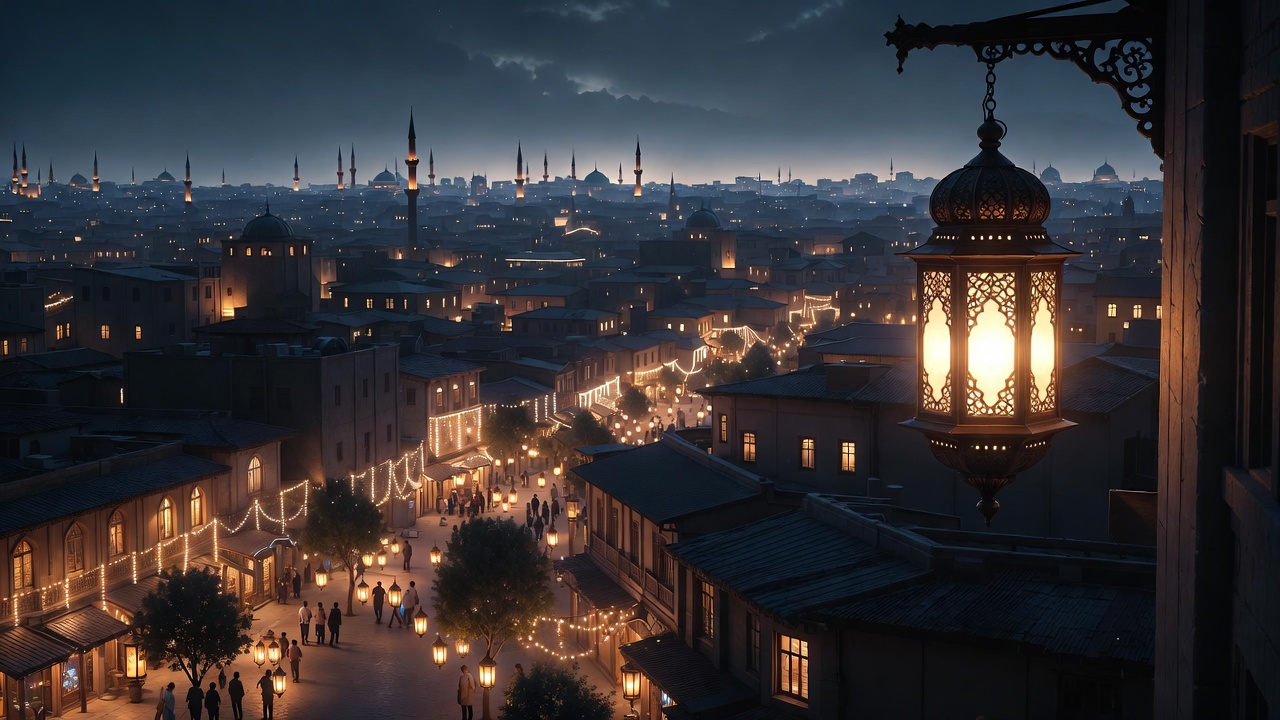
The crescent moon has been sighted. Mosques have echoed with the call to prayer. Ramadan 2026 is now upon us. For nearly two billion Muslims worldwide, this sacred month of fasting, reflection, and devotion has officially begun — though the exact start date depends on where you live.
This year, Ramadan falls during the Islamic month of 1447 AH (Anno Hegirae), arriving in late February and stretching into March. Because it lands near the spring equinox, fasting hours across the Northern Hemisphere are shorter and more manageable than in previous summer Ramadans. That is welcome news for millions.
Whether you are planning your suhoor and iftar schedule, coordinating with colleagues who are fasting, or simply curious about one of the world’s largest annual religious observances, this guide covers everything you need to know — from confirmed start dates by country to the science behind moon sighting.
When Does Ramadan 2026 Start? Confirmed Dates by Country
The start of Ramadan is not a single global event. It unfolds across time zones, shaped by the crescent moon’s visibility and each nation’s chosen method of determination. In 2026, this led to a one-day split between countries.
Saudi Arabia’s Supreme Court confirmed that the crescent moon was sighted on the evening of Tuesday, February 17, 2026. As a result, fasting in Saudi Arabia and several other nations began on Wednesday, February 18 (Al Jazeera).
However, countries like Turkey, Egypt, Singapore, Indonesia, and Australia determined that the crescent was not visible on February 17. Their astronomical data showed the moon sat too close to the sun for a reliable sighting. These nations declared Thursday, February 19 as the first day of fasting (Gulf News).
This one-day difference is not unusual. It happens regularly and reflects a theological distinction — not an error.
Ramadan 2026 Start Dates: Country-by-Country Breakdown
| Region / Country | First Day of Fasting | Method Used |
|---|---|---|
| Saudi Arabia | Wednesday, Feb 18 | Physical moon sighting |
| UAE, Qatar, Bahrain | Wednesday, Feb 18 | Physical moon sighting |
| Yemen, Iraq, Lebanon | Wednesday, Feb 18 | Physical moon sighting |
| Palestine | Wednesday, Feb 18 | Physical moon sighting |
| Turkey | Thursday, Feb 19 | Astronomical calculation |
| Egypt | Thursday, Feb 19 | Moon sighting (Al-Azhar) |
| Jordan | Thursday, Feb 19 | Moon sighting committee |
| Oman | Thursday, Feb 19 | Moon sighting committee |
| Indonesia | Thursday, Feb 19 | Calculation + isbat session |
| India | Thursday, Feb 19 | Local hilal (moon) sighting |
| Pakistan | Thursday, Feb 19 | Ruet-e-Hilal Committee |
| Singapore | Thursday, Feb 19 | Astronomical calculation |
| Australia | Thursday, Feb 19 | Australian Fatwa Council |
| France | Thursday, Feb 19 | Great Mosque of Paris |
| United Kingdom | Wednesday, Feb 18 | Varies by community |
| USA (FCNA/ISNA) | Wednesday, Feb 18 | Astronomical calculation |
| Morocco | Thursday, Feb 19 | Independent moon sighting |
Note: In the United States, the Fiqh Council of North America (FCNA) and the Islamic Society of North America (ISNA) announced February 18 as the first day of fasting, based on astronomical calculations. However, some local communities — such as those following the Triangle Imams Council in North Carolina — chose February 19 instead, following physical moon sighting traditions.
How the Crescent Moon Determines Ramadan Start Dates in 2026
Ramadan is the ninth month of the Islamic lunar (Hijri) calendar. Its beginning is tied directly to the crescent moon. When the thin sliver of the new moon — called the hilal — becomes visible after sunset on the 29th day of Sha’ban (the preceding month), Ramadan begins the following morning.
This tradition stretches back over 1,400 years, rooted in the Prophet Muhammad’s instruction to begin fasting upon sighting the moon. But in practice, the process is more complex than simply looking at the sky.
Three Key Factors for a Successful Moon Sighting
According to Al Jazeera’s moon sighting guide, three astronomical factors determine whether the crescent can actually be seen:
- Elongation — The angular distance between the moon and the sun must be at least 8 to 12 degrees. If the moon is closer than 7 degrees, the crescent is physically too thin to reflect enough light for the human eye to detect.
- Altitude — The moon must sit high enough above the horizon at sunset. An altitude of 10 degrees is generally sufficient for clear visibility with the naked eye. Lower altitudes of 3–5 degrees may work with telescopes.
- Lag Time — This is the gap between sunset and moonset. For reliable naked-eye sighting, at least 45 minutes of lag time is needed so the sky darkens enough to reveal the crescent.
In 2026, the astronomical new moon (conjunction) occurred on Tuesday, February 17, at approximately 1:01 PM (UTC). That same evening, Saudi Arabia’s Supreme Court received reports from trained moon sighters who confirmed seeing the crescent. But in much of Asia, Africa, and Europe, the moon set before the sun — making a sighting physically impossible.
This explains the one-day difference between countries.
Why Do Different Countries Start Ramadan on Different Days?
This question comes up every single year, and the answer lies in the intersection of Islamic jurisprudence (fiqh) and astronomy.
There are two main schools of thought:
- Physical moon sighting (ru’yah): Some scholars hold that the start of Ramadan must be confirmed by a credible witness physically seeing the crescent with the naked eye or a telescope. Saudi Arabia, Pakistan, India, Bangladesh, and many others follow this approach.
- Astronomical calculation (hisab): Other scholars argue that modern astronomy can determine with certainty when the moon will be visible. The FCNA, ISNA, and the European Council for Fatwa and Research (ECFR) follow this method. Their criteria require that after conjunction, the moon’s elongation is at least 8 degrees and it sits at least 5 degrees above the horizon at sunset, anywhere on the globe (Fiqh Council of North America).
Both methods are considered valid within Islamic legal tradition. The split is not a sign of disagreement but a reflection of scholarly diversity that has existed for centuries.
In 2026, this led to a clear split:
- February 18 start: Saudi Arabia, UAE, Qatar, Bahrain, USA (FCNA), UK (many communities)
- February 19 start: Turkey, Egypt, Jordan, Oman, Indonesia, India, Pakistan, France, Australia, Singapore
As IBTimes UK noted, this means that a Muslim colleague in London may have started fasting a day before a supplier in Jakarta. The split is theology, not error.
Ramadan 2026 Fasting Hours Around the World: What to Expect
One of the most practical questions for anyone observing Ramadan is simple: how long will I fast each day?
The answer depends entirely on geography. Muslims fast from Fajr (pre-dawn prayer) to Maghrib (sunset prayer). The closer you are to the equator, the more consistent your fasting hours. The farther north or south you go, the more they vary with the seasons.
In 2026, Ramadan falls just before the spring equinox (March 20). This creates a unique situation where fasting hours are shorter in the north and longer in the south — the opposite of what many people expect.
Fasting Hours by Region — Ramadan 2026
| Region | Approximate Fasting Hours |
|---|---|
| Scandinavia (Sweden, Norway) | 11.5–12 hours |
| Western Europe (UK, France, Germany) | 12–12.5 hours |
| Southern Europe (Spain, Italy) | 12.5–13 hours |
| North America (most US cities) | 12.5–13 hours |
| Middle East (UAE, Saudi Arabia) | ~12 hours 45 min |
| North Africa (Morocco, Egypt) | ~12.5–13 hours |
| South Asia (India, Pakistan) | 12.5–13 hours |
| Southeast Asia (Indonesia, Malaysia) | ~13 hours |
| South America (Brazil, Argentina) | 14–15 hours |
| Australia & New Zealand | 13.5–15 hours |
| Far Northern regions (Greenland, Iceland) | 16+ hours |
Source: Data compiled from Al Jazeera, Morocco World News, and Khaleej Times.
A few things stand out this year:
- Residents in the UAE can expect first-day fasts of about 12 hours and 46 minutes — roughly 30 minutes shorter than last year’s opening day.
- In far northern regions like parts of Russia, Greenland, and northern Canada, fasts could stretch to 20 hours due to extreme daylight.
- Islamic scholars generally agree that in places with extreme daylight conditions, Muslims may follow the fasting schedule of Makkah or the nearest city with a moderate day-night cycle.
- As Ramadan progresses toward March, fasting hours in the Northern Hemisphere will gradually increase by a few minutes each day as days grow longer.
For nearly 90 percent of the world’s population in the Northern Hemisphere, fasting hours will continue to decrease each year until 2031, when Ramadan will coincide with the winter solstice — the shortest day of the year.
Laylat al-Qadr 2026: The Night of Power and When It Falls
Among all the nights of Ramadan, none carries more weight than Laylat al-Qadr — the Night of Power. Muslims believe this is the night when the first verses of the Quran were revealed to the Prophet Muhammad through the angel Jibril (Gabriel), over 1,400 years ago.
The Quran itself describes this night in Surah Al-Qadr (97:3): it is “better than a thousand months.” That means worship performed on this single night carries a reward greater than 83 years of devotion.
When Is Laylat al-Qadr in 2026?
The exact date of Laylat al-Qadr has never been fixed. The Prophet Muhammad instructed Muslims to seek it among the odd nights of the last ten days of Ramadan — that is, the 21st, 23rd, 25th, 27th, or 29th night. However, strong emphasis in multiple hadith narrations points to the 27th night as the most likely.
For Ramadan 2026:
- Countries that started fasting on February 18: The 27th night falls on the evening of Sunday, March 16 into Monday, March 17.
- Countries that started fasting on February 19: The 27th night falls on the evening of Monday, March 17 into Tuesday, March 18.
Many Muslims dedicate the entire last ten nights to intensive worship, prayer, Quran recitation, and i’tikaf (spiritual retreat in the mosque). This practice follows the Sunnah of the Prophet Muhammad, who would increase his devotion significantly during the final stretch of Ramadan.
When Is Eid al-Fitr 2026? End of Ramadan Celebration Dates
The joyful festival of Eid al-Fitr marks the end of Ramadan and the beginning of Shawwal, the tenth month of the Islamic calendar. Like the start of Ramadan, Eid’s exact date depends on the sighting of the crescent moon.
Expected Eid al-Fitr 2026 Dates
| Country / Authority | Expected Eid al-Fitr Date |
|---|---|
| Saudi Arabia & Gulf States | Thursday, March 19 or Friday, March 20 |
| USA (FCNA/ISNA) | Friday, March 20 |
| Turkey, Egypt, Jordan | Friday, March 20 |
| India, Pakistan, Bangladesh | Friday, March 20 |
| Indonesia, Malaysia | Friday, March 20 |
| UK | Thursday, March 19 or Friday, March 20 |
| Australia | Friday, March 20 |
Sources: IslamicFinder, Islamic Relief, IslamiCity.
Current astronomical forecasts suggest that Ramadan 2026 will be 29 or 30 days long, depending on the Shawwal crescent moon sighting. If the month lasts 29 days (as Dubai projections suggest), Eid will fall one day earlier.
Eid al-Fitr traditions include:
- Salat al-Eid — a special congregational prayer performed in the morning
- Zakat al-Fitr — obligatory charity paid before the Eid prayer, ensuring the poor can celebrate
- Wearing new clothes, exchanging gifts, and feasting with family
- Visiting relatives and neighbors to share in the joy
Before Eid, Muslims must pay Zakat al-Fitr, a compulsory charity traditionally equivalent to one meal’s worth of staple food. In the United States, many communities set this at $15 per person for 2026.
How the Islamic Lunar Calendar Shifts Ramadan Each Year
If you have noticed Ramadan arriving earlier each year on the Western (Gregorian) calendar, you are right. The Islamic calendar is purely lunar, consisting of 12 months that follow the moon’s cycle. Each month lasts 29 or 30 days, making the Islamic year about 354 days long — roughly 10 to 11 days shorter than the solar Gregorian year.
This means Ramadan migrates backward through the seasons over a roughly 33-year cycle. In 2026, Ramadan lands in late February to mid-March. By 2031, it will fall during the winter solstice in the Northern Hemisphere — the shortest fasting days in a generation for Muslims in Europe and North America. By the late 2030s, it will shift into autumn, and eventually back into summer.
Upcoming Ramadan start dates (approximate):
| Year | Estimated Start Date |
|---|---|
| 2026 | February 18–19 |
| 2027 | February 7–8 |
| 2028 | January 27–28 |
| 2029 | January 16–17 |
| 2030 | January 5–6 |
Note: All dates are estimates. Actual dates depend on crescent moon sighting each year.
This constant shift is one of Ramadan’s defining features. Unlike fixed holidays, every Muslim will experience Ramadan in every season over the course of a lifetime. Summer fasts can be grueling — stretching past 18 hours in northern latitudes. Winter fasts are more forgiving. The rhythm ties the spiritual experience directly to the natural world.
Suhoor and Iftar: Ramadan Meal Traditions Across Cultures
Two meals anchor each fasting day: suhoor (the pre-dawn meal before Fajr) and iftar (the meal at sunset that breaks the fast).
Suhoor — The Pre-Dawn Meal
Suhoor is eaten before the first light of dawn. It is considered a blessed meal and a vital source of energy for the long day ahead. Common suhoor foods vary by culture but tend to be sustaining and hydrating — think oatmeal, eggs, yogurt, dates, and plenty of water.
Iftar — Breaking the Fast
The Prophet Muhammad broke his fast with dates and water, and this Sunnah remains deeply ingrained across nearly every Muslim culture. After dates, families and communities sit down to a full meal.
What iftar looks like around the world:
- Middle East: Lentil soup, fattoush salad, sambousek (fried pastries), and grilled meats
- South Asia: Pakoras, fruit chaat, haleem (slow-cooked stew), and biryani
- North Africa: Harira soup (a Moroccan staple), chebakia (honey cookies), and couscous
- Southeast Asia: Kolak (coconut milk dessert), rendang, and ketupat (compressed rice)
- Turkey: Pide (Ramadan flatbread), güllaç (rose milk dessert), and lentil soup
- Western countries: Interfaith iftars are increasingly popular, where Muslim communities invite neighbors to share the meal and learn about Ramadan
In many Muslim-majority countries, the streets come alive after Maghrib. Night markets spring up, mosques serve communal meals, and families gather in ways that make Ramadan as much a social experience as a spiritual one.
Ramadan 2026 Prayer Timetable and Daily Schedule Guide
A typical day during Ramadan follows a distinct rhythm built around the five daily prayers and two additional practices:
| Time | Activity |
|---|---|
| ~4:30–5:30 AM (varies) | Suhoor (pre-dawn meal) |
| Fajr (before sunrise) | First prayer; fasting begins |
| Dhuhr (midday) | Second prayer |
| Asr (afternoon) | Third prayer |
| Maghrib (sunset) | Fourth prayer; iftar (fast broken) |
| Isha (night) | Fifth prayer |
| After Isha | Taraweeh prayers (special Ramadan prayers) |
Taraweeh prayers are a hallmark of Ramadan nights. These are additional congregational prayers held after Isha, during which long portions of the Quran are recited. Many mosques aim to complete the entire Quran over the course of the month.
For accurate daily prayer times in your city, consult the Islamic Relief Ramadan Timetable or the Muslim Hands Ramadan Timetable 2026, both sourced from the Muslim World League calendar.
Who Is Exempt from Fasting During Ramadan?
Fasting during Ramadan is one of the Five Pillars of Islam and is obligatory for every healthy adult Muslim. However, Islam is a faith that values mercy and ease. Several categories of people are exempt:
- Travelers on long journeys
- People who are ill (temporarily or chronically)
- Pregnant or nursing women if fasting could harm them or their child
- Elderly individuals who cannot physically endure the fast
- Women during menstruation
- Children who have not yet reached puberty
Those who miss fasts due to temporary conditions are expected to make up the days later (qada). Those who cannot fast at all — due to chronic illness or old age — are required to pay fidya, a form of charity that feeds a person in need for each missed day.
Understanding Zakat and Charity During Ramadan 2026
Charitable giving intensifies during Ramadan. Two forms of Islamic charity are especially relevant:
Zakat al-Mal is the annual obligatory charity based on accumulated wealth. It equals 2.5 percent of a Muslim’s total savings above a minimum threshold (nisab). While Zakat can be paid at any time of year, many Muslims choose Ramadan — believing the spiritual rewards are multiplied during this blessed month.
Zakat al-Fitr is a separate, compulsory payment due before the Eid al-Fitr prayer. Its purpose is to ensure that even the poorest members of the community can celebrate Eid with dignity. In the United States, many mosques have set the 2026 rate at approximately $15 per person in the household.
How Non-Muslims Can Show Respect During Ramadan 2026
Ramadan is not just a Muslim observance — it ripples through workplaces, schools, and neighborhoods everywhere. If you are not fasting but live or work alongside people who are, here are a few thoughtful ways to show respect:
- Wish them well. A simple “Ramadan Mubarak” (Blessed Ramadan) or “Ramadan Kareem” (Generous Ramadan) is always appreciated.
- Be mindful about eating and drinking in front of fasting colleagues, especially during meetings. You do not need to hide — most fasting Muslims do not expect this — but awareness goes a long way.
- Offer flexibility with meeting times if possible. Energy levels can dip in the afternoon for those fasting.
- Accept an iftar invitation if offered. Communal iftars, including interfaith ones, are a beautiful way to share in the experience.
- Ask genuine questions. Most Muslims are happy to talk about Ramadan. Curiosity signals respect.
Ramadan Mubarak — Looking Ahead
Ramadan 2026 is a month of shorter fasts, spiritual renewal, and global unity across nearly two billion people. Whether you are setting your alarm for suhoor in New York, breaking your fast with harira in Casablanca, or joining a Taraweeh prayer in Jakarta, the essence remains the same: self-discipline, gratitude, compassion, and closeness to God.
The key dates to remember:
- 🌙 First Taraweeh: Evening of February 17 (Feb 18 countries) / Evening of February 18 (Feb 19 countries)
- 🕌 First day of fasting: February 18 or 19, depending on your location
- ✨ Laylat al-Qadr (27th night): Evening of March 16 or 17
- 🎉 Eid al-Fitr: Expected March 19–20
As always, confirm your local dates through your mosque, national Islamic authority, or trusted astronomical resource. The moon may be universal, but its sighting — and the start of Ramadan — remains beautifully local.
Ramadan Mubarak to all who observe. May this month bring peace, reflection, and abundant blessings.
This article was last verified on February 23, 2026. Dates are confirmed based on official announcements from the Saudi Supreme Court, the Fiqh Council of North America, the European Council for Fatwa and Research, Al Jazeera, Gulf News, and Islamic Relief. Moon sighting variations may still affect end-of-Ramadan and Eid dates.