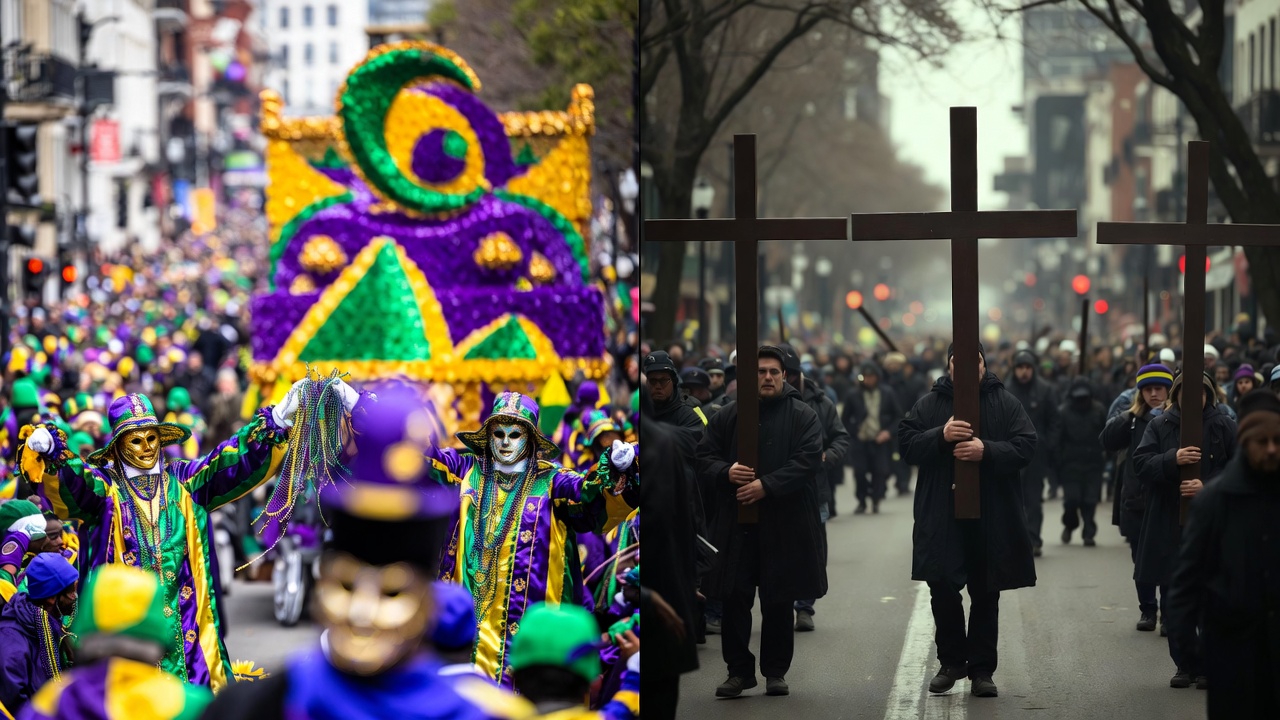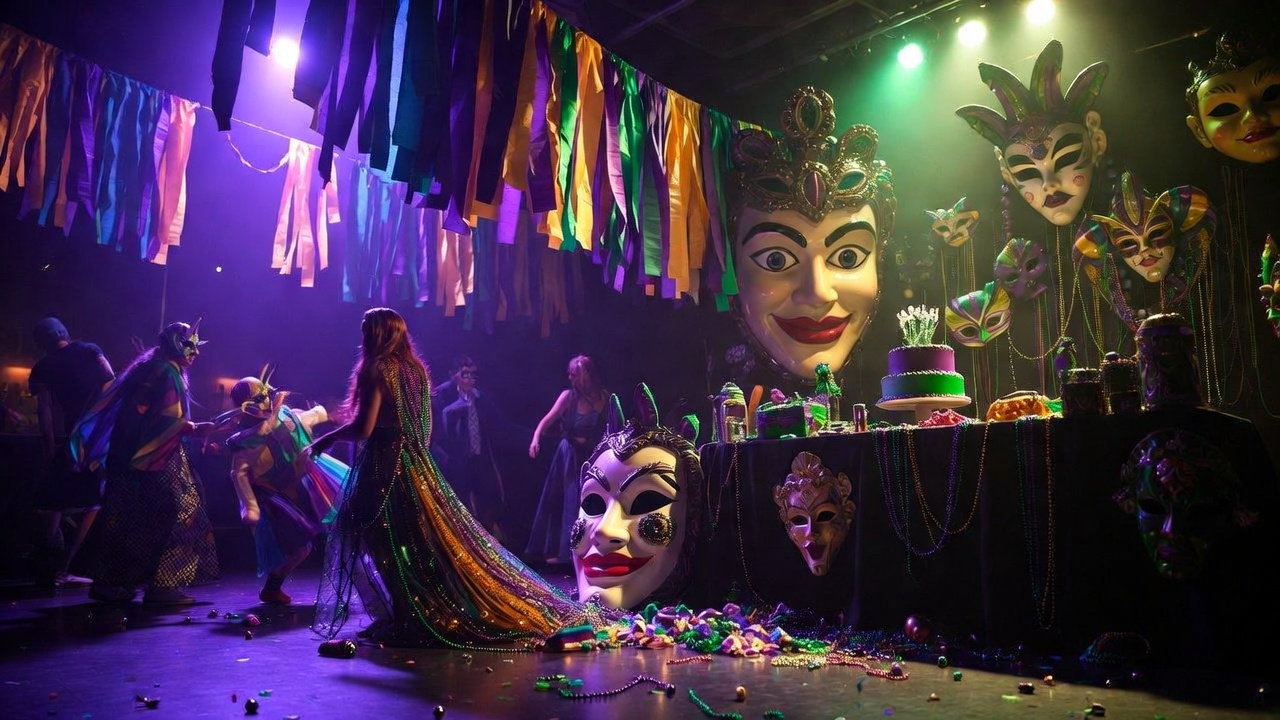
The streets are alive with the sound of brass bands. Colorful floats lumber past cheering crowds. Masked revelers toss glittering beads into outstretched hands. Somewhere, a grandmother is pulling a fresh King Cake from the oven, its sweet cinnamon aroma filling the kitchen.
Fat Tuesday is coming.
Whether you call it Mardi Gras, Shrove Tuesday, Carnival, or simply “the greatest free party on Earth,” this ancient celebration continues to captivate millions of people around the world. But when exactly does Fat Tuesday fall in 2026? What are the origins of this colorful tradition? And why do we still celebrate it with such passion after all these centuries?
Grab a slice of King Cake and settle in. We’re about to take you on a journey through time, across continents, and deep into the heart of one of humanity’s most enduring festivals.
What Date is Fat Tuesday in 2026? Mark Your Calendar for February 17th
Fat Tuesday 2026 falls on Tuesday, February 17th.
This date marks the final day of the Carnival season and the last opportunity for celebration before the solemn period of Lent begins on Ash Wednesday, February 18th. If you’re planning to experience Mardi Gras in New Orleans or any other major celebration destination, you’ll want to book your accommodations early. This year’s date coincides with both Valentine’s Day weekend and Presidents’ Day, making it an exceptionally popular time for travel.
The 2026 Carnival season officially begins on January 6th (Twelfth Night or Epiphany) and runs for 43 days until Fat Tuesday on February 17th. While this is a slightly shorter season than some years, locals and visitors alike will pack just as much celebration into those six weeks.
Here’s a quick reference table for Mardi Gras dates over the coming years:
| Year | Fat Tuesday Date | Days in Carnival Season |
|---|---|---|
| 2026 | February 17 | 43 days |
| 2027 | February 9 | 35 days |
| 2028 | February 29 | 55 days |
| 2029 | February 13 | 39 days |
| 2030 | March 5 | 59 days |
Why Does Mardi Gras Change Dates Every Year? Understanding the Easter Connection
One of the most common questions about Fat Tuesday concerns its ever-shifting date. Unlike fixed holidays such as Christmas or Independence Day, Mardi Gras moves around the calendar like a restless spirit.
The answer lies in the moon.
Fat Tuesday is always exactly 47 days before Easter Sunday. Easter itself is a “moveable feast” calculated using a formula established at the Council of Nicaea in 325 CE. Easter falls on the first Sunday following the first full moon after the spring equinox. This astronomical calculation means Easter can occur on any Sunday between March 22nd and April 25th.
Because Mardi Gras must fall 47 days before Easter, it can land on any Tuesday between February 3rd and March 9th. These extreme dates are rare occurrences. A February 3rd or March 9th Mardi Gras happens roughly once every 100 to 150 years, making them once-in-a-lifetime events.
The day after Fat Tuesday is always Ash Wednesday, which marks the beginning of Lent. This 40-day period of fasting, prayer, and penance leads Christians to Easter Sunday. Understanding this religious framework is essential to understanding why Mardi Gras evolved as a celebration of indulgence before sacrifice.
What Does Fat Tuesday Actually Mean? The Etymology of Mardi Gras
The name “Fat Tuesday” comes directly from the French “Mardi Gras”—mardi meaning Tuesday and gras meaning fat. This refers to the tradition of consuming all the rich, fatty foods in one’s household before the fasting period of Lent.
But why “fat”?
In the days before refrigeration, this was more than symbolism—it was practical necessity. Eggs, butter, milk, lard, and cheese would spoil during the 40 days of Lenten abstinence. Resourceful cooks devised ways to use up these perishables, leading to the creation of rich dishes and the famous King Cake, which incorporates eggs, butter, and sugar into a delicious brioche-style pastry.
The word “Carnival” itself reveals this same connection to food. Derived from the Medieval Latin carnelevarium (meaning “to remove meat”) or possibly carne vale (“farewell to meat”), Carnival represents the final opportunity to enjoy flesh before the meatless weeks of Lent.
Different cultures have their own names for this day:
| Country/Region | Name | Translation |
|---|---|---|
| France | Mardi Gras | Fat Tuesday |
| United Kingdom | Shrove Tuesday / Pancake Day | Day of Confession |
| Germany | Fastnacht | Eve of the Fast |
| Iceland | Sprengidagur | Bursting Day |
| Sweden | Fettisdagen | Fat Tuesday |
| Poland | Pączki Day (Thursday before) | Doughnut Day |
| Italy | Martedì Grasso | Fat Tuesday |
| Russia | Maslenitsa | Butter Week |
The Ancient Origins of Mardi Gras: From Pagan Rituals to Christian Traditions
The roots of Mardi Gras reach back thousands of years, long before Christianity spread across Europe. Understanding these origins helps explain why the celebration has such primal energy, even today.
Lupercalia and Saturnalia: The Roman Connection
Many historians trace Carnival traditions to the ancient Roman festivals of Saturnalia and Lupercalia. Saturnalia, held in late December, honored Saturn, the god of agriculture and time. During this festival, social norms were temporarily abandoned. Masters served slaves. Citizens wore costumes and masks to blur class distinctions. Feasting, drinking, and general revelry ruled the day.
Lupercalia, celebrated in mid-February, was a fertility festival honoring Faunus, the Roman god of agriculture. The celebration involved animal sacrifice, feasting, and ritualistic behaviors meant to ensure fertility and ward off evil spirits. The timing—mid-February, just as winter begins releasing its grip—connects to humanity’s ancient impulse to celebrate the approaching spring.
The Christianization of Pagan Celebrations
When Christianity spread across the Roman Empire following Emperor Constantine’s Edict of Milan in 313 CE, religious leaders faced a challenge. The pagan festivals were deeply ingrained in local culture. Rather than abolishing these beloved celebrations outright, church leaders chose a strategy of adaptation.
The excess of Saturnalia and Lupercalia was channeled into the period before Lent. The logic was elegant: if people needed a final release of indulgence before 40 days of fasting and penance, why not give it to them? The wild energy of pagan festivals became the foundation for Christian Carnival.
Pope Gregory XIII’s establishment of the Gregorian calendar in 1582 helped standardize these celebrations across Catholic Europe. Mardi Gras became an “official” part of the Christian calendar, even as it retained unmistakable echoes of its pagan ancestors.
The Medieval Transformation
During the Middle Ages, Carnival evolved into an increasingly elaborate affair. European nobility held lavish feasts and pageants. The tradition of masking, already present in Roman festivals, became central to the celebration. Masks allowed commoners to mingle with aristocrats, lovers to meet in secret, and satirists to mock the powerful without fear of retribution.
The Carnival of Venice, which emerged in the 13th century, became particularly famous for its elaborate masks and costumes. Some were simple affairs; others were masterpieces of craftsmanship featuring gold leaf, jewels, and exotic feathers. The Venetian mask became a symbol of mystery, transformation, and the blurring of identity that lies at the heart of Carnival.
How Mardi Gras Came to America: The Birth of New Orleans Carnival
The story of Mardi Gras in America begins with French explorers and the muddy banks of the Mississippi River.
The First American Mardi Gras in 1699
On March 3, 1699, French-Canadian explorer Pierre Le Moyne d’Iberville and his brother Jean-Baptiste Le Moyne de Bienville made camp approximately 60 miles south of what would become New Orleans. Recognizing that it was Fat Tuesday back in France, the expedition held a small celebration and named their landing spot “Point du Mardi Gras.”
This modest observance marked the first recorded Mardi Gras celebration in what would become the United States. Though some historians argue that Mobile, Alabama (founded by the same French explorers in 1702) deserves credit for the first official Mardi Gras, New Orleans would ultimately become synonymous with the celebration.
From Private Balls to Public Parades
In the decades following French colonization, Mardi Gras in Louisiana evolved from informal gatherings to more organized affairs. The Marquis de Vaudreuil, who became governor of Louisiana in 1743, is credited with establishing elegant society balls and banquets that would influence Carnival traditions for generations.
However, the Mardi Gras we know today truly began taking shape in the 19th century:
1827: A group of students who had visited Paris brought back stories of Carnival celebrations. They donned colorful costumes and danced through the streets of New Orleans, recreating the revelry they had witnessed abroad.
1837: The first documented Mardi Gras parade rolled through New Orleans streets. While informal processions had occurred before, this marked the beginning of organized parading.
1857: A secret society of New Orleans businessmen called the Mistick Krewe of Comus organized a torchlit nighttime parade with marching bands and elaborate floats. This pivotal moment established the “krewe” system that would define New Orleans Mardi Gras for generations to come. The parade featured themes drawn from mythology and literature, setting a template that krewes still follow today.
Understanding the Krewe System: The Heart of New Orleans Mardi Gras
No discussion of Fat Tuesday is complete without understanding the krewes—the social organizations that create, fund, and stage the parades and balls that define Carnival season.
What is a Krewe?
The word “krewe” was coined by the Mistick Krewe of Comus as an archaic, fanciful spelling of “crew.” These organizations range from exclusive old-line social clubs with membership by invitation only to modern “super krewes” open to anyone who can pay the membership fee.
Each krewe has its own identity, traditions, and signature elements:
- Themes: Every krewe parade follows an annual theme, ranging from historical subjects to mythology to pop culture satire
- Throws: Each krewe has signature items tossed to parade-goers, from standard beads to hand-decorated treasures
- Monarchs: Most krewes crown a King and Queen to reign over their celebrations
- Balls: Many krewes host elaborate masked balls, some open to the public, others strictly members-only
The Legendary Krewes of New Orleans
Krewe of Rex (Founded 1872)
Rex, officially known as the School of Design, is one of the most influential krewes in Mardi Gras history. Founded to entice tourists to visit New Orleans and help the city recover from the Civil War, Rex created many traditions we now consider essential to Mardi Gras:
- The official Carnival colors: purple (justice), green (faith), and gold (power)
- The collectible doubloon coins (introduced in 1960)
- The tradition of the monarch receiving a “key to the city” from the mayor
- The official Mardi Gras anthem: “If Ever I Cease to Love”
Rex parades on Fat Tuesday morning, immediately following Zulu, and their monarch is considered the symbolic “King of Carnival.”
Krewe of Zulu (Founded 1909)
The Zulu Social Aid & Pleasure Club holds a special place in Mardi Gras history. Founded by a group of African American laborers inspired by a musical comedy about the Zulu tribe, Zulu began as a satirical response to the exclusivity of white krewes like Rex.
The first Zulu parade in 1915 was deliberately modest—the King wore a lard can for a crown and carried a banana stalk as a scepter, while floats were constructed from dry goods boxes decorated with moss and palmetto leaves. What began as parody evolved into one of Carnival’s most beloved traditions.
The most coveted throw in all of Mardi Gras is the Zulu coconut—a hand-decorated coconut thrown only by Zulu members. These “golden nuggets” are so treasured that in 1988, Louisiana passed a law specifically exempting Zulu from liability for coconut-related injuries.
The legendary Louis Armstrong reigned as Zulu King in 1949, cementing the krewe’s cultural significance.
The Super Krewes
Beginning in the late 1960s, a new generation of krewes emerged that would transform Mardi Gras:
Krewe of Endymion (Founded 1967): Started as a small neighborhood venture, Endymion grew into the largest krewe in Mardi Gras history. Their Saturday night parade features massive floats with fiber optic lighting, animatronic figures, and celebrity guests. The post-parade Endymion Extravaganza has featured performances by music legends including Rod Stewart and Pitbull.
Krewe of Bacchus (Founded 1968): Famous for recruiting celebrity Kings, Bacchus revolutionized Mardi Gras by welcoming visitors and tourists rather than focusing solely on local society. Past monarchs have included Will Ferrell, Nicolas Cage, and Adam Devine. Their Sunday night parade marks a highlight of Carnival weekend.
Krewe of Orpheus (Founded 1993): Co-founded by New Orleans native and Grammy-winning musician Harry Connick Jr., Orpheus parades on Lundi Gras (the Monday before Fat Tuesday). The krewe was founded with an inclusive philosophy and quickly became one of Carnival’s most popular parades.
Mardi Gras 2026 Parade Schedule: When to See the Best Parades
Planning a trip to New Orleans for Mardi Gras 2026? Here’s what you need to know about the parade schedule:
The Final Weekend (February 11-17, 2026)
| Date | Day | Major Parades |
|---|---|---|
| February 11 | Wednesday | Krewe du Vieux (satirical, adults only) |
| February 13 | Friday | Krewe of Hermes, Krewe d’Etat |
| February 14 | Saturday | Krewe of Endymion (Super Krewe) |
| February 15 | Sunday | Krewe of Bacchus (Super Krewe) |
| February 16 | Lundi Gras | Krewe of Orpheus |
| February 17 | Fat Tuesday | Krewe of Zulu (8:00 AM), Krewe of Rex (10:30 AM) |
Pro tip: The 2026 final weekend coincides with Valentine’s Day (Saturday) and Presidents’ Day weekend, making it an exceptionally busy time. Book accommodations months in advance and expect premium pricing.
Parade Viewing Tips
- Arrive early: For major parades, stake out your spot 2-3 hours before start time
- Bring supplies: Folding chairs, snacks, water, and a bag for collecting throws
- Know the route: Most major parades follow St. Charles Avenue through Uptown before turning onto Canal Street
- Understand parade etiquette: Make eye contact with float riders, hold your hands up, and cheer enthusiastically for the best throws
- Be patient: Parades can run late, especially as the season progresses
The Iconic King Cake Tradition: History, Meaning, and That Mysterious Baby
No Mardi Gras celebration is complete without King Cake, the iconic ring-shaped pastry decorated in purple, green, and gold that has become synonymous with Carnival season.
The Origins of King Cake
The King Cake tradition connects to Epiphany (January 6th), also known as Three Kings Day or Twelfth Night. This Christian holiday commemorates the arrival of the Three Wise Men (the Magi) in Bethlehem to visit the infant Jesus. The circular shape of the cake is said to represent the circular route the kings took to avoid King Herod’s soldiers.
The tradition of hiding a token inside the cake dates back to the Roman festival of Saturnalia, when beans were baked into cakes during harvest celebrations. Whoever found the bean was declared “king for a day.”
French settlers brought this tradition to Louisiana in the 18th century, where it merged with local customs and the exuberant spirit of Carnival.
Why is There a Baby in the King Cake?
The tiny plastic baby hidden inside modern King Cakes represents the infant Jesus, connecting the dessert to its Epiphany origins. But the baby is a relatively recent addition to the tradition.
The evolution of the hidden token:
- Medieval Europe: Beans or coins
- 19th Century New Orleans: The Twelfth Night Revelers krewe hid beans inside cakes in the 1870s
- 1940s-1950s: Donald Entringer Sr., a baker at McKenzie’s Pastry Shoppes in Metairie, Louisiana, began hiding small plastic babies inside his King Cakes after a traveling salesman sold him a supply of miniature dolls
The tradition stuck. Today, finding the baby in your slice of King Cake brings specific obligations and honors:
- You are declared “king” or “queen” for the day
- You are blessed with good luck for the coming year
- You must host the next King Cake party or bring the next cake (this is sacred obligation in Louisiana)
What Does King Cake Taste Like?
Traditional King Cake resembles a large Danish pastry or brioche coffee cake. The dough is rich with eggs, butter, and cinnamon, then shaped into an oval ring. After baking, it’s topped with a white icing glaze and decorated with colored sugar in the official Mardi Gras colors:
- Purple for justice
- Green for faith
- Gold for power
Modern bakeries offer creative variations:
- Cream cheese filling
- Praline pecan
- Strawberry
- Chocolate
- Bananas Foster
- Boudin (savory Cajun sausage)
In New Orleans, King Cake season runs strictly from January 6th through Fat Tuesday. Eating King Cake outside this window is considered bad luck—or at least poor form.
Where to Get the Best King Cake
New Orleanians are passionate about their King Cake preferences. Some beloved bakeries include:
- Dong Phuong Bakery (famous for their flaky, less-sweet version)
- Haydel’s Bakery (traditional favorite)
- Gambino’s Bakery (classic New Orleans style)
- Randazzo’s King Cakes (shipped nationwide)
- Sucre (award-winning gourmet versions)
Most bakeries ship King Cakes nationwide, allowing Mardi Gras fans everywhere to participate in the tradition.
Global Fat Tuesday Celebrations: How the World Marks This Day
While New Orleans may be the most famous Mardi Gras destination in the United States, Fat Tuesday celebrations occur across the globe, each with distinct local traditions.
Rio de Janeiro Carnival: The World’s Largest Party
Brazil’s Carnival runs from the Friday before Ash Wednesday through noon on Ash Wednesday, with celebrations reaching fever pitch on Fat Tuesday. The Rio Carnival attracts millions of visitors and holds the Guinness World Record for the largest Carnival celebration on Earth.
Key features include:
- Samba Schools: Social organizations (similar to krewes) that compete in elaborate parade competitions
- Sambadrome: A purpose-built parade venue where samba schools perform their routines for judges
- Street Parties (Blocos): Neighborhood celebrations featuring live music and dancing
- Elaborate Costumes: Some costumes cost tens of thousands of dollars and take months to create
The Rio Carnival blends European Carnival traditions with African rhythms and indigenous Brazilian culture, creating a celebration unlike any other on Earth.
Venice Carnevale: Masks and Mystery
The Carnival of Venice dates to the 13th century and is famous for its stunning masks and elaborate costumes. At its height in the 18th century, the festival lasted for months, with Venetians wearing masks so constantly that authorities struggled to maintain public order.
Modern Carnevale features:
- Traditional Masks: Including the iconic white bauta, the gold-adorned Colombina, and the long-nosed medico della peste (plague doctor)
- Costume Competitions: Elaborate period costumes compete for prizes in St. Mark’s Square
- Masked Balls: Private and public events recreating the grandeur of 18th-century Venice
- Flight of the Angel: A costumed performer descends on a zip line from St. Mark’s Campanile to the square below
Shrove Tuesday in the United Kingdom: Pancake Day
Across the Atlantic, Fat Tuesday takes a distinctly different form. In Britain, Shrove Tuesday is better known as Pancake Day—a celebration centered on making and eating thin, crepe-style pancakes.
The tradition of eating pancakes arose from the practical need to use up eggs, milk, and butter before Lent. British pancakes are thinner than American-style pancakes and are typically served with simple toppings like lemon juice and sugar.
Pancake races are a beloved Shrove Tuesday tradition in the UK. Participants race while flipping pancakes in frying pans, a custom said to have originated in Olney, Buckinghamshire in 1445. According to legend, a woman so absorbed in making pancakes forgot the time until she heard the church bells calling people to confession. She ran to church still carrying her frying pan, flipping her pancake as she went.
Today, pancake races are held in towns across Britain, including the famous Rehab Parliamentary Pancake Race in London, where members of Parliament compete against journalists.
Other unique British Shrovetide traditions include:
- Shrovetide Football in Ashbourne: A massive, nearly ruleless football game played through the streets of this Derbyshire town, with goals three miles apart
- Skipping in Scarborough: The entire town gathers on the promenade to skip rope
- The Westminster Pancake Grease: Schoolboys at Westminster School compete to grab pieces of a pancake tossed over a high bar
Other Global Celebrations
Germany (Fastnacht/Karneval): German Carnival celebrations officially begin on November 11th at 11:11 AM and continue through Ash Wednesday. The biggest celebrations occur in Cologne, Düsseldorf, and Mainz, with Rosenmontag (Rose Monday) being the peak day for parades.
Switzerland (Basler Fasnacht): The Basel Carnival uniquely begins after Ash Wednesday, starting at 4:00 AM on the Monday following Ash Wednesday. The celebration features haunting masked figures, lantern parades, and traditional fife and drum corps.
Trinidad and Tobago: Caribbean Carnival features spectacular “mas” (masquerade) costumes, steel pan music, and calypso competitions. J’Ouvert (“daybreak” in French Creole) celebrations begin before dawn on Carnival Monday.
Mobile, Alabama: Often claiming to host America’s first Mardi Gras, Mobile’s celebrations are more family-friendly than New Orleans. The Order of Myths and other mystic societies stage parades and balls throughout the season.
Why Do We Still Celebrate Fat Tuesday? The Enduring Appeal of Carnival
In our modern, secular age, why does Fat Tuesday continue to captivate millions of people—many of whom have no intention of observing Lent?
The Human Need for Release
Anthropologists and psychologists suggest that Carnival-type celebrations serve a fundamental human need. Throughout history, societies have created “safety valve” festivals—periods when normal rules are suspended, hierarchies are inverted, and the id is allowed to run free.
This release serves multiple purposes:
- Psychological relief: A controlled outlet for impulses normally suppressed
- Social bonding: Shared transgression creates community
- Renewal: The symbolic “death” of the old year/season before rebirth
- Resistance: Carnival has historically provided opportunities to mock authority and express dissent
The Joy of Transformation
Fat Tuesday’s emphasis on masks and costumes taps into a deep human desire for transformation. Behind a mask, we can become anyone—a king, a goddess, a creature of fantasy. This temporary escape from fixed identity is powerfully liberating.
The tradition of wearing masks dates back to Carnival’s pagan roots but carries psychological significance that transcends religious context. Masks allow us to explore aspects of ourselves we normally suppress, to transcend social roles and expectations, and to connect with others outside the constraints of everyday identity.
Community and Connection
In an increasingly fragmented world, Mardi Gras offers something increasingly rare: genuine community celebration. Standing shoulder-to-shoulder with strangers, cheering for a parade, catching throws, sharing food and drink—these experiences create bonds that transcend the digital connections that dominate modern life.
For New Orleans specifically, Mardi Gras represents cultural continuity and resilience. The city has celebrated Carnival through wars, epidemics, and natural disasters. Just months after Hurricane Katrina devastated the Gulf Coast in 2005, New Orleans held a scaled-down but defiant Mardi Gras, demonstrating that the celebration is inseparable from the city’s identity.
The Feast Before the Fast
Even for those who don’t observe Lent, the rhythm of indulgence followed by restraint resonates. January’s resolutions have typically failed by mid-February. Fat Tuesday offers permission to embrace pleasure without guilt—just for one day—before (perhaps) recommitting to moderation.
This psychological permission structure may explain why Mardi Gras has flourished even as religious observance has declined. The celebration has been successfully secularized while retaining its essential function: marking the boundary between excess and restraint, between Carnival and Lent, between one season and the next.
Essential Mardi Gras Vocabulary: Speak Like a Local
Planning to experience Fat Tuesday in New Orleans? Master these terms:
| Term | Meaning |
|---|---|
| Krewe | A social organization that stages Mardi Gras parades and balls |
| Throws | Items tossed from floats to parade-goers (beads, doubloons, cups, toys) |
| Doubloon | A commemorative aluminum coin thrown during parades |
| Flambeaux | Torch carriers who light nighttime parades |
| Lagniappe | A little something extra (Cajun French) |
| Laissez les bons temps rouler | “Let the good times roll” (Cajun French) |
| Lundi Gras | “Fat Monday,” the day before Mardi Gras |
| Second Line | A parade-within-a-parade featuring dancers with decorated umbrellas |
| Mardi Gras Indians | African American masking tradition featuring elaborate handmade “suits” |
| Neutral Ground | The median of a boulevard (where parade-goers gather) |
| King Rex | The King of Carnival, selected by the Krewe of Rex |
| Queen | Female royalty selected by each krewe |
| Ball | Formal masked dance held by krewes |
Planning Your Mardi Gras 2026 Trip: Practical Tips for Visitors
When to Visit
Peak Experience (February 13-17, 2026): The final weekend through Fat Tuesday offers the most parades and highest energy. Expect crowds, premium prices, and an unforgettable experience.
Family-Friendly Option (February 6-8, 2026): Earlier weekend parades are less crowded and more suitable for children. Krewe of Little Rascals and Krewe of Barkus (the dog parade!) are particularly kid-friendly.
Authentic Local Experience: Visit during weekday parades in early February for a more relaxed, locals-focused experience.
Where to Stay
French Quarter: Iconic but expensive and crowded during Carnival. Expect noise late into the night.
Garden District/Uptown: Closer to major parade routes along St. Charles Avenue. More residential feel.
Mid-City: Near the beginning of many parade routes. Emerging dining and nightlife scene.
Metairie/Kenner: Suburban options offer lower prices and parking, though you’ll need transportation to reach parades.
What to Bring
Essential items for parade-going:
- Comfortable, waterproof shoes (you will stand for hours)
- Layers (February weather is unpredictable, ranging from cold to warm)
- A bag for collecting throws
- Cash (many vendors and bars don’t accept cards)
- Sunscreen (yes, even in February)
- Portable phone charger
- Patience and a good attitude
Safety Considerations
Mardi Gras in New Orleans is generally safe, but common-sense precautions apply:
- Stay aware of your surroundings, especially at night
- Keep valuables secure and out of sight
- Travel in groups when possible
- Stay hydrated (alcohol dehydrates quickly)
- Know your limits with alcohol consumption
- Designate a meeting spot in case your group gets separated
- Keep your phone charged
The Cultural Significance of Mardi Gras Indians
No discussion of New Orleans Mardi Gras is complete without acknowledging the Mardi Gras Indians—one of the most visually stunning and culturally significant traditions in American folk culture.
Origins and Meaning
Mardi Gras Indians are African American carnival “tribes” or “gangs” who parade on Mardi Gras and St. Joseph’s Day wearing elaborate handmade suits inspired by Native American ceremonial dress. The tradition dates to the mid-19th century and honors the historical alliance between enslaved Africans and Native Americans who harbored runaway slaves.
Creating a Mardi Gras Indian suit is a year-round labor of love. Members hand-sew every sequin, feather, and bead onto their suits, which can weigh up to 150 pounds and take hundreds of hours to complete. Each suit is worn only once—the following year, the process begins again from scratch.
Key Traditions
- Big Chiefs: Leaders of each tribe who wear the most elaborate suits
- Spy Boys: Scouts who walk ahead of the tribe
- Flag Boys: Members who carry the tribe’s banner
- Call and Response: Tribes sing traditional songs with call-and-response patterns derived from African musical traditions
- Battles: Traditionally, when two tribes met, they would “battle” through dance, singing, and display of their suits (replacing earlier, sometimes violent confrontations)
The Mardi Gras Indians parade through the streets of primarily Black neighborhoods like Tremé and the 7th Ward, far from the tourist crowds of the French Quarter. Witnessing this tradition requires local knowledge and early morning dedication—tribes begin emerging before dawn on Mardi Gras Day.
Mardi Gras Food Traditions: What to Eat on Fat Tuesday
Beyond King Cake, New Orleans Mardi Gras features a rich tradition of indulgent cuisine perfect for the feast before the fast.
Essential Mardi Gras Foods
Beignets: These pillowy fried dough squares covered in powdered sugar are a New Orleans icon. Café Du Monde in the French Quarter serves them 24 hours a day, but expect long lines during Carnival.
Crawfish: Louisiana’s beloved “mudbugs” are in season during Carnival. Look for crawfish boils featuring these spicy, messy, delicious crustaceans.
Gumbo: This hearty stew combining African, French, and Native American influences is perfect for cool February evenings.
Jambalaya: A one-pot rice dish with Creole or Cajun roots, featuring sausage, chicken, and/or seafood.
Po’ Boys: These massive sandwiches on French bread can be filled with fried oysters, shrimp, roast beef, or dozens of other options.
Red Beans and Rice: Traditionally served on Mondays, this humble dish is elevated by slow-cooked beans and smoky sausage.
Fat Tuesday for Families: Kid-Friendly Mardi Gras Activities
Mardi Gras isn’t just for adults. Many families make Carnival a cherished annual tradition. Here’s how to enjoy Fat Tuesday with children:
Family-Friendly Parades
- Krewe of Little Rascals: A children’s parade where kids ride on floats
- Krewe of Barkus: The annual dog parade in the French Quarter
- Krewe of Muses: An all-women krewe known for their decorated shoes and family-friendly route
- Daytime parades: Generally more suitable for children than nighttime events
Activities for Kids
- King Cake parties: Host your own or attend family-friendly events
- Mask making: Create your own Mardi Gras masks
- Float watching: Watch float construction at Mardi Gras World
- Second line dancing: Learn the traditional New Orleans dance
- Neutral ground picnics: Set up along parade routes with food and games
Tips for Attending Parades with Children
- Bring a wagon or stroller for younger children
- Bring snacks and drinks (lines for food can be long)
- Arrive early to secure a spot with good sightlines
- Consider ladder seats (elevated seats that provide better views)
- Teach children to make eye contact with float riders for better throws
- Leave before children get overtired—there’s always tomorrow’s parade
The Environmental Impact of Mardi Gras: Sustainability Efforts
The environmental impact of Mardi Gras has become an increasing concern. An estimated 25 million pounds of beads are thrown during Carnival season, many ending up in storm drains, trees, or landfills.
The Problem with Beads
Most Mardi Gras beads are made from petroleum-based plastics manufactured overseas. They’re essentially single-use items—brilliant for one parade, then discarded.
The environmental costs include:
- Plastic pollution in waterways and the Gulf of Mexico
- Carbon emissions from manufacturing and shipping
- Heavy metal contamination (some cheap beads contain lead)
- Cleanup costs for the city
Sustainability Initiatives
Organizations are working to make Mardi Gras more sustainable:
Arc of Greater New Orleans: Collects and recycles Mardi Gras beads, providing jobs for people with disabilities
Grounds Krewe: Volunteers clean up after parades, reducing litter
Krewe of Chewbacchus: This sci-fi themed krewe emphasizes “green” throws—DIY, homemade, and sustainable materials
Biodegradable alternatives: Some companies now produce beads from plant-based materials
You can help by:
- Catching and keeping only beads you truly want
- Returning unwanted beads to recycling programs
- Choosing quality over quantity
- Supporting krewes that emphasize sustainable practices
Mardi Gras in the Modern Era: How Technology Has Changed Carnival
Fat Tuesday has evolved with the times, embracing technology while preserving essential traditions.
Parade Tracking Apps
Mobile apps now allow you to track parade floats in real-time, plan routes, and receive alerts about delays. Popular apps include:
- MardiGras.com Official App
- WWL-TV Parade Tracker
- NOLA Ready (city emergency services app)
Social Media and Mardi Gras
Instagram and TikTok have transformed how people experience and share Carnival. Krewe costumes go viral. King Cake rankings spark passionate debates. Parade moments are shared in real-time with audiences worldwide.
This digital dimension extends Mardi Gras beyond New Orleans, allowing diaspora communities and curious observers everywhere to participate virtually.
Live Streaming
Major parades are now broadcast live online, allowing people who can’t travel to New Orleans to experience the celebration. Local TV stations stream parade coverage, while individual krewe members often share their perspectives via social media.
Conclusion: Laissez Les Bons Temps Rouler
Fat Tuesday 2026 falls on February 17th, but as we’ve seen, the celebration is so much more than a single date. It’s a culmination of thousands of years of human celebration, adapted and transformed across cultures and continents. It’s the last great feast before the season of sacrifice, the final explosion of color before the gray of Lent.
Whether you’re planning to experience Mardi Gras in New Orleans, joining a local celebration, hosting a King Cake party at home, or simply flipping pancakes on Shrove Tuesday, you’re participating in something ancient and vital—the human need to gather, to feast, to mask ourselves and reveal ourselves, to celebrate life in all its messy, joyful excess.
The krewes will roll. The bands will play. The beads will fly. And for one magical day, the world will remember that joy is worth celebrating.
Laissez les bons temps rouler. Let the good times roll.
Frequently Asked Questions About Fat Tuesday 2026
When is Fat Tuesday 2026? Fat Tuesday 2026 falls on Tuesday, February 17th.
Why is it called Fat Tuesday? The name comes from the French “Mardi Gras” (mardi = Tuesday, gras = fat), referring to the tradition of eating rich, fatty foods before the Lenten fast.
Is Mardi Gras only celebrated in New Orleans? No. Mardi Gras/Carnival celebrations occur worldwide, including Rio de Janeiro, Venice, Mobile (Alabama), and many other cities. The UK celebrates the same day as Pancake Day or Shrove Tuesday.
What are the Mardi Gras colors and what do they mean? Purple represents justice, green represents faith, and gold represents power. These colors were established by the Krewe of Rex in 1872.
Why is there a baby in King Cake? The tiny plastic baby represents the infant Jesus and connects the cake to its Epiphany (Three Kings Day) origins. Whoever finds the baby traditionally must host the next King Cake party.
When does Carnival season 2026 begin? Carnival season 2026 begins on January 6th (Twelfth Night/Epiphany) and runs through February 17th (Fat Tuesday).
Is Mardi Gras a public holiday? Louisiana is the only U.S. state where Mardi Gras is an official state holiday. Schools, banks, and government offices close.
What time do Mardi Gras parades start? On Fat Tuesday 2026, the Krewe of Zulu begins at 8:00 AM, followed by Rex at 10:30 AM. Other parades run throughout the day.
How far in advance should I book accommodations for Mardi Gras 2026? Book at least 3-6 months in advance for the best selection and prices. Hotels near parade routes book up quickly.
Can families attend Mardi Gras? Yes! Many parades and events are family-friendly. Daytime parades and uptown parade routes tend to be more suitable for children than the French Quarter at night.
Planning your Fat Tuesday celebration? Share your Mardi Gras memories and tips in the comments below. And don’t forget to follow us for more travel guides to the world’s most incredible festivals.