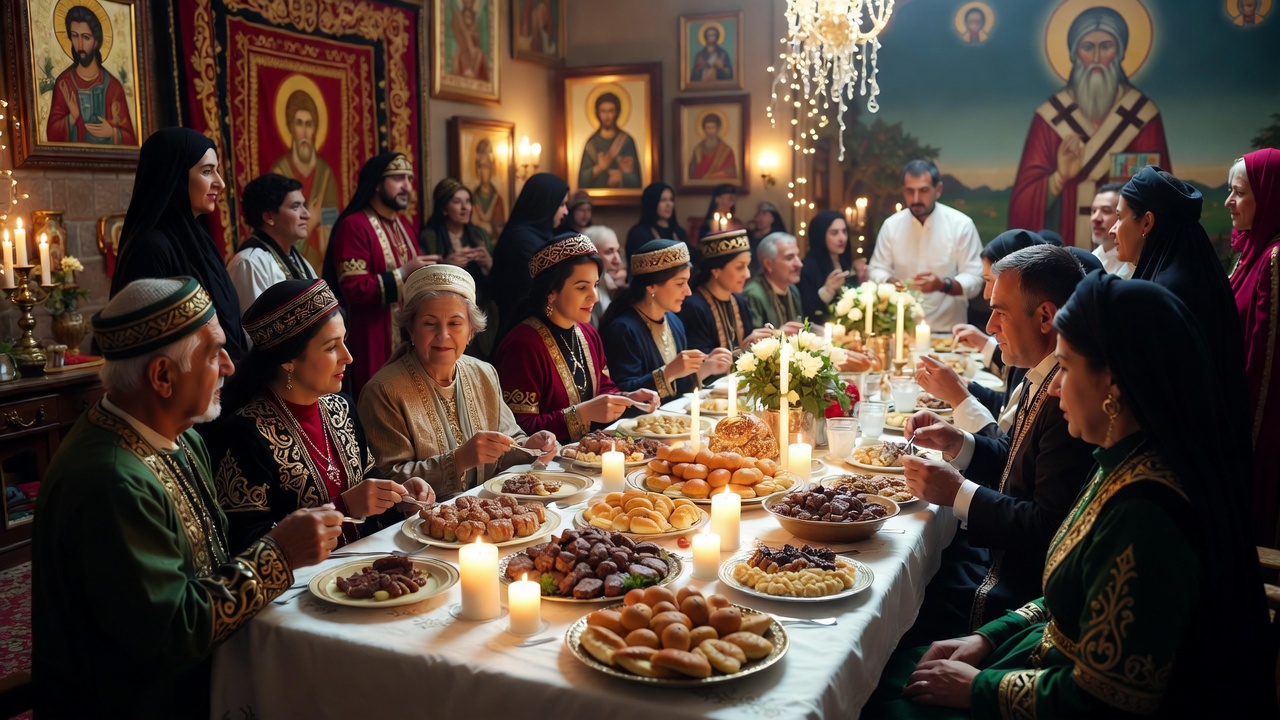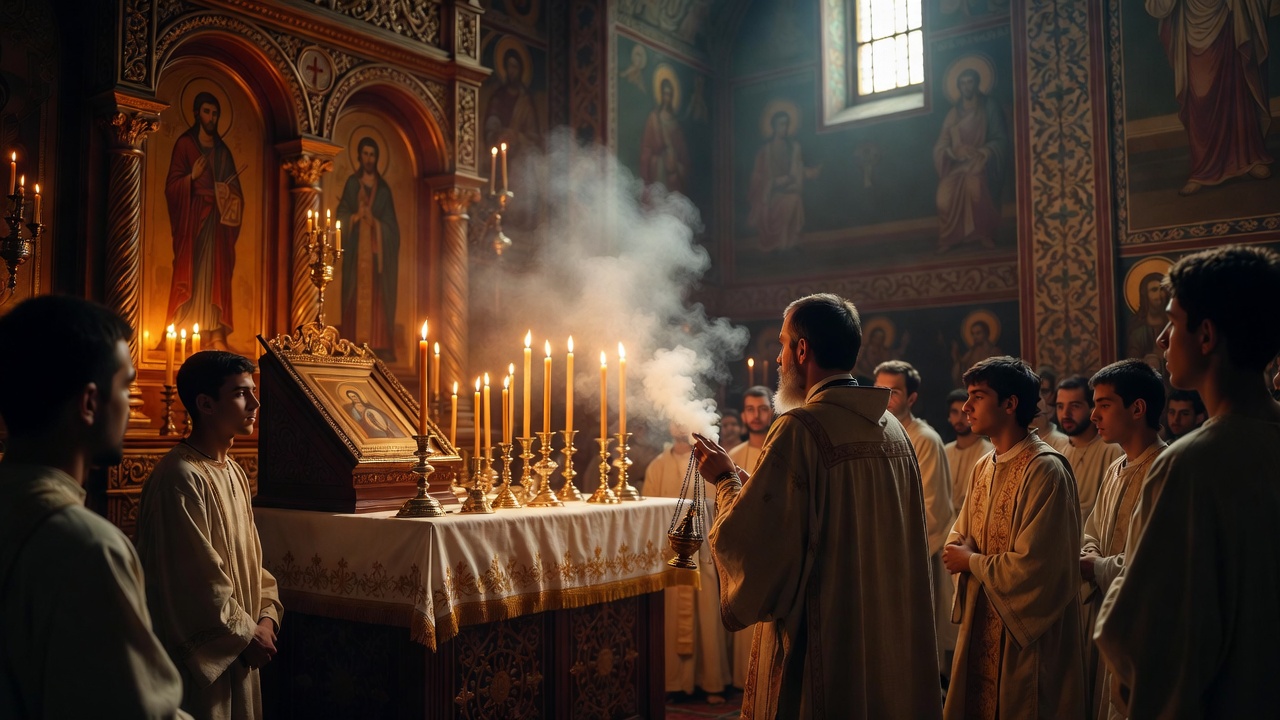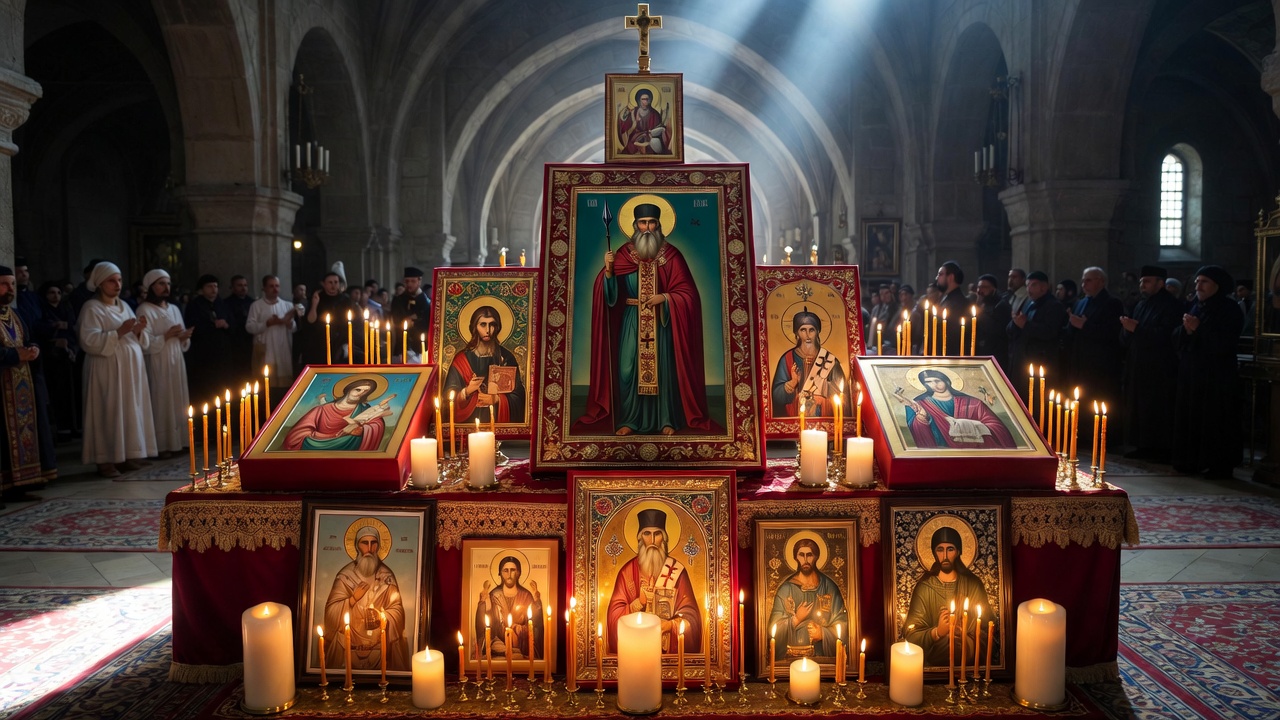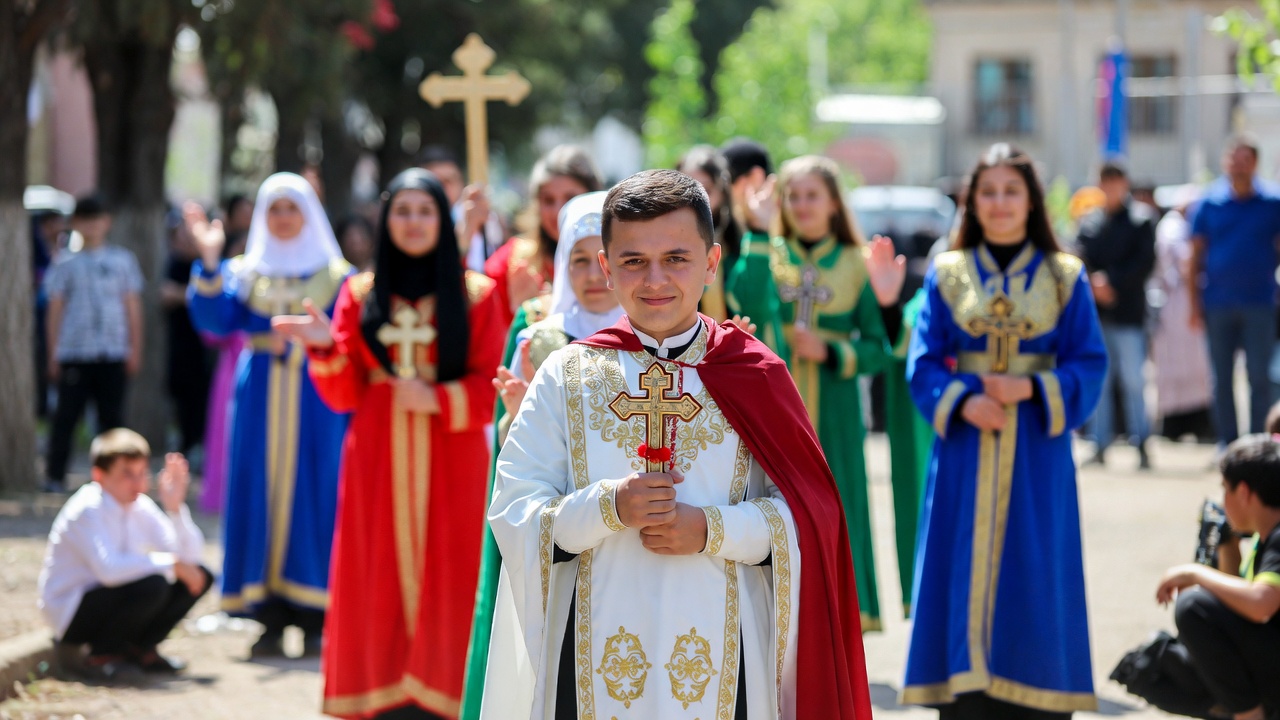
Every winter, as frost settles across the Armenian highlands and snow blankets the ancient churches of Yerevan, a feeling of warmth stirs in the hearts of Armenian youth. It is the season of Sourb Sarkis — the Feast of Saint Sarkis the Warrior — a holiday that blends deep Christian devotion with centuries-old folk rituals about love, destiny, and dreams. If you have ever wondered what the Armenian version of Valentine’s Day looks like, this is it.
In this guide, we cover everything you need to know about Saint Sarkis Day in 2026: the exact date, the historical origins, the beloved traditions of salty cookies and dream prophecies, and practical tips for anyone who wants to celebrate or visit Armenia during this remarkable holiday.
What Is the Date of Saint Sarkis Day in 2026?
Saint Sarkis Day 2026 falls on Saturday, January 31, 2026.
The Feast of Saint Sarkis is a moveable feast in the Armenian Apostolic Church calendar. It does not land on the same date every year. Instead, it is always celebrated on a Saturday, exactly 63 days before Armenian Easter. Since Armenian Easter in 2026 falls on April 5, counting back 63 days brings us to January 31.
The feast can shift anywhere between January 11 and February 15, depending on the year. Here is a quick look at past and upcoming dates for reference:
| Year | Saint Sarkis Day | Armenian Easter |
|---|---|---|
| 2023 | February 4 | April 9 |
| 2024 | January 27 | March 31 |
| 2025 | February 15 | April 20 |
| 2026 | January 31 | April 5 |
| 2027 | January 16 | March 21 |
| 2028 | February 5 | April 9 |
The five-day Fast of the Catechumens immediately precedes Saint Sarkis Day. In 2026, this fast runs from Monday, January 26 through Friday, January 30. Many of the most emotionally charged traditions — including the eating of the famous salty cookie — take place on Friday evening, the last night of the fast, just hours before the feast itself.
Who Was Saint Sarkis the Warrior? The History Behind the Armenian Patron Saint of Love
To understand why millions of Armenians celebrate this holiday with such passion, you need to know the story of the man behind the feast. Saint Sarkis — known in Armenian as Sourb Sargis Zoravar (Սուdelays Սարգիս Զորdelays) — was not Armenian by birth. He was a Cappadocian Greek who lived during the fourth century and rose to become one of the most beloved saints in Armenian Christianity.
A Roman General Turned Christian Hero
Sarkis served as a general in the Roman army during the reign of Emperor Constantine the Great (306–337 AD). His courage, faith, and skill on the battlefield earned him the title of General in Chief of Cappadocia, a region that bordered ancient Armenia. But Sarkis was not only a warrior. He used his authority to spread the Christian Gospel across the towns under his command. He replaced pagan temples with churches. He taught the faith to soldiers and civilians alike.
Everything changed in 361 AD, when Julian the Apostate became emperor. Julian despised Christianity and set about persecuting believers across the Roman Empire. Churches were destroyed. Christians were hunted. Sarkis, unwilling to renounce his faith, abandoned his military position. Together with his only son, Mardiros (also known as Martiros), he fled to Armenia.
Refuge in Armenia and Service in Persia
The Armenian king Tiran, grandson of King Tiridates III — the ruler who had made Armenia the first Christian nation in history — welcomed Sarkis warmly. But Armenia was not safe either. Julian’s armies were advancing toward Antioch, and King Tiran feared that hosting Sarkis would bring Roman aggression to his kingdom. He urged Sarkis and Mardiros to seek refuge farther east, in the Sassanid Persian Empire.
When they arrived in Persia, Shah Shapur II recognized Sarkis’s reputation as a brilliant military leader. He appointed Sarkis as a commander in the Persian army. Once again, Sarkis proved himself in battle. And once again, he continued to preach Christianity openly, converting many Persian soldiers along the way.
Martyrdom and Legacy
This could not remain hidden for long. Soldiers who had not converted reported to Shapur that Sarkis was spreading the Christian faith among the Persian ranks. The Shah summoned Sarkis to a feast at a Zoroastrian temple and ordered him to make a sacrifice to the pagan gods.
Sarkis refused. According to tradition, he declared that he worshipped only the one true God — the Holy Trinity that created heaven and earth. He destroyed idols in the temple. The enraged crowd seized Mardiros and killed him before his father’s eyes. Sarkis was thrown into prison. Even in captivity, his spirit did not break. When Shapur learned of this, he ordered Sarkis beheaded.
Fourteen loyal soldiers who tried to retrieve and honor Sarkis’s body were also executed. Eventually, the relics of Saint Sarkis made their way to Assyria, where they remained until the fifth century. Mesrop Mashtots, the legendary inventor of the Armenian alphabet, arranged for the relics to be transferred to the village of Karbi (in the Ashtarak region of Armenia), where a church was built over them. Today, the relics are preserved in the collection of the Mother See of Holy Etchmiadzin.
Saint Sarkis is known by many titles in Armenian hymns, but one stands out: arakahas (արագdelays), meaning “one who arrives quickly.” It reflects the belief that Saint Sarkis responds swiftly to the prayers of those in need — especially the young and those yearning for love.
Why Is Saint Sarkis Day Called the Armenian Valentine’s Day?
The connection between Saint Sarkis and romantic love is ancient and deeply woven into Armenian folk culture. There are several reasons why Armenians consider this feast their own version of Valentine’s Day.
The Legend of the Forty Soldiers and the Maiden
One of the most popular folk stories tells a dramatic tale of love and betrayal. After returning from a great battle in which Sarkis and his forty soldiers defeated an enemy force of ten thousand, a celebration was held at the royal palace. During the feast, the soldiers were tricked and intoxicated. The Persian ruler ordered forty young women to kill the sleeping warriors by thrusting daggers into their hearts.
Thirty-nine women obeyed. But the fortieth, upon seeing the peaceful and handsome face of the sleeping Sarkis, could not bring herself to kill him. Instead, she kissed him. Sarkis awoke to discover the horror of what had happened. He seized the young woman, leapt onto his legendary white horse, and smashed through the city gates as a violent snowstorm raged behind them.
This folk story — of love triumphing over death, of a woman choosing compassion over obedience — is the reason lovers across Armenia have considered Saint Sarkis their protector and intercessor for centuries.
A Day Officially Dedicated to Youth and Love
The connection between Saint Sarkis and love is not merely folkloric. By official decree of His Holiness Karekin II, Supreme Patriarch and Catholicos of All Armenians, the Feast of Saint Sarkis has been proclaimed a day of blessing of the youth. At the end of the Divine Liturgy on Saint Sarkis Day, young people are invited to approach the altar for a special blessing ceremony. This makes the holiday both a sacred religious observance and a public celebration of young love.
The Tradition of the Salty Cookie: How Armenians Dream About Their Future Spouse
Of all the customs tied to Saint Sarkis Day, none captures the imagination quite like the tradition of the aghi blit — the salty cookie. This ritual is performed on the evening before the feast, typically Friday night, and it is practiced mainly by unmarried young people.
How the Salty Cookie Tradition Works
The ritual follows a straightforward but challenging set of rules:
- Bake or obtain an aghi blit. This is a simple, purposely over-salted flatbread made from flour, salt, and water. The cookie is nearly inedible because of the extreme amount of salt.
- Eat the cookie before bed. The salt will make you intensely thirsty.
- Do not drink any water afterward. This is the hard part. You must go to bed thirsty.
- Pray to Saint Sarkis and fall asleep.
- Wait for the dream. According to tradition, a figure will appear in your dream offering you water. That person is your future spouse.
The details of the dream matter. If the person offers water in a golden cup, your future spouse will be wealthy. A silver cup means comfortable middle-class life. A cup made of copper or clay suggests more modest means. The amount of water in the cup is also significant — more water means a longer and happier marriage.
How to Make Aghi Blit at Home
The recipe for the traditional salty cookie is deliberately simple. According to Embroidered Recipes, a well-known source for Armenian culinary traditions, the basic ingredients are:
| Ingredient | Amount |
|---|---|
| All-purpose flour | 1¼ cups (about 155 g) |
| Salt | A few tablespoons |
| Water | Enough to form a dough |
Steps:
- Mix the flour and salt together thoroughly.
- Add water gradually until a firm dough forms.
- Roll the dough out flat.
- Cut into small shapes — circles, squares, or use cookie cutters.
- Bake at 350°F (180°C) until golden brown, about 20 to 30 minutes.
The result is a very hard, very salty wafer. It is meant to be endured, not enjoyed. The discomfort of the salt and the thirst that follows is considered a small sacrifice for the chance to glimpse your romantic destiny.
Pokhindz and the Hoofprint: The Flour Tray Tradition on Saint Sarkis Eve
Another beloved tradition involves pokhindz — roasted wheat flour — and the legendary white horse of Saint Sarkis. This ritual takes place on the same Friday evening as the salty cookie tradition.
How the Flour Tray Custom Works
On the eve of the feast, families prepare a tray of pokhindz (or sometimes regular flour) and place it outside their front door — on the doorstep, the balcony, or even on the rooftop. The door is sometimes left slightly open. The belief is that Saint Sarkis will ride past on his white horse during the night, and the horse’s hooves will leave an imprint in the flour.
Finding a hoofprint on the tray the next morning is a powerful omen. It means that Saint Sarkis has visited your home and blessed it. Your prayers — especially those related to love and marriage — will be answered.
This custom connects directly to the folk image of Saint Sarkis as a figure who rides through winter storms, his horse’s gallop shaking the earth and his spear stirring blizzards. In Armenian folk tradition, the imagery of snowstorms and wild winds on the eve of Saint Sarkis Day is seen as evidence of the saint’s passage through the land.
Bird Feeding on Saint Sarkis Day Morning: Reading the Direction of Love
A third folk custom takes place on the morning of the feast itself. This tradition involves feeding birds and watching their flight patterns.
Early on Saint Sarkis Day, young people scatter crumbs of bread or lavash rolls filled with khashil (a porridge made from roasted wheat flour) for the birds. They watch carefully as the birds pick up the crumbs and fly away. The direction the bird flies is believed to indicate the direction from which your future spouse will come.
There is a sobering caveat to this tradition. If the bird stays where it is and does not fly away, it means the person will not get married that year. While this might sound discouraging, the custom is typically observed with humor and good spirits among groups of young friends.
The Fast of the Catechumens: Spiritual Preparation Before Saint Sarkis Day 2026
The five days leading up to Saint Sarkis Day are a period of fasting known as the Fast of the Catechumens . In 2026, this fast runs from January 26 to January 30. It is a distinct and ancient fasting tradition that is unique to the Armenian Apostolic Church.
Origins and Meaning of the Fast
The Fast of the Catechumens has its roots in the early years of Armenian Christianity. According to tradition, Saint Gregory the Illuminator — the founding figure of the Armenian Church — ordered King Tiridates III and other new converts to fast for five days before baptism. The purpose was purification of the five human senses from pagan influence, preparing the soul to receive the Christian faith.
The Armenian Diocese in Georgia notes that in ancient times, only bread and salt were permitted during the fast, and the celebration of Divine Liturgy was suspended during these days.
Over the centuries, this fast became popularly known as the “Fast of Saint Sarkis,” since the feast of the saint always follows immediately on Saturday. However, the Armenian Church clarifies that the fast is not formally connected to Saint Sarkis. It is the Fast of the Catechumens — a much older institution that simply precedes the saint’s feast in the liturgical calendar.
Key Dates for the Fast of the Catechumens in 2026
| Day | Date | Note |
|---|---|---|
| Monday | January 26 | Fast begins |
| Tuesday | January 27 | Fast continues |
| Wednesday | January 28 | Fast continues |
| Thursday | January 29 | Fast continues |
| Friday | January 30 | Last day of fast; salty cookie tradition; flour tray tradition |
| Saturday | January 31 | Feast of Saint Sarkis — Day of Blessing the Youth |
How Saint Sarkis Day Is Celebrated in Armenian Churches in 2026
The church celebrations on Saint Sarkis Day are solemn and deeply moving. They take place across all Armenian Apostolic churches worldwide, with particular grandeur in Armenia itself.
Divine Liturgy and the Blessing of the Youth
On the morning of the feast, Divine Liturgy (Surb Patarag) is celebrated in all churches bearing the name of Saint Sarkis. The liturgy includes special hymns dedicated to the saint and his companions.
After the liturgy, a special ceremony of blessing of young people takes place. This ceremony was formalized by the decree of Catholicos Karekin II. Young men and women are invited forward to receive the priest’s blessing. It is an emotional moment — a public affirmation of hope, love, and the future.
The Relic Procession in Yerevan
In Yerevan, the capital of Armenia, the celebration reaches its peak with a procession that carries a relic of Saint Sarkis from the Mother See of Holy Etchmiadzin to the Saint Sarkis Church in the city center. This procession is accompanied by singing, prayer, and crowds of believers who line the streets in the January cold.
The Saint Sarkis Cathedral in Yerevan is a major landmark and a focal point of the celebrations. Built in the mid-19th century, it sits on a hill overlooking the Hrazdan River gorge. On Saint Sarkis Day, the church is packed with worshippers, and the surrounding streets come alive with cultural activities, concerts, and exhibitions.
Saint Sarkis Halva: The Sweet Reward After the Salty Cookie
If the aghi blit is the trial, then Saint Sarkis Halva is the reward. This beloved Armenian sweet is closely associated with the feast and is prepared in homes and sold in pastry shops across Armenia and the Armenian diaspora during the Saint Sarkis season.
What Is Saint Sarkis Halva?
Saint Sarkis Halva is a marshmallow-based confection rolled in toasted sesame seeds. It is chewy, nutty, and sweetly perfumed with rose water. The halva is typically shaped into logs or rounds, sliced, and served as a festive treat on the morning of the feast — a sweet contrast to the punishing saltiness of the previous night’s cookie.
Basic Ingredients for Saint Sarkis Halva
Based on traditional recipes from the Armenian Mirror-Spectator, the key ingredients include:
- Sesame seeds (2–3 cups, toasted)
- Sugar
- Water
- Lemon juice
- Rose water
- Marshmallows
- Nuts (optional, such as pistachios or walnuts)
The sesame seeds are toasted and cooled. A sugar syrup is prepared with water, sugar, lemon juice, and rose water. When the syrup turns golden, marshmallows are stirred in until smooth. The mixture is then shaped and rolled in the toasted sesame seeds. The result is a distinctive white-and-golden confection with a wonderfully chewy texture.
In Armenian pastry shops, you can spot Saint Sarkis Halva by its appearance: a pale, cylindrical sweet coated in sesame seeds, often displayed alongside other traditional Armenian sweets like gata and pakhlava.
How Armenian Diaspora Communities Celebrate Saint Sarkis Day Around the World
Armenia’s diaspora is one of the largest in the world relative to the country’s population. Armenian communities in Los Angeles, Beirut, Paris, Moscow, Sydney, Buenos Aires, and dozens of other cities maintain strong connections to their liturgical and folk traditions. Saint Sarkis Day is one of the holidays that travels well.
Celebrations in the United States
The United States is home to a large and vibrant Armenian community. Cities like Los Angeles, Glendale, Fresno, Boston, and New York have Armenian churches that hold special services on Saint Sarkis Day. The St. Sarkis Armenian Orthodox Church and other parishes hold Divine Liturgy, youth blessings, and community gatherings. Armenian bakeries in these areas prepare aghi blit and Saint Sarkis Halva in the days leading up to the feast.
For younger Armenian Americans, the holiday has taken on additional dimensions. Social media has become a major platform for sharing aghi blit experiences, dream interpretations, and halva recipes. The tradition of the salty cookie, in particular, has become a popular subject of humorous Instagram and TikTok posts among Armenian youth.
Celebrations in Lebanon and the Middle East
The Armenian community of Lebanon, centered around Beirut’s Bourj Hammoud neighborhood, has some of the most colorful Saint Sarkis celebrations outside of Armenia. Churches hold special services, and families prepare traditional foods. The tradition of the salty cookie is widely practiced among young Lebanese Armenians.
Celebrations in Europe and Australia
In France, where the Armenian community numbers over half a million, churches in Paris, Lyon, and Marseille hold Saint Sarkis Day services. The Armenian Church in Sydney similarly organizes liturgical celebrations and cultural events tied to the feast.
Saint Sarkis Day vs. Valentine’s Day: What Makes the Armenian Celebration Unique?
Many travelers and cultural observers naturally ask: How does Saint Sarkis Day compare to Valentine’s Day? The two holidays share a connection to romantic love, but they are fundamentally different in character.
| Feature | Saint Sarkis Day | Valentine’s Day |
|---|---|---|
| Date | Moveable (Jan 11 – Feb 15) | Fixed (February 14) |
| Origin | Armenian Apostolic Church, 4th century martyr | Roman Christian tradition, 3rd century martyr |
| Primary focus | Youth, love, dreams, and faith | Romantic love and gift-giving |
| Key traditions | Salty cookie, flour tray, bird feeding, halva | Cards, flowers, chocolates, dinners |
| Church involvement | Central — Divine Liturgy, youth blessing | Minimal in modern practice |
| Mystical element | Dream prophecy about future spouse | None |
| Cultural scope | Armenian communities worldwide | Global commercial holiday |
The most striking difference is the mystical and spiritual dimension of Saint Sarkis Day. Valentine’s Day in its modern form is primarily a commercial holiday centered on gift exchanges. Saint Sarkis Day, by contrast, asks young people to fast, pray, endure discomfort, and open themselves to the possibility of divine revelation through dreams. The holiday treats love not as a consumer product but as a spiritual gift — something earned through devotion and faith.
That said, many Armenian youth today celebrate both holidays. Saint Sarkis Day and Valentine’s Day sometimes fall within a couple of weeks of each other, and Armenian florists, chocolatiers, and jewelers benefit from a double season of love.
Visiting Armenia for Saint Sarkis Day 2026: A Travel Planning Guide
If you are considering a trip to Armenia to experience Saint Sarkis Day firsthand, January 31, 2026 is a rewarding time to visit. The country is cold — temperatures in Yerevan in late January typically range between -7°C and 2°C (19°F to 36°F) — but the warmth of the celebrations more than compensates.
Where to Experience Saint Sarkis Day in Armenia
Yerevan is the best place to experience the full range of celebrations. The procession from Etchmiadzin to the Saint Sarkis Church is the highlight, and the city’s Armenian bakeries and restaurants will be stocked with halva, aghi blit, and other festive foods.
Vagharshapat (Etchmiadzin) is the spiritual heart of Armenian Christianity and the seat of the Catholicos. If you want to see the most elaborate liturgical celebrations, a trip to the Mother See of Holy Etchmiadzin is essential.
Ushi village in Aragatsotn province is home to the Saint Sarkis Monastery, built over the relics of the saint. On the feast day, pilgrims travel here to pay homage. The setting is remote and beautiful — a stone monastery surrounded by the snow-covered Armenian highlands.
Practical Tips for Travelers
- Book accommodation early. While Saint Sarkis Day is not as heavily touristed as some Armenian holidays, hotels in Yerevan fill quickly in late January due to the combined holiday season.
- Dress warmly. January in Armenia is genuinely cold. Layers, a good coat, and sturdy waterproof boots are essential.
- Learn a few phrases in Armenian. Greetings like “Barev dzez” (Hello) and “Shnorhavor Sourb Sarkis” (Happy Saint Sarkis) will be warmly received.
- Try the aghi blit. Even if you are not Armenian, participating in the salty cookie tradition is a fun and memorable experience. Most guesthouses and hostels in Yerevan will be happy to help you find one.
- Visit an Armenian bakery. Ask for Sourb Sarkis Halva — it is only widely available around the time of the feast.
The Wedding Rush After Saint Sarkis Day: Why Timing Matters in the Armenian Calendar
An interesting cultural detail connected to Saint Sarkis Day involves weddings. In the Armenian Apostolic Church, weddings cannot be performed during the Great Lent, the seven-week fasting period before Easter. In 2026, Great Lent begins on February 16.
This means that the roughly two-week window between Saint Sarkis Day (January 31) and the start of Lent (February 16) is a peak wedding season in Armenia. Couples who wish to marry in the church rush to hold their ceremonies during this brief period. If they miss it, they must wait until after Easter — more than two months later.
As Ecokayan Resort explains, during the Great Lent, the curtains of the church altars are closed and no wedding ceremonies take place. This creates a charming sense of urgency around Saint Sarkis Day — not only a time to dream about love, but a deadline for those who have already found it.
Important Cultural Events and Activities Around Saint Sarkis Day in Armenia
The celebration of Saint Sarkis Day in Armenia has expanded beyond purely religious observances. For more than a decade, the holiday has included a range of cultural activities organized in Yerevan and other cities.
These events typically include:
- Art exhibitions featuring works inspired by the story of Saint Sarkis and themes of love
- Concerts of traditional Armenian music, including performances of sharakan (Armenian sacred hymns) and folk songs
- Theatrical reenactments of the legend of Saint Sarkis, sometimes performed in front of the Saint Sarkis Church in Yerevan, complete with a rider on a white horse
- Festive parades through the streets of central Yerevan
- Cooking demonstrations of aghi blit and halva preparation
- Youth gatherings and social events organized by Armenian churches and cultural organizations
These activities make Saint Sarkis Day one of the most festive and accessible holidays in the Armenian winter calendar, even for visitors who are not members of the Armenian Apostolic Church.
The Symbolism of the White Horse in Armenian Saint Sarkis Traditions
The image of Saint Sarkis on his white horse is one of the most enduring symbols in Armenian culture. In churches, iconography, and folk art, the saint is almost always depicted as a mounted warrior — his horse rearing, his spear raised, snowflakes swirling around him.
The white horse symbolizes purity, power, and divine speed. The Armenian hymn title arakahas — “one who arrives quickly” — reflects this imagery. Saint Sarkis is not a distant, passive saint. He is a figure of action, riding through storms to answer the prayers of the faithful.
The Victoria and Albert Museum in London holds a large printed curtain made in Madras, India, in 1710, depicting Saint Sarkis and his son Mardiros on horseback. This artifact is evidence of how far the reverence for Saint Sarkis has traveled — from the battlefields of ancient Persia to the textile workshops of colonial India.
The horseshoe, by extension, has become a symbol of good luck and love in Armenian tradition. Finding a hoofprint in the flour tray on Saint Sarkis Eve is considered one of the most auspicious signs a young person can receive.
Frequently Asked Questions About Saint Sarkis Day 2026
When exactly is Saint Sarkis Day in 2026?
Saint Sarkis Day falls on Saturday, January 31, 2026. It is celebrated 63 days before Armenian Easter (April 5, 2026).
Is Saint Sarkis Day a public holiday in Armenia?
Saint Sarkis Day is an official observance in the Armenian Apostolic Church calendar, but it is not a government-designated public holiday in Armenia. Most businesses operate normally. However, churches hold special services and many people take time to participate in traditions.
What is the salty cookie (aghi blit) and why do Armenians eat it?
The aghi blit is a small, extremely salty flatbread made from flour, salt, and water. Unmarried young people eat it on the evening before Saint Sarkis Day without drinking water afterward. They believe that their future spouse will appear in their dreams to offer them water.
Can non-Armenians participate in Saint Sarkis Day traditions?
Absolutely. The folk traditions — eating the salty cookie, placing flour outside, feeding birds — are open to anyone. If you are in Armenia during the feast, locals will be delighted if you join in. Just be prepared for the salt.
How is Saint Sarkis Day different from Trndez?
Trndez (Tiarnendaraj) is another Armenian holiday that falls about two weeks after Saint Sarkis Day. It is a festival of fire and purification, celebrated 40 days after Christmas (February 14 in the Armenian calendar). While both holidays have folk customs related to love and fertility, they are distinct celebrations with different origins. Trndez is centered around bonfires and jumping over flames, while Saint Sarkis Day is centered around dreams, fasting, and the story of a warrior saint.
What food is traditional on Saint Sarkis Day?
The main traditional foods are the aghi blit (salty cookie, eaten the night before), khashil (roasted wheat flour porridge), pokhindz (roasted wheat flour placed on trays), and Saint Sarkis Halva (marshmallow-and-sesame-seed confection eaten on the day of the feast).
Churches and Monasteries Dedicated to Saint Sarkis Across Armenia and the World
The devotion to Saint Sarkis is not just expressed through annual celebrations. It is built into stone and mortar. Over 200 churches and monasteries bear the name of Saint Sarkis across Armenia and the Armenian diaspora, making him one of the most widely commemorated saints in the Armenian tradition.
Notable Saint Sarkis Churches
The most important sites associated with Saint Sarkis include:
- Saint Sarkis Cathedral, Yerevan — The most prominent church dedicated to the saint in Armenia’s capital. Located on a scenic hilltop above the Hrazdan River gorge, it serves as the main venue for the relic procession on the feast day. The cathedral was built in the mid-19th century and remains one of the most visited churches in the city.
- Saint Sarkis Monastery, Ushi — Located in the village of Ushi in the Aragatsotn province, this monastery was built directly over the relics of Saint Sarkis after Mesrop Mashtots transferred them to Armenia in the fifth century. It is an important pilgrimage site, especially on the feast day. Archaeological excavations in 1999 uncovered relics at this location that are now held by the Mother See of Holy Etchmiadzin.
- Saint Sarkis Church, Tehran — A major Armenian church in Iran’s capital, serving the historic Armenian community of Tehran. Saint Sarkis Day celebrations here blend Armenian and Persian cultural elements, reflecting the saint’s own deep connection to both Armenia and Persia.
- Saint Sarkis Church, Carmel, Indiana — One of the newer Armenian churches in the United States, which won Building of the Year in 2022 with a striking modern design. It hosts Saint Sarkis Day liturgy and community events annually.
The sheer number of churches named after this saint across the globe — from the Middle East to North America, from Europe to Australia — reflects the depth and continuity of Armenian devotion to Sourb Sarkis over seventeen centuries.
The Enduring Meaning of Saint Sarkis Day in Modern Armenian Culture
In a world where love is often reduced to consumer transactions — roses, chocolates, and greeting cards — Saint Sarkis Day offers something rarer. It is a holiday that asks people to go without before they receive. Fast before you feast. Endure salt before you taste sweetness. Pray before you dream.
For Armenians, this holiday is a thread that connects them to their deepest roots. It links a fourth-century Cappadocian warrior to a twenty-first-century teenager in Glendale eating a salty cookie and posting about it on social media. It links the Mother See of Etchmiadzin to Armenian parishes in Sydney, Paris, and Buenos Aires. It links the ancient practice of fasting before baptism to the universal human hope of finding love.
Whether you are Armenian, a student of world cultures, a foodie curious about aghi blit, or a traveler planning a winter trip to Yerevan, Saint Sarkis Day is a holiday worth knowing about. On January 31, 2026, as the snow falls over the Armenian highlands and the churches fill with song, the spirit of the swift-riding saint will once again bring warmth to the coldest night of the year.
Shnorhavor Sourb Sarkis! — Happy Saint Sarkis Day!