A Complete Guide to Rwanda’s National Heroes Day, the Brave Men and Women Who Shaped the Nation, and Why This East African Holiday Matters
Every year on February 1st, the East African nation of Rwanda pauses to honor its most courageous citizens. Known as National Heroes Day (or Umunsi w’Intwari in Kinyarwanda), this public holiday pays tribute to extraordinary individuals who demonstrated unwavering patriotism, supreme sacrifice, and exceptional bravery throughout Rwanda’s turbulent history.
But who exactly are these heroes? What did they do to earn such profound national recognition? And why does this small landlocked country celebrate heroism with such reverence?
In this comprehensive guide, I’ll take you deep into the heart of Rwandan heroism—exploring the stories of remarkable individuals, the unique three-tier hero classification system, the profound historical context, and how modern Rwanda continues to honor its champions of unity and peace.
Understanding Rwanda’s Turbulent History: Why Heroism Matters So Much
Before diving into the heroes themselves, it’s essential to understand the historical context that makes heroism such a profound concept in Rwanda.
Pre-Colonial Unity and Identity
For over 500 years before European colonization, Rwanda existed as a unified kingdom. The three groups—Hutu, Tutsi, and Twa—were not rigid ethnic categories but rather socio-economic classifications that individuals could move between. They shared:
- A common language: Kinyarwanda
- A common culture and traditions
- A common identity as Banyarwanda (people of Rwanda)
Colonial Divide and Rule
German colonizers (1885-1919) and later Belgian colonizers (1919-1962) deliberately divided Rwandans along ethnic lines:
| Colonial Period | Key Actions | Long-term Impact |
|---|---|---|
| 1885-1919 (German) | Initial indirect rule | Established European presence |
| 1919-1962 (Belgian) | Ethnic identity cards introduced (1935) | Formalized ethnic divisions |
| 1950s | Shifted support to Hutu majority | Created political instability |
| 1959 | Hutu uprising began | Tutsi exile waves started |
The ethnic identity cards introduced in 1935 proved particularly devastating. These documents rigidly categorized every Rwandan as Hutu, Tutsi, or Twa, eliminating the fluid nature of traditional identity. These same cards would later be used during the 1994 genocide to identify victims.
Cycles of Violence and Exile
Following independence in 1962, Rwanda experienced repeated cycles of violence:
- 1959-1963: First wave of anti-Tutsi pogroms; hundreds of thousands fled to neighboring countries
- 1973: Military coup brought Juvénal Habyarimana to power
- 1990-1994: Civil war between the Rwandan government and RPF
- April-July 1994: Genocide against the Tutsi claimed over one million lives in just 100 days
Understanding this history helps explain why heroism holds such sacred significance in modern Rwanda. The heroes celebrated on February 1st are those who stood against division, fought for liberation, and sacrificed everything for a unified Rwanda.
What Is Rwanda’s National Heroes Day and Why Is It Celebrated on February 1st?
National Heroes Day is one of Rwanda’s most significant public holidays. Established after the 1994 Genocide against the Tutsi, this annual observance serves as a day of remembrance and appreciation for individuals who have profoundly contributed to the country’s unity, independence, and fight against injustice.
The holiday was created as Rwanda rebuilt itself from the ashes of the genocide that claimed over one million lives. The Government of National Unity recognized that celebrating heroism would:
- Inspire future generations to embrace patriotism
- Honor those who made supreme sacrifices for the nation
- Promote unity and reconciliation among all Rwandans
- Establish positive role models for young citizens
According to the Chancellery for Heroes, National Orders and Decorations of Honour (CHENO), the official body responsible for identifying and honoring national heroes, February 1st was chosen to provide Rwandans with a dedicated day to reflect on the values of courage, sacrifice, and national service.
“Heroes’ Day reminds everyone that the spirit of heroism is alive in Rwandans. It calls on all citizens to contribute to the continued development and peace of the nation, following the example set by the heroes honored on this special day.” — University of Kigali Statement
How Does Rwanda Classify Its National Heroes? Understanding the Imanzi, Imena, and Ingenzi Categories
Unlike many countries that simply list national heroes, Rwanda has developed a sophisticated three-tier classification system that distinguishes heroes based on the nature and magnitude of their sacrifices. This unique approach reflects the nation’s deep cultural appreciation for heroism and provides clear standards for recognition.
The Three Categories of Rwandan National Heroes
| Category | Meaning | Criteria | Current Members |
|---|---|---|---|
| Imanzi | Supreme Hero | Outstanding achievements with supreme sacrifice, often posthumous | The Unknown Soldier, Maj. Gen. Fred Rwigema |
| Imena | Distinguished Hero | Extraordinary acts marked by sacrifice, high importance, and example | King Mutara III Rudahigwa, Agathe Uwilingiyimana, Michel Rwagasana, Félicité Niyitegeka, Nyange Students |
| Ingenzi | Notable Hero | Good ideas or outstanding achievements with supreme sacrifice | Currently no individuals inducted |
This classification system was established by the Chancellery for Heroes, National Orders and Decorations of Honour (CHENO), which was created under Rwanda’s Constitution of 2003 (revised in 2015). CHENO’s mission is to identify, thank, honor, and celebrate the memory of Rwandan citizens or foreigners who distinguish themselves through heroism and bravery.
Who Are the Imanzi Heroes? Rwanda’s Supreme Champions of Sacrifice
The Imanzi category represents the highest honor in Rwanda’s hero classification system. Reserved exclusively for those who demonstrated supreme sacrifice—typically giving their lives—this posthumous recognition celebrates individuals whose achievements shaped the very foundation of modern Rwanda.
Currently, only two entities hold this prestigious designation:
Major General Fred Gisa Rwigema: The Father of Rwanda’s Liberation
Born: April 10, 1957, in Mukiranze village, Kamonyi District
Died: October 2, 1990, in Nyabweshongozi, Umutara region
Category: Imanzi (Supreme Hero)
Major General Fred Rwigema stands as one of the most revered figures in Rwandan history. His story embodies the refugee experience, the struggle for return, and the ultimate sacrifice for homeland.
Early Life and Exile
Rwigema was born to Anastasie Kimonyo and Katarina Mukandilima in Rwanda’s Southern Province. When he was just a toddler, his family was forced to flee to Uganda during the 1959 pogroms that drove thousands of Tutsi families into exile. They settled in Nshungerezi Refugee Camp, where young Rwigema grew up as a stateless person, yearning for a homeland he barely remembered.
Military Career and Revolutionary Spirit
Despite his refugee status, Rwigema proved himself an exceptional military strategist:
- 1974: Joined the Front for National Salvation (FRONASA), a rebel group led by Yoweri Museveni
- 1976: Traveled to Mozambique to join FRELIMO rebels fighting Portuguese colonialism
- 1979: Helped topple Ugandan dictator Idi Amin
- 1986: Played a crucial role in helping the National Resistance Army (NRA) capture power in Uganda
- 1988: Appointed Uganda’s Deputy Minister of State for Defence
Throughout his remarkable Ugandan military career, Rwigema never forgot his Rwandan identity. He remained deeply committed to helping fellow refugees return to their homeland.
The Liberation Struggle and Supreme Sacrifice
On October 1, 1990, Rwigema led the historic attack that launched the Rwandan Patriotic Front (RPF) liberation war. As the first commander of the liberation struggle, he mobilized thousands of Rwandan refugees who had exhausted all peaceful options for repatriation.
Tragically, Rwigema was killed by enemy fire on October 2, 1990—just the second day of the liberation war—on a hill called Nyabweshongozi. He never lived to see the liberation he initiated, but his legacy lived on. The struggle he started culminated in Rwanda’s liberation on July 4, 1994, and the end of the genocide.
“He is credited for mobilizing Rwandans in exile towards supporting the struggle that was launched after all other options for peaceful repatriation failed to yield any results.” — CHENO
Rwigema is survived by his wife Janet Urujeni Rwigema (whom he married on June 20, 1987) and two children: Junior Gisa and Teta Gisa.
The Unknown Soldier: A Symbol of Collective Sacrifice
The Unknown Soldier represents all Rwandan soldiers who made the ultimate sacrifice during the liberation struggle and whose remains could not be identified. This symbolic hero honors:
- Soldiers who died during the 1990-1994 Liberation War
- All future defenders who may shed blood defending Rwanda’s sovereignty
- The collective heroism of countless unnamed patriots
The Tomb of the Unknown Soldier stands at the National Heroes’ Mausoleum in Remera, Kigali, next to Amahoro Stadium. It serves as a powerful reminder that heroism often comes without recognition, and that countless unnamed individuals contributed to Rwanda’s liberation.
Who Are the Imena Heroes? Distinguished Rwandans Who Changed History
The Imena category honors heroes who demonstrated extraordinary acts characterized by supreme sacrifice, high importance, and example. Unlike the Imanzi category, Imena heroes may include both living and deceased individuals.
King Mutara III Rudahigwa: The Reformist Monarch
Born: March 1911, Nyanza
Died: July 25, 1959, Bujumbura, Burundi
Category: Imena
Standing an impressive six feet nine inches tall, King Mutara III Rudahigwa was a towering figure—both literally and metaphorically—in Rwandan history. As the 27th king of Rwanda, he implemented groundbreaking reforms that challenged colonial oppression and promoted national unity.
Ascending to the Throne
Rudahigwa was the son of King Yuhi V Musinga and Queen Nyiramavugo Kankazi Redegonde. He received formal education at the Colonial School for Chiefs’ Sons in Nyanza—unusual for Rwandan monarchs of his era. His father’s opposition to Belgian colonial rule led to Musinga’s deposition in 1931, and the young Rudahigwa ascended to the throne on November 16, 1931.
Revolutionary Reforms
Despite colonial constraints, King Rudahigwa implemented transformative changes:
| Reform | Year | Impact |
|---|---|---|
| Abolition of Ubuhake | 1954 | Ended the feudal clientship system that bound Hutu to Tutsi patrons |
| Abolition of Uburetwa | 1950s | Eliminated forced labor obligations |
| End of Ikiboko | 1949 | Stopped violent whipping punishments under colonial supervision |
| Fonds Mutara scholarship | 1950s | Provided educational funding for both Hutu and Tutsi students |
| School construction programs | 1950s | Built most of Rwanda’s schools during his reign |
Faith and National Identity
In 1943, Rudahigwa became the first Rwandan king to convert to Catholicism, adopting the Christian name Charles Léon Pierre. In 1946, he dedicated Rwanda to Christ the King, effectively making Christianity the state religion. This act spearheaded a wave of conversions throughout the country.
Pope Pius XII awarded him the Order of St. Gregory the Great and granted him the title “Most Christian King of the Rwandans.”
Mysterious Death and Lasting Legacy
King Rudahigwa died suddenly on July 25, 1959, in Bujumbura, Burundi, under circumstances that remain shrouded in mystery. He had traveled there to complete travel documents for a planned trip to the United States to attend the UN General Assembly, where he intended to negotiate Rwanda’s independence.
Many Rwandans believe he was assassinated by colonial powers threatened by his independence advocacy. His death precipitated political instability that eventually led to Rwanda gaining independence in 1962.
“He believed in sustainable development of the nation and struggled for the dignity of Rwanda as a nation which were almost incompatible at the time when colonialists wanted every slice of the African cake.” — The Great Lakes Eye
Prime Minister Agathe Uwilingiyimana: Rwanda’s First Female Prime Minister
Born: May 23, 1953, Nyaruhengeri
Died: April 7, 1994, Kigali
Category: Imena
Agathe Uwilingiyimana made history as Rwanda’s first and only female Prime Minister. Her assassination during the opening hours of the 1994 Genocide against the Tutsi marked one of the darkest moments in Rwandan history, but her courage and commitment to unity continue to inspire millions.
From Chemistry Teacher to Political Pioneer
Uwilingiyimana was born to Juvénal Ntibashirakandi and Xaverine Nyirantibangwe in southern Rwanda. She excelled academically, studying at Lycée Notre Dame de Cîteaux in Kigali, where she majored in mathematics and chemistry. By 1983, she was teaching chemistry at the National University of Rwanda in Butare.
Her exceptional leadership abilities caught national attention, and she rose rapidly through political ranks:
- 1989: Director in the Ministry of Commerce
- 1992: Minister of Education
- July 17, 1993: Appointed Prime Minister
Champion of Equality and Anti-Discrimination
As Minister of Education, Uwilingiyimana championed reforms against discrimination and advocated for:
- Equal access to education regardless of ethnicity
- Women’s rights in academic settings
- The right of girls to study science and mathematics
These positions made her deeply unpopular with extremists. The genocide propaganda radio station RTLM called for her assassination, and Hutu Power newspapers depicted her as a “political trickster” and a “rat.”
Final Hours of Courage
When President Habyarimana’s plane was shot down on April 6, 1994, Uwilingiyimana became Rwanda’s constitutional head of state. For approximately 14 hours, she was the country’s leader.
In her last recorded words during a Radio France interview that night, she said:
“There are shots, people are terrified, people are in their homes lying on the ground. We are suffering the consequences of the death of the head of state, I think.”
Despite warnings from friends and family urging her to flee, she refused to abandon her people. On the morning of April 7, 1994, presidential guards invaded her home in Kiyovu. Ten Belgian UN peacekeepers sent to protect her were also killed.
Her five children escaped and eventually found refuge in Switzerland, saved through the heroic efforts of Captain Mbaye Diagne, a Senegalese UN peacekeeper.
In 2008, the International Criminal Tribunal for Rwanda (ICTR) found Colonel Théoneste Bagosora guilty of genocide and crimes against humanity, including his role in Uwilingiyimana’s murder, sentencing him to life imprisonment.
Félicité Niyitegeka: The Saint of Gisenyi
Born: 1934, Southern Rwanda
Died: April 21, 1994, “Commune Rouge,” Gisenyi
Category: Imena
Félicité Niyitegeka exemplifies the highest form of moral courage—choosing death over abandoning those she had sworn to protect. Her story of selfless sacrifice during the genocide has earned her recognition as one of Rwanda’s most beloved heroes.
A Life Dedicated to Service
Born to Simon Sekabwa and Angelina Nyirampabuka, Niyitegeka was nicknamed “ikimanuka” by her family, meaning someone with an honest and friendly personality. Rather than marry, she devoted her life to serving others, joining the Auxiliaries of the Apostolate, a lay Catholic order that included both Hutu and Tutsi members.
After obtaining a teaching certificate and receiving religious training in Lourdes, France, she became director of the Centre Saint-Pierre in Gisenyi—a Catholic charity center in a quiet lakeside town overlooking Lake Kivu.
Courage in the Face of Genocide
When the genocide began in April 1994, Niyitegeka was conducting a spiritual retreat at Centre Saint-Pierre. Understanding that sending Tutsi participants home meant condemning them to death, she made a fateful decision: she would shelter them.
As news of the massacres spread, more Tutsi refugees arrived at the center. Niyitegeka:
- Hid refugees in concealed spaces throughout the compound
- Arranged escapes across the border into Zaire (now DR Congo), just a mile away
- Bribed soldiers guarding the border to look the other way
- Successfully evacuated multiple groups of refugees
“I Would Rather Die with Them”
On April 20, 1994, her brother, Lieutenant-Colonel Alphonse Nzungize, arrived to warn her. He begged her to abandon the refugees and save herself. Niyitegeka refused.
In her final letter to her brother, she wrote:
“My dear brother, thank you for your wish to save me. However, I have decided to die with my 43 people instead of abandoning them. Pray that we meet the heavenly Father, and convey my regards to mother. I shall, as well pray for you before God.”
On April 21, 1994, Interahamwe militiamen invaded the compound. They offered to spare Niyitegeka’s life—she was Hutu, after all—but insisted her Tutsi charges must die.
She refused.
The militiamen loaded everyone onto buses and drove them to the “Commune Rouge” (Red Commune)—a cemetery that had been converted into an extermination site. There, Niyitegeka was executed alongside the 43 refugees she had protected.
Her body was never recovered, but her symbolic grave stands at the National Heroes’ Mausoleum in Kigali, and her former home in Gisenyi has been transformed into the Heritage of Humanity Mausoleum.
Michel Rwagasana: The Nationalist Who Refused to Flee
Born: 1927, Gitisi, Nyamagana, Ruhango District
Died: December 23, 1963
Category: Imena
Michel Rwagasana served as personal secretary to King Mutara III Rudahigwa and became a passionate advocate for Rwandan unity and independence. His refusal to abandon his people—even when warned of imminent execution—places him among Rwanda’s most honored heroes.
Service to the King
Rwagasana attended Groupe Scolaire Astrida, earning a Diploma in Administration. His integrity and capability led to his appointment as Personal Secretary to King Mutara III Rudahigwa in 1954. Working closely with the reformist monarch, Rwagasana developed a deep appreciation for:
- National unity regardless of ethnicity
- Rwandan independence from colonial rule
- Democratic governance
After King Rudahigwa’s death in 1959, Rwagasana cofounded the Union Nationale Rwandaise (UNAR), a monarchist political party advocating for Rwandan independence. He served as the party’s first secretary general.
The Ultimate Sacrifice
In December 1963, following a failed incursion by Tutsi exiles from Burundi, the Rwandan government launched a purge of UNAR members and moderate Hutu politicians. When Pierre Claver Karyabwite warned Rwagasana that UNAR leadership was to be executed, Rwagasana refused to flee.
His response:
“Don’t you get it? I came back to remain with the people. They will only be killed after I am dead. Under no circumstances will I flee to leave them to be killed.”
On December 23, 1963, Rwagasana was detained and taken to Ruhengeri, where he was executed. He never saw his fourth child, born after his death to his wife Suzana Nzayire.
The Nyange Secondary School Students: “We Are All Rwandans”
Date of Attack: March 18, 1997
Location: Nyange Secondary School, Ngororero District
Category: Imena (47 students—6 killed, survivors honored)
The Nyange students represent perhaps the most powerful symbol of Rwanda’s post-genocide unity. Their defiant declaration—“Twese Turi Abanyarwanda” (We are all Rwandans)—in the face of certain death continues to inspire the nation.
The Night of Terror
On the evening of March 18, 1997, approximately 20 armed insurgents—remnants of the defeated genocidal forces who had established bases in refugee camps in Zaire—infiltrated Nyange Secondary School. The attackers, wearing fatigues of the former Forces Armées Rwandaises (FAR), entered two classrooms where Senior Five and Senior Six students were studying.
The insurgents’ demands were simple and chilling: separate yourselves—Hutu on one side, Tutsi on the other.
An Act of Extraordinary Courage
What happened next stunned the attackers.
Chantal Mujawamahoro, a 22-year-old student, rose and declared:
“No Hutu, no Tutsi in the room. We are all Rwandans.”
The insurgent leader, disbelieving, asked: “What did you say?”
The entire classroom echoed her response: “Yes! We are all Rwandans!”
In both classrooms, students refused to separate, despite knowing the likely consequences. They had learned from the horrors of 1994—some had lost family members in the genocide—and chose unity over survival.
The Aftermath
Enraged by the students’ defiance, the attackers opened fire and threw grenades into the classrooms. The attack lasted 10-15 minutes before Rwanda Defence Force soldiers arrived.
Six students died that night:
- Sylvestre Bizimana (Senior 6)
- Chantal Mujawamahoro (Senior 5)
- Beatrice Mukambaraga (Senior 6)
- Séraphine Mukarutwaza (Senior 5)
- Hélène Benimana (Senior 5)
- Valens Ndemeye (Senior 5)
Two more died later from their injuries, and nineteen sustained serious wounds.
Legacy of the Nyange Heroes
The 47 Nyange students—both those who died and the 39 survivors—are honored as Imena heroes. The survivors formed Association Komeza Ubutwari (Association for Continuing Heroism), conducting educational sessions in schools to teach young Rwandans about unity and courage.
Two survivors, Phanuel Sindayiheba and Prisca Uwamahoro, later married and have three children together—a powerful testament to hope and resilience.
The Rwandan government has designated Nyange Secondary School as an “institution of the brave” and constructed the Nyange Heroes Museum at the site, funded partly through partnership with Germany’s Rhineland-Palatinate region.
What Is the Ingenzi Category and Why Is It Currently Empty?
The Ingenzi category is designated for heroes who are “notorious for good ideas or outstanding achievements characterized by supreme sacrifice, great importance and high example.” Unlike the Imanzi category, Ingenzi can include living individuals.
As of 2026, no individuals have been inducted into the Ingenzi category. However, CHENO continues conducting annual research to identify candidates whose deeds of valor and patriotism may qualify them for this recognition.
In January 2026, CHENO Director General Nicolas Rwaka confirmed that the chancellery received 30 new proposed National Heroes, who will undergo thorough research based on their deeds and achievements.
How Does Rwanda Celebrate National Heroes Day? Traditions and Ceremonies
Official Ceremonies at the National Heroes Mausoleum
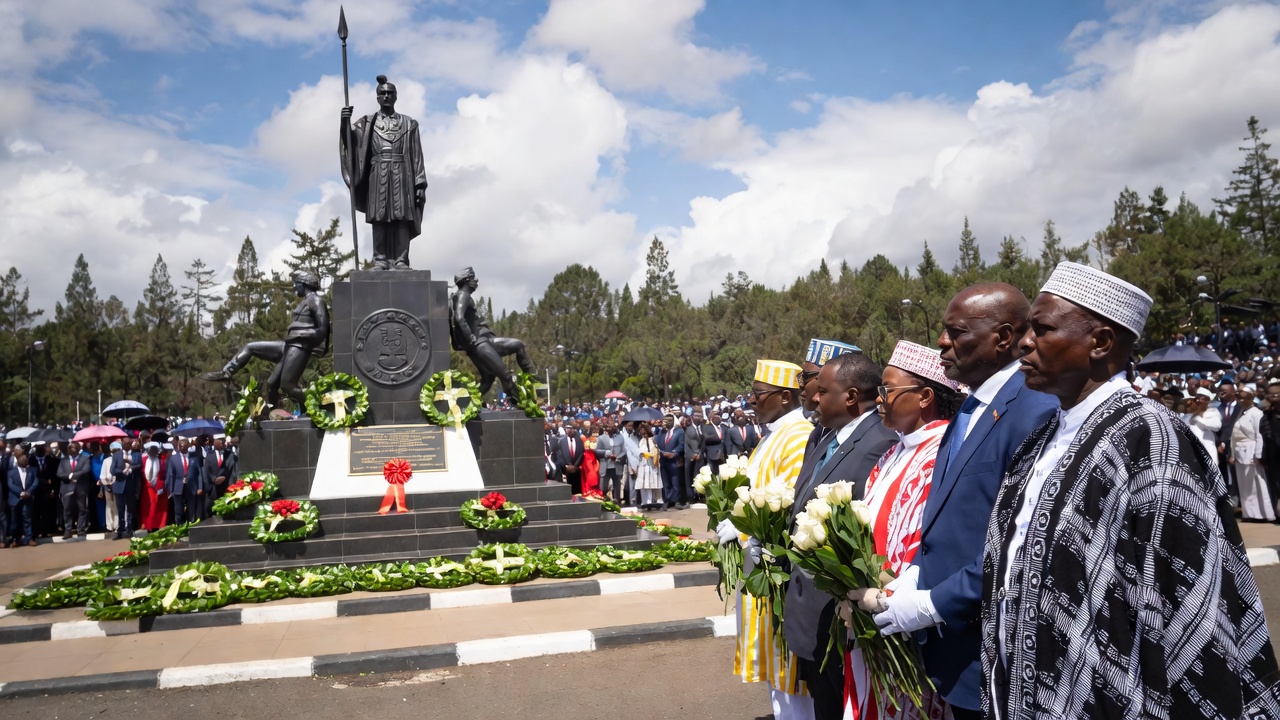
The main celebration takes place at the National Heroes’ Mausoleum in Remera, Kigali, next to Amahoro Stadium. Key elements include:
- Wreath-laying ceremony by President Paul Kagame and First Lady Jeannette Kagame
- Moment of silence in honor of fallen heroes
- Attendance by senior government officials, diplomatic corps, and families of heroes
- National broadcast on television and radio
Heroes Week Activities
The week preceding February 1st (typically January 21-31) features:
| Activity | Description |
|---|---|
| Community discussions | Village-level gatherings to discuss heroism and national values |
| School programs | Educational sessions about Rwanda’s heroes |
| Sports events | Soccer matches and athletic competitions |
| Cultural performances | Songs, dances, and poems celebrating heroism |
| Media coverage | Documentaries and interviews with survivors and families |
Grassroots Celebrations
Unlike many national holidays, Heroes Day celebrations extend to the grassroots level. Every village and community organizes:
- Local ceremonies honoring regional heroes
- Storytelling sessions about acts of bravery
- Youth programs promoting patriotism
- Community service activities
What Are Rwanda’s National Orders and Medals of Honor?
Beyond the three hero categories, Rwanda also awards National Orders and Medals of Honor to recognize exceptional service:
| Award | Name (Kinyarwanda) | Criteria |
|---|---|---|
| National Liberation Medal | Uruti | Role in liberating the country |
| Campaign Against Genocide Medal | Umurinzi | Role in fighting/stopping the 1994 genocide |
| National Order of Honor | Agaciro | Political, economic, or welfare development leadership |
| National Order of Outstanding Friendship | Igihango | Promoting Rwanda’s international cooperation |
| National Order of Performance | Indashyikirwa | Innovations boosting national development |
| National Order of Culture | Indangamirwa | Promoting Rwandan culture |
| National Order of Bravery | Indengabaganizi | Life-risking sacrifice to save others |
How Can Visitors Experience Rwanda’s Heroism Legacy? Tourism Guide
National Heroes Mausoleum
Location: Remera Sector, Gasabo District, Kigali
Hours: Monday-Sunday, 9:00 AM – 5:00 PM
Admission: Free
How to Visit: Apply through Irembo for a free visit permit (processed within 1 day)
The mausoleum features:
- Upper section: Tombs of Imanzi heroes (Rwigema and Unknown Soldier)
- Lower section: Symbolic tombs of Imena heroes
- Central symbol: A figure pouring “water of life”—representing sacrifice for others
- Green, serene grounds for contemplation
Kigali Genocide Memorial
Location: Gisozi, Kigali
Hours: 9:00 AM – 5:00 PM (last entry 4:00 PM), 7 days a week
Admission: Free (donations encouraged)
Website: kgm.rw
The memorial is the final resting place for over 250,000 genocide victims and includes:
- Comprehensive exhibitions on Rwandan history
- The Wall of Names
- Memorial gardens including the Garden of Unity
- The Flame of Remembrance
- Children’s Memorial
Nyange Secondary School Memorial
Location: Ngororero District, Western Province
Significance: Site of the 1997 attack and Nyange Heroes Museum
The memorial includes:
- Exhibition room in the former Senior Six classroom
- Single-person tomb of Chantal Mujawamahoro
- Educational center promoting heroism values
Félicité Niyitegeka Heritage of Humanity Mausoleum
Location: Gisenyi Sector, Rubavu District
Significance: Former home and workplace of the heroic nun
This recently established site preserves Niyitegeka’s legacy and includes the compound where she sheltered refugees.
King’s Palace Museum
Location: Nyanza District, Southern Province
Significance: Last residence of King Mutara III Rudahigwa
Visitors can explore the traditional royal palace and learn about Rwanda’s monarchical history.
The Cultural Significance of Heroism in Rwandan Society
Heroism in Rwanda is not merely a concept reserved for history books—it’s a living value deeply woven into the fabric of everyday life. Understanding this cultural dimension helps explain why Heroes Day carries such profound meaning.
Traditional Concepts of Heroism
In pre-colonial Rwanda, heroism was expressed through various cultural practices:
| Concept | Meaning | Modern Application |
|---|---|---|
| Ubupfura | Integrity and nobility of character | Expected of all leaders |
| Ubwenge | Wisdom and intelligence | Valued in decision-making |
| Ubutwari | Bravery and courage | Central to hero recognition |
| Ubuntu | Humanity toward others | Foundation of reconciliation |
These values formed the bedrock of Rwandan identity for centuries. Colonial rule attempted to destroy these traditions, but modern Rwanda has deliberately revived them as part of its healing process.
Homegrown Solutions and National Values
Rwanda’s post-genocide reconstruction has been built on homegrown solutions that draw from traditional values:
- Gacaca courts: Community-based justice system that processed over 1.2 million genocide cases
- Umuganda: Monthly community service (last Saturday of each month) that builds national unity
- Ingando: Solidarity camps for civic education
- Ndi Umunyarwanda: “I am Rwandan” program promoting national identity over ethnic division
These initiatives all connect to the culture of heroism celebrated on February 1st. By honoring heroes who exemplified these values, Rwanda reinforces their importance for current and future generations.
The Role of Youth in Preserving Heroism
Young Rwandans—most of whom were born after the genocide—play a crucial role in preserving the legacy of national heroes:
- Student clubs dedicated to heroism education
- Annual essay competitions about national heroes
- Community service projects inspired by heroic values
- Social media campaigns sharing hero stories
- Youth pilgrimages to memorial sites
The Association Komeza Ubutwari, formed by Nyange school attack survivors, actively engages with students across Rwanda, sharing firsthand testimony and inspiring the next generation to embody heroic values.
Practical Travel Tips for Visiting Rwanda During Heroes Day
If you’re planning to experience Heroes Day celebrations firsthand, here’s everything you need to know:
Best Time to Visit
Late January through early February offers the ideal window:
- Heroes Week activities run from approximately January 21-31
- Main celebrations occur on February 1st
- Weather is typically dry and pleasant
What to Expect During Celebrations
| Activity | Location | Public Access |
|---|---|---|
| Official wreath-laying | National Heroes Mausoleum | Limited (VIP event, but grounds open) |
| Community celebrations | Villages nationwide | Fully open and welcoming |
| Cultural performances | Various venues | Often free or low-cost |
| Memorial visits | All memorial sites | Free, enhanced programming |
Etiquette and Respectful Behavior
When visiting memorial sites or attending celebrations:
- Dress modestly (shoulders and knees covered)
- Maintain silence in memorial spaces
- Ask permission before photographing people
- Do not use flash photography inside museums
- Show respect at burial sites
Essential Kinyarwanda Phrases for Heroes Day
| English | Kinyarwanda | Pronunciation |
|---|---|---|
| Happy Heroes Day | Umunsi w’Intwari muhire | Oo-moon-see win-twa-ree moo-hee-ray |
| We are all Rwandans | Twese turi Abanyarwanda | Tway-say too-ree Ah-banya-rwan-da |
| Thank you | Murakoze | Moo-ra-ko-zay |
| Hero | Intwari | Een-twa-ree |
| Peace | Amahoro | Ah-ma-ho-ro |
Recommended Itinerary for a 3-Day Heroes Day Visit
Day 1: Kigali
- Morning: Kigali Genocide Memorial
- Afternoon: National Heroes Mausoleum
- Evening: Cultural dinner at a local restaurant
Day 2: February 1st – Heroes Day
- Morning: Observe local village celebrations
- Midday: Watch national broadcast of official ceremony
- Afternoon: Visit Camp Kigali Memorial (Belgian peacekeepers site)
- Evening: Attend cultural performances
Day 3: Western Province
- Full day trip to Nyange Secondary School Memorial
- Stop at Félicité Niyitegeka Museum in Rubavu
- Optional: Lake Kivu sunset
What Can We Learn From Rwanda’s Heroes? Lessons for the World
Unity Over Division
The Nyange students’ refusal to separate along ethnic lines offers a powerful lesson: identity politics can be resisted. In a world increasingly divided by ethnicity, religion, and nationality, their declaration “We are all Rwandans” reminds us of our shared humanity.
Moral Courage in Crisis
Félicité Niyitegeka and Prime Minister Uwilingiyimana demonstrate that moral courage means standing firm even when it costs everything. Both women had opportunities to save themselves but chose solidarity with the vulnerable.
Reform Through Leadership
King Mutara III Rudahigwa shows that meaningful reform is possible even under oppressive circumstances. Despite colonial constraints, he abolished exploitative systems and championed education for all.
The Cost of Liberation
Major General Fred Rwigema’s sacrifice reminds us that freedom is never free. His willingness to lead from the front, ultimately giving his life on the second day of the liberation war, exemplifies servant leadership.
Collective Heroism
The Unknown Soldier represents a profound truth: most heroes are unnamed. The liberation of Rwanda required the sacrifice of thousands whose names we will never know.
How Is Rwanda Preserving Its Heroism Legacy for Future Generations?
Educational Integration
Rwandan schools incorporate heroism education into the national curriculum. Students learn about:
- The stories of national heroes
- Values of patriotism and sacrifice
- The importance of unity and reconciliation
- How to apply heroic principles in daily life
Digital Preservation
Young Rwandans are leveraging technology to preserve heroes’ stories through:
- Social media campaigns highlighting historical heroes
- Online educational platforms sharing hero narratives
- Interactive digital archives preserving historical records
- Documentary films and video testimonies
CHENO’s Ongoing Research
The Chancellery continues researching potential new heroes, ensuring that:
- Contemporary acts of heroism receive recognition
- Historical heroes yet to be identified are honored
- The culture of heroism remains vibrant and relevant
Annual Commemorations
Beyond February 1st, Rwanda maintains a robust calendar of remembrance:
- April 7 – July 4: Kwibuka (remembrance) period for the genocide
- July 4: Liberation Day
- October 1: National Patriotism Day
Frequently Asked Questions About Rwanda’s Heroes Day
Why is Heroes Day on February 1st in Rwanda?
February 1st was selected to provide Rwandans with a dedicated day—separate from other commemorations like Liberation Day (July 4th) or the genocide remembrance period (April)—to specifically honor national heroes and their values.
Can foreigners become Rwandan national heroes?
Yes. According to CHENO, both Rwandan citizens and foreigners who distinguished themselves through heroism can be recognized. National Orders have been awarded to non-Rwandans, including Ghanaian generals who served with UNAMIR during the genocide.
How are new heroes selected in Rwanda?
Proposed hero candidates must demonstrate:
- Proven integrity
- Patriotism
- Sacrifice (putting public interest above self)
- Vision
- Proven courage
CHENO conducts thorough research on all candidates before submitting names for Cabinet approval.
Is Rwanda safe to visit for Heroes Day?
Yes. Rwanda is widely regarded as one of Africa’s safest countries, with a low crime rate and excellent infrastructure. The celebrations are peaceful and welcoming to international visitors.
Are there entrance fees for memorial sites?
The National Heroes Mausoleum and Kigali Genocide Memorial offer free admission, though donations are encouraged at the genocide memorial.
Conclusion: Why Rwanda’s Heroes Matter Beyond Its Borders
Rwanda’s National Heroes Day is more than a public holiday—it’s a statement of values, a commitment to unity, and a promise to future generations.
In a world struggling with division, conflict, and moral relativism, the stories of Rwanda’s heroes offer powerful alternatives:
- King Mutara III Rudahigwa shows that leaders can prioritize their people over colonial masters
- Agathe Uwilingiyimana demonstrates that women can lead with courage and conviction
- Félicité Niyitegeka proves that ethnicity need not determine whom we protect
- The Nyange students reveal that young people can choose unity over division
- Fred Rwigema and the Unknown Soldier remind us that some causes are worth dying for
As Rwanda prepares to celebrate its 32nd National Heroes Day on February 1, 2026, under the stewardship of CHENO and with the participation of millions of Rwandans, the nation continues to build on its heroic foundation.
Whether you’re planning to visit Rwanda, studying African history, or simply seeking inspiration, the stories of these extraordinary individuals offer timeless lessons in courage, sacrifice, and the enduring power of unity.
Happy Heroes Day to all Rwandans—at home and around the world.
Have you visited Rwanda’s memorial sites or participated in Heroes Day celebrations? Share your experiences in the comments below.
References and Further Reading
For more information about Rwanda’s heroes and history: