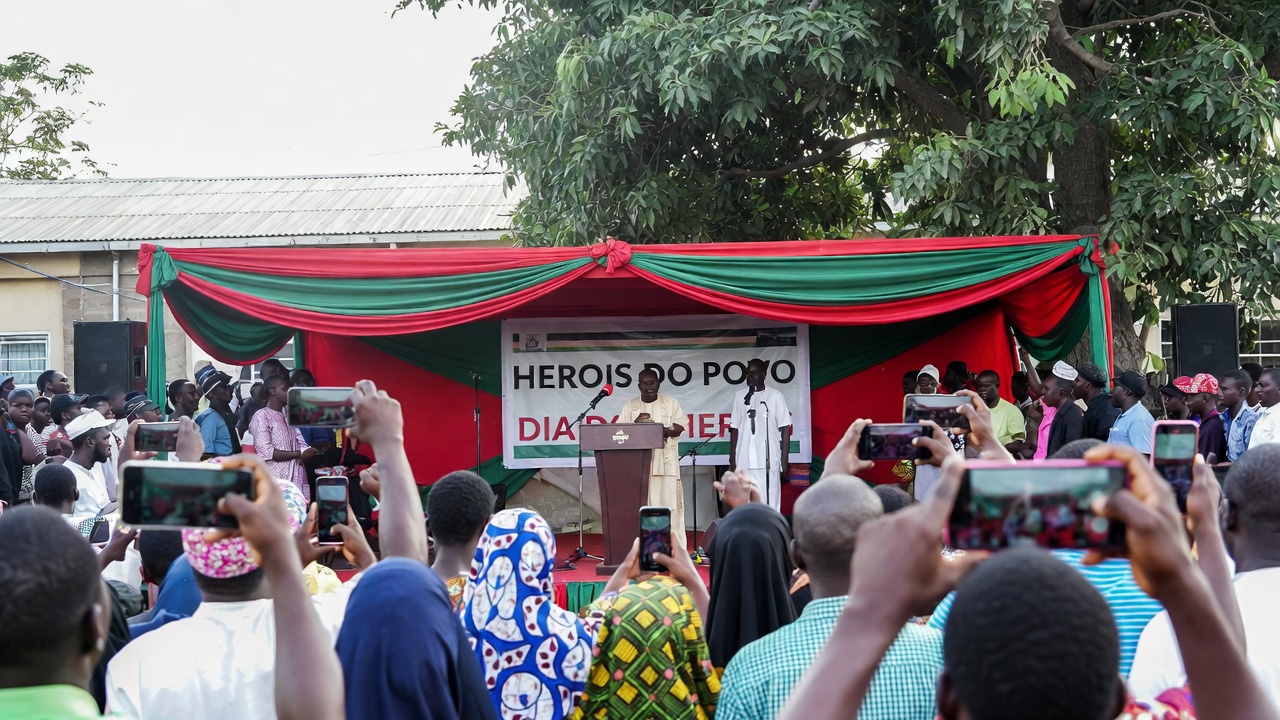
Every year on February 3, the Republic of Mozambique comes to a standstill. Schools close. Businesses shut their doors. Families gather around radios and television sets. In the capital city of Maputo, dignitaries and ordinary citizens alike converge on a star-shaped monument along Avenida Acordos de Lusaka. They come to remember. They come to honor. They come to celebrate the Dia dos Heróis Moçambicanos — Mozambican Heroes’ Day.
At the heart of this solemn national holiday stands one name above all others: Eduardo Chivambo Mondlane. He was a shepherd boy who became a scholar. A scholar who became a revolutionary. A revolutionary who became the father of a nation — even though he never lived to see that nation born.
But who was Eduardo Mondlane, really? And why does his death — not his birthday — define a national holiday more than half a century later?
This is his story. And through his story, you will understand why every February, 33 million Mozambicans pause to say: A luta continua — the struggle continues.
Why Is February 3 Mozambique Heroes’ Day? The Origin of the National Holiday
Mozambique Heroes’ Day, known locally as Dia dos Heróis Moçambicanos, falls on February 3 each year. It is a public holiday across the entire country. The date is not random. It marks the exact day in 1969 when Eduardo Mondlane — the founder and first president of the Mozambique Liberation Front (FRELIMO) — was killed by a parcel bomb in Dar es Salaam, Tanzania.
The choice to anchor the holiday to Mondlane’s death rather than his birth carries deep meaning. In Mozambique’s national consciousness, his sacrifice represents the sacrifice of every fighter, teacher, nurse, and farmer who gave their life for independence. His death became the ultimate symbol of what colonial oppression would do to silence the voices of freedom. And his legacy became the foundation upon which a free Mozambique was built.
In 2026, Heroes’ Day falls on Tuesday, February 3, marking the 57th anniversary of Mondlane’s assassination. This year carries special weight. Mozambique celebrated its 50th anniversary of independence in June 2025, and the country continues to grapple with a deeply polarized political landscape following the contested October 2024 presidential elections.
As President Daniel Chapo stated at the 2025 Heroes’ Day ceremony at Heroes’ Square in Maputo: “In this great march of our people, we forged principles like national unity, which remains and will always be the secret to our success.”
The holiday serves as both a moment of reflection and a reminder. Mozambique’s independence was not handed over freely. It was fought for — with blood, with ideas, and with sacrifice.
Eduardo Mondlane Early Life: From Shepherd Boy to the Only Educated Son of a Chief
Eduardo Chivambo Mondlane was born on June 20, 1920, in the village of N’wajahani, in the district of Mandlakazi, in the Gaza Province of what was then called Portuguese East Africa — modern-day Mozambique. He was the fourth of sixteen sons of a chief of the Bantu-speaking Tsonga people.
His family was prominent in their community, but their world was one of rural, traditional African life. As Mondlane himself later recalled:
“My parents belonged to old Africa without real contact with the fashions of the Western world; they did not know Christianity, they could neither read nor write; they venerated and worshiped the ancestors… My childhood was spent in the pastures with many shepherds who were my age.” (Mondlane, qtd. in Dictionary of African Christian Biography)
Until the age of about ten, young Eduardo lived the same life as any other boy in his village. He tended his family’s cattle. He learned the rhythms of the land and the social hierarchies of pastoral life. His name “Chivambo” was given to him by village elders who believed the spirit of the great chief Chivambo Mondlane had been reborn in this child.
But Eduardo was different from his brothers. He was the only one of all sixteen sons to receive even a primary education. According to the Encyclopedia of World Biography, Mondlane later credited his “very determined and persistent” mother for pushing him toward schooling. She told him to go to school so he could “understand the witchcraft of the white man” and be able to fight against colonial rule.
That maternal advice changed the course of Mozambican history.
How Eduardo Mondlane Pursued Education Under Colonial Rule in Mozambique
Getting an education in colonial Mozambique was extraordinarily difficult for Africans. The Portuguese colonial school system was built almost exclusively for European settlers. As late as the mid-1950s, fewer than 10 out of nearly 6 million Africans in Mozambique attended secondary school. Literacy rates among the indigenous population hovered between 95 and 98 percent illiteracy.
Against these staggering odds, Mondlane found his way into a Swiss Presbyterian mission school near Manjacaze. He later moved to an American Methodist agricultural school, where he spent two years teaching African peasants dry-farming techniques. He then secured a scholarship to attend a Presbyterian secondary school in the Transvaal region of South Africa — at Lemana College.
In 1948, Mondlane achieved something remarkable. He was admitted to Witwatersrand University in Johannesburg, becoming the first African from Mozambique to attend a South African university. But his time there was brutally short. The new apartheid government of South Africa declared him an “unwanted foreign native” and revoked his student permit in 1949.
Undeterred, Mondlane traveled to Lisbon, Portugal, in 1950 to attend the University of Lisbon. There, he encountered the same racial discrimination and colonial attitudes that pervaded every corner of the Portuguese empire. He left for the United States after Protestant missionaries helped arrange a scholarship from the Phelps-Stokes Fund in New York.
He enrolled at Oberlin College in Ohio in 1951 as a junior. At 32 years old, this tall, charismatic Mozambican quickly made a strong impression on the small liberal arts campus. He graduated in 1953 with a Bachelor of Arts in sociology and anthropology.
His academic journey did not stop there. Mondlane went on to earn a Master’s degree from Northwestern University and then a doctorate (Ph.D.) from Northwestern as well, completing his dissertation under the supervision of the renowned anthropologist Melville Herskovits. He also spent a year as a visiting scholar at Harvard University.
Here is a summary of Mondlane’s academic path:
| Year | Institution | Location | Achievement |
|---|---|---|---|
| 1948–1949 | Witwatersrand University | Johannesburg, South Africa | Expelled under apartheid |
| 1950 | University of Lisbon | Lisbon, Portugal | Attended briefly |
| 1951–1953 | Oberlin College | Oberlin, Ohio, USA | B.A. in Sociology & Anthropology |
| 1953–1956 | Northwestern University | Evanston, Illinois, USA | M.A. and Ph.D. in Anthropology |
| 1956–1957 | Harvard University | Cambridge, Massachusetts, USA | Visiting Scholar |
By the time he completed his studies, Eduardo Mondlane had become Mozambique’s most educated citizen — and arguably one of the most highly educated Africans on the continent at the time.
Eduardo Mondlane at the United Nations and Syracuse University: The Scholar Turned Activist
After his year at Harvard, Mondlane joined the United Nations Secretariat in 1957 as a research officer in the Trusteeship Department. This position allowed him to travel across Africa, studying the political and social conditions of trust territories — colonies in transition toward self-governance.
During this period, he married Janet Rae Johnson, a white American woman from Indiana. They had met at a Christian summer camp years earlier and maintained their relationship despite fierce opposition from her parents. Their interracial marriage, rare and controversial in that era, would become a symbol of Mondlane’s belief in human equality beyond racial boundaries. Together, they had three children: Eduardo Jr., Chude, and Nyeleti.
In 1961, Mondlane took a momentous trip back to Mozambique while still working for the UN. Thousands of Mozambicans greeted him with enthusiasm. They saw in him the leadership their independence movement desperately needed. As the Oberlin College alumni profile recounts, during this visit Mondlane recognized that his destiny lay not in classrooms or UN conference rooms, but in the liberation of his people.
Because UN employees are prohibited from direct political engagement, Mondlane resigned from his position. He accepted a teaching post at Syracuse University in New York as an assistant professor of anthropology, where he helped develop the East African Studies Program.
But academia was only a temporary station. Mondlane had already decided to devote the rest of his life to something far more dangerous and far more important.
How FRELIMO Was Founded: Eduardo Mondlane and the Birth of the Mozambique Liberation Front
By the early 1960s, several small exile groups of Mozambican nationalists were operating from neighboring countries — mostly from Tanganyika (present-day Tanzania). These organizations included the Mozambican African National Union (MANU), the National Democratic Union of Mozambique (UDENAMO), and the National African Union of Independent Mozambique (UNAMI).
Each group was limited by internal divisions, scarce resources, and competing leadership claims. Separately, they had little chance against the formidable apparatus of Portuguese colonial rule. African leaders like Julius Nyerere of Tanganyika and Kwame Nkrumah of Ghana urged the Mozambican exiles to unite.
On June 25, 1962, representatives from these three organizations gathered in Dar es Salaam, Tanganyika, and agreed to merge. They formed the Frente de Libertação de Moçambique — the Mozambique Liberation Front, better known by its acronym FRELIMO.
Eduardo Mondlane was elected as its first president at the founding congress that September. He was the clear choice. His academic credentials gave him international credibility. His personal warmth and openness made him effective at bridging ethnic and ideological divides within the movement. And his extensive network of contacts — from American universities to African heads of state to European solidarity groups — gave FRELIMO access to the diplomatic and material support it needed.
Mondlane returned to Syracuse to finish his teaching commitments. In early 1963, he and his family moved permanently to Dar es Salaam. There, the real work of revolution began.
Key facts about FRELIMO’s founding:
- Founded: June 25, 1962 (this date is now Mozambique’s Independence Day)
- Location: Dar es Salaam, Tanganyika (Tanzania)
- Founding groups: MANU, UDENAMO, UNAMI
- First president: Eduardo Mondlane
- First vice-president: Uria Simango
- Headquarters: Dar es Salaam, Tanzania (could not operate inside Mozambique)
- Main supporters: Soviet Union, China, Tanzania, Algeria, Egypt
The Mozambican War of Independence: How FRELIMO Fought Portuguese Colonial Rule
For more than 470 years, Portugal had controlled Mozambique. Unlike other European colonial powers that began granting independence to their African territories after World War II, Portugal under the authoritarian Estado Novo regime of António de Oliveira Salazar insisted that Mozambique was not a colony at all — it was an “overseas province” of the mother country.
FRELIMO initially tried diplomatic channels to secure independence. When those efforts failed, the movement turned to armed resistance.
On September 25, 1964, FRELIMO launched its armed struggle against the Portuguese colonial government in northern Mozambique. This date is now commemorated as Armed Forces Day in Mozambique. The guerrilla campaign began in the northern provinces of Cabo Delgado and Niassa, where Portuguese control was weakest and FRELIMO had the strongest support among the local Makonde population.
Portugal responded by deploying up to 70,000 troops to Mozambique. From a strictly military standpoint, the Portuguese army held the upper hand for most of the conflict. But FRELIMO’s guerrilla strategy — modeled in part on successful anti-colonial campaigns in Algeria and Indochina — proved effective at wearing down the colonial forces.
Under Mondlane’s leadership, FRELIMO did not just fight a military war. The movement built an alternative society in the areas it controlled. In the “liberated zones” of northern Mozambique, FRELIMO established:
- Schools for children and adults
- Health clinics staffed by FRELIMO-trained medics
- Agricultural cooperatives to grow food
- Administrative structures for governance
- Programs promoting women’s participation in both military and civilian roles
For Mondlane, the fight was never just about pushing the Portuguese out. It was about creating a new kind of Mozambique — one built on equality, education, and dignity. As he stated in his book The Struggle for Mozambique, published just before his death: the goal was not merely political independence, but a total transformation of Mozambican society.
The Assassination of Eduardo Mondlane: A Parcel Bomb in Dar es Salaam on February 3, 1969
By 1968, FRELIMO had made significant military progress. The movement controlled large stretches of the northern countryside. Its second congress, held in July 1968 in the liberated territories of Niassa province, re-elected Mondlane as president by an overwhelming majority.
But success brought enemies — from both outside and within.
The Portuguese secret police, known as PIDE (Polícia Internacional e de Defesa do Estado), had long targeted Mondlane. Within FRELIMO itself, the organization was strained by ethnic tensions, ideological disagreements, and rivalries among ambitious leaders. Some members from the northern Maconde community questioned Mondlane’s southerner background and his cosmopolitan lifestyle.
On the morning of February 3, 1969, Eduardo Mondlane was at the home of an American friend, Betty King, in Dar es Salaam, Tanzania. A package arrived at the house. It appeared to contain a book. When Mondlane opened it, a concealed bomb detonated.
Eduardo Chivambo Mondlane was killed instantly. He was 48 years old.
The identity of the assassins has never been definitively established. Multiple theories exist. The most commonly cited suspects include agents of the Portuguese PIDE — specifically, a former agent named Casimiro Monteiro has been identified as the person who allegedly planted the bomb. But internal FRELIMO rivals, Tanzanian political figures, and the shadowy Aginter Press (a covert Portuguese intelligence network) have also been implicated at various times.
FRELIMO officially blamed Portuguese colonialism and imperialism. The investigation remained murky, entangled in the espionage and proxy conflicts of the Cold War era.
At Mondlane’s funeral, his Oberlin College classmate and friend, Reverend Edward Hawley, delivered the eulogy. He said Mondlane “laid down his life for the truth that man was made for dignity and self-determination.”
What Happened After Eduardo Mondlane’s Death: From Samora Machel to Independence in 1975
Mondlane’s assassination was a devastating blow to FRELIMO. But it did not destroy the movement. After a brief leadership crisis, Samora Machel — FRELIMO’s military commander — took over as president of the organization in 1970.
Machel was a pragmatic and charismatic leader in his own right. Under his command, FRELIMO’s guerrilla forces pushed deeper into Mozambique. By the early 1970s, FRELIMO’s roughly 7,000 guerrilla fighters had wrested control of significant portions of central and northern Mozambique from the Portuguese authorities.
The decisive turning point came not on Mozambican soil, but in Lisbon. On April 25, 1974, a peaceful military coup known as the Carnation Revolution overthrew Portugal’s authoritarian government. The new Portuguese government had no appetite to continue fighting expensive colonial wars in Africa.
Negotiations between FRELIMO and Portugal culminated in the Lusaka Accord, signed on September 7, 1974. The agreement called for a complete transfer of power to FRELIMO — without elections.
On June 25, 1975, Mozambique officially became an independent nation. Samora Machel became its first president. The flag was raised at a ceremony in Machava Stadium on the outskirts of what had been Lourenço Marques — soon to be renamed Maputo.
Eduardo Mondlane had been dead for six years. He never saw the nation he helped to create. But every Mozambican who was there that day knew they were living his dream.
Key dates in Mozambique’s path to independence:
| Date | Event |
|---|---|
| June 25, 1962 | FRELIMO founded in Dar es Salaam |
| September 25, 1964 | Armed struggle against Portugal begins |
| February 3, 1969 | Eduardo Mondlane assassinated |
| July 1968 | Second FRELIMO Congress re-elects Mondlane |
| 1970 | Samora Machel becomes FRELIMO president |
| April 25, 1974 | Carnation Revolution in Portugal |
| September 7, 1974 | Lusaka Accord signed |
| June 25, 1975 | Mozambique gains independence |
Eduardo Mondlane’s Legacy in Modern Mozambique: University, Currency, and Streets
Mondlane’s influence on Mozambique did not end with his death. His name is woven into the fabric of daily life across the country.
Eduardo Mondlane University — The largest and most prestigious university in Mozambique was renamed in Mondlane’s honor in 1976. Originally founded by the Portuguese as the Universidade de Lourenço Marques, the institution was given the name Universidade Eduardo Mondlane (UEM). Located in Maputo, it remains the country’s leading center for higher education and research. Today, UEM serves tens of thousands of students and is a symbol of the educational transformation Mondlane dreamed of.
National Currency — The Bank of Mozambique issued a 100 Meticais banknote in 1983 featuring Mondlane’s portrait on the front. The note also depicted the flag-raising ceremony at Machava Stadium during the 1975 independence celebrations. Mondlane continues to appear on Mozambican currency to this day, a constant reminder in every wallet and marketplace.
Streets, Schools, and Public Spaces — Across Mozambique, streets bear his name. Schools are named after him. In Maputo alone, Avenida Eduardo Mondlane is one of the city’s main thoroughfares. The same pattern repeats in cities and towns throughout the country.
The Oberlin College Scholarship — In the United States, Oberlin College in Ohio established the Eduardo Chivambo Mondlane Scholarship, available to citizens of sub-Saharan African countries applying to the college. It continues the legacy of international educational access that shaped Mondlane’s own life.
Syracuse University Lecture Series — Syracuse University, where Mondlane once taught, hosts the Eduardo Mondlane Brown Bag Lecture Series through its Africa Initiative. The series invites scholars from around the world to engage in Africana studies.
Even Mondlane’s family carried his legacy forward. His wife, Janet Rae Mondlane, served in various government positions in independent Mozambique. His daughter, Nyeleti Mondlane, became Minister of Youth and Sports and later served as Minister of Gender, Children, and Social Action.
How Is Mozambique Heroes’ Day Celebrated? Traditions, Parades, and Food
Heroes’ Day is a full public holiday in Mozambique. Here is what happens on February 3 throughout the country:
Official Ceremonies at Heroes’ Square (Praça dos Heróis Moçambicanos)
The main event takes place in Maputo at Praça dos Heróis Moçambicanos — Heroes’ Square. This remarkable monument was designed by Mozambican architect António Forjaz. Its star-shaped structure contains the remains of Mondlane, Samora Machel, and other national heroes. Beside it stretches a 95-meter mural created by Mozambican artists, depicting the centuries-long struggle for independence.
The president of Mozambique presides over the central ceremony. Speeches are delivered. Wreaths and flowers are laid at the tombs. The president and other officials pay tribute to Mondlane and all who died in the independence struggle.
In 2025, President Daniel Chapo addressed the nation from Heroes’ Square, calling for economic independence, dialogue across political divides, and an end to corruption and nepotism. The ceremony marked the 56th anniversary of Mondlane’s death.
Military Parades and Political Speeches
Military parades are a common feature of Heroes’ Day. Soldiers march through the streets. Politicians from various parties deliver addresses — though the day has traditionally been dominated by FRELIMO, the ruling party, which traces its origins directly to Mondlane’s liberation movement.
School and Community Activities
Schools across the country organize educational programs in the days surrounding Heroes’ Day. Students learn about Mondlane’s life, the independence war, and the meaning of sacrifice for national freedom. Community organizations hold discussion groups and remembrance events.
Family Gatherings and Traditional Food
Beyond the official ceremonies, Heroes’ Day is also a time for family. Because it is a public holiday, many Mozambicans use the day to gather with relatives and share meals. Traditional dishes commonly enjoyed include:
- Xima (also spelled nsima or ugali) — a thick maize porridge that is a staple of the Mozambican diet
- Matapa — a dish made from cassava leaves, ground peanuts, and coconut milk, often served with prawns or crab
- Piri-piri chicken or prawns — Mozambique is famous for its fiery piri-piri chili preparations, a legacy of the country’s Portuguese and Indian Ocean culinary heritage
- Pão — fresh bread, a common accompaniment inherited from Portuguese baking traditions
Cultural Performances
Traditional music and dance are part of the celebration. The Mapiko dance, performed by the Makonde people of northern Mozambique, is sometimes featured during national festivities. This masked dance carries deep spiritual and cultural meaning and represents a living connection to the communities that first supported FRELIMO’s guerrilla struggle.
Heroes’ Day 2026: What to Expect on the 57th Anniversary of Eduardo Mondlane’s Death
The 2026 Heroes’ Day is notable for several reasons. It follows a turbulent period in Mozambican politics. The October 2024 general elections were heavily disputed. Opposition candidate Venâncio Mondlane (no relation to Eduardo Mondlane) challenged the results, claiming the vote was rigged in favor of FRELIMO’s Daniel Chapo. International observers, including the EU election mission, raised concerns about irregularities.
Months of protest followed the election. According to reports from the civil society group Plataforma Decide, more than 300 people were killed in clashes between protesters and security forces in the months after the vote. Chapo was ultimately sworn in as president on January 15, 2025.
At the 2025 Heroes’ Day ceremony, Venâncio Mondlane was conspicuously absent. He instead issued a decree on social media declaring that Heroes’ Day should be moved from February 3 to March 18. According to AIM News, Venâncio Mondlane proposed a new list of national heroes, with Eduardo Mondlane at the top, followed by Samora Machel. The move was largely symbolic — the official Heroes’ Day ceremony went ahead as planned.
By early 2026, Mozambique is working to stabilize. President Chapo launched an inclusive national dialogue in September 2025, bringing together political parties, civil society, and religious organizations. The extractive industries — especially natural gas — remain a beacon of economic potential but are challenged by political instability and the ongoing insurgency in Cabo Delgado province.
For 2026, visitors and Mozambicans alike can expect the familiar rhythm of Heroes’ Day: the presidential address at Heroes’ Square, military parades, educational programs, family gatherings, and quiet reflection.
The 57th anniversary is also a moment to ask larger questions. Whose heroes are they? Who gets to define heroism? And how does a young nation reconcile the ideals of its founders with the messy realities of 21st-century governance?
These are the questions that Eduardo Mondlane himself would have embraced. He was, after all, a scholar first — a man who believed deeply that ideas mattered, that education was freedom, and that dialogue was the beginning of every revolution.
Eduardo Mondlane’s Book The Struggle for Mozambique: A Must-Read for Understanding the Country
Shortly before his death, Eduardo Mondlane completed what would become his most important intellectual contribution: a book titled The Struggle for Mozambique, published in 1969 by Penguin Books.
The book is a powerful combination of personal memoir, political analysis, and historical document. In it, Mondlane provides a detailed account of Portuguese colonial exploitation in Mozambique. He documents forced labor systems, educational disparities, racial discrimination, and the systematic repression of African political expression.
He also chronicles the formation of FRELIMO, the outbreak of the armed struggle in September 1964, and the efforts to build “liberated zones” — areas under FRELIMO control where cooperatives, schools, and health services operated independently of the colonial government.
The Struggle for Mozambique remains essential reading for anyone seeking to understand Mozambique’s history. It is widely available in libraries and through online booksellers. For travelers visiting Mozambique, reading this book before arriving provides invaluable context for understanding the monuments, street names, and national holidays that define the country.
Visiting Maputo for Heroes’ Day: A Travel Guide for Cultural Tourists in Mozambique
If you are planning a trip to Mozambique around February 3, here is what you need to know about visiting during Heroes’ Day.
Getting There
Maputo is served by Maputo International Airport (MPM), with direct flights from Johannesburg, Nairobi, Addis Ababa, Lisbon, and other major cities. The city is also accessible by road from South Africa and Eswatini.
Where to Stay
Maputo offers a range of accommodations, from luxury hotels like the historic Serena Polana Hotel to mid-range guesthouses. February falls within the wet season, so hotel prices tend to be lower than peak season. Budget-conscious travelers can find good deals during this period.
What to See
For the culturally curious traveler, Maputo offers a wealth of historical sites:
- Praça dos Heróis Moçambicanos (Heroes’ Square) — The star-shaped monument and 95-meter mural. Normally, the square is only open to the public on national holidays like Heroes’ Day and Independence Day (June 25).
- Fortaleza de Maputo — The city’s oldest building, a Portuguese fortress built in 1780, now serving as a colonial history museum.
- Maputo Central Train Station — A beautiful Beaux-Arts building designed by an associate of Gustave Eiffel.
- National Art Museum (Museu Nacional de Arte) — Home to works by renowned Mozambican artists.
- FEIMA Craft Market — An open-air market where local artisans sell traditional crafts, carvings, and textiles.
- Tunduru Botanical Gardens — A green oasis in the center of the city.
What to Eat
Mozambican cuisine is a delicious fusion of African, Portuguese, Indian, and Arab flavors. While in Maputo, do not miss:
- Prawns piri-piri — Maputo is legendary for its giant prawns prepared with the local chili sauce
- Matapa — Cassava leaf stew with peanuts and coconut
- Caril de caranguejo — Crab curry with coconut milk
- Cerveja 2M — Mozambique’s beloved national beer, perfect for a warm February afternoon
Safety Considerations for 2026
It is important for travelers to stay informed about the current political situation. While Maputo and the southern provinces are generally safe for tourists, the northern province of Cabo Delgado has experienced an ongoing armed insurgency since 2017. Check your government’s travel advisories before planning your trip. In Maputo itself, the main risks are petty crime (as in any large city), and you should exercise normal urban precautions.
Other National Heroes of Mozambique: Beyond Eduardo Mondlane
While Mondlane is the central figure of Heroes’ Day, the holiday honors all who gave their lives for Mozambique’s freedom. Here are some of the other key figures remembered on February 3:
Samora Machel (1933–1986) — FRELIMO’s military commander who succeeded Mondlane as president of the movement and became Mozambique’s first president after independence in 1975. He died in a plane crash in South Africa in 1986 under circumstances that remain disputed. His remains lie beside Mondlane’s in Heroes’ Square.
Josina Machel (1945–1971) — A prominent woman fighter and political organizer within FRELIMO. She helped establish the Organization of Mozambican Women and advocated for gender equality within the liberation movement. April 7, the anniversary of her death, is observed as Mozambican Women’s Day.
Afonso Dhlakama (1953–2018) — The longtime leader of RENAMO, the main opposition movement. Though he was a political rival of FRELIMO for decades, his role in eventually signing peace agreements has led some Mozambicans to consider him a national hero.
José Craveirinha (1922–2003) — Mozambique’s most celebrated poet and the first African lusophone writer to win the Prémio Camões, the most prestigious literary prize in the Portuguese-speaking world. His poetry gave voice to the suffering and aspirations of the Mozambican people.
The Meaning of Heroes’ Day in 2026: Why Eduardo Mondlane Still Matters for Mozambique’s Future
Why does a man who died in 1969 still matter in 2026?
The answer lies in what Eduardo Mondlane represented — and what he still represents for millions of Mozambicans.
He represented education as liberation. Mondlane’s own journey from shepherd boy to Ph.D. scholar proved that the colonial argument — that Africans were incapable of self-governance — was a lie. Today, Mozambique still struggles with educational access and quality. Only about 60% of the adult population is literate. Eduardo Mondlane University and the many schools bearing his name serve as daily reminders that education was always central to his vision.
He represented unity across division. Mondlane brought together rival ethnic groups, exiled intellectuals, peasant farmers, and international supporters into a single movement. Today, Mozambique’s political divisions — between FRELIMO and the opposition, between north and south, between urban elites and rural poor — echo the same tensions that Mondlane worked to overcome.
He represented the idea that independence must be more than political. Mondlane argued that true liberation meant economic independence, social equality, and the end of all forms of exploitation. In 2026, as Mozambique sits on vast natural gas reserves but continues to rank among the poorest countries in the world, his words carry an uncomfortable resonance.
And he represented personal sacrifice for a collective dream. Mondlane gave up a comfortable academic life in the United States to lead a guerrilla war from exile in Tanzania. He knew the risks. He paid with his life. In a world of cynical politics and self-serving leadership, his example retains a rare moral power.
Frequently Asked Questions About Eduardo Mondlane and Mozambique Heroes’ Day
Who was Eduardo Mondlane? Eduardo Chivambo Mondlane (1920–1969) was a Mozambican scholar, anthropologist, and nationalist leader who founded FRELIMO in 1962 and led the armed struggle for independence from Portugal until his assassination in 1969.
Why is Heroes’ Day on February 3? February 3 marks the date of Eduardo Mondlane’s assassination in 1969 in Dar es Salaam, Tanzania. The date was chosen to symbolize the sacrifice of all who fought for Mozambique’s independence.
Is Heroes’ Day a public holiday in Mozambique? Yes. It is a full public holiday. Schools and most businesses are closed nationwide.
Where is Eduardo Mondlane buried? Mondlane’s remains are interred in the star-shaped monument at Praça dos Heróis Moçambicanos (Heroes’ Square) in Maputo, alongside Samora Machel and other national heroes.
What language is spoken in Mozambique? Portuguese is the official language. However, most Mozambicans also speak indigenous Bantu languages such as Makhuwa, Sena, Tsonga (Changana), and Swahili, depending on the region.
Can tourists visit Heroes’ Square in Maputo? Heroes’ Square is generally only open to the public on national holidays such as Heroes’ Day (February 3) and Independence Day (June 25). Photography may require authorization from the Ministry.
What is FRELIMO? FRELIMO (Frente de Libertação de Moçambique) is the Mozambique Liberation Front, founded in 1962 by Eduardo Mondlane. It led the independence struggle and has been the ruling political party of Mozambique since 1975.
Who is the current president of Mozambique? As of 2026, the president of Mozambique is Daniel Chapo, who was inaugurated on January 15, 2025, following the contested October 2024 elections.
Final Thoughts: Why Every Traveler Should Know Eduardo Mondlane’s Story
Eduardo Mondlane was not a king. He was not a general. He was a boy who herded cattle in the valleys of southern Mozambique. He was a student who fought his way through the closed doors of colonial education. He was a professor who left the comfort of an American university to live in exile and lead a liberation war. And he was a dreamer who believed that a better world was possible — not just for Mozambicans, but for all people living under oppression.
His story is not just a chapter in a history textbook. It is alive. It lives in the names of streets. It lives in the university that bears his name. It lives in the star-shaped monument where his remains rest beside those of the men and women he inspired. And it lives, every February 3, when Mozambique pauses to remember.
If you ever find yourself in Maputo on a warm February morning, standing before the great mural at Heroes’ Square as the president’s voice echoes across the crowd, you will feel something. Not just the weight of history, but the quiet persistence of hope.
A luta continua. Venceremos. — The struggle continues. We will win.
That was Eduardo Mondlane’s promise. And 57 years after his death, Mozambique is still working to keep it.