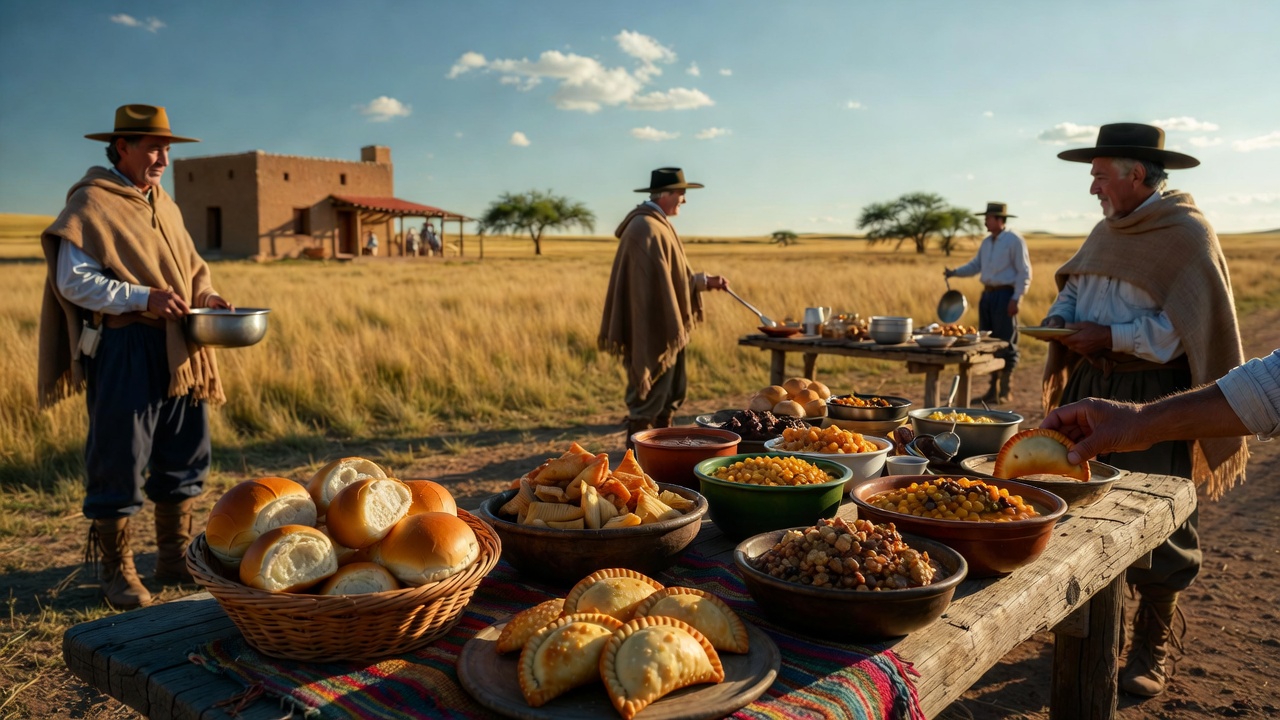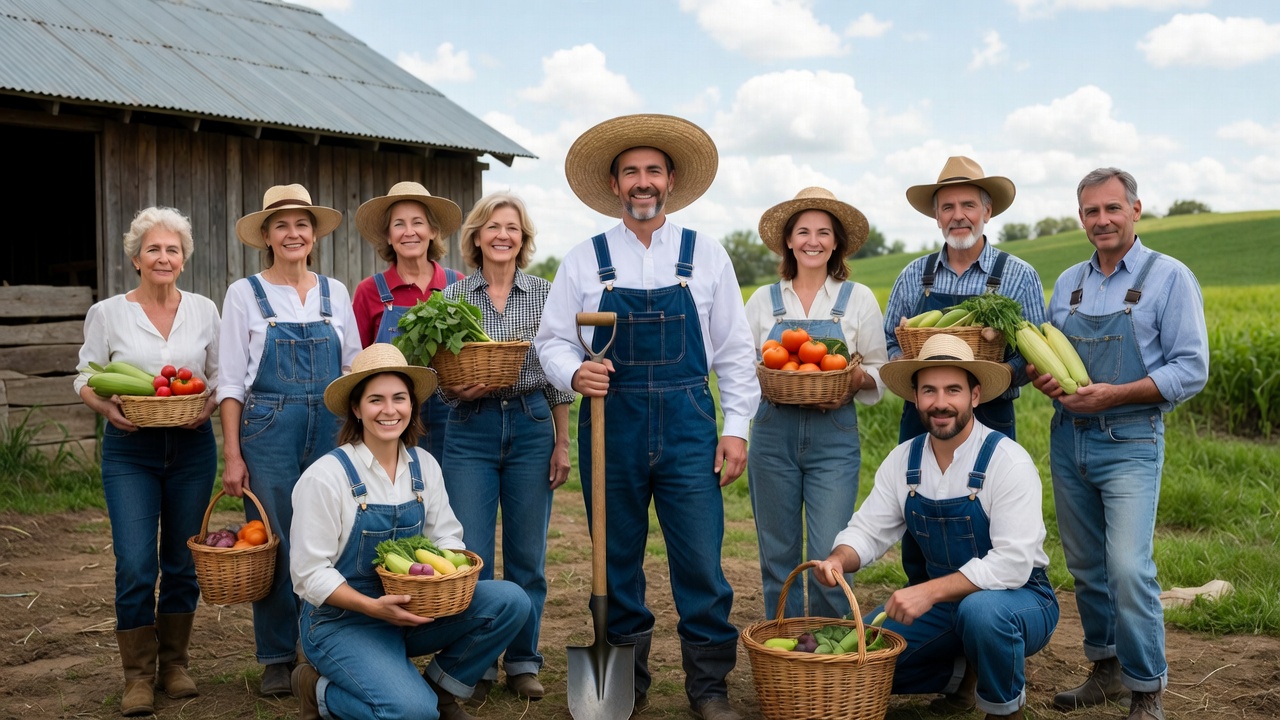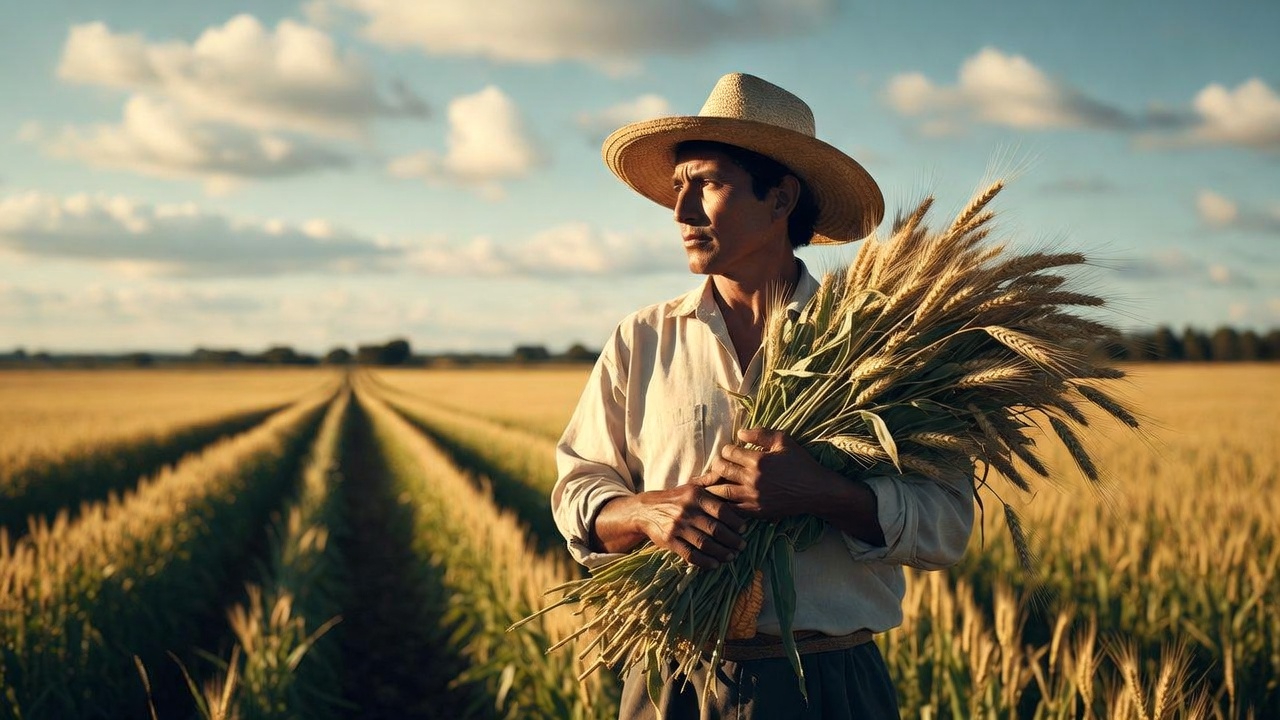
On the morning of April 17 each year, something quiet but powerful happens across the Argentine countryside. In the northern province of Santiago del Estero, a woman named Deolinda rises before dawn to tend her goats. In the Pampas, a weathered gaucho rides out to check his cattle beneath skies still thick with stars. In Mendoza, vineyard workers gather around a shared mate gourd before the sun hits the vines. These people are campesinos — farmers, peasant workers, stewards of the land. And on this day, their struggle and their contribution are honored.
Día del Campesino, or the Day of the Peasant Farmer, holds different dates and different names across Latin America. In Argentina, the most widely recognized observance falls on April 17, the International Day of Peasant Struggles (Día Internacional de las Luchas Campesinas). Declared by the global peasant movement La Vía Campesina, this date commemorates the 1996 Eldorado do Carajás massacre in Brazil, when 19 landless workers were killed by military police during a peaceful march for agrarian reform. From that tragedy, a global day of solidarity was born — one that resonates deeply in Argentina.
But this is not just a day of mourning. It is a day of recognition. Argentine farmers — from the vast industrial soybean operations of the Pampas to the small indigenous goat herders of the northwest — feed their nation and a significant portion of the planet. This article explores ten specific, inspiring ways they do so.
What Is the History of Día del Campesino in Argentina and Latin America?
To understand why Día del Campesino matters, you have to understand where it comes from — and why the word campesino carries a weight far heavier than its English translation of “peasant” or “farmer.”
Across Latin America, various nations have established their own national observance of this day. Peru celebrates Día del Campesino on June 24, rooted in the Incan Inti Raymi solstice festival and later formalized during the 1969 agrarian reform under President Juan Velasco Alvarado. Bolivia marks it on August 2, honoring the 1953 land reform decree. Colombia celebrates on the first Sunday of June, established in 1964 during the presidency of Guillermo León Valencia.
Argentina, however, does not have a single national holiday called “Día del Campesino.” Instead, the country’s agricultural communities — and the broader public — have adopted April 17 as their primary day of observance. This date aligns with the global commemoration organized by La Vía Campesina, the world’s largest peasant movement, which today represents over 200 million farmers in 81 countries.
In Argentina, the Movimiento Nacional Campesino Indígena (MNCI) — a member of La Vía Campesina — brings together more than 50,000 families of peasant and indigenous farmers from across the country’s 23 provinces. Every April 17, they organize feriazos (street fairs), marches, workshops, and cultural events. In cities like Mendoza, Buenos Aires, and Córdoba, campesino organizations set up stalls selling agroecological produce directly to city dwellers. These events carry a clear message: the people who grow your food deserve to be seen.
The observance is also closely linked to Argentina’s Ley 27.118, the Ley de Reparación Histórica de la Agricultura Familiar (Historical Reparation Law for Family Farming). Passed in 2014, this law was hailed as a breakthrough for campesino rights. It promised land access, infrastructure support, and fair market conditions for small-scale farmers. More than a decade later, the law has still never received its own dedicated budget, a fact that campesino organizations raise every April 17 as proof that their struggles are far from over.
How Argentine Agriculture Feeds Millions: Understanding the Country’s Global Food Impact
Before diving into the ten specific ways Argentine farmers shape our world, it helps to understand the sheer scale of Argentina’s agricultural footprint.
Argentina is, by any measure, one of the world’s great farming nations. According to the OECD’s 2025 Agricultural Policy Monitoring and Evaluation report, agriculture’s contribution to the country’s GDP grew from 4.7% in 2000 to 5.9% in 2023. But that figure dramatically understates the sector’s importance. When you include processed agricultural goods, agro-food products account for nearly 50% of Argentina’s total exports.
Here are some numbers that put it in perspective:
| Indicator | Figure |
|---|---|
| Share of agro-food in total exports (2023) | 49.4% |
| Argentina’s rank in soybean oil and meal exports | #1 globally |
| Argentina’s rank in corn exports | #3 globally |
| Total agricultural land | ~4% of all agricultural land covered in OECD report |
| Estimated cattle population | Over 54 million head |
| Family farms registered in ReNAF | Over 100,000 |
| Total agricultural employment (2023) | ~8.3% of national workforce |
In July 2025, Argentine agro-exports hit US$4.1 billion in a single month — the highest monthly figure since 2002, according to reporting by the Gateway to South America. That 57% year-over-year surge was driven in part by President Javier Milei’s decision to permanently reduce export duties on key agricultural products through Decree 526/2025.
What these figures make clear is that Argentine agriculture is not a quaint tradition. It is a global economic force. And at its foundation are the farmers — millions of them, from industrial growers to subsistence campesinos — whose daily labor keeps the entire system alive.
1. How Argentine Soybean Farmers Feed Global Livestock Supply Chains
If you have eaten chicken, pork, or farmed fish anywhere in Europe or Asia in the past decade, there is a good chance that animal was raised on Argentine soybean meal.
Argentina is the world’s largest exporter of soybean meal and soybean oil. The country’s soybean crush was projected to reach 42.4 million metric tons in 2024, a 37% increase from 2023, according to Mordor Intelligence’s agriculture market report. Chinese importers, in particular, have increased purchases of Argentine soybeans due to geopolitical tensions with the United States.
The soybean story in Argentina began in earnest in the 1990s, when genetically modified Roundup Ready soybeans — developed by Monsanto (now Bayer) — were approved for commercial planting. The adoption was swift and transformative. Soy acreage expanded rapidly across the Pampas and pushed into the northern provinces, often at the expense of native forests and smallholder farms.
This expansion has been deeply controversial. Environmental organizations and campesino movements argue that the monoculture model drives deforestation, soil degradation, and rural displacement. The Unión de Trabajadores de la Tierra (UTT), a farmworkers’ union representing thousands of families across 16 Argentine provinces, has called the soy model a form of “corporate control” over Argentina’s territory.
Yet the economic reality is undeniable. Soy and its derivatives bring in billions of dollars annually. In December 2025, the Milei government reduced the export tax on soybeans to 24% from 26% and on soybean byproducts to 22.5% from 24.5% — the latest in a series of cuts designed to incentivize production and exports.
The campesino perspective adds nuance to this story. Many small-scale farmers have been pushed off their land by soy expansion. Others have found ways to participate in the soy economy on their own terms, joining cooperatives or growing soy alongside diverse food crops. Their experience reminds us that behind every global commodity statistic, there are human decisions — and human consequences.
2. Why Family Farming in Argentina Is the Backbone of Food Security
While agribusiness dominates the export headlines, family farming is what actually feeds Argentina. This is not an exaggeration. It is a point that officials, researchers, and campesino leaders have stated repeatedly.
According to data from the FAO’s Family Farming Knowledge Platform, over 100,000 family farmers are enrolled in Argentina’s National Register of Family Agriculture (ReNAF). They produce a wide variety of crops and animal products: 74% are involved in animal production, 68% in plant production, and 15% in agro-industrial processing. Many families combine multiple activities, reflecting the diversified nature of small-scale Argentine farming.
These family farms are distributed across every major region. The Pampas account for 37%, followed by the northwest and northeast at 21% each, the Cuyo region (home to Mendoza’s wine country) at 15%, and Patagonia at 6%.
At a 2023 event in the Argentine Chamber of Deputies, Miguel Ángel Gómez, then president of the National Institute of Family, Peasant and Indigenous Farming (INAFCI), highlighted a sobering demographic reality: Argentina has been losing rural farmers for half a century. Meanwhile, 92% of the country’s population lives in ten or eleven large cities.
Marina Cardelli, Undersecretary of National Affairs in the Argentine Foreign Ministry, put it starkly at the same event: family farming produces 80% of the world’s food, yet most smallholder farmers are poor. She emphasized that without family farming, there is “no future for the planet.”
For travelers visiting Argentina, the impact of family farming is visible in every neighborhood feria (farmers’ market), every plate of empanadas filled with locally grown produce, and every jar of artisanal dulce de membrillo (quince paste) sold at a roadside stand in Tucumán.
3. How the Gaucho Tradition Preserves Argentina’s Rural Farming Heritage
No exploration of Argentine farming culture is complete without the gaucho — that iconic figure of the Pampas who has become inseparable from the country’s national identity.
The gaucho emerged in the 18th century as a mestizo horseman of the vast grasslands, subsisting on wild cattle and living by a code of fierce independence. As Britannica notes, gauchos hunted the large herds of escaped horses and cattle that roamed the Pampas, using tools like the lasso, knife, and boleadoras. Their costume — the chiripa, woolen poncho, and bombachas (pleated trousers) — is still worn by Argentine ranch workers today.
The gaucho’s role transformed dramatically in the late 19th century. Barbed wire, railroads, and massive European immigration ended the era of the free-roaming horseman. Estancias (large ranches) replaced the open range. Gauchos became hired ranch hands or drifted into rural towns.
But something remarkable happened: instead of fading away, the gaucho became Argentina’s most powerful cultural symbol. The epic poem Martín Fierro (1872) by José Hernández, which tells the story of a gaucho conscripted into the army and forced off his land, became a foundational text of Argentine literature. The gaucho came to represent individuality, bravery, and resistance — values that continue to animate campesino movements today.
In 2026, gaucho culture is alive across rural Argentina. Estancias in the Pampas near towns like San Antonio de Areco welcome visitors for horseback rides, traditional asados (barbecues), and demonstrations of horse-handling skills. The annual Día de la Tradición (Day of Tradition), celebrated on November 10, draws thousands to gaucho festivals featuring folk music, dance, and equestrian competitions.
What matters for the Día del Campesino context is this: the gaucho is the original Argentine campesino. The modern ranch worker, the family farmer, the indigenous herder — they all carry forward a tradition of land stewardship that stretches back centuries.
4. What Role Do Argentine Farmers Play in the Global Beef Industry?
Argentina and beef are almost synonymous. The country’s cattle population stands at over 54 million head, and its beef industry is central to both the domestic diet and the global protein supply.
The Pampas are the traditional heartland of Argentine cattle ranching. As Britannica describes, estancieros (ranch owners) have proven quick to adapt to shifting markets, switching breeds and supplementing alfalfa feed with grain sorghum to produce leaner meat. The southeastern Pampas, between Buenos Aires and Mar del Plata, remain an important dairy and sheep-raising district.
Argentine beef enjoys a global reputation for quality, largely because of the country’s grass-fed production model. While feedlots have expanded in recent years, a significant portion of Argentine cattle still graze on the natural pastures of the Pampas. This grass-fed approach gives the meat a distinctive flavor profile that commands premium prices in markets like Europe, China, and the Middle East.
In 2025, Argentina’s beef export tax was reduced from 6.75% to 5% as part of President Milei’s broader agricultural reform agenda. The country’s beef and veal output was projected at 3.08 million metric tons (carcass-weight equivalent) for the year.
Behind these statistics are the people who tend the herds. On a typical estancia, a modern gaucho might start the day at 5 a.m., riding out on horseback to check on cattle spread across hundreds or even thousands of hectares. Technology has changed some aspects of the job — trucks and GPS tracking have supplemented the horse — but the core relationship between farmer, animal, and land endures.
5. How the Agroecology Movement Is Transforming Argentine Farming Practices
One of the most remarkable stories in Argentine agriculture today is the rise of agroecology — a farming approach that replaces chemical pesticides and genetically modified seeds with biological inputs, crop diversification, and traditional knowledge.
Argentina is home to roughly 4,800 organic and agroecological farming establishments covering over four million hectares, according to a study published in PMC (PubMed Central). These farms produce everything from vegetables and grains to honey and livestock, and are predominantly run by campesino families and small-scale producers.
The growth of agroecology in Argentina has been driven largely by grassroots movements. In 2016, a coalition of agronomists, doctors, and community leaders created the National Network of Agroecological Municipalities (Renama). As Dialogue Earth reported, Renama now spans 34 Argentine localities and brings together 180 producers working 100,000 hectares of land using agroecological methods, supported by 85 technical experts.
The results have been striking. In the small commune of Zavalla, in the heart of Santa Fe province, producers who switched to agroecological wheat found that profits were double their production costs — compared to conventional wheat, where costs exceeded profits. Claudio Benítez, an agronomist from Renama, explained that agroecological yields are more stable and costs are significantly lower because farmers no longer depend on expensive dollar-priced chemical inputs.
One farmer from Zavalla, Roxana Schonfeld, described the transition as gradual: “We started by replacing pesticides and reducing doses. Then we reduced the number of applications until we no longer used them and incorporated other technologies such as diversified production and polycultures.”
For campesino communities, agroecology is not just an economic strategy. It is a political statement about who controls the food system. Organizations like the Unión de Trabajadores de la Tierra (UTT) now operate over 150 distribution points, eight agroecological warehouses, and several agroecological markets across Argentina. During the COVID-19 pandemic, UTT supplied vulnerable communities with fresh produce and expanded its network of “sovereign food canteens.”
For travelers interested in sustainable food, visiting an agroecological market in Buenos Aires, Rosario, or Córdoba is one of the most authentic ways to experience Argentine campesino culture. These markets, known as ferias agroecológicas, sell produce directly from farmer to consumer — no middlemen, no corporate supply chains.
6. Why Argentine Wheat and Corn Exports Matter for Global Food Prices
Every time you eat a slice of bread in Cairo, a bowl of polenta in Lagos, or a tortilla in Mexico City, there is a chance that the grain came from Argentina.
Argentina is one of the world’s most important exporters of wheat and corn. For the 2025/26 season, wheat production was projected to reach a record 20.5 million metric tons. Meanwhile, Argentina consistently ranks as the third-largest corn exporter globally, behind the United States and Brazil.
The export infrastructure is concentrated around the city of Rosario, on the Paraná River, where a string of grain elevators, crush plants, and port terminals handle the bulk of Argentina’s agricultural outflows. This corridor — sometimes called the “soy highway” — processes and ships millions of tons of grain annually to destinations across Asia, Europe, and Africa.
In early 2025, the Milei government reduced export taxes on wheat and corn from 12% to 9.5%. In December 2025, these rates were made permanent for the duration of the current administration.
| Commodity | Export Tax (Dec 2023) | Export Tax (Dec 2025) |
|---|---|---|
| Soybeans | 33% | 24% |
| Soybean meal/oil | 31% | 22.5% |
| Corn | 12% | 9.5% |
| Wheat | 12% | 9.5% |
| Beef | 6.75% | 5% |
These reductions have had an immediate effect. According to S&P Global, the lower duties “seek to boost farming, the economy’s most productive sector, which has been severely punished by these taxes over the last 20 years,” in the words of President Milei himself.
For campesino organizations, however, the tax cuts tell only part of the story. Small farmers argue that lower export taxes primarily benefit large agribusiness firms — the companies that control the infrastructure, the shipping, and the international contracts. A family farmer growing wheat on 50 hectares in the northwest does not benefit from export tax relief the same way that a corporation farming 300,000 hectares does.
This tension — between the macroeconomic benefits of export-oriented agriculture and the lived reality of small-scale farming — is at the heart of why Día del Campesino exists.
7. How Indigenous and Campesino Communities Protect Argentina’s Biodiversity
Argentina stretches from the subtropical north to the sub-Antarctic south, encompassing an extraordinary range of ecosystems. Campesino and indigenous communities are among the most important guardians of this biodiversity.
In the northern provinces of Salta, Jujuy, Santiago del Estero, and Formosa, campesino families practice diversified farming that integrates crops, livestock, and forest management in ways that sustain local ecosystems. Goat herding, bee-keeping, traditional maize cultivation, and forest-product gathering are common activities that maintain the ecological fabric of these regions.
The Movimiento Campesino de Santiago del Estero (MOCASE), one of Argentina’s most prominent campesino organizations, has been fighting deforestation and land grabs since the early 1990s. Santiago del Estero province has been one of the hardest hit by the expansion of soy monoculture into what was once the Chaco forest — one of South America’s largest and most biodiverse woodlands.
Argentina’s Ley de Bosques (Forest Law), passed in 2007, established minimum budgets for the protection of native forests and created a system for classifying land by conservation priority. But enforcement has been uneven, and campesino communities report ongoing conflicts with agricultural enterprises that clear forest for cultivation.
On the agroecological front, organizations like MOCASE and its allied university, UNICAM SURI, have pioneered models that combine campesino farming practices with therapeutic community support. As the Global Forest Coalition documented on International Day of Peasant Struggles 2024, the Galaxia Refugio La Dorotea project in Santiago del Estero blends agroecological practices with mental health care, creating “agroecological shelters” that nurture both ecological and human well-being.
For biodiversity travelers, the intersection of campesino culture and ecological conservation offers some of Argentina’s most compelling experiences. Visiting a community-managed forest in the Chaco, learning about native seed conservation in Misiones, or tasting honey produced by indigenous bee-keepers in Jujuy — these are experiences that no luxury resort can replicate.
8. What Is the Role of Argentine Women Farmers in Rural Food Production?
Women are at the center of Argentine campesino life, yet their contributions have been systematically undervalued and overlooked.
Across the northern provinces, goat herding — a critical source of food, income, and community stability — is primarily carried out by women, children, and young people. Yet as Carolina Llorens of the MNCI-Somos Tierra (We Are Land) movement explained in a 2025 interview, this work “is not considered a productive activity but rather an extension of household duties.” This means women are often denied control over the income their labor generates.
The MNCI-Somos Tierra and other campesino organizations have been working to change this. The Peasant Movement of Córdoba, for example, has focused on building economic autonomy for women producers. First, they make women’s labor visible. Then, they add value to products like goat cheese, handicrafts, and herbs. Finally, they create direct-to-consumer marketing channels that put money directly in women’s hands.
At the international level, Argentine campesina women participated in the first Feminist School organized by the Alliance for Food Sovereignty of the Peoples of Latin America and the Caribbean. The program, which included virtual sessions and an in-person gathering in Colombia in 2023, produced a booklet called Sowers of Life and Resistance — a collection of testimonies from women who build food sovereignty daily.
A key concept that has emerged from this work is the idea of “depatriarchalizing food systems.” As the MNCI-Somos Tierra puts it, this means challenging power structures that control not only land and markets but also the bodies and labor of women. Agroecology and fair trade are seen as concrete steps toward this transformation.
For those who celebrate Día del Campesino, honoring the role of women is not an afterthought. It is the recognition that without the labor, knowledge, and resilience of campesina women, Argentina’s food system — and the global food system — would collapse.
9. How Technology and Tradition Coexist on Argentine Farms in 2026
The image of the Argentine farmer is changing. No longer just a man on horseback with a lasso, the modern Argentine agricultural worker might also be checking satellite imagery on a smartphone, adjusting a precision irrigation system, or reviewing AI-generated crop health data.
According to Farmonaut’s 2025 agriculture trend report, precision agriculture adoption rates in Argentina were poised to exceed 60% by 2025. Technologies in widespread use include satellite-based monitoring, soil sensors, drone surveillance, and AI-powered advisory tools. These innovations help farmers adapt to the alternating droughts and floods that characterize Argentina’s continental climate.
Major financial institutions are responding to this shift. In December 2025, Farm Progress reported that Nera, a joint venture between Banco Santander and Grupo Financiero Galicia, projected US$1.5 billion in agricultural credit lines for 2026 — a 36% jump from the previous year. Nera’s CEO, Marcos Herbin, estimated that if export tariffs are eliminated entirely, “investment in crops can jump from $16 billion a year to $22 billion.”
But the technology story has two sides.
For large commercial operations, precision agriculture offers clear economic benefits: better yields, lower input costs, and improved environmental compliance. For small campesino farmers, however, the digital divide remains a serious challenge. Many families in the northwest and northeast lack reliable internet access, the capital to invest in drones or satellite subscriptions, and the technical training to use these tools.
This is where a concept from Argentina’s agricultural research institute, INTA (Instituto Nacional de Tecnología Agropecuaria), becomes relevant. INTA has developed a program of extensión rural (rural extension) that brings agricultural knowledge — including digital tools — directly to farming communities. During the COVID-19 pandemic, INTA launched a massive open online course (MOOC) on agroecology, adapted from a French model for Latin American contexts, which reached thousands of Argentine producers.
The ideal future — one that many campesino organizations advocate for — is not a choice between tradition and technology. It is a blend: a farming system where satellite data informs ancient seed-selection practices, where AI weather forecasts help indigenous herders protect their flocks, and where blockchain traceability allows a small producer in Misiones to sell certified organic yerba mate directly to a specialty shop in Berlin.
10. Why the Fight for Land Access Defines the Future of Argentine Campesino Farmers
Land. It is the single issue that unites every campesino struggle in Argentina and across the world.
In Argentina, access to land remains deeply unequal. According to the Unión de Trabajadores de la Tierra, more than 70% of small producers in Argentina have no ownership of the land they farm. They lease plots, often on precarious terms, and face the constant threat of eviction.
This is not a new problem. The tension between large landholders and smallholder farmers has shaped Argentine politics since the 19th century, when the Conquest of the Desert displaced indigenous communities and concentrated land ownership in the hands of a small elite. The latifundio (large estate) system that emerged remains, in modified form, a defining feature of the Argentine countryside.
The Ley 27.118 (Historical Reparation Law for Family Farming), passed unanimously by Congress in 2014, was supposed to address this. The law promised access to land, infrastructure, credit, and technical support for campesino families. It also called for a moratorium on rural evictions. But as campesino leader José Luis Castillo of the Asamblea Campesina Indígena del Norte Argentino (ACINA) told Agencia Tierra Viva, the law “has never had a budget.” Without funding, its promises remain on paper.
Meanwhile, the Ley 26.160 (Emergency Law on Indigenous Territorial Rights), which suspends evictions of indigenous communities, has required repeated renewals and faces an uncertain future under the current government’s deregulatory agenda.
The land question has direct consequences for food production. As Castillo explained, campesino communities have “limitations to produce at scale” because they simply do not have enough land. More land would mean more food — not for export, but for local tables.
Under President Milei’s administration, the emphasis has shifted toward market liberalization and deregulation. Agricultural producers who own large tracts of land have broadly welcomed these policies. But campesino organizations warn that without specific protections for small farmers, the benefits of reform will flow overwhelmingly to the biggest players.
This is precisely why Día del Campesino matters. It is a day that forces a conversation about who owns the land, who works the land, and who eats the food that the land produces. Without that conversation, the farmers who feed Argentina — and the world — remain invisible.
What You Can Do to Support Argentine Farmers and Celebrate Día del Campesino
Día del Campesino is not just for Argentine campesinos. It is for anyone who eats — which is to say, everyone. Here are concrete ways to engage:
If you are traveling to Argentina, seek out the ferias agroecológicas (agroecological fairs) in Buenos Aires, Rosario, Córdoba, or Mendoza. These markets offer the freshest produce, sold directly by the families who grew it. Ask questions. Learn the stories behind the food. Buy the cheese, the honey, the herbs. Your purchase directly supports a campesino family.
If you are visiting the Pampas, consider staying at an estancia that practices sustainable ranching. Towns like San Antonio de Areco, about an hour from Buenos Aires, offer authentic gaucho experiences rooted in genuine farming culture — not tourist kitsch.
If you are at home, look for Argentine products that carry fair trade or organic certifications. Argentine organic honey, yerba mate, olive oil, and wine are increasingly available in international markets.
If you want to learn more, follow organizations like La Vía Campesina and Agencia Tierra Viva for reporting on campesino issues. The UNDROP (United Nations Declaration on the Rights of Peasants and Other People Working in Rural Areas), adopted in 2018, is an excellent framework for understanding the global peasant rights movement.
The Future of Argentine Farming: What Campesino Movements Want You to Know
As we move deeper into 2026, Argentine agriculture stands at a crossroads.
On one hand, the country is experiencing a period of renewed agricultural investment. Export tax reductions under President Milei, the EU-Mercosur trade agreement signed in late 2025, and growing demand from Asian markets are all creating favorable conditions for Argentine grain, oilseed, and meat exports. The World Bank has committed over US$12 billion in support packages for Argentine agriculture, including US$5 billion allocated for private agribusiness investment.
On the other hand, the challenges facing small-scale and campesino farmers are as urgent as ever. Climate change is intensifying droughts and floods. The 2023 drought alone reduced major crop production by 45% and caused an estimated US$20 billion loss in agricultural revenue. Without land reform, many campesino families remain trapped in cycles of precarity. And the tension between export-oriented agribusiness and local food sovereignty shows no sign of resolving easily.
What campesino movements want you to know is this: food is not just a commodity. It is a relationship. A relationship between people and land, between growers and eaters, between tradition and innovation, between profit and dignity.
When you celebrate Día del Campesino — whether on April 17 in Argentina, June 24 in Peru, or wherever in the world you read these words — you are honoring that relationship. You are saying that the people who grow our food matter. That their struggles are our struggles. That their future is our future.
Frequently Asked Questions About Día del Campesino in Argentina
When is Día del Campesino celebrated in Argentina? In Argentina, the most widely observed date is April 17, aligned with the International Day of Peasant Struggles. This global day was established by La Vía Campesina in memory of the 1996 Eldorado do Carajás massacre in Brazil.
Is Día del Campesino a public holiday in Argentina? No. It is not an official public holiday in Argentina. It is an observance day, marked by campesino organizations through fairs, marches, cultural events, and public forums.
How many family farmers are there in Argentina? Over 100,000 family farmers are registered in Argentina’s National Register of Family Agriculture (ReNAF). The actual number of campesino and small-scale farming families is believed to be significantly higher.
What crops do Argentine farmers grow? Argentina’s major commercial crops include soybeans, corn, wheat, and sunflower seeds. Family farmers also produce a wide variety of vegetables, fruits, herbs, honey, goat cheese, wine, olive oil, yerba mate, and livestock products.
What is La Vía Campesina? La Vía Campesina is the world’s largest movement of peasant farmers, representing over 200 million members in 81 countries. It coined the concept of “food sovereignty” in 1996 and advocates for agrarian reform, agroecology, and peasant rights.
What is the best way to support Argentine campesino farmers as a traveler? Visit agroecological fairs and farmers’ markets. Stay at working estancias that practice sustainable agriculture. Purchase locally produced goods directly from farming families. Engage respectfully with rural communities and ask about their work.
Key Takeaways: Why Día del Campesino Matters for Everyone
The story of Argentine campesinos is not a niche topic for agricultural specialists. It is a universal story about food, justice, culture, and the relationship between humans and the land.
The ten ways explored in this article — from soybean exports to agroecology, from gaucho heritage to women’s empowerment, from precision technology to land rights — are all interconnected. They form a web that connects a small goat herder in Santiago del Estero to a consumer in Shanghai, a wheat farmer in the Pampas to a baker in Cairo.
Día del Campesino asks us to see that web. To follow the threads. To understand that every meal begins with someone’s hands in the soil.
In Argentina, those hands belong to the campesinos. They deserve your attention. They have earned your respect.