A deep dive into the plebiscite, reunification, and the birth of one of Africa’s most symbolic national holidays
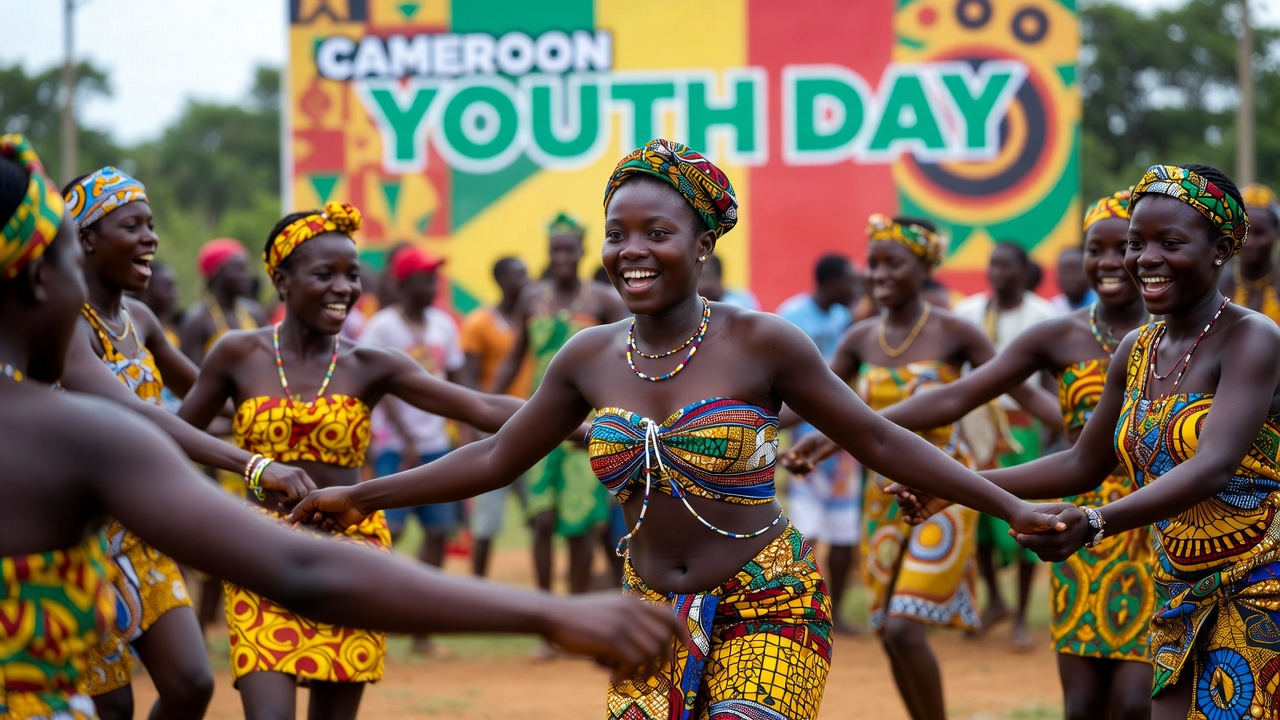
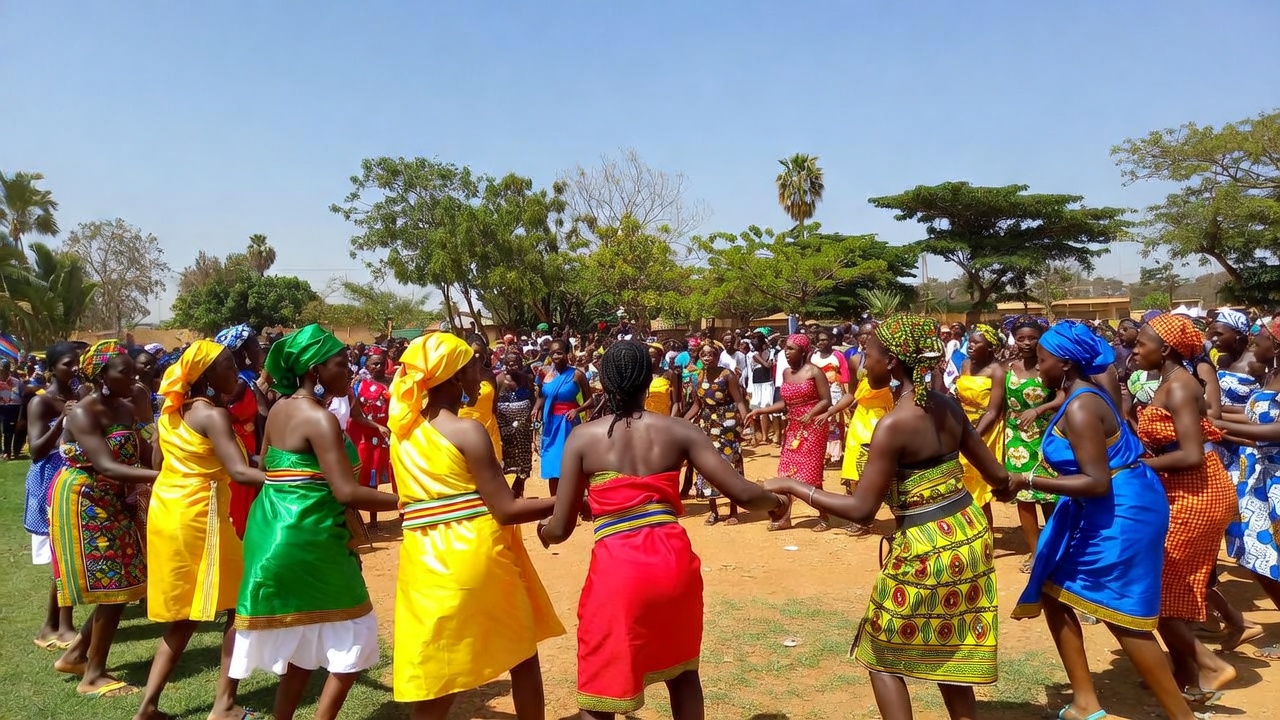
Every year on February 11, the streets of Yaoundé, Douala, Bamenda, and countless towns across Cameroon come alive. Drums echo through the morning air. Schoolchildren in crisp uniforms march in perfect formation. Traditional dancers perform alongside brass bands. This is La Fête de la Jeunesse—Cameroon’s National Youth Day.
But why February 11? The answer takes us back over six decades. It requires us to understand colonialism, decolonization, a historic referendum, and the dreams of young Africans seeking to build a unified nation.
This article explores the complete history and origins of Cameroon’s Youth Day. We examine how a political plebiscite became a celebration of youth. We look at the key figures who shaped this transformation. And we consider what this holiday means for Cameroonians today, both at home and in the diaspora.
What Is Cameroon Youth Day and When Is It Celebrated?
Cameroon Youth Day is a public holiday observed annually on February 11. The government designated this date as a national holiday in 1966. Schools, banks, and government offices close. Businesses pause their operations. The entire nation turns its attention to the young.
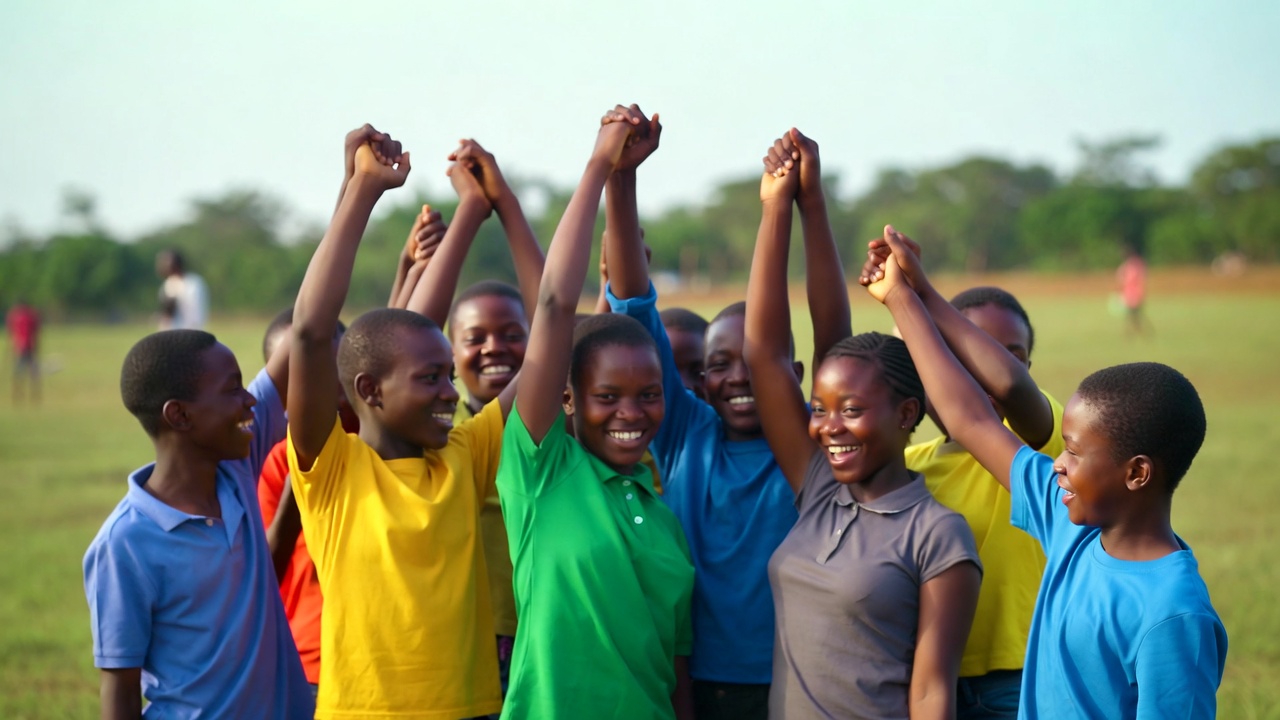
The holiday has a clear purpose. It aims to recognize the role of young people in national development. It celebrates their potential to build a prosperous future. And it connects the younger generation to the nation’s history.
According to the CIA World Factbook, more than 60% of Cameroon’s population is under the age of 25. This makes the youth demographic critically important. Their energy, creativity, and aspirations shape the country’s trajectory.
The holiday is not limited to a single day. Cameroon observes what locals call the “Youth Onzaine”—an 11-day period of activities leading up to February 11. The word “Onzaine” comes from the French onze, meaning eleven. This extended celebration includes sports competitions, cultural festivals, civic service projects, and educational workshops.
On the eve of the holiday, February 10, the President of the Republic delivers a nationally televised address. This speech reviews the government’s achievements regarding youth education and employment. It outlines new policies and goals for the coming year. It serves as a moment of national reflection.
The Historical Significance of February 11, 1961: The Cameroon Plebiscite
The date of February 11 was not chosen randomly. It carries profound historical significance. On this day in 1961, a United Nations-supervised plebiscite was held in the British Cameroons. This vote determined the political future of the territory.
Understanding the Colonial Background of British and French Cameroons
To understand the plebiscite, we must first understand Cameroon’s colonial history.
Before World War I, the territory known as Kamerun was a German colony. Germany established its protectorate in 1884. The territory stretched across a vast area of Central Africa.
World War I changed everything. In 1916, French and British forces defeated Germany in Kamerun. The victors divided the territory between themselves. France received approximately 80% of the land. Britain received the remaining 20%.
| Colonial Period | Ruling Power | Territory Name |
|---|---|---|
| 1884-1916 | Germany | Kamerun |
| 1916-1960 | France | French Cameroun |
| 1916-1961 | Britain | British Cameroons |
The League of Nations formalized this arrangement in 1922. France and Britain administered their respective zones as mandated territories. After World War II, these became United Nations Trust Territories in 1946.
Britain further divided its portion into Northern Cameroons and Southern Cameroons. Both were administered as part of Nigeria for convenience. This administrative arrangement would have lasting consequences.
The Road to the 1961 Plebiscite: Choosing Between Nigeria and Cameroon
By the late 1950s, decolonization was sweeping across Africa. French Cameroun gained independence on January 1, 1960. Ahmadou Ahidjo became the first president of the newly independent Republic of Cameroon.
The British Cameroons faced a different situation. The United Nations had to decide their future. A plebiscite was organized to let the people choose.
The vote presented two options only:
- Achieve independence by joining the independent Federation of Nigeria
- Achieve independence by joining the independent Republic of Cameroon
A third option—full, separate independence—was not on the ballot. This absence remains controversial to this day. According to Wikipedia’s entry on the 1961 British Cameroons referendum, the option of full independence was opposed by both British officials and various African delegations at the United Nations.
The Plebiscite Results: A Nation Divided
The plebiscite was held on February 11 and 12, 1961. The results split the British Cameroons in two.
In Northern Cameroons, voters chose Nigeria. Approximately 60% voted for integration with the Federation of Nigeria.
In Southern Cameroons, voters chose Cameroon. The results were decisive: 233,571 votes in favor of joining the Republic of Cameroon versus 97,741 for joining Nigeria. This represented approximately 70.5% support for reunification with Cameroon.
| Region | Join Nigeria | Join Cameroon | Outcome |
|---|---|---|---|
| Northern Cameroons | 60% | 40% | Became part of Nigeria |
| Southern Cameroons | 29.5% | 70.5% | Joined Republic of Cameroon |
The Southern Cameroons’ decision led to the formation of the Federal Republic of Cameroon on October 1, 1961. The two former trust territories—French Cameroun and British Southern Cameroons—were now united under one flag.
How Did Plebiscite Day Become Cameroon’s National Youth Day?
The transformation of February 11 from a political anniversary to a youth celebration is a fascinating story. It involves the visionary leadership of John Ngu Foncha, the Prime Minister of West Cameroon.
John Ngu Foncha: The Architect of Youth Day
John Ngu Foncha (1916-1999) was a Cameroonian statesman and nationalist leader. He founded the Kamerun National Democratic Party (KNDP) in 1955. He became Premier of the British Cameroons on February 1, 1959.
Foncha was the principal advocate for reunification with French Cameroun. He led the campaign that resulted in the successful plebiscite vote. After reunification, he served as Prime Minister of West Cameroon and Vice President of the Federal Republic.
According to archival research by Dr. Jude Fokwang, Foncha’s government introduced the Youth Day concept as a way to honor the new nation’s future.
The First Youth Day Celebrations: October 1962
The first “Youth and Sport” day in West Cameroon was held on October 26, 1962. This date had previously served as a kind of national day for the territory.
The event was held in high regard. Politicians, local officials, and the general public participated enthusiastically. Activities included parades by primary and secondary school students, dance performances, and sports competitions. Football for boys and handball for girls became standard features.
The celebration aimed to instill patriotism in young people. It sought to connect them to the ideals of nation-building.
Shifting the Date to February 11: Foncha’s Vision
By the end of 1963, Foncha’s government made a significant decision. They would move Youth Day from October 26 to February 11. This change aligned the celebration with the anniversary of the 1961 plebiscite.
On January 14, 1964, Prime Minister Foncha explained his reasoning:
“The idea of the Youth Day springs from the desire that Cameroonian children should inherit and continue to implement what has been achieved.”
Foncha elaborated on February 7, 1964, emphasizing that the day should serve two purposes. For children, it should be a day of sports and feasting. For adults, it should be a day of stocktaking and reflection.
The West Cameroon Executive Council formally agreed that February 11, 1964, would be celebrated as Youth Day. The Council directed that “schools and all sporting organisations” should take part in the events.
The Grand Celebration of February 11, 1964
The first Youth Day on the new date was a major event. The West Cameroon government invited over 200 dignitaries from East (French) Cameroon. The guest list included:
- Federal President Ahmadou Ahidjo
- Mayors of Douala, Nkongsamba, Kribi, and Yaoundé
- Traditional rulers including King Manga Bell of Douala
- The Sultan of Foumban
Celebrations took place in Buea and Bamenda. Multiple centres were amalgamated to ensure massive attendance. Senior pupils from rural areas trekked to the celebration sites. Local councils provided transportation for children.
In Bamenda, music for the parade was played by the Bambui Teachers’ Training College band. Activities spanned two days. Prime Minister Foncha attended both events, contributing to the festive atmosphere.
From Regional Holiday to National Public Holiday: 1966
The success of Youth Day in West Cameroon caught the attention of the federal government. In 1966, President Ahidjo’s administration adopted the holiday nationally. February 11 became a national public holiday throughout the Federal Republic of Cameroon.
The decision was significant for several reasons. It elevated a West Cameroonian initiative to national status. It linked the celebration of youth to the anniversary of reunification. And it created an annual occasion for reflecting on the nation’s shared history.
The Political Context: Why Ahidjo Embraced Youth Day
The adoption of Youth Day by the federal government was not purely altruistic. It carried political implications that continue to spark debate today.
The Shadow of Northern Cameroons’ Loss
Some historians argue that the federal government had complex motivations. On February 11, 1961, while Southern Cameroons voted to join Cameroon, Northern Cameroons voted to join Nigeria.
This meant that the Republic of Cameroon lost potential territory. The plebiscite was, in this sense, a mixed result. While Southern Cameroons chose reunification, Northern Cameroons chose Nigeria.
By transforming February 11 into Youth Day, some argue, the government reframed the narrative. The focus shifted from territorial loss to celebrating youth potential.
Fostering National Unity Through Youth
The transformation also served nation-building goals. The Federal Republic of Cameroon faced the challenge of integrating two territories with different colonial legacies. French Cameroun had experienced French administration and legal systems. Southern Cameroons had British administration and common law traditions.
Youth Day provided a unifying occasion. It brought young people from both regions together in shared celebration. It emphasized their common identity as Cameroonians, regardless of linguistic background.
The Youth Day Presidential Address Tradition
Since its elevation to national status, Youth Day has been initiated by a presidential address. This tradition continues to the present day. On February 10, the President of the Republic delivers a radio and television message to the nation’s youth.
However, an important controversy surrounds this tradition. According to Dr. Jude Fokwang’s research, none of President Biya’s Youth Day speeches have ever been delivered in English. For a bilingual nation that celebrates its French and British colonial legacies, this linguistic exclusion has been noted by critics.
How Is Cameroon Youth Day Celebrated Today?
Modern Youth Day celebrations are elaborate affairs. They involve weeks of preparation and culminate in spectacular events on February 11.
The Youth Onzaine: 11 Days of Activities
The celebration officially begins on February 1. This 11-day period—the Onzaine—features a wide range of activities:
Civic Service (“Human Investment”) Young people participate in community improvement projects. They clean streets, fix public spaces, and volunteer their time. This instills values of service and responsibility.
Sports Competitions Football matches, handball tournaments, and athletic meets are organized across the country. These foster healthy competition and teamwork.
Cultural Festivals Traditional dances, concerts, and art exhibitions showcase Cameroon’s diverse heritage. Each of the country’s ten regions contributes its unique cultural expressions.
Educational Workshops Seminars on entrepreneurship, leadership, and civic responsibility help equip youth with practical skills.
Round Table Discussions Forums address issues affecting young people. Topics include employment, education, peacebuilding, and social justice.
The Grand March-Past Parade on February 11
The highlight of Youth Day is the march-past parade. In the capital Yaoundé and in regional headquarters, thousands of young people march before government officials and dignitaries.
Participants include:
- Primary school students in their distinctive uniforms
- Secondary school students organized by institution
- University students often in marching bands
- Youth organizations and civic groups
- Teachers and education officials
The parades are colorful spectacles. Schools compete for recognition through their marching precision, uniform presentation, and creative displays. Some groups raise awareness about social issues. Others perform traditional dances or play musical instruments.
The Role of the Ministry of Youth Affairs and Civic Education
The Ministry of Youth Affairs and Civic Education (MINJEC) oversees Youth Day planning. The Ministry coordinates with regional and local authorities to ensure events take place throughout the country.
Each year, MINJEC announces an official theme. Recent themes have included:
| Year | Theme |
|---|---|
| 2024 | “Youth, Import Substitution and Economic Patriotism for Cameroon’s Development” |
| 2025 | “Youth: Maturity and Responsibility for the Consolidation of Peace, Security, Economic Growth and Democratic Process” |
| 2019 | “Youth, Great Opportunities and Participation in Building a Peaceful, Stable and Emerging Cameroon” |
These themes reflect national priorities and challenges facing young Cameroonians.
Pagne Culture: The Traditional Fabric of Celebration
A distinctive feature of Cameroonian celebrations is pagne—specially designed fabric. Youth Day often features a commemorative pagne in different colors representing different groups:
- Green for primary schools
- Red for secondary schools
- Yellow for universities
- Blue for teachers
Families often purchase this fabric to demonstrate their participation and solidarity. The pagne becomes both a uniform and a symbol of shared identity.
Why Youth Day Matters: Demographics and the Future of Cameroon
Understanding Youth Day requires understanding Cameroon’s demographics. The country has one of Africa’s youngest populations.
Cameroon’s Young Population: Key Statistics
According to Population Pyramids data, Cameroon’s demographic profile reveals striking youth dominance:
| Age Group | Percentage of Population | Estimated Number |
|---|---|---|
| 0-14 years | 41.1% | ~12.3 million |
| 15-64 years | 56.1% | ~16.8 million |
| 65+ years | 2.8% | ~0.8 million |
The median age is just 19.1 years. This means half of all Cameroonians are teenagers or younger.
These numbers have profound implications. The education system must accommodate millions of students. The labor market must create jobs for an ever-growing workforce. Social services must adapt to the needs of a youthful society.
Youth Unemployment and Economic Challenges
Despite their numbers, young Cameroonians face significant challenges. Youth unemployment remains a persistent problem. Many graduates struggle to find work that matches their qualifications.
In his 2025 Youth Day address, President Paul Biya announced measures to address this crisis. According to Xinhua News, these include:
- Establishing a regulatory framework to support first-time jobseekers
- Creating the Green Jobs Promotion Program targeting over 10,000 jobs
- Contractualization of health workers to reduce insecurity among young health graduates
Such initiatives acknowledge that celebrating youth is not enough. The nation must invest in their futures.
Youth and the Anglophone Crisis
Since 2016, Cameroon has experienced a serious internal conflict. The Anglophone crisis affects the Northwest and Southwest regions—the territories of the former Southern Cameroons.
This crisis has displaced hundreds of thousands of people. Many are young people whose education and prospects have been disrupted. The conflict’s roots trace back to grievances about the relationship between Anglophone and Francophone Cameroon—grievances connected to the very events that February 11 commemorates.
For many Anglophone Cameroonians, Youth Day carries complex emotions. The date marks the plebiscite that led to reunification. But it also reminds them of promises they believe were broken.
Celebrating Youth Day in the Cameroonian Diaspora
Cameroonians abroad also mark Youth Day. For diaspora communities, the holiday maintains cultural connections across distances.
Diaspora Activities and Celebrations
Cameroonian communities in cities like Paris, Washington D.C., London, and Toronto organize their own gatherings. These may include:
- Cultural parties with traditional music and dance
- Community meals featuring Cameroonian cuisine
- Social media campaigns sharing memories and photos
- Virtual observances connecting diaspora members worldwide
Sending Support Home
According to Remitly, Youth Day is a time when diaspora members send money home. These remittances help families:
- Buy new school uniforms for children participating in parades
- Purchase shoes and accessories needed for march-past
- Fund celebratory meals with siblings and cousins
- Cover transportation costs to celebration venues
This financial support ensures that young relatives can participate in Youth Day with dignity and pride.
The Foumban Conference: Understanding Cameroon’s Reunification
To fully appreciate Youth Day’s significance, we must understand the Foumban Conference. This gathering shaped the political structure of reunified Cameroon.
The Meeting at Foumban: July 1961
After the plebiscite, Southern Cameroons and the Republic of Cameroon needed to negotiate their union. The Foumban Constitutional Conference was held from July 17 to 21, 1961.
The conference took place in Foumban, a historic town in the Bamoun Kingdom. President Ahidjo chose the location as a place for “rest and relaxation.”
The delegations were unequal in size. Twelve delegates represented Francophone Cameroon. Twenty-five delegates represented Anglophone Cameroon. This numerical advantage for Anglophones did not translate into greater influence.
Ahidjo’s Draft Constitution: A Surprise Maneuver
The Southern Cameroons delegation expected joint negotiations. They anticipated collaborating to draft a new constitution for the Federal Republic.
President Ahidjo had different plans. He presented a pre-written draft constitution based on the Constitution of the Fifth French Republic. The Southern Cameroons delegates were shocked.
According to historical accounts, delegate Namoso Mbile expressed frustration: “We have the feeling that we have wasted our time coming to Foumban for the draft to be tabled in this fashion.”
The Outcome: A Strong Central Government
The conference lasted only five days. The resulting constitution established a federal system, but with significant central government power. Ahidjo became Federal President. Foncha became Vice President and Prime Minister of West Cameroon.
Mbile later reflected on the brevity: “We may have done more if we had spent five months instead of five days in writing our constitution at Foumban.”
Notably, the West Cameroon House of Assembly never formally ratified the constitution. Yet the Federal Republic came into existence on October 1, 1961.
From Federation to Unitary State: 1972
The federal structure did not last. On May 20, 1972, President Ahidjo announced a referendum to transform the federal republic into a unitary state. The referendum passed, and the United Republic of Cameroon was born.
Critics argue this violated the Foumban constitution, which stated that any proposal “which impairs the unity and integrity of the Federation shall be inadmissible.”
In 1984, President Paul Biya renamed the country simply “République du Cameroun”—the same name French Cameroon had before federation.
Different Perspectives on February 11: Celebration or Mourning?
Youth Day’s meaning is contested. Different Cameroonians interpret the date differently.
The Official Narrative: Celebrating Youth and Unity
The government presents February 11 as a day of celebration. It marks the beginning of Cameroon’s reunification journey. It honors the youth who will carry the nation forward.
This narrative emphasizes:
- National unity across linguistic and regional divides
- Youth potential as the engine of development
- Patriotic values of service and citizenship
Critical Perspectives: Remembering What Was Lost
Some Cameroonians, particularly Anglophone activists, view February 11 differently. They see it as a day of betrayal rather than celebration.
Their perspective emphasizes:
- The absence of a third option for full independence in the plebiscite
- Broken promises regarding federal autonomy
- Marginalization of Anglophones in the unitary state
- The renaming of the country to erase Southern Cameroons’ identity
For these critics, transforming Plebiscite Day into Youth Day was a deliberate erasure. It diverted attention from political grievances to celebrations and parades.
Finding Common Ground
Despite these tensions, most Cameroonians participate in Youth Day. They celebrate their children’s achievements. They enjoy the parades and cultural performances. They appreciate the break from work and school.
The holiday’s meaning may be contested. But its observance remains nearly universal.
What Makes Youth Day Unique Among African National Holidays?
Cameroon’s Youth Day stands out among African national celebrations for several reasons.
Extended Duration: The 11-Day Celebration
Unlike single-day holidays, Youth Day spans nearly two weeks. The Onzaine provides sustained focus on youth issues. This extended period allows for diverse activities and widespread participation.
Presidential Address Tradition
The formal presidential speech on February 10 elevates the holiday’s importance. It signals that youth concerns are central to government priorities. Few other African countries have such an institutionalized tradition.
Historical Complexity
Youth Day commemorates a plebiscite—a vote about national identity. This distinguishes it from independence days or leaders’ birthdays. The holiday invites reflection on what it means to choose a shared future.
Demographic Relevance
With over 60% of the population under 25, Cameroon has a compelling reason to prioritize youth. The holiday aligns national observance with demographic reality.
Practical Guide: How to Experience Cameroon Youth Day
For travelers, researchers, or diaspora members planning to experience Youth Day, here are practical considerations.
Best Locations to Witness the Celebrations
Yaoundé (Capital City) The largest and most elaborate celebrations occur here. The main parade passes before top government officials. Crowds are significant but manageable.
Douala (Economic Capital) Cameroon’s largest city offers vibrant street celebrations. The commercial atmosphere adds energy to the festivities.
Bamenda and Buea (Anglophone Regions) These cities have historical significance. They hosted the earliest Youth Day celebrations. Recent security concerns may affect activities.
What to Expect
- Crowds: Streets fill with spectators, participants, and vendors
- Closures: Banks, schools, and government offices close
- Traffic: Road closures for parades may disrupt travel
- Noise: Drums, brass bands, and public address systems create a festive atmosphere
- Heat: February is dry season; sun protection is essential
Cultural Etiquette
- Dress modestly out of respect for local customs
- Ask permission before photographing children
- Support local vendors selling food and souvenirs
- Show enthusiasm for performances—participation is welcomed
The Future of Youth Day in Cameroon
As Cameroon evolves, so too will Youth Day. Several factors will shape the holiday’s future significance.
Addressing Youth Unemployment
The government has announced various employment initiatives. Their success will determine whether Youth Day becomes more celebratory or more aspirational.
Resolving the Anglophone Crisis
Peace in the Northwest and Southwest regions would allow full participation in Youth Day celebrations. Continued conflict means some communities cannot celebrate freely.
Digital Transformation
Social media has already changed how Youth Day is experienced. Hashtags, live streams, and digital campaigns connect Cameroonians globally. Future celebrations will likely be increasingly hybrid.
Generational Change
Today’s youth have no personal memory of the 1961 plebiscite. Their relationship to February 11 differs from their grandparents’ experiences. Education and cultural transmission will determine how future generations understand the date.
Key Figures in the History of Cameroon’s Youth Day
Understanding Youth Day requires knowing its architects and key players.
John Ngu Foncha (1916-1999)
- Founder of the Kamerun National Democratic Party
- Premier of British Cameroons (1959-1961)
- Prime Minister of West Cameroon (1961-1965)
- Vice President of the Federal Republic (1961-1970)
- Initiated the transformation of Plebiscite Day into Youth Day
Ahmadou Ahidjo (1924-1989)
- First President of the Republic of Cameroon (1960-1982)
- Elevated Youth Day to a national holiday in 1966
- Transformed the federal republic into a unitary state in 1972
Paul Biya (1933-present)
- President of Cameroon since 1982
- Continues the Youth Day presidential address tradition
- Renamed the country to “République du Cameroun” in 1984
Frequently Asked Questions About Cameroon Youth Day
When is Cameroon Youth Day 2026? Cameroon Youth Day 2026 falls on Wednesday, February 11, 2026.
Is Youth Day a public holiday? Yes. Schools, banks, and government offices are closed.
What does “Onzaine” mean? It refers to the 11-day period of activities from February 1 to February 11.
Who organizes Youth Day? The Ministry of Youth Affairs and Civic Education (MINJEC) coordinates the celebrations.
Why was February 11 chosen? The date commemorates the 1961 plebiscite when Southern Cameroons voted to join the Republic of Cameroon.
When did Youth Day become a national holiday? In 1966, the federal government adopted it from West Cameroon.
Conclusion: The Enduring Significance of February 11
Cameroon’s Youth Day is more than a holiday. It is a living link between past and future. The date connects contemporary celebrations to a pivotal moment in the nation’s history.
On February 11, 1961, the people of Southern Cameroons made a choice. They voted to achieve independence by joining their neighbors. That choice—and the promises made around it—continues to shape Cameroon.
Today, millions of young Cameroonians march through their towns and cities. They wear their finest uniforms. They wave flags. They sing patriotic songs. Most do not remember the plebiscite. Many cannot name John Ngu Foncha or explain the Foumban Conference.
Yet they participate in a tradition that connects them to all of this history. They carry forward the hopes of their elders. They represent the potential that Foncha spoke of in 1964—the desire that Cameroonian children should “inherit and continue to implement what has been achieved.”
Whether one views February 11 as celebration or commemoration, as triumph or tragedy, its importance is undeniable. Youth Day reminds Cameroonians who they are and where they come from. It challenges them to build the nation their ancestors imagined.
For a country where more than half the population is under 25, this is no small matter. The youth are not just the future of Cameroon. They are overwhelmingly its present. February 11 acknowledges this reality in a way few other national holidays can match.
As Cameroon faces its challenges—economic development, regional tensions, democratic aspirations—the meaning of Youth Day will continue to evolve. But the fundamental insight behind the holiday remains powerful: a nation’s future depends on its young people.
This is why February 11 matters. This is why Cameroonians march, dance, and celebrate every year. This is the history and origin of Youth Day—a holiday born from a plebiscite, shaped by visionary leaders, and carried forward by each new generation.
Planning to celebrate Cameroon Youth Day? Share your experiences in the comments below. And don’t forget to connect with Cameroonian communities near you for local celebrations and cultural events.
The Role of Schools and Educational Institutions in Youth Day
Schools play a central role in Youth Day celebrations. For months before February 11, educational institutions prepare their students for the grand march-past.
Months of Preparation and Practice
The preparation begins weeks in advance. Students practice marching formations during physical education classes. They rehearse coordinated movements and commands. Teachers drill students on proper posture, arm swings, and step timing.
This preparation serves multiple purposes. It builds discipline and teamwork. It creates pride in representing one’s school. And it ensures that the final parade demonstrates order and unity.
Uniform Standards and Presentation
Schools take uniform presentation seriously. Students must appear in clean, complete, and well-pressed uniforms. Shoes must be polished. Socks must be matching. Hair must be neatly groomed.
For many families, this creates financial pressure. New uniforms, shoes, and accessories may be needed. The diaspora remittances mentioned earlier often address precisely these needs.
Competition Between Schools
The march-past is competitive. Schools compete for recognition based on:
- Marching precision and synchronization
- Uniform presentation and cleanliness
- Creative elements like banners or props
- Discipline during the entire parade
- Numbers of participating students
Winning recognition brings pride to the school community. It motivates students to take the preparation seriously.
Educational Value Beyond the Parade
Youth Day provides learning opportunities beyond the parade itself. Teachers use the occasion to teach:
- Civic responsibility and national identity
- Cameroon’s history and the significance of February 11
- Teamwork and collective achievement
- Physical discipline and self-presentation
Many schools incorporate Youth Day themes into classroom activities during the Onzaine period.
Traditional Dances and Cultural Performances During Youth Day
Cameroon’s cultural diversity shines during Youth Day celebrations. Traditional dances from the country’s many ethnic groups feature prominently.
Regional Dance Traditions
Cameroon has over 250 ethnic groups and correspondingly diverse dance traditions. Youth Day showcases this heritage:
Bamileke Dances (West Region) Known for elaborate costumes and masks, Bamileke dance groups perform energetic routines that honor ancestral traditions.
Bamoun Traditions (West Region) The Bamoun people, with their rich kingdom history, contribute distinctive royal dance forms.
Grassfield Dances (Northwest Region) The traditional dances of the Grassfields feature intricate footwork and ceremonial regalia.
Sawa Cultural Expressions (Littoral Region) Coastal peoples bring water-themed dances reflecting their relationship with the sea and rivers.
Beti-Fang Performances (Centre and South Regions) These central forest peoples contribute dances with complex rhythms and storytelling elements.
Music and Instrumentation
Traditional instruments accompany the dances:
- Drums of various sizes and tones
- Balafons (wooden xylophones)
- Flutes made from bamboo or wood
- Rattles and shakers
- String instruments from northern traditions
Modern Youth Day celebrations blend these traditional sounds with contemporary music, creating fusion performances that appeal to young audiences.
Preserving Heritage Through Youth Participation
Youth Day provides an opportunity to pass traditional knowledge to younger generations. Many dance troupes include young people learning from elder practitioners. This ensures cultural continuity even as Cameroon modernizes.
Youth Day and Cameroon’s Bilingual Identity
Cameroon proudly identifies as a bilingual nation. French and English are both official languages. Youth Day celebrations reflect—and sometimes complicate—this bilingual identity.
The Legacy of Two Colonial Systems
The bilingual nature stems directly from the events February 11 commemorates. French Cameroun and British Southern Cameroons had different educational, legal, and administrative systems. Reunification brought these systems together.
Celebrations in Both Languages
Youth Day events occur in both French and English. In the Francophone regions (eight of ten regions), celebrations proceed primarily in French. In the Anglophone regions (Northwest and Southwest), English predominates.
The national events in Yaoundé feature both languages, though critics note that French often dominates official proceedings.
Bilingualism as Youth Day Theme
Several past Youth Day themes have emphasized national unity across linguistic lines. The government uses the occasion to promote bilingualism as a national value.
However, the Anglophone crisis has complicated this message. Many Anglophones feel that true bilingualism remains unrealized. The fact that presidential Youth Day addresses are delivered only in French symbolizes this tension for critics.
Comparing Cameroon’s Youth Day to Other African Youth Celebrations
Several African nations have youth-focused holidays. Cameroon’s Youth Day is distinctive but shares features with celebrations elsewhere.
South Africa’s National Youth Day (June 16)
South Africa commemorates the Soweto Uprising of June 16, 1976. On this day, students protested against apartheid education policies. Police killed many demonstrators.
South African Youth Day has a more somber tone than Cameroon’s celebration. It emphasizes remembrance and the sacrifice of young people for freedom.
International Youth Day (August 12)
The United Nations observes International Youth Day globally. This provides an opportunity for international solidarity around youth issues. Cameroon participates while maintaining its distinct February 11 celebration.
Distinctive Elements of Cameroon’s Approach
Cameroon’s Youth Day is unique in several respects:
- Its connection to a specific national referendum
- The extended 11-day celebration period
- The presidential address tradition
- The emphasis on parades and marching as central activities
These elements give Cameroon’s celebration a distinctive national character.
Youth Entrepreneurship and Economic Empowerment Themes
Recent Youth Day themes have emphasized economic participation. The government promotes youth entrepreneurship as a pathway to development.
Import Substitution and Local Production
The 2024 theme—“Youth, Import Substitution and Economic Patriotism”—encouraged young people to:
- Produce locally rather than depend on imports
- Consume Cameroonian products to support national businesses
- Start businesses that address local needs
- Develop skills relevant to the national economy
This economic focus reflects concerns about youth unemployment and economic dependency.
Government Programs for Young Entrepreneurs
Several government initiatives support youth economic participation:
National Employment Fund (FNE) This agency provides training, internship placements, and job matching services for young Cameroonians.
Three-Year Integrated Import Substitution Plan (2024-2026) This government program encourages youth to engage in productive activities that reduce import dependency.
Green Jobs Promotion Programme Announced in President Biya’s 2025 Youth Day address, this program targets 10,000 jobs in environmental sectors like sanitation, waste recycling, and organic farming.
Challenges Facing Young Entrepreneurs
Despite these programs, young Cameroonians face significant barriers:
- Limited access to capital and financing
- Bureaucratic obstacles to business registration
- Infrastructure gaps especially in rural areas
- Skills mismatches between training and market needs
- Competition from imported goods
Youth Day provides an annual occasion to assess progress on these challenges.
The Impact of Technology and Social Media on Youth Day
Digital technology has transformed how Cameroonians experience Youth Day. Social media platforms amplify celebrations and connect communities.
Hashtags and Digital Campaigns
Each Youth Day generates trending hashtags. #FeteDelaJeunesse, #YouthDayCameroon, and similar tags aggregate content from across the country. Users share photos, videos, and memories from celebrations.
These digital campaigns create virtual participation for those unable to attend physical events. Diaspora members especially benefit from this connection.
Live Streaming and Video Content
Youth Day parades are increasingly live-streamed on social media platforms. This allows:
- Real-time viewing by family members abroad
- Documentation of local celebrations
- Comparison between different regional events
- Archiving of content for future reference
The national television broadcast has been supplemented by countless unofficial streams from smartphones.
Digital Organizing for Youth Issues
Young Cameroonians use social media to organize around issues highlighted during Youth Day. Digital platforms enable:
- Advocacy campaigns for youth employment
- Networking among young entrepreneurs
- Information sharing about opportunities and programs
- Political engagement around youth-focused policies
This digital dimension adds new layers to the traditional celebration.
Planning Your Visit: Experiencing Youth Day as a Tourist
For international visitors interested in experiencing Cameroon’s Youth Day, careful planning enhances the experience.
Best Time to Arrive
Arriving by January 31 allows you to witness the full Onzaine. The launching ceremonies often occur on February 1. This gives time to acclimate and understand the lead-up activities.
Recommended Itinerary
Days 1-3 (February 1-3): Witness opening ceremonies and initial sporting events Days 4-6 (February 4-6): Attend cultural exhibitions and workshops Days 7-9 (February 7-9): Experience talent shows and local celebrations Day 10 (February 10): Watch the President’s televised address Day 11 (February 11): Attend the grand march-past parade
Practical Considerations
| Consideration | Recommendation |
|---|---|
| Accommodation | Book early; hotels fill up |
| Transportation | Expect road closures; use taxis |
| Photography | Ask permission; be respectful |
| Security | Stay aware; follow local guidance |
| Health | Stay hydrated; use sun protection |
| Language | Basic French helps; English works in some areas |
Cultural Sensitivity
Visitors should approach Youth Day with cultural respect:
- Dress modestly to show respect for local customs
- Avoid disrupting parade formations or official areas
- Engage positively with locals who may be curious about foreign visitors
- Purchase locally to support the community
- Be patient with crowds and delays