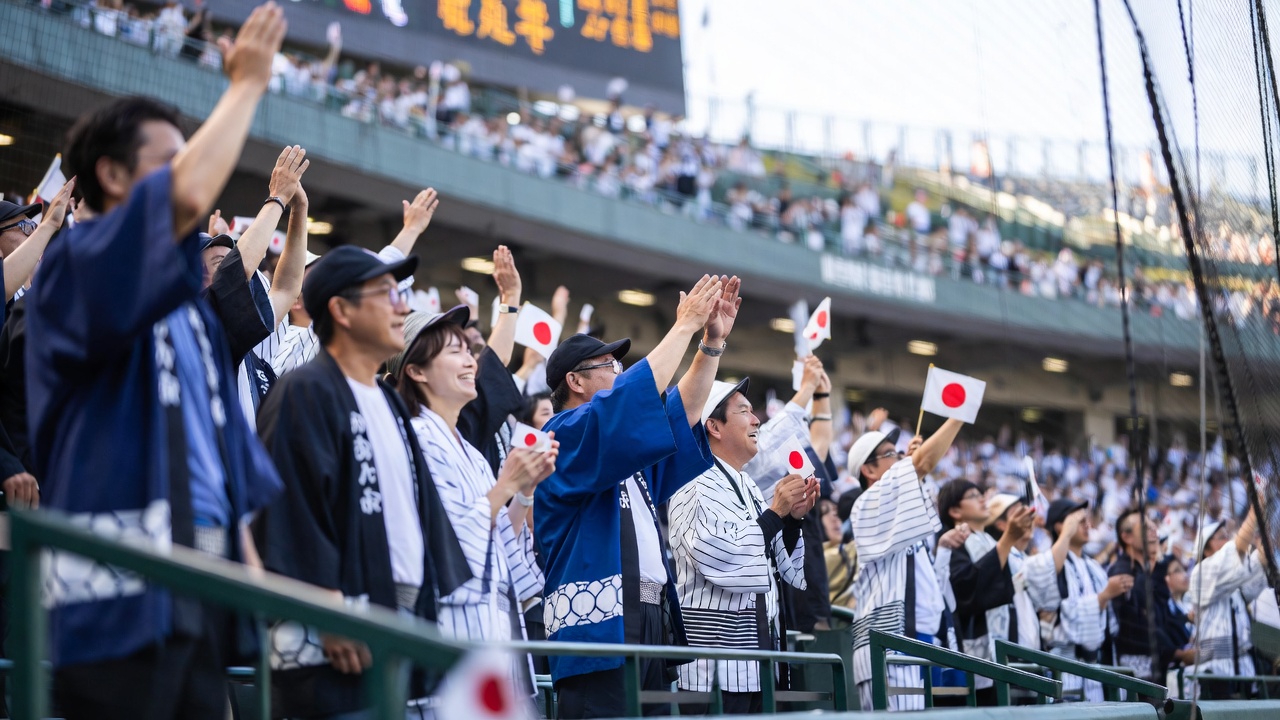
If you have ever sat in the outfield bleachers at Koshien Stadium in Nishinomiya or the towering upper deck of Tokyo Dome, you already know: a Japanese baseball game is not just a sporting event. It is a festival, a concert, a communal prayer, and a neighborhood reunion rolled into nine electrifying innings. The coordinated chants never stop. The taiko drums never rest. The trumpets blare player-specific melodies that tens of thousands of fans sing from memory. And when the final out is recorded, the crowd files out in near-perfect order, leaving barely a scrap of litter behind.
Japan did not invent baseball. But many who witness a game here walk away convinced that the Japanese perfected the art of watching it. This is the story of how a sport introduced by American teachers more than 150 years ago became the beating heart of an entire nation’s culture — and why, in 2026, Japanese baseball fans remain unmatched anywhere on earth.
How Did Baseball Become Japan’s National Sport? A Brief History of Japanese Baseball
To understand the passion, you first need to understand the roots.
Baseball arrived in Japan in the early Meiji era. Horace Wilson, an American educator teaching in Tokyo, is widely credited with introducing the game to his students around 1872. At first, it was little more than a classroom curiosity. But by the turn of the 20th century, high school and university baseball had exploded in popularity. When Waseda University toured the United States in 1905 and played against Stanford, nearly 500 Japanese fans packed an entire section of the bleachers in Palo Alto, waving banners and cheering every play. It was, perhaps, the first glimpse of what Japanese baseball fandom would become.
Professional baseball followed in 1936 with the founding of the Japanese Baseball League, which eventually evolved into today’s Nippon Professional Baseball (NPB). The league now consists of 12 teams split between the Central League and the Pacific League, playing 144 regular-season games from late March through October.
But the raw numbers tell only part of the story. In the 2024 season, NPB drew approximately 26.68 million total attendees, with an average of about 31,100 fans per game. The 2025 season then broke that record again, topping 27 million attendees and averaging 31,515 per game. Those figures make NPB the second-highest-attended professional sports league in the world, behind only Major League Baseball in the United States — despite playing significantly fewer games per season.
One Japanese writer once observed a sentiment that has been shared widely among fans over the decades: “Baseball is perfect for us. If the Americans hadn’t invented it, we would have.”
That is not arrogance. It is a reflection of how deeply the sport has been woven into the rhythms of Japanese daily life — from school playgrounds to office break rooms, from neighborhood festivals to primetime television.
What Makes Japanese Baseball Fan Culture So Unique Compared to Other Countries?
Walk into any major stadium in the United States, and you will find a crowd that ebbs and flows with the action. Fans chat, check their phones, grab a hot dog. The atmosphere picks up during key moments — a bases-loaded at-bat, a diving catch — and quiets again between innings.
Now walk into Meiji Jingu Stadium on a summer evening when the Tokyo Yakult Swallows are at bat. The contrast is immediate.
Every single fan in the home cheering section is standing. They are singing. They are waving miniature plastic umbrellas (the Swallows’ trademark celebration) or team towels or inflatable thunder sticks. Trumpets belt out brass melodies unique to each batter. When the Swallows score, the entire section erupts in a choreographed umbrella dance that has become one of baseball’s most recognizable fan rituals.
And here is the remarkable part: the cheering is organized, not spontaneous. It is led by the ōendan (応援団), or “cheering squad,” and every fan knows exactly when to chant, what words to sing, and which arm to raise. This is not chaos. This is collective art.
Several core differences set Japanese fan culture apart:
| Feature | Japanese Baseball (NPB) | American Baseball (MLB) |
|---|---|---|
| Cheering style | Organized, continuous chanting for every batter | Spontaneous reactions to key plays |
| Fan organization | Dedicated ōendan with leaders, drums, trumpets | Occasional rally towels or foam fingers |
| Player songs | Every batter has a unique chant fans memorize | Walk-up music played on speakers |
| Between-inning behavior | Opposing team’s fans cheer; home fans sit quietly | Entertainment acts, kiss cams, mascot races |
| Stadium cleanliness | Fans clean up their own sections | Custodial staff handle post-game cleanup |
| Food culture | Bento boxes, yakitori, edamame, draft beer vendors | Hot dogs, nachos, peanuts, craft beer |
| Negativity toward opponents | Extremely rare; focus on cheering for own team | Booing, heckling, and jeering are common |
As Miguel Rojas of the Los Angeles Dodgers observed during the 2025 Tokyo Series, the quality of attention from Japanese fans stands out. “The attention to detail and kind of being present. It was so cool,” Rojas said. “They didn’t really care too much about the outside, they were just watching the game.”
That level of presence — sustained across nine full innings, rain or shine, blowout or nail-biter — is what separates Japanese baseball fandom from the rest of the world.
The Ōendan: How Japan’s Organized Cheering Squads Create the World’s Best Stadium Atmosphere
The ōendan is the engine room of the Japanese baseball experience. The word literally translates to “cheering squad” or “support group,” and the tradition stretches back more than a century. According to MLB.com’s detailed history of ōendan culture, the roots of organized cheering in Japan can be traced to university baseball in the early 1900s. When Waseda University toured the United States, their fans encountered American college marching bands. They brought the idea home and fused it with Japanese traditions of group coordination and discipline.
Today, professional ōendan groups are elaborate operations. A typical squad includes:
- A lead cheer master who stands on a platform facing the crowd, directing the chants with precise hand signals and a whistle
- Taiko drummers who provide the rhythmic backbone
- Trumpet and brass players who perform player-specific melodies
- Flag bearers who wave massive team banners at key moments
- Thousands of regular fans who follow every cue without hesitation
What makes this system extraordinary is its inclusivity. Unlike American cheerleading, which focuses on performance by a trained squad, the Japanese ōendan exists to get every single person in the section involved. As the Japan National Tourism Organization puts it, the ōendan style is “less about performance and more about mass audience participation.”
The ōendan members often dress in traditional happi coats or festival garb bearing team logos. They beat drums, blow horns, and call out sophisticated chants whose words change depending on which team they face and which player steps up to bat. And they never stop. Even when the team is losing badly, the ōendan tirelessly supports their squad to the final pitch.
Kentaro Kawai, chairman of the Yakult Swallows’ “Kanto Swallow Army” fan group and a member of the Samurai Japan ōendan, captured the essence in an interview with MLB.com: “The fact that you can create a sense of unity and oneness in the ballpark” is his favorite part of the tradition.
For young Japanese fans, this is simply how baseball works. Many are surprised when they first watch an MLB broadcast and hear no coordinated cheering at all. The ōendan is not a novelty. It is the default.
Why the Hanshin Tigers Have the Most Legendary Baseball Fanbase in Japan
Every country has teams whose fans are a cut above. In England, it might be Liverpool. In Argentina, Boca Juniors. In Japan, that team is the Hanshin Tigers.
Based in the Kansai region around Osaka and Kobe, the Tigers command a devotion that borders on the religious. Their fans are called torakichi — literally, “tiger maniacs” — and they have earned the nickname many times over.
The Tigers’ home ground, Koshien Stadium, is one of the oldest ballparks in Japan, built in 1924. It holds roughly 47,000 fans, and on game days, it fills to capacity with a sea of yellow and black. The noise is deafening. The energy is relentless. Writers and journalists who cover Japanese baseball consistently single out Hanshin fans as the most passionate, the most numerous, and the loudest in the country.
Trevor Raichura, a writer who covers the Tigers, put it plainly in a conversation with MLB.com: “As far as passion goes, the Tigers fans are probably more knowledgeable than any other fanbase out there. They’re greater in number, they’re greater in volume.”
The Curse of the Colonel is the most famous baseball legend in Japan, and it belongs entirely to the Tigers. In 1985, Hanshin won the Central League pennant for the first time since 1964. Fans flooded the Ebisu Bridge in Osaka’s neon-lit Dōtonbori district to celebrate. As they chanted each player’s name, someone who resembled that player jumped into the canal below. When it came time for the team’s American star, Randy Bass, nobody in the crowd matched his appearance.
So the fans did what only Osaka fans would do. They grabbed a Colonel Sanders statue from a nearby KFC — the white-bearded Colonel being the closest approximation to a bearded American — dressed it in a Tigers jersey, and hurled it off the bridge into the murky water.
What followed became baseball legend. The Tigers won the Japan Series that year but then collapsed into 18 years of futility, including numerous last-place finishes. Fans became convinced that the Colonel’s ghost had cursed the team. Attempts to retrieve the statue failed for decades. The story became so famous that KFC restaurants in Osaka reportedly moved their Colonel statues indoors whenever the Tigers had a strong season.
The statue was finally pulled from the canal in 2009, missing a hand and its glasses. But the curse seemed to linger. The Tigers made the Japan Series again in 2014 and lost. It was not until November 2023 that the Tigers finally broke through, defeating the Orix Buffaloes to win the Japan Series for the first time in 38 years. The city of Osaka erupted. Fans gathered at the same bridge where the curse began. This time, a fan dressed as Colonel Sanders jumped into the river and was pulled right back out, laughing. The symbolism was perfect.
It is a story that could only happen in Japan, in a city as irreverent and warm-hearted as Osaka, with fans as gloriously obsessed as the torakichi. And it is a reminder that Japanese baseball fandom is not just about cheering. It is about decades of loyalty, shared myth, collective memory, and a refusal to give up on your team — no matter how long the losing streak lasts.
Koshien and the Summer High School Baseball Tournament: Where Japanese Baseball Passion Begins
If you want to understand why Japanese adults are such devoted baseball fans, look at where the love affair starts: high school.
The National High School Baseball Championship, universally known as “Summer Koshien,” is not merely a sporting event. It is one of the most-watched television events in Japan every year. Held at Koshien Stadium each August, the tournament brings together the best high school teams from all 47 prefectures, each having earned their spot through grueling regional qualifiers. The comparison that comes closest for an American audience is March Madness — except the emotional intensity runs even deeper, and the entire nation stops to watch.
When a local team makes it to Koshien, entire communities rally behind them. Governors issue public statements of support. Shopkeepers hang banners. Local television stations cover every pitch. In Okinawa, it has been said that the roads become empty when the Okinawan team plays at Koshien — because everyone is inside watching.
The traditions of Summer Koshien are deeply moving:
- Air-raid sirens sound to signal the start and end of each game, a tradition dating back to 1936
- Each team bows to the opposing team at home plate before and after every game
- Marching bands and ōendan from each school perform throughout the entire game
- An assistant manager — often a female student — reads an emotional letter of support for the team during a broadcast break
- Losing players weep openly, sometimes collapsing to their knees after elimination
- Players scoop up handfuls of infield dirt from Koshien to take home, a lifelong memento of their time on hallowed ground
That last tradition is especially powerful. For third-year students, Summer Koshien marks the end of their high school baseball careers. The handful of red-brown Koshien dirt becomes a physical connection to the greatest athletic experience of their young lives.
As Kenta Maeda, the Japanese pitcher who played for both the Dodgers and the Twins, once observed: “Of course, kids watch the pro game. But it’s Koshien they aspire to.”
The 2025 Summer Koshien saw Okinawa Shogaku defeat Nihon University Daisan 3-1 in the final — the first championship for the school in its 11th Summer Koshien appearance. The tournament also introduced evening start times for the first time in history to protect players from Japan’s brutal summer heat. These changes show that the tournament continues to evolve while preserving its emotional core.
Summer Koshien is where lifelong fans are made. A child who watches their prefecture’s team fight through the tournament — who cheers, who cries when they lose, who collects the newspaper clippings — carries that passion into adulthood. The devotion that fills NPB stadiums is rooted in the dirt of Koshien.
How Japanese Fans Cheer for Individual Players: The Art of the Personalized Baseball Chant
One of the most distinctive features of Japanese baseball is that every player has their own original chant or fight song, composed specifically for them. This is not a walk-up song played over the speakers. It is a melody performed live by the ōendan’s brass section and sung by tens of thousands of fans in unison, from memory.
When Munetaka Murakami steps to the plate for the Yakult Swallows, the entire home section launches into his personal chant. When a new rookie is called up for the first time, fans somehow already know his song within days. The speed with which these songs spread through the fanbase is remarkable — passed along through social media, fan clubs, and word of mouth at the stadium itself.
This system creates a level of personal connection between fan and player that is difficult to replicate in any other sports culture. Fans do not just root for a uniform or a team logo. They sing directly to the person at the plate, calling his name, urging him forward with a melody that belongs only to him.
Some teams have developed unique traditions around these chants:
- Tokyo Yakult Swallows fans wave miniature plastic umbrellas during their team’s rally song, creating one of the most photographed fan spectacles in all of sports
- Hanshin Tigers fans release “jet balloons” into the sky during the seventh-inning stretch, a tradition that has spread to many other NPB teams and fills the stadium with a colorful cloud of inflatables
- Hiroshima Carp supporters are famous for the “Carp Squat” — a synchronized squatting celebration after the team scores
- Hokkaido Nippon-Ham Fighters fans once performed the “Inaba Jump” for fan favorite Atsunori Inaba, a synchronized leap that reportedly caused earthquake-like tremors and was eventually banned in some stadiums
These are not isolated gimmicks. They are expressions of a culture that values group harmony, creative expression, and total dedication to the communal experience.
Japanese Baseball Stadium Food and Drink: A Culinary Experience Unlike Any Other Ballpark
Walk into an American ballpark, and you expect hot dogs, nachos, and overpriced beer. Walk into a Japanese ballpark, and you enter a different universe entirely.
Stadium food in Japan is a destination in itself. The offerings reflect regional pride and culinary skill that would feel at home in a proper restaurant. Here is a sample of what fans enjoy during a typical game:
| Stadium | Signature Foods |
|---|---|
| Tokyo Dome (Yomiuri Giants) | Bento boxes, gyūdon (beef bowls), takoyaki, premium sushi |
| Koshien Stadium (Hanshin Tigers) | Koshien curry rice, karaage (fried chicken), grilled squid |
| Fukuoka PayPay Dome (SoftBank Hawks) | Hakata ramen, mentaiko (spicy cod roe) rice balls, yakitori |
| Mazda Zoom-Zoom Stadium (Hiroshima Carp) | Hiroshima-style okonomiyaki, oyster dishes |
| ES CON Field Hokkaido (Nippon-Ham Fighters) | Jingisukan (lamb BBQ), Hokkaido seafood bowls, fresh dairy soft serve |
Beer vendors — often young women carrying kegs on their backs — walk the aisles throughout the game, pouring fresh draft beer directly into your cup. It is a remarkable feat of stamina and balance, and these vendors have become celebrities in their own right, sometimes attracting their own fan followings.
The food culture ties directly to the fan culture. Eating well is part of supporting your team. Many fans arrive early specifically to explore the food options, treating the stadium visit as both a sporting event and a culinary outing. This is especially true at newer venues like ES CON Field Hokkaido, which opened in 2023 and was designed to integrate restaurants, hot springs, and entertainment spaces alongside the baseball diamond.
The 2026 World Baseball Classic in Tokyo: Why Japanese Baseball Fans Are Ready to Take Center Stage Again
As this article goes live in February 2026, the baseball world is about to descend on Japan once more. The 2026 World Baseball Classic kicks off on March 5, 2026, with Pool C games hosted at Tokyo Dome from March 5 to 10. Japan’s Samurai Japan squad will defend their title as three-time champions, having defeated the United States in the dramatic 2023 final when Shohei Ohtani struck out Mike Trout for the last out.
The 2026 roster is stacked. Ohtani returns as a hitter (he will not pitch in this tournament). Yoshinobu Yamamoto — who was named 2025 World Series MVP — has confirmed he will pitch. Seiya Suzuki, Yusei Kikuchi, Munetaka Murakami, and Kazuma Okamoto round out a roster designed to defend Japan’s crown.
The significance of the WBC for Japanese fans cannot be overstated. When Samurai Japan plays, the entire country watches. As Evan Kaplan, president of MLB Players, Inc., noted when announcing the WBC’s new Netflix streaming deal for Japan: “Japanese fans have long shown remarkable passion for international baseball.” Netflix will stream all 47 games live and on-demand for Japanese viewers — the first time the platform has streamed a live event of this scale in Japan. Public viewing events are being organized in cities across the country.
The 2023 WBC final drew enormous television audiences in Japan. The 2026 edition, with Japan hosting pool play and defending the title, promises to be even bigger. For fans, this is not just a tournament. It is a matter of national pride, and the ōendan will be ready.
How Shohei Ohtani Changed Global Perception of Japanese Baseball Fans Forever
No conversation about modern Japanese baseball is complete without Shohei Ohtani. The two-way phenomenon — a dominant pitcher and a fearsome hitter — has reshaped the way the world thinks about Japanese baseball.
But Ohtani’s impact extends beyond his athletic feats. He has become a cultural bridge. When the 2025 MLB season opened in Tokyo with the Dodgers facing the Cubs, the fan response was extraordinary. MLB set up a 30,000-square-foot merchandise store — the largest special-event store in league history. Fans lined up for hours. A Dodgers jersey cost roughly 75,000 yen (about $500). They sold out. The event demonstrated that Japanese baseball fans were willing to invest significant money and time to celebrate their heroes.
The documentary Homecoming: The Tokyo Series, directed by Emmy Award-winning filmmaker Jason Sterman and premiering in February 2026, captures this phenomenon beautifully. “In Japan, baseball is part of everyday life,” Sterman observed. “It’s work, craft, and pride.”
What Ohtani has done is make the world pay attention to what Japanese fans have known all along: that baseball in Japan is not a pastime. It is a way of life.
Japanese Baseball Fan Etiquette: The Respectful Rules That Make Games Special
The passion of Japanese fans is made even more remarkable by its discipline. There are unwritten rules — and some very written ones — that govern fan behavior at NPB games, and they contribute enormously to the unique atmosphere.
Key aspects of Japanese baseball fan etiquette include:
- Alternating cheering by half-inning. When your team is at bat, you cheer. When the opposing team is at bat, your section goes quiet, and their fans take over. This structured turn-taking ensures that every fan group gets its moment.
- No booing or heckling. This is one of the most striking differences from American baseball culture. Japanese fans do not boo opposing players, heckle pitchers, or jeer umpires. The focus is entirely on positive support for your own team.
- Cleaning up after yourself. At the end of the game, fans pick up their own trash and leave their seating area spotless. It is a reflection of broader Japanese cultural values around cleanliness and communal responsibility.
- Respecting personal space and boundaries. Even in packed cheering sections, fans are remarkably considerate of those around them. There is intensity without aggression.
- The “uguisu-jō” tradition. At most NPB stadiums, the public address announcer is a woman, affectionately known as uguisu-jō — or “warbler lady.” Her calm, melodic voice contrasts beautifully with the roar of the crowd.
As one American journalist noted in the New York Times: these fans radiate only love for their teams. There is no hostility in a Japanese baseball stadium. The energy is fierce, but it is always constructive.
This combination — extreme passion married to impeccable manners — is what makes Japanese baseball fandom genuinely unique. It is not just that the fans care more. It is that they care better.
Why Japanese Baseball Is More Than a Sport: The Social and Cultural Role of NPB Teams
In Japan, professional baseball teams serve functions that go far beyond entertainment. They are regional identity markers, social gathering points, and economic engines for their home cities.
The Yomiuri Giants, based at Tokyo Dome, have historically been Japan’s most popular team — the “New York Yankees” of NPB. Their games are broadcast nationally, and their success in the 1960s and 1970s cemented baseball’s place in Japanese popular culture. But the regional teams often inspire even deeper loyalty.
The Hiroshima Toyo Carp are owned by their fans and the city itself, one of the few NPB teams without a major corporate parent. Their passionate supporters — identifiable by their bright red — represent the resilience of Hiroshima itself. Supporting the Carp is not just fandom; it is civic identity.
The Fukuoka SoftBank Hawks — champions in the 2025 Japan Series after defeating the Hanshin Tigers — draw from the fierce pride of Kyushu. Their home stadium is consistently one of the loudest and best-attended in the Pacific League.
Baseball also serves as a social release valve in a culture that values restraint and harmony. As the sociologist Robert Whiting noted in his seminal work You Gotta Have Wa, the Japanese sarariman (salaryman) spends his working day hiding personal feelings in deference to the group. But inside the ballpark, surrounded by fellow fans, all that changes. The ōendan becomes a space where pent-up energy and emotion can be released in a socially acceptable way. In the cheering section, a quiet office worker can scream at the top of his lungs, and it is not only acceptable — it is expected.
This is why the fan clubs — called kōenkai — are so important. Some, like the Tigers’ fan organizations, function almost like community networks, organizing group outings, socializing at izakaya (Japanese pubs) after games, and building friendships that extend far beyond the stadium.
How to Experience Japanese Baseball as a Foreign Tourist in 2026
If you are traveling to Japan in 2026, attending an NPB game should be at the top of your itinerary. Here is a practical guide to making the most of the experience:
When to go: The NPB regular season runs from late March to October. The preseason begins in late February. The 2026 World Baseball Classic runs from March 5-17, with pool play at Tokyo Dome.
How to get tickets: Ticket purchasing can be challenging for foreign visitors, as many systems are designed for Japanese residents. The service Japan Sports Ticket was created specifically to help international tourists navigate the process. For popular teams like the Giants, Tigers, and Hawks, buying in advance is essential.
Where to sit for the best experience: If you want the full ōendan experience, sit in the outfield cheering sections. This is where the organized chanting happens and where the energy is at its peak. Be prepared to stand for most of the game and to join in the cheering. Infield seats offer a more relaxed viewing experience.
What to bring:
- Your team’s towel or merchandise (easily purchased at the stadium)
- Cash (some vendors still prefer it)
- An appetite (arrive hungry — the food is outstanding)
- An open mind (you will be invited to participate, and you should)
Stadiums not to miss:
| Stadium | City | Team | Why Visit |
|---|---|---|---|
| Koshien Stadium | Nishinomiya | Hanshin Tigers | Japan’s oldest ballpark; legendary atmosphere |
| Tokyo Dome | Tokyo | Yomiuri Giants | Iconic venue; host of 2026 WBC Pool C |
| Meiji Jingu Stadium | Tokyo | Yakult Swallows | Open-air charm; famous umbrella dance |
| Mazda Zoom-Zoom Stadium | Hiroshima | Hiroshima Carp | Modern design; incredible regional food |
| ES CON Field Hokkaido | Kitahiroshima | Nippon-Ham Fighters | Japan’s newest stadium (2023); hot springs and BBQ |
Several tour operators now offer dedicated Japanese baseball tours. Companies like Big League Tours and Extra Innings Travel run multi-city itineraries that include games at multiple stadiums, behind-the-scenes tours, and cultural excursions.
The 2025 Tokyo Series and Beyond: How Japan’s Baseball Passion Is Reshaping the Global Game
The influence of Japanese baseball culture is no longer confined to Japan. It is reshaping the global sport.
When the Los Angeles Dodgers and Chicago Cubs opened the 2025 MLB season in Tokyo, the event was more than a marketing exercise. It was a cultural exchange. Japanese fans brought their cheering style to an MLB game, and the American players were visibly moved by the atmosphere. The resulting documentary, Homecoming: The Tokyo Series, premiered at the Egyptian Theatre in Hollywood in February 2026 to critical acclaim.
MLB’s Noah Garden captured the sentiment: “The 2025 season started in grand fashion with five Japanese-born MLB players returning home as larger-than-life sports figures. It ended with Ohtani, Yamamoto, Sasaki, and the Dodgers winning the World Series, watched by record-setting global audiences.”
Meanwhile, at the grassroots level, Japanese cheering culture has started to influence fan behavior at baseball events worldwide. At the 2023 World Baseball Classic, the Samurai Japan ōendan was broadcast globally, introducing millions of viewers to coordinated cheering for the first time. Fan groups in South Korea, Taiwan, and even some MLB teams have begun experimenting with organized chants inspired by the Japanese model.
The Japanese baseball ecosystem — from the youth development pipeline of Koshien, to the professional spectacle of NPB, to the global ambassadorship of players like Ohtani, Yamamoto, and Ichiro Suzuki (inducted into the MLB Hall of Fame in January 2025) — represents a complete cultural package. It is not just a game. It is a philosophy. And the fans are its most faithful practitioners.
Why Japanese Baseball Fans Will Continue to Be the Most Passionate in the World
Let us return to where we started. Why are Japanese baseball fans the most passionate in the world?
It is not one thing. It is everything.
It is the ōendan — the organized cheering squads that transform every game into a communal celebration. It is Koshien — the high school tournament that plants the seed of devotion in every Japanese child who watches. It is the etiquette — the discipline and respect that elevate passion into something beautiful rather than destructive. It is the food, the rituals, the jet balloons, the player songs. It is the torakichi still showing up at Koshien year after year, through decades of heartbreak, until the curse finally breaks. It is the salaryman screaming in the bleachers after a silent day at the office. It is the grandmother who can sing every player’s chant from memory.
Japanese baseball fandom is not a hobby. It is not a weekend activity. It is an identity. And as the 2026 World Baseball Classic prepares to return to Tokyo Dome, as Samurai Japan takes the field to defend their title, as the ōendan fills the stadium with sound and color and life — the world will see, once again, why nobody does baseball fandom quite like Japan.
Pack your towel. Learn the chants. And get ready to stand for nine straight innings.
The game is about to begin.