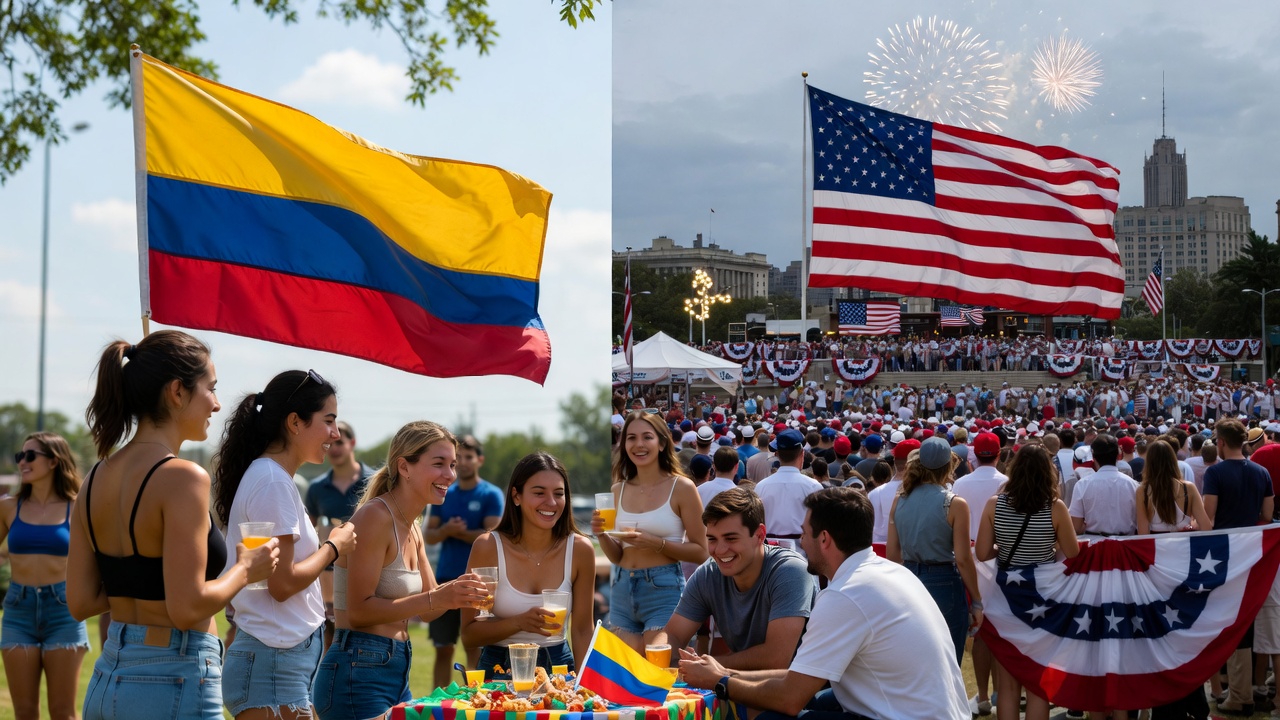
When people hear “July 4,” they think of fireworks over the Washington Monument. They picture backyard barbecues and the Star-Spangled Banner. But July 4 carries a completely different meaning in Colombia. It has nothing to do with American independence. In Colombia, this date marks the birth of one of the most progressive constitutions in Latin America — the Constitución Política de 1991.
On July 4, 1991, after months of passionate debate, 70 elected delegates proclaimed a new social contract for the Colombian people. The ceremony ended over a century of governance under the aging 1886 Constitution. It was, by every measure, a turning point. And in 2026, Colombia commemorates the 35th anniversary of its Constitution — a milestone that arrives at a particularly charged political moment.
This guide explores everything you need to know about Colombia’s Constitution Day on July 4: the violent history that created it, the student movement that made it possible, the rights it protects, how Colombians observe the date, and why it matters more than ever in 2026.
What Is Colombia Constitution Day and Why Is It on July 4?
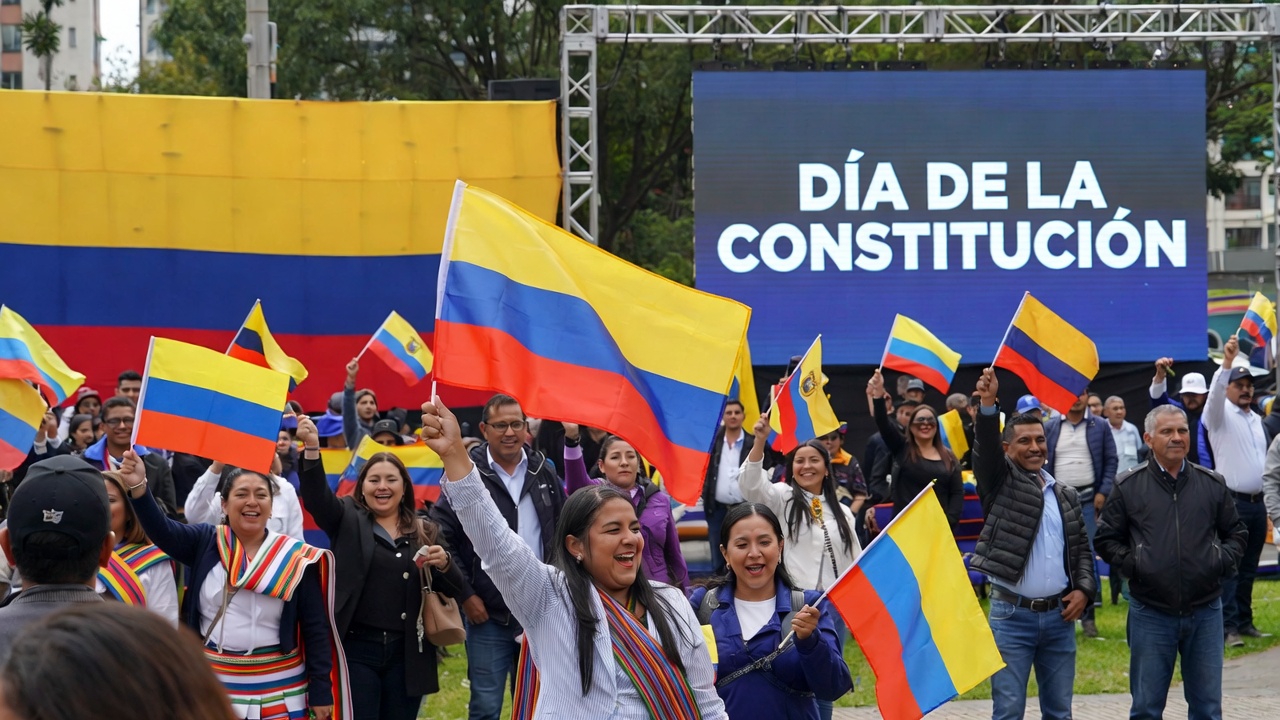
Colombia’s Constitution Day falls on July 4 each year. It marks the date in 1991 when the National Constituent Assembly formally proclaimed the country’s current governing charter. The full title of the document is the Constitución Política de Colombia de 1991. Colombians also call it the “Constitution of Rights” because of the broad protections it introduced.
This is not a public holiday with a day off from work. Colombia reserves that honor for July 20 (Independence Day) and August 7 (Battle of Boyacá). Instead, July 4 is a civic commemorative date — a day for reflection, academic forums, editorial commentary, and public debate. Universities hold symposiums. Newspapers publish special editions. Legal scholars and politicians discuss what the Constitution has achieved and where it has fallen short.
The distinction is important for travelers and cultural observers. You will not see parades or fireworks on July 4 in Bogotá the way you would on July 20. But you will find a country engaged in serious, sometimes heated, conversation about its democratic foundations.
Quick Facts: Colombia Constitution Day
| Detail | Information |
|---|---|
| Date | July 4, every year |
| What it marks | Proclamation of the 1991 Political Constitution |
| Document replaced | The 1886 Constitution |
| Type of observance | Civic commemorative date (not a public holiday) |
| President at the time | César Gaviria (Liberal Party) |
| Number of Constituent Assembly delegates | 70 elected + 4 appointed |
| 2026 significance | 35th anniversary |
The Violent History That Made Colombia Need a New Constitution
To understand why July 4 matters in Colombia, you have to understand the country that existed before 1991. The old 1886 Constitution had governed Colombia for more than a century. It established a highly centralized, Catholic state dominated by two political parties: the Conservatives and the Liberals. A power-sharing arrangement called the Frente Nacional (National Front), active from 1958 to 1974, gave these two parties a monopoly on political power. Third parties and independent movements were effectively shut out.
By the late 1980s, this closed political system had produced devastating consequences. Colombia was caught in a web of violence involving guerrilla groups (the FARC, the ELN, the M-19), paramilitary forces, and drug cartels — most notoriously the Medellín Cartel led by Pablo Escobar. Political assassinations were routine. In 1989 alone, Colombia experienced the murder of 12 judicial officers and the assassination of Liberal presidential candidate Luis Carlos Galán on August 18 in Soacha.
The violence did not stop there. In 1990, two more presidential candidates were assassinated: Bernardo Jaramillo of the Patriotic Union on March 22 and Carlos Pizarro of the AD M-19 on April 26. Colombia was averaging 11 politically motivated killings per day in 1988, according to data compiled by Americas Watch and cited by academic researchers at Yale Law School.
The existing Constitution offered no adequate remedy. Its rigid amendment process — requiring changes to pass through Congress, the very institution many saw as corrupt and compromised — made reform from within nearly impossible. The country desperately needed a new social pact.
How a Student Movement Changed Colombia Forever: The Séptima Papeleta
The story of Colombia’s 1991 Constitution begins not in a legislative chamber, but in the streets. Specifically, it begins with a student-led movement that is one of the most remarkable episodes of peaceful civic action in Latin American history: the Séptima Papeleta, or “Seventh Ballot.”
The Marcha del Silencio and the Birth of Student Activism
Seven days after the assassination of Luis Carlos Galán in August 1989, university students in Bogotá organized a massive Marcha del Silencio (Silent March). Thousands of students, professors, workers, and ordinary citizens walked through the capital carrying candles and signs. No chants. No slogans shouted. Just silence — a powerful, deliberate rejection of the violence that had consumed the nation. The march’s motto captured its spirit: “Por todo lo que nos une, contra todo lo que nos separa” — “For everything that unites us, against everything that divides us.”
That march planted the seed for what came next. Students from both public and private universities — an unusual alliance in Colombia — began organizing to demand systemic change. Not just a new president. Not just a new law. A completely new constitution.
The significance of this public-private university coalition cannot be overstated. In Colombia, the divide between public universities (often seen as politically progressive, working-class institutions) and private universities (associated with the upper and middle classes) was deep and real. For students from the Universidad Nacional and the Universidad Distrital to stand alongside students from the Universidad del Rosario and the Universidad de los Andes was itself a statement: the crisis had become so severe that old divisions no longer mattered. As former student leader and current director of the Electoral Observation Mission Alejandra Barrios has recalled, the movement brought together people from every ideological corner and every social class, united by a single conviction — Colombia’s political system needed to be rebuilt from the ground up.
The Seventh Ballot: A Revolutionary Idea Born on Campus
On March 11, 1990, Colombia held elections for the Senate, House of Representatives, departmental assemblies, municipal councils, mayors, and a Liberal Party internal consultation. That meant six official ballots went into the voting box. The students proposed a seventh — the séptima papeleta — an unofficial ballot on which voters could express their desire for a National Constituent Assembly to write a new Constitution.
The ballot read: “Plebiscito por Colombia, voto por una Asamblea Constituyente” — a plebiscite for Colombia, a vote for a Constituent Assembly. The national electoral authority, the Registraduría, refused to print it. It refused to count it. But newspapers across the country — El Tiempo, El Espectador, and others — took up the cause. They printed the ballot. Citizens cut it out, carried it to the polls, and dropped it into the boxes alongside their official votes.
The unofficial count showed over two million Colombians had deposited the seventh ballot. It had no legal force. But it had enormous political force. As Colombia’s Radio Nacional documented on the 35th anniversary of the movement, the séptima papeleta demonstrated that citizens were willing to bypass traditional channels when those channels failed them.
From Unofficial Ballot to Official Mandate
Responding to the wave of popular pressure, President Virgilio Barco issued Decree 927 on May 3, 1990, authorizing the Registraduría to count votes on the question of a Constituent Assembly during the presidential election on May 27. This time, the vote was official. The result was decisive: over 5.2 million Colombians voted “yes” for a Constituent Assembly.
The Supreme Court validated the result, arguing that the sovereign will of the people could not be ignored. On December 9, 1990, Colombians elected 70 delegates to the National Constituent Assembly. The body that would write a new Constitution for 35 million people had been born from a simple piece of paper that students carried to the polls.
Who Wrote Colombia’s 1991 Constitution: Inside the National Constituent Assembly
The Constituent Assembly that convened on February 5, 1991, was unlike anything Colombia had seen. For the first time, the body charged with shaping the nation’s legal framework was not dominated by the traditional Liberal-Conservative duopoly.
A Historic Composition
The Assembly’s elected delegates represented a genuine cross-section of Colombian society:
- Liberal Party: 25 delegates
- Alianza Democrática M-19 (the former guerrilla group, now a legal political party): 19 delegates
- Movimiento de Salvación Nacional (Conservative dissident movement): 11 delegates
- Partido Social Conservador: 5 delegates
- Independent Conservative slates: 4 delegates
- Indigenous peoples’ representatives: 2 delegates
- Patriotic Union (UP): 2 delegates
- Evangelical Christian movement: 2 delegates
- Esperanza, Paz y Libertad (demobilized EPL): 2 delegates
- Partido Revolucionario de los Trabajadores: 1 delegate (non-voting)
- Movimiento Indígena Quintín Lame: 1 delegate (non-voting)
The Assembly elected a shared tripartite presidency — a deliberate symbol of Colombia’s aspiration for pluralism. The three co-presidents were:
- Horacio Serpa Uribe (Liberal Party)
- Álvaro Gómez Hurtado (National Salvation Movement — Conservative)
- Antonio Navarro Wolff (AD M-19 — former guerrilla)
A Liberal, a Conservative, and a former guerrilla leader sitting side by side to chair the same body. That image alone told the world something had changed in Colombia.
Five Months of Intense Debate
The Assembly worked for approximately five months under President César Gaviria’s administration. Delegates debated everything from land reform to indigenous rights, from environmental protections to the structure of the judiciary. The word that dominated proceedings, from the first session to the last, was paz — peace.
On the final day of the Assembly’s work, July 4, 1991, the new Constitution was proclaimed. On that same day, as documented by researchers at Yale Law School, the Extraditables — the coalition of drug traffickers led by Pablo Escobar — announced the dissolution of their organization. The connection between the Constitution and the end of narcoterrorist violence was complex, but undeniable.
The Constitution was officially published in Constitutional Gazette number 114 on July 7, 1991. It contained 380 articles and 60 transitory provisions. It replaced a document that had governed Colombia for 105 years.
Key Rights and Reforms Introduced by Colombia’s 1991 Constitution
The 1991 Constitution transformed Colombia from a closed, centralized, exclusionary state into something radically different on paper: a social state under the rule of law (Estado social de derecho), decentralized, pluralistic, and grounded in respect for human dignity. Here are the most important changes it introduced.
The Acción de Tutela: Colombia’s Most Powerful Legal Tool
Without question, the single most impactful innovation of the 1991 Constitution is the acción de tutela, enshrined in Article 86. This is a simplified legal mechanism that allows any person — without a lawyer — to petition any judge for the immediate protection of their fundamental constitutional rights. The judge must respond within 10 days.
The tutela was modeled partly on Mexico’s amparo but adapted to Colombian needs. Its impact has been staggering. According to data cited by Wikipedia’s entry on the Colombian Constitution, a 2013 poll of nearly 6,000 Colombians showed that 83.7% were familiar with the tutela — far more than any other legal mechanism. Between 1991 and 2011, Colombian citizens filed approximately 4 million tutela actions. In 2013 alone, there were 454,500 filings.
The tutela has been used to protect rights ranging from healthcare access to environmental preservation. In a landmark 2016 case, Afro-Colombian and indigenous communities in Chocó used an acción de tutela to argue that the government had violated their rights by failing to stop illegal mining. The Constitutional Court’s resulting Sentence T-622 declared the Atrato River a subject of legal rights — a groundbreaking decision in global environmental law.
The Constitutional Court: Guardian of the New Order
Before 1991, the Supreme Court handled judicial review. The new Constitution created an independent Corte Constitucional (Constitutional Court) specifically tasked with defending the supremacy of the Constitution. This court has become one of the most active and progressive constitutional tribunals in the world.
Key rulings by the Constitutional Court include:
| Year | Ruling | Impact |
|---|---|---|
| 2006 | C-355 | Decriminalized abortion in three specific circumstances |
| 2008 | T-760 | Recognized health as a fundamental right |
| 2010 | C-141 | Blocked a constitutional amendment allowing a third presidential term |
| 2011/2016 | C-577 / SU 214 | Recognized the right of same-sex couples to marry |
| 2016 | T-622 | Declared the Atrato River a subject of legal rights |
| 2022 | C-055 | Expanded reproductive rights, decriminalizing abortion up to 24 weeks |
Recognition of Ethnic and Cultural Diversity
Article 7 of the Constitution recognizes and protects the ethnic and cultural diversity of Colombia. This was revolutionary. For the first time, the state acknowledged that Colombia is not a monolithic, Spanish-speaking, Catholic nation but a mosaic of indigenous peoples, Afro-Colombian communities, Raizal people, and Roma communities. Indigenous languages were declared official in their respective territories alongside Spanish.
Environmental Protections Ahead of Their Time
The 1991 Constitution is sometimes called one of the world’s first “green constitutions.” Multiple articles establish the state’s obligation to protect the environment, guarantee citizens’ right to a healthy environment, and manage natural resources sustainably. These provisions have been the legal foundation for landmark environmental rulings in the decades since.
Expanded Democratic Participation
The Constitution introduced mechanisms of direct democracy that did not exist before, including referendums, popular consultations (consultas populares), citizen initiatives, plebiscites, open town halls (cabildos abiertos), and the right of recall for elected officials. Article 40 guaranteed citizens the right to participate in shaping, exercising, and controlling political power.
Decentralization and Local Autonomy
Departmental and municipal governments received significantly greater autonomy. Governors, previously appointed by the president, became popularly elected. This was a direct response to decades of excessive centralization under the 1886 Constitution.
How Colombians Observe Constitution Day on July 4 Each Year
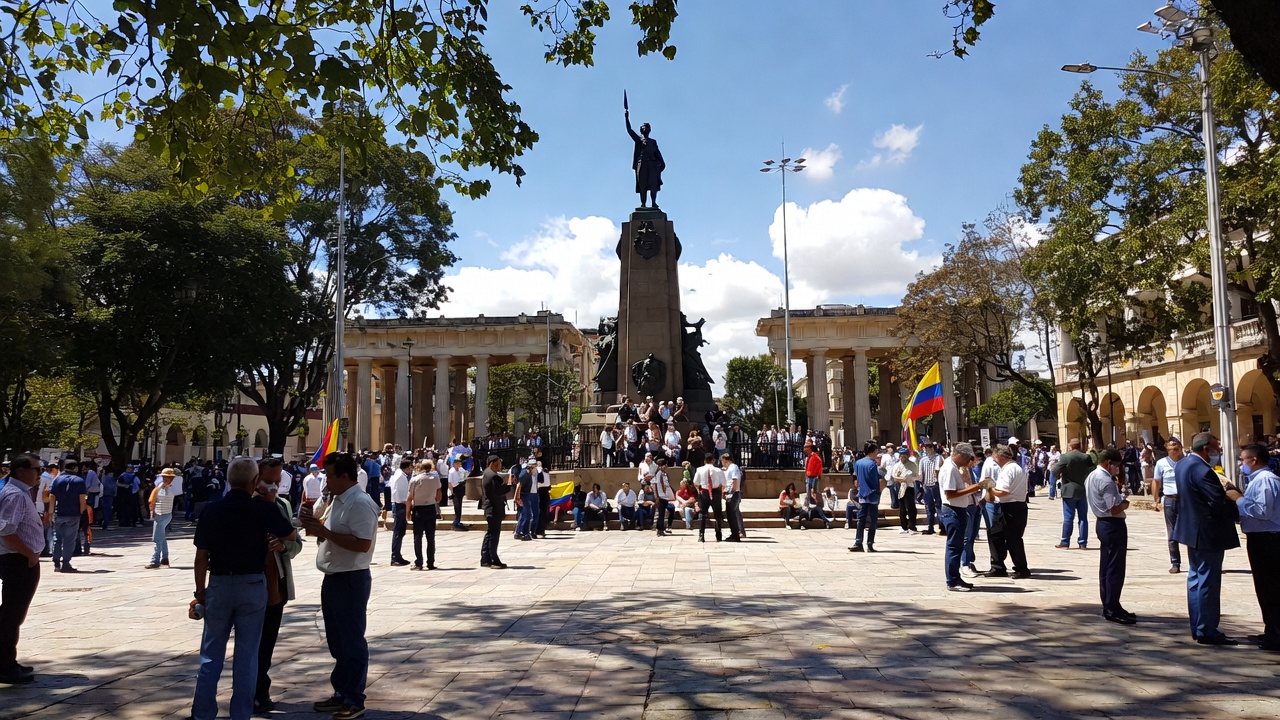
As mentioned, July 4 is not a day off in Colombia. There are no parades, no concerts in the plaza, no special menu at the local restaurant. The observance is civic and intellectual rather than festive.
Academic Forums and University Events
The most visible commemorations take place at universities. Institutions like the Universidad del Rosario, the Universidad de los Andes, the Universidad Externado, and the Universidad Nacional regularly host symposiums, panel discussions, and lectures around July 4. Constitutional law professors lead discussions on the document’s achievements and unresolved promises.
In 2021, for the 30th anniversary, the Universidad del Rosario organized a major event that produced the book Reflexiones y desafíos de la Constitución Política de 1991 tras treinta años de su expedición — a collection of essays examining the Constitution’s impact and challenges, led by Professor Diana Valencia Tello.
Media Commentary and Public Debate
Major Colombian newspapers — El Tiempo, El Espectador, and Semana — typically publish anniversary editorials, special reports, and opinion pieces around July 4. Television news programs run segments examining how specific constitutional provisions have played out in practice. These discussions often center on whether the Constitution’s promises have been fulfilled or betrayed.
Quiet Civic Reflection
For ordinary Colombians, July 4 is more of a “background” date — a moment of awareness rather than active celebration. Many Colombians know the significance of the date even if they do not mark it with any particular ritual. The tutela, in particular, is so deeply woven into daily life that Colombians encounter the Constitution’s impact regularly, whether they think about it in those terms or not.
Colombia Constitution Day vs. Independence Day: What Travelers Need to Know
Travelers visiting Colombia in July often confuse these two dates or assume they carry the same significance. They do not. Here is a clear comparison.
| Feature | Constitution Day (July 4) | Independence Day (July 20) |
|---|---|---|
| Type | Civic commemorative date | National public holiday |
| Day off work? | No | Yes |
| Parades? | No | Yes — military parades nationwide |
| Fireworks? | No | Yes, in many cities |
| Traditional food? | No special dishes | Bandeja paisa, arepas, tamales, empanadas, ajiaco |
| Music and dance? | Academic events | Cumbia, vallenato, salsa, bambuco |
| Mood | Reflective, scholarly | Festive, patriotic |
| Flag displays? | Some institutional displays | Ubiquitous yellow, blue, and red |
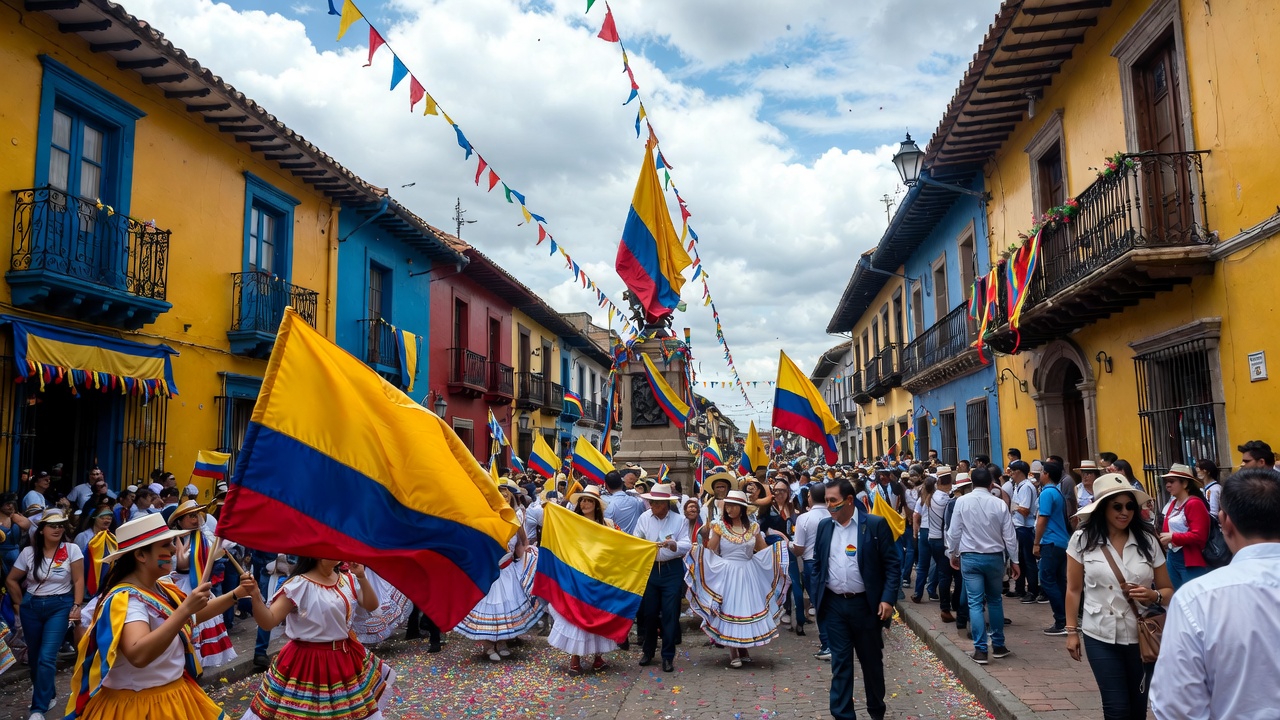
If you are visiting Colombia in July and want to experience lively celebrations, plan your trip around July 20. That is when streets fill with the colors of the tricolor flag, military bands march through city plazas, families gather over plates of lechona and empanadas, and the night sky lights up with fireworks. Cities like Bogotá, Medellín, Cartagena, and Cali host the biggest events.
But if you are a student of law, politics, or Latin American history, July 4 offers something equally valuable: a window into how Colombia thinks about itself, its democratic institutions, and the gap between constitutional aspiration and lived reality.
Why the 35th Anniversary in 2026 Is Especially Significant for Colombia
The 35th anniversary of the 1991 Constitution arrives at a moment of profound political tension in Colombia. This is not just another round-number milestone. The very existence and shape of the Constitution are actively under debate.
President Petro and the Constituent Assembly Proposal
Since 2024, President Gustavo Petro has repeatedly proposed convening a new National Constituent Assembly. His argument is that the 1991 Constitution, while progressive on paper, has never been fully implemented. Social reforms in healthcare, labor, education, and land redistribution have been blocked or diluted by Congress, which his coalition no longer controls.
Petro’s proposal has evolved over time. Initially, he framed it as a mechanism to expand the existing Constitution, not replace it. As reported by ColombiaOne.com, the president has argued that institutional obstacles justify extraordinary measures to fulfill the Constitution’s original democratic promises.
However, opposition leaders, legal scholars, and international observers have raised serious concerns. Senate President Efraín Cepeda has insisted that any constituent assembly must follow the procedures set out in Article 376 of the Constitution — which requires Congressional approval before any such body can be convened. The debate has intensified as Colombia approaches legislative elections in March 2026 and presidential elections in May and June 2026.
A Country Debating Its Own Foundations
This means that in July 2026, when Colombia marks 35 years of its Constitution, the national conversation will not be a polite academic exercise. It will be a live political debate about whether the document needs updating, expansion, or replacement — and about who has the authority to make those changes.
The parallels to 1990 are striking and deliberate. Petro’s supporters have invoked the memory of the séptima papeleta, proposing an “eighth ballot” (octava papeleta) to be included in the March 2026 elections as a way of gauging popular support for a new Constituent Assembly. The symbolism is powerful: just as students in 1990 used an unofficial ballot to bypass a gridlocked Congress, Petro’s allies seek to use a similar mechanism to advance reform over institutional resistance. Critics, however, point out a fundamental difference — the 1990 movement arose from civil society, while the 2026 effort is being driven from the presidential palace.
Colombia’s political polarization is intense. Petro’s approval rating hovers around 37%, and his coalition lost control of the Senate in 2024. The opposition controls Congress and has allies in the judiciary. International observers, including the Atlantic Council, have warned that the push for a constituent assembly — depending on how it is pursued — could place real strain on Colombia’s democratic checks and balances.
For travelers, students, journalists, and anyone interested in Latin American politics, this makes July 2026 an extraordinarily compelling time to be in Colombia. The 35th anniversary will likely feature expanded university forums, heightened media coverage, and passionate public discourse.
The World Congress on Constitutional Law
Adding to the significance of 2026, Colombia is hosting the World Congress on Constitutional Law (WCCL), organized by the International Association of Constitutional Law. As described by the WCCL 2026 website, the event will examine Colombian constitutionalism’s distinctive features — its activist Constitutional Court, its expansive rights protections, and its role as a reference point for the entire region.
Understanding Colombia’s Holiday Calendar in 2026: Where July 4 Fits
Colombia observes 18 national public holidays each year. The country uses a system known as the Ley Emiliani (Law 51 of 1983), which shifts many holidays to the following Monday to create long weekends. Colombians call these extended breaks puentes festivos — “holiday bridges.”
However, certain holidays cannot be moved, including Easter-related dates, Independence Day (July 20), the Immaculate Conception (December 8), and Christmas Day (December 25).
Key Colombian holidays near July 4:
| Date (2026) | Holiday | Movable? |
|---|---|---|
| June 29 → Monday, June 29 | Saints Peter and Paul | Yes (moved to Monday) |
| July 4 | Constitution Day (non-holiday commemoration) | N/A |
| July 20 | Independence Day (Día de la Independencia) | No |
| August 7 | Battle of Boyacá | No |
| August 15 → Monday, August 17 | Assumption of the Virgin Mary | Yes (moved to Monday) |
For travelers, the practical implication is this: July 4 is a regular working day. Government offices, banks, shops, and restaurants operate on normal schedules. July 20, however, brings closures across the country, increased domestic travel, and crowded roads — especially on routes leaving Bogotá, Medellín, and Cali.
How the 1991 Constitution Changed Everyday Life in Colombia
Constitutional texts can seem abstract. Dusty documents locked in archives. But Colombia’s 1991 Constitution changed things that ordinary people touch every day.
Healthcare as a Right
Before 1991, access to healthcare was determined largely by employment status and ability to pay. The new Constitution established healthcare as a fundamental right — a principle reinforced by the Constitutional Court’s landmark Ruling T-760 of 2008. While the Colombian healthcare system remains deeply imperfect — plagued by inefficiencies, underfunding, and unequal access between urban and rural areas — the constitutional guarantee has given millions of Colombians a legal tool to demand care. The tutela is most commonly used precisely to protect the right to health, accounting for roughly 23% of all filings according to data reported by the Wikipedia entry on the 1991 Constitution.
Indigenous and Afro-Colombian Rights
The Constitution’s recognition of ethnic diversity was not merely symbolic. It established special electoral districts for indigenous and Afro-Colombian communities, guaranteed territorial rights for indigenous reserves (resguardos), and recognized customary indigenous law in indigenous territories. These provisions have been the basis for decades of legal battles — some won, some still ongoing — over land, resources, and cultural preservation.
Environmental Jurisprudence
Colombia has become a global leader in rights-of-nature jurisprudence, building on the environmental provisions of the 1991 Constitution. The Atrato River rights case is the most famous example, but similar rulings have extended legal personhood to other ecosystems. This is a direct legacy of the 1991 Constituent Assembly’s decision to embed environmental protections into the constitutional text.
Marriage Equality
The Constitutional Court’s rulings recognizing same-sex marriage in 2016 were grounded in the equality and dignity provisions of the 1991 Constitution. Colombia became one of the first countries in Latin America to achieve marriage equality through judicial interpretation of constitutional rights — a path made possible by the document proclaimed on July 4, 1991.
Visiting Colombia Around Constitution Day: A Practical Travel Guide for July 2026
While Constitution Day itself does not generate the kind of festivities that draw tourists, July is a fascinating month to visit Colombia. The date sits between two major national holidays, and the broader cultural season offers plenty for visitors.
Weather and Climate in July
Colombia’s climate varies dramatically by region. In Bogotá (elevation 2,640 meters), July is part of the drier season, with average daytime temperatures around 18°C (64°F). Medellín, the “City of Eternal Spring,” hovers around 22°C (72°F) year-round. Cartagena and the Caribbean coast are hot and humid, with temperatures reaching 32°C (90°F) or higher. July is part of the veranillo de San Juan — a brief dry spell within the broader rainy season.
Key Events and Festivals in July
- Constitution Day forums (July 4): Check university websites in Bogotá for symposiums and panel discussions. Many are open to the public and offer simultaneous translation.
- Independence Day (July 20): Military parades, cultural festivals, traditional food, and fireworks nationwide.
- Festival de Música del Pacífico Petronio Álvarez: Typically held in Cali in August, but cultural programming begins in July. This celebration of Pacific Colombian music and culture is declared part of Colombia’s cultural heritage.
- Festival Mono Núñez: Held in Ginebra, Valle del Cauca, this is the most important Andean music competition in Colombia.
Practical Tips for July Travel
- Book domestic flights early. The period around July 20 is one of the busiest travel windows in Colombia. Prices surge, and routes fill up.
- Expect road restrictions. During holiday weekends, Colombia implements traffic measures including pico y placa (license plate-based restrictions) and bans on heavy freight vehicles on certain highways.
- Learn a few words of Spanish. While English is increasingly spoken in tourist areas, basic Spanish enormously enriches your experience — especially at July 4 academic events, which are usually conducted in Spanish.
- Wear the colors. If you are in Colombia around July 20, wearing yellow, blue, and red shows respect for the national celebration and helps you feel part of the moment.
What the World Can Learn from Colombia’s Constitutional Journey
Colombia’s constitutional story is not a simple tale of triumph. The 1991 Constitution established extraordinary rights on paper — but the country has spent 35 years struggling to make many of them real. Violence has continued. Inequality persists. The armed conflict, while diminished after the 2016 peace agreement with the FARC, has not ended entirely. Social leaders and human rights defenders continue to be killed.
And yet, what Colombia achieved in 1991 remains remarkable. A country in the grip of narcoterrorism, guerrilla warfare, and political assassination managed to produce a constitution through an inclusive, democratic, and largely peaceful process. A student movement with no money, no political party, and no legal standing sparked a national transformation. A piece of paper — the seventh ballot — rewrote the rules of a nation.
The Colombian Constitution is now studied worldwide as a model for rights-based constitutionalism. The World Congress on Constitutional Law chose Colombia as its 2026 host precisely because of the richness and complexity of its constitutional experience. As the event’s organizers note, the 1991 Constitution became a reference for all of Latin American constitutionalism because of its robust judicial guarantees and its commitment to human rights.
For anyone interested in how societies rebuild themselves after conflict, how legal documents can be instruments of peace, and how ordinary citizens can reshape their government, Colombia’s Constitution Day on July 4 is a date worth knowing and understanding.
Frequently Asked Questions About Colombia Constitution Day
Is July 4 a public holiday in Colombia?
No. July 4 is a civic commemorative date, not a public holiday. Colombians do not get a day off from work. Schools, banks, and government offices operate normally. The day is marked primarily through academic events, media coverage, and public debate.
What is the difference between July 4 and July 20 in Colombia?
July 4 commemorates the proclamation of the 1991 Constitution. July 20 commemorates the 1810 Cry of Independence from Spanish rule. July 20 is a full national holiday with parades, fireworks, and celebrations. July 4 is observed more quietly through civic and intellectual activities.
How old is Colombia’s current constitution in 2026?
The Constitution was proclaimed on July 4, 1991. In 2026, it turns 35 years old.
What is the acción de tutela?
The acción de tutela is a legal mechanism established by Article 86 of the 1991 Constitution. It allows any person to petition any judge — without a lawyer — for the immediate protection of their fundamental constitutional rights. The judge must rule within 10 days. It is the most widely used legal mechanism in Colombia.
Can I visit Colombia on July 4 to observe Constitution Day?
Yes. While there are no street celebrations, universities and cultural institutions in Bogotá and other major cities often host public forums and discussions. Check the websites of the Universidad del Rosario, Universidad de los Andes, and Universidad Externado for scheduled events.
Is Colombia’s 1991 Constitution still in effect?
Yes. The 1991 Constitution is the current governing document of Colombia. It has been amended multiple times since its proclamation but remains in force. As of 2026, there is active debate — driven by President Gustavo Petro — about whether to convene a new Constituent Assembly to expand or modify the document.
Final Thoughts: Why Every Traveler Should Know About Colombia’s July 4
Colombia is a country that defies easy summary. It is a place of extraordinary beauty and deep historical scars, of constitutional ambition and persistent inequality, of cumbia rhythms and Supreme Court rulings. Understanding July 4 in Colombia means understanding a country that chose — at the darkest moment in its modern history — to build something new through dialogue rather than violence.
The 1991 Constitution is not perfect. No constitution is. But the story of how it came to be — through student marches, unofficial ballots, and a diverse assembly of former enemies — is one of the great democratic narratives of the 20th century. And in 2026, that story is still being written.
If you visit Colombia this July, take a moment on the 4th. Not for fireworks. Not for barbecue. Take a moment for the piece of paper that changed a country — and for the students who believed it could.