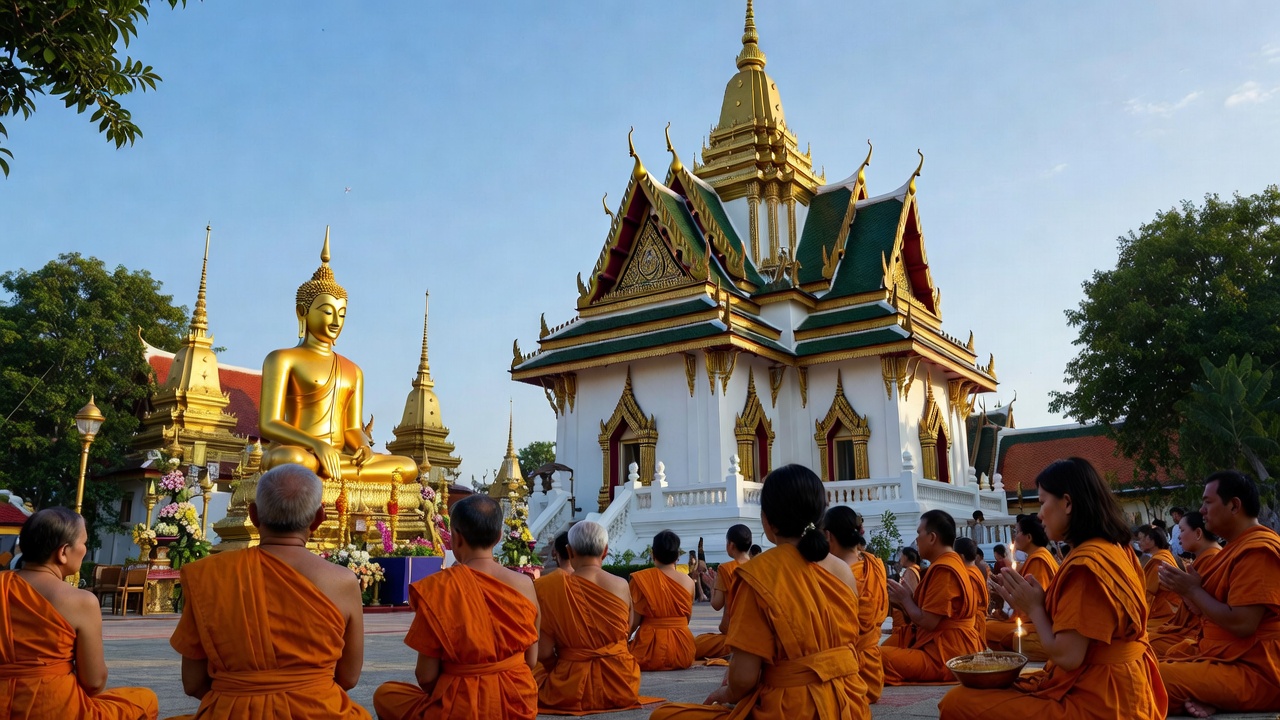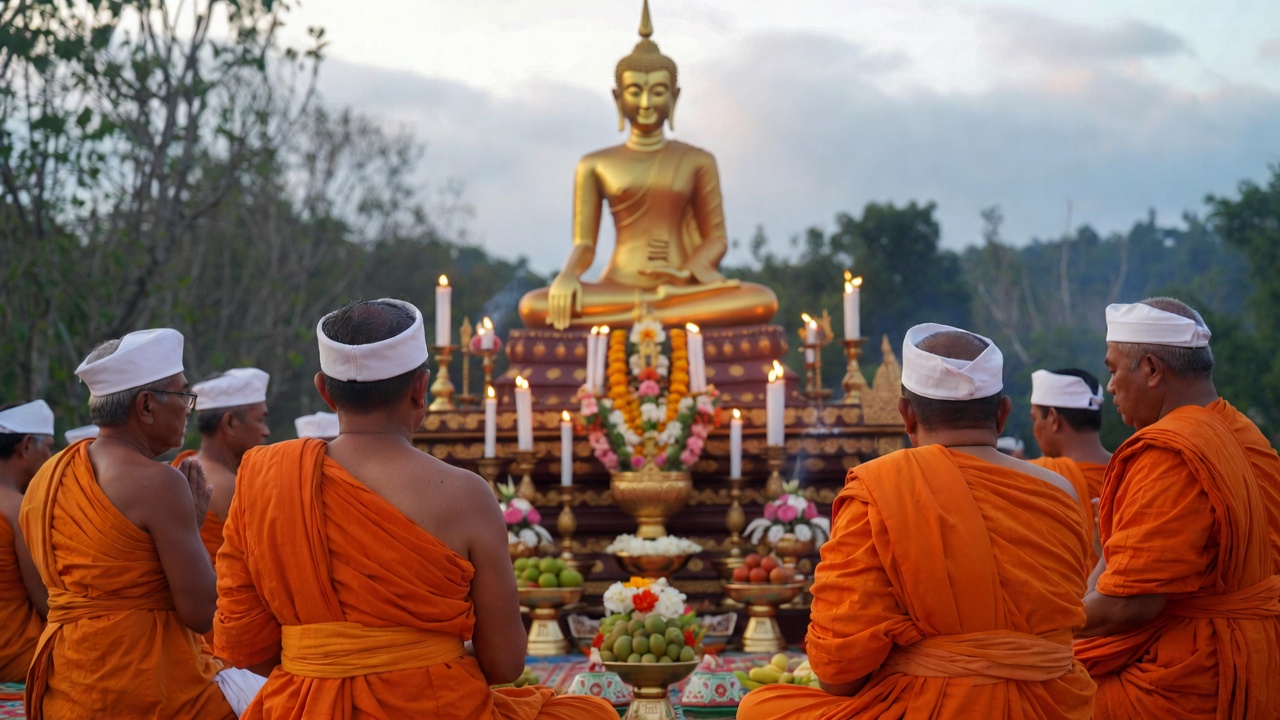
Every year, Thailand goes dry for 24 hours. Bars shut their doors. Convenience stores lock their beer fridges behind curtains. Even the buzzing nightlife strips of Bangkok, Pattaya, and Phuket fall eerily silent. The reason? Makha Bucha Day — one of the most sacred dates on the Thai Buddhist calendar.
In 2026, Makha Bucha Day falls on Tuesday, March 3. For travelers arriving in Thailand unprepared, the alcohol ban can feel like a rude surprise. But behind the locked fridges lies a story that stretches back over 2,500 years — a story about mindfulness, moral discipline, and the spiritual roots of one of Southeast Asia’s most profound religious holidays.
This guide explains everything: the ancient origins, the modern law, the 2025 legal reforms, and practical advice for travelers. Whether you are a curious visitor or a long-term resident, understanding why alcohol disappears on Makha Bucha Day will give you a deeper appreciation for Thai culture itself.
What Is Makha Bucha Day and Why Is It Important in Thailand?
Makha Bucha Day, also spelled Magha Puja, is the second most important Buddhist holiday after Vesak (Visakha Bucha). It is celebrated on the full moon of the third lunar month in the traditional Thai calendar. That month is called “Makha” in the Pali language. “Bucha” means “to honor” or “to venerate.” So the name literally translates to “honoring on the full moon of the third month.”
The holiday commemorates a remarkable event from over 2,500 years ago. Nine months after the Buddha attained Enlightenment, 1,250 monks gathered spontaneously — without prior invitation or planning — at the Veluvana Bamboo Grove near the ancient Indian city of Rajagaha (modern-day Rajgir in Bihar, India). This gathering is known as the Fourfold Assembly because four extraordinary things happened at once:
- All 1,250 monks arrived without being summoned.
- All of them were arahants — fully enlightened beings.
- All of them had been ordained directly by the Buddha himself.
- They gathered on the full moon day of the third lunar month.
On this occasion, the Buddha delivered what many consider the heart of his moral teaching: the Ovada Patimokkha. This sermon contained three core principles that still guide Buddhist practice today:
- Cease from all evil.
- Do only good.
- Purify one’s mind.
These three lines sound simple. But for Thai Buddhists, they represent the entire ethical foundation of the faith. That is why Makha Bucha carries such deep emotional and spiritual weight. It is not just a date on the calendar. It is a reminder of the moment Buddhism’s moral core was first spoken aloud.
How Did Makha Bucha Day Become a National Holiday in Thailand?
The history of Makha Bucha as a formal celebration in Thailand is surprisingly recent. The holiday was not widely observed in the Thai kingdom in earlier centuries. Its modern history begins in the mid-19th century.
King Mongkut (Rama IV) formally established the Makha Bucha ceremony in 1851. At first, the celebration was limited to the Temple of the Emerald Buddha (Wat Phra Kaew) within the Grand Palace complex. Only members of the royal court could attend.
His son, King Chulalongkorn (Rama V), later expanded the observance beyond the palace walls. He believed that Makha Bucha could serve as a vehicle to promote Buddhist faith across the entire kingdom. Temples nationwide began organizing their own ceremonies, and ordinary people could now take part.
In 1913, Makha Bucha Day was declared an official public holiday in Thailand. It has remained one ever since. Government offices, schools, and many businesses close for the day. Banks and shopping malls remain open, but the atmosphere across the country shifts toward reflection and quiet devotion.
In 2006, the Thai government added another layer of meaning. It designated Makha Bucha as “National Gratitude Day” (Wan Khwam Rak Lae Katanyu). This was partly a cultural campaign to offer Thai youth an alternative to Valentine’s Day, which falls close to Makha Bucha in some years. The government encouraged young people to express “pure love and gratitude” rather than romantic or material love during this period.
| Year | Key Milestone |
|---|---|
| 1851 | King Rama IV begins formal Makha Bucha ceremony at the Grand Palace |
| Late 1800s | King Rama V expands the celebration to temples nationwide |
| 1913 | Makha Bucha declared an official public holiday |
| 2006 | Government designates the day as “National Gratitude Day” |
| 2015 | Alcohol sales formally banned nationwide on Makha Bucha Day |
| 2025 | Limited exemptions introduced for tourism-related venues |
What Is the Alcohol Ban on Makha Bucha Day in Thailand?
Here is the part that catches most visitors off guard. On Makha Bucha Day, the sale of alcoholic beverages is banned across the entire Kingdom of Thailand for a full 24 hours — from midnight to midnight.
This is not a suggestion or a cultural norm. It is enforceable law. The legal basis comes from the Alcoholic Beverage Control Act B.E. 2551 (2008), specifically Section 28, which authorizes the Minister of Public Health to prohibit alcohol sales on specific days. The minister, with approval from the National Alcoholic Beverage Policy Committee, designates five major Buddhist holidays as “National No Alcohol Days” each year.
The five days when alcohol sales are banned in Thailand are:
- Makha Bucha Day (February or March)
- Visakha Bucha Day (May or June)
- Asalha Bucha Day (July or August)
- Wan Khao Phansa — the start of Buddhist Lent (July or August)
- Wan Ok Phansa — the end of Buddhist Lent (usually October)
On these days, the ban applies to all retailers: convenience stores like 7-Eleven, supermarkets, restaurants, bars, nightclubs, and street vendors. The alcohol shelves at 7-Eleven are either locked behind rolling shutters or covered with curtains. Bartenders politely decline orders. Even beer gardens in tourist areas go silent.
The penalties for violating this ban are serious. Under Section 39 of the same act, anyone caught selling alcohol on a prohibited day faces up to six months in prison, a fine of up to 10,000 Thai baht (roughly $280 USD), or both. In practice, large chain stores comply strictly. Police conduct spot checks, especially in tourist-heavy areas.
That said, enforcement at very small, independent mom-and-pop shops (called raan chum in Thai) can be uneven. Some small vendors may quietly sell alcohol to familiar customers. But this is technically illegal, and visitors should not count on it.
Why Is Alcohol Banned on Makha Bucha Day? The Buddhist Connection
To understand the alcohol ban, you need to understand the Five Precepts (Pañcasīla) — the foundational ethical code for all Buddhist lay practitioners. These five commitments are not commandments handed down by a deity. They are voluntary training rules that Buddhists undertake to cultivate a mindful, compassionate life.
The Five Precepts are:
- Refrain from killing any living being.
- Refrain from stealing or taking what is not given.
- Refrain from sexual misconduct.
- Refrain from lying or false speech.
- Refrain from consuming intoxicants that cloud the mind.
The fifth precept is the one directly connected to the alcohol ban. In the original Pali Canon, it reads: “Surāmerayamajjapamādaṭṭhānā veramaṇī sikkhāpadaṃ samādiyāmi,” which translates roughly to “I undertake the training rule to abstain from fermented and distilled intoxicants which are the basis for heedlessness.”
The key word here is heedlessness (Pali: pamāda). In Buddhist philosophy, mindfulness (appamāda) is considered the single most important quality for spiritual progress. The Buddha himself emphasized that heedlessness — the loss of awareness and self-control — is the root of all moral failure. When a person is intoxicated, they are more likely to violate every other precept: they might harm others, lie, steal, or engage in sexual misconduct.
This is why the fifth precept is sometimes called the “gateway precept.” It protects all the others. As the Insight Meditation Center explains, “intoxication involves a loss in care, caring, and carefulness.” When mindfulness disappears, the entire ethical framework collapses.
On Makha Bucha Day specifically, Thai Buddhists are encouraged to observe the Five Precepts with extra diligence. Some devout practitioners go further and observe the Eight Precepts, which add restrictions on eating after noon, entertainment, and sleeping on luxurious beds. The day is meant to be one of heightened spiritual awareness — a time when the mind is kept as clear as possible.
Banning alcohol sales on this day is the government’s way of supporting that spiritual practice at a national level. It removes temptation from the environment. It creates a shared atmosphere of sobriety and reflection. And it signals to both Thais and visitors that this is a day when the country collectively turns inward.
How Does the Alcohol Ban on Buddhist Holidays Help Public Health in Thailand?
The alcohol ban is not only a spiritual matter. It also serves a very practical public health function.
Thailand has long faced a serious alcohol-related public health challenge. According to a report published in the Bulletin of the World Health Organization, Thailand has the highest per capita alcohol consumption in the WHO’s South-East Asian region, at approximately 7.2 liters of pure alcohol per year among people aged 15 and older. This figure exceeds the global average of 6.4 liters.
The consequences are devastating. Road injuries are the leading cause of alcohol-related death in Thailand. A study published in Alcohol: Clinical and Experimental Research in January 2025 confirmed that the three biggest killers linked to alcohol consumption among Thais are road injuries, liver cirrhosis, and other unintentional injuries.
Consider the scale of Thailand’s road safety crisis:
- The WHO’s Global Status Report on Road Safety recorded Thailand’s road traffic death rate at 25.4 per 100,000 people, making it one of the highest in Asia.
- The WHO estimates that 18,000 to 20,000 people die on Thailand’s roads every year — an average of roughly 50 deaths per day.
- Motorcycles are involved in over 80% of road traffic fatalities in the country.
- During Thailand’s “dangerous days” around the New Year holiday period from December 27, 2025, to January 5, 2026, authorities recorded 2,467 accidents, 2,376 injuries, and 436 deaths. Drunk driving accounted for nearly 32% of all accidents during this period.
Against this backdrop, the alcohol ban on Buddhist holidays is one of several policy tools the Thai government uses to reduce harm. Songkran Pakchokdee, director of the StopDrink Network Office in Thailand, has pointed out that the ban is consistent with WHO guidelines on restricting the availability of alcohol as a public health measure. “The ban restricts access to places where alcohol can be bought and sold, not its consumption,” he has stated.
In other words, you will not be arrested for drinking alcohol you already have at home on Makha Bucha Day. The law targets the sale, not the act of drinking. But the effect is the same: fewer people drinking means fewer drunk drivers on the road, fewer alcohol-fueled incidents, and fewer hospital admissions.
What Changed in 2025? Thailand’s New Exemptions for Tourists and Hotels
For years, the alcohol ban on Buddhist holidays was absolute. The only exception was duty-free shops inside international airport terminals. But in 2025, Thailand’s government introduced significant — though carefully limited — changes.
The push for reform came from the tourism and hospitality industries. Thailand’s tourism sector is a massive part of the national economy, and business owners in places like Pattaya, Phuket, and Bangkok’s entertainment zones argued that an absolute alcohol ban hurt their revenue and confused foreign visitors.
On May 9, 2025, a new directive was published in the Royal Thai Government Gazette, signed by Prime Minister Paetongtarn Shinawatra. It introduced limited exemptions to the ban as part of the “Amazing Thailand Grand Tourism and Sports Year 2025” campaign.
Under the 2025 rules, alcohol may be sold on Buddhist holy days at the following types of venues:
| Venue Type | Condition |
|---|---|
| International airport terminals | Restaurants and cafes in passenger buildings |
| Licensed hotels | Must be registered under the Hotel Act B.E. 2547 |
| Registered entertainment venues | Must hold a license under the Entertainment Places Act |
| Entertainment venues in tourist zones | Requires specific announcement from the Ministry of Public Health |
| National or international event venues | Requires approval from both Public Health and Tourism ministries |
However, the exemptions are narrow. As People’s Party MP Taopiphop Limjittrakorn warned on social media: “Roadside food stalls, convenience stores, restaurants, and supermarkets are not included in the new announcement. They still cannot sell alcohol.” He cautioned people not to misunderstand the reform, adding, “I don’t want to see anyone getting arrested because of this misunderstanding.”
According to the Alcohol Control Network, only about 3% of Thailand’s 580,000 registered alcohol-selling venues qualify for the exemptions. That is roughly 15,000 registered hotels plus a small number of airport outlets and licensed entertainment venues. The other 97% of alcohol vendors must still comply with the full ban.
Then, in September 2025, Thailand went further. Amendments to the Alcoholic Beverage Control Act were published in the Royal Gazette and took effect on November 8, 2025. According to the Library of Congress legal analysis, the amendments updated the definition of “alcoholic beverage” (excluding drinks below 0.5% alcohol, such as kombucha and alcohol-removed beers), broadened advertising restrictions, and increased penalties for violations — with fines rising to as much as 100,000 baht and up to one year of imprisonment for illegal sales.
So while the 2025 reforms cracked open a small window for tourism-related businesses, they also tightened the overall regulatory framework. The message from the Thai government is clear: the alcohol ban on Buddhist holidays is here to stay, even as limited, controlled exceptions are allowed for the sake of the tourism economy.
How Do Thai People Actually Celebrate Makha Bucha Day?
For many Thai Buddhists, Makha Bucha Day begins before sunrise. Devotees wake early to prepare food offerings for monks during their morning alms rounds (tak bat). This act of giving — called dana — is one of the most cherished merit-making activities in Thai Buddhism.
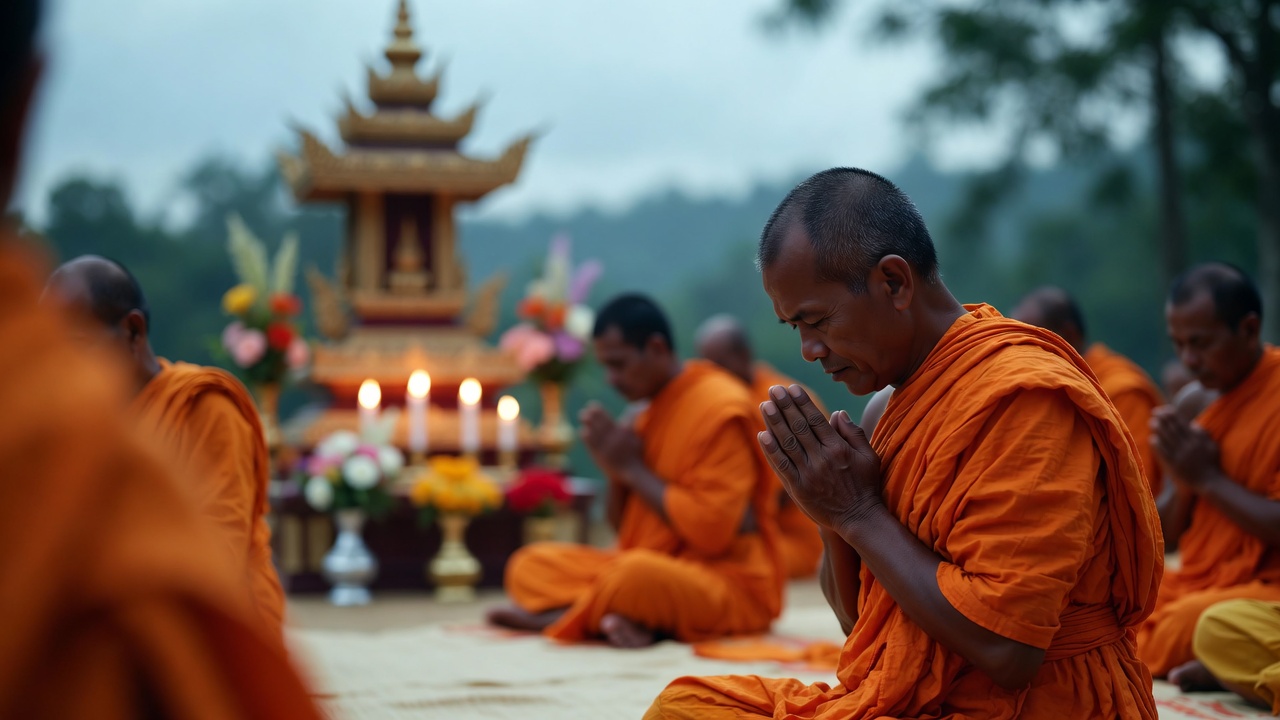
Throughout the day, people visit their local temples (wat) to listen to sermons, meditate, and reflect on the teachings of the Ovada Patimokkha. Some practitioners, especially the elderly and the deeply devout, wear white robes and spend the entire day — or even several days — at the temple, observing the Eight Precepts.
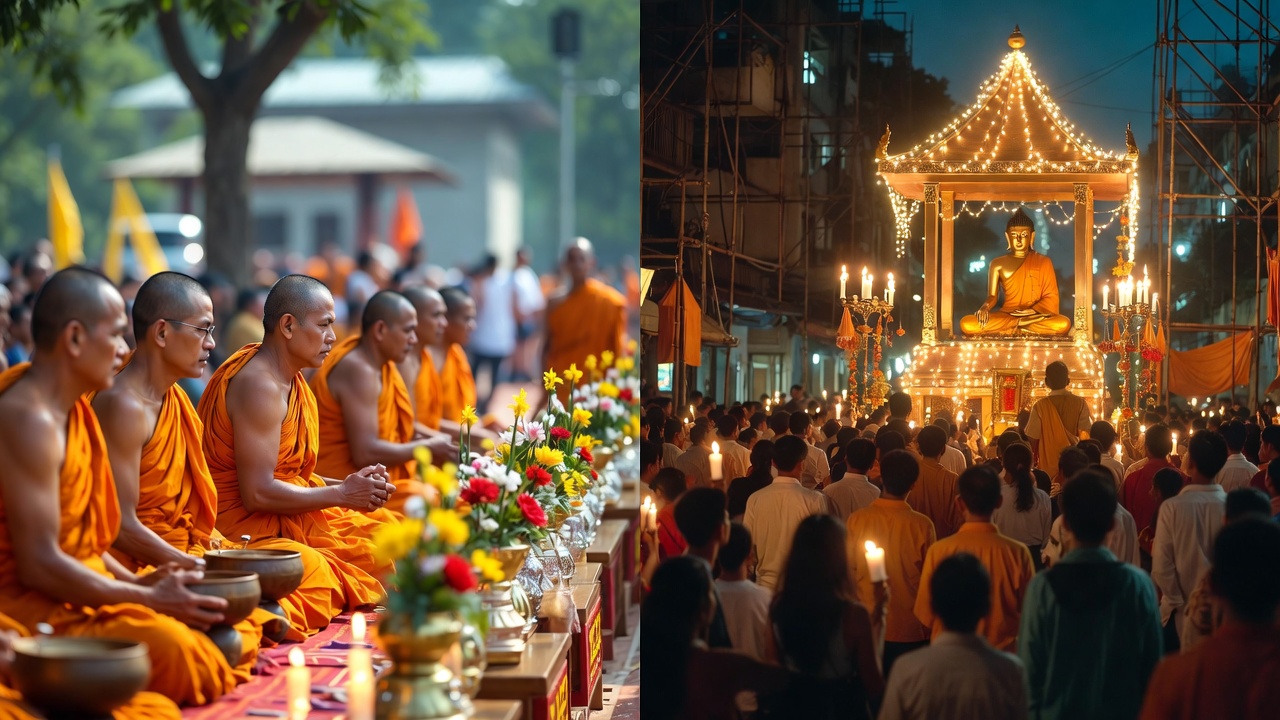
The most visually striking element of Makha Bucha is the wian thian ceremony, held at temples across the country after sunset. “Wian” means to circle around. “Thian” means candle. During this ritual, monks and lay people walk three times clockwise around the main ordination hall (ubosot), each holding a lit candle, incense sticks, and a lotus flower. Each lap represents one of the Three Jewels (Triratna) of Buddhism:
- First lap: For the Buddha — the Awakened One.
- Second lap: For the Dharma — the teachings.
- Third lap: For the Sangha — the monastic community.
The sight of hundreds of flickering candles moving slowly in the warm night air, under the light of the full moon, is one of Thailand’s most beautiful and moving religious scenes. The atmosphere is one of deep calm. Voices are hushed. People move gently. The temple grounds, fragrant with incense, feel set apart from the noise of everyday life.
Some of the most popular temples for Makha Bucha celebrations include:
- Wat Phra Kaew (Temple of the Emerald Buddha), Bangkok
- Wat Saket (the Golden Mount), Bangkok — famous for its candlelit procession up 344 steps
- Wat Phra Singh, Chiang Mai
- Wat Chedi Luang, Chiang Mai
- Wat Umong, Chiang Mai — known for its forested, meditative setting
- Wat Phra Mahathat, Nakhon Si Thammarat — one of the oldest temples in southern Thailand
In northeastern Thailand, the province of Yasothon holds a distinctive tradition. At Ban Fa Yat village, the day before Makha Bucha features a Garland Procession. Popped rice and flowers, used as offerings to the Buddha, are strung into elaborate garlands and paraded through the village with traditional dances.
In Prachin Buri, about three hours northeast of Bangkok, the local government organizes an annual Makha Bucha fair with religious activities, lantern releases into the night sky, exhibitions about Buddhism, markets, and a cultural procession at an archaeological site linked to early Buddhism in Thailand.
Is Makha Bucha Day Celebrated Only in Thailand? A Look at Southeast Asia
Makha Bucha — known by different names in different countries — is a public holiday in several Southeast Asian nations where Theravada Buddhism is practiced. Thailand hosts the largest and most visible celebrations, but the holiday is observed across the region.
| Country | Local Name | Public Holiday? | Alcohol Ban? |
|---|---|---|---|
| Thailand | Makha Bucha (มาฆบูชา) | Yes | Yes, nationwide with limited exemptions |
| Cambodia | Meak Bochea (មាឃបូជា) | Yes | No formal nationwide ban |
| Laos | Magha Puja (ມາຄະບູຊາ) | Yes | Varies by region |
| Myanmar | Tabaung Full Moon Day | Yes | No formal nationwide ban |
| Sri Lanka | Navam Poya | Yes (Poya days are monthly holidays) | Alcohol banned on all Poya days |
In Cambodia, Meak Bochea is observed with temple visits and candlelight processions similar to Thailand. The day is a public holiday, and government offices close. However, Cambodia does not enforce a formal nationwide alcohol sales ban as strictly as Thailand does.
In Myanmar, the equivalent celebration falls on the full moon of the month of Tabaung. It is a time for temple visits, pagoda festivals, and community gatherings. Alcohol restrictions exist in Myanmar but are less uniformly enforced.
Sri Lanka offers an interesting comparison. The country bans alcohol sales on every Poya (full moon) day — that is, once a month, twelve times a year. This is a more expansive approach than Thailand’s five designated Buddhist holidays. Bars and liquor stores close entirely on Poya days, and even hotels may restrict alcohol service.
Thailand’s approach sits in the middle: more restrictive than Cambodia or Myanmar, less restrictive than Sri Lanka. The 2025 reforms moved Thailand slightly toward a more permissive model, but the core ban remains firmly intact.
What Happens If You Get Caught Selling Alcohol on Makha Bucha Day?
This is not a hypothetical question. Thai police actively enforce the alcohol ban, especially during the 24-hour prohibition period. Here is what you need to know about the penalties:
Under the original Alcoholic Beverage Control Act of 2008 (Section 39):
- Maximum prison sentence: 6 months
- Maximum fine: 10,000 baht (~$280 USD)
- Both penalties can be applied simultaneously
Under the November 2025 amendments to the Act:
- Maximum fine for illegal sales raised to: 100,000 baht (~$2,800 USD)
- Maximum prison sentence for illegal sales: Up to 1 year
- Daily fines for ongoing violations: Up to 50,000 baht per day until corrected
- Penalties for illegal alcohol advertising: Up to 500,000 baht and/or 6 months in prison
Enforcement patterns differ by location. In Bangkok, Pattaya, and Phuket, police conduct targeted checks at bars, clubs, and convenience stores. Major chains like 7-Eleven, Big C, Lotus’s, and Tops comply without exception. Their point-of-sale systems are programmed to block alcohol transactions on banned dates.
Smaller businesses, especially in rural areas or tourist-heavy streets, may take risks. But as the fines and penalties have increased substantially after the 2025 amendments, even small operators are becoming more cautious.
For tourists: You will not be arrested for drinking alcohol that you already purchased before the ban took effect. The law targets the sale, not personal consumption. If you have a bottle of wine in your hotel room from the day before, you are free to drink it. But you cannot walk into a 7-Eleven or a restaurant and buy a beer on Makha Bucha Day.
Practical Tips for Travelers: How to Prepare for the Makha Bucha Day Alcohol Ban
If you are visiting Thailand around Makha Bucha Day in 2026 (March 3), here is how to prepare:
Before the ban:
- Stock up the day before. Buy whatever you need on March 2. The ban starts at midnight, so make your purchases before 11:59 PM.
- Check your hotel’s policy. If you are staying at a registered hotel, the bar may be exempt under the 2025 rules. Ask the front desk to confirm.
- Download a calendar app with Thai holidays marked. Makha Bucha is just one of five no-alcohol days, and the dates shift each year based on the lunar calendar.
During the ban:
- Do not ask convenience store staff to sell you alcohol illegally. It puts them at risk of arrest and fines. Respect the law.
- Consider visiting a temple. The wian thian candlelight procession is one of Thailand’s most moving cultural experiences. Tourists are welcome at most temples — just dress modestly (cover shoulders and knees) and keep your voice low.
- Enjoy the city without alcohol. Bangkok, Chiang Mai, and the islands have spectacular food, night markets, and cultural attractions that do not require a drink.
- If you are in an entertainment zone like Walking Street in Pattaya or Bangla Road in Phuket, expect closures. Most bars and clubs will be shut.
After the ban:
- Alcohol sales resume at midnight on the day following Makha Bucha. The 24-hour period is strictly observed.
- Be mindful of prices. Some vendors may raise prices slightly right after the ban lifts due to sudden demand.
The Ongoing Debate: Should Thailand Lift the Alcohol Ban on Buddhist Holidays?
The alcohol ban is not without controversy. It has been the subject of heated public debate in Thailand for years, with strong arguments on both sides.
Arguments for keeping the ban:
- Cultural preservation. Thailand is a predominantly Buddhist country. Roughly 93% of the population identifies as Theravada Buddhist. The alcohol ban reinforces the spiritual significance of holy days and encourages reflection.
- Public health benefits. Even a single day without alcohol sales reduces road accidents, domestic violence, and alcohol-related hospital admissions. The StopDrink Network and public health advocates argue that the ban aligns with WHO recommendations on limiting alcohol availability.
- Spiritual support for practitioners. For the millions of Thai Buddhists who observe the Five Precepts more strictly on Makha Bucha Day, the ban creates an environment that supports their practice. Removing it would make sobriety harder in a country where social drinking is widespread.
Arguments for lifting or modifying the ban:
- Impact on tourism. Thailand’s tourism industry generates hundreds of billions of baht in revenue. Business owners in entertainment zones argue that the ban drives tourists to neighboring countries with more relaxed rules.
- Religious freedom. Critics, including members of Thailand’s People’s Party (formerly Move Forward Party), argue that a ban based on Buddhist observance should not apply to non-Buddhists. People’s Party MP Taopiphop Limjittrakorn has argued that the ban affects “freedom of religion and occupation” under the Thai constitution.
- Inconsistent enforcement. The ban is widely circumvented at small shops, creating an uneven playing field where large businesses comply while small ones take risks.
The 2025 reforms represent a compromise: the ban stays, but tourism-related businesses get limited relief. Whether future governments will push further toward liberalization remains to be seen. But for now, the cultural and spiritual weight of Makha Bucha Day ensures that the alcohol ban retains strong public support.
How Does Makha Bucha Day Compare to Other No-Alcohol Holidays Around the World?
Thailand is not the only country that restricts alcohol on religious or cultural holidays. Here is how its approach compares to other nations:
| Country | Alcohol Restriction | Basis |
|---|---|---|
| Thailand | Sales banned on 5 Buddhist holidays | Buddhist tradition + law |
| Sri Lanka | Sales banned on every full moon (Poya) day — 12 per year | Buddhist tradition + law |
| India | “Dry days” on national holidays like Republic Day, Gandhi Jayanti | Constitutional + state-level laws |
| Myanmar | Limited restrictions on Buddhist holidays | Buddhist tradition, uneven enforcement |
| United Arab Emirates | Restrictions during Ramadan in some emirates | Islamic tradition |
| Norway/Sweden | Limited weekend/holiday sale hours | Public health tradition |
| United States | Some states restrict sales on Sundays or holidays | “Blue laws” (Christian tradition) |
What makes Thailand’s ban distinctive is its legal precision and national scope. Unlike India, where “dry days” vary by state and enforcement is patchy, Thailand applies the ban uniformly. Unlike Scandinavian countries, where the restrictions are framed purely as public health measures, Thailand’s ban is explicitly tied to religious observance.
The 2025 reforms brought Thailand closer to a hybrid model — religious in spirit, pragmatic in application. The ban still exists at the retail level. But the carve-outs for hotels, airports, and entertainment venues acknowledge the realities of a modern, tourism-dependent economy.
What the Makha Bucha Day Alcohol Ban Means for Thailand’s Cultural Identity
At its deepest level, the Makha Bucha Day alcohol ban is about identity. It is a statement about what kind of society Thailand aspires to be.
Thailand is often called the “Land of Smiles” and is famous worldwide for its nightlife, beach parties, and full-moon raves. But these are only one part of a complex cultural picture. Beneath the tourist veneer lies a society deeply rooted in Theravada Buddhist values: generosity (dana), moral discipline (sila), mental cultivation (bhavana), and the pursuit of wisdom (pañña).
The alcohol ban is a visible expression of sila — moral discipline applied at the societal level. It says: on this one day, the entire nation pauses together to honor something higher than personal pleasure. It is a collective act of renunciation, even for people who are not particularly devout.
For visitors, the ban is also an invitation. It is an invitation to step outside the tourist bubble and experience Thailand as Thais experience it — not through a beer glass, but through quiet temple courtyards, flickering candlelight, the scent of jasmine and incense, and the gentle hum of Buddhist chanting under a full moon.
The Buddha’s message on that full moon night over 2,500 years ago was deceptively simple: stop doing harm, do good, and purify your mind. The Makha Bucha Day alcohol ban is Thailand’s way of honoring that message — not just in words, but in law.
Makha Bucha Day 2026: Key Dates, Times, and What to Expect
Here is your quick-reference guide for Makha Bucha Day 2026:
| Detail | Information |
|---|---|
| Date | Tuesday, March 3, 2026 |
| Buddhist Era year | B.E. 2569 |
| Alcohol ban period | 12:00 AM to 11:59 PM (24 hours) |
| Public holiday | Yes — government offices and schools closed |
| Banks and malls | Open (banks may have reduced hours) |
| Temples | Open all day; wian thian ceremony in the evening |
| Best temples to visit | Wat Phra Kaew (Bangkok), Wat Saket (Bangkok), Wat Phra Singh (Chiang Mai) |
| Hotel bars | May be exempt under 2025 regulations — check with your hotel |
| Convenience stores | Alcohol shelves locked for the full 24 hours |
| Nightclubs and bars | Closed in most areas; some licensed entertainment zones may be exempt |
Frequently Asked Questions About the Makha Bucha Day Alcohol Ban
Can I drink alcohol in my hotel room on Makha Bucha Day? Yes. The ban applies to the sale of alcohol, not personal consumption. If you bought your drinks before the ban, you may consume them privately.
Are there exceptions for foreigners? No. The law applies equally to Thai nationals and foreign visitors. Your nationality does not exempt you from the ban.
Can I buy alcohol at the airport? Yes, if you are at an international terminal. Under the 2025 reforms, restaurants and cafes inside international airport buildings may serve alcohol on Buddhist holidays.
What if I am on a resort island like Koh Samui or Koh Phangan? The ban applies nationwide. Resort hotels may be exempt if they hold a proper hotel license. Beach bars and small restaurants will be closed for alcohol sales.
Is the alcohol ban only on Makha Bucha Day? No. Thailand bans alcohol sales on five Buddhist holidays per year, plus election days.
What if a small shop sells me alcohol anyway? The shop is breaking the law and risks a fine of up to 100,000 baht and/or imprisonment. You will not be arrested for purchasing, but you may be caught up in an enforcement action.
Final Thoughts: Embracing the Quiet Beauty of Makha Bucha Day
The Makha Bucha Day alcohol ban is one of those cultural practices that can feel inconvenient at first — especially if you arrive in Thailand expecting the party scene to be running at full volume seven days a week. But once you understand the history, the spiritual meaning, and the public health logic behind it, the ban starts to make a different kind of sense.
It is a 24-hour pause. A national moment of stillness. A country of nearly 72 million people collectively honoring a message delivered under a full moon over two and a half millennia ago: cease from evil, do good, purify the mind.
Whether you are a Buddhist practitioner, a curious traveler, or simply someone who appreciates the richness of world cultures, Makha Bucha Day offers something rare in our hyperconnected, always-on world: a reason to slow down.
Visit a temple. Watch the candlelight procession. Sit quietly under the full moon. You might find that the day you could not buy a beer turns out to be the most memorable day of your entire trip.
Have you experienced Makha Bucha Day in Thailand? Share your story in the comments below. And if you are planning to visit Thailand in 2026, bookmark this page — it might save you from a very dry surprise.