There is a moment at Tokyo Dome that no first-time visitor ever forgets. The lights dim. The crowd of 43,000 rises as one. A wall of sound — trumpets, taiko drums, coordinated chanting — crashes through the stadium like a wave. It is not a playoff game. It is not a rivalry match. It is a Tuesday night in June. And yet, the energy is absolutely electric.
This is baseball in Japan. And this is why Tokyo Dome sits at the top of every global baseball pilgrimage list.
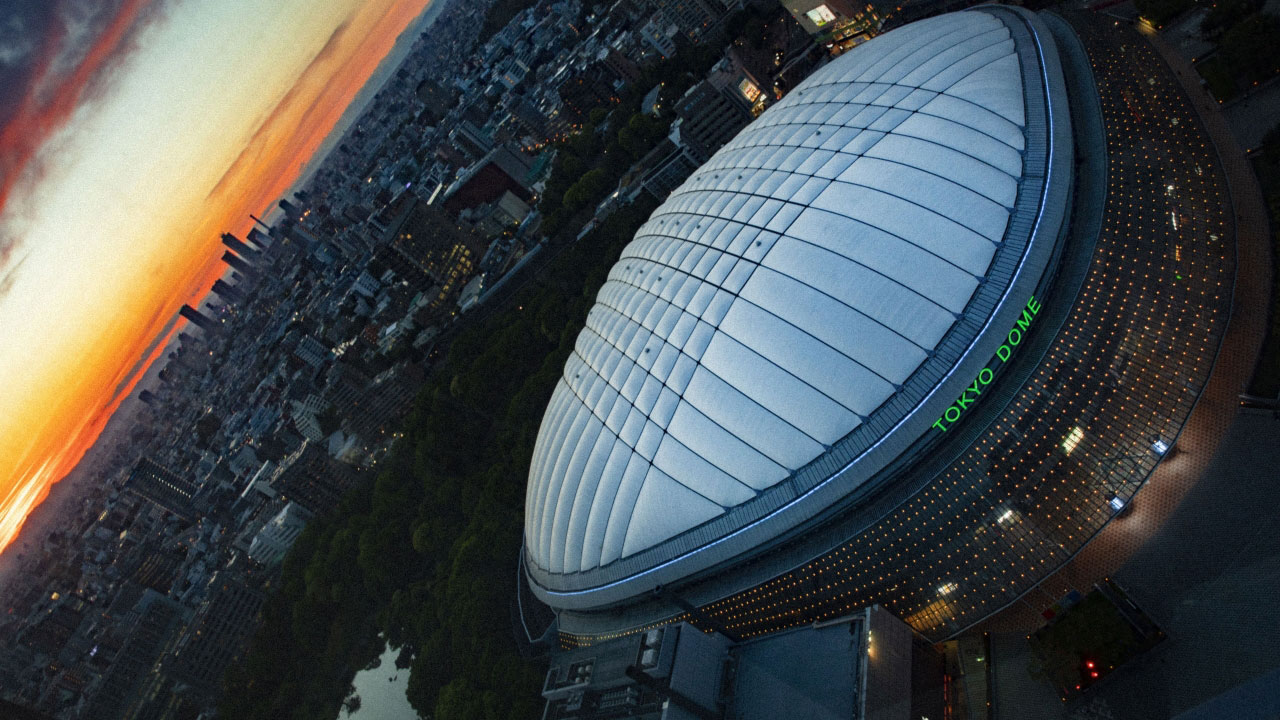
For fans of America’s pastime, a trip to Japan’s capital is incomplete without a visit to Tokyo Dome — the legendary indoor stadium in the heart of Bunkyō, Tokyo. Known affectionately as “The Big Egg” for its distinctive white domed roof, this 43,500-seat cathedral of Japanese baseball has been the stage for some of the sport’s greatest moments since it opened in 1988. It is the home of the Yomiuri Giants, Japan’s most decorated professional team. It is where Shohei Ohtani once hit a ball through a seam in the fiberglass roof. It is where Ichiro Suzuki retired from professional baseball in 2019 after a final bow before a sold-out crowd.
And in March 2026, it will once again host the World Baseball Classic, cementing its status as the world’s most important international baseball venue.
Whether you are a die-hard fan of Nippon Professional Baseball (NPB), a casual follower drawn by the spectacle, or a traveler looking for one of Tokyo’s most authentic cultural experiences, this guide covers everything you need to know before you go.
What Makes Tokyo Dome the Best Baseball Stadium in Japan
Among the twelve stadiums in Japan’s professional baseball circuit, Tokyo Dome holds a special place. It was Japan’s first domed stadium when it opened on March 17, 1988, replacing the beloved Korakuen Stadium that had served the Yomiuri Giants since 1938. The dome was modeled after the Hubert H. Humphrey Metrodome in Minneapolis and designed by Nikken Sekkei and Takenaka Corporation.
The stadium covers an area of 46,755 square meters — so large, in fact, that Japanese people commonly use “Tokyo Dome” as a unit of measurement. A news report might describe a new park as “three times the size of Tokyo Dome.” That cultural shorthand alone tells you something about the building’s place in the Japanese imagination.
But it is not just the size that matters. It is the total experience.
The dome’s air-supported roof is an engineering marvel in its own right. A cable-reinforced, 0.8 mm-thick fiberglass membrane stays inflated by slightly pressurizing the interior with independent blowers that push 150,000 cubic meters of air per hour. The result is a climate-controlled environment where the temperature stays around 28°C in summer and 18°C in winter, according to the official Tokyo Dome City visitor guide. Rain or shine, sweltering heat or freezing cold, the game always goes on.
The playing field dimensions mirror modern MLB standards: 100 meters (328 feet) down both foul lines and 122 meters (400 feet) to center field, with a fence height of 4.24 meters. The artificial turf covers both the infield and outfield. For visiting American fans used to grass outfields and open-air parks, the enclosed setting feels different — but the energy more than compensates.
What truly distinguishes Tokyo Dome from other stadiums is its role as the beating heart of Japanese baseball culture. The Yomiuri Giants host roughly 70 home games here each season. Other NPB teams occasionally use it as a neutral venue. And when Japan hosts the world — through the WBC, Premier12, or MLB Opening Series — Tokyo Dome is almost always the chosen stage.
The Rich History of the Yomiuri Giants at Tokyo Dome
You cannot talk about Tokyo Dome without talking about the Yomiuri Giants. The team and the building are inseparable.
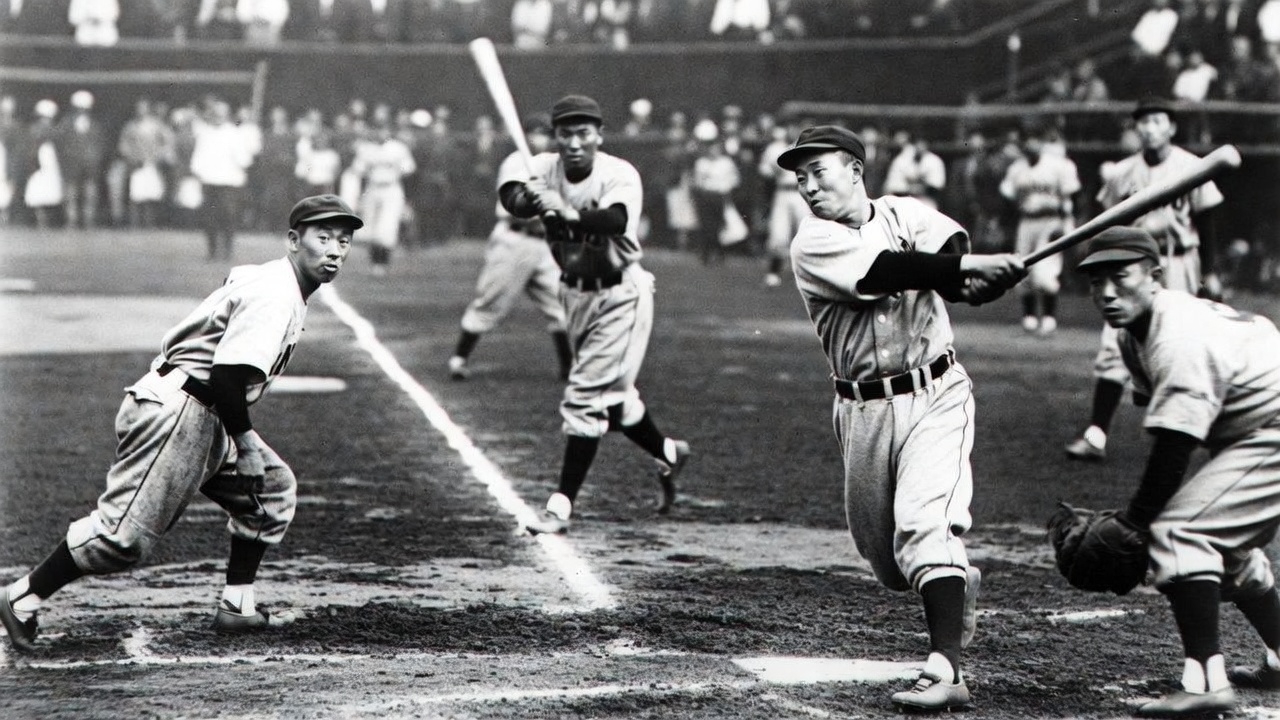
The Yomiuri Giants are the oldest professional sports team in Japan. Founded in 1934, the club traces its origins to an exhibition series organized to compete against a touring team of MLB All-Stars, including Babe Ruth, Lou Gehrig, and Jimmie Foxx. Yomiuri Shimbun newspaper owner Matsutaro Shoriki assembled the best Japanese players available to form what was then called the Great Japan Tokyo Baseball Club — Japan’s first professional baseball team.
Since then, the Giants have become the undisputed kings of Japanese baseball. They have won a record 22 Japan Series championships plus nine additional titles from the pre-NPB Japanese Baseball League era, as documented by NPB. Their legendary “V9” dynasty from 1965 to 1973, when they won nine consecutive Japan Series titles, remains one of the greatest sustained runs of dominance in all of professional sports worldwide.
The Yomiuri Giants are frequently called “the New York Yankees of Japan” — and the comparison is apt. Like the Yankees, they have a national fan base that extends far beyond their home city. Like the Yankees, they are both deeply loved and passionately despised. The term “Anti-Kyojin” (anti-Giants) is a well-known phrase in Japanese sports culture.
Some of the greatest names in baseball history have worn the Giants’ orange and black:
| Player | Era | Achievements |
|---|---|---|
| Sadaharu Oh | 1959–1980 | 868 career home runs (world record), 15-time home run champion |
| Shigeo Nagashima | 1958–1974 | Six-time MVP, “Mr. Giants,” National Honor Award recipient |
| Hideki Matsui | 1993–2002 | Three-time NPB MVP, later 2009 World Series MVP with the Yankees |
| Tetsuharu Kawakami | 1938–1958 | “The God of Batting,” first Japanese player to hit .300+ in eight consecutive seasons |
| Eiji Sawamura | 1936–1944 | Struck out Ruth, Gehrig, Foxx, and Jimmie Dykes in the famous 1934 exhibition |
Walking into Tokyo Dome for a Giants game is not just attending a baseball match. It is stepping into nearly a century of sporting heritage.
How Japanese Baseball Fan Culture Creates an Unforgettable Experience at Tokyo Dome
If there is one thing that separates a Tokyo Dome baseball experience from anything you will find in North America, it is the cheering.
Japanese baseball cheering is orchestrated, relentless, and deeply communal. At the center of it all is the ōendan (応援団) — literally, “cheering squad.” These organized groups of fans lead the crowd through coordinated chants, songs, and rhythmic clapping for the entire duration of the game. They use trumpets, taiko drums, whistles, and megaphones to keep the energy at a fever pitch.
Every player on the roster has his own personalized chant — a unique melody that the crowd sings when that player steps up to bat. These are not simple call-and-response cheers. They are full songs with lyrics, harmonies, and choreography. Fans bang small plastic bats together in rhythm. They wave towels. They rise and sit in unison. The overall effect is closer to a European football supporters’ section than anything you would encounter at Yankee Stadium or Fenway Park.
The cultural roots run deep. According to MLB.com’s feature on ōendan history, the tradition of organized cheering at Japanese baseball games evolved over more than a century, eventually becoming an essential part of the sport’s identity. As Junjiro Maruyama, the leader of the Yomiuri Giants Cheering Club, explained: the cheering creates “a sense of unity and oneness in the ballpark.”
Important etiquette for first-time visitors:
- Fans cheer when their team is batting. When the opposing team is at bat, the home crowd falls relatively silent while the visiting fans take their turn. This turn-taking system is unique to Japanese baseball.
- Heckling is frowned upon. The atmosphere is passionate but respectful. You will not hear the kind of individual shouting or taunting that is common at American stadiums.
- The cheering sections are specific. Home fans sit on the first-base side and in the right-field outfield. Visiting fans occupy the left-field outfield sections. You must not wear opposing team gear in the wrong section — this rule is enforced.
- Everyone is welcome to join in. Even if you do not know the words, clapping along and matching the rhythm is enough. Japanese fans are generally delighted when foreign visitors try to participate.
One of the most popular traditions at Giants games is the orange towel wave — fans hold up bright orange towels and wave them in sync during key moments. It creates a stunning visual spectacle, a sea of orange rippling through the stands.
What to Eat and Drink at Tokyo Dome: A Guide to Japanese Baseball Stadium Food
Forget the stale nachos and lukewarm hot dogs you might associate with ballpark food elsewhere. Tokyo Dome’s food scene is one of its greatest selling points.
Since a major renovation announced in December 2021 by Mitsui Fudosan and the Yomiuri Shimbun Group, the stadium has been transformed into a completely cashless venue. Every food vendor, every merchandise shop, and even the famous roaming beer vendors accept only digital or credit card payments. This modernization has dramatically sped up service times throughout the stadium.
Inside Tokyo Dome, the food options span an impressive range:
- Bento boxes — Many are themed around specific Giants players. These beautifully arranged boxes contain rice, grilled meats, pickled vegetables, and seasonal specialties. They sell out fast, so arrive early.
- Yakitori — Grilled chicken skewers, seasoned with tare sauce or salt, are a classic Japanese stadium staple.
- Curry rice — A beloved comfort food across Japan, served piping hot in generous portions.
- Karaage — Japanese-style fried chicken, crispy on the outside, juicy within.
- Ramen and udon — Yes, fans eat steaming bowls of noodle soup at their seats.
- Edamame — Salted soybeans, the perfect companion to an ice-cold beer.
- Vietnamese, Thai, and Indian options — As one Tripadvisor reviewer enthused on the Tokyo Dome listing: “Food: Excellent. Amazing. Fantastic. They have Vietnamese, Thai, Indian, all sorts of American, and foods from all parts of Japan.”
The beer girls of Tokyo Dome deserve special mention. Young women carrying miniature kegs on their backs navigate the steep stadium stairs, pouring fresh draft beer directly at your seat. Each vendor typically sells a specific brand — Asahi, Kirin, Sapporo, or Suntory. They carry portable electronic payment devices, keeping things efficient and seamless. This tradition is a beloved part of the Japanese baseball experience and a frequent highlight for foreign visitors.
Outside the stadium, Tokyo Dome City features Food Stadium Tokyo, a food hall with dozens of restaurants broadcasting live sports on a six-meter LED screen and 33 monitors. You can enjoy everything from craft cocktails to traditional izakaya fare while watching games on the big screens.
Important food rules to know:
| Item | Allowed? |
|---|---|
| Outside food | ✅ Yes |
| Non-alcoholic drinks under 1L | ✅ Yes |
| Cans and glass bottles | ❌ No |
| Alcoholic beverages from outside | ❌ No |
| Frozen drinks | ❌ No |
| Plastic bottles over 1L | ❌ No |
You can bring your own bento from a nearby convenience store if you prefer — but honestly, the in-stadium food is half the fun.
How to Buy Tokyo Dome Baseball Tickets as a Foreign Tourist in 2026
Buying tickets for a Giants game at Tokyo Dome has become significantly easier for international visitors in recent years. Here is a step-by-step breakdown of your options.
Option 1: The Official Giants English Website (Recommended)
The Yomiuri Giants operate an English-language online ticket platform at e-tix.jp. The site allows you to select your game, choose your seats on an interactive map, and pay by credit card. You have two delivery options:
- Print at Home — You receive a QR code by email that you show on your smartphone at the gate.
- Pickup at 7-Eleven — You receive a voucher code and pick up physical tickets at any 7-Eleven convenience store in Japan for a small service fee of ¥165.
Note: Some foreign credit cards may not work on the platform. If your card is declined, try a different card or consider one of the alternative methods below.
Option 2: Third-Party Booking Platforms
Services like Klook and GetYourGuide sell Tokyo Dome tickets with English-language support and accept international credit cards reliably. These platforms add a service markup, but they eliminate the stress of navigating Japanese payment systems.
Option 3: Convenience Store Kiosks
If you are already in Japan, you can purchase tickets at Lawson, 7-Eleven, or FamilyMart kiosks, or through platforms like e-plus, Ticket Pia, and Lawson Tickets. The kiosk interfaces are primarily in Japanese, so this method works best if you can read some Japanese or have a helpful companion.
Option 4: Tokyo Dome Box Office
Located near Gate 22, the ticket counter is open daily from 11:00 AM to 7:00 PM. You can buy tickets for upcoming games here, subject to availability. This works well for weekday games earlier in the season (April and May), which tend to be less crowded.
Ticket price ranges for 2026 Giants home games:
| Seat Type | Approximate Price (JPY) |
|---|---|
| Outfield standing | ¥1,500 |
| Outfield reserved | ¥1,700 – ¥2,500 |
| Infield reserved | ¥3,500 – ¥5,500 |
| S-reserved seats | ¥5,000 – ¥6,200 |
| DAZN Excite Seats (close range) | ¥8,000+ |
| Group/premium box seats | Varies |
Weekend games, rivalry matchups (especially against the Hanshin Tigers), and holiday games sell out faster and may carry higher prices. Weekday games earlier in the season offer the best availability and value.
The 2026 World Baseball Classic at Tokyo Dome: What Baseball Fans Need to Know
The year 2026 marks a monumental moment for Tokyo Dome. The stadium will host Pool C of the 2026 World Baseball Classic from March 5 to March 10, bringing together five national teams in a round-robin tournament.
Tokyo Dome has been selected to host all six editions of the World Baseball Classic since the tournament’s inception in 2006, as noted by MLB.com. No other venue in the world can claim that distinction. The stadium has also hosted three WBSC Premier12 finals. This track record makes Tokyo Dome the single most important venue in international baseball.
Pool C teams for the 2026 WBC:
| Team | WBSC Ranking | Key Storyline |
|---|---|---|
| 🇯🇵 Japan | #1 | Defending champions, led by Shohei Ohtani |
| 🇰🇷 South Korea | #4 | Fierce regional rivals of Japan |
| 🇹🇼 Chinese Taipei | Qualified | Growing powerhouse with passionate fanbase |
| 🇦🇺 Australia | Qualified | Emerging contender with training base in Tokyo |
| 🇨🇿 Czech Republic | Qualified | Surprise darlings of the 2023 WBC |
The tournament schedule spans six days, with the first game — Chinese Taipei versus Australia — set for March 5 at noon local time. Japan’s games are expected to draw the most intense demand. The top two teams from Pool C will advance to the knockout stage in Miami.
Key ticket information: Single-game tickets for Pool C went on general sale on January 15, 2026, through the official WBC ticketing page. Counter sales at Tokyo Dome began January 16. Japan-specific ticket strips covering all four Japan games were available from October 2025 through Giants season ticket holders and the general public.
For international fans, the MLB.com WBC ticketing portal also offers travel and hospitality packages that bundle tickets with hotel accommodations in Tokyo.
Broadcasting note: In a first for the tournament, Netflix secured exclusive Japanese-language broadcasting rights for all 2026 WBC games in Japan.
How Tokyo Dome Has Hosted Historic MLB Opening Day Games in Japan
Long before the WBC existed, Tokyo Dome was already hosting Major League Baseball. The stadium has been the venue for multiple MLB season-opening series, a tradition that began in 2000 and has brought some of the biggest names in American baseball to Japanese soil.
A timeline of MLB Opening Series at Tokyo Dome:
| Year | Teams | Notable Moment |
|---|---|---|
| 2000 | Chicago Cubs vs. New York Mets | First regular-season MLB games played in Asia |
| 2004 | New York Yankees vs. Tampa Bay Devil Rays | Hideki Matsui returned to Tokyo Dome as a Yankee |
| 2008 | Boston Red Sox vs. Oakland Athletics | World champions opened their title defense in Japan |
| 2012 | Seattle Mariners vs. Oakland Athletics | Ichiro Suzuki collected four hits in the opener |
| 2019 | Seattle Mariners vs. Oakland Athletics | Ichiro’s final professional game and retirement |
| 2025 | Los Angeles Dodgers vs. Chicago Cubs | Shohei Ohtani, Yoshinobu Yamamoto, Shota Imanaga, and Seiya Suzuki all appeared |
The 2019 series holds a particularly emotional place in baseball history. Ichiro Suzuki, one of the greatest hitters the game has ever known, played his final professional game at Tokyo Dome on March 21, 2019, before a sold-out crowd of 46,451. After going 0-for-4 in the second game against Oakland, Ichiro walked off the field one last time to a prolonged standing ovation that lasted over ten minutes. Grown men wept in the stands.
The 2025 Tokyo Series brought another wave of excitement, with the Los Angeles Dodgers and Chicago Cubs facing off on March 18–19. The series featured multiple Japanese-born MLB stars returning to play in their homeland, including Shohei Ohtani and Yoshinobu Yamamoto for the Dodgers, and Shota Imanaga and Seiya Suzuki for the Cubs. The exhibition games on March 15–16, which pitted the MLB clubs against the Yomiuri Giants and the Hanshin Tigers, added an extra layer of cross-cultural excitement.
These events transform Tokyo Dome into a bridge between two great baseball cultures. They offer Japanese fans the chance to see MLB superstars in person. And they give American fans traveling to Tokyo an extraordinary reason to time their visit.
Exploring the Japanese Baseball Hall of Fame and Museum Inside Tokyo Dome
Tucked just to the right of Gate 21, the Baseball Hall of Fame and Museum is one of Tokyo Dome’s hidden treasures — and an absolute must for any serious baseball fan.
The museum was first established in 1959, originally located beside the old Korakuen Stadium. When Tokyo Dome was built in 1988, the museum moved into the new complex, doubling in size. Its mission, as stated on the museum’s official website, is “to contribute to the development of baseball in Japan through dedication of baseball greats and the exhibition and collection of memorable baseball materials.”
Highlights of the collection include:
- The Hall of Fame plaque room — Bronze portrait reliefs of all inductees, from legends like Sadaharu Oh and Shigeo Nagashima to American Horace Wilson, the teacher who first introduced baseball to Japan in 1872.
- Sadaharu Oh’s training katana — The legendary home run king famously practiced his batting swing with a Japanese sword to perfect his balance and timing. The actual katana is on display.
- Babe Ruth’s 1934 tour poster — A rare promotional poster from the landmark MLB All-Stars tour of Japan that ultimately led to the founding of the Yomiuri Giants.
- World Baseball Classic trophies — Japan’s WBC championship trophies from 2006, 2009, and 2023 are prominently featured.
- Team uniforms and memorabilia — Displays from all twelve current NPB franchises, plus historical amateur and women’s baseball artifacts.
- Interactive exhibits — Children and adults alike can take virtual at-bats against famous Japanese pitchers.
Practical information:
| Detail | Information |
|---|---|
| Location | Next to Gate 21, Tokyo Dome |
| Hours | 10:00 AM – 5:00 PM (6:00 PM on Giants game days) |
| Closed | Mondays (except holidays, school vacations, and game days), Dec 29–Jan 1 |
| Adult admission | ¥800 |
| Students (over 15) | ¥500 |
| Children (6–15) | ¥200 |
| Seniors (65+) | ¥500 |
Budget about 60 to 90 minutes for a thorough visit. English signage is limited, but an English information packet is available at the front desk — be sure to ask for it. Between that packet and a translation app on your phone, you will be able to understand most exhibits.
The museum makes an ideal pre-game activity if you are attending an evening game at Tokyo Dome. Arrive a few hours early, explore the exhibits, browse the gift shop, and then head into the stadium with a deeper appreciation for the game you are about to watch.
Things to Do at Tokyo Dome City Before and After a Baseball Game
Tokyo Dome does not exist in isolation. It is the centerpiece of Tokyo Dome City, a sprawling entertainment complex that offers a full day’s worth of activities beyond baseball.
Tokyo Dome City Attractions (Amusement Park)
The complex includes a full amusement park that sits on the site of the former Korakuen Stadium. Two rides stand out:
- Thunder Dolphin — Tokyo’s fastest roller coaster, featuring a 66.5-meter drop and top speeds of 130 km/h over a course of more than 1,000 meters. A single ride costs ¥1,500.
- Big O Ferris Wheel — The world’s first centerless (hubless) Ferris wheel, offering panoramic views of the Tokyo skyline. Karaoke gondolas are available for an extra fee.
The amusement park area is free to enter — you only pay for individual rides.
Spa LaQua Natural Hot Springs
After a game, there is no better way to unwind than at Spa LaQua, a natural hot springs complex fed by underground springs. The facility includes indoor and outdoor baths, saunas, and relaxation areas. Men’s and women’s bathing areas are separate, and signs in multiple languages explain Japanese bathing etiquette. It is open late, making it a perfect post-game destination.
Shopping and Dining
Tokyo Dome City houses dozens of shops, restaurants, and cafes. Notable options include:
- Food Stadium Tokyo — The multi-restaurant food hall with giant LED screens showing live sports.
- Giants merchandise store (To:Do) — The official team shop near the stadium, stocked with jerseys, caps, towels, and every conceivable piece of Giants memorabilia.
- GiGO — An arcade and entertainment center with game machines and anime merchandise.
- Shake Shack and Taco Bell — For those craving familiar fare.
Tokyo Dome Hotel
Conveniently located within the complex, the Tokyo Dome Hotel offers comfortable rooms with views of the stadium and surrounding area. It even features exclusive rooms created in collaboration with Sanrio characters. Staying here means you can walk to the stadium in minutes and avoid the post-game rush at train stations.
Tokyo Dome Tour
If you are visiting on a non-game day, you can sign up for an hour-long guided tour of the stadium itself. The tour takes you onto the field, through the Giants store, and into areas normally off-limits to the public. Guides explain the technology behind the air-supported roof and share stories from the stadium’s history.
How to Get to Tokyo Dome: A Complete Transportation Guide for Visitors
Tokyo Dome enjoys one of the best public transportation connections of any stadium in the world. You do not need a car. You do not need a taxi. The train will get you there quickly and comfortably.
Nearest stations and walking times:
| Station | Lines | Walk Time |
|---|---|---|
| Korakuen | Tokyo Metro Marunouchi Line, Nanboku Line | ~2 minutes to outfield entrance |
| Kasuga | Toei Ōedo Line, Toei Mita Line | ~5 minutes |
| Suidōbashi | JR Sōbu Line, Toei Mita Line | ~5 minutes to main entrance |
Korakuen Station on the Marunouchi Line is the most convenient option. The outfield entrance to Tokyo Dome is literally steps from the station exit. From Tokyo Station, the ride takes about 9 minutes on the Marunouchi Line — a direct journey with no transfers.
Suidōbashi Station on the JR Sōbu Line is also popular, especially for visitors traveling from Shinjuku or Akihabara. The walk from the south exit takes about five minutes and passes through several food vendors on game days.
Post-game crowds: With up to 46,000 fans filing out simultaneously, nearby stations can get packed immediately after the final out. The congestion typically clears within 10 to 15 minutes. Rather than rushing to the exit, consider spending a few extra minutes walking around Tokyo Dome City, grabbing a snack, or visiting the merchandise store. By the time you reach the station, the worst of the crowds will have passed.
For visitors using an IC card (Suica or Pasmo), the entire process is seamless — tap in, ride, tap out. If you are arriving from Narita or Haneda Airport, you can reach Tokyo Dome within 60 to 90 minutes using a combination of airport express trains and subway connections.
Best Time to Visit Tokyo Dome for Baseball in 2026
Timing your visit correctly can make the difference between a good experience and an unforgettable one.
The NPB regular season runs from late March through late September. The Yomiuri Giants play approximately 70 home games at Tokyo Dome during this period. Here is a month-by-month breakdown to help you plan:
| Month | Weather | Crowd Level | Notes |
|---|---|---|---|
| March | Cool (8–15°C) | Moderate to High | Season opener energy; 2026 WBC in early March |
| April | Mild (12–20°C) | Moderate | Cherry blossom season; weekday games easier to attend |
| May | Warm (17–25°C) | Moderate | Golden Week holidays may increase demand |
| June | Rainy season (20–27°C) | Lower | Dome protects from rain; good for ticket availability |
| July | Hot (25–33°C) | High | Summer holidays; 2026 NPB All-Star Game 1 on July 28 at Tokyo Dome |
| August | Hot (26–34°C) | High | Peak tourist season; book early |
| September | Warm (22–29°C) | High | Pennant race drama; intense atmosphere |
For the most electric atmosphere, aim for:
- Giants vs. Hanshin Tigers — Japan’s greatest baseball rivalry. These games sell out fastest and produce the most passionate crowds.
- Interleague games — When Pacific League teams visit, you get fresh matchups and different fan cultures colliding.
- The 2026 NPB All-Star Game — Game 1 will be held at Tokyo Dome on July 28, 2026, according to scheduling information from NPB.
For the easiest ticket access and most relaxed experience, target weekday games in April, May, or June against non-marquee opponents. You will still enjoy a fantastic atmosphere, but you will have your pick of seats.
Since Tokyo Dome is an indoor venue, weather is never a concern. This is a significant advantage over outdoor stadiums like Meiji Jingu Stadium (home of the Yakult Swallows) or ZOZO Marine Stadium in Chiba, where games can be postponed due to rain.
How Tokyo Dome Compares to Other Baseball Stadiums Around the World
For the globally-minded baseball fan, it is worth putting Tokyo Dome in context alongside other legendary venues.
| Stadium | Location | Capacity | Opened | Roof | Home Team |
|---|---|---|---|---|---|
| Tokyo Dome | Tokyo, Japan | 43,500 (baseball) | 1988 | Enclosed (air-supported) | Yomiuri Giants |
| Yankee Stadium | New York, USA | 46,537 | 2009 | Open-air | New York Yankees |
| Fenway Park | Boston, USA | 37,755 | 1912 | Open-air | Boston Red Sox |
| Wrigley Field | Chicago, USA | 41,649 | 1914 | Open-air | Chicago Cubs |
| Koshien Stadium | Nishinomiya, Japan | 47,508 | 1924 | Open-air | Hanshin Tigers |
| ES CON Field Hokkaido | Kitahiroshima, Japan | 35,000 | 2023 | Retractable | Nippon-Ham Fighters |
| Dodger Stadium | Los Angeles, USA | 56,000 | 1962 | Open-air | Los Angeles Dodgers |
Tokyo Dome may lack the open-air charm of Fenway Park or the ivy-covered walls of Wrigley Field. But what it offers instead is something those stadiums cannot: a completely controlled environment combined with one of the most passionate fan cultures in sports. The cheering, the food culture, the communal rituals — these elements create an experience that many visiting fans describe as the most memorable of their lives.
It is also worth noting that Tokyo Dome holds more regular-season MLB games than any venue outside North America. That distinction alone places it in a category of its own on the world baseball map.
Insider Tips for First-Time Visitors to Tokyo Dome
After researching extensively and drawing on the experiences of countless fans who have made the pilgrimage, here are the most valuable tips for getting the most out of your visit.
Before the game:
- Arrive at least two hours early. Gates typically open two hours before the first pitch. Use the time to explore the concourse, buy food before the lines get long, and soak in the pre-game atmosphere.
- Visit the Baseball Hall of Fame first. It closes at 5:00 PM (6:00 PM on game days), so build it into your pre-game schedule.
- Buy your orange towel. If you are cheering for the Giants, an orange towel from the merchandise store is essential. It is the universal symbol of Giants fandom.
- Download the Giants app or check the website for the starting lineup. Knowing who is batting will help you follow the player-specific chants.
During the game:
- Sit in the cheering section for the full experience. The right-field outfield seats are where the organized ōendan sit. It is loud, energetic, and unlike anything else in sports. However, if you prefer a quieter experience, the infield seats offer better views with a more relaxed atmosphere.
- Bring only a small bag. Bags larger than the size of your seat are prohibited. Leave luggage at your hotel or use the coin lockers at the stadium.
- Carry a credit card or IC card. The stadium is completely cashless. No cash registers exist inside Tokyo Dome.
- Try the player-themed bento boxes. They sell out quickly, so grab one as soon as gates open.
- Watch for the seventh-inning stretch. Japanese teams have their own versions of this tradition, often involving balloon releases (though policies vary by team and season) or special cheer performances.
After the game:
- Do not rush for the exit. Wait 10 to 15 minutes and let the stations clear out. Use the time to wander Tokyo Dome City.
- Consider Spa LaQua. A post-game soak in the natural hot springs is the perfect way to end the evening.
Why Every Baseball Fan Should Visit Tokyo Dome at Least Once in Their Lifetime
There is a Japanese word — “ikigai” — that roughly translates to “a reason for being.” For tens of millions of Japanese baseball fans, their ikigai is the game itself. The bonds formed in the stands, the songs passed down from generation to generation, the shared joy of a walkoff home run at Tokyo Dome — these are not just entertainment. They are a way of life.
When you walk into Tokyo Dome as a visitor, you are welcomed into that world. The stadium does not ask you to speak Japanese. It does not demand that you know every player’s batting average. It only asks that you open yourself to the experience — the sound, the energy, the taste, the history.
Baseball was introduced to Japan over 150 years ago by an American teacher named Horace Wilson. Since then, the Japanese have taken the sport and made it something entirely their own — something infused with the values of wa (harmony), gaman (perseverance), and ikigai (purpose). Tokyo Dome is the physical embodiment of that transformation.
From the Giants’ 22 championship banners hanging overhead, to the ōendan’s trumpets echoing through the pressurized dome, to the scent of yakitori drifting from the concourse, to the quiet reverence of the Baseball Hall of Fame — this is a place where baseball is not just played. It is honored.
And that is why Tokyo Dome is not just a must-visit for baseball fans.
It is a pilgrimage.
Practical Information: Tokyo Dome Quick Reference Guide
| Detail | Information |
|---|---|
| Full name | Tokyo Dome (東京ドーム) |
| Address | 1-3-61 Kōraku, Bunkyō-ku, Tokyo 112-0004, Japan |
| Opened | March 17, 1988 |
| Capacity | 43,500 (baseball), up to 55,000 (concerts/events) |
| Home team | Yomiuri Giants (NPB Central League) |
| Playing surface | Artificial turf |
| Dimensions | LF/RF: 100m (328 ft), CF: 122m (400 ft) |
| Nearest station | Korakuen (Marunouchi/Nanboku Lines), Suidōbashi (JR Sōbu/Mita Lines) |
| Payment | Cashless only (credit cards, IC cards, digital payments) |
| Wi-Fi | Free Wi-Fi available for foreign visitors |
| Official website | tokyo-dome.co.jp/en |
| Giants tickets | e-tix.jp (English) |
| 2026 WBC tickets | mlb.com/world-baseball-classic/tickets/tokyo |
Have you been to Tokyo Dome? Planning your first visit for the 2026 season or the World Baseball Classic? Share your experiences and questions in the comments below. And if this guide helped you plan your trip, consider bookmarking it for reference — we update it regularly with the latest information.