There is a moment in the Indian calendar when winter loosens its grip and the earth stirs awake. Fields of sarson (mustard) burst into gold across the plains of North India. The air smells different — lighter, sweeter, full of promise. This is Vasant Panchami, the festival that announces spring’s arrival.
And on this day, India turns yellow.
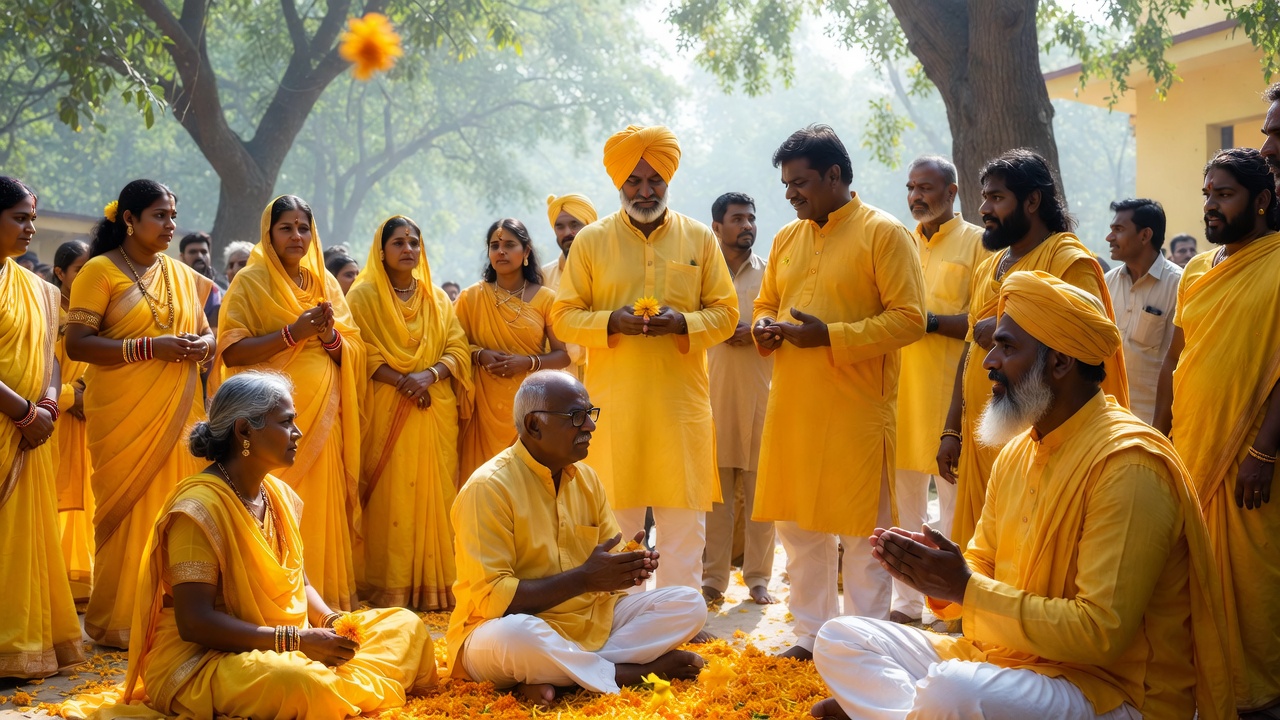
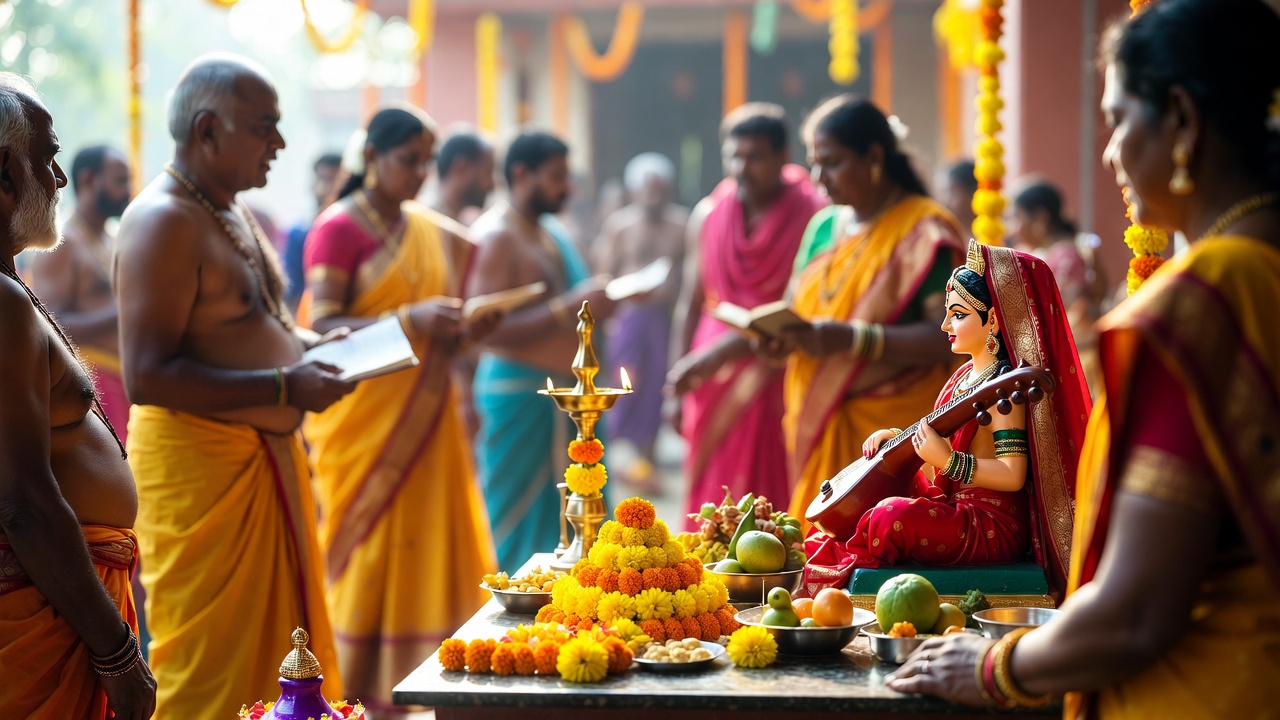
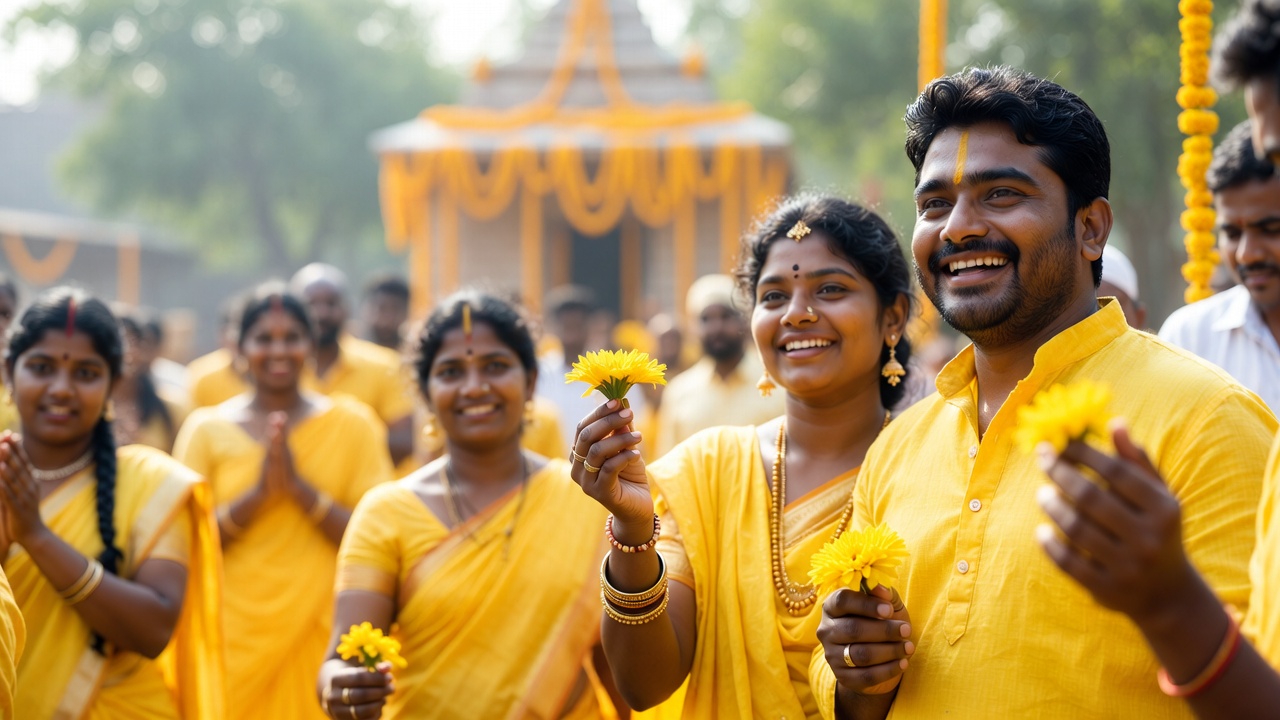
Walk through any neighbourhood in Varanasi, Kolkata, Jaipur, or Amritsar during Vasant Panchami, and the colour hits you immediately. Yellow sarees, yellow kurtas, yellow turbans. Yellow marigolds heaped at temple entrances. Yellow sweets — kesari halwa, saffron rice, boondi laddoos — offered first to Goddess Saraswati and then shared with loved ones.
But why yellow? What makes this particular colour so inseparable from this particular festival? And if you plan to celebrate Vasant Panchami in 2026, how should you dress for the occasion?
This guide answers all of that — rooted in real tradition, regional customs, and the living culture of the people who celebrate it.
What Is Vasant Panchami and When Is It Celebrated in 2026?
Vasant Panchami — also called Basant Panchami or Saraswati Puja — falls on the fifth day (Panchami Tithi) of the bright half (Shukla Paksha) of the Hindu lunar month of Magha. The word “Vasant” means spring, and “Panchami” means fifth.
In 2026, Vasant Panchami falls on Friday, January 23. According to the Hindu Panchang, the Panchami Tithi begins at 2:28 AM on January 23 and ends at 1:46 AM on January 24. The most auspicious window for Saraswati Puja is from 7:15 AM to 12:50 PM, as noted by major Panchang sources.
The festival serves a double purpose. It marks the seasonal transition from winter to spring — a time of renewal, growth, and colour. At the same time, it is the day devoted to Goddess Saraswati, the Hindu deity of knowledge, wisdom, music, and the arts.
Here is a quick snapshot:
| Detail | Information |
|---|---|
| Festival Name | Vasant Panchami / Basant Panchami / Saraswati Puja |
| 2026 Date | Friday, January 23, 2026 |
| Tithi | Panchami of Magha Shukla Paksha |
| Puja Muhurat | 7:15 AM – 12:50 PM |
| Deity Worshipped | Goddess Saraswati |
| Signature Colour | Yellow |
| Key Regions | North India, Eastern India, Rajasthan, Punjab, Nepal, Bali (Indonesia) |
Despite technically falling in the chill of late January, the festival looks ahead. It is celebrated forty days before the full bloom of spring, because in Indian tradition, the transition between any two seasons takes forty days to complete. Vasant Panchami is the starting gun. Forty days later comes Holi, the riotous festival of colours that celebrates spring at its peak.
Why Do People Wear Yellow on Vasant Panchami? The Deep Symbolism Explained
The yellow of Vasant Panchami is not a fashion choice. It carries layers of meaning — spiritual, agricultural, mythological, and emotional. To understand why millions of people choose this colour on this specific day, you need to look at all these layers together.
Yellow Represents Knowledge, Wisdom, and Goddess Saraswati
In Hindu colour symbolism, yellow is the colour of knowledge, learning, and mental clarity. It represents happiness, peace, meditation, and intellectual development. It is, quite literally, the colour of the mind at work.
This connection runs deep into scripture and tradition. Lord Vishnu, the preserver of the universe and the embodiment of supreme knowledge, is traditionally depicted wearing yellow garments. Lord Krishna and Lord Ganesha are also associated with yellow in their iconography.
When devotees wear yellow on Vasant Panchami, they are aligning themselves with Saraswati’s energy — the pursuit of wisdom, clarity of speech, and creative expression. The colour becomes a form of devotion, a way of saying, “I open myself to learning today.”
Yellow Mirrors the Mustard Fields of Spring
There is also a beautifully practical reason. Across the northern plains of India — in Punjab, Haryana, Uttar Pradesh, Rajasthan, and Bihar — mustard crops bloom during this season, blanketing the landscape in brilliant yellow. The fields of sarson ke phool (mustard flowers) are one of the most iconic sights of rural India in late January and February.
Wearing yellow on Vasant Panchami is a way of moving in harmony with nature. When the earth dresses in gold, the people do too. The festival connects human life with the agricultural calendar — a reminder that, for centuries, Indian culture and farming have been one and the same.
Yellow Carries Spiritual Energy and Positive Vibrations
According to Hindu spiritual tradition, yellow is believed to stimulate the intellect, uplift mood, and attract positive energy. The Hindu Speakers Bureau notes that yellow “represents the spiritual light that illuminates the truth” and “stimulates our mind and intellect so that we acquire wisdom and clarity.”
This is not unique to Hinduism. Across many world cultures, yellow is linked with sunlight, warmth, optimism, and vitality. But in the specific context of Vasant Panchami, these qualities are channelled toward Saraswati’s blessings — making the colour both a spiritual tool and a festive expression.
A Quick Guide to What Yellow Symbolises on Vasant Panchami
| Symbolic Layer | Meaning |
|---|---|
| Spiritual | Knowledge, wisdom, truth, mental clarity |
| Mythological | Colour of Lord Vishnu’s garments; linked to Goddess Saraswati |
| Agricultural | Mirrors the golden mustard fields of spring |
| Emotional | Optimism, joy, renewal, fresh beginnings |
| Cosmic | Represents the energy of the sun and the warmth of new life |
The History Behind Wearing Yellow Clothes on Basant Panchami
The tradition of wearing yellow on this day is not a recent invention. It reaches back centuries, rooted in myth, cross-cultural exchange, and the rhythms of agrarian life.
The Puranic Origin: The Birth of Goddess Saraswati
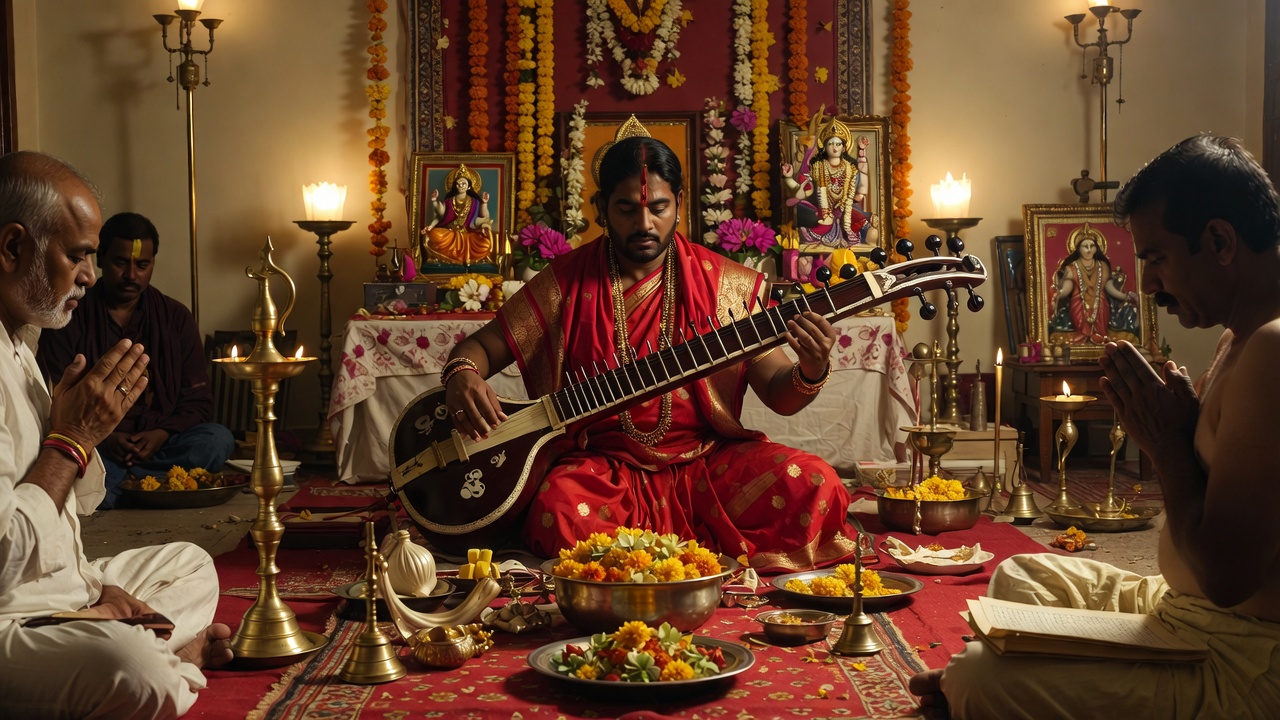
According to Hindu Puranic tradition, Lord Brahma created the universe but found it lifeless and silent. To fill it with consciousness, sound, and knowledge, he sprinkled water from his kamandalu (sacred water vessel). In that moment, Goddess Saraswati appeared — adorned in white, holding a veena (stringed instrument), seated on a lotus. She brought speech, music, and learning into the world.
Vasant Panchami is therefore considered the appearance day of Goddess Saraswati. The yellow worn on this day honours not only the goddess but also the creative, life-giving forces she represents.
Amir Khusrau and the Sufi Adoption of Basant
One of the most fascinating chapters in this tradition involves the Sufi poet Amir Khusrau (1253–1325 CE). According to widely cited local traditions, Khusrau once saw Hindu women carrying yellow flowers to a temple during Basant, dressed in vibrant yellow.
At the time, his beloved spiritual master Nizamuddin Auliya was deep in grief after the death of his nephew. To bring some happiness to the mourning saint, Khusrau adopted the yellow-clad celebration and brought it to the dargah (Sufi shrine). Since then, the Chishti order of Sufi Muslims has observed Basant Panchami at the dargah of Nizamuddin Auliya in Delhi, continuing a tradition that bridges Hindu and Islamic cultures.
This story is a powerful reminder that Vasant Panchami — and its yellow — belongs to everyone. It is a shared celebration that transcends religious boundaries.
How Different Regions Celebrate Vasant Panchami in Yellow
India is a vast country, and no two regions celebrate the same festival in exactly the same way. Yet the colour yellow remains a constant thread. Here is how the tradition plays out across the subcontinent.
North India: Yellow Turbans, Kites, and Mustard Fields
In Punjab, Vasant Panchami is known as the Basant Festival of Kites. People wear yellow turbans or headdresses, eat yellow rice, and fly kites to celebrate the season. The skies over Amritsar and Lahore (historically) fill with colourful kites, and the yellow outfits mirror the blooming mustard fields below.
In Uttar Pradesh and Rajasthan, devotees wear jasmine garlands alongside their yellow clothes. Morning pujas to Saraswati take place in homes, schools, and temples. In Rajasthan, people wear garlands of pale yellow jasmine flowers as a special Basant Panchami marker.
In Uttarakhand, the celebration expands beyond Saraswati Puja. People also worship Lord Shiva and Goddess Parvati as divine parents of the earth and its crops. Yellow rice is eaten, yellow clothes are worn, and it doubles as a significant school supplies shopping season.
Eastern India: Saraswati Puja as a Grand Cultural Event
In West Bengal, the festival is called Saraswati Pujo, and it is one of the most beloved events of the year — especially for students. Beautiful clay idols of the goddess are installed in schools, homes, and community pandals (temporary structures).
Students dress in yellow and place their books, pens, musical instruments, and even laptops at the feet of the goddess, seeking her blessing. In a unique custom, many students abstain from reading or writing on this day as a mark of surrender to divine knowledge.
In Bihar, Odisha, and Assam, the celebrations follow similar patterns, with yellow remaining the dominant colour in clothing, decorations, and food.
Western and Southern India: Quieter but Meaningful Observances
In Maharashtra, newly married couples visit a temple on their first Basant Panchami after the wedding, wearing yellow. In Gujarat, the festival is linked with love and emotional anticipation, and people exchange flower bouquets set with mango leaves while wearing saffron, pink, or yellow.
Southern India observes the festival more quietly but with equal devotion. The Sri Vidya Saraswathi Temple in Warangal (Telangana) and the Saraswati Temple in Pushkar (Rajasthan) see large gatherings of devotees in yellow.
Beyond India: Nepal, Bali, and the Sikh Tradition
In Nepal, Vasant Panchami is a public holiday. Parents bring young children to Saraswati temples to perform Vidyarambh — the ceremony of writing their first letters.
In Bali, Indonesia, the festival is called Hari Raya Saraswati. Teachers and students wear brightly coloured clothes instead of their usual uniforms and bring traditional cakes and fruit to school for temple offerings.
Among Sikhs, Basant Panchami is treated as a spring festival. Maharaja Ranjit Singh, the founder of the Sikh Empire, famously encouraged its celebration in Gurdwaras and once gave 2,000 rupees to the Harmandir Sahib in Amritsar to distribute food on this day. Namdhari Sikhs have historically celebrated it with yellow clothes to mirror the mustard fields.
What to Wear on Vasant Panchami 2026: A Complete Yellow Attire Guide
So, you want to dress for Vasant Panchami. Whether you are attending a family puja, visiting a temple, joining a community celebration, or simply honouring the day from home, here is a practical guide to choosing the right outfit.
Traditional Yellow Saree Options for Vasant Panchami
A yellow saree is the most classic choice for women on this day. The key is to match the fabric to the occasion and the weather — late January in North India can still be chilly.
| Fabric | Best For | Style Tip |
|---|---|---|
| Banarasi Silk | Formal puja, family gatherings | Pair with a gold or cream blouse; traditional zari work adds richness |
| Chanderi Silk | Long morning rituals, temple visits | Lightweight and graceful; pair with pearl or oxidised silver earrings |
| Cotton | Casual home puja, warm climates | Comfortable and breathable; ideal for all-day wear |
| Chiffon/Georgette | Evening events, modern celebrations | Easy draping; add a sequined or embroidered border for sparkle |
| Tussar Silk | Semi-formal gatherings | Natural sheen and texture; pair with statement jhumkas |
Shade guide: You do not have to stick to bright canary yellow. Butter yellow, mustard, turmeric gold, marigold, and saffron are all appropriate and equally beautiful. Choose a shade that flatters your skin tone.
Yellow Kurta Sets and Suit Sets for a Comfortable Festive Look
For women who prefer something easier to manage than a saree, a yellow kurta set is a wonderful choice. Options include:
- Straight-cut kurta with palazzo pants — Clean, modern, and comfortable for day-long celebrations
- Anarkali kurta set — Flowing and regal; a timeless choice with zari or mirror-work embroidery
- Sharara set — Adds movement and flair; great for lively gatherings
- Co-ord set in cotton or muslin — Contemporary, breathable, and easy to style
Pair any of these with gold-toned jewellery, pearl earrings, or simple bangles. Keep makeup soft and natural — a hint of kohl, warm blush, and nude or peach lipstick works beautifully for a morning celebration.
What Should Men Wear on Vasant Panchami?
Men have equally strong options for incorporating yellow:
- Yellow kurta-pyjama — The go-to traditional choice. Pair with a white or cream churidar or pyjama.
- Yellow turban or dupatta — Especially popular in Punjab and Rajasthan, where a yellow pagri (turban) is the signature Basant look.
- Mustard or saffron Nehru jacket — Worn over a white or cream kurta for a polished look.
- Yellow shirt or kurta with a dhoti — Common in eastern India during Saraswati Pujo.
Vasant Panchami Outfit Ideas for Children
Children are at the heart of Vasant Panchami — it is, after all, a day dedicated to learning. Dress children in:
- Yellow frock or lehenga for girls
- Yellow kurta-pyjama for boys
- Yellow ribbons, dupattas, or scarves if a full yellow outfit is not available
In schools that observe the festival, children often come dressed in yellow and bring books, pencils, and notebooks to place at Saraswati’s feet during the morning puja.
Can You Wear Other Colours on Vasant Panchami?
Yes. While yellow is traditional and strongly preferred, you are not breaking any rule by adding other colours. White, ivory, cream, pastel green, and light gold pair beautifully with yellow and are considered respectful alternatives.
Some women wear a white saree with yellow accessories — a yellow bindi, yellow bangles, or a marigold garland in the hair. The idea is not rigid uniformity but joyful participation in the spirit of the festival.
Traditional Yellow Foods Prepared on Vasant Panchami Day
The colour yellow extends beyond clothing. It fills the kitchen too. Here are the most common festive dishes served across India on this day:
| Dish | Region | Key Ingredient |
|---|---|---|
| Meethe Chawal (Sweet Yellow Rice) | North India | Saffron or turmeric, dry fruits |
| Kesari Halwa | Pan-India | Saffron, cardamom, ghee |
| Boondi Laddoo | Rajasthan, UP | Yellow-tinted chickpea flour |
| Khichdi | Bihar, UP | Turmeric, rice, lentils |
| Pongali | South India | Turmeric, rice, jaggery |
| Pulihora | Andhra Pradesh, Telangana | Turmeric, tamarind, rice |
Most dishes use turmeric (haldi) or saffron (kesar) to achieve their golden hue. These are not just colourings — turmeric is antibacterial and aids digestion, while saffron is considered one of the most precious spices in the world. Together, they make the food both beautiful and nourishing.
Vasant Panchami Puja Rituals and the Role of Yellow Offerings
If you are performing Saraswati Puja at home on Vasant Panchami 2026, here is a simple guide to the ritual and where yellow fits in:
- Wake up early and bathe. Wear yellow clothes.
- Prepare a clean altar. Place an idol or image of Goddess Saraswati on a white or yellow cloth.
- Offer yellow flowers — marigolds are the most common choice.
- Offer yellow sweets and fruits — kesari halwa, boondi, saffron rice, or bananas.
- Light a lamp (diya) and incense.
- Place books, instruments, or study materials near the idol. Students often place textbooks, pens, and notebooks at the goddess’s feet.
- Chant Saraswati mantras. The simple mantra “Om Saraswatyai Namah” is widely used.
- Seek blessings for wisdom, learning, creativity, and success.
The yellow flowers, yellow cloth, and yellow sweets create a visual harmony that reinforces the festival’s core message: knowledge is light, and light is golden.
Why Vasant Panchami Is Considered Auspicious for New Beginnings
Vasant Panchami is regarded as an “Abujh Muhurat” — one of the most auspicious timings in the Hindu calendar, when no further muhurat (auspicious moment) calculations are needed. Any new beginning started on this day is believed to bring success.
This is why the day is especially important for:
- Vidyarambh (Aksharabhyas): The ceremony where young children write their first letters. Parents across India — particularly in South India, Bengal, and Nepal — choose this day to formally initiate their child’s education.
- Starting new creative projects: Whether it is music, writing, painting, or dance, artists consider this day ideal for beginning something new.
- Launching educational ventures: Schools, coaching centres, and training programmes often start on or near this date.
- Weddings and engagements: In some communities, Vasant Panchami is a preferred date for marriages.
The combination of the goddess of wisdom’s blessings, the natural energy of spring, and the purity of the Panchami Tithi makes this one of the most favourable days in the entire year.
Vasant Panchami and Its Connection to Holi: The 40-Day Spring Countdown
One detail that many visitors to India find surprising: Vasant Panchami marks the beginning of the 40-day countdown to Holi. The two festivals are deeply connected. Vasant Panchami opens the door to spring with yellow. Holi bursts through it with every colour imaginable.
In some parts of North India, the bonfire (Holika Dahan) logs are first placed on the day of Vasant Panchami, forty days before they are lit. This symbolic act ties the two festivals together in a continuous arc of seasonal celebration — from the first stirring of spring to its exuberant full bloom.
If you are planning a trip to India that covers both festivals, late January through mid-March gives you the full experience — from the quiet, golden devotion of Vasant Panchami to the joyful chaos of Holi.
Frequently Asked Questions About Wearing Yellow on Vasant Panchami
Is it compulsory to wear yellow on Vasant Panchami? No. There is no strict religious rule that mandates yellow. However, wearing yellow is a beloved tradition that connects you to the festival’s spirit. It is a gesture of participation, not a requirement.
What shades of yellow are appropriate? All shades work — from pale lemon and butter yellow to deep mustard, marigold, turmeric gold, and saffron. Choose what suits you best.
Can men wear yellow too? Absolutely. In Punjab, men wear yellow turbans. Across North India, yellow kurtas are common. In some regions, even a yellow handkerchief or scarf counts.
What if I do not have any yellow clothes? Wear white, cream, or a light pastel. Add a yellow accessory — a bindi, bangles, a scarf, or a flower in your hair. The spirit matters more than the outfit.
Why is Goddess Saraswati associated with white if the festival colour is yellow? Saraswati is traditionally depicted in white, symbolising purity and truth. Yellow represents the knowledge and light she brings. The two colours complement each other — white is the canvas, yellow is the illumination.
Final Thoughts: Embrace the Golden Spirit of Vasant Panchami
Vasant Panchami is one of those festivals that asks very little of you but gives so much in return. There are no elaborate rules. No expensive preparations. No week-long rituals. Just a quiet morning. A prayer for wisdom. A plate of golden sweets. And a piece of yellow cloth that connects you to the earth, to the goddess, and to the countless generations who have celebrated this same season for centuries.
When you wear yellow on this day, you are not just following a dress code. You are wearing the colour of mustard flowers swaying in the January wind. You are wearing the colour of saffron threads dissolving in warm milk. You are wearing the colour of a child’s first letter, traced onto a slate at the feet of Saraswati.
That is why we wear yellow on Vasant Panchami. Because some traditions are not old-fashioned — they are timeless.
Happy Vasant Panchami 2026. May the golden light of knowledge shine upon you and your family.