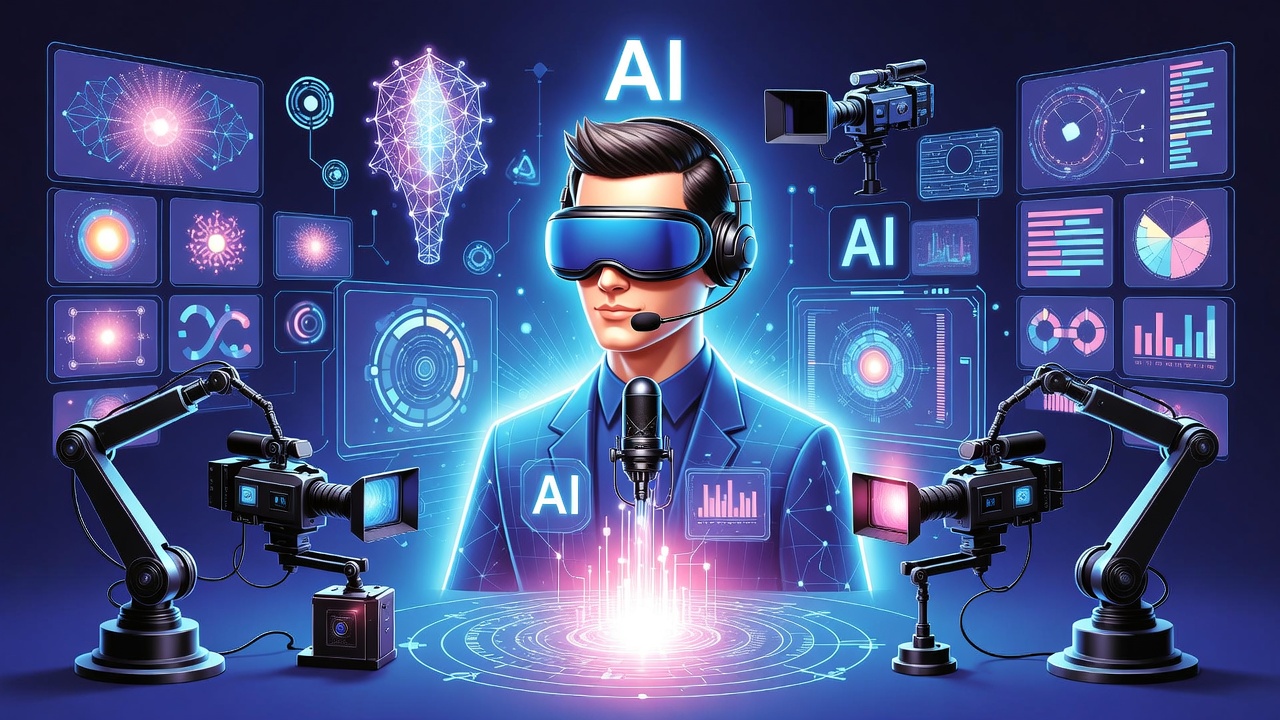
Every year on February 13, the world pauses to celebrate a medium that has shaped civilizations, toppled regimes, launched musical careers, and kept lonely night-shift workers company for over a century. World Radio Day 2026 arrives with a theme that speaks directly to our moment in history: “Radio and Artificial Intelligence.”
Proclaimed by UNESCO and adopted by the United Nations General Assembly in 2012, World Radio Day honors the anniversary of the first United Nations Radio broadcast on February 13, 1946. That first transmission carried a simple but powerful message: “This is the United Nations calling the peoples of the world.” Eight decades later, the peoples of the world are still listening. But the voices coming through the speaker — and the technology behind them — are changing fast.
This year, UNESCO has chosen to confront a question that broadcasters, listeners, and regulators alike are grappling with: Can artificial intelligence strengthen radio without stripping away its human soul? The answer, as we will explore in this deep dive, is complicated, hopeful, and already unfolding in studios from Portland, Oregon to Milan, Italy to Accra, Ghana.
What Is World Radio Day and Why Is It Celebrated on February 13?
Before we get into the mechanics of algorithms and voice cloning, it helps to understand why we celebrate radio at all — and why this particular date matters.
World Radio Day (WRD) was first proposed by Spain in September 2010. The Spanish Radio Academy saw a need to recognize the medium’s role in education, free expression, and disaster response. By November 2011, all UNESCO Member States had unanimously accepted the proposal. The United Nations General Assembly formally adopted it in December 2012 under resolution A/RES/67/124.
The choice of February 13 is not arbitrary. It marks the founding of United Nations Radio in 1946, a service born in makeshift offices and studios in New York City. Its mission was to connect a war-shattered world through the power of the spoken word. That mission has never gone away. It has just found new tools.
Each year, UNESCO selects a theme that reflects the medium’s most pressing challenge or opportunity. Past themes have included:
| Year | Theme |
|---|---|
| 2015 | Youth and Radio |
| 2017 | Radio is You! |
| 2019 | Dialogue, Tolerance, and Peace |
| 2020 | Radio and Diversity |
| 2022 | Radio and Trust |
| 2023 | Radio and Peace |
| 2025 | Radio in Times of Crisis |
| 2026 | Radio and Artificial Intelligence |
The progression from “Trust” to “Peace” to “Artificial Intelligence” tells a story of an industry racing to keep pace with technology while holding onto the values that made it trusted in the first place.
World Radio Day 2026 Theme Explained: Radio and Artificial Intelligence
The 2026 theme is not a celebration of technology for its own sake. UNESCO’s framing is precise and deliberate: “AI is a tool, not a voice.”
This distinction matters. As UNESCO’s official World Radio Day page states, “Today Artificial Intelligence opens a new chapter: not just for innovation but for deepening their bond with listeners. When used ethically and responsibly to support professional judgement, creativity and public service values, AI can become an ally in strengthening audience trust.”
The key phrase there is “Technology alone does not build trust. Radio broadcasters do.”
UNESCO’s 2026 initiative encourages radio stations to approach AI as an opportunity for growth and innovation while preserving three things audiences value most: warmth, reliability, and the human touch. To support this, UNESCO has released several resources:
- Free access to AI broadcasting tools through technology enterprise partnerships, including automatic transcription, speaker diarization, text-to-speech, and real-time translation tools.
- Free AI training sessions offered by UNESCO partners.
- An AI Roadmap with 12 practical recommendations to help radio stations avoid common pitfalls when adopting AI. The roadmap is available in all six official United Nations languages.
- A global interactive map where stations can register their World Radio Day activities and find cross-border collaboration partners.
These resources represent a clear signal: the world’s leading cultural organization believes AI and radio can coexist. But the terms of that coexistence matter enormously.
How Many People Still Listen to Radio in 2026? Global Listenership Statistics
Before we talk about how AI is transforming radio, let’s address the elephant in the room. In an age of Spotify, Apple Music, YouTube, and podcasts, does anyone still listen to the radio?
The answer is a resounding yes.
According to projections compiled by Statista, over 3.2 billion people worldwide tune in to radio — roughly 40% of the global population. User penetration is forecast at approximately 39.88% in 2025, with the figure holding steady through 2030.
In the United States alone, the numbers are remarkable. Nielsen’s Q3 2025 audio report found that Americans spend an average of 3 hours and 53 minutes per day with audio content. Of the ad-supported audio universe, radio commands 62% of daily listening time. AM/FM radio reaches approximately 91% of U.S. adults monthly, according to radio industry analysis from Gitnux.
Here is a snapshot of key global radio statistics:
| Metric | Figure |
|---|---|
| Global radio listeners | Over 3.2 billion |
| U.S. weekly AM/FM reach (adults 12+) | ~82% |
| Daily U.S. audio consumption | 3 hours 53 minutes |
| Radio’s share of ad-supported audio (U.S.) | 62% |
| Country with highest radio usage rate | Finland (79% of consumers) |
| Global traditional radio market value | ~$9.3 billion (2024) |
| Radio advertising ROI | $12 return per $1 spent (U.S. retail) |
Radio is not a dying medium. It is an evolving one. And AI is at the center of that evolution.
Why UNESCO Chose Artificial Intelligence as the 2026 World Radio Day Focus
UNESCO did not pick AI as the 2026 theme randomly. Several converging trends made it unavoidable.
First, AI adoption in newsrooms and studios has accelerated dramatically. From automated transcription services like Otter.ai and Descript to full-blown AI-generated show hosts, the technology has moved from experimental to operational in just two years.
Second, listeners are becoming more comfortable with AI voices. A Futuri AI in Media Study found that 74% of respondents were comfortable with AI voices in sports programming, and 80% approved of their use in commercials. Younger audiences showed even higher acceptance, with some expressing openness to entirely AI-run radio stations.
Third, the ethical stakes have become impossible to ignore. In April 2025, Australian radio station CADA was caught running an AI-generated host named “Thy” for six months without disclosing it to listeners. The AI host, built using ElevenLabs voice-cloning software, presented a four-hour daily music segment that reached over 72,000 listeners. When the deception was revealed, it sparked a global debate about transparency in broadcasting. The same Futuri study showed that 90% of listeners prefer broadcasters to disclose when AI is used in content creation.
These three forces — adoption, acceptance, and accountability — made AI the only logical choice for World Radio Day 2026.
How AI-Powered Playlist Curation Is Changing What You Hear on the Radio
One of the quietest but most significant ways AI has entered radio is through music programming and playlist curation. This is not new in principle — radio stations have used software-driven scheduling for years. But the sophistication of AI-powered systems in 2026 is in a different league.
Traditional music scheduling software worked on rigid rule sets. A program director would set parameters: no more than two songs from the same decade in a row, never play the same artist within a 90-minute window, always lead the morning show with an upbeat track. The software would then generate a playlist within those constraints.
AI-powered systems go much further. They analyze real-time listener data — including skip rates on streaming simulcasts, social media sentiment, time-of-day patterns, local events, and even weather conditions — to dynamically adjust programming. If a heatwave hits a city, an AI system might increase the rotation of upbeat summer anthems. If a beloved local artist passes away, it can prioritize tribute tracks within minutes.
Platforms like Radio.Cloud now offer AI-driven programming suites that allow even small stations to create what feels like a hyper-personalized experience. Their system can increase the local elements in syndicated content by up to five times per hour, according to the company. This means a station running nationally syndicated programming can still sound deeply local.
The research firm Future Data Stats estimates that AI will add $22.9 billion of value to the music and audio market by 2030 through AI-powered playlisting, mood-based content personalization, and automated voiceovers.
For listeners, this means the radio of 2026 is smarter than ever. It learns what you want to hear. The question is whether that learning enhances the serendipity that makes radio special or whether it creates a filter bubble that slowly narrows your world.
AI Voice Cloning in Radio Broadcasting: The Rise of Virtual DJs
If AI playlist curation is the quiet revolution, AI voice cloning is the loud one.
The story begins in June 2023, when Portland, Oregon station Live 95.5 FM became what is widely regarded as the first radio station to use an AI DJ for an entire shift. The station deployed “AI Ashley,” a voice clone of human host Ashley Elzinga, built using Futuri Media’s RadioGPT platform powered by GPT-4. As Rolling Stone reported, Elzinga was asked to read prompts while the system analyzed her inflection, personality, and speech patterns.
“It was kind of intense,” Elzinga told Rolling Stone. “It wanted to hear the inflection of my voice and my personality, and it started to generate who I was.”
Since then, AI DJs have multiplied across the radio landscape:
- DJ Tori is an entirely AI-created personality hosting overnight and weekend shifts at KFMW Rock 108 in Hiawatha, Iowa. From her image (blue hair streaks, tattoos) to her voice, she is a complete artificial creation. She occasionally mispronounces words — “Live” rhyming with “give” instead of “five” — but her station rolls with the quirks.
- Spotify’s AI DJ X compiles personalized playlists with conversational patter tailored to individual listening habits.
- CADA’s “Thy” in Sydney operated for six months before being exposed as AI, triggering a transparency debate that rippled across the global broadcasting industry.
The technology behind these voices has advanced rapidly. Modern AI voice platforms from companies like ElevenLabs, WellSaid Labs, and OpenAI can capture inflection, emotion, breathing sounds, and even vocal tics that make synthetic speech nearly indistinguishable from human voices. A 2024 study by Podcastle found that two out of three Americans incorrectly labeled human voices as AI, suggesting the “uncanny valley” for audio may already be closing.
But the labor implications are serious. Rolling Stone’s reporting revealed that media company Audacy — which owns more than 200 stations across the United States — asked an undetermined number of on-air employees to sign contracts granting the company rights “in perpetuity” to create digital replicas of their voice and likeness. The industry’s largest companies are clearly preparing for a future where human talent can be replicated at scale.
As longtime DJ Frankie Ross of The Wave in Los Angeles told Rolling Stone: “The one thing they haven’t straightened out is the cadence and how we speak. But AI is learning every day, and once they get that worked out, there will be a lot of people out of work long term.”
How AI Helps Radio Stations Automate Show Prep and Content Production
Beyond the microphone, AI is transforming the behind-the-scenes work that makes radio possible. For many broadcasters, this is where the technology’s value is most immediately felt — not in replacing humans, but in multiplying their productivity.
Show preparation is a good example. Before AI, a morning show host might spend two to three hours reading news articles, scanning social media trends, and drafting talking points before going on air. Today, AI tools like ChatGPT, Gemini, and specialized broadcasting platforms can generate show outlines, scripts, and talking points in minutes. As Radio.co’s guide to AI in broadcasting notes, “What used to take hours can now be done in minutes.”
Here are the key areas where AI is streamlining radio operations:
Automated transcription and archiving. Tools like Descript, Otter.ai, and Sonix can transcribe every interview, debate, and live segment automatically. They tag content by keyword and topic, making it searchable. For UNESCO’s World Radio Day 2026 offerings, technology partners are providing free access to tools that handle automatic transcription, speaker diarization, collaborative editing, transcript summarization, and searchable archiving.
News curation and fact-checking. AI systems can scan hundreds of news sources in real-time, identify trending stories, flag potential misinformation, and provide broadcasters with concise summaries for news bulletins. This allows a one-person community station to deliver news coverage that once required a full newsroom.
Social media management. AI tools can repurpose radio segments into social media clips, generate captions, suggest optimal posting times, and analyze engagement data. For stations competing for attention across multiple platforms, this is invaluable.
Dynamic ad insertion. AI enables sophisticated advertising targeting within broadcast streams. Instead of everyone hearing the same commercial, AI can tailor ads to specific regional audiences, time slots, and even individual listener profiles on digital streams. The research from MIDiA Research highlights this as a critical revenue opportunity: dynamic ad insertion powered by AI can increase advertising yield while maintaining a seamless broadcast flow.
Archive recovery. This is one of the most culturally significant applications. Radio stations around the world possess vast archives of historical recordings — thousands of hours of interviews, music performances, and news coverage. Much of this material sits in storage because organizing it is prohibitively expensive and time-consuming. AI can listen to decades of old tapes, identify speakers and keywords, and index everything for retrieval. As Remitly’s World Radio Day 2026 guide put it, AI acts as “a super-powered archivist” that can “breathe new life into dormant memories, allowing stations to reshare voices from the past that would otherwise be lost to time.”
The Ethical Dilemma: Should Radio Stations Disclose When AI Is Used on Air?
The CADA incident in Australia brought one question to the forefront of the global broadcasting debate: Do listeners have the right to know when they are hearing an AI-generated voice?
The answer, from virtually every stakeholder except a few technology enthusiasts, is yes.
UNESCO’s 2026 framework explicitly calls for transparency as a non-negotiable principle. The organization’s AI Roadmap for radio stations includes disclosure as one of its 12 core recommendations. The message is clear: if a station uses a synthetic voice or AI-generated script, listeners deserve to know.
This principle is also reflected in emerging regulation. As Xperi’s broadcast technology analysis noted, “upcoming AI regulation and legislation include the obligation to inform consumers whenever they encounter or consume AI-generated content.” The European Union’s AI Act, which entered into force in stages beginning in 2024, includes specific transparency requirements for AI-generated content that mimics human speech.
But the broadcasting industry itself is divided on how disclosure should work. Some stations take a creative approach. Spotify, for instance, named its AI feature “AI DJ X” — making the artificial nature part of the brand identity. Other stations have opted for simple statements: “AI was used to create portions of today’s programming.”
The deeper ethical question goes beyond disclosure. It touches on consent, compensation, and intellectual property.
When Audacy asked employees to sign over rights to their digital voice replicas “in perpetuity,” it raised alarm bells across the industry. Radio host Cory Dylan of 100.7 KFBG in San Diego told ABC News: “I do concern myself that our contracts don’t protect our voices. It is my voice and it’s the way I choose to use it.”
For World Radio Day 2026, UNESCO is encouraging broadcasters to develop “clear, caring policies and internal guardrails for ethical AI use.” This means not just telling listeners when AI is present, but establishing policies about who controls voice data, how long it can be used, and what happens to it after an employee leaves a station.
AI and Accessibility: How Technology Is Making Radio More Inclusive
One of the most positive stories about AI in radio is the one least often told: its potential to make broadcasting more accessible to people who were previously excluded.
Radio has always been an auditory medium. For the deaf and hard-of-hearing community, this meant being left out of the conversation entirely. AI is changing that. Real-time speech-to-text systems can now generate live captions for radio streams. AI-powered translation tools can render content in dozens of languages simultaneously. Text-to-speech systems can make written content from radio station websites available to blind and visually impaired listeners in natural-sounding audio.
The UNESCO World Radio Day 2026 offerings from technology enterprise partners include tools for real-time translation, captioning, and multi-language editing — all designed to expand radio’s reach to communities that traditional broadcasting has struggled to serve.
For stations in multilingual countries — which is to say most countries — AI translation is especially valuable. A community station in Cameroon, for instance, might broadcast primarily in French but serve a population that speaks dozens of local languages. AI can generate simultaneous translations, allowing the same program to reach speakers of Fulfulde, Ewondo, or Bassa without requiring separate production for each language.
This aligns with broader movements in the AI space. Google’s Masakhane African Languages AI Hub, supported by $3 million in funding, is expanding research and open-source tools across more than 40 African languages. While this work is not radio-specific, the tools it produces can directly benefit community broadcasters across the continent.
The promise is clear: AI can make radio a medium that speaks — literally — to everyone, regardless of language, hearing ability, or location.
Community Radio in Developing Countries: Can AI Bridge the Digital Divide?
Community radio stations are the backbone of information access in much of the Global South. In sub-Saharan Africa, South Asia, and parts of Latin America, a community radio station may be the only source of news, health information, agricultural guidance, and educational content for hundreds of thousands of people.
These stations typically operate on shoestring budgets with volunteer staff. They broadcast in local languages to audiences that may have limited literacy and no internet access. For these stations, AI is both an enormous opportunity and a significant challenge.
The opportunity is efficiency. AI tools can help a one-person operation produce content that previously required a full team. Automated transcription means a single volunteer can document hours of programming for reporting purposes. AI-generated news summaries can keep a station current on national and international events. Text-to-speech can fill gaps in programming when live hosts are unavailable.
The challenge is access. As TechAfrica News reported, “While 83% of Sub-Saharan Africa’s population is covered by a mobile broadband network, only about 25% actually use mobile internet services.” Over 2,000 languages are spoken across Africa, yet most AI models primarily function in English or French. Without localized AI, entire communities remain excluded.
The digital literacy gap compounds the problem. In many African countries, particularly in rural areas and among older generations, the skills needed to operate AI tools simply do not exist at scale. A community radio station in rural Mali may have access to a computer, but its operators may lack the training to use an AI transcription service, let alone a voice synthesis platform.
There are reasons for cautious optimism. Africa’s AI market is valued at approximately $4.51 billion in 2025, with a projected compound annual growth rate of 27.42% that could push it to $16.53 billion by 2030, according to Mastercard’s 2025 AI in Africa report. Platforms like Darli, which supports more than 20 African languages, have already reached over 110,000 farmers with AI-powered agricultural advice. If similar platforms can be adapted for broadcasting, the potential is enormous.
UNESCO’s World Radio Day 2026 initiative directly addresses this by offering free AI tools and training to radio stations worldwide, with a focus on building capacity in regions where resources are limited. The technology enterprises participating in the program are providing free trials of broadcasting-related AI tools, from automatic transcription to multi-language editing.
The question is whether these short-term initiatives can evolve into sustained support. A free trial that expires on February 14 does little for a community station in the Central African Republic that needs year-round assistance.
World Radio Day 2026 Events and Celebrations Around the Globe
World Radio Day is not just a topic for online discussion. It is a day of active celebration, with events organized by broadcasters, educational institutions, and cultural organizations worldwide.
Milan, Italy is hosting one of the largest 2026 celebrations. The World Radio Day event organized by Radio Speaker at Talent Garden Calabiana on March 9, 2026 (rescheduled to avoid conflicts with the Winter Olympics and Sanremo Festival) features nine hours of non-stop live streaming. As Unica Radio reported, the event brings together legendary Italian radio figures including Linus, Nicola Savino, Marco Mazzoli, and Giuseppe Cruciani for discussions on how AI can enhance human work without replacing the uniqueness of voice and storytelling. The event also features an exhibition space showcasing the latest hardware and software for audio production.
UNESCO’s global interactive map allows radio stations worldwide to register their activities and connect with partner stations in other countries. This map has become a vital networking tool, enabling cross-border collaborations that persist well beyond February 13.
Across Asia, the initiative has gained significant traction. RadioInfo Asia has been actively promoting the 2026 theme, and stations throughout the region are preparing special broadcasts that explore AI’s role in Asian broadcasting markets.
In the United States, radio industry professionals are approaching the day with a mix of reflection and forward-looking ambition. As Barrett Media’s year-end survey of industry professionals revealed, many broadcasters entered 2026 with a specific goal: “I’d like to learn the best uses of AI in my roles to work as efficiently and beneficially as possible.”
Here are some ways anyone can participate in World Radio Day 2026:
- Tune in to a local community station instead of your usual streaming playlist. You might discover a new voice or learn something about your neighborhood.
- Engage with stations running special programs or call-ins for the day. Share why radio matters to you.
- Explore international radio through apps like Radio Garden, which lets you tune into stations from thousands of miles away.
- Start a conversation about AI in broadcasting. Ask your friends, family, or social media followers: Would you listen to an AI radio host? Would you want to know if you were?
- Register on the UNESCO World Radio Day map if you are a broadcaster, and explore collaboration opportunities with stations in other countries.
How AI Is Transforming Radio Advertising and Revenue Models
For commercial broadcasters, AI is not just a creative tool — it is a financial lifeline.
The radio advertising market is enormous. Global radio ad spend is approximately $36 billion per year, and in the United States, radio advertising is projected at around $13 billion annually by recent estimates. For every dollar spent on radio advertising, retailers see approximately $12 in return on investment, making radio one of the most cost-effective advertising channels available.
But the competition from digital platforms is fierce. Tech giants like Google and Spotify are capturing a growing share of advertising revenue, leaving traditional broadcasters with shrinking margins. AI offers several ways to fight back.
Programmatic audio advertising, which uses AI to automate the buying and selling of ad space, is growing at approximately 20% year-over-year, according to radio industry statistics compiled by Gitnux. This technology allows advertisers to target specific demographics, locations, and listening contexts with precision that was previously impossible on terrestrial radio.
Dynamic ad insertion takes this further. AI can swap out advertisements in real-time based on the listener’s profile, location, and even the content they are currently hearing. A listener in Miami hearing a morning drive show might receive an ad for a local restaurant, while someone streaming the same show in Chicago hears a promotion for a nearby car dealership.
As Xperi’s Joe D’Angelo wrote, AI’s most practical current use in radio is “the lighter fuel on the fire of the targeting the internet brought to advertising, as AI leverages its nimble learning capabilities around listener habits to enhance precision marketing so ads can be personalized on the fly.”
Perhaps most interesting is AI’s potential for hyperlocal advertising. Small businesses that could never afford traditional radio advertising may find AI-generated ads within their budget. An AI system can generate a professional-sounding local ad — maybe for as few as 500 households — at a fraction of the cost of traditional production. As one analyst at Xperi noted, “Most consumers won’t care how an ad is produced, but they will care if the ad, its call to action, and its offer are relevant to them.”
The Future of AI Radio Hosts: Will Robots Replace Human DJs Entirely?
This is the question that haunts every working broadcaster — and the one that UNESCO’s 2026 theme addresses most directly.
The short answer is no, not entirely. But the nuances matter.
Radio consultant Fred Jacobs compared AI’s role in radio to Charles Darwin: the strong will survive. “I think if you’re an accomplished air personality, particularly on a personality show, what AI will do is make your job easier,” Jacobs told ABC News.
Washington, D.C. radio host Toby Knapp of 97.1 WASH-FM sees AI as evolution, not extinction. “You can’t automate companionship,” he said in the same report. “Only you can do what you do. And that’s extremely important.”
The evidence so far supports a mixed picture. AI DJs are most effective in roles that were already automated or underserved: overnight shifts, weekend fills, and syndicated time slots where live hosts were either unavailable or too expensive to employ. In these roles, AI provides programming that is more engaging than silence or a simple auto-playlist.
However, the format matters enormously. Music radio — where the host’s role is primarily to introduce songs and read liners — is far more vulnerable to AI replacement than talk radio, where personalities build relationships with audiences through conversation, humor, vulnerability, and shared experience.
MIDiA Research’s analysis put it eloquently: “In an automated world, authentic human connection becomes a scarce and increasingly valuable commodity. The industry’s pivot to AI must therefore be one of reinforcement, not replacement.”
The bottom line for World Radio Day 2026 is this: AI will not replace your favorite morning host. But it will handle the tasks that keep your favorite morning host up until 3 AM doing show prep. Whether that trade-off is a net positive depends entirely on how the technology is governed.
UNESCO’s AI Roadmap for Radio Stations: 12 Practical Recommendations
One of the most valuable contributions of World Radio Day 2026 is UNESCO’s AI Roadmap — a practical guide designed to help radio stations navigate AI adoption without falling into ethical or operational traps.
The roadmap, available in all six UN official languages, sets out 12 recommendations that cover the full spectrum of AI use in broadcasting. While the full document should be read at UNESCO’s WRD offers page, the core principles can be summarized as follows:
Transparency first. Always disclose when AI is used in content creation. Listeners have the right to know what is human and what is machine-generated.
Human oversight always. AI should assist decision-making, not replace it. A human being should always have final editorial control over what goes on air.
Protect voice rights. Broadcasters must establish clear policies about who owns voice data, how it can be used, and what happens to it when an employment relationship ends.
Invest in training. AI tools are only as good as the people using them. Stations should invest in training for all staff members, not just technical personnel.
Prioritize accessibility. AI should be used to make radio more inclusive, not less. This means investing in tools for real-time translation, captioning, and multilingual content.
Guard against bias. AI systems trained on biased data will produce biased content. Stations should regularly audit their AI tools for cultural, linguistic, and demographic bias.
Start small, learn fast. Not every station needs to implement every AI tool at once. Start with the applications that address your most pressing needs and expand from there.
These principles are not just aspirational. They are a framework for an industry that is being transformed whether it is ready or not.
How to Celebrate World Radio Day 2026: A Complete Guide for Listeners and Broadcasters
World Radio Day is for everyone — not just industry professionals. Here is a practical guide to making the most of February 13, 2026.
For Listeners
Rediscover local radio. Spend one full hour listening to a community station you have never tried before. In most cities, there are stations serving immigrant communities, Indigenous populations, university students, and niche music genres that rarely appear on mainstream playlists.
Go international. Download the Radio Garden app or visit radio.garden and spin the virtual globe. Land on a station in Lagos, Mumbai, or Reykjavik. Listen for fifteen minutes. Notice how different — and how similar — radio feels around the world.
Talk about it. Ask a friend, parent, or grandparent about their favorite radio memory. For older generations, radio was the soundtrack to their lives in a way that streaming services may never replicate. These conversations are acts of cultural preservation.
Send a message. Contact your favorite station and tell them what their work means to you. In an era of declining budgets and uncertain futures, a listener’s voice carries real weight.
For Broadcasters
Register on the UNESCO map. Visit the World Radio Day global map and register your station or event. This connects you with a worldwide network of broadcasters.
Run a special segment on AI. Ask your listeners how they feel about AI voices, automated content, and the future of radio. Be transparent about your own station’s use of AI tools.
Explore the free AI tools. UNESCO’s technology partners are offering free trials of broadcasting-related AI tools for World Radio Day 2026. These include tools for transcription, translation, voice synthesis, and archive management.
Collaborate across borders. Use the UNESCO map to find a partner station in another country. Exchange programs, guests, or sound archives. The best World Radio Day celebrations create relationships that last long beyond February 13.
The History of Radio Innovation: From Marconi to Machine Learning
To understand where radio is going, it helps to remember where it came from.
1895: Guglielmo Marconi demonstrates the first practical wireless telegraph, laying the foundation for radio communication.
1920: KDKA in Pittsburgh, Pennsylvania broadcasts the results of the Harding-Cox presidential election, often cited as one of the first commercial radio broadcasts in history.
1932: The League of Nations begins “Radio Nations” from a Dutch station, transmitting across Europe. The service runs for ten years.
1946: United Nations Radio launches from New York with the words, “This is the United Nations calling the peoples of the world.”
1990s-2000s: Internet streaming begins to reshape radio distribution. Stations can now reach global audiences.
2011: UNESCO Member States proclaim World Radio Day. The first celebration takes place in 2012.
2020s: AI enters the radio landscape, first through music scheduling and advertising technology, then through voice synthesis and automated content creation.
2023: Live 95.5 in Portland, Oregon deploys “AI Ashley,” widely considered the first AI DJ to run a full radio shift.
2025: Australia’s CADA controversy brings AI transparency in broadcasting to global attention.
2026: UNESCO’s World Radio Day focuses on “Radio and Artificial Intelligence,” establishing a framework for ethical AI use in broadcasting.
Each technological leap has prompted predictions that radio would die. Television was supposed to kill it. The internet was supposed to bury it. Podcasts were supposed to replace it. Radio survived every challenge by doing what it does best: adapting, localizing, and connecting. AI is the latest test of that resilience.
What Radio Professionals Are Saying About AI in 2026
The radio industry’s relationship with AI is complex, emotional, and deeply personal. For many broadcasters, their voice is not just a professional tool — it is their identity, their livelihood, and their connection to their community.
Here is a range of perspectives from across the industry:
Optimistic but cautious. Toby Knapp, 97.1 WASH-FM in Washington, D.C.: “I think the only constant in our business is change, and the only constant in technology is that it’s going to evolve. As a music personality, I don’t play CDs or queue up vinyl… today’s talent need to embrace what technology can do.”
Concerned about labor. Shawn Tempesta, 102.7 VGS in Las Vegas: “To pretend that AI is not going to be a mass extinction event for jobs in this country, be it radio or anything else, you’re fooling yourself.”
Protective of identity. Cory Dylan, 100.7 KFBG in San Diego: “I do concern myself that our contracts don’t protect our voices. It is my voice and it’s the way I choose to use it.”
Pragmatic. Fred Jacobs, radio consultant: The strong talent will survive. AI will make their job easier.
Institutional. UNESCO: “Technology alone does not build trust. Radio broadcasters do.”
These voices represent the spectrum of emotions — hope, fear, pragmatism, and determination — that define broadcasting’s relationship with AI in 2026. None of them are wrong. The future will likely contain elements of all their visions.
Key Takeaways: World Radio Day 2026 and the Future of Broadcasting with AI
As we approach February 13, 2026, here are the essential points to carry forward:
Radio is alive and massive. With over 3.2 billion listeners worldwide and 91% monthly reach among U.S. adults, radio remains one of the most powerful communication platforms on Earth.
The 2026 theme matters. UNESCO’s choice of “Radio and Artificial Intelligence” reflects a decisive moment for the industry. The decisions made in 2026 about transparency, ethics, and governance will shape broadcasting for decades.
AI is a tool, not a replacement. The most successful uses of AI in radio — automated show prep, dynamic ad insertion, archive recovery, accessibility tools — enhance human capabilities rather than replacing them.
Transparency is non-negotiable. Listeners overwhelmingly want to know when AI is used. Stations that fail to disclose risk losing the trust that makes radio valuable in the first place.
The Global South needs support. Community radio stations in developing countries stand to benefit enormously from AI, but only if the tools are accessible, affordable, and available in local languages.
The human voice still matters. In a world of synthetic speech and algorithmic curation, the warmth, imperfection, and authenticity of a human voice is more valuable than ever.
Radio has survived every technological revolution of the past century. It survived television. It survived the internet. It survived streaming. It will survive AI — but only if the people who make it, and the people who listen to it, insist that the technology serves the medium rather than consuming it.
Happy World Radio Day. Now go turn on your radio.