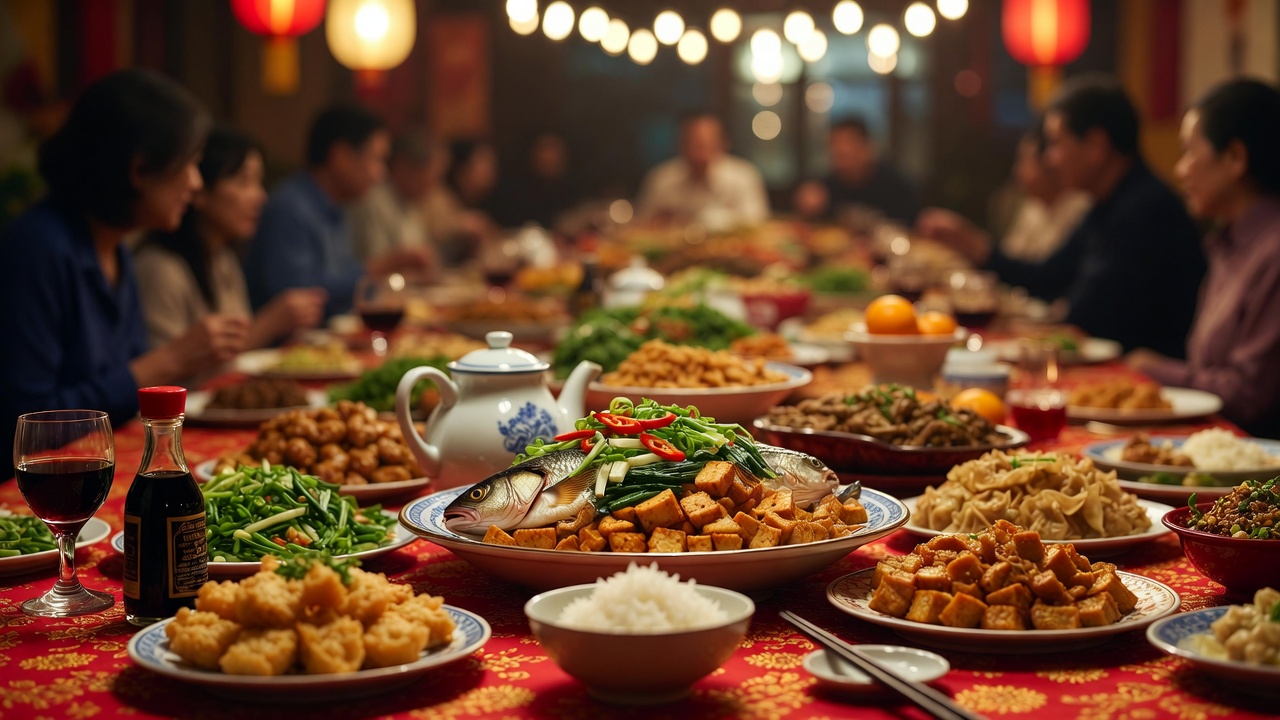
The kitchen smells like ginger and soy sauce. A steamer is rattling on the stove. Somewhere between folding the fortieth dumpling and checking the whole fish in the oven, the doorbell rings — more family has arrived. This is Nián Yè Fàn (年夜饭), the Chinese New Year’s Eve reunion dinner, and it is the most anticipated meal of the entire year.
Chinese New Year 2026 falls on Tuesday, February 17, ushering in the Year of the Fire Horse. The Horse symbolizes vitality, momentum, and perseverance in Chinese culture. After the reflective Year of the Snake, 2026 gallops in with bold, fiery energy — and the dinner table should match that spirit.
But the reunion dinner is about much more than good food. Every dish carries a wish. A whole fish promises surplus. Dumplings resemble ancient gold ingots. Sticky rice cake nudges your fortune upward. Getting the menu right means setting the tone for twelve months of luck, health, and togetherness.
Whether you are a seasoned home cook or preparing your very first Spring Festival feast, this guide walks you through 10 essential Chinese New Year’s Eve dinner recipes, complete with the cultural stories behind each dish and practical tips to help you pull off a stunning spread.
Why the Chinese New Year Reunion Dinner Menu Matters So Much
The reunion dinner — known as tuán nián fàn (团年饭) — is not just a meal. It is a ritual. Families that have scattered across cities and even continents travel home for this single evening. In China, this annual migration, called Chūn Yùn (春运), is the largest human movement on the planet. According to China Highlights, China’s public holiday for Lunar New Year is eight days long, from New Year’s Eve through the seventh day of the new lunar calendar year.
At the heart of this homecoming is the table. Traditionally, families serve an even number of dishes — eight or ten — because even numbers represent harmony and balance. Each dish is chosen not only for flavor but for the blessing it carries. Homophonic wordplay, or xié yīn (谐音), drives many of these choices: if an ingredient’s name sounds like a lucky word, it earns a place on the menu.
The 2026 Year of the Horse adds its own layer. Red, the luckiest color in Chinese culture, should appear prominently — think char siu glaze, chili oil, red-braised sauces. The Horse’s energy calls for bold flavors, hearty portions, and a table that signals abundance.
Here are the ten recipes you need to know.
1. Whole Steamed Fish Recipe for Chinese New Year (Symbolizing Abundance)
Chinese name: 清蒸鱼 (Qīngzhēng Yú) Symbolism: Surplus year after year — 年年有余 (nián nián yǒu yú)
No reunion dinner is complete without a whole fish. The word for fish, yú (鱼), sounds identical to the word for surplus, yú (余). Families serve the fish whole — head to tail — to symbolize a good beginning and a good ending, or yǒu tóu yǒu wěi (有头有尾) in Chinese. According to China Highlights, the fish should ideally be the last dish left on the table with some remaining, reinforcing the idea of always having more than enough.
Best fish to choose: Sea bass (鲈鱼) is a popular choice in eastern China for its tender, clean flesh. Crucian carp (鲫鱼) is another tradition — its first character sounds like jí (吉), meaning good luck. In the southern provinces, snapper and grouper are common.
How to make it:
| Ingredient | Amount |
|---|---|
| Whole sea bass, gutted and cleaned | 1 (about 1.5 lb / 700g) |
| Fresh ginger, julienned | 2-inch piece |
| Scallions, shredded | 3 stalks |
| Light soy sauce | 3 tbsp |
| Shaoxing wine | 1 tbsp |
| Sugar | 1 tsp |
| Neutral oil (for sizzling) | 3 tbsp |
| Fresh cilantro | A few sprigs |
Score the fish diagonally on both sides for even cooking. Place it on a heatproof plate over ginger slices. Steam for 8–10 minutes depending on size — the flesh should flake easily. Drain any liquid from the plate. Top with fresh julienned ginger and shredded scallions. Heat oil in a small pan until it shimmers, then pour it over the aromatics so they sizzle and release their fragrance. Finish with a drizzle of light soy sauce and a touch of sugar. Garnish with cilantro.
Pro tip: Point the fish head toward the eldest or most honored guest at the table. This is a gesture of deep respect.
2. Homemade Chinese Dumplings for Lunar New Year (Jiaozi Recipe)
Chinese name: 饺子 (Jiǎozi) Symbolism: Wealth and prosperity
Dumplings are the undisputed king of the northern Chinese New Year table. Their crescent shape mirrors yuánbǎo (元宝), the gold and silver ingots used as currency in ancient China. The act of making dumplings is itself a tradition — multiple generations gather around a table, mixing filling, rolling dough, and pleating wrappers. It is as much a bonding ritual as a cooking task.
According to China Sichuan Food, dumplings have a history stretching back more than 1,800 years and remain the most popular New Year’s Eve food across northern China. Some families hide a clean coin inside one dumpling. Whoever bites into it is said to enjoy extra fortune in the coming year.
Classic pork and cabbage filling:
| Ingredient | Amount |
|---|---|
| Ground pork | 1 lb (450g) |
| Napa cabbage, finely chopped and squeezed dry | 2 cups |
| Scallions, minced | 3 stalks |
| Fresh ginger, grated | 1 tbsp |
| Light soy sauce | 2 tbsp |
| Sesame oil | 1 tbsp |
| Salt | ½ tsp |
| White pepper | ¼ tsp |
| Dumpling wrappers (store-bought or homemade) | 50 pieces |
Mix the pork, cabbage, scallions, and ginger. Season with soy sauce, sesame oil, salt, and pepper. Stir in one direction until the mixture becomes sticky and cohesive. Place a tablespoon of filling in the center of each wrapper. Moisten the edges with water, fold in half, and pleat tightly.
Dumplings can be boiled, steamed, or pan-fried. Pan-fried dumplings, known as guōtiē (锅贴) or potstickers, are a favorite for their contrast of crispy bottoms and tender tops.
Dipping sauce: Combine 3 tablespoons black vinegar, 1 tablespoon light soy sauce, a few slices of fresh ginger, and chili oil to taste.
3. Traditional Nian Gao Sticky Rice Cake Recipe (Year of the Horse 2026)
Chinese name: 年糕 (Nián Gāo) Symbolism: Rising higher every year — 年年高升 (nián nián gāoshēng)
Nián gāo may be the most symbolically important food of the entire festival. The name is a near-perfect homophone for “year higher” — a wish for growth in career, wealth, health, and knowledge. As The Woks of Life notes, nian gao is a staple dessert on the Chinese New Year table, beloved in both northern and southern China.
The basic version is made with just glutinous rice flour, sugar, and water. Southern-style nian gao tends to be sweet and dense, often sliced and pan-fried in egg batter after it sets. Shanghainese nian gao, on the other hand, is a savory white rice cake that can be stir-fried with pork and vegetables.
Sweet Cantonese-style nian gao:
| Ingredient | Amount |
|---|---|
| Glutinous rice flour | 1 lb (450g) |
| Brown sugar or Chinese brown slab sugar | 1 cup (200g) |
| Water | 1¼ cups |
| Vegetable oil | 1 tbsp |
| Red dates (optional, for decoration) | 5–6 |
Dissolve the sugar in warm water. Gradually mix the sugar water into the glutinous rice flour until you get a smooth batter. Stir in the oil. Pour into a greased, parchment-lined round cake pan. Top with red dates. Steam over high heat for about 50–60 minutes, or until a chopstick inserted into the center comes out clean. Let it cool completely — it will firm up overnight. Slice and serve, or pan-fry slices in a little oil for a crispy exterior.
Pro tip: In many homes, nian gao is made days ahead because it actually improves as the glutinous rice firms and becomes chewier.
4. Crispy Golden Spring Rolls: A Lucky Chinese New Year Appetizer
Chinese name: 春卷 (Chūn Juǎn) Symbolism: Wealth and the arrival of spring
If dumplings represent silver ingots, spring rolls represent gold bars. Their golden, crispy exterior and compact shape make them a potent edible symbol of wealth at the New Year table. The name itself references spring, tying the dish directly to the Spring Festival.
Spring rolls date back to the Jin dynasty (circa 265–420 CE), when people arranged thin pancakes and seasonal vegetables on a platter called the Chūn Pán (春盘), or Spring Platter. The deep-fried version popular today evolved over centuries, and as noted by chinesenewyear.net, spring rolls can also be steamed or baked depending on the region, with sizes and shapes varying from small rectangles to large flat circles.
Pork and vegetable spring rolls:
| Ingredient | Amount |
|---|---|
| Spring roll wrappers | 20 sheets |
| Ground pork | 6 oz (170g) |
| Bean sprouts | 2 cups |
| Carrots, julienned | 1 medium |
| Shiitake mushrooms, sliced | 4–5 |
| Napa cabbage, shredded | 1 cup |
| Light soy sauce | 2 tbsp |
| Oyster sauce | 1 tbsp |
| Sesame oil | 1 tsp |
| Cornstarch slurry (for sealing) | 2 tbsp cornstarch + 2 tbsp water |
| Oil for frying | As needed |
Stir-fry the pork until cooked through. Add the vegetables and mushrooms. Season with soy sauce, oyster sauce, and sesame oil. Cook until the cabbage wilts and most of the liquid evaporates. Let the filling cool completely — this prevents soggy wrappers. Place about 2 tablespoons of filling near the corner of each wrapper. Fold the corner over the filling, tuck in the sides, and roll tightly. Seal the final edge with cornstarch slurry. Deep-fry at 350°F (175°C) until golden and crispy, about 3–4 minutes.
Pro tip: Double-frying is the secret to an extra-crunchy shell. Fry once at a lower temperature, rest for 5 minutes, then fry again briefly at a higher temperature.
5. Chinese Braised Whole Chicken Recipe for Good Luck and Prosperity
Chinese name: 白切鸡 / 红烧鸡 (Bái Qiē Jī / Hóngshāo Jī) Symbolism: Good luck, unity, and wholeness
Chicken sits alongside fish as a centerpiece of the reunion dinner. The word jī (鸡) sounds like jí (吉), which means good luck and prosperity. Like the fish, the chicken is served whole — head, feet, and all — to represent completeness and the hope for a year with both a good start and a good finish.
As Food Network describes, in Cantonese families, bái qiē jī (白切鸡) — white-cut chicken — is a New Year’s Eve staple because it is simple, produces juicy meat, and pairs well alongside heavier dishes.
There is also a charming tradition surrounding the chicken feet. They are typically given to the family’s main breadwinner, since the word for “grab” is a homophone for chicken claws — implying the ability to grab onto wealth in the new year.
White-cut chicken with ginger-scallion sauce:
| Component | Ingredients |
|---|---|
| Chicken | 1 whole chicken (3–4 lb), giblets removed |
| Poaching liquid | Water to cover, 3 slices ginger, 2 scallions, 1 tbsp Shaoxing wine |
| Ginger-scallion sauce | ½ cup finely minced ginger, ½ cup chopped scallions, 3 tbsp neutral oil (heated until smoking), 1 tsp salt, 1 tsp sugar |
Bring a large pot of water to a boil with the ginger, scallions, and wine. Lower the chicken in gently, return to a boil, then reduce the heat to the lowest setting. Cover and poach for about 35–40 minutes. Turn off the heat and let the chicken sit in the liquid for another 15 minutes. Remove the chicken and immediately plunge it into an ice bath to stop cooking and tighten the skin. This creates the signature silky, slightly jiggly texture prized in Cantonese cuisine. Chop and arrange on a platter. Serve with the ginger-scallion dipping sauce on the side.
6. Char Siu Roast Pork Recipe: The Red Dish for Good Fortune
Chinese name: 叉烧 (Chā Shāo) Symbolism: Fortune, vitality, and happiness
Red is the most auspicious color in Chinese culture. It represents the sun, power, fortune, and joy. At the reunion table, chā shāo (叉烧) — Cantonese-style roast barbecue pork — brings that vibrant red right to the center of the spread.
As Reader’s Digest’s guide to lucky Chinese New Year foods explains, char siu’s glossy, lacquered red tones add a burst of festive color. The dish appears on reunion tables across southern China, Hong Kong, and the global Chinese diaspora every year without fail.
Char siu pork:
| Ingredient | Amount |
|---|---|
| Pork shoulder or butt, cut into thick strips | 2 lb (900g) |
| Hoisin sauce | 3 tbsp |
| Oyster sauce | 2 tbsp |
| Soy sauce | 2 tbsp |
| Shaoxing wine | 2 tbsp |
| Honey | 3 tbsp |
| Five-spice powder | ½ tsp |
| Red fermented bean curd (nán rǔ) | 1 cube |
| Garlic, minced | 3 cloves |
| Red food coloring (optional, for authentic color) | A few drops |
Mix all the marinade ingredients and coat the pork strips thoroughly. Marinate in the refrigerator for at least 6 hours, ideally overnight. Roast at 375°F (190°C) for about 25 minutes, then flip and baste with the reserved marinade mixed with extra honey. Increase the heat to 425°F (220°C) and roast for another 10 minutes, watching carefully to get a caramelized char without burning. Rest for 10 minutes before slicing.
Pro tip: For the most authentic flavor, include one cube of nán rǔ (南乳), or red fermented bean curd, in your marinade. This gives the pork its distinctive rosy hue and a deep savory-sweet depth.
7. Longevity Noodles for Chinese New Year: Long Life Stir-Fry Recipe
Chinese name: 长寿面 (Chángshòu Miàn) Symbolism: Long life
The logic here is beautifully simple: long noodles, long life. Chángshòu miàn are deliberately left uncut. Their unbroken length represents the wish for an unbroken, healthy lifespan. Cutting the noodles is considered very bad luck — even accidentally — so cooks and diners handle them with care.
In northern China, longevity noodles are traditionally served on Chinese New Year’s Day. They can be boiled in broth or fried. The stir-fried version, known as chǎo miàn (炒面), is popular because it allows for bold seasoning and a satisfying savory character.
Stir-fried longevity noodles:
| Ingredient | Amount |
|---|---|
| Fresh or dried long noodles (yi mein or Shanghai noodles) | 12 oz (340g) |
| Shrimp, peeled and deveined | 8 oz (225g) |
| Baby bok choy, halved | 4 heads |
| Shiitake mushrooms, sliced | 6 |
| Garlic, minced | 3 cloves |
| Oyster sauce | 2 tbsp |
| Light soy sauce | 1 tbsp |
| Dark soy sauce | 1 tsp (for color) |
| Sesame oil | 1 tsp |
| White pepper | A pinch |
| Vegetable oil | 2 tbsp |
Cook the noodles according to package instructions until just al dente. Drain and toss with a drizzle of sesame oil to prevent sticking. Heat oil in a wok over high heat. Sear the shrimp until pink. Remove. Stir-fry the garlic, mushrooms, and bok choy until tender. Return the shrimp. Add the noodles and sauces. Toss everything together using chopsticks or tongs — never a knife — to keep the noodles intact.
Pro tip: Yi mein (伊面), a Cantonese egg noodle, is the traditional choice for birthday and New Year longevity noodles because of its springy texture and ability to absorb sauce without breaking.
8. Tang Yuan Sweet Rice Balls Recipe (Family Reunion Dessert)
Chinese name: 汤圆 (Tāngyuán) Symbolism: Family reunion and togetherness — 团团圆圆 (tuántuán yuányuán)
The name tāngyuán sounds remarkably like tuányuán (团圆), meaning reunion. Their round shape reinforces this symbolism — circles represent completeness and the wholeness of a family gathered together. As China Sichuan Food describes, tang yuan are eaten on the first day of the new year as well as the Lantern Festival, and they can be filled with black sesame, peanut, or red bean paste.
While tang yuan are most closely tied to the Lantern Festival (the fifteenth and final day of Spring Festival celebrations), many southern Chinese families also serve them at the reunion dinner itself.
Black sesame tang yuan:
| Ingredient | Amount |
|---|---|
| Dough: Glutinous rice flour | 1½ cups |
| Warm water | ¾ cup (adjust as needed) |
| Filling: Black sesame seeds, toasted | ½ cup |
| Butter or lard | 2 tbsp, softened |
| Powdered sugar | ¼ cup |
| Soup: Water | 6 cups |
| Rock sugar or granulated sugar | ¼ cup |
| Ginger slices (optional) | 2–3 |
For the filling, grind the toasted sesame seeds in a food processor until a paste forms. Mix with butter and sugar. Refrigerate until firm enough to roll into small balls (about 1 teaspoon each). For the dough, mix glutinous rice flour with warm water until you get a smooth, pliable dough — it should feel like Play-Doh. Pinch off a small piece, flatten it in your palm, place a sesame ball in the center, and carefully seal and roll into a smooth sphere. Bring the sweetened water (with ginger, if using) to a gentle boil. Drop in the tang yuan. They are ready when they float to the surface and look slightly translucent, about 3–4 minutes.
Pro tip: A common trick is to take a small piece of dough, cook it separately, then knead it back into the raw dough. This creates a partially cooked “mother dough” that makes the tang yuan extra smooth and elastic.
9. Four Joy Meatballs: A Traditional Chinese New Year Main Course
Chinese name: 四喜丸子 (Sì Xǐ Wánzi) Symbolism: The four blessings — prosperity, harmony, health, and longevity
Four Joy Meatballs are a stunning main dish that appears at banquets and New Year celebrations across China. As described by the MICHELIN Guide’s 2026 Lunar New Year feature, these oversized braised pork meatballs are always served in even numbers — most commonly four — and represent balance, completeness, and shared celebration.
Their generous size and rich, glossy sauce make them a showstopper at the center of the table. The dish traces its roots to northern Chinese cuisine, but versions appear across the country.
Braised four joy meatballs:
| Ingredient | Amount |
|---|---|
| Ground pork (not too lean — 70/30 works best) | 1.5 lb (680g) |
| Firm tofu, crumbled | 4 oz (113g) |
| Egg | 1 |
| Scallions, minced | 3 stalks |
| Ginger, grated | 1 tbsp |
| Light soy sauce | 2 tbsp |
| Shaoxing wine | 1 tbsp |
| Cornstarch | 2 tbsp |
| Salt | ½ tsp |
| White pepper | ¼ tsp |
| Braising liquid: Chicken stock | 2 cups |
| Dark soy sauce | 1 tbsp |
| Sugar | 1 tsp |
| Star anise | 2 whole |
| Baby bok choy (for serving) | 4 heads |
Combine the pork, tofu, egg, scallions, ginger, soy sauce, wine, cornstarch, salt, and pepper. Mix vigorously in one direction until very smooth and sticky. Divide into 4 large balls. Brown them in a little oil on all sides until golden. Transfer to a clay pot or Dutch oven. Add the braising liquid ingredients. Bring to a simmer, cover, and braise on low heat for about 45 minutes. The meatballs should be tender and the sauce reduced and glossy. Blanch the bok choy and arrange around the meatballs for serving.
10. Fa Gao Prosperity Cake Recipe: A Sweet Chinese New Year Dessert
Chinese name: 发糕 (Fā Gāo) Symbolism: Rising fortune — 发财高升 (fācái gāoshēng)
This fluffy steamed sponge cake is pure edible optimism. The word fā (发) means both “to rise” and “to prosper.” As China Sichuan Food explains, when the cake steams, it rises and often splits open at the top — and this crack is actually a sign of good fortune. The wider the split, the better your luck will be.
Fa gao is simple to make, requires no oven, and fills the house with a warm, comforting sweetness that signals the New Year is here.
Steamed fa gao:
| Ingredient | Amount |
|---|---|
| All-purpose flour | 1½ cups (190g) |
| Sugar (white or brown for deeper flavor) | ½ cup (100g) |
| Baking powder | 2 tsp |
| Warm water or milk | ¾ cup |
| Vegetable oil | 1 tbsp |
| Vinegar | 1 tsp |
| Red dates or goji berries (for decoration) | A handful |
Mix the flour, sugar, and baking powder. Add the warm water gradually and stir until you get a smooth, slightly thick batter. Stir in the oil and vinegar (this helps with the rise). Pour the batter into small lined cupcake molds or a round cake pan, filling only about two-thirds full to allow room for rising. Top each with a red date or a few goji berries for a festive touch. Steam over high heat for 20–25 minutes. Do not open the lid during the first 15 minutes. The cakes are done when a toothpick comes out clean and — hopefully — beautiful cracks have formed on top.
Chinese New Year Dinner Planning Tips: How to Organize a Reunion Feast
Pulling off ten dishes on one evening takes planning. Here are some practical strategies:
Make-ahead dishes (prepare 1–2 days before): Nian gao, char siu pork, meatball braising liquid, and dumpling filling can all be prepared in advance. Fa gao also keeps well at room temperature.
Same-day essentials: Steam the fish fresh — it tastes best hot and just-cooked. Boil tang yuan right before serving. Fry spring rolls at the last minute for maximum crunch.
Table layout: Serve dishes family-style on a round table, which promotes sharing and symbolizes unity. Place the whole fish and whole chicken as central dishes. Position the fish head toward the eldest guest.
Number of dishes: Aim for 8 or 10 — even numbers represent balance and harmony. The number 8 is especially lucky in Chinese culture because it sounds like the word for “prosper” (发, fā).
Beverages: Tea is traditional, especially pu-erh or chrysanthemum tea. For toasting at midnight, báijiǔ (白酒) — a potent clear Chinese spirit — is customary in many families.
Quick Reference: Chinese New Year Lucky Foods and Their Meanings
| Dish | Chinese Name | Symbolism |
|---|---|---|
| Whole steamed fish | 清蒸鱼 | Surplus year after year |
| Dumplings | 饺子 | Wealth and prosperity |
| Sticky rice cake (Nian Gao) | 年糕 | Rising fortune |
| Spring rolls | 春卷 | Wealth and spring renewal |
| Whole chicken | 白切鸡 | Good luck and unity |
| Char siu pork | 叉烧 | Happiness and vitality |
| Longevity noodles | 长寿面 | Long life |
| Tang yuan | 汤圆 | Family reunion |
| Four joy meatballs | 四喜丸子 | Four blessings |
| Fa gao | 发糕 | Prosperity and growth |
Celebrating the Year of the Horse at Your Dinner Table
The Year of the Fire Horse is a year of momentum. The Smithsonian Institution describes the Horse as a symbol of hard work, bravery, and perseverance — qualities worth carrying into every corner of life, starting with the effort you put into your New Year’s Eve meal.
Cooking a reunion dinner is an act of love. It says: I traveled home. I stood at the stove. I remembered the way my grandmother scored the fish. Each dish you set on that table connects your family to centuries of tradition and to each other.
This year, whether you make all ten dishes or just two, cook with intention. Let the fish head face the right direction. Keep the noodles long and unbroken. Fold your dumplings with care. And when the clock strikes midnight on February 17, 2026, sit down at your table knowing that every flavor is also a wish — for abundance, for health, for togetherness, and for a year that rises higher than the last.
新年快乐!马到成功! Happy New Year! May success come swiftly, like a horse at full gallop!