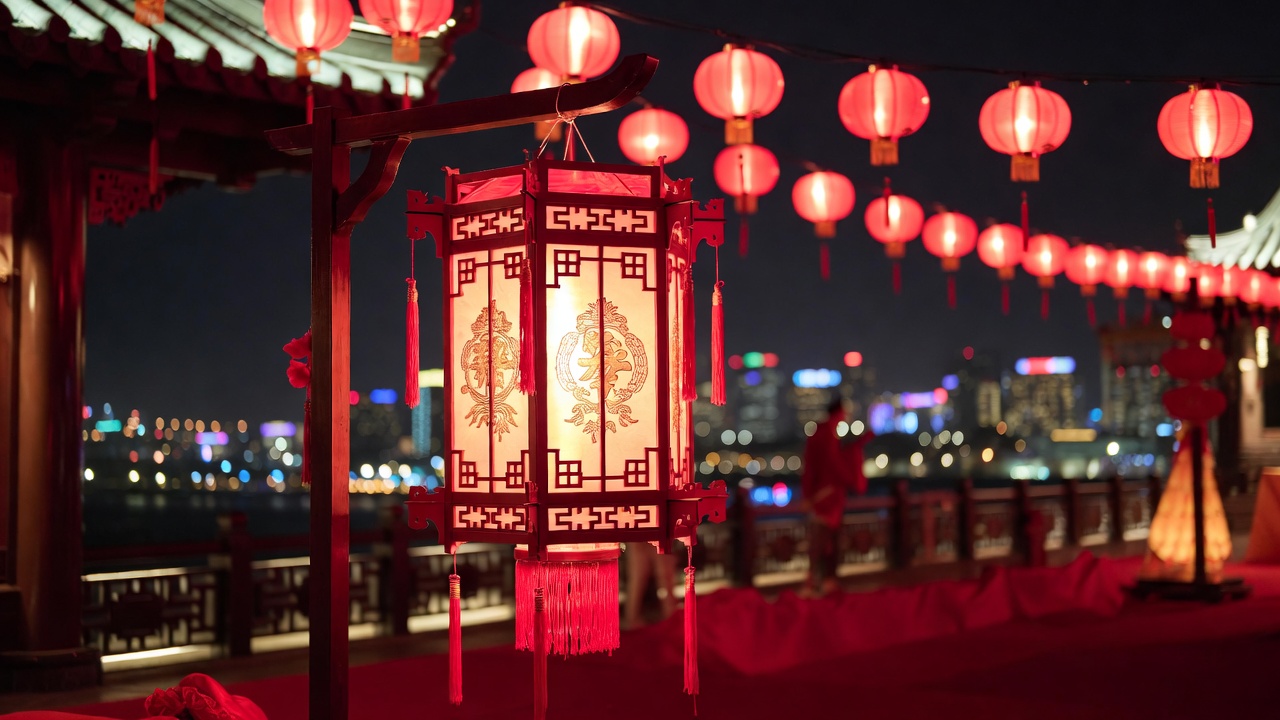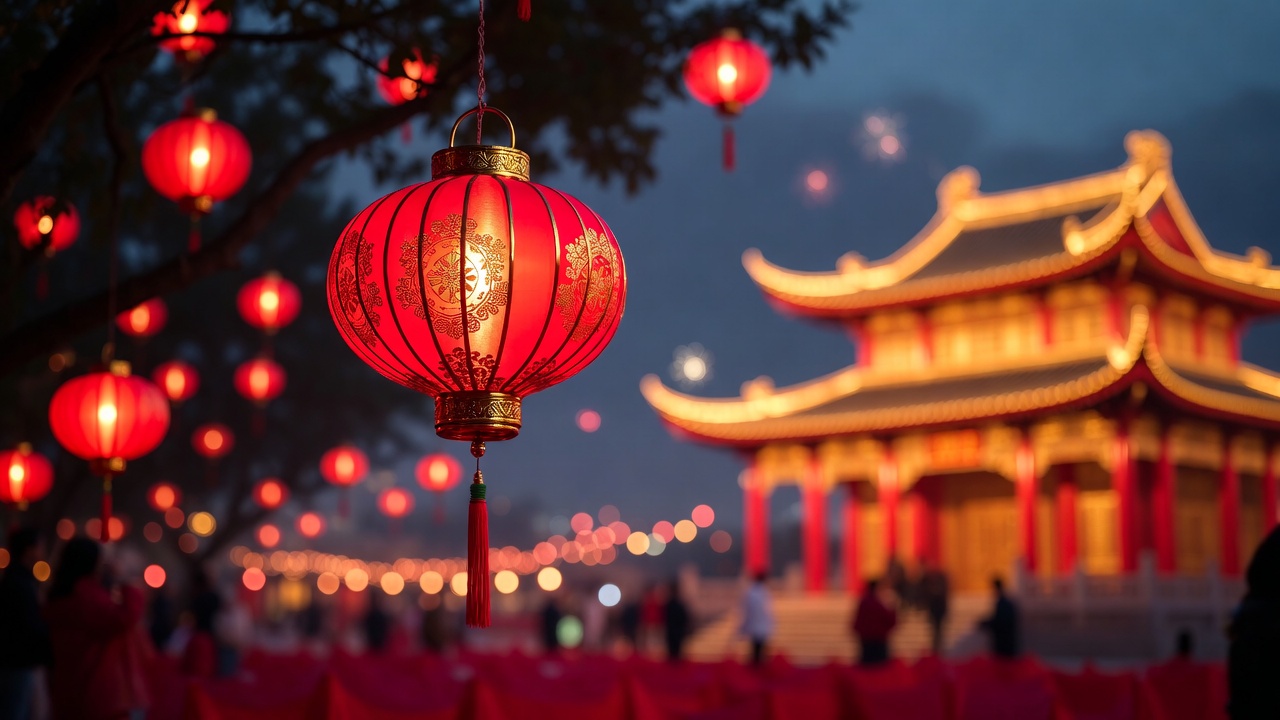
The smell of sizzling dumplings fills the kitchen. Red lanterns sway outside the front door. Grandma is shuffling mahjong tiles. It’s Chinese New Year’s Eve — or Chúxī (除夕) — and your family is gathered around the table waiting for the reunion dinner to begin. But before the feast, someone pulls out a list of trivia questions, and suddenly, the whole room comes alive.
Whether your family has celebrated Spring Festival for generations or you’re hosting your first Lunar New Year party, a trivia game is the perfect way to fill the hours between the reunion dinner and the midnight firecrackers. This collection of 100 Chinese New Year’s Eve trivia questions covers everything — from ancient legends and zodiac animals to lucky foods, regional customs, and the latest 2026 Year of the Horse celebrations.
Grab some melon seeds, pour the tea, and get ready. It’s quiz time.
Why Chinese New Year’s Eve Trivia Games Are Perfect for Family Reunions
Chinese New Year’s Eve is the single most important night on the Chinese calendar. Families travel thousands of miles to sit together at the same table. In 2026, an estimated 9.5 billion passenger trips are expected during the 40-day Chūnyùn (春运) travel rush — making it the largest annual human migration on the planet.
Once the family gathers, the tradition of Shǒu Suì (守岁) — “guarding the year” by staying awake until midnight or dawn — means you have hours of togetherness ahead. A trivia game bridges generations. Grandparents can show off their knowledge of old customs. Kids can shine with what they’ve learned in school. Parents get to laugh at the questions they get wrong.
Trivia also teaches. Many younger Chinese people living abroad grow up knowing about Spring Festival without knowing the stories behind it. These questions turn a casual evening into a shared cultural experience — no screens required.
How to Use These 100 Lunar New Year Quiz Questions at Your Party
Before we jump into the questions, here are a few tips to make your trivia night run smoothly:
Choose a format that fits your family. You can read questions aloud one by one, split into teams (the “Dumplings” vs. the “Spring Rolls”?), or print them on cards and scatter them across the table for people to grab between dishes.
Mix difficulty levels. We’ve tagged every question as 🟢 Easy, 🟡 Medium, or 🔴 Hard. Start with easy questions to warm everyone up, then ramp up the challenge.
Award prizes the Chinese New Year way. Instead of trophies, give red envelopes (hóngbāo) with small amounts of lucky money, tangerines, or candy to the winners.
Use the table below to navigate directly to the category you want.
| Category | Questions | Best For |
|---|---|---|
| Origins & Legends | Q1–Q15 | History buffs, grandparents |
| Chinese Zodiac Animals | Q16–Q30 | Kids, astrology fans |
| Lucky Foods & Reunion Dinner | Q31–Q45 | Foodies, home cooks |
| Red Envelopes & Gift-Giving | Q46–Q55 | Anyone who loves hóngbāo |
| Decorations, Greetings & Customs | Q56–Q70 | Culture enthusiasts |
| Regional Spring Festival Traditions | Q71–Q80 | Travel lovers |
| Spring Festival Gala & Pop Culture | Q81–Q90 | TV watchers, younger generations |
| 2026 Year of the Horse Special | Q91–Q100 | Everyone celebrating this year |
Chinese New Year Origin Story and Legend Trivia Questions
These questions explore where it all began — the myths, the monsters, and the ancient rituals that shaped the holiday we celebrate today.
Q1. 🟢 What is the Chinese name for Chinese New Year’s Eve? Answer: Chúxī (除夕). The character chú means “to get rid of,” and xī means “evening.” Together, they represent the night when the old year is driven away.
Q2. 🟢 According to legend, what was the name of the fearsome beast that terrorized villagers at the start of each new year? Answer: Nián (年). The word nián also means “year” in Chinese. The legend says villagers discovered that the monster was afraid of loud noises, bright lights, and the color red — which is why these elements define Spring Festival celebrations to this day.
Q3. 🟡 During which ancient dynasty did the practice of year-end rituals that later became Chinese New Year first appear? Answer: The Shang Dynasty (approximately 1600–1046 BC). People held sacrificial ceremonies to honor gods and ancestors at the end of each year. The origin of Chinese New Year’s Eve can be traced back roughly 3,500 years.
Q4. 🟡 What was “Big Nuo” (大傩)? Answer: An exorcism ritual performed on the last day of the year during the Warring States period (475–221 BC) in the state of Qin. It was meant to expel illness and evil spirits. This is one of the earliest recorded New Year’s Eve practices.
Q5. 🟢 What three things was the monster Nian supposedly afraid of? Answer: Loud noises, the color red, and bright fire (light). This is why firecrackers, red decorations, and candles or lanterns are central to the celebration.
Q6. 🟡 When did Chinese families begin the tradition of Shǒu Suì — staying awake all night on New Year’s Eve? Answer: During the Jin Dynasty (266–420 AD). The general Zhou Chu described the practice in his writing Fēngtǔ Jì (风土记), where he used the word Chúxī (除夕) to mean New Year’s Eve — a term still used today.
Q7. 🔴 In Zhou Chu’s Fēngtǔ Jì, he described three end-of-year customs. Kuìsuì (馈岁) was the exchange of gifts. Biésuì (别岁) was farewell feasts. What was the third? Answer: Shǒu Suì (守岁) — staying awake all night until sunrise to “guard the year.”
Q8. 🟡 Before firecrackers were invented, what did ancient Chinese people burn to scare away evil spirits on New Year’s? Answer: Bamboo. When thrown into a fire, bamboo stalks burst and crack with a loud popping sound. The Chinese word for firecrackers — bàozhú (爆竹) — literally means “exploding bamboo.”
Q9. 🟢 True or False: Chinese New Year falls on a different date every year on the Western (Gregorian) calendar. Answer: True. Chinese New Year follows the lunisolar calendar. The date always falls between January 21 and February 20. In 2026, Chinese New Year’s Day is Tuesday, February 17.
Q10. 🟡 What is the name of the Tang Dynasty poem by Wang Anshi that famously captures New Year’s Day customs like firecrackers, spring wine, and replacing old door couplets? Answer: Yuán Rì (元日), meaning “New Year’s Day.” The poem reads in part: “Amid the sound of firecrackers, a year has come to an end / The spring wind has wafted warm breath to the Tusu wine.”
Q11. 🟢 How long do Chinese New Year celebrations traditionally last? Answer: 16 days — from Chinese New Year’s Eve to the Lantern Festival on the 15th day of the first lunar month.
Q12. 🟡 What is the name of the ritual where families seal their front doors on New Year’s Eve and do not reopen them until dawn? Answer: Kāi Cái Mén (开财门) — “opening the door of fortune.” The doors are sealed at night and opened the next morning to welcome wealth and good luck into the home.
Q13. 🟢 What does the Chinese character fú (福) mean, and why do many families hang it upside down? Answer: Fú means “fortune” or “good luck.” The character is hung upside down (dào, 倒) because the word for “upside down” sounds the same as the word for “to arrive” (dào, 到). So an upside-down fú symbolizes “fortune has arrived.”
Q14. 🔴 What is the Laba Festival, and how does it connect to Chinese New Year preparations? Answer: The Laba Festival falls on the 8th day of the 12th lunar month. It marks the traditional start of Spring Festival preparations. Families eat Laba Congee (腊八粥) — a thick porridge made with rice, beans, peanuts, dried fruit, and nuts. In 2026, the Laba Festival fell on January 26.
Q15. 🟡 What is the “Little Year” (Xiǎo Nián, 小年), and why do northern and southern Chinese celebrate it on different days? Answer: The Little Year marks the start of intensive New Year preparations, including sacrifices to the Kitchen God. In northern China, it is the 23rd day of the 12th lunar month. In most of southern China, it is the 24th day. The difference likely stems from historical variations in court vs. folk customs.
Chinese Zodiac Animal Trivia Questions for Kids and Adults
The twelve animals of the Chinese zodiac are the stars of every Lunar New Year celebration. How well does your family know them?
Q16. 🟢 How many animals are in the Chinese zodiac cycle? Answer: 12.
Q17. 🟢 Can you name all 12 Chinese zodiac animals in order? Answer: Rat, Ox, Tiger, Rabbit, Dragon, Snake, Horse, Sheep (or Goat), Monkey, Rooster, Dog, Pig.
Q18. 🟢 What is the zodiac animal for 2026? Answer: The Horse (马). Specifically, 2026 is the Year of the Fire Horse.
Q19. 🟡 Which element is paired with the Horse in 2026, and what does that element represent? Answer: Fire (火). In the Chinese Five Element theory, Fire represents passion, enthusiasm, courage, and dynamic energy. A Fire Horse year is said to bring bold action and exciting change.
Q20. 🟢 What zodiac animal was 2025? Answer: The Snake (蛇). Specifically, 2025 was the Year of the Wood Snake.
Q21. 🟡 How does the Chinese zodiac combine animals with elements to create a longer cycle? Answer: Each animal rotates through five elements — Wood, Fire, Earth, Metal, and Water. This creates a 60-year grand cycle (12 animals × 5 elements = 60 unique combinations).
Q22. 🟡 Where is the Horse in the sequence of zodiac animals? Answer: The Horse is the 7th animal in the Chinese zodiac.
Q23. 🟢 If you were born in 2002, what is your Chinese zodiac sign? Answer: The Horse. Recent Horse years include 1942, 1954, 1966, 1978, 1990, 2002, 2014, and 2026.
Q24. 🔴 What is Běn Mìng Nián (本命年), and why is it significant for people born in the Year of the Horse in 2026? Answer: Běn Mìng Nián means “year of one’s birth sign.” When your zodiac year comes around again (every 12 years), it is traditionally believed to bring challenges and bad luck because of a clash with Tai Sui (太岁), the God of Age. To counter this, people wear red clothing — such as red underwear, socks, or bracelets — throughout the year.
Q25. 🟡 Which zodiac animal supposedly won the great race to the Jade Emperor by riding on the back of the Ox and jumping off at the finish line? Answer: The Rat. According to legend, the Jade Emperor held a race to decide the order of the zodiac. The clever Rat hitched a ride on the hardworking Ox and leaped ahead at the last moment.
Q26. 🟢 What personality traits are traditionally associated with people born in the Year of the Horse? Answer: Horse people are said to be energetic, adventurous, independent, lively, and warm-hearted. They are natural leaders who thrive in social settings.
Q27. 🔴 Approximately how old is the Chinese zodiac system? Answer: Over 2,000 years old. Excavated bamboo books confirm the zodiac existed before the Qin Dynasty (221–207 BC). The complete 12-animal cycle was established by the Eastern Han Dynasty (25–220 AD).
Q28. 🟡 In the Chinese zodiac, which two animals are considered the most compatible with the Horse? Answer: The Tiger and the Dog are traditionally the most compatible with the Horse, forming one of the four “compatibility triangles” in Chinese astrology.
Q29. 🟢 True or False: Your Chinese zodiac animal is determined by the Gregorian (Western) calendar year you were born. Answer: False. The zodiac follows the Chinese lunar calendar. Because the Lunar New Year falls between January 21 and February 20, someone born in January or February may actually belong to the previous year’s zodiac sign. Always check the exact lunar date.
Q30. 🟡 What are the lucky colors for the Fire Horse year of 2026? Answer: Red, gold, and green. These colors are believed to boost energy, vitality, and fortune during the Horse year.
Lucky Foods and Reunion Dinner Trivia Questions
Food is the heart of Chinese New Year’s Eve. Every dish on the table tells a story. How much does your family know about what’s on the plate — and what it means?
Q31. 🟢 What is the Chinese New Year’s Eve dinner called, and why is it so important? Answer: It’s called the reunion dinner (tuányuán fàn, 团圆饭). It is the most important meal of the year because it brings every family member together at one table. Many people travel enormous distances — contributing to the Chūnyùn travel rush — just to be home for this one meal.
Q32. 🟢 Why is fish (yú, 鱼) always served at the reunion dinner? Answer: The word for “fish” in Chinese (yú) sounds exactly like the word for “surplus” or “abundance” (余). Eating fish symbolizes the wish nián nián yǒu yú (年年有余) — “may you have surplus every year.” In many families, the fish is intentionally not finished so that leftovers remain.
Q33. 🟡 Why are dumplings (jiǎozi, 饺子) shaped the way they are? Answer: Dumplings are shaped like ancient Chinese silver ingots (yuánbǎo, 元宝), which were boat-shaped pieces of precious metal used as currency. Eating dumplings symbolizes wealth for the coming year. Dumplings are the must-eat food on New Year’s Eve in northern China.
Q34. 🟡 Some families hide special items inside dumplings. What do a coin, a piece of candy, and a peanut each symbolize? Answer: A coin = wealth in the coming year. A candy = a sweet life. A peanut = health and longevity. Whoever finds the hidden item in their dumpling receives that blessing.
Q35. 🟢 What is niángāo (年糕), and why is it considered lucky? Answer: Niángāo is a sticky glutinous rice cake. The word is a homophone for “year high” (年高), symbolizing the wish for higher income, a better position, or growing success each year. It’s especially popular in southern China.
Q36. 🟡 What is the key difference between northern and southern Chinese New Year’s Eve dinner traditions? Answer: In northern China, dumplings (jiǎozi) are the must-eat centerpiece. In southern China (south of the Yangtze River), families prefer spring rolls (chūn juǎn, 春卷) and sticky rice cake (niángāo). Both regions always serve fish.
Q37. 🟢 What are spring rolls, and why are they associated with Chinese New Year? Answer: Spring rolls are thin dough wrappers filled with vegetables, meat, or sweet fillings, then fried to a golden-yellow color. Their golden appearance resembles gold bars, symbolizing wealth and prosperity. The name “spring roll” connects them to the Spring Festival.
Q38. 🟡 What is tāngyuán (汤圆), and what does its round shape symbolize? Answer: Tāngyuán are glutinous rice balls served in sweet soup, sometimes with fillings like sesame paste, peanut, or red bean. Their round shape symbolizes family reunion, harmony, and completeness. They are especially associated with the Lantern Festival but also eaten on New Year’s Eve.
Q39. 🟡 What is Laba Congee, and what goes into it? Answer: Laba Congee (腊八粥) is a thick porridge traditionally eaten on the Laba Festival. It’s cooked with rice, beans, peanuts, dried fruit, lotus seeds, nuts, and sugar. It symbolizes the harvest of the past year and is especially popular in the Beijing region and other parts of northern China.
Q40. 🟢 Why do many families deliberately cook more food than they can eat on New Year’s Eve? Answer: Leftovers symbolize abundance. Having food remaining the next day represents the wish that the family will always have more than enough.
Q41. 🔴 In traditional Chinese food symbolism, what does a whole chicken served at the reunion dinner represent? Answer: A whole chicken represents family unity and completeness. The word for chicken (jī, 鸡) also sounds similar to jí (吉), meaning “auspicious” or “lucky.”
Q42. 🟡 What kind of noodles are traditionally served during Chinese New Year, and what is the rule about eating them? Answer: Long noodles (长寿面, chángshòu miàn, or “longevity noodles”) are served to represent a long life. The rule: never cut or break the noodles before eating them, or you risk “cutting” your lifespan short.
Q43. 🟢 What fruit is commonly displayed and gifted during Chinese New Year because of its lucky meaning? Answer: Tangerines and oranges. In Cantonese, the word for tangerine sounds like “luck,” and the word for orange sounds like “wealth.” Kumquat trees are also displayed in homes as symbols of good fortune.
Q44. 🟡 True or False: It is considered bad luck to eat porridge on Chinese New Year’s morning. Answer: True in some traditional beliefs. Porridge was historically considered a food of poverty. Eating it on New Year’s Day could symbolize financial hardship for the coming year.
Q45. 🔴 Why are fācài (发菜, black moss or fat choy) and dried oysters (háo shì, 蚝豉) popular New Year ingredients in Cantonese cuisine? Answer: Together, they create the phrase hǎo shì fā cái (好事发财) — meaning “good deeds and great wealth.” Fācài sounds like fā cái (发财, “get rich”), and dried oysters (háo shì) sound like hǎo shì (好事, “good things”). Cantonese New Year cooking is full of these phonetic puns.
Red Envelope and Gift-Giving Traditions Trivia Questions
Nothing makes kids’ eyes light up quite like a red envelope. But how much do you really know about hóngbāo?
Q46. 🟢 What is a red envelope called in Mandarin and Cantonese? Answer: In Mandarin: hóngbāo (红包). In Cantonese: lìshì (利是) or lai see.
Q47. 🟢 Who traditionally receives red envelopes during Chinese New Year? Answer: Children and retired seniors. Married adults give red envelopes to unmarried younger family members and to elderly parents or grandparents as a sign of respect and good wishes.
Q48. 🟡 According to tradition, what was originally placed inside red envelopes before paper money existed? Answer: Coins. In ancient times, adults would thread copper coins on colorful thread and form a dragon shape, then place them beside their sleeping children’s beds on New Year’s Eve.
Q49. 🟡 Why must the amount of money in a red envelope always be an even number? Answer: Even numbers are considered lucky in Chinese culture because they represent balance and harmony. Odd numbers are associated with funerals and mourning. However, the number 4 is avoided because sì (四) sounds like sǐ (死, “death”).
Q50. 🟢 What amounts are especially lucky to put in a red envelope? Answer: Amounts containing the number 8 (sounds like fā, meaning “prosper”) are very popular. Common amounts include 88, 168, 188, 288, 888, etc. The number 6 (sounds like liù, meaning “smooth”) is also lucky.
Q51. 🟡 True or False: You should open a red envelope immediately in front of the person who gave it to you. Answer: False. It is considered polite to wait and open the red envelope later in private. Opening it in front of the giver can be seen as focused on the money rather than the gesture.
Q52. 🟡 What is the connection between red envelopes and the Nian monster legend? Answer: Red envelopes are red because the color wards off evil and bad luck — just as red scared away the monster Nian. The money inside is called yāsuì qián (压岁钱), which can mean “money to suppress age” or “money to ward off evil spirits.”
Q53. 🟢 When do parents typically give red envelopes to their children on Chinese New Year’s Eve? Answer: After the reunion dinner or while children are sleeping. Some parents tuck the red envelope under their child’s pillow — much like the Western tradition of tooth fairy money or Christmas gifts.
Q54. 🟡 In the digital age, how do many Chinese people now send red envelopes? Answer: Through WeChat (微信) and Alipay (支付宝). Digital red envelopes (diànzǐ hóngbāo) became hugely popular after WeChat introduced the feature during the 2014 Spring Festival. Today, billions of digital red envelopes are exchanged each year.
Q55. 🔴 What is one gift you should never give during Chinese New Year because of its unlucky meaning? Answer: A clock. In Mandarin, “giving a clock” (sòng zhōng, 送钟) sounds identical to the phrase for “attending a funeral” (sòng zhōng, 送终). Other taboo gifts include pears (splitting a pear = splitting up), scissors or knives (cutting ties), and shoes (in some dialects, sounds like “evil”).
Decorations, Greetings, and Spring Festival Customs Quiz Questions
From the couplets on the door to the words you say at midnight, Chinese New Year customs are rich with meaning.
Q56. 🟢 What is the most dominant color in Chinese New Year decorations, and why? Answer: Red. Chinese people believe red brings good luck, prosperity, and happiness. It also wards off evil spirits. This belief traces back to the legend of the monster Nian, which feared the color red.
Q57. 🟢 What are chūnlián (春联), the red banners pasted on either side of the front door? Answer: Spring Festival couplets. They are matching poetic phrases written in black or gold ink on long strips of red paper. They express good wishes for the new year — like wealth, health, or family harmony — and are displayed on the doorframe.
Q58. 🟡 What is the standard Mandarin greeting for “Happy New Year”? Answer: Xīn Nián Kuài Lè (新年快乐). Another extremely popular greeting is Gōng Xǐ Fā Cái (恭喜发财) — meaning “Congratulations and may you prosper.” In Cantonese, this is pronounced “Kung Hei Fat Choi.”
Q59. 🟡 Why do families do a deep cleaning of their homes before Chinese New Year? Answer: This is called “sweeping away the dust” (sǎo chén, 扫尘). In Chinese, the word for “dust” (chén, 尘) sounds like the word for “old” (chén, 陈). Cleaning the house symbolizes removing old bad luck and making space for new blessings and a fresh start.
Q60. 🟢 What are you absolutely NOT supposed to do on New Year’s Day that relates to cleaning? Answer: Do not sweep the floor on New Year’s Day. Sweeping on this day is believed to sweep away your good luck and fortune. Many families avoid all cleaning for the first few days of the new year.
Q61. 🟡 Why are Chinese New Year paper cuttings (jiǎnzhǐ, 剪纸) traditionally red? Answer: Red paper cuttings combine two layers of symbolism: the lucky color red and auspicious patterns (fish for surplus, fú for fortune, flowers for prosperity). This folk art has been practiced for centuries and is recognized as an important cultural tradition.
Q62. 🟢 What happens at midnight on Chinese New Year’s Eve? Answer: Families set off firecrackers and fireworks. This marks the arrival of the new year and is believed to drive away evil spirits. In the past, whoever launched the first firecracker of the year was thought to receive the best luck.
Q63. 🟡 Who must you greet first on Chinese New Year’s morning, and why? Answer: Parents or the eldest members of the household. Greetings follow a strict hierarchy: you greet elders first as a sign of filial respect (孝, xiào). Then you greet older siblings, and so on.
Q64. 🟢 What is a mén shén (门神), and where would you find one? Answer: Mén shén are door gods — colorful images of guardian warriors pasted on the front door. They protect the home from evil spirits and have been part of Chinese culture since the Zhou Dynasty (1046–256 BC).
Q65. 🟡 Why is it considered bad luck to break a bowl, plate, glass, or vase during the Chinese New Year period? Answer: Breaking objects symbolizes disruption, loss, and the breaking of family bonds. If something does break accidentally, the owner should quickly say suì suì píng ān (岁岁平安) — “peace every year” — since suì (碎, “broken”) sounds like suì (岁, “year”).
Q66. 🟢 What two iconic dances are performed during Chinese New Year celebrations in China and Chinatowns worldwide? Answer: The lion dance and the dragon dance. Both are performed to bring prosperity and good luck. The dragon dance features a long, colorful dragon carried by numerous dancers.
Q67. 🟡 What festival marks the official end of the Chinese New Year celebrations? Answer: The Lantern Festival (Yuánxiāo Jié, 元宵节), held on the 15th day of the first lunar month. People hang glowing lanterns, carry them in nighttime parades, solve riddles, and eat tāngyuán (glutinous rice balls).
Q68. 🔴 What is the significance of the 5th day of the Chinese New Year? Answer: The 5th day is called Jiē Cái Shén (接财神) — the day to welcome the God of Wealth. Many businesses choose this day to reopen. People set off firecrackers at midnight on the 4th day to greet the God of Wealth, believing he descends from heaven on the 5th.
Q69. 🟡 Why do many Chinese families wear brand-new clothes from head to toe on New Year’s Day? Answer: New clothes represent a fresh start and a clean break from the old year. This tradition is especially strong for children, who are dressed in entirely new outfits. For people in their zodiac birth year (Běn Mìng Nián), a red garment — often red underwear — is considered essential.
Q70. 🟡 What is the traditional practice of bài nián (拜年)? Answer: Bài nián means “New Year visits” — the custom of visiting relatives and friends during the first days of the new year. Visitors bring gifts or red envelopes, exchange greetings, and share tea and snacks. In some rural areas, this tradition lasts several days.
Regional Spring Festival Traditions Across China Trivia
China is vast. The way people celebrate in Beijing is different from Guangzhou, which is different from Chengdu. These questions explore that diversity.
Q71. 🟡 In which part of China are dumplings the absolute must-eat food on New Year’s Eve — north or south? Answer: North. Dumplings are the king of northern Chinese New Year’s Eve tables. In the south, people prefer spring rolls, niángāo, and elaborate multi-course banquets.
Q72. 🟡 What is unique about the way Cantonese-speaking families celebrate Chinese New Year compared to Mandarin-speaking families? Answer: Cantonese culture places heavy emphasis on wordplay and homophones when selecting food and decorations. For example, fācài (fat choy) for wealth, and lettuce (shēngcài) for “growing wealth.” The greeting “Kung Hei Fat Choi” is also distinctly Cantonese.
Q73. 🔴 In the Beijing region, what special congee is eaten during the Laba Festival? Answer: Laba Congee (腊八粥) — a rich porridge made with rice, beans, peanuts, dried fruit, lotus seeds, nuts, and sugar. It symbolizes a bountiful harvest. While common across northern China, the Beijing preparation is especially traditional.
Q74. 🟡 How is Chinese New Year celebrated in Hong Kong? Answer: Hong Kong enjoys a 3-day public holiday (February 17–19 in 2026). Celebrations include massive fireworks displays over Victoria Harbour, a Lunar New Year parade in Tsim Sha Tsui, flower markets in Victoria Park, and horse racing at the Sha Tin Racecourse on New Year’s Day.
Q75. 🟡 What is special about how Taiwan celebrates Chinese New Year? Answer: Taiwan observes a 5-day holiday (February 16–20 in 2026). In addition to standard customs, Taiwanese traditions include visiting temples to draw fortune sticks (qiú qiān), attending Lunar New Year markets, and the Pingxi Sky Lantern Festival, where thousands of glowing lanterns are released into the sky.
Q76. 🟢 In how many countries outside of China is Chinese New Year widely celebrated? Answer: Chinese New Year is celebrated in dozens of countries with significant Chinese populations, including Singapore, Malaysia, Indonesia, Thailand, the Philippines, Vietnam, South Korea (as Seollal), and major cities worldwide — from San Francisco and New York to London, Sydney, and Paris.
Q77. 🟡 What is the Vietnamese name for their Lunar New Year celebration? Answer: Tết (short for Tết Nguyên Đán). While sharing many roots with Chinese New Year, Vietnamese Tết has distinct traditions, foods (like bánh chưng rice cakes), and customs.
Q78. 🔴 In parts of southeastern China, what unusual tradition involves “money trees”? Answer: On Chinese New Year’s Eve, some families cut pine branches, place them in a vase, and then tie copper coins, shoe-shaped gold or silver ornaments, and pomegranate flowers to the branches. This “money tree” tradition resembles a Christmas tree and symbolizes growing wealth.
Q79. 🟡 What is the traditional practice of visiting ancestors’ graves before Chinese New Year? Answer: Many Chinese families visit ancestral graves the day before New Year’s to pay respects, clean the graves, and offer food and incense. During the reunion dinner, some families set an extra place at the table for departed ancestors, symbolically inviting them to “eat first.”
Q80. 🟡 How do many Chinese communities in Western countries celebrate Chinese New Year? Answer: Chinatowns in cities like San Francisco, New York, London, and Sydney hold parades with lion and dragon dances, firecrackers, cultural performances, and street food festivals. Restaurants and shopfronts are adorned with red and gold decorations. These celebrations have become major cultural events that attract people of all backgrounds.
Spring Festival Gala and Chinese New Year Pop Culture Trivia
No Chinese New Year’s Eve would be complete without the world’s most-watched TV show. How much does your family know about the Gala?
Q81. 🟢 What is the CCTV Spring Festival Gala, and when did it first air? Answer: The Spring Festival Gala (Chūn Jié Lián Huān Wǎn Huì, 春节联欢晚会, often shortened to Chūnwǎn) is a live variety show broadcast on Chinese state television every New Year’s Eve. It first aired in 1983. The show runs from 8:00 PM until midnight.
Q82. 🟡 The Spring Festival Gala holds a world record. What is it? Answer: It is the most-watched television program in the world, according to Guinness World Records. The show’s producers reported that the 2018 edition attracted more than one billion viewers.
Q83. 🟡 How many total views did the 2025 Spring Festival Gala receive across all platforms? Answer: The 2025 Spring Festival Gala reached a record 16.8 billion views across all media platforms, an 18.31% increase from the previous year. Mobile viewership soared to 372 million, up 52.46% year-on-year.
Q84. 🟡 What types of performances does the Spring Festival Gala feature? Answer: The show is a variety format including singing, dancing, comedy sketches (xiǎopǐn), cross-talk (xiàngsheng), acrobatics, magic, and martial arts. The performances are chosen through many rounds of auditions, and preparation takes about six months.
Q85. 🔴 What was notable about the very first Spring Festival Gala in 1983? Answer: The first Gala was broadcast live from a tiny studio of only 600 square meters, with just 60 staff and 200 guests. It had no budget for recording or editing. The studio had four telephones that accepted live song requests from callers nationwide. The popular singer Li Guyi performed nine songs that night.
Q86. 🟡 Why was the 1985 Spring Festival Gala considered a disaster? Answer: It was held at the Workers Indoor Arena with a live audience. Staff had no walkie-talkies and had to run around or gesture to give cues. The show was poorly coordinated and lasted over six hours — making it the longest Gala on record. It was widely criticized for poor lighting and excessive noise.
Q87. 🟢 In how many languages was the 2025 Spring Festival Gala broadcast? Answer: 82 languages — 14 more than the previous year. Over 3,100 media partners worldwide, including CNN and Japan’s Niconico, helped distribute the show.
Q88. 🟡 What patriotic song performed by Hong Kong singer Cheung Ming-man at the 1984 Gala became an overnight sensation? Answer: “My Chinese Heart” (Wǒ de Zhōngguó Xīn, 我的中国心). It was unprecedented for a Hong Kong entertainer to perform on mainland Chinese TV at that time. The song became one of the most iconic in Chinese pop culture history.
Q89. 🟢 What does the Chinese New Year countdown look like for families watching the Spring Festival Gala at home? Answer: As the clock nears midnight, the Gala hosts lead a live countdown on stage. At the stroke of twelve, the hosts shout “Happy New Year!” and families watching at home join in. Firecrackers and fireworks then erupt outside. Many families exchange their first Xīn Nián Kuài Lè greetings at this moment.
Q90. 🟡 What major cultural milestone did the Spring Festival achieve in 2024? Answer: In December 2024, the Spring Festival was officially inscribed on UNESCO’s Representative List of the Intangible Cultural Heritage of Humanity. The 2025 Gala was the first held after this recognition. This inscription acknowledged the global cultural significance of Chinese New Year celebrations.
2026 Year of the Horse Chinese New Year Special Trivia Questions
These final ten questions are all about what makes this year’s celebration special. Perfect for testing who’s been paying attention to the latest news.
Q91. 🟢 What exact date is Chinese New Year’s Eve in 2026? Answer: Monday, February 16, 2026. Chinese New Year’s Day — the first day of the Year of the Horse — is Tuesday, February 17, 2026.
Q92. 🟡 How long is the official public holiday in mainland China for Chinese New Year 2026? Answer: 8 days, from February 15 to February 22, 2026. This extended holiday covers from one day before New Year’s Eve through the 6th day of the new lunar year.
Q93. 🟢 How many passenger trips are expected during the 2026 Chūnyùn travel rush? Answer: A record 9.5 billion inter-regional passenger trips, according to China’s National Development and Reform Commission (NDRC). Self-driving accounts for about 80% of total travel. The railway system expects to carry 540 million passengers, and civil aviation forecasts 95 million air trips.
Q94. 🟡 How long does the 2026 Chūnyùn travel rush last, and what are its exact dates? Answer: 40 days, from February 2 to March 13, 2026. This period covers the massive flow of people heading home before the holiday and returning to work afterward.
Q95. 🟡 The Horse is associated with which natural element in Chinese culture — yin or yang? Answer: Yang. The Horse carries strong yang energy, associated with warmth, activity, strength, and outward expression. This fits the Horse’s spirited, independent personality.
Q96. 🔴 What makes 2026 specifically a “Fire Horse” year, and how often does a Fire Horse year occur? Answer: The Chinese calendar combines 12 animals with 5 elements in a 60-year grand cycle. A Fire Horse year occurs once every 60 years. The last Fire Horse year was 1966, and the next will be 2086. In Chinese and Japanese culture, Fire Horse years carry unique folk beliefs about the intensity and strong-willed nature of people born in those years.
Q97. 🟡 What lucky numbers are associated with the Horse zodiac sign in 2026? Answer: 2, 3, 7, and 9. These numbers are believed to bring harmony, growth, and success during the Year of the Horse.
Q98. 🟢 What is the traditional greeting specifically for the Year of the Horse? Answer: Mǎ Dào Chéng Gōng (马到成功) — meaning “success upon the arrival of the horse.” This is an old idiom that is especially popular as a New Year greeting in Horse years. It wishes the recipient instant success in everything they do.
Q99. 🟡 What year will it be on the traditional Chinese calendar when 2026’s Chinese New Year begins? Answer: The year 4723 in the traditional Chinese calendar, counting from the legendary inauguration of the Yellow Emperor (Huáng Dì) in 2697 BC.
Q100. 🟢 When is the Lantern Festival that marks the end of the 2026 Spring Festival celebrations? Answer: The Lantern Festival falls on the 15th day of the first lunar month, which in 2026 is Tuesday, March 3, 2026. On this night, families hang lanterns, watch dragon dances, solve riddles, and eat tāngyuán to close out the holiday season.
Free Printable Chinese New Year’s Eve Trivia Answer Sheet for Families
Want to turn this into a proper game? Here’s how to set it up:
Step 1: Pick 20–30 questions from the list above (mixing difficulty levels and categories).
Step 2: Read each question aloud. Give teams 30 seconds to write their answer.
Step 3: Reveal the answer. Award 1 point for 🟢 Easy, 2 points for 🟡 Medium, and 3 points for 🔴 Hard.
Step 4: The team with the most points wins the grand prize — the biggest red envelope on the table!
| Round | Category | Suggested Questions | Time Per Question |
|---|---|---|---|
| 1 — Warm-Up | Origins & Zodiac | Q1, Q2, Q5, Q16, Q17, Q18 | 20 seconds |
| 2 — Foodie Round | Lucky Foods | Q32, Q33, Q35, Q36, Q42, Q43 | 30 seconds |
| 3 — Culture Deep Dive | Customs & Greetings | Q56, Q58, Q59, Q60, Q63, Q66 | 30 seconds |
| 4 — Lightning Round | Mixed Categories | Q46, Q50, Q81, Q82, Q91, Q98 | 15 seconds |
| 5 — Boss Level | Hard Questions | Q7, Q27, Q45, Q85, Q96 | 45 seconds |
Tips for Hosting an Unforgettable Chinese New Year’s Eve Trivia Night
A great trivia night is about more than the questions. Here are some ideas to make it truly special:
Set the mood. Play traditional Chinese New Year music in the background. Hang red lanterns around the room. Set out bowls of melon seeds, dried plums, and peanuts for snacking.
Make it multi-generational. Assign a grandparent and a grandchild to the same team. The mix of life experience and fresh knowledge often produces the best (and funniest) results.
Add bonus rounds. Challenge family members to write a Spring Festival couplet, name as many zodiac animals as they can in 30 seconds, or demonstrate the proper way to fold a dumpling.
Use it as a storytelling prompt. When an older family member knows the answer to a hard question, ask them to share the story behind it. The best part of Chinese New Year isn’t the quiz — it’s the conversations that grow from it.
Keep it respectful. These traditions carry deep cultural and spiritual meaning. Approach every question with curiosity and appreciation, especially if your family includes members who are learning about Chinese culture for the first time.
Frequently Asked Questions About Chinese New Year’s Eve Trivia
What age group are these Chinese New Year trivia questions suitable for? These questions are designed for all ages. The 🟢 Easy questions work well for children ages 6 and up. The 🟡 Medium questions are great for teenagers and adults. The 🔴 Hard questions will challenge even the most knowledgeable family elders.
Can I use these questions for a school or community event? Absolutely. These trivia questions are perfect for classroom Lunar New Year parties, community center celebrations, ESL classes, cultural exchange events, and workplace holiday gatherings.
How many questions should I use for a typical trivia game? For a casual family game during the reunion dinner, 20–30 questions is ideal. For a more structured event with multiple rounds, use 40–50 questions across five themed rounds.
Are these questions only about mainland Chinese traditions? No. While many questions focus on traditions common across Chinese-speaking communities, the quiz also touches on celebrations in Hong Kong, Taiwan, Singapore, Vietnam, and Chinese diaspora communities worldwide.
Wrapping Up: Make This Year of the Horse Chinese New Year One to Remember
Chinese New Year’s Eve is about more than firecrackers and feasts. It’s about sitting with the people you love and sharing stories that connect you to something larger — a culture, a history, a family legacy.
This Year of the Fire Horse brings bold, spirited energy. Channel that energy into laughter, learning, and a little friendly competition. Print these 100 questions, gather your family around the table, pour the tea, and see who really knows their stuff.
Gōng Xǐ Fā Cái! Mǎ Dào Chéng Gōng! 🐴
May the Year of the Horse bring your family health, prosperity, and — of course — winning trivia scores.