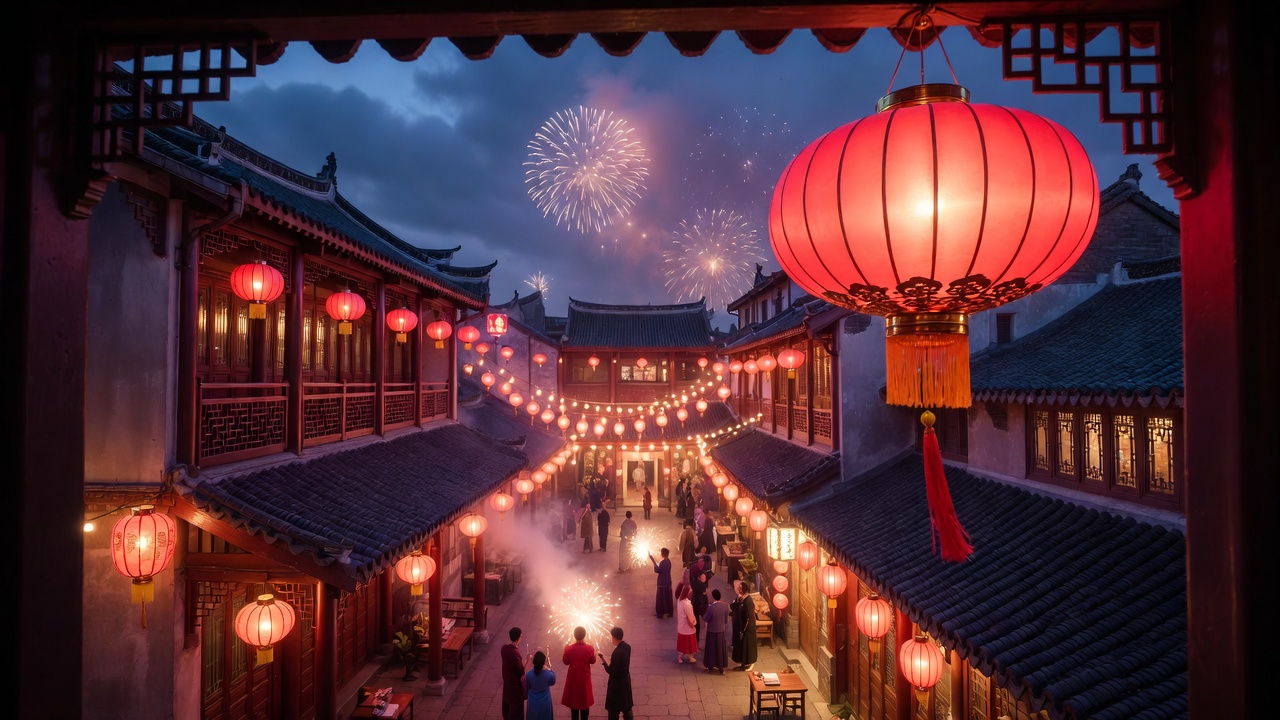
The first full moon of the Lunar New Year is rising. On March 3, 2026, billions of people across East and Southeast Asia — and millions more around the world — will celebrate the Lantern Festival (元宵节, Yuánxiāo Jié). It is a night when streets flood with crimson light, families gather over steaming bowls of tangyuan, and children carry paper lanterns through temple corridors, their faces lit by the same warm glow that has guided Chinese celebrations for over 2,000 years.
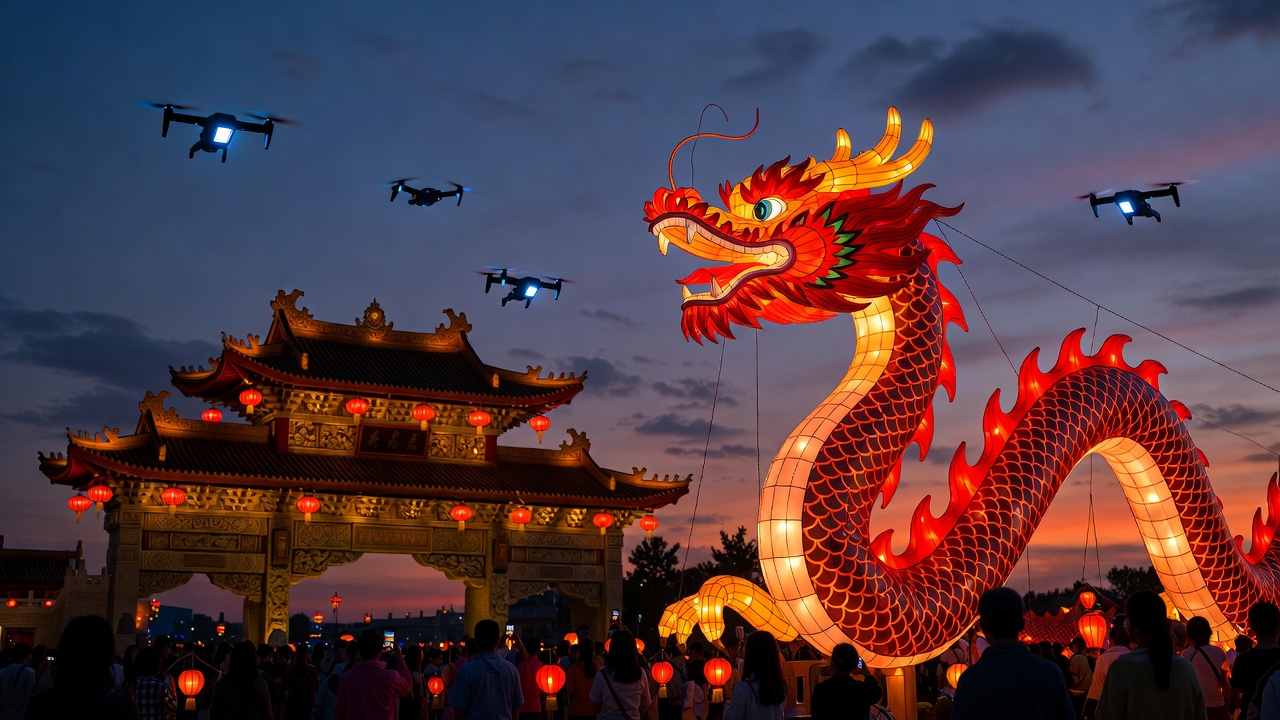
But the Lantern Festival in 2026 is not your grandmother’s festival. This year, 22,580 drones set a new Guinness World Record at the CMG Spring Festival Gala in Hefei. In Zigong, artisans built a phoenix from 15,000 red chilies and a mythical qilin from 46,000 recycled medicine bottles. In Taiwan, a 21-meter tower made of recycled wood channels the spirit of Alishan’s ancient forests.
The ancient and the modern are no longer separate lanes. They are braided together — and in 2026, that braid is tighter, brighter, and more globally visible than ever before.
What Is the Lantern Festival and Why Is It Celebrated in 2026?
The Lantern Festival falls on the 15th day of the first month of the Chinese lunar calendar. It marks the first full moon of the new year and the official end of the Spring Festival period. In 2026, the Year of the Horse, that date lands on Tuesday, March 3.
The festival’s roots stretch back to the Western Han Dynasty (206 BC – AD 25). One popular origin story credits Emperor Hanmingdi, a devoted Buddhist who ordered lanterns lit in every household, temple, and palace on the fifteenth night to honor the Buddha. Over time, this practice grew into one of China’s most cherished folk traditions.
Another beloved legend involves the Jade Emperor, who planned to destroy a village with fire. A wise man advised villagers to hang red lanterns and set off firecrackers. The trick worked — from above, the village appeared to already be ablaze, and the emperor called off the attack. To this day, red lanterns on the fifteenth night honor that clever escape.
The Lantern Festival is not a public holiday in mainland China. Businesses open as usual. But the cultural weight of the evening is enormous. It is the night when the New Year truly ends, and people let go of the old year by gazing at lanterns, solving riddles, and sharing wishes with family.
| Key Facts | Details |
|---|---|
| Chinese Name | 元宵节 (Yuánxiāo Jié) / 上元节 (Shàngyuán Jié) |
| 2026 Date | March 3, 2026 |
| Zodiac Year | Year of the Horse (马年) |
| History | Over 2,000 years old |
| Signature Food | Tangyuan (south) / Yuanxiao (north) |
| Core Activities | Lantern displays, riddle-guessing, lion & dragon dances, fireworks |
How Drone Light Shows Are Replacing Fireworks at Lantern Festivals
If there is one headline trend defining the 2026 Lantern Festival, it is the rise of drone light shows as the new sky canvas. Across China, synchronized drone formations have become the default spectacle — quieter than fireworks, cleaner for the air, and far more versatile in storytelling.
The most staggering example came from the CMG 2026 Spring Festival Gala at its Hefei branch venue. There, EHang Egret launched 22,580 GD4.0 formation drones simultaneously from a single ground station, earning a new Guinness World Record. The drones painted the night sky with horse-head walls in the style of Hui architecture — a fitting tribute to the Year of the Horse and Anhui’s cultural heritage.
Meanwhile, in Chongqing, the “Dynamic Chongqing” drone light show on New Year’s Eve deployed 8,000 drones alongside water curtains and laser projections. The team created a first-ever land-water-air integrated display across the Yangtze and Jialing rivers. The show ran for 50 minutes and, throughout 2025, the regular drone performances along Nanbin Road drew a combined 6 million on-site spectators, according to People’s Daily Online.
In Zhejiang province, 45 large-scale lantern sets covering 72,000 square meters lit up simultaneously after a drone display that opened the Spring Festival season. As one visitor told reporters: the drone shows offer a different Chinese New Year experience — one that feels futuristic while still honoring tradition.
In the United States, the trend is growing too. Sky Elements Drone Shows performed at the Port of Los Angeles’ 12th Annual Lunar New Year Festival on February 21, 2026. Their drones formed galloping horses, dancing dragons, and shimmering lanterns over San Pedro harbor.
Why does this matter for the Lantern Festival? Because the festival has always been about light. Drones simply give that light new wings.
Zigong Lantern Festival 2026: The World Capital of Lantern Art
No conversation about the Lantern Festival is complete without Zigong (自贡), a modest city in Sichuan province that quietly dominates the global lantern industry. If you have seen a lantern festival at a theme park in Orlando, a botanical garden in London, or a zoo in Singapore, there is a strong chance those lanterns were made in Zigong.
The 32nd Zigong International Dinosaur Lantern Festival opened on January 23, 2026, and will run through March 3. This year’s theme is “Lantern Painting China, Building Dreams for the Future.” It features 11 large-scale lantern groups and over 200 smaller displays across 10 themed zones.
The highlights are breathtaking:
- A 210-meter-long installation inspired by the philosopher Zhuangzi, depicting the mythical kunpeng — a creature that transforms from a giant fish into a soaring bird.
- A 180-meter-long tribute to the Chinese heroine Mulan, timed to celebrate the Year of the Horse.
- A nearly 4-meter-high golden beast (jinmaohou) sculpted from 100 kilograms of straw.
- A mythical qilin assembled from 46,000 recycled medicine bottles.
- A phoenix made from 15,000 red chilies.
What makes Zigong special in 2026 is the festival’s embrace of an “everything can be a lantern” philosophy. This is not just marketing. It represents a real shift in craft. Artisans are moving beyond traditional silk-and-wire construction to incorporate recycled, organic, and industrial materials — turning waste into wonder.
The festival has also integrated AI-powered interactions, smart touch controls, and light-sensing systems. Visitors can sing with virtual performers and meet lifelike robotic dinosaurs — a nod to Zigong’s fame as the “Home of the Dinosaurs” for its vast collection of fossils.
For the first time in 2026, the festival adopted a “1+7” venue model: one main venue at Zigong’s China Lantern World and seven satellite locations across the city, including parks, greenways, and university campuses. The effect is a city-wide celebration that turns Zigong into a glowing metropolis every evening from dusk until nearly midnight.
The tradition of Zigong’s lantern celebrations dates back to the Tang Dynasty (618–907). Since their international debut in Singapore in 1990, Zigong lanterns have been displayed in more than 80 countries and regions.
“The lantern festival is truly impressive. Every year you think it is impossible to make it even better, but somehow they do.” — Gunther Lazelsberger, Consul General of Austria in Chengdu, quoted by China Daily
2026 Taiwan Lantern Festival in Chiayi: Where Technology Meets Forest Heritage
Taiwan’s national Lantern Festival is the island’s biggest Lunar New Year event. Every year, a different city hosts the spectacle. In 2026, the honor goes to Chiayi County, where the festival runs from March 3 to 15 at the plaza near the Chiayi County Hall and the Southern Branch of the National Palace Museum.
The centerpiece lantern is titled “Alishan, Veiled in Luminous Mist” (阿里山·光照世界). Standing 21 meters tall, it takes the form of a cylindrical tower clad in recycled wood sourced from old buildings and wind-felled trees in the Alishan region. A rotating circular halo at the top symbolizes the sun rising over the mountains. A 13-meter-diameter screen at the base narrates Taiwan’s story, from its geological formation to modern technology.
The design was created by artists Yao Chung-han, Lu Yen-cheng, and Rex Takeshi Chen, who told Focus Taiwan that the lantern’s use of local recycled wood reflects sustainability principles while embedding local stories into the artwork.
Because 2026 is the Year of the Horse, horse motifs gallop across the festival. The handheld paper lanterns — always a beloved family souvenir — feature OhBear (Taiwan’s tourism mascot) riding a wooden rocking horse, a playful departure from traditional zodiac-only designs. A total of 280,000 handheld lanterns have been prepared for distribution.
The 2026 festival also features some delightful surprises: a Super Mario-themed family zone, a stunning Aomori Nebuta lantern display from Japan, and a replica of Taiwan’s pavilion from the Osaka World Expo. The festival includes 22 exhibition zones showcasing over 600 individual works, along with cutting-edge digital displays and AI-assisted storytelling.
Past Taiwan Lantern Festivals have drawn tens of millions of visitors over their run. Chiayi’s convenient access via the Taiwan High Speed Rail and free shuttle-bus service make it one of the easiest national festivals to attend.
| 2026 Taiwan Lantern Festival | Details |
|---|---|
| Host City | Chiayi County (third time: 2007, 2018, 2026) |
| Dates | March 3 – 15, 2026 |
| Main Lantern | “Alishan, Veiled in Luminous Mist” — 21m tall |
| Exhibition Zones | 22 zones, 600+ works |
| Free Lanterns | 280,000 OhBear rocking-horse lanterns |
| Special Features | Mario zone, Aomori Nebuta, Osaka Expo pavilion |
Pingxi Sky Lantern Festival 2026: Writing Wishes on Floating Light
If you have ever seen photographs of hundreds of glowing lanterns drifting into a black sky above misty mountains, you were likely looking at the Pingxi Sky Lantern Festival in northern Taiwan. Discovery Channel once named it one of the best festivals on the planet. National Geographic listed it among the 10 best winter trips worldwide.
In 2026, the Pingxi Sky Lantern Festival takes place on two dates: February 27 in Pingxi and March 3 in Shifen. The Shifen event is the bigger one, with 1,350 sky lanterns released in waves every 20 minutes from 6 to 9 PM, according to Taiwan Obsessed.
The tradition of releasing sky lanterns in Pingxi is rooted in a specific piece of folk history. The sky lantern, or Kongming lantern, was first invented during the Three Kingdoms period (220–280 AD) by the strategist Zhuge Liang to send military signals. Centuries later, Taiwanese farmers adopted the lantern for a gentler purpose: writing wishes for a bountiful harvest and releasing them into the sky to reach the heavens.
Today, visitors can write their own wishes — in any language — on large rice-paper lanterns. You light the fuel cell, hold the lantern until the hot air fills it, and let go. Watching your handwritten prayer rise gently into the night, joining a river of warm orange light above the old railway tracks, is one of the most moving experiences in East Asian travel.
Getting there: Take a local train from Taipei to Ruifang (about 45 minutes), then switch to the Pingxi Line. Trains and buses will be crowded during the festival — arrive early and book accommodation in nearby Jiufen, Keelung, or Taipei.
Eco-Friendly Lanterns and Sustainable Festival Practices in 2026
The 2026 Lantern Festival season marks a turning point for sustainability in lantern culture. Across every major celebration, organizers are making visible efforts to reduce waste, use renewable materials, and rethink what a lantern can be made of.
In Zigong, the shift is dramatic. Artisans have embraced recycled medicine bottles, agricultural straw, dried chilies, and salvaged industrial materials as primary construction materials. The festival’s “everything can be a lantern” approach is not an afterthought — it is the central creative philosophy of the 2026 edition.
In Chiayi, the main lantern’s wooden elements are made from recycled local wood — salvaged from old buildings and trees felled by storms. Artists told reporters this was a deliberate choice to embed sustainability into the artwork itself, not just the operations around it.
In Japan, the Hanazono Lantern Festival in Niseko uses LED sky lanterns attached to strings. The lanterns are collected after every event, ensuring nothing is left behind. This “fly and retrieve” model is becoming a standard for environmentally conscious sky-lantern events.
In the United States, the Water Lantern Festival — which plans events in 200+ cities worldwide in 2026 — uses lanterns made from biodegradable rice paper and wood bases. LED candles are reused and recycled between events. Post-event cleanup crews collect every lantern from the water, plus any pre-existing litter.
The tension between spectacle and ecology is real. Traditional sky lanterns, once released, become debris. Paper lanterns lit by open flame carry fire risk. Large-scale electrical installations consume enormous amounts of energy. But the 2026 festival circuit shows that solutions are emerging on every front — from drone shows (zero debris, zero smoke) to biodegradable materials to retrieval systems.
Best Traditional Lantern Festival Foods to Try in 2026
No Lantern Festival is complete without food, and the undisputed star of the table is tangyuan (汤圆) — sweet glutinous rice balls served in warm broth.
In southern China, they are called tangyuan and are made by wrapping fillings inside rolled rice dough. In northern China, the same treat is called yuanxiao (元宵), but the method is different: fillings are rolled in dry glutinous rice flour until a ball forms. Same spirit, different technique — a perfect metaphor for regional Chinese culture.
The round shape of tangyuan symbolizes reunion, completeness, and family harmony — qualities the Chinese word tuanyuan (团圆) captures beautifully. Eating them on the fifteenth night is not just custom; it is an act of shared hope.
Classic fillings include:
- Black sesame paste — the most traditional, rich and nutty
- Crushed peanut — sweet and slightly crunchy
- Red bean paste — earthy and comforting
- Fermented rice broth (jiuniang) — the tangyuan are served swimming in a mildly sweet, slightly alcoholic rice wine broth, often topped with osmanthus flowers
In 2026, trendy tangyuan shops in Shanghai, Chengdu, and Taipei are offering modern flavors: matcha, taro, durian, chocolate, and even cheese-filled varieties. Some bakeries serve tangyuan in the form of cute animal shapes — horses, naturally, are the star this year.
Other traditional Lantern Festival street foods include:
- Fried tangyuan — crispy on the outside, molten inside
- Spring rolls — a Fujian tradition during the festival
- Sticky rice cakes (nian gao) — leftover from the New Year period but still beloved
- Candied hawthorn sticks (tanghulu) — the classic Chinese street snack, especially in northern cities
How to Guess Lantern Riddles: A 1,000-Year-Old Tradition Still Thriving
One of the most intellectually engaging traditions of the Lantern Festival is guessing lantern riddles (猜灯谜, cāi dēngmí). The custom dates back to the Song Dynasty (960–1279), when scholars began writing clever riddles on strips of paper and attaching them to lanterns. Passersby would try to solve them; correct answers earned small prizes.
The format is simple. A riddle is posted on or beneath a lantern. It might be a wordplay riddle, a character-decomposition puzzle, or a poetic clue. Solving it requires knowledge of Chinese characters, idioms, history, or culture.
Here is how a typical lantern riddle works:
- Riddle: “The sun and the moon stand together.” (日月同辉)
- Answer: The character 明 (míng, meaning “bright”), which is composed of 日 (sun) and 月 (moon).
In 2026, many festival venues blend the old and the new by posting riddles on digital screens or integrating them into AR (augmented reality) apps that visitors scan with their phones. But in parks and temple grounds across China and Taiwan, you will still find paper riddles dangling from silk-and-bamboo lanterns — exactly as they were a thousand years ago.
Top Lantern Festival Events Around the World in 2026
The Lantern Festival has long outgrown the borders of China and Taiwan. In 2026, celebrations span six continents. Here are some of the most notable:
| Event | Location | Dates | Highlights |
|---|---|---|---|
| 32nd Zigong Intl. Dinosaur Lantern Festival | Zigong, Sichuan, China | Jan 23 – Mar 3 | 200+ displays, AI interactions, 1+7 venue model |
| 2026 Taiwan Lantern Festival | Chiayi, Taiwan | Mar 3 – 15 | 21m Alishan lantern, Mario zone, 600+ artworks |
| Pingxi Sky Lantern Festival | Pingxi & Shifen, Taiwan | Feb 27 & Mar 3 | Mass sky lantern releases, 1,350 lanterns at Shifen |
| Taipei Lantern Festival | Taipei, Taiwan | Feb 25 – Mar 15 | Free admission, horse-themed lanterns, Ximending area |
| Chongqing Spring Lantern Festival | Chongqing, China | Late Jan – Mar 22 | Western China’s largest water lantern festival |
| Nanjing Qinhuai Lantern Fair | Nanjing, Jiangsu, China | Spring Festival – mid-Mar | Historic river setting with Ming Dynasty walls |
| Shanghai Yu Garden Lantern Show | Shanghai, China | Spring Festival – mid-Mar | Classical garden backdrop, myth-themed lanterns |
| San Gabriel Lantern Festival | San Gabriel, CA, USA | Mar 21 – 22 | Free, Taiwan-sponsored lantern displays, street food |
| Port of LA Lunar New Year | San Pedro, CA, USA | Feb 21 | Sky Elements drone show with horse and dragon motifs |
| Yi Peng Lantern Festival | Chiang Mai, Thailand | Nov 24 – 25 | Sky lantern releases, temple ceremonies |
Why the Year of the Horse Shapes 2026 Lantern Festival Designs
The Chinese zodiac is not just a calendar system. It is a living design language that shapes everything from lantern motifs to festival mascots. In 2026, the Year of the Horse (马年) infuses celebrations with themes of speed, freedom, vitality, and ambition.
In Chiayi, the Taiwan Lantern Festival’s handheld lanterns feature OhBear riding a wooden rocking horse — the first time the national mascot has been combined with the zodiac animal. In Taipei, horse-themed lanterns fill the corridor between Beimen and Ximen MRT stations. In Hsinchu, the local event mascot is Rody, a bouncing toy horse beloved by children across Taiwan.
In mainland China, the Zhejiang Spring Festival light show featured horse-themed displays across its 72,000-square-meter exhibition. In Zigong, the 180-meter Mulan tribute was deliberately designed around horsemanship — after all, the legend of Mulan is inseparable from the horse she rode into battle.
The horse also resonates beyond East Asia. In Chinese culture, the phrase 马到成功 (mǎ dào chéng gōng) — “success upon the horse’s arrival” — is one of the most popular New Year blessings. Expect to see this idiom everywhere: printed on red envelopes, stitched into lanterns, and beamed across drone-lit skies.
How to Celebrate the Lantern Festival If You Cannot Travel to Asia
You do not need a plane ticket to celebrate the Lantern Festival in 2026. Here are some meaningful ways to observe the holiday from wherever you are.
Make tangyuan at home. Glutinous rice flour is available at most Asian grocery stores. Mix the flour with water, shape it into balls, fill them with black sesame paste or peanut butter, and boil until they float. Serve in warm ginger-sugar broth. The process is meditative, and the result is delicious.
Hang a red lantern. Even a simple paper lantern from a craft store, hung by your front door or window, connects you to the festival’s oldest tradition: lighting the darkness to welcome the new year.
Solve a lantern riddle. Look up Chinese lantern riddles online. Try to solve them with friends or family over dinner. The laughter and confusion are part of the fun.
Attend a local event. In the United States, the Water Lantern Festival is expanding to over 200 cities in 2026, with events where participants personalize lanterns and release them onto lakes and rivers. The San Gabriel Lantern Festival near Los Angeles (March 21–22) is free and features Taiwan-sponsored displays.
Watch the moon. The Lantern Festival is, at its heart, a celebration of the first full moon. Step outside on the night of March 3 and look up. Across time zones and continents, the same moon shines down — just as it did when the first lanterns were lit over two millennia ago.
The Future of Lantern Festivals: What Comes After Drones and AI?
The 2026 season suggests that lantern festivals are entering a new creative era. Several trends are converging:
AI-powered choreography. Drone shows are increasingly designed using artificial intelligence, which can generate flight paths and color sequences faster and with more complexity than manual programming. The Spring Festival Gala’s record-setting performance relied on EHang’s advanced cluster command-and-control systems to coordinate over 22,000 drones from a single computer.
Immersive and interactive installations. In Zigong, light-sensing systems and touch controls allow visitors to shape the display around them. In Chongqing, the water lantern festival features installations that respond to physical touch — couples can trigger lighting effects by holding hands.
Material innovation. The line between “lantern” and “sculpture” is blurring. When a phoenix is made from chilies and a qilin from medicine bottles, the medium becomes the message. This “everything can be a lantern” approach is expanding the definition of lantern art itself.
Global cultural exchange. The 2026 Taiwan Lantern Festival welcomed Japan’s Aomori Nebuta — massive illuminated floats from northeastern Japan’s own lantern tradition. The Osaka World Expo pavilion made an appearance. These cross-pollinations signal a future where lantern festivals become platforms for international artistic dialogue.
Sustainable spectacle. From LED sky lanterns on strings (retrieved after flight) to biodegradable water lanterns to recycled-material sculptures, the industry is actively solving the environmental equation. The question is no longer whether to go green, but how fast.
The Lantern Festival has survived and thrived for over 2,000 years by doing what all great traditions do: holding its core meaning steady while letting its expression evolve. The core — light, reunion, hope, the passing of one year into the next — remains as powerful in 2026 as it was in the Western Han Dynasty.
What changes is the canvas. And tonight, the canvas is the entire sky.