Every winter the same question circulates online: should you say “Chinese New Year” or “Lunar New Year,” and are they even the same thing? The short answer is that they usually fall on the same day but do not mean the same thing. “Chinese New Year” refers to one specific celebration, China’s Spring Festival, while “Lunar New Year” is an umbrella term for the new year that several Asian cultures mark on the same lunisolar date, each in its own way. This guide untangles the difference, walks through how Korea, Vietnam, and Mongolia celebrate, and explains when each term is the right one to use.
The Short Answer
Chinese New Year and Lunar New Year almost always land on the same date because they follow the same calendar: the traditional East Asian lunisolar calendar, in which the year begins on the second new moon after the winter solstice. In 2026 that date is February 17. The difference is one of scope. Chinese New Year is the Chinese version of the holiday, known within China as the Spring Festival (春节, Chūnjié). Lunar New Year is the broader label that also covers Korea’s Seollal, Vietnam’s Tết, and Mongolia’s Tsagaan Sar, among others. Calling the whole family of celebrations “Chinese New Year” overlooks the fact that millions of Koreans and Vietnamese celebrate a new year that is theirs, not China’s.
If you want the full picture of the Chinese version specifically, our complete guide to Chinese New Year covers its dates, traditions, and the Year of the Horse in depth.
What “Lunar New Year” Actually Means
A purely lunar calendar, like the Islamic one, tracks only the phases of the moon, which is why the Islamic new year drifts through the seasons. The East Asian calendar is different: it is lunisolar, meaning it follows the moon’s months but adds a leap month every few years to stay aligned with the solar year and the seasons. This is why the Lunar New Year always falls in late winter, between January 21 and February 20, rather than wandering across the calendar.
Because so many cultures across East and Southeast Asia historically used this same calendar, they share the same new year date. The customs, foods, language, and even the zodiac animals differ, but the timing is common. That shared timing is exactly why “Lunar New Year” has become the preferred umbrella term in multicultural cities, where Korean, Vietnamese, and Chinese communities all celebrate at once.
Why “Chinese New Year” Is Also Called Spring Festival
Within China, almost nobody says the English phrase “Chinese New Year.” The everyday name is the Spring Festival, and the reason is historical. When China adopted the Gregorian calendar in 1912, January 1 became the official “New Year.” To avoid two competing new years, the traditional lunisolar festival was renamed the Spring Festival, a name it has carried ever since. So “Chinese New Year” and “Spring Festival” are the same holiday under two names: one used mostly for an international audience, the other used at home.
Same Day, Very Different Celebrations
The clearest way to understand the difference between Lunar New Year and Chinese New Year is to look at how four cultures celebrate the same date.
China: The Spring Festival
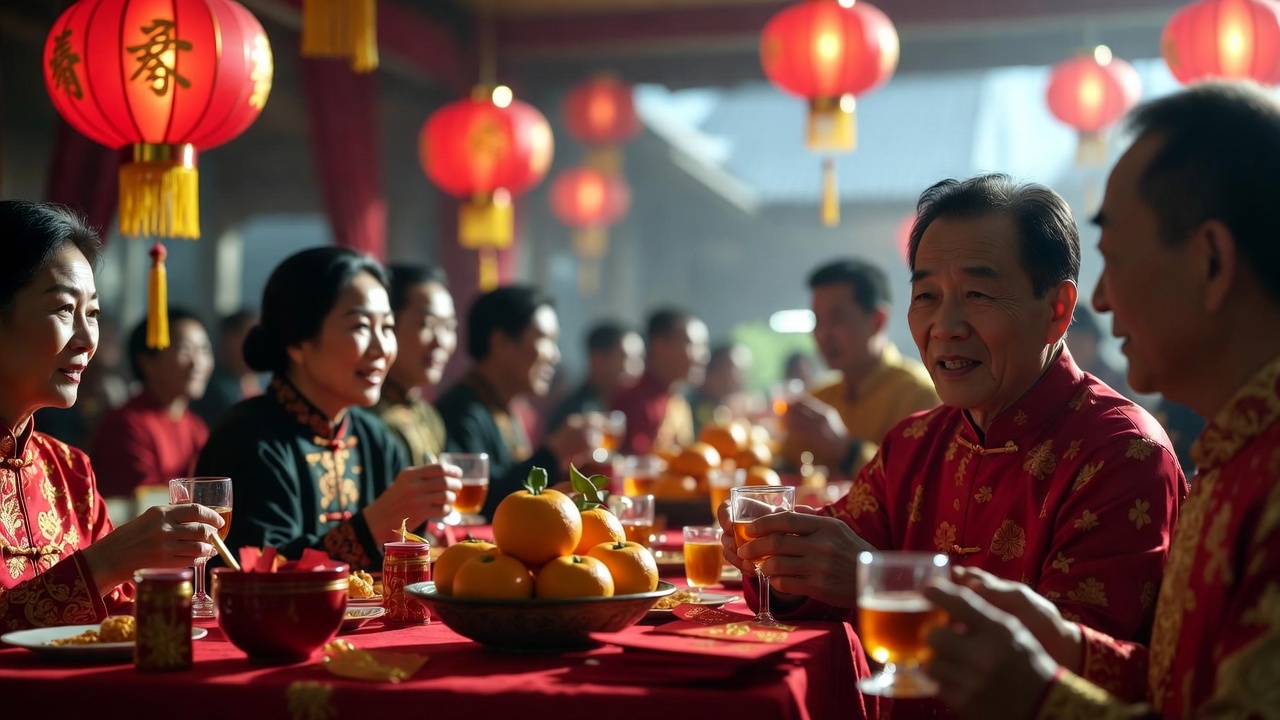
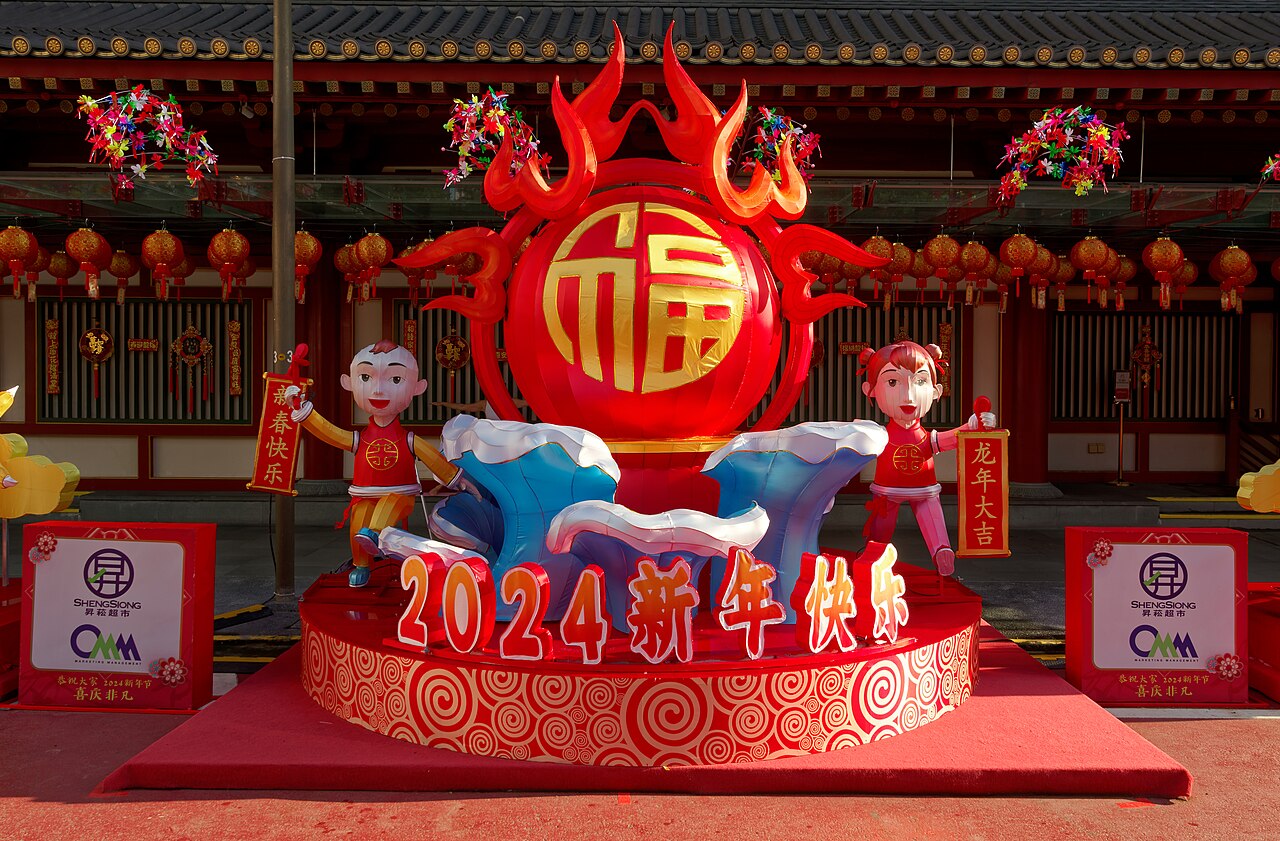
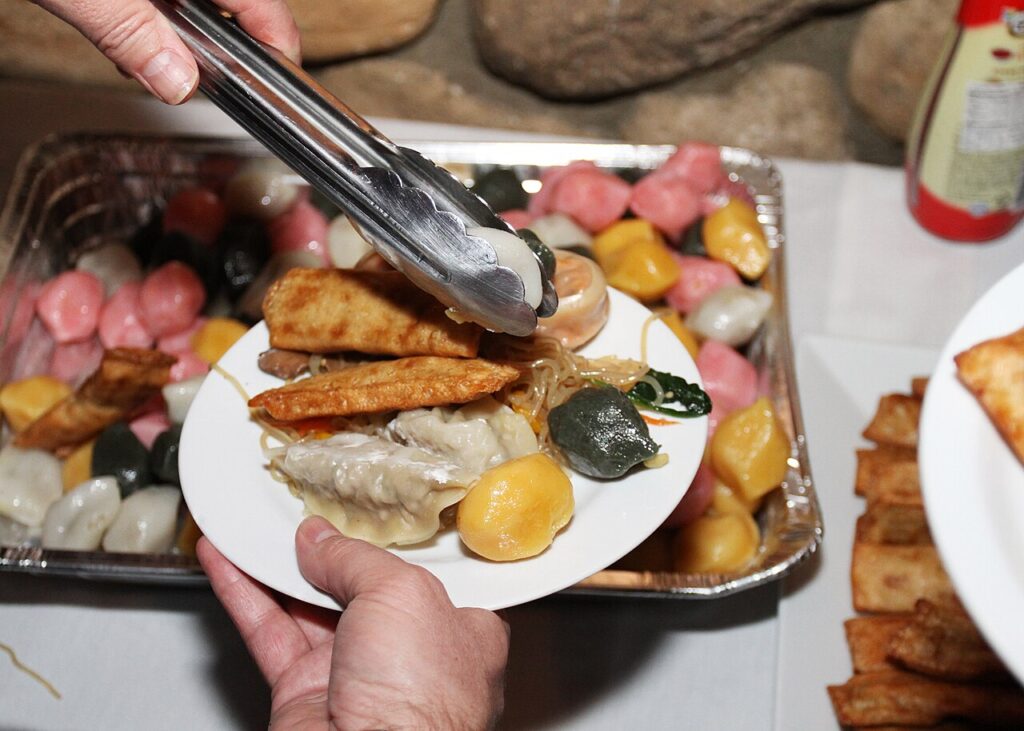
The Chinese celebration centres on the New Year’s Eve reunion dinner, red envelopes, lion dances, firecrackers, and a fifteen-day arc that ends with the Lantern Festival. Northern families eat dumplings; southern families favour fish, rice cake, and sweet rice balls. The zodiac animal of the year, a Horse in 2026, shapes much of the season’s symbolism.
The Chinese version is the loudest and most outward-facing of the four. Beyond the reunion dinner, the season spills into public space: red couplets are pasted on doorways, lion and dragon dances wind through streets and shopping centres, and, where they are still permitted, firecrackers drive out the old year at midnight. The fifteen-day arc runs from New Year’s Eve to the Lantern Festival, with each early day carrying its own custom, from the day-one ban on sweeping away luck to the welcoming of the God of Wealth on the fifth. The scale of the homecoming it produces, hundreds of millions of journeys squeezed into a few weeks, has no equal anywhere on earth.
Korea: Seollal
Korea’s Seollal (설날) is quieter and more solemn than the Chinese version, focused on family and ancestors rather than public spectacle. The two defining customs are charye, a memorial rite in which food is offered to ancestors at a carefully arranged table, and sebae, a deep formal bow that younger family members make to their elders, who respond with words of wisdom and money. Many wear the traditional hanbok.
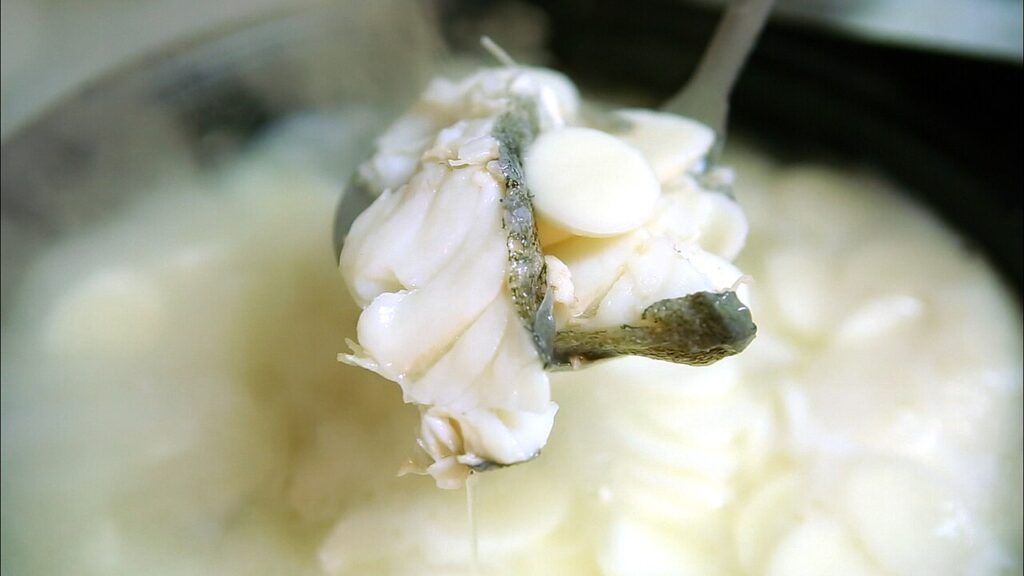
The essential Seollal food is tteokguk, a soup of sliced rice cakes in a clear broth. Eating a bowl is said to add a year to your age, so Koreans sometimes ask how many bowls of tteokguk you have eaten as a playful way of asking your age. Families also play traditional games such as yutnori, a board game played by throwing four wooden sticks.
The atmosphere of Seollal differs sharply from the Chinese festival. Where China leans toward noise, colour, and public spectacle, Korea leans toward stillness and reverence. The charye ancestral rite is the morning’s centrepiece: the family lays out a precisely arranged table of food for several generations of ancestors, bows before it, and shares the meal afterwards in the belief that the ancestors have partaken first. Only after this do the living turn to one another for the sebae bows and the giving of New Year money. It is worth noting that Korea uses the same twelve zodiac animals as China, with no cat substitution, so a Korean and a Chinese person born in the same year share the same sign.
Beyond yutnori, Seollal is a day for a cluster of folk games now mostly played at holidays: jegichagi, a kind of hacky-sack with a weighted shuttlecock; neolttwigi, a standing seesaw on which two players launch each other into the air; and kite flying. Many families still wear hanbok, the flowing traditional dress, in bright colours for children and softer tones for adults. The overall mood is less a party than a homecoming, centred on respect for elders and remembrance of those who came before.
Vietnam: Tết
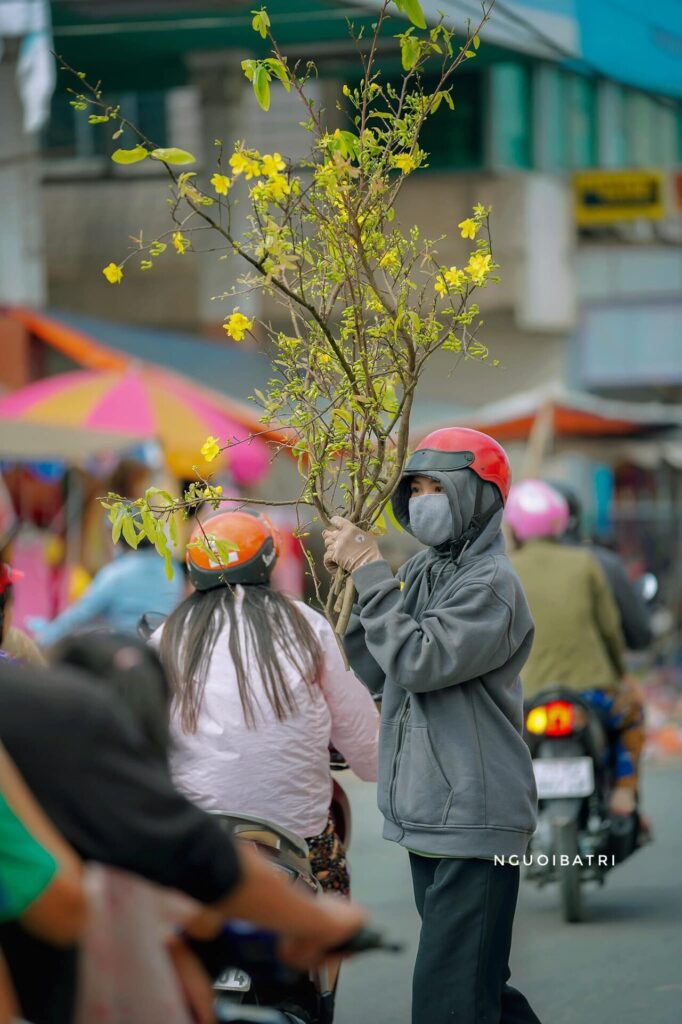
Vietnam’s Tết Nguyên Đán, usually shortened to Tết, is the country’s most important holiday and is celebrated with as much intensity as the Chinese festival, but with distinctly Vietnamese symbols. Homes are decorated with branches of yellow apricot blossom (hoa mai) in the south and pink peach blossom (hoa đào) in the north, along with kumquat trees.
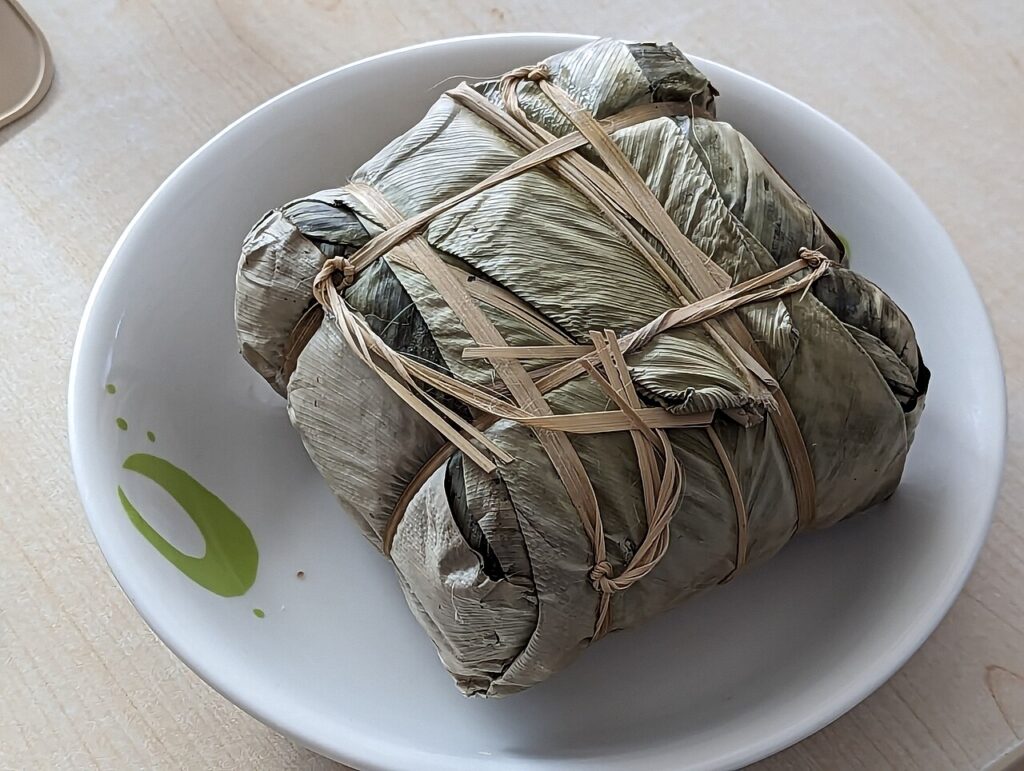
The signature Tết food is bánh chưng, a dense square cake of glutinous rice, mung bean, and pork wrapped in green dong leaves and boiled for hours. Its square shape represents the earth. Children receive lucky money in red envelopes, called lì xì, and the first visitor to enter a home in the new year, the xông đất, is believed to set the fortune for the year, so families choose that first guest with care.
Tết has its own rich layer of custom beyond the food and flowers. A week before the new year, families mark the departure of the Kitchen Gods (Ông Táo), who are believed to ride a carp to heaven to report on the household; live carp are bought and then released into rivers and ponds as part of the send-off. Homes display a tray of five fruits (mâm ngũ quả) on the ancestral altar, the selection chosen so that the fruit names, spoken together, voice a wish for the year. The three days of Tết each have a focus in the traditional saying: the first day for the father’s side of the family, the second for the mother’s side, and the third for one’s teachers, a reminder of how deeply respect for learning runs in Vietnamese culture. In the south, the square bánh chưng is often joined or replaced by bánh tét, a cylindrical version wrapped in banana leaf, and the apricot blossom that brightens southern homes gives way to peach blossom in the north.
Mongolia: Tsagaan Sar
Mongolia’s Tsagaan Sar, the “White Moon” festival, marks both the new year and the end of the harsh winter. Its date is set by the Mongolian lunar calendar and so can differ from the Chinese date by a day or even a month in some years. Families stack ceremonial “shoes” of layered biscuits, eat large quantities of buuz (steamed mutton dumplings), and offer dairy foods that reflect the herding culture. Elders are honoured with a distinctive greeting in which the younger person supports the elder’s arms.
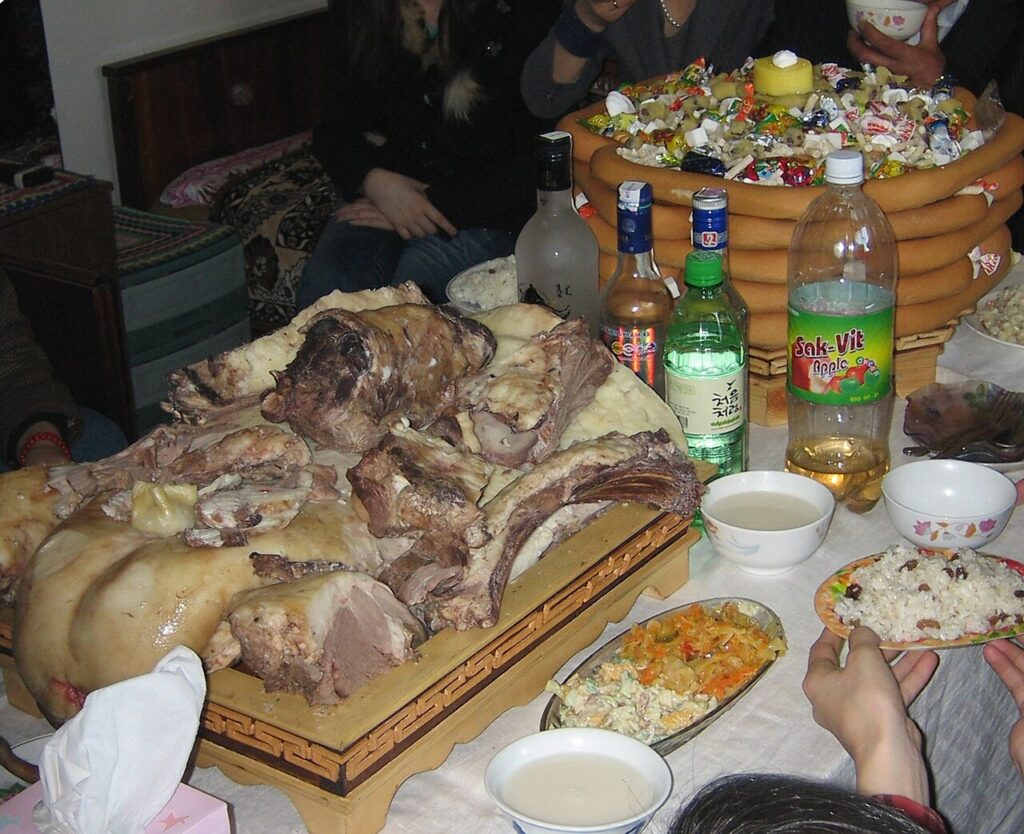
Mongolia’s Tsagaan Sar carries the stamp of a herding culture. The defining greeting is the zolgokh, in which the younger person extends their arms, palms up, to support the elbows of the elder, who rests their arms on top, a gesture of respect and support exchanged while holding a length of blue ceremonial silk. Tables are dominated by white dairy foods, which give the festival its name, the “White Moon,” along with mountains of steamed buuz dumplings and a whole boiled sheep’s rump. Because the date is set by Mongolian astrological reckoning rather than the Chinese calendar, Tsagaan Sar sometimes falls on the same day as the Chinese and Korean new year and sometimes a full month later.
What Every Lunar New Year Shares
For all their differences, these celebrations rhyme with one another in ways that reveal a common root. In each culture, the days before the new year are for a deep cleaning of the home, settling outstanding debts, and buying new clothes, so that the year begins fresh and unburdened. Each places the family reunion at its centre and honours ancestors in some form, whether through Korea’s charye, Vietnam’s altar offerings, or China’s remembrance rites. Each gives lucky money to children, sets a table of foods chosen for the wishes their names or shapes carry, and treats the first days of the year as a time when one’s conduct sets the tone for the months to come. The surface details differ, but the underlying grammar of renewal, gratitude, and hope is the same.
Why So Many Cultures Share the Same Date
The shared date is a legacy of history. For centuries, the Chinese lunisolar calendar was the standard across much of East and Southeast Asia, adopted by neighbouring states that fell within China’s cultural orbit. Korea, Vietnam, and other societies took up the calendar along with much else, then adapted the new year it produced to their own beliefs, foods, and language. When these countries later moved their official civil calendars to the Gregorian system, they kept the traditional festival as a cultural and family holiday. That is why a Korean grandmother, a Vietnamese family, and a Chinese household can all sit down to their new year feast on the very same evening, each certain the night belongs to them.
| Culture | Name | Signature food | Defining custom |
|---|---|---|---|
| China | Spring Festival (Chunjie) | Dumplings, fish, rice cake | Reunion dinner, lion dance, firecrackers |
| Korea | Seollal | Tteokguk (rice cake soup) | Charye ancestral rite, sebae bow |
| Vietnam | Tet Nguyen Dan | Banh chung (sticky rice cake) | First-footer (xong dat), apricot and peach blossom |
| Mongolia | Tsagaan Sar | Buuz dumplings, dairy foods | Zolgokh greeting, white foods |
The Zodiac Is Not Always the Same
One of the most surprising differences hides in the zodiac. China and Vietnam share a twelve-animal cycle, but two of the animals differ. Where the Chinese zodiac has the Rabbit, the Vietnamese has the Cat, and where China has the Ox, Vietnam traditionally emphasises the Water Buffalo. The most common explanation is linguistic: the Chinese word for rabbit (mǎo) sounds close to the Vietnamese word for cat, and over centuries the animal shifted. So a year that is the Year of the Rabbit in China is the Year of the Cat in Vietnam. Our guide to the history of the Chinese zodiac explains the twelve-year cycle and its elements in full.
How to Say Happy New Year in Each Language
If you want to greet someone in their own language, the words differ as much as the customs do:
- Mandarin Chinese: Xīnnián kuàilè (Happy New Year), or Gōngxǐ fācái (wishing you prosperity).
- Cantonese: Gung Hei Fat Choi, the familiar Cantonese form of the prosperity greeting.
- Korean: Saehae bok mani badeuseyo, meaning “may you receive many blessings in the new year.”
- Vietnamese: Chúc mừng năm mới, “happy new year,” often followed by wishes for health and luck.
- Mongolian: Sar shineiin mend hürgeye, a greeting for the White Moon festival.
Matching the greeting to the person is the surest way to turn a generic “happy holidays” into something that genuinely lands.
Is It Wrong to Say “Chinese New Year”?
The naming question has become genuinely sensitive, and both sides have a point. The case for “Lunar New Year” is one of inclusion: Korean and Vietnamese people understandably do not want their own ancient holidays folded under a Chinese label, especially in diverse cities where all three communities celebrate together. The case for “Chinese New Year” is one of accuracy in the right context: if you are specifically describing the Chinese Spring Festival, its dumplings and its Nian legend, then “Chinese New Year” is the precise term, not a slight.
The practical approach is simple. Use “Lunar New Year” when you are speaking broadly, greeting a mixed group, or unsure of someone’s background. Use “Chinese New Year” when you are talking specifically about Chinese customs. When greeting an individual, the safest and warmest choice is to match the name to their culture: Seollal for a Korean friend, Tết for a Vietnamese one.
A Festival Recognised by the World
The cultural weight of the festival has earned formal international recognition. At the end of 2024, UNESCO added the Spring Festival, described as the social practices of the Chinese people in celebration of the traditional new year, to its list of the Intangible Cultural Heritage of Humanity, acknowledging the customs, foods, and family rituals that surround the occasion. The broader Lunar New Year has gained official standing elsewhere too: the United Nations now observes it as a floating holiday, and a growing number of countries and American states formally recognise the day, a reflection of how far beyond Asia these celebrations have spread.
Do Japan and Other Countries Celebrate?
Japan is the notable exception in the region. It once celebrated the lunisolar new year, but in 1873 it moved its new year permanently to January 1 on the Gregorian calendar, so mainland Japan does not observe the Lunar New Year today. Pockets remain, including Okinawa and Japan’s Chinese communities, where Chinatowns in Yokohama and Nagasaki hold lively celebrations. Elsewhere, Lunar New Year is a public holiday across much of East and Southeast Asia, from Singapore and Malaysia to Indonesia and the Philippines, each blending the festival with local culture.
So Which Should You Say?
If you remember one thing, let it be this: Lunar New Year is the family, and Chinese New Year is one member of it. They share a birthday but not an identity. Saying “Lunar New Year” honours the Korean, Vietnamese, Mongolian, and other communities who celebrate the same day in their own way, while “Chinese New Year” remains the right and respectful term for the Chinese Spring Festival itself. Whichever you use, the spirit is shared: a clean house, a full table, family gathered close, and a hopeful start to a new year. To learn the right words for the occasion, see our guide to Chinese New Year greetings in Mandarin and Cantonese.
Frequently Asked Questions
Is Lunar New Year the same as Chinese New Year?
They fall on the same date but are not identical. “Chinese New Year” is the Chinese celebration, known in China as the Spring Festival. “Lunar New Year” is the umbrella term that also covers Korea’s Seollal, Vietnam’s Tet, and Mongolia’s Tsagaan Sar, each with its own customs.
Why does the Lunar New Year date change every year?
The festival follows a lunisolar calendar and falls on the second new moon after the winter solstice. Because lunar months do not line up exactly with the solar year, the date shifts each year between January 21 and February 20.
Which countries celebrate Lunar New Year?
It is a public holiday across much of East and Southeast Asia, including China, South Korea, Vietnam, Singapore, Malaysia, Indonesia, and the Philippines, and is widely celebrated by Chinese, Korean, and Vietnamese communities worldwide.
Is it wrong to say “Chinese New Year”?
Not when you mean the Chinese celebration specifically. Use “Lunar New Year” as the inclusive term when speaking broadly or to a mixed group, and “Chinese New Year” when describing Chinese customs. When greeting an individual, matching the name to their culture, such as Seollal or Tet, is the warmest choice.
Do Japanese people celebrate Lunar New Year?
Mainland Japan moved its new year to January 1 on the Gregorian calendar in 1873, so it no longer observes the Lunar New Year, though Okinawa and Japan’s Chinese communities, including the Chinatowns of Yokohama and Nagasaki, still celebrate it.
Why is the Vietnamese zodiac different from the Chinese one?
Vietnam shares most of the twelve-animal cycle but has the Cat where China has the Rabbit, and emphasises the Water Buffalo over the Ox. The shift is usually explained by the Chinese word for rabbit sounding close to the Vietnamese word for cat.