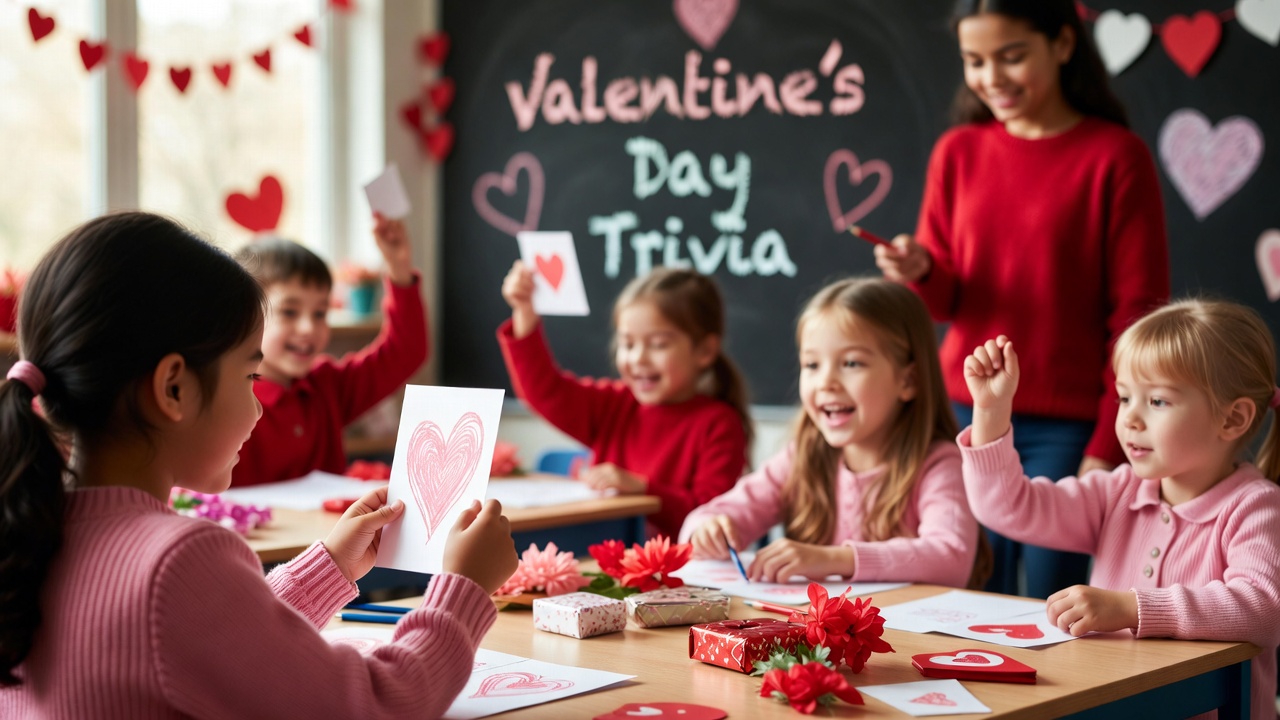
Looking for Valentine trivia for kids that goes beyond the usual hearts and flowers? You’re in the right place! Whether you’re a teacher planning a classroom party or a parent seeking fun Valentine’s Day activities, these kid-friendly facts will spark curiosity and giggles alike.
Let’s dive into the most fascinating Valentine’s Day history for kids—complete with candy secrets, ancient legends, and some seriously surprising numbers!
Why Do We Celebrate Valentine’s Day? The Story Behind the Holiday
Every February 14th, millions of people exchange cards and chocolates. But why do we celebrate Valentine’s Day for kids to understand?
Here’s the short version: A long time ago in ancient Rome, there lived a kind priest named Valentine. He helped people in secret when it was against the rules. The Roman emperor threw him in jail. Legend says Valentine sent a letter signed “From Your Valentine” before he died. That phrase stuck around for nearly 2,000 years!
Quick Facts About Valentine’s Day Origins
| Fact | Details |
|---|---|
| First Valentine’s Day | Around 496 AD |
| Named After | Saint Valentine of Rome |
| Original Celebration | A Roman festival called Lupercalia |
| First Valentine Card | Sent in 1415 by a French duke |
Fun Valentine’s Day Facts for Children About Cards and Letters
Did you know that Valentine’s Day is the second biggest card-giving holiday in America? Only Christmas beats it!
Here are some wild numbers:
- Americans exchange about 145 million Valentine cards each year
- Teachers receive the most Valentine’s Day cards of any group
- Kids give out 1 billion valentines annually in classrooms
- The first commercial Valentine cards appeared in the 1840s
- Hallmark started selling Valentine cards in 1913
Who Gets the Most Valentines?
Teachers win this contest every year. Kids hand out classroom valentines by the handful. Parents come in second place. Friends and classmates round out the top recipients.
Pet owners now buy Valentine cards for their furry friends too! About 27 million people give valentines to their dogs and cats.
Valentine’s Day Candy Facts for Kids: Sweet Secrets Revealed
Candy and Valentine’s Day go together like peanut butter and jelly. These Valentine’s Day candy facts for kids might make them see their treats differently!
Conversation Hearts: Tiny Treats with Big History
Those little candy hearts with messages? They’ve been around since 1866! The Necco company made 8 billion conversation hearts every year before other companies took over production.
Fun candy heart facts:
- Each heart takes about 45 minutes to dry
- New sayings get added almost every year
- “Be Mine” remains the most popular phrase
- The candies were originally called “motto hearts”
Chocolate Takes the Crown
Over 58 million pounds of chocolate get purchased during Valentine’s week. That’s heavier than 145 blue whales!
| Valentine Candy | Fun Fact |
|---|---|
| Chocolate boxes | Invented in 1861 by Cadbury |
| Heart-shaped boxes | First sold in the 1860s |
| Conversation hearts | Over 150 years old |
| Lollipops | “Sucker for you” became popular in 1920s |
Interesting Facts About Valentine’s Day for Students: Around the World
Valentine’s Day looks different depending on where you live. These interesting facts about Valentine’s Day for students show how cultures celebrate love!
Japan’s Chocolate Tradition
In Japan, girls give chocolate to boys on February 14th. Then on March 14th—called “White Day”—boys return the favor! They give white chocolate or gifts back.
South Korea’s Monthly Celebrations
South Koreans celebrate love on the 14th of every single month. That’s 12 love-themed holidays each year!
Finland’s Friendship Focus
Finland calls February 14th “Friend’s Day.” It celebrates all friendships, not just romantic ones. Kids exchange cards with their best buddies.
Other Global Traditions
- Wales: People give hand-carved wooden spoons
- Denmark: Friends send pressed white flowers called “snowdrops”
- Brazil: Valentine’s Day falls on June 12th instead
- Philippines: Mass wedding ceremonies happen every February 14th
Valentine’s Day Trivia Questions for Kids: Test Your Knowledge!
Ready to quiz your little ones? Use these Valentine’s Day trivia questions for kids at your next party or classroom celebration!
Easy Questions (Ages 4-7)
- What color is most associated with Valentine’s Day?
- Answer: Red and pink
- What shape represents love on Valentine’s Day?
- Answer: Heart
- What flying baby shoots love arrows?
- Answer: Cupid
- What flower is most popular on Valentine’s Day?
- Answer: Red rose
Medium Questions (Ages 8-11)
- How many conversation hearts are made each year?
- Answer: About 8 billion
- What country invented the Valentine’s Day card?
- Answer: England
- In Roman mythology, who was Cupid’s mother?
- Answer: Venus, goddess of love
- What do people in Wales give instead of cards?
- Answer: Hand-carved wooden spoons
Challenge Questions (Ages 12+)
- What year did Hallmark start selling Valentine cards?
- Answer: 1913
- How much money do Americans spend on Valentine’s Day?
- Answer: Over $25 billion
Kid-Friendly Valentine Facts About Cupid and Ancient Symbols
Cupid appears everywhere in February. But who exactly is this chubby little archer?
The Real Story of Cupid
Cupid comes from Roman mythology. His Greek name was Eros. Ancient artists first showed him as a handsome teenager. By the Renaissance, painters started drawing him as a baby with wings.
Why the bow and arrow? Romans believed anyone struck by Cupid’s arrow would fall madly in love. The arrows had gold tips for love and lead tips for dislike!
What Hearts Really Mean
The heart symbol doesn’t look much like a real human heart. So where did it come from?
Historians have three theories:
- Swan theory: Two swans touching beaks form a heart shape
- Plant theory: An ancient plant called silphium had heart-shaped seeds
- Ivy theory: Ivy leaves, sacred to the god Dionysus, inspired the shape
Valentine’s Day Fun Facts for Preschoolers: Simple and Sweet
Little learners love Valentine’s Day too! Here are Valentine’s Day fun facts for preschoolers using simple words and ideas.
Colors of Valentine’s Day
- Red means love and passion
- Pink means friendship and caring
- White means purity and sweetness
- Purple sometimes shows up too—it means royalty!
Animals That Mate for Life
Some animals pick one partner forever. Teachers love sharing these examples:
| Animal | Fun Love Fact |
|---|---|
| Swans | Touch beaks to make a heart shape |
| Penguins | Give their mate a special pebble |
| Lovebirds | Named for sitting close together |
| Wolves | Stay with the same partner always |
| Bald eagles | Build nests together for years |
Easy Valentine Numbers for Kids
- 1 special day each February
- 2 main colors: red and pink
- 3 common gifts: cards, candy, flowers
- 4 letters in the word “love”
- 14 the date we celebrate
How Did Valentine’s Day Start for Kids? A Timeline Adventure
Understanding how did Valentine’s Day start for kids becomes easier with a visual timeline!
Valentine’s Day Through the Ages
269 AD — Saint Valentine dies in Rome
496 AD — Pope Gelasius declares February 14th as St. Valentine’s Day
1300s — People in England and France believe birds choose mates on this day
1415 — The Duke of Orleans sends the first known Valentine card from prison
1600s — Handwritten valentines become popular in England
1840s — First mass-produced Valentine cards appear in America
1866 — Conversation heart candies are invented
1913 — Hallmark sells its first Valentine’s Day cards
Today — Over 190 million Valentine cards are sent worldwide!
Roses, Flowers, and Valentine’s Day Traditions
Red roses rule Valentine’s Day. But why this particular flower?
Why Red Roses?
Venus, the goddess of love, considered roses sacred. Red symbolized deep love and passion. Over time, red roses became the ultimate love symbol.
Valentine’s Day Flower Facts
- 250 million roses are grown just for Valentine’s Day
- Most American Valentine roses come from Colombia and Ecuador
- Pink roses mean gratitude
- Yellow roses represent friendship
- White roses symbolize new beginnings
Beyond Roses: Other Popular Valentine Flowers
- Tulips (declaration of love)
- Carnations (fascination)
- Lilies (devotion)
- Orchids (rare beauty)
- Daisies (innocent love)
Weird and Wacky Valentine’s Day Facts Kids Will Love
Save the best for last! These unusual Valentine’s Day facts will get the biggest reactions.
Truly Strange But True
- Doctors used to prescribe chocolate as a cure for heartbreak!
- The oldest known Valentine is on display in a British museum—from 1477!
- Alexander Graham Bell applied for his telephone patent on Valentine’s Day 1876
- Vermont produces 50 million conversation hearts in just six weeks
- Teachers receive approximately 27% of all Valentine cards
- 3% of pet owners buy Valentine gifts for their pets
- The Italian city of Verona receives about 1,000 letters addressed to Juliet each February
Record-Breaking Valentine Facts
| Record | Details |
|---|---|
| Largest box of chocolates | 1,689 pounds |
| Longest love letter | 4,507 pages |
| Most expensive Valentine | $3.6 million necklace |
| Largest Valentine card | 1,053 square feet |
Classroom Valentine’s Day Activities Using These Fun Facts
Teachers can turn this trivia into engaging activities!
Activity Ideas
- Trivia Bowl: Divide the class into teams and quiz them
- Timeline Art: Have kids illustrate the history of Valentine’s Day
- World Map Project: Mark different Valentine traditions around the globe
- Math with Candy: Use conversation hearts for counting and sorting
- Creative Writing: Write a story about how Cupid got his job
Final Thoughts: Share the Love and Knowledge!
Now you’ve got enough Valentine trivia for kids to impress every student, child, or curious learner in your life! From ancient Roman priests to billions of conversation hearts, Valentine’s Day packs centuries of fascinating history into one candy-filled holiday.
Print out these facts. Share them at your classroom party. Use them for family trivia night. However you celebrate, these fun tidbits make February 14th even more special.
Which Valentine fact surprised you most? Share your favorite in the comments below!