Your ultimate guide to Chinese New Year food traditions that bring wealth, health, and happiness
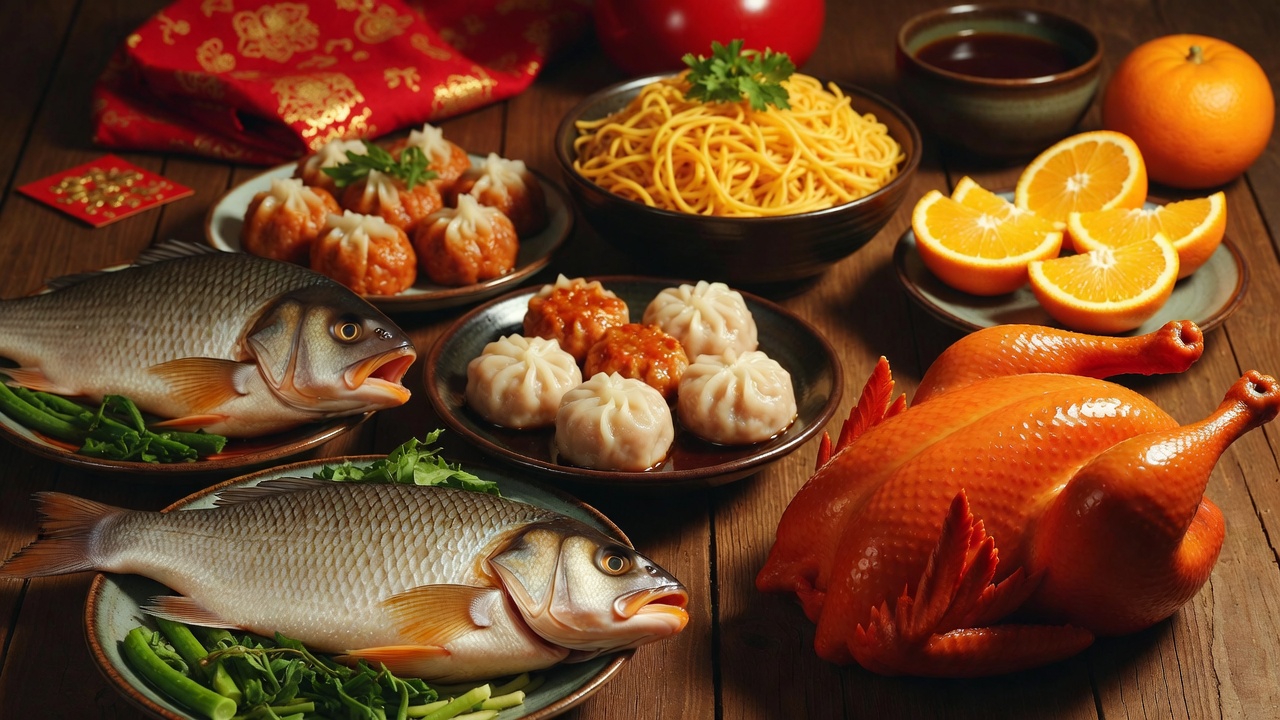
The aroma of sizzling dumplings. The gleam of whole steamed fish. The sweet crunch of candied lotus seeds. Spring Festival isn’t just a holiday—it’s a feast for the senses and the soul.
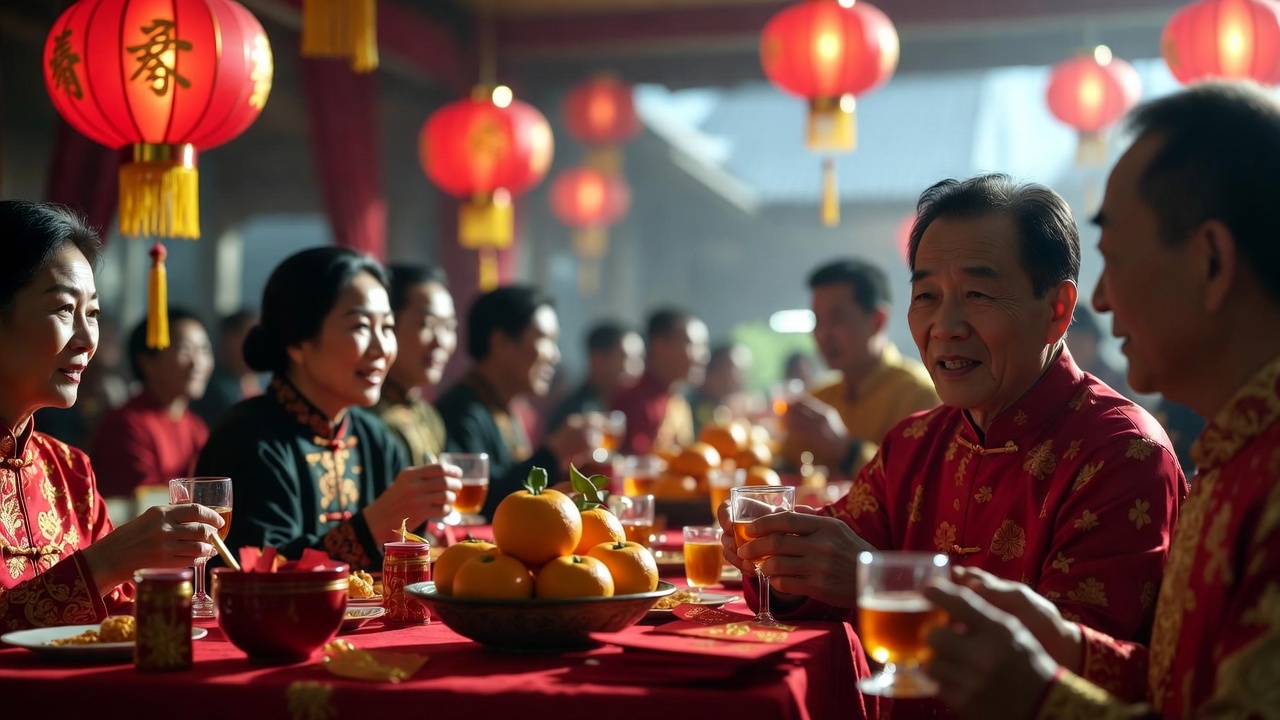
For over 4,000 years, Chinese families have gathered around tables laden with symbolic dishes. Every ingredient tells a story. Every bite carries a wish. This is the magic of Lunar New Year food traditions.
Ready to discover which lucky foods will fill your table this year? Let’s dive in.
Why Food Matters So Much During Chinese New Year
Food isn’t just sustenance during Spring Festival. It’s a language of love and hope.
The Chinese word for “eating” (吃, chī) appears in countless blessings. “Have you eaten?” is how elders show care. Sharing meals builds bonds that span generations.
Lucky foods work through homophonic magic. Words that sound alike share meaning. Fish sounds like “surplus.” Tangerines echo “gold.” Noodles represent long life because—well, they’re long.
This isn’t superstition. It’s cultural poetry on a plate.
The Essential 8: Must-Have Spring Festival Foods for Good Fortune
These dishes anchor every reunion dinner. Skip them, and something feels missing.
| Food | Chinese Name | Lucky Meaning | Best Served |
|---|---|---|---|
| Whole Fish | 鱼 (yú) | Surplus & abundance | Steamed, head and tail intact |
| Dumplings | 饺子 (jiǎozi) | Wealth & prosperity | Boiled or pan-fried |
| Spring Rolls | 春卷 (chūnjuǎn) | Wealth (gold bars) | Deep-fried until golden |
| Nian Gao | 年糕 (niángāo) | Rising success | Steamed or pan-fried |
| Longevity Noodles | 长寿面 (chángshòu miàn) | Long life | Never cut, slurp whole |
| Tang Yuan | 汤圆 (tāngyuán) | Family togetherness | In sweet soup |
| Whole Chicken | 鸡 (jī) | Prosperity & reunion | Poached or roasted |
| Eight Treasure Rice | 八宝饭 (bābǎo fàn) | Good fortune | Steamed with dried fruits |
Lucky Fish Dishes: Swimming Into Abundance
Why Fish Is the Star of Chinese New Year Dinner
The word “fish” (鱼, yú) sounds identical to “surplus” (余, yú). Serving fish means you’re wishing for abundance year after year.
But here’s the catch—literally. The fish must be served whole. Head. Tail. Everything. This represents completeness from beginning to end.
Traditional rules for lucky fish:
- Point the head toward honored guests or elders
- Never flip the fish (it symbolizes capsizing a boat)
- Leave some uneaten to ensure surplus carries into the new year
- The fish cheeks go to the host—it’s the sweetest meat
Best Fish Varieties for Spring Festival
- Crucian Carp (鲫鱼) — Sounds like “good luck”
- Catfish (鲶鱼) — Sounds like “year of surplus”
- Mandarin Fish (鳜鱼) — Represents wealth and nobility
- Sea Bass (鲈鱼) — Popular in coastal regions
- Pomfret (鲳鱼) — Flat shape resembles silver coins
Popular Chinese New Year Fish Recipes
Steamed Whole Fish with Ginger and Scallion The Cantonese classic. Light soy sauce. Fresh aromatics. Pure elegance.
Sweet and Sour Fish (糖醋鱼) Northern favorite. Crispy exterior meets tangy sauce. Kids adore it.
Squirrel-Shaped Mandarin Fish (松鼠鳜鱼) Suzhou masterpiece. The fish is scored to fan out like a squirrel’s tail. Dramatic and delicious.
Dumplings: Little Pouches of Prosperity
The History Behind Chinese New Year Dumplings
Dumplings date back 1,800 years. Legend says a doctor named Zhang Zhongjing invented them to cure frostbitten ears during a harsh winter.
Their shape tells the whole story. Dumplings resemble ancient Chinese gold ingots called yuanbao. Eating them invites wealth into your home.
Dumpling-Making Traditions That Bring Extra Luck
Not all dumplings are equal. How you make them matters.
Lucky dumpling customs:
- Fold edges into pleats (never leave them smooth—that seals away fortune)
- Hide a coin inside one dumpling (the finder gets extra luck)
- Make them the night before and eat at midnight
- Arrange them in rows, not circles (rows of ingots, not endless cycles)
- Use an even number of pleats for balance
Regional Dumpling Fillings Across China
| Region | Popular Filling | Special Meaning |
|---|---|---|
| Beijing | Pork and Napa Cabbage | Prosperity and wealth |
| Northeast | Pork and Sauerkraut | Good fortune through hardship |
| Shandong | Fish and Pork | Double abundance |
| Shanghai | Pork and Shepherd’s Purse | Fresh start |
| Sichuan | Spicy Pork and Chives | Eternal prosperity |
| Xinjiang | Lamb and Onion | Strength and vitality |
Nian Gao: The Sticky Rice Cake That Lifts You Higher
What Makes Nian Gao So Lucky?
Nian gao sounds like “year high” (年高). Each slice promises you’ll climb higher in the coming year. Better job. More income. Greater achievements.
This glutinous rice cake comes in dozens of regional styles. Some are sweet. Others savory. All are sticky—because blessings should cling to you.
Types of Nian Gao for Chinese New Year
Sweet Versions:
- Cantonese Brown Sugar Nian Gao — Dark, dense, caramelized
- Shanghai White Sugar Nian Gao — Light, mild, elegant
- Fujian Sweet Potato Nian Gao — Rustic, earthy, purple-hued
- Ningbo Osmanthus Nian Gao — Floral, fragrant, refined
Savory Versions:
- Shanghai Stir-Fried Nian Gao — With pork and vegetables
- Korean Tteokguk Style — In clear soup (Korean New Year)
- Hakka Savory Nian Gao — With dried shrimp and mushrooms
Lucky Noodles: Strand by Strand Into Longevity
Why You Should Never Cut Your New Year Noodles
Long noodles mean long life. Simple as that.
The rules are clear: don’t cut them, don’t bite them in half, don’t break them before cooking. Slurp them dramatically. The longer the strand you eat, the longer you’ll live.
Best Noodle Dishes for Spring Festival
Yi Mein (伊面) — Birthday Noodles Slightly chewy. Golden-colored. Stir-fried with mushrooms and cabbage. The classic longevity choice.
Dragon Whisker Noodles (龙须面) Hand-pulled into impossibly thin strands. Named for their resemblance to dragon whiskers. Auspicious for obvious reasons.
Crossing the Bridge Noodles (过桥米线) Yunnan specialty. Hot broth keeps cooking thin rice noodles at the table. A theatrical crowd-pleaser.
Whole Chicken: Completeness and Family Unity
Traditional Ways to Serve Chicken During Chinese New Year
The chicken must be whole. Head attached. Feet pointing upward. This symbolizes completeness and family togetherness.
Cantonese White Cut Chicken (白切鸡) reigns supreme. Poached gently. Served room temperature. Dipped in ginger-scallion sauce.
Soy Sauce Chicken (豉油鸡) offers richer flavor. Braised until mahogany-colored. Sweet, savory, irresistible.
The Meaning Behind Chicken Dishes
- Serving chicken promises prosperity (鸡, jī, sounds similar to “auspicious”)
- Chicken feet represent the family grasping wealth
- Wings help family members “fly high” in their careers
- The wishbone brings good luck to whoever gets it
Lucky Vegetables for Chinese New Year
Leafy Greens That Symbolize Wealth and Growth
Vegetables aren’t just healthy. They’re loaded with meaning.
Top lucky vegetables:
| Vegetable | Chinese Name | Lucky Meaning |
|---|---|---|
| Bok Choy | 青菜 (qīngcài) | “Touching fortune” |
| Lettuce | 生菜 (shēngcài) | “Growing wealth” |
| Chinese Cabbage | 白菜 (báicài) | “100 fortunes” |
| Mustard Greens | 芥菜 (jièicài) | Long life |
| Bamboo Shoots | 笋 (sǔn) | Wishes coming true |
| Lotus Root | 莲藕 (liánǒu) | Connected blessings |
| Leeks | 韭菜 (jiǔcài) | Eternal prosperity |
| Black Moss | 发菜 (fàcài) | “Striking it rich” |
Vegetarian Dishes for the First Day of Chinese New Year
Many families eat vegetarian on New Year’s Day. This brings peace and purity into the fresh year.
Buddha’s Delight (罗汉斋) is the quintessential choice. Eighteen ingredients. Each carries meaning. Mushrooms for opportunity. Tofu for blessings. Lily bulbs for unity.
Sweet Treats: Chinese New Year Desserts and Snacks
Traditional Candies and Their Hidden Meanings
The new year should start sweetly. Chinese New Year candy ensures sweet words and sweet relationships all year long.
Must-have sweets:
- Candied Lotus Seeds — Fertility and many children
- Red Dates (Jujubes) — Early prosperity
- Dried Longan — Family reunion
- Peanuts — Continuous growth and vitality
- Melon Seeds — Silver coins and fertility
- Sesame Candy — Rising prosperity
- Peanut Brittle — Crunching into wealth
- Coconut Candy — Father-son bonding (sounds like 爷, grandfather)
- Winter Melon Candy — Health and growth
The Togetherness Tray: Filling Your Candy Box
The togetherness tray (全盒) sits in every living room during Spring Festival. Traditionally divided into eight compartments, it overflows with symbolic snacks.
What to include:
- Dried fruits (sweetness)
- Seeds (fertility)
- Nuts (prosperity)
- Candies (happiness)
- Chocolates (modern addition for children)
Always offer the tray to guests. Refusing a sweet would be refusing good fortune.
Lucky Fruits for Chinese New Year
Citrus Fruits: Golden Globes of Good Fortune
Orange and gold colors dominate Chinese New Year. Citrus fruits deliver both.
Tangerines and Oranges The Cantonese word for tangerine (柑, gān) sounds like “gold.” Oranges (橙, chéng) sound like “success.” Gift them in pairs. Display them everywhere.
Kumquats (金桔) Their name literally means “golden orange.” Small but mighty. A single tree in your home attracts wealth all year.
Pomelos (柚子) Large, impressive, long-lasting. They represent abundance and family unity. The Cantonese name sounds like “to have.”
Other Lucky Fruits for Your New Year Table
| Fruit | Lucky Meaning | How to Display |
|---|---|---|
| Apples | Peace (苹, píng) | In bowls throughout the home |
| Grapes | Abundance | On stems, never separated |
| Persimmons | Fulfillment | Dried or fresh |
| Pomegranates | Fertility | Cut open to show seeds |
| Dragon Fruit | Prosperity | Display whole |
| Lychees | Close family ties | Branches with leaves |
Fruits to Avoid During Spring Festival
Never gift or display:
- Pears (sounds like “separation”)
- Any fruit with 4 in quantity (sounds like “death”)
- Overripe or bruised fruit (decay symbolizes decline)
Meat Dishes That Bring Prosperity
Pork: The Traditional Meat of Abundance
Pork dominates Chinese cuisine—and Chinese New Year is no exception.
Dongpo Pork (东坡肉) Hangzhou’s gift to the culinary world. Cubes of belly pork braised until spoon-soft. Rich, sweet, unforgettable.
Red-Braised Pork (红烧肉) The color red brings luck. The fat brings fortune. This dish delivers both.
Char Siu (叉烧) Cantonese barbecue pork. Glossy, sweet, slightly charred. Children never refuse it.
Duck: Loyalty and Fidelity
Duck symbolizes marital fidelity. Mandarin ducks mate for life.
Peking Duck makes any celebration feel grand. Roast Duck offers simpler elegance. Eight Treasure Duck stuffed with rice and treasures impresses every guest.
Seafood Beyond Fish: Treasures From the Sea
Prawns and Shrimp: Laughter and Happiness
The Cantonese word for prawn (虾, xiā) sounds like laughter. Serving prawns ensures a year filled with joy.
Preparation tip: Keep the heads and tails on. Completeness matters.
Popular dishes:
- Salt and Pepper Prawns
- Drunken Shrimp
- Crystal Prawns
- Garlic Butter Prawns
Abalone: The Ultimate Luxury Food
Abalone (鲍鱼, bàoyú) sounds like “guaranteed surplus.” Its steep price makes it a status symbol.
Fresh is rare. Canned works perfectly. One piece per person shows generosity and wishes prosperity for each guest.
Other Lucky Seafood for Your Feast
- Scallops — Progress and advancement
- Sea Cucumber — Good heart and kindness
- Oysters — Good business (sounds like “good market”)
- Clams — Opening to reveal treasure
Regional Spring Festival Foods Across China
Northern Chinese New Year Specialties
The north celebrates with hearty, warming dishes.
Signature foods:
- Dumplings (the undisputed king)
- Lamb hot pot
- Sweet red bean soup
- Braised pork with vermicelli
- Pickled vegetable dishes
- Sesame seed balls
Southern Chinese New Year Traditions
Cantonese and Fujian families favor different specialties.
Signature foods:
- Nian gao (sweet rice cake)
- Turnip cake (萝卜糕)
- Whole steamed fish
- Roast suckling pig
- Oyster lettuce wraps
- Braised dried oysters with black moss
Sichuan and Southwestern Traditions
Bold flavors mark celebrations here.
Signature foods:
- Twice-cooked pork
- Mapo tofu
- Smoked duck
- Spicy cold dishes
- Sweet water noodles
- Pickled vegetables
Tang Yuan: Sweet Dumplings for Family Reunion
The Meaning Behind These Glutinous Rice Balls
Tang yuan (汤圆) sounds like “reunion” (团圆, tuányuán). Their round shape represents completeness and family togetherness.
Traditionally eaten on the Lantern Festival (fifteenth day), many families also enjoy them on New Year’s Eve.
Classic Tang Yuan Fillings
Traditional:
- Black sesame paste
- Red bean paste
- Peanut butter
- Sweet lotus paste
Modern:
- Chocolate
- Matcha cream
- Taro
- Purple sweet potato
Eight Treasure Rice: A Dessert Fit for Emperors
What Are the Eight Treasures?
This stunning steamed rice dessert features sticky rice studded with dried fruits and nuts. Each “treasure” carries meaning.
Traditional eight treasures:
| Ingredient | Symbolism |
|---|---|
| Red dates | Early fortune |
| Lotus seeds | Fertility |
| Dried longan | Reunion |
| Ginkgo nuts | Silver ingots |
| Candied winter melon | Good health |
| Dried apricots | Gold nuggets |
| Raisins | Sweetness |
| Red bean paste | Good luck |
The number eight matters. It sounds like “prosperity” (发, fā). Eight treasures. Eight guests. Eight dishes. The number pervades Spring Festival.
Spring Rolls: Biting Into Bars of Gold
Why Spring Rolls Mean Wealth
Golden, crispy, shaped like gold bars. Spring rolls (春卷) promise wealth with every crunch.
Originally a spring celebration food, they’ve become essential at Chinese New Year. The name itself contains “spring”—the season of renewal.
Regional Spring Roll Variations
Cantonese Style Thin, shatteringly crisp, filled with vegetables and bits of pork.
Shanghai Style Slightly thicker wrapper. Sweeter filling. Often vegetarian.
Vietnamese Style Fresh, unfried version. Light and healthy. Increasingly popular.
Fujianese Popiah Soft wrapper. Complex fillings. Assembled at the table. Interactive and fun.
Turnip Cake: A Cantonese New Year Essential
Lo Bak Go: The Savory Breakfast Favorite
Turnip cake (萝卜糕) appears on every Cantonese New Year table. Made from shredded daikon radish and rice flour, it’s steamed then pan-fried.
Hidden inside: lap cheong sausage, dried shrimp, mushrooms. Each bite reveals new flavors.
The name matters too. “Cake” (糕) sounds like “high” (高). Eating it lifts your fortune.
Taro and Sweet Potato: Underground Treasures
Why Root Vegetables Bring Luck
Root vegetables grow hidden underground—like buried treasure waiting to be discovered. They represent hidden wealth revealing itself.
Taro (芋头) The Cantonese word sounds like “surplus at every turn.” Steamed, mashed, or in desserts.
Sweet Potato (地瓜) Symbolizes sweetness and good earth. Purple varieties add festive color.
Tofu Dishes: Blessings and Abundance
The Lucky Meanings of Bean Curd
Tofu (豆腐) sounds similar to both “blessing” and “happiness.” It’s essential for vegetarian New Year meals.
Warning: Never eat plain white tofu blocks. White symbolizes mourning. Instead, serve it fried (golden), stuffed (filled with fortune), or in colorful dishes.
Lucky preparations:
- Stuffed tofu with meat
- Fried tofu puffs in soup
- Braised tofu with vegetables
- Mapo tofu (for spice lovers)
Hot Pot: The Ultimate Reunion Meal
Why Families Gather Around the Boiling Pot
Hot pot represents unity. Everyone shares one pot. Everyone participates. Everyone bonds.
The bubbling broth symbolizes a life full of energy and excitement. The variety of ingredients represents abundance.
Must-have hot pot ingredients for luck:
- Leafy greens — wealth
- Mushrooms — opportunity
- Fish balls — surplus
- Tofu — blessings
- Noodles — long life
- Dumplings — prosperity
Lucky Beverages for Chinese New Year
Traditional Drinks to Toast the New Year
Baijiu (白酒) The traditional Chinese spirit. Strong. Symbolic. Adults toast with it to honor elders and seal good wishes.
Osmanthus Wine (桂花酒) Sweet, floral, gentle. Women and those who prefer lighter drinks enjoy it.
Sweet Tea Tea service shows respect. Sweet tea ensures sweet conversations.
Soy Milk Homemade soy milk on New Year’s morning represents fresh starts and health.
Foods to Avoid During Spring Festival
What Not to Eat for Good Luck
Some foods break the festive magic. Avoid these throughout the fifteen-day celebration.
Never serve:
- Porridge — Implies poverty
- White foods alone — Associated with mourning
- Medicine — Invites illness
- Damaged fruits — Represents decay
- Meat from four-legged animals on Day 1 — Some regions avoid this
Never do:
- Cut noodles
- Break rice cakes
- Flip the fish
- Use white plates without color
- Serve dishes with the number four
How to Plan Your Chinese New Year Dinner Menu
Creating a Balanced and Auspicious Feast
A proper reunion dinner balances flavors, textures, colors, and symbols.
Essential components:
- One whole fish (surplus)
- One whole chicken (unity)
- Dumplings or spring rolls (wealth)
- One noodle dish (longevity)
- One vegetable dish (freshness)
- One sweet dish (sweet year)
- Soup (completeness)
- Rice cake (rising fortune)
Sample Chinese New Year Menu for 8 People
Appetizers:
- Spring rolls
- Shrimp chips
- Sesame balls
Main Courses:
- Steamed whole sea bass
- White cut chicken
- Dongpo pork belly
- Stir-fried longevity noodles
- Buddha’s delight vegetables
- Garlic prawns
Desserts:
- Eight treasure rice
- Tang yuan in sweet soup
- Nian gao slices
Final Thoughts: Eating Your Way to Good Fortune
Spring Festival food is more than sustenance. It’s hope made edible.
Every dumpling folded carries a wish. Every fish served speaks of abundance. Every noodle slurped extends your years.
These traditions survived millennia because they work. Not through magic—through meaning. When families gather to share these dishes, they’re sharing more than food. They’re passing down dreams for the future.
This year, fill your table with lucky foods. Toast with loved ones. Laugh over dumplings. Marvel at golden spring rolls.
And remember: the most auspicious ingredient of all isn’t on any menu.
It’s the people you share it with.
Gong Xi Fa Cai! May your Year be filled with abundance, joy, and countless delicious meals.