Where the shadow of the world’s greatest monument meets the hands of India’s finest artisans.
Every February, as the winter chill begins to recede and the jasmine-scented breeze sweeps through the Yamuna plains, the city of Agra transforms into something far more magnificent than the marble wonder it is already famous for. Taj Mahotsav 2026, scheduled from February 18 to February 27, promises to be the most spectacular celebration yet of India’s living artistic heritage. For ten extraordinary days, the grounds of Shilpgram—just a stone’s throw from the Eastern Gate of the Taj Mahal—will pulse with the rhythm of hammers on copper, the whisper of looms weaving silk, and the careful scratch of chisels on Makrana marble.
This is not merely a festival. It is an invitation to witness the soul of India unfold before your eyes.
Having spent nearly two decades documenting festivals across six continents, I can say without hesitation that Taj Mahotsav occupies a unique space in the global calendar of cultural celebrations. Unlike festivals that preserve traditions in glass cases, this one places living, breathing artisanship at your fingertips. You don’t just observe history here—you take it home with you.
What is Taj Mahotsav Festival in Agra India?
Taj Mahotsav is an annual cultural carnival organized by the Uttar Pradesh Tourism Department and the Taj Mahotsav Samiti in Agra. First launched in 1992, this ten-day extravaganza has grown into one of India’s most significant platforms for traditional artisans, folk performers, and culinary masters. The festival takes its name from its illustrious neighbor—the Taj Mahal—and draws inspiration from the Mughal era’s legendary patronage of arts and crafts.
The primary objectives of Taj Mahotsav include:
- Preserving endangered craft traditions by giving artisans direct market access
- Showcasing India’s cultural diversity through performances, cuisine, and handicrafts
- Promoting heritage tourism in Agra beyond its monuments
- Empowering rural artisan communities economically and socially
- Connecting international visitors with authentic Indian craftsmanship
Each year, over 400 master craftsmen and craftswomen from every corner of India gather at Shilpgram to display their ancestral skills. The festival regularly attracts hundreds of thousands of visitors, including significant numbers of international tourists who time their India trips specifically around this cultural phenomenon.
Taj Mahotsav 2026 Dates and Schedule Overview
Mark your calendars. The dates are set.
| Festival Details | Information |
|---|---|
| Official Name | Taj Mahotsav 2026 |
| Dates | February 18 – February 27, 2026 |
| Duration | 10 Days |
| Daily Timings | 10:00 AM to 10:00 PM |
| Venue | Shilpgram, Eastern Gate Road |
| Location | Near Taj Mahal, Agra, Uttar Pradesh |
| Organized By | Taj Mahotsav Samiti & UP Tourism |
| Entry Fee | ₹50 (Adults), ₹10 (Children 5-12) |
The festival follows a carefully orchestrated daily schedule designed to maximize visitor engagement:
Morning Hours (10 AM – 1 PM): Best for craft demonstrations, live artisan workshops, and quieter shopping. The light is also ideal for photography.
Afternoon Sessions (2 PM – 5 PM): Folk performances begin, culinary stalls reach peak operation, and children’s entertainment zones come alive.
Evening Programs (6 PM – 10 PM): The festival transforms under lights. Major cultural performances, classical music concerts, and celebrity appearances typically occur during these hours.
For the most authentic experience, I recommend arriving when the gates open. Watching artisans begin their day’s work—the first stroke of paint on papier-mâché, the initial cuts into raw marble—offers insights that the crowded evening hours simply cannot provide.
Where is Taj Mahotsav Held: Shilpgram Venue Guide
Shilpgram, meaning “Village of Craftsmen,” was purpose-built to host Taj Mahotsav and similar cultural events. Its location is nothing short of poetic—positioned along the Eastern Gate Road, it offers visitors the extraordinary opportunity to gaze upon the Taj Mahal’s silhouette while exploring India’s craft traditions.
Getting to Shilpgram from Major Landmarks
| Starting Point | Distance | Travel Time | Best Route |
|---|---|---|---|
| Taj Mahal Eastern Gate | 500 meters | 5-7 min walk | Direct pedestrian path |
| Agra Fort | 5 km | 15-20 min by auto | Raja Ki Mandi Road |
| Agra Cantonment Station | 9 km | 25-30 min by taxi | MG Road via Bypass |
| Kheria Airport | 11 km | 30-35 min by cab | NH-44 highway |
| Delhi (Nizamuddin) | 200 km | 3-4 hours by train | Gatimaan Express |
The Shilpgram complex sprawls across several acres, organized into distinct zones:
- Craft Pavilions – State-wise arrangement of artisan stalls
- Cultural Arena – Main stage for performances
- Culinary Street – Regional food stalls and live kitchens
- Children’s Zone – Rides, puppet shows, and interactive activities
- Exhibition Hall – Special displays and awards presentations
Navigating the venue requires comfortable footwear. The grounds are a mix of paved pathways and earthen tracks, designed to evoke the atmosphere of a traditional Indian village fair or mela.
Traditional Indian Handicrafts at Taj Mahotsav Festival
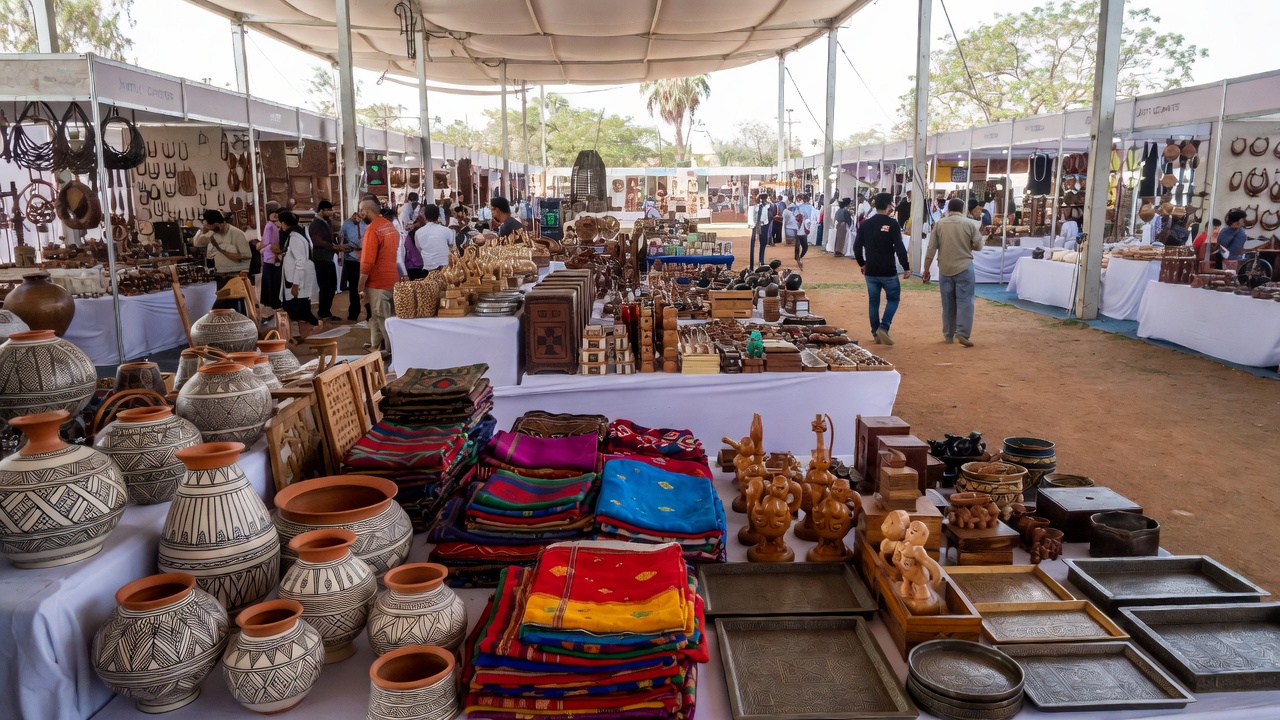
The heart of Taj Mahotsav beats in its craft pavilions. Here, spread across colorful stalls and workshops, the accumulated wisdom of generations comes alive through nimble fingers and practiced eyes.
What makes shopping at Taj Mahotsav fundamentally different from purchasing handicrafts elsewhere in India? Authenticity without intermediaries. The person selling you that marble tabletop is the same person who spent three months carving it. The woman explaining the intricacies of Chikan stitches is the same craftsperson who executed them by lamplight in her Lucknow workshop.
This direct connection serves dual purposes. For visitors, it guarantees provenance and fair pricing—typically 30-50% lower than retail markets. For artisans, it eliminates the exploitative middlemen system that has historically suppressed their earnings.
The crafts represented at Taj Mahotsav span India’s entire geographical and cultural spectrum:
Northern Region Crafts:
- Marble inlay work (Agra)
- Chikankari embroidery (Lucknow)
- Zardozi metallic embroidery (Lucknow)
- Brass ware (Moradabad)
- Wooden toys (Varanasi)
- Silk and Zari textiles (Varanasi)
Southern Region Crafts:
- Wood and stone carvings (Tamil Nadu)
- Bronze casting (Thanjavur)
- Bidriware metal craft (Karnataka)
- Kalamkari paintings (Andhra Pradesh)
Eastern Region Crafts:
- Kantha embroidery (West Bengal)
- Pattachitra paintings (Odisha)
- Bamboo and cane work (Northeast states)
- Terracotta pottery (West Bengal)
Western Region Crafts:
- Blue pottery (Jaipur)
- Bandhani tie-dye (Gujarat)
- Block printing (Rajasthan)
- Lacquer ware (Rajasthan)
Himalayan Region Crafts:
- Papier-mâché (Kashmir)
- Pashmina shawls (Kashmir)
- Carpets and rugs (Kashmir)
- Thangka paintings (Ladakh/Tibet border regions)
Pietra Dura Marble Inlay Work: Agra’s Signature Craft
If the Taj Mahal could speak, it would tell you about the art of Pietra Dura—the exquisite stone inlay technique that adorns its walls. At Taj Mahotsav, you meet the living descendants of those very craftsmen.
Pietra Dura, meaning “hard stone” in Italian, is known locally as Parchin Kari or Pacchikari. The technique involves embedding precisely cut pieces of semi-precious stones into cavities carved into white Makrana marble. The result? Seamless floral patterns that appear painted rather than assembled from dozens of separate stone fragments.
The Remarkable History of Agra Marble Inlay
The origins of this craft remain beautifully contested. Some scholars trace it to 16th-century Florence, where the Medici workshops perfected similar techniques. Others argue for indigenous Indian development. The truth likely lies somewhere in between—a creative fusion that occurred under Mughal patronage.
What is certain is that Emperor Shah Jahan elevated the craft to unprecedented heights. When constructing the Taj Mahal (1632-1653), he employed master craftsmen to execute the intricate floral designs using stones sourced from across the known world:
| Stone | Color | Origin |
|---|---|---|
| Lapis Lazuli | Deep Blue | Afghanistan |
| Jade | Green | Central Asia |
| Turquoise | Sky Blue | Persia/Tibet |
| Carnelian | Orange-Red | Arabia |
| Jasper | Various | India |
| Malachite | Green | Russia |
| Mother of Pearl | Iridescent White | Persian Gulf |
| Onyx | Black | Yemen |
The craftsmen who created these masterpieces settled in Agra, and their descendants—now spanning 15 to 17 generations—continue the tradition in workshops clustered around Taj Ganj, Nai Ki Mandi, and Gokulpura.
What to Buy: Marble Inlay Products at Taj Mahotsav
At the festival, you’ll find Pietra Dura work ranging from modest souvenirs to museum-quality furniture pieces:
Entry-Level Items (₹500 – ₹2,000):
- Coasters and trivets
- Small decorative plates
- Paperweights
- Pendant jewelry
Mid-Range Products (₹2,000 – ₹15,000):
- Jewelry boxes
- Photo frames
- Vases
- Small tabletops
Premium Pieces (₹15,000 – ₹5,00,000+):
- Dining table tops
- Coffee tables
- Floor panels
- Architectural elements
What to look for when buying: Examine the joins between stones carefully. In authentic Pietra Dura, the transition should be invisible to the naked eye. Run your finger across the surface—it should feel completely smooth, with no ridge where one stone meets another. The best pieces use natural stones, not dyed alternatives, so colors should exhibit subtle variations rather than uniform synthetic brightness.
Lucknow Chikankari Embroidery: The Art of Shadow Work
If Agra’s gift to the world is carved in stone, Lucknow’s contribution is stitched in thread. Chikankari, often called “shadow work” for the delicate translucent effect it creates on fabric, represents one of humanity’s most refined embroidery traditions.
Origins and Cultural Significance of Chikankari
The word “Chikan” derives from the Persian chikin or chakin, meaning “cloth wrought with needlework.” Legend attributes its introduction to Empress Nur Jahan, wife of Mughal Emperor Jahangir, who was said to be captivated by Persian embroidery traditions.
Another folk tale speaks of a traveling craftsman who taught the technique to a poor farmer near Lucknow as payment for his hospitality. Whatever the origins, Chikankari flourished under Nawabi patronage in the 18th and 19th centuries, becoming synonymous with Lucknow’s refined cultural identity.
In December 2008, the Geographical Indication Registry granted Chikankari GI protection, formally recognizing Lucknow as the exclusive hub of this craft. Today, over 5,000 families in villages surrounding Lucknow depend on Chikankari for their livelihood.
Understanding Chikankari Stitches and Techniques
What sets genuine Lucknowi Chikankari apart is its use of 32 distinct stitches, each serving a specific design purpose. Here are the most significant:
| Stitch Name | Technique | Appearance |
|---|---|---|
| Taipchi | Running/darning stitch | Foundation lines |
| Murri | Rice-shaped French knots | Raised floral centers |
| Phanda | Millet-shaped knots | Smaller raised details |
| Bakhiya | Shadow work stitch | Translucent effect |
| Jali | Net-like mesh stitching | Lace-like patterns |
| Keel Kangan | Buttonhole variant | Border designs |
| Hool | Eyelet stitch | Delicate perforations |
| Zanjeera | Chain stitch | Continuous outlines |
The most prized—and increasingly rare—technique is Murri work. These tiny, rice-shaped knots require extraordinary precision and are becoming scarce as fewer young artisans master the demanding skill.
Shopping for Authentic Chikankari at Taj Mahotsav
Lucknow’s artisans travel to Shilpgram with their finest creations. Expect to find:
- Kurtas and Kurtis – The classic Chikankari garment
- Sarees – Often on fine muslin, cotton, or georgette
- Dupattas – Elegant scarves for layering
- Dress Materials – Unstitched fabric lengths
- Home Furnishings – Tablecloths, napkins, cushion covers
Pro tip: White-on-white (the traditional safed style) Chikankari offers the purest expression of the craft. While colored and embellished versions have their appeal, they sometimes mask inferior stitching quality. Hold the fabric up to light—genuine shadow work (bakhiya) should create a beautiful translucent effect where the design appears to float within the fabric.
Banarasi Silk Sarees and Textiles from Varanasi
No exploration of Indian crafts is complete without encountering the Banarasi silk saree—the textile equivalent of the Taj Mahal itself. At Taj Mahotsav, weavers from Varanasi bring these magnificent creations directly to buyers.
The Heritage of Varanasi Silk Weaving
Varanasi, also called Banaras, has been a silk weaving center for over 2,000 years. The industry received transformative influence from Persian weavers who migrated to the region between the 15th and 17th centuries, introducing new techniques that merged with existing Indian traditions.
Today, approximately 1.2 million people in and around Varanasi—spanning the districts of Gorakhpur, Chandauli, Bhadohi, Jaunpur, and Azamgarh—depend directly or indirectly on handloom silk production.
In 2009, weaver associations secured Geographical Indication (GI) rights for “Banaras Brocades and Sarees,” protecting the authenticity of products from the region. Under this designation, no silk labeled “Banarasi” can originate from outside the six designated Uttar Pradesh districts.
Types of Banarasi Sarees You’ll Find at Taj Mahotsav
| Variety | Characteristics | Best For |
|---|---|---|
| Katan Silk | Pure silk, twisted threads, heavy | Weddings, major ceremonies |
| Organza (Kora) | Lightweight, transparent | Summer occasions |
| Georgette | Fluid drape, contemporary feel | Festive gatherings |
| Tissue | Metallic sheen, luxurious | Evening events |
| Tanchoi | Woven patterns, satin finish | Formal occasions |
| Cutwork | Openwork designs | Light celebrations |
| Jangla | Dense brocade patterns | Grand occasions |
| Butidar | Scattered small motifs | Daily elegant wear |
The defining features of authentic Banarasi textiles include:
- Zari work – Gold or silver metallic thread woven into patterns
- Kalga and Bel – Traditional border motifs of upright leaves
- Jhallar – Distinctive fringe-like leaf patterns at border edges
- Mina work – Colorful additional embellishments in the weave
A genuine handwoven Banarasi saree requires between 15 days to 6 months to complete, depending on design complexity. The most intricate pieces involve multiple weavers working in coordination.
Investment Considerations for Banarasi Textiles
Banarasi sarees at Taj Mahotsav typically range from ₹8,000 for simple designs to ₹2,00,000+ for elaborate bridal pieces with heavy zari work. The festival offers significant advantages over retail shopping:
- Direct artisan pricing – No retail markup
- Customization options – Many weavers accept special orders
- Verification opportunity – See the weaver’s hands, know the source
- Supporting families – Your purchase directly benefits weaving households
Kashmir Papier-Mâché: Ancient Persian Art in Indian Hands
The journey from the mountains of Kashmir to the plains of Agra might span a thousand kilometers, but at Taj Mahotsav, these worlds converge through the art of Kashmiri Papier-Mâché.
How Persian Craft Traditions Reached Kashmir
The story begins in the 14th century when the Sufi saint Mir Sayyid Ali Hamadani traveled to Kashmir from Persia. He brought with him not only spiritual teachings but also a retinue of skilled craftsmen. Among the techniques they introduced was Kar-i-Qalamdani—the art of making pen cases from molded paper pulp.
The name itself tells the history: qalamdan means pen case in Persian, reflecting the craft’s original function. Over subsequent centuries, Kashmiri artisans expanded the repertoire to include boxes, trays, bowls, lamp bases, and elaborate decorative panels.
In 2012, Kashmir Papier-Mâché received GI protection from the Government of India, formally recognizing its cultural significance and geographical authenticity.
The Two-Stage Creation Process
Authentic Kashmiri papier-mâché involves two distinct specializations, often performed by different artisan families:
Stage 1: Sakhtsazi (Form Making) The sakhtsaz craftsman creates the base object:
- Scrap paper is soaked for 4-5 weeks until it disintegrates
- The pulp is mixed with rice water, natural adhesives, and sometimes straw
- The mixture is molded onto wooden or brass forms
- Multiple layers of muslin and tissue strengthen the structure
- The dried form is smoothed with chalk-glue paste
- Finally, polishing with brick fragments creates a smooth surface
Stage 2: Naqashi (Painting) The naqash artist transforms the plain form into art:
- A base coat is applied
- Designs are sketched directly onto the surface
- Traditional pigments derived from minerals, vegetables, and organic sources create the colors
- Fine brushes made from goat, cat, or donkey hair execute intricate details
- Multiple layers of lacquer protect and enhance the finished piece
Signature Motifs of Kashmiri Papier-Mâché
The patterns adorning these objects tell stories of Kashmir’s landscape and cultural influences:
| Motif | Description | Symbolism |
|---|---|---|
| Chinar Leaves | Five-pointed maple-like leaves | Kashmir’s iconic autumn |
| Hazara | “Thousand flowers” pattern | Paradise gardens |
| Gul-andar-Gul | Flower within flower | Infinite beauty |
| Kingfisher | Blue Kola Tonch bird | Kashmir’s waterways |
| Peacocks | Royal bird in full display | Mughal heritage |
| Arabesque | Interlacing geometric curves | Islamic artistic tradition |
| Calligraphy | Quranic verses | Spiritual devotion |
At Taj Mahotsav, Kashmiri artisans offer everything from small trinket boxes (₹300-500) to elaborate room screens (₹50,000+). The quality differences are visible in the fineness of brushwork and the depth of lacquer finish.
Rajasthan Blue Pottery: The Desert’s Gift to Indian Craft
While not from Uttar Pradesh, the artisans of Jaipur contribute one of India’s most distinctive crafts to Taj Mahotsav: the ethereal Blue Pottery tradition.
Origins of Jaipur Blue Pottery
Blue pottery’s journey to India mirrors the Mughal expansion itself. The technique originated in Persia and reached Indian shores through Afghanistan and Central Asia. In Rajasthan, it found particularly fertile ground under the patronage of the Kachhwaha rulers of Jaipur.
What makes Blue Pottery unique is its composition. Unlike conventional ceramic pottery, Blue Pottery contains no clay. Instead, it’s made from:
- Quartz stone powder
- Ground glass (known as powdered katira)
- Multani mitti (Fuller’s earth)
- Borax
- Gum
This unusual mixture gives finished pieces a distinctive translucent quality and remarkably low thermal conductivity—Blue Pottery cups keep beverages hot (or cold) longer than standard ceramics.
The Color Palette and Design Vocabulary
The signature blue that gives the craft its name derives from cobalt oxide. Traditional pieces use this striking hue against white backgrounds, though contemporary adaptations have introduced expanded palettes including turquoise, green, yellow, and brown.
Common motifs include:
- Floral patterns – Roses, lotuses, and stylized flowers
- Peacocks – Rajasthan’s state bird
- Geometric designs – Islamic-influenced patterns
- Leaf and vine patterns – Naturalistic borders
What to Buy: Blue Pottery Product Range
| Product Category | Price Range | Best Uses |
|---|---|---|
| Door knobs | ₹100 – ₹500 | Home décor updates |
| Coasters | ₹200 – ₹800 | Daily use and gifts |
| Soap dishes | ₹300 – ₹600 | Bathroom accessories |
| Tea sets | ₹1,500 – ₹5,000 | Display and entertaining |
| Vases | ₹500 – ₹3,000 | Decorative centerpieces |
| Wall plates | ₹800 – ₹2,500 | Wall art |
| Tiles | ₹200 – ₹1,000 each | Kitchen and bathroom renovation |
Buyer’s tip: The signature test for quality Blue Pottery is the sound test. Gently tap the piece—authentic Blue Pottery produces a distinctive ring, almost bell-like, rather than a dull thud. Also examine the blue color; genuine cobalt oxide creates depth in the hue, while synthetic substitutes often appear flat.
Northeast India Bamboo and Cane Crafts: Sustainable Artistry
Perhaps the most ecologically significant crafts at Taj Mahotsav come from India’s northeastern states—Assam, Manipur, Mizoram, Nagaland, Meghalaya, Tripura, and Arunachal Pradesh. Here, bamboo isn’t merely a material; it’s the cornerstone of entire cultures.
The Bamboo Tradition of Northeast India
The hills and valleys of northeastern India host the world’s densest bamboo forests. For millennia, indigenous communities have developed sophisticated techniques for transforming this remarkable grass into everything from houses to musical instruments, from cooking vessels to elaborate jewelry.
Each state brings distinctive styles:
Assam: Famous for jaapi (traditional bamboo hats), bhortal (ceremonial equipment), and the cylindrical jenga containers used in the preparation of Assamese cuisine.
Manipur: Known for elegant kauna reed products, basket weaving with geometric patterns, and utilitarian items like fish traps and grain storage units.
Nagaland: Produces striking bamboo and cane items decorated with tribal motifs, including warrior baskets, spear holders, and ceremonial items.
Mizoram: Specializes in finely woven cane furniture, intricate pattern work, and the distinctive puandum carrying baskets.
Products Available at Taj Mahotsav
The northeastern artisans at Shilpgram offer:
- Furniture – Chairs, tables, shelving units
- Home décor – Lampshades, room dividers, wall hangings
- Baskets – Storage, laundry, decorative varieties
- Fashion items – Bags, jewelry, hair accessories
- Kitchen items – Steamers, trays, plate stands
- Musical instruments – Flutes, percussion instruments
These products represent sustainable design at its finest—biodegradable materials, traditional low-impact production methods, and support for marginalized communities.
Live Artisan Demonstrations and Craft Workshops
One of Taj Mahotsav’s most compelling features is the opportunity to witness creation in real-time. Throughout the festival grounds, artisans perform their work openly, transforming raw materials into finished art before your eyes.
Daily Demonstration Schedule
While specific times vary by stall, visitors can generally expect to observe:
Morning (10 AM – 12 PM):
- Marble cutting and stone shaping
- Loom setup and weaving beginnings
- Pottery wheel throwing
- Block carving for textile printing
Afternoon (2 PM – 5 PM):
- Detailed inlay stone placement
- Embroidery stitching sessions
- Papier-mâché painting
- Metalwork hammering
Evening (6 PM – 8 PM):
- Finishing and polishing demonstrations
- Textile border completion
- Interactive Q&A sessions with master artisans
Participating in Hands-On Workshops
Several craft pavilions offer visitor participation opportunities:
| Workshop Type | Duration | Approximate Cost | What You Create |
|---|---|---|---|
| Basic block printing | 45 minutes | ₹200-500 | Printed fabric square |
| Clay pot painting | 30 minutes | ₹150-300 | Decorated small pot |
| Simple weaving | 1 hour | ₹300-500 | Woven bookmark or coaster |
| Stone polishing | 30 minutes | ₹200-400 | Finished marble piece |
| Chikankari basics | 1.5 hours | ₹400-800 | Small embroidered piece |
These workshops are particularly valuable for children, offering tactile engagement with cultural traditions in ways that passive observation cannot match.
Folk Performances and Cultural Shows at Taj Mahotsav
As the sun sets behind the distant dome of the Taj Mahal, a different kind of magic unfolds at Shilpgram. The Cultural Arena comes alive with performances that have been passed down through countless generations.
Regional Dance Forms Featured at the Festival
Taj Mahotsav serves as a living museum of India’s dance heritage:
Brij Region Dances (Local):
- Ras Leela – Dramatization of Krishna’s divine plays
- Charkula – Women balancing brass pots while dancing
- Nautanki – Traditional folk theater form
Rajasthani Performances:
- Ghoomar – Graceful spinning dance
- Kalbeliya – Snake charmer community’s undulating movements
- Bhavai – Balancing acts with multiple pots
South Indian Traditions:
- Bharatanatyam – Classical Tamil Nadu dance
- Kuchipudi – Andhra Pradesh’s storytelling dance
- Theyyam excerpts – Kerala’s ritual art form
Eastern Expressions:
- Bihu – Assam’s harvest celebration dance
- Chhau – Masked martial dance from Odisha
- Rabindra Nritya – Bengali literary dance form
Musical Performances Across Genres
The evening air at Taj Mahotsav carries melodies from across the subcontinent:
- Qawwali – Sufi devotional music with deep Agra connections
- Classical recitals – Sitar, sarod, tabla performances
- Folk songs – Regional ballads and seasonal music
- Bhajans and Kirtans – Morning devotional sessions
- Contemporary fusion – Modern interpretations of traditional forms
Each evening typically features multiple performance slots, allowing visitors to experience contrasting styles within a single visit.
Best Food Stalls and Culinary Experiences at Taj Mahotsav
A festival without food is merely an exhibition. Taj Mahotsav embraces the Indian philosophy that nourishment of the palate is inseparable from nourishment of the soul.
Regional Cuisines Represented
The Culinary Street at Shilpgram transforms into a map of India’s food geography:
| Region | Must-Try Dishes | Specialty Highlights |
|---|---|---|
| Agra (Local) | Petha, dalmoth, bedai | Traditional sweets and snacks |
| Lucknow | Galouti kebabs, tunday kababi | Awadhi royal cuisine |
| Rajasthan | Dal-baati-churma, ghevar | Desert state specialties |
| Hyderabad | Biryani, double ka meetha | Nizami culinary traditions |
| Punjab | Amritsari kulcha, lassi | North Indian comfort food |
| Bengal | Rosogolla, mishti doi | Eastern sweets |
| South India | Dosas, filter coffee | Temple and home cooking |
| Gujarat | Dhokla, thepla | Vegetarian excellence |
Agra’s Famous Petha: A Sweet You Must Try
No visit to Agra—whether for the Taj or for Mahotsav—is complete without sampling Petha, the city’s signature sweet. Made from ash gourd (winter melon), this translucent confection comes in varieties including:
- Angoori Petha – Grape-shaped, most traditional
- Paan Petha – Betel leaf flavored
- Kesar Petha – Saffron-infused
- Chocolate Petha – Modern adaptation
At the festival, local halwais (sweet makers) prepare fresh batches, allowing visitors to taste petha at its absolute best—still warm, perfectly sweetened, and impossibly soft.
Mughlai Cuisine and Its Agra Heritage
The Mughal emperors were legendary gastronomes, and Agra served as an imperial capital for generations. Festival stalls offer dishes with direct lineage to royal kitchens:
- Subz Biryani – Vegetable rice prepared in the dum style
- Korma – Creamy curries using traditional grinding techniques
- Naan and Roti varieties – Bread baked in traditional tandoors
- Sewaiyan – Vermicelli pudding, a Mughal court favorite
Complete Shopping Guide for Taj Mahotsav 2026
Navigating the abundance of craft stalls requires strategy. Here’s a comprehensive approach to maximize your Taj Mahotsav shopping experience.
Budgeting for Different Craft Categories
| Budget Level | Amount (INR) | What You Can Buy |
|---|---|---|
| Souvenir | ₹500 – ₹2,000 | Small marble items, simple textiles |
| Moderate | ₹2,000 – ₹10,000 | Quality embroidered pieces, pottery sets |
| Premium | ₹10,000 – ₹50,000 | Banarasi sarees, marble tabletops, carpets |
| Collector | ₹50,000+ | Museum-quality pieces, furniture, commissioned work |
Smart Shopping Strategies
Day One: Survey and Compare Walk the entire venue first. Note which stalls interest you, observe quality variations, and gather price points. Resist impulse purchases.
Day Two: Deep Dive and Negotiate Return to your selected stalls. Engage artisans in conversation about their work. Serious interest often unlocks better prices and sometimes commissions for custom pieces.
Negotiation Etiquette:
- Bargaining is expected but should be respectful
- Start at 60-70% of quoted price for handmade items
- Never negotiate if you don’t intend to buy at the agreed price
- Fixed prices are sometimes indicated—respect these
- Larger purchases often include complimentary smaller items
Authenticity Verification Tips
Distinguishing genuine crafts from imitations requires attention:
For Marble Inlay:
- Seamless stone-to-stone transitions
- Natural color variations within stones
- Weight—real marble is heavy
- Temperature—real marble feels cool to touch
For Textiles:
- Examine reverse side—machine work looks identical both sides
- Pull a thread—real silk has distinctive feel and smell when burned
- Check irregularities—handloom produces subtle variations
For Papier-Mâché:
- Surface smoothness without plastic feel
- Lacquer depth—multiple layers show rich finish
- Weight—traditional pieces feel surprisingly light
For Blue Pottery:
- Ring test when tapped
- Color depth in blues
- Slight texture variation on surface
Shipping and Export Considerations
For larger purchases, most established artisans offer shipping services. Key considerations:
- Get receipts with full description and artisan details
- Ask about export documentation for valuable pieces
- Consider insurance for items over ₹25,000
- Retain seller contact information for any post-purchase issues
The festival management also operates an official shipping counter to assist international visitors.
Best Time to Visit Taj Mahotsav for Photography
For visual storytellers, Taj Mahotsav offers extraordinary opportunities. The convergence of colorful crafts, traditional costumes, and magnificent backdrop creates countless frame-worthy moments.
Optimal Photography Conditions
| Time | Light Quality | Best Subjects |
|---|---|---|
| 10 AM – 11 AM | Soft morning light | Craft demonstrations, portraits |
| 11 AM – 2 PM | Harsh overhead | Avoid outdoor shoots |
| 2 PM – 4 PM | Improving angles | Architectural details, textiles |
| 4 PM – 6 PM | Golden hour begins | Performance preparations, crowd scenes |
| 6 PM – 7 PM | Magic hour | Taj Mahal silhouette shots, lit stalls |
| 7 PM – 10 PM | Artificial lighting | Performance documentation, night market atmosphere |
Photography Ethics and Best Practices
- Always ask permission before photographing artisans at work
- Respect “no photography” signs at certain stalls
- Consider purchases when extensively photographing someone’s work
- Be mindful of crowds during peak performance times
- Avoid flash during cultural performances unless permitted
Many artisans appreciate receiving copies of photographs featuring their work—carry a few extra business cards or offer to email images.
How to Reach Taj Mahotsav 2026: Transportation Guide
Agra’s position in the “Golden Triangle” of Indian tourism (Delhi-Agra-Jaipur) makes it highly accessible by multiple transport modes.
From Delhi to Agra
| Transport Mode | Duration | Approximate Cost | Best For |
|---|---|---|---|
| Gatimaan Express | 1 hr 40 min | ₹990 (Executive) | Speed, comfort |
| Shatabdi Express | 2 hours | ₹555-990 | Value, reliability |
| Yamuna Expressway (car) | 3-3.5 hours | ₹3,500-4,500 | Flexibility, groups |
| Flight | 40 min | ₹3,500+ | Time-sensitive travelers |
| Bus (Luxury AC) | 4-5 hours | ₹600-1,200 | Budget-conscious |
From Jaipur to Agra
| Transport Mode | Duration | Approximate Cost |
|---|---|---|
| Train | 4-5 hours | ₹250-850 |
| NH-48 Drive | 4-4.5 hours | ₹4,000-6,000 |
| Bus | 5-6 hours | ₹400-900 |
From Agra City to Shilpgram
Once in Agra, reaching the festival venue is straightforward:
- Auto-rickshaw from main city: ₹100-200
- Cycle rickshaw from Taj Ganj: ₹50-80
- Walk from Taj Mahal Eastern Gate: 5-7 minutes
- Hotel shuttle services: Often complimentary for festival visitors
Accommodation Options Near Taj Mahotsav Venue
Agra offers accommodations across every budget category. During Taj Mahotsav, advance booking is strongly recommended as the city experiences significant visitor increases.
Luxury Hotels Near Taj Mahal
| Hotel | Distance to Shilpgram | Features |
|---|---|---|
| The Oberoi Amarvilas | 1.5 km | Taj view rooms, world-class service |
| ITC Mughal | 2 km | Mughal-themed grounds, luxury spa |
| Jaypee Palace | 5 km | Convention facilities, large pools |
| Courtyard by Marriott | 4 km | Modern amenities, business facilities |
Mid-Range and Budget Options
| Category | Examples | Price Range (per night) |
|---|---|---|
| Mid-range | Hotel Amar, Crystal Sarovar | ₹3,000 – ₹6,000 |
| Budget | Hotel Sidhartha, Tourist Rest House | ₹1,500 – ₹3,000 |
| Backpacker | Joey’s Hostel, Hotel Kamal | ₹500 – ₹1,500 |
Homestay and Heritage Options
For culturally immersive stays, consider Agra’s growing homestay sector:
- Taj Haveli – Traditional Mughal-era home conversion
- Various Airbnb listings – Local family homes near Taj Ganj
- Heritage havelis – Restored merchant houses
Combining Taj Mahotsav with Agra Heritage Tourism
The festival’s timing in February coincides with Agra’s most pleasant weather—ideal for exploring the city’s UNESCO World Heritage sites.
Suggested Multi-Day Itinerary
Day 1: Arrival and Festival Exploration
- Morning: Arrive Agra, hotel check-in
- Afternoon: First Taj Mahotsav visit (craft survey)
- Evening: Festival cultural performances
Day 2: Heritage and Crafts
- Sunrise: Taj Mahal visit (less crowded, magical light)
- Late morning: Agra Fort exploration
- Afternoon: Return to Taj Mahotsav for shopping
- Evening: Mehtab Bagh sunset (Taj view from across Yamuna)
Day 3: Deep Craft Exploration
- Morning: Fatehpur Sikri excursion (40 km)
- Afternoon: Final Taj Mahotsav visit
- Evening: Kinari Bazaar and Sadar Bazaar shopping
Other Monuments Worth Visiting
| Site | Distance from Shilpgram | Entry Fee (Foreign Tourists) |
|---|---|---|
| Taj Mahal | 500 meters | ₹1,100 |
| Agra Fort | 5 km | ₹650 |
| Itmad-ud-Daulah (Baby Taj) | 4 km | ₹210 |
| Mehtab Bagh | 3 km | ₹300 |
| Fatehpur Sikri | 40 km | ₹610 |
| Akbar’s Tomb, Sikandra | 10 km | ₹310 |
Tips for International Tourists Visiting Taj Mahotsav
Visitors from abroad will find Taj Mahotsav remarkably accessible, though some preparation enhances the experience significantly.
Practical Considerations
Currency:
- Indian Rupee (INR) is required for most transactions
- ATMs available in Agra city center
- Some premium stalls accept cards; most prefer cash
- Recommended cash to carry: ₹10,000-20,000 for shopping
Language:
- Hindi predominates; English widely understood
- Multilingual signage at festival
- Artisans often have basic English for transactions
- Consider translation app for complex discussions
Weather in February:
- Day temperatures: 20-25°C (68-77°F)
- Night temperatures: 8-12°C (46-54°F)
- Dress in layers
- Comfortable walking shoes essential
Cultural Etiquette Guidelines
Respectful Interaction:
- Remove shoes before entering any temple or dargah spaces
- Ask permission before photographing people
- Avoid pointing feet at people or sacred items
- Accept offered hospitality (tea, snacks) graciously
Dress Recommendations:
- Modest clothing recommended for both genders
- Shoulders and knees covered, particularly for women
- Comfortable footwear suitable for walking and removal
Bargaining Culture:
- Expected in most settings
- Keep negotiations friendly
- Walking away is acceptable if price isn’t agreeable
- Don’t bargain if you won’t buy at agreed price
Supporting Artisan Communities: The Ethical Shopping Perspective
Your purchase at Taj Mahotsav carries significance beyond the transaction. Understanding the ecosystem helps appreciate the impact.
The Economic Reality of Indian Artisans
Traditional craft sectors face substantial challenges:
- Competition from machine-made products
- Migration of younger generations to other occupations
- Middlemen systems that capture majority of profits
- Raw material cost increases
- Limited market access
Taj Mahotsav directly addresses several of these issues by providing:
- Zero-middlemen sales – Direct artisan-to-buyer transactions
- National platform – Exposure beyond local markets
- Recognition – Awards and honors for exceptional work
- Networking – Connections with designers and exporters
How Your Purchase Makes a Difference
When you buy a ₹5,000 Chikankari kurta at Taj Mahotsav versus a market in Delhi:
| Scenario | Amount Reaching Artisan |
|---|---|
| Taj Mahotsav direct purchase | ₹4,000-4,500 (80-90%) |
| Urban retail store | ₹1,500-2,000 (30-40%) |
| Export house | ₹1,000-1,500 (20-30%) |
The difference sustains families, preserves traditions, and ensures that children see viable futures in ancestral crafts.
Beyond Shopping: Other Ways to Support
- Share artisan stories on social media
- Provide testimonials for craftspeople who request them
- Connect artisans with potential bulk buyers if you have contacts
- Commission custom work for significant occasions
- Return to the same craftspeople in future visits
Frequently Asked Questions About Taj Mahotsav 2026
Q: Is Taj Mahotsav suitable for children? A: Absolutely. The festival features dedicated children’s zones with rides, puppet shows, folk games, and interactive craft activities. The culinary variety ensures even picky eaters find appealing options.
Q: Can I visit both Taj Mahal and Taj Mahotsav in one day? A: Yes, and this combination is highly recommended. The Shilpgram venue is just 500 meters from the Taj Mahal’s Eastern Gate. A sunrise Taj visit followed by afternoon festival exploration makes an ideal itinerary.
Q: Are credit cards accepted at craft stalls? A: Some larger and premium stalls accept cards, but cash remains king at most artisan stalls. ATMs are available in Agra city, but carrying sufficient cash is advisable.
Q: What’s the best day of the week to visit during the festival? A: Weekdays (Monday-Thursday) are significantly less crowded than weekends. Opening day and closing day see maximum footfall for inaugural and closing ceremonies.
Q: Is the festival wheelchair accessible? A: The main pathways are accessible, though some craft pavilions have stepped entrances. Festival management provides assistance upon request at entry gates.
Q: Can I bargain at the stalls? A: Negotiation is expected and accepted at most stalls. Begin respectfully and maintain friendly engagement. Fixed-price stalls (often government emporia) will indicate if bargaining isn’t applicable.
Q: Are there guided tours available? A: Official guides can be engaged at entry gates. Private tour operators also offer packages that include festival visits with expert commentary on crafts.
Q: What time do evening performances start? A: Major cultural programs typically begin around 6 PM and continue until 9:30 PM. Smaller folk performances occur throughout the day on secondary stages.
Planning Your Taj Mahotsav 2026 Experience: Final Thoughts
Standing amid the colorful chaos of Taj Mahotsav, watching a marble craftsman whose great-great-great-grandfather worked on the Taj Mahal itself, one realizes that “living heritage” isn’t merely a phrase. It’s a responsibility. Every chisel strike, every thread pulled through fabric, every motif painted on papier-mâché carries forward something irreplaceable.
The genius of Taj Mahotsav lies in making this continuity tangible. You don’t simply observe tradition—you participate in its survival. The marble box you purchase becomes part of a story stretching back to Shah Jahan’s vision. The Chikankari scarf your mother wears connects her to Nur Jahan’s court. The Banarasi silk draped at your daughter’s wedding links generations across centuries.
February 18 to 27, 2026. Ten days when the shadow of the world’s most beautiful building falls across India’s most beautiful traditions. Ten days when commerce and culture dance together in service of something larger than either.
Come for the crafts. Stay for the connections. Leave with treasures that transcend their price tags.
See you at Shilpgram.
Quick Reference Card: Taj Mahotsav 2026
| Essential Information | Details |
|---|---|
| Dates | February 18-27, 2026 |
| Timings | 10:00 AM – 10:00 PM |
| Venue | Shilpgram, Eastern Gate Road, Agra |
| Entry Fee | ₹50 adults, ₹10 children (5-12) |
| Official Website | tajmahotsav.org |
| Nearest Railway | Agra Cantonment (9 km) |
| Nearest Airport | Kheria/Agra Airport (11 km) |
| Best Metro Connection | Delhi (200 km via Gatimaan Express) |
| Recommended Duration | 2-3 full days |
| Shopping Budget | ₹5,000 – ₹50,000+ |