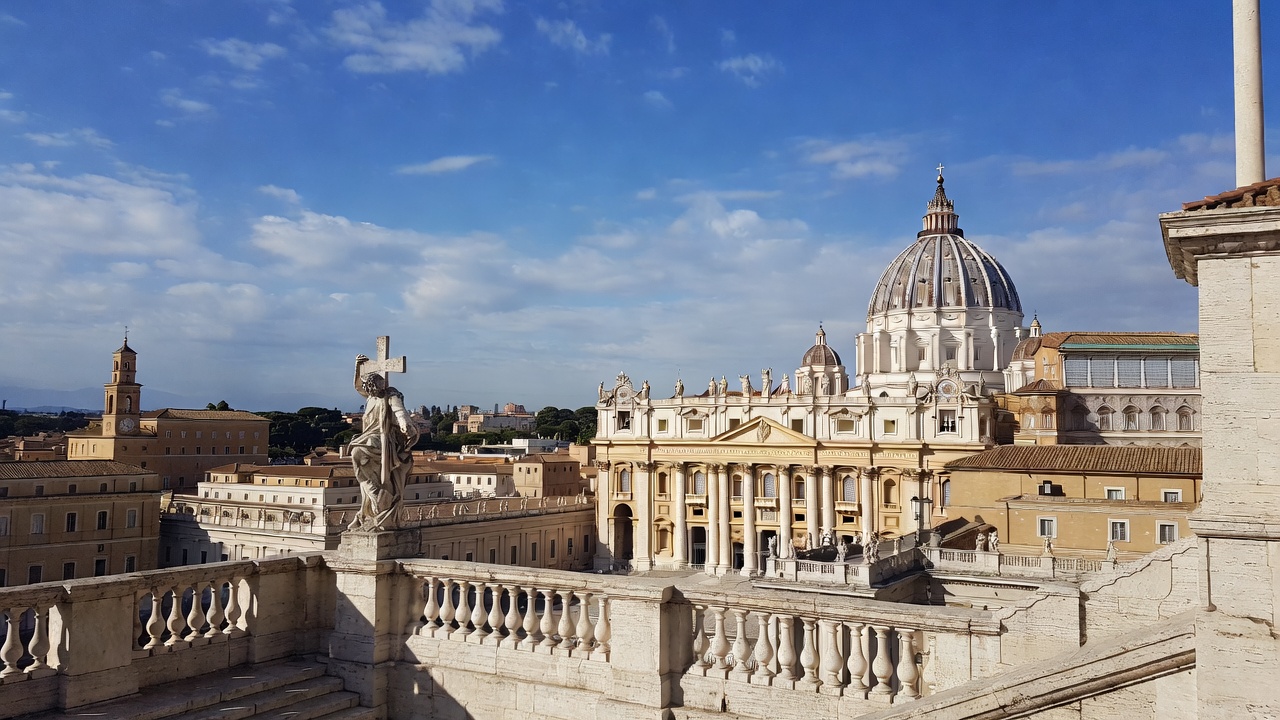
Rome is a city where every stone tells a story. But some stories shaped the entire world order. The Lateran Pacts of 1929 are one of those stories. Signed on February 11 in the grand halls of the Lateran Palace, these agreements ended nearly sixty years of bitter conflict between the Catholic Church and the Italian state. They created Vatican City — the smallest sovereign nation on Earth. They redefined the relationship between spiritual authority and political power in modern Europe.
For travelers who crave more than selfies at the Colosseum, the Lateran Pacts offer an extraordinary lens through which to explore Rome. This is not just a story locked away in dusty archives. It is a story written across the streets, squares, and basilicas of the Eternal City. From the room where the pacts were signed to the grand boulevard built to celebrate them, the physical legacy of this historic agreement is still very much alive — and in 2026, more accessible than ever.
This guide takes you on a deep cultural journey through the sites, history, and living traditions connected to the Lateran Pacts. Whether you are a history enthusiast, a pilgrim, or simply a curious traveler, you will find something here worth the trip.
What Are the Lateran Pacts? A Complete History for Cultural Travelers
Before you walk the sites, you need to understand the story. The Lateran Pacts were not a single document. They were three separate agreements signed on February 11, 1929, between the Kingdom of Italy and the Holy See. Each addressed a different piece of a puzzle that had tormented Italian politics for decades.
The Roman Question: Why the Pacts Were Needed
The trouble began in 1870. That year, troops of the newly unified Kingdom of Italy marched into Rome and seized the last remnants of the Papal States — the territories across central Italy that the Pope had governed as a temporal ruler for over a thousand years. Pope Pius IX lost everything. He retreated behind the Vatican walls and declared himself a “prisoner of the Vatican.”
For the next 59 years, every Pope refused to leave the Vatican grounds. They refused to recognize the legitimacy of the Italian state. The Italian government, for its part, offered financial compensation through the Law of Guarantees of 1871 — an annual payment of 3.25 million lire and use of the Vatican and Lateran Palaces. The Holy See never accepted.
This standoff became known as the “Roman Question.” It was more than a legal dispute. It affected international diplomacy, domestic politics, and the daily lives of millions of Italian Catholics caught between loyalty to their country and loyalty to their faith.
The Three Parts of the Lateran Pacts Explained
The resolution came in 1929 through negotiations between Pope Pius XI (represented by Cardinal Secretary of State Pietro Gasparri) and Prime Minister Benito Mussolini. The agreements they produced had three distinct components:
| Component | Articles | Key Provisions |
|---|---|---|
| Treaty of Conciliation | 27 articles | Created Vatican City as a sovereign state; recognized Holy See’s full independence |
| Financial Convention | 3 articles | Italy paid 750 million lire in cash plus 1 billion lire in government bonds as compensation for lost territories |
| Concordat | 45 articles | Defined the Catholic Church’s role in Italian society; made Catholicism the state religion; recognized Church marriages |
The agreements were signed in the Hall of the Pontiffs (also called the Hall of the Conciliation) inside the Lateran Palace. The Italian Parliament ratified them on June 7, 1929.
The 1984 Revision: How the Pacts Changed with the Times
The original Concordat remained in force for over five decades. But by the 1980s, Italy had changed dramatically. The country’s postwar democratic constitution, adopted in 1948, had established that all religious confessions are “equally free before the law” — a principle that sat uneasily alongside the Concordat’s declaration of Catholicism as the sole state religion.
In 1984, Italy and the Vatican signed a revised concordat — sometimes called the Villa Madama Agreement. The most important change: Catholicism was no longer the official state religion of Italy. Mandatory religious education in schools ended. The state’s exclusive financial support for the Church was replaced by a voluntary tax mechanism called the otto per mille — under which Italian taxpayers direct 0.8% of their income tax to the religious community of their choice or to state social programs.
The Treaty of Conciliation, however, was left untouched. Vatican City remains a sovereign state to this day.
How to Visit the Lateran Palace in Rome: A Hidden Gem of Church History
If you only visit one site connected to the Lateran Pacts, make it the Lateran Palace (Palazzo Lateranense). This is where the agreements were physically signed. But the palace’s history stretches back far beyond 1929.
A Palace Older Than the Vatican
The Lateran Palace was the primary residence of the Popes for over a thousand years — from the 4th century until 1309. That is not a typo. For most of Catholic history, the Pope did not live at the Vatican. He lived here, at the Lateran.
The site originally belonged to the powerful Laterani family in ancient Rome. Emperor Constantine the Great donated it to Pope Miltiades in the early 4th century. It hosted five ecumenical councils between the 12th and 16th centuries. Dante himself once described its splendor as beyond all human achievement.
Two devastating fires — in 1307 and 1361 — during the Avignon Papacy destroyed much of the medieval palace. When the Popes returned to Rome in 1377, they chose the Vatican instead. The current building dates from 1586–1589, designed by architect Domenico Fontana at the request of Pope Sixtus V.
What You Will See Inside the Lateran Palace
The palace tour covers ten rooms across nearly 3,000 square meters of the first floor. The spaces are richly frescoed by late Mannerist painters including Cesare Nebbia, Giovanni Battista Ricci, and Paul Brill. Here are the highlights:
- Hall of the Pontiffs (Sala della Conciliazione): This is the room where the Lateran Pacts were signed. Nineteen frescoed Popes sit beneath canopies along the upper register. The beautiful wooden ceiling dates to 1589.
- Hall of the Emperors: Named for the frescoes of fourteen emperors who defended and spread Christianity. Cruciferous coins discovered during the palace’s reconstruction inspired the room’s theme.
- Rooms of the Prophets: Four rooms dedicated to Samuel, David, Elijah, and Daniel.
- Sala degli Apostoli: Dedicated to the Coming of the Messiah.
- Private Papal Apartment: Four intimate rooms — a dining room, bedroom, library, and antechamber — plus a private chapel.
The tour ends at the entrance to the Basilica of St. John Lateran, where you can continue independently.
Practical Tips for Visiting the Lateran Palace in 2026
Location: Piazza di San Giovanni in Laterano, 00184 Roma
Access: Enter from Piazza di Porta San Giovanni, beside the Basilica entrance. Arrive at least 15 minutes before your booked time.
Tours: Guided tours are managed by the Missionary Sisters of Divine Revelation through the Office for the Pastoral Care of Pilgrimage (Opera Romana Pellegrinaggi). Book online at the official Palazzo Lateranense website.
Audio Guide: After the palace tour, a multilingual audio guide covers St. John Lateran Basilica, its medieval Cloister, and the Papal Chapel of the Sancta Sanctorum.
Accessibility: The museum route is reachable via a monumental staircase and is equipped with lifts for visitors with mobility challenges.
Pro tip: Most tourists in Rome head straight for the Vatican Museums. The Lateran Palace sees far fewer visitors, which means a more peaceful and personal experience. Locals call it one of Rome’s true “hidden gems.”
Basilica of St. John Lateran: The True Cathedral of Rome and Its Role in the Pacts
Right next to the Lateran Palace stands a building that surprises many first-time visitors: the Archbasilica of St. John Lateran (San Giovanni in Laterano). It is not St. Peter’s Basilica that holds the title of the Pope’s cathedral. It is this one.
Why St. John Lateran Matters More Than You Think
St. John Lateran is officially the “Mater et Caput” — the Mother and Head — of all churches in Rome and the world. It is the Pope’s cathedral as Bishop of Rome. Every newly elected Pope celebrates his formal “taking of possession” here — not at St. Peter’s.
Under the terms of the Lateran Treaty, the Basilica and the entire Lateran complex are extraterritorial property of the Holy See. This means that while they sit on Italian soil, they enjoy privileges similar to foreign embassies. Italy has no jurisdiction within their walls.
The Basilica was first built by Emperor Constantine in the 4th century, making it one of the oldest churches in Christendom. It has been rebuilt and restored many times. The current interior owes much to the great architect Francesco Borromini, who redesigned it in the 17th century.
What to See at St. John Lateran Basilica
- The Holy Door: Opened only during Jubilee Years, the Holy Door at St. John Lateran is one of five in Rome. For the current Jubilee of Hope (December 2024 – January 2026), this door was ceremonially opened on December 29, 2024, by Cardinal Baldassare Reina.
- The Papal Altar: Only the Pope may celebrate Mass at this altar, which contains a wooden relic table believed to have been used by St. Peter himself.
- The Cloister: A masterpiece of Cosmatesque art from the 13th century. Its twisted columns and intricate mosaic inlays make it one of the finest medieval cloisters in Rome.
- The Holy Stairs (Scala Santa): Across the street from the Basilica, these 28 marble steps are traditionally believed to be the staircase that Jesus climbed when he appeared before Pontius Pilate in Jerusalem. Pilgrims ascend them on their knees.
- The Baptistery: The oldest in the Western world, dating to the 5th century.
Visiting St. John Lateran During the 2025–2026 Jubilee Year
The Jubilee of Hope, proclaimed by Pope Francis, runs from December 24, 2024, through January 6, 2026. St. John Lateran is one of the four Papal Basilicas with a Holy Door — alongside St. Peter’s, St. Mary Major, and St. Paul Outside the Walls.
The square in front of the Basilica (Piazza San Giovanni in Laterano) underwent a major renovation ahead of the Jubilee. It now features ground-level fountains designed to help visitors cope with Rome’s summer heat. The renovation was part of a broader program of over 600 urban improvement projects that the city undertook to prepare for the expected influx of visitors.
The Vatican’s Jubilee website anticipates over 32 million pilgrims will visit Rome during the Holy Year. If you plan to walk through the Holy Door, you will need a free Pilgrim’s Card, available through the official Jubilee website or the IUBILAEUM25 app.
Via della Conciliazione: Walking the Road of Reconciliation from Castel Sant’Angelo to St. Peter’s
No visit to the Lateran Pacts sites is complete without a stroll down the Via della Conciliazione — the “Road of Reconciliation.” This grand boulevard is the most visible physical legacy of the 1929 agreements.
How the Lateran Pacts Inspired a New Roman Boulevard
After the Lateran Pacts were signed, Mussolini commissioned a monumental road to symbolize the restored relationship between Italy and the Vatican. The Via della Conciliazione was designed by architects Marcello Piacentini and Attilio Spaccarelli. Construction began in 1936 with the demolition of the historic Spina di Borgo — the medieval neighborhood that had filled the space between Castel Sant’Angelo and St. Peter’s for centuries.
The street was completed in time for the 1950 Jubilee. It stretches roughly 500 meters from Piazza Pia to Piazza Papa Pio XII, directly in front of St. Peter’s Square.
The Controversy Behind the Beautiful Avenue
The road’s construction was far from universally celebrated. To build it, Rome destroyed an entire medieval quarter. Narrow alleyways, historic churches, Renaissance palaces — gone. The French writer Stendhal had once described the thrill of catching sudden glimpses of St. Peter’s dome through the twisting streets of the old Borgo. That experience vanished forever.
The demolished structures included the Church of San Giacomo Scossacavalli, the Palazzo del Governatore di Borgo, and significant portions of the Palazzo dei Convertendi and Palazzo Rusticucci-Accoramboni. Some buildings were rebuilt in new locations. Many were lost entirely.
Art historian Paolo Nicoloso has pointed out that the road’s construction was also a tool of social engineering. The working-class residents of the Borgo were displaced to the outskirts of Rome as part of Mussolini’s broader strategy of deurbanizing the working class from the city center.
Today, the Via della Conciliazione is one of Europe’s most photographed streets. Its two rows of 28 obelisk-shaped lamp posts, its wide sidewalks, and the stunning view of St. Peter’s dome at the far end create an unforgettable approach to the Vatican. Souvenir shops, gelato stands, and small restaurants line both sides.
The New Piazza Pia: Rome’s Largest Pedestrian Space (Opened 2024)
At the Castel Sant’Angelo end of Via della Conciliazione, a dramatic transformation has taken place. Piazza Pia — once a traffic-choked intersection where an estimated 3,000 cars passed per hour — has been completely pedestrianized.
The €85.3 million project, completed in December 2024 just before the Jubilee began, rerouted traffic through an extended underground tunnel. The result is a sweeping public square of 7,000 square meters that can accommodate up to 150,000 people. It features two large round fountains, benches, shade trees, and a terraced green staircase connecting to the Tiber River walkway below.
Piazza Pia is now the largest pedestrian-only area in Rome. It serves as the official starting point for the Jubilee pilgrimage to the Holy Door of St. Peter’s Basilica. During excavation, workers also uncovered a 2nd-century Roman laundry (fullonica) and a garden believed to date to the era of Emperor Caligula.
Rome Mayor Roberto Gualtieri called the project “the most important among the construction projects carried out on the occasion of the Jubilee of Hope.” For travelers, it means you can now walk seamlessly from Castel Sant’Angelo through Piazza Pia, down the entire Via della Conciliazione, and into St. Peter’s Square without encountering a single car.
Vatican City: The Sovereign State Born from the Lateran Treaty
The single most consequential outcome of the Lateran Pacts was the creation of Vatican City (Stato della Città del Vaticano) as an independent sovereign state. At just 0.44 square kilometers (about 44 hectares), it is the smallest independent country in the world — roughly the size of 61 standard football pitches.
How the Treaty Created the World’s Smallest Country
Article 3 of the Treaty of Conciliation recognized “the full ownership and the exclusive and absolute dominion and sovereign jurisdiction of the Holy See over the Vatican.” Italy agreed to regard Vatican City as neutral and inviolable territory. The Pope, in turn, pledged to remain perpetually neutral in international disputes.
The financial settlement attached to the treaty compensated the Holy See for its lost territories. Italy paid 750 million lire in cash and issued 1 billion lire in government bonds — a sum that, while significant, was actually less than what Italy had originally offered in 1871.
Vatican City issues its own postage stamps and mints its own coins (legal tender throughout the eurozone by a special monetary convention with Italy). It operates its own radio station, newspaper (L’Osservatore Romano), and railway station. It has its own flag, anthem, and security force — the famous Pontifical Swiss Guard, which has protected the Pope since 1506.
What to Visit in Vatican City in 2026
For cultural travelers, Vatican City offers an extraordinary concentration of art, architecture, and history:
| Site | Why Visit | Tips |
|---|---|---|
| St. Peter’s Basilica | The world’s largest church, built over St. Peter’s tomb. Michelangelo’s Pietà. Bernini’s baldachin. | Free entry. Dress code enforced. Climb the dome for panoramic views. |
| Vatican Museums | Home to the Sistine Chapel, Raphael Rooms, and one of the world’s greatest art collections. | Book tickets well in advance — Jubilee crowds are significant. |
| Vatican Gardens | 23 hectares of formal gardens, fountains, and grottos. | Accessible only by guided tour. Book through the Vatican Museums website. |
| Vatican Necropolis (Scavi) | The excavated Roman cemetery beneath St. Peter’s, including Peter’s traditional burial site. | Very limited spots. Reserve months ahead. |
| Vatican Post Office | Send postcards home with a Vatican stamp — a beloved tradition. | Located inside St. Peter’s Square. |
Getting There: The closest Metro station is Ottaviano (Line A), about a 10-minute walk to St. Peter’s Square. Bus lines 40 and 64 also serve the area.
February 11 Lateran Treaty Day: How Vatican City Celebrates Its National Day
Every year on February 11, Vatican City observes Lateran Treaty Day — its national day and the anniversary of the signing of the Lateran Pacts. It is a public holiday within the Vatican. Most offices close.
What Happens on Lateran Treaty Day
The celebration is more solemn than festive. It is a day of institutional reflection rather than street parades. The Pope typically addresses the significance of the anniversary. In recent years, this has included references to the importance of peaceful cooperation between Church and state.
In 2019, for the 90th anniversary, the Vatican organized a roundtable discussion at the Pontifical Teutonic College in Rome. Father Bernard Ardura, president of the Pontifical Committee for Historical Sciences, described the Lateran Pacts as an example of how “reconciliation between former foes is achievable.”
Pope Francis himself has remarked that the Lateran Pacts allowed the Church “to contribute fully to the spiritual and material growth of Rome and Italy as a whole, a country rich in history, art and culture, which Christianity had contributed to building.”
Planning Your Visit Around February 11
If you time your Rome trip to coincide with February 11, you will find a city in the quiet beauty of late winter. The weather is cool but often sunny. Crowds are thinner than in spring or summer. And you will experience an anniversary that few tourists know about.
Consider combining the date with visits to:
- The Lateran Palace to stand in the room where history was made
- St. John Lateran Basilica to see the Pope’s own cathedral
- Via della Conciliazione for a sunset walk toward St. Peter’s
- Castel Sant’Angelo for panoramic views over the Tiber and Vatican
February in Rome also brings the anticipation of Carnival (Carnevale), which typically falls in February or early March. While Rome’s Carnival celebrations are more subdued than those of Venice, you will find masked events, parades, and special pastries — particularly frappe (crispy fried dough dusted with sugar) and castagnole (sweet fried dough balls) — in bakeries across the city.
The Roman Question Explained: Understanding the Conflict Behind the Lateran Pacts
To fully appreciate what you are seeing in Rome, it helps to understand the depth of the conflict that the Lateran Pacts resolved. The so-called “Roman Question” was not simply a legal dispute. It was a wound that cut through Italian society for six decades.
The Fall of the Papal States (1870)
On September 20, 1870, Italian troops breached the Porta Pia — one of the ancient gates in Rome’s Aurelian Walls — and entered the city. This event, known as the Capture of Rome (Presa di Roma), completed the unification of Italy. But it also stripped the Pope of his last remaining territory.
Before 1870, the Papal States had covered much of central Italy — including modern-day Lazio, Umbria, Marche, and parts of Emilia-Romagna. The Pope was both a spiritual leader and a temporal ruler, governing these lands with the support of Catholic monarchies like France and Spain.
The Italian nationalist movement, known as the Risorgimento, viewed the Papal States as an obstacle to unification. One by one, the papal territories fell. Rome was the last to go.
Sixty Years of Papal Isolation
Pope Pius IX’s response was dramatic. He excommunicated those responsible for the seizure of Rome. He proclaimed himself a “prisoner of the Vatican.” He forbade Italian Catholics from participating in national elections — a policy known as the non expedit.
For nearly sixty years, successive Popes refused to set foot outside the Vatican. They rejected the Law of Guarantees. They refused the annual financial payment. They maintained that the Italian state had committed an act of theft.
The practical consequences were real. As historian Father Roberto Regoli of the Pontifical Gregorian University has explained, the Pope’s lack of territorial sovereignty created problems during World War I. Nations at war with Italy that had ambassadors accredited to the Holy See could not maintain their diplomatic presence in Rome, because Italy could not guarantee their independence or safety.
This experience made it clear that the Pope needed genuine sovereignty — not just honorary respect — to carry out his global mission. The urgency of finding a solution intensified after the war.
How Mussolini and Pius XI Found Common Ground
The man who finally resolved the Roman Question was, paradoxically, a dictator. Benito Mussolini saw an opportunity. Securing the support of the Catholic Church would lend legitimacy to his Fascist regime and help unite a divided nation. Pope Pius XI saw an opportunity too: to restore the Church’s temporal independence and its influence in Italian education and family law.
Secret negotiations began in 1926. The Pope’s envoy was Francesco Pacelli — brother of the future Pope Pius XII. Mussolini’s representative was diplomat Domenico Barone. The talks culminated in the signing ceremony on February 11, 1929.
The event was, by any measure, a propaganda triumph for Mussolini. But it was also a genuine resolution to a real problem. The Lateran Pacts survived the fall of Fascism, the end of the Italian monarchy, World War II, and the birth of the Italian Republic. They were incorporated into the 1948 Italian Constitution and remain the legal foundation for Italy-Vatican relations to this day.
Lateran Pacts and Religious Freedom in Italy: What Travelers Should Know
The Lateran Pacts had consequences that extended well beyond the Vatican walls. For religious minorities in Italy — particularly Jews and Waldensians (Valdesi) — the original Concordat represented a step backward.
How the Original Pacts Affected Religious Minorities
Before 1929, Italy’s liberal constitution had guaranteed equality for all citizens regardless of religion. Italian Jews had lived on the peninsula for 2,000 years. They had participated at every level of public life during the Risorgimento. Two Jewish Italians had served as Prime Minister. Jewish scholars, artists, and scientists were prominent in national life.
The Lateran Concordat changed the legal landscape. By declaring Catholicism the state religion, it redefined Jews and Protestants as adherents of “admitted cults” (culti ammessi) — tolerated but not equal. Religious minorities could no longer rely on secular law alone to protect their freedom.
The consequences became tragically clear in 1938, when Mussolini’s government passed the Italian racial laws. These laws prohibited marriages between Jews and non-Jews. The Vatican protested that this violated the Concordat, which gave the Church sole authority over Catholic marriages. But the laws remained in force.
The 1984 Concordat and Religious Pluralism
The 1984 revision corrected many of these imbalances. By ending Catholicism’s status as the sole state religion, it created space for genuine religious pluralism in Italy. The otto per mille tax system was extended to include other religious communities that signed formal agreements (intese) with the Italian state.
Today, Italy recognizes agreements with several religious communities, including Waldensian, Jewish, Baptist, Lutheran, Adventist, and Buddhist communities, among others.
For travelers visiting Rome, this history adds depth to any visit to the Jewish Ghetto (Ghetto di Roma) — one of the oldest in the world, located just across the Tiber from Trastevere. The Great Synagogue of Rome (Tempio Maggiore), completed in 1904, and the Jewish Museum of Rome inside it, tell the story of a community that endured centuries of discrimination — including the ghetto system imposed by the Popes themselves — before achieving full equality.
The Seven Pilgrim Churches of Rome: A Lateran Pacts Walking Itinerary
One of the most rewarding ways to experience the sites connected to the Lateran Pacts is through the ancient tradition of the Seven Churches Pilgrimage (Giro delle Sette Chiese). This route, popularized by St. Philip Neri in the 16th century, links Rome’s most sacred basilicas in a single walking circuit.
The Full Route: Churches, Distance, and Practical Tips
The traditional pilgrimage covers roughly 25 kilometers (about 15.5 miles). It connects the following churches:
| # | Church | Connection to Lateran Pacts |
|---|---|---|
| 1 | St. Peter’s Basilica | Located in Vatican City, created by the Treaty |
| 2 | St. Paul Outside the Walls | Extraterritorial property of the Holy See under the Treaty |
| 3 | San Sebastiano fuori le Mura | Along the Via Appia; near the catacombs |
| 4 | St. John Lateran | Where the Pacts were signed; Pope’s cathedral |
| 5 | Santa Croce in Gerusalemme | Near the Lateran; houses relics of the True Cross |
| 6 | San Lorenzo fuori le Mura | Early Christian basilica with stunning mosaics |
| 7 | St. Mary Major | Extraterritorial property of the Holy See; one of four Papal Basilicas |
Under the Lateran Treaty, Italy recognized the Holy See’s full ownership of three of these basilicas: St. John Lateran, St. Mary Major, and St. Paul Outside the Walls, along with their annexed buildings. These sites are not Italian territory. They are Vatican property on Italian soil, enjoying diplomatic-style privileges.
How to Walk the Route in 2026
During the Jubilee of Hope, the Seven Churches Walk has taken on renewed significance. Many organized pilgrimage groups walk the route in stages over several days. If you prefer to tackle it in a single day, start early (dawn is best), wear comfortable shoes, and carry plenty of water.
The route passes through diverse Roman neighborhoods — from the grandeur of the Vatican to the working-class character of San Lorenzo, from the ancient Appian Way to the bustling streets near Termini station. You will see Rome as most tourists never do: on foot, slowly, through residential neighborhoods and along ancient roads.
Best Cultural Experiences Near the Lateran Complex in Rome
The area around the Lateran Palace and Basilica — the San Giovanni neighborhood — is one of Rome’s most authentic and least touristy districts. Here are the cultural experiences you should not miss:
The Holy Stairs (Scala Santa)
Directly across from the Basilica, the Scala Santa houses the 28 marble steps that, according to tradition, Jesus climbed at Pontius Pilate’s palace in Jerusalem. The steps were brought to Rome by St. Helena, mother of Emperor Constantine, in the 4th century. Pilgrims ascend the stairs on their knees — a practice that has continued for centuries. At the top is the Sancta Sanctorum chapel, the former private chapel of the Popes, decorated with stunning medieval frescoes.
The Lateran Obelisk
Standing in the center of Piazza San Giovanni in Laterano is the tallest obelisk in Rome — and the largest standing ancient Egyptian obelisk in the world. Originally commissioned by Pharaoh Thutmose III in the 15th century BCE, it was completed by his grandson Thutmose IV. It stands 32.18 meters tall (45.70 meters including the base) and weighs over 230 tons. Emperor Constantius II brought it to Rome in 357 CE to decorate the Circus Maximus. Pope Sixtus V had it moved to the Lateran in 1588.
Porta San Giovanni and the Aurelian Walls
A short walk from the Basilica takes you to Porta San Giovanni, one of the gates in Rome’s Aurelian Walls — the defensive fortifications built in the 3rd century CE that still encircle much of the old city. Walking along the walls gives you a sense of Rome’s layered history: ancient, medieval, and modern all at once.
San Giovanni Neighborhood Food and Markets
The San Giovanni district is a fantastic area for food. Local trattorias here serve authentic Roman cuisine at prices lower than you will find in the centro storico. Look for classics like:
- Cacio e pepe — pasta with pecorino cheese and black pepper
- Supplì — fried rice balls filled with mozzarella
- Carciofi alla giudia — deep-fried artichokes in the Jewish Roman style
- Saltimbocca alla romana — veal wrapped with prosciutto and sage
The Mercato di Via Sannio, a short walk from the Basilica, is a popular open-air market selling everything from vintage clothing to leather goods. On weekends, it buzzes with locals.
How the Lateran Pacts Shaped Vatican City’s Role in the Modern World
The Lateran Pacts did not just create a small territory. They gave the Pope a platform on the world stage.
Diplomatic Power from a Tiny State
Thanks to the Treaty of Conciliation, the Holy See is recognized as a subject of international law. It maintains diplomatic relations with over 180 countries — more than most nations on Earth. The Pope can travel the world as a head of state. He can address the United Nations General Assembly. He can sign treaties and send ambassadors (called Apostolic Nuncios) to foreign capitals.
None of this would have been possible without the territorial sovereignty established by the Lateran Pacts. As the text of the original Treaty explicitly states, the Vatican’s “artistic and scientific treasures” would “remain open to scholars and visitors” — a provision that has helped make the Vatican Museums one of the most visited museums in the world, with over 6 million visitors annually in pre-pandemic years.
The Vatican’s Postal Union Membership
A lesser-known consequence of the Lateran Pacts: Vatican City was able to join the Universal Postal Union, a United Nations specialized agency. This gave the tiny state a presence in international bodies — a stepping stone to broader engagement with the global community.
Planning Your Lateran Pacts Cultural Trip to Rome: Practical Travel Guide for 2026
Rome in 2026 is a city transformed. The Jubilee of Hope infrastructure projects have left a lasting legacy of improved public spaces, restored monuments, and better transportation links. Here is what you need to know to plan your trip.
Best Time to Visit Rome for Lateran Pacts Sites
| Season | Pros | Cons |
|---|---|---|
| February (around Feb. 11) | Thin crowds; Lateran Treaty Day; cool weather | Some outdoor sites less pleasant in cold |
| March–April | Spring weather; Easter celebrations; flowers | Growing tourist numbers; Holy Week crowds |
| May–June | Long days; warm weather; outdoor dining | High season pricing; more crowded |
| September–October | Warm but not scorching; harvest season food | Still busy but more manageable |
| November–January | Lowest prices; fewest tourists; Christmas markets | Shorter days; occasional rain |
Note for 2026: The Jubilee of Hope formally concludes on January 6, 2026 (the Feast of the Epiphany) with the closing of the Holy Door at St. Peter’s Basilica. If you visit in early January, you may witness the closing ceremonies — a once-in-25-years event.
Getting Around Rome’s Lateran Pacts Sites
The key sites are spread across Rome, but all are well-connected by public transport:
- Lateran Palace & Basilica: Metro Line A or C, station San Giovanni. Tram line 3 also stops nearby.
- Via della Conciliazione & Piazza Pia: Metro Line A, station Ottaviano, then a 10-minute walk. Bus lines 40 and 64.
- Vatican City (St. Peter’s): Metro Line A, station Ottaviano or Cipro.
- Jewish Ghetto: Bus line 23 or a 20-minute walk from the Lateran across the ancient Circus Maximus.
Consider purchasing a Roma Pass or the OMNIA Vatican and Rome Card for combined access to transport and attractions.
Where to Stay Near the Lateran Pacts Sites
The San Giovanni and Monti neighborhoods offer excellent value. They are less expensive than hotels near the Vatican or Spanish Steps but well-connected by metro. The Monti neighborhood, in particular, has become one of Rome’s trendiest areas, with independent boutiques, wine bars, and vintage shops.
The Prati neighborhood, near the Vatican and Via della Conciliazione, is ideal if you want to be within walking distance of St. Peter’s. It is a residential area with a more local feel than the centro storico.
Beyond Rome: Day Trips Connected to the Lateran Pacts and Papal History
If your cultural appetite extends beyond the city walls, several day trips from Rome connect to the broader story of the Pacts and papal history.
Castel Gandolfo: The Pope’s Summer Residence
Located about 25 kilometers southeast of Rome in the Alban Hills, Castel Gandolfo served as the papal summer residence for centuries. Under the Lateran Treaty, the Castel Gandolfo estate enjoys extraterritorial status — it is Vatican property on Italian soil.
Pope Francis opened the papal palace and gardens to the public in 2014. Visitors can tour the ornate papal apartments, stroll through the gardens (which sit atop the ruins of Emperor Domitian’s villa), and enjoy stunning views of Lake Albano below. The town itself is charming, with good restaurants and a lakeside beach.
How to get there: Regional train from Roma Termini to Castel Gandolfo station (about 40 minutes).
Assisi: St. Francis and the Spirit of Reconciliation
While not directly connected to the Lateran Pacts, Assisi — birthplace of St. Francis — embodies the spirit of reconciliation and peace that the Pacts sought to achieve. The Basilica of St. Francis, with its famous frescoes by Giotto, is a UNESCO World Heritage Site. Assisi is about 2.5 hours from Rome by train and makes an excellent overnight trip.
Frequently Asked Questions About the Lateran Pacts and Cultural Travel in Rome
Are the Lateran Pacts still in effect in 2026? Yes. The Treaty of Conciliation, which created Vatican City, has never been revised and remains fully in force. The Concordat was significantly revised in 1984 but continues to regulate Church-state relations in Italy.
Can you visit the room where the Lateran Pacts were signed? Yes. The Hall of the Pontiffs (also called the Hall of the Conciliation) is part of the guided tour of the Lateran Palace. Book your visit through the official Palazzo Lateranense website.
Is Vatican City part of Italy? No. Vatican City is a fully sovereign and independent state. It has its own government, laws, postal service, and currency. However, it is entirely surrounded by Rome and relies on Italy for many services.
Do you need a passport to enter Vatican City? No. There are no formal border controls for visitors entering St. Peter’s Square or the Vatican Museums. However, Vatican City does have its own security checkpoints, and certain restricted areas require special permission.
Is February 11 a public holiday in Italy? It is a public holiday only in Vatican City, not in Italy. However, Italian government offices and Catholic institutions may hold commemorative events.
How long do you need to see all the Lateran Pacts sites? A dedicated cultural traveler could cover the major sites in 3 to 4 full days: one day for the Lateran Complex, one for the Vatican, one for Via della Conciliazione and Castel Sant’Angelo, and one for the Seven Churches walk or Jewish Ghetto.
Final Thoughts: Why the Lateran Pacts Matter for Today’s Travelers
Travel is at its best when it connects us to something larger than ourselves. The Lateran Pacts are not just a footnote in a history textbook. They are a living story, written into the stones and streets of one of the world’s great cities.
When you stand in the Hall of the Pontiffs at the Lateran Palace, you stand where two opposing forces chose negotiation over conflict. When you walk down the Via della Conciliazione, you walk a road that was built — for better and for worse — to symbolize reconciliation. When you enter Vatican City, you enter a sovereign state that exists because of a piece of paper signed nearly a century ago.
Rome in 2026 offers a rare convergence of history, faith, and modern urban renewal. The Jubilee of Hope has left the city more accessible and beautiful than ever. The sites connected to the Lateran Pacts are open, well-maintained, and — for the most part — blissfully uncrowded compared to the Colosseum or the Trevi Fountain.
Go. Walk the streets where history was made. Taste the food. Talk to the locals. Let the Eternal City teach you what reconciliation looks like when it is carved in marble and paved in sampietrini.
Buon viaggio.
This article was researched and written using historical sources, official tourism information, and firsthand knowledge of Rome’s cultural sites. All factual claims have been verified against published academic and institutional sources.