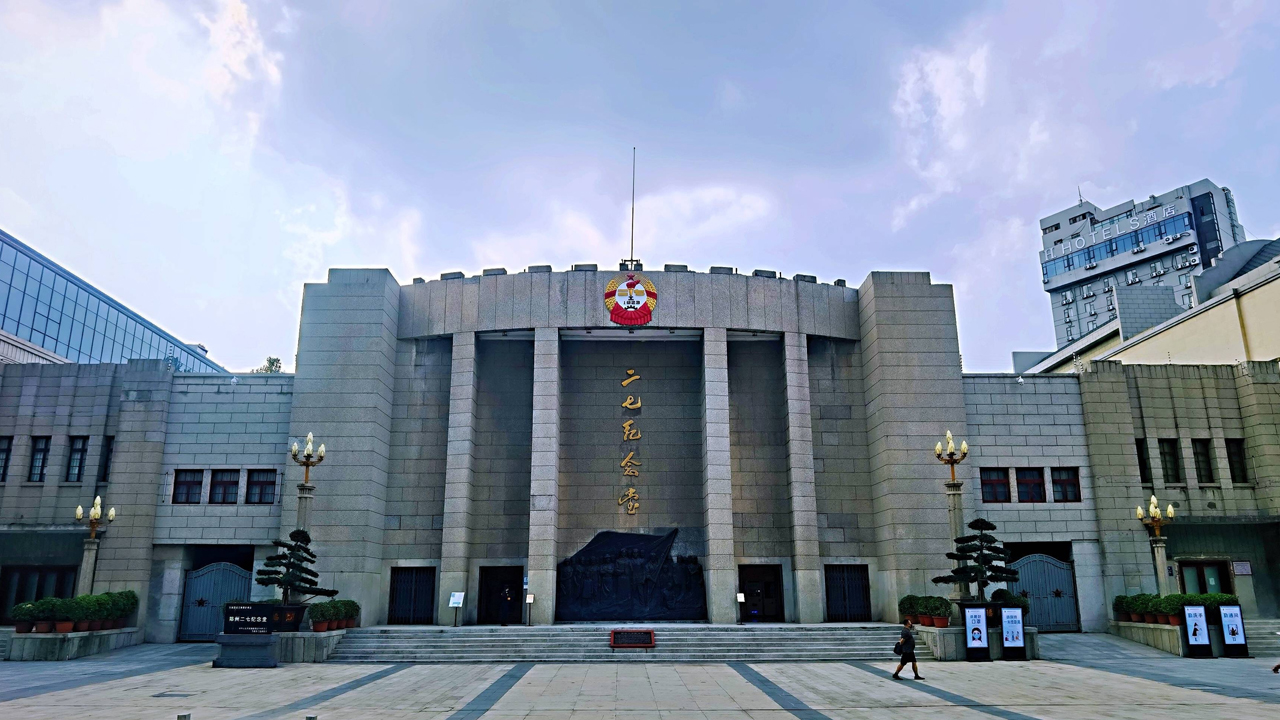
If you ask any Zhengzhou local to name the one building that defines their city, the answer is almost always the same: the Erqi Memorial Tower (二七纪念塔, Èrqī Jìniàntǎ). Standing 63 meters tall in the heart of downtown, this distinctive twin-pentagonal tower is far more than a landmark. It is the soul of Zhengzhou. It tells the story of railway workers who gave their lives for dignity and fairness in 1923. For travelers who want to understand China beyond the Great Wall and the Terracotta Army, the February 7 Memorial Hall offers something rare — a window into the country’s modern labor history, told on the very ground where it happened.
This guide covers everything you need to plan your visit in 2026. We will walk through the history behind the memorial, what to see inside the tower, how to get there, what to eat nearby, and how the February 7 site connects to a broader Zhengzhou itinerary. Whether you are a history enthusiast, a cultural traveler, or simply passing through China’s busiest railway crossroads, this is one stop you should not miss.
What Is the February 7 Memorial Hall in Zhengzhou and Why Does It Matter?
The February 7 Memorial Hall — known locally as the Erqi Memorial Tower or simply Erqi Tower — is a monument and museum located at Erqi Square (二七广场) in the Erqi District of Zhengzhou, Henan Province. It commemorates the Great Strike of February 7, 1923, when workers on the Beijing-Hankou Railway launched a massive strike for labor rights and were met with lethal military force.
The tower was completed on September 29, 1971, and served as the tallest building in Zhengzhou until 1976. It sits on the site where two strike leaders, Wang Shengyou and Si Wende, were executed for organizing the movement. Today, the tower functions both as a national patriotic education base and a beloved city landmark that appears on postcards, souvenirs, and even the logo of the Erqi District government.
For international visitors, the memorial matters because it represents one of the earliest organized labor movements in modern Chinese history. The events of February 1923 shaped the trajectory of the Chinese Communist Party and redirected the course of China’s revolution. Understanding this site helps travelers appreciate how Zhengzhou — often dismissed as just a transit hub — is actually a city with deep historical roots.
Key facts at a glance:
| Detail | Information |
|---|---|
| Official name | Erqi Memorial Tower (二七纪念塔) |
| Location | Erqi Square, No. 230 Erqi Road, Erqi District, Zhengzhou |
| Year completed | 1971 |
| Height | 63 meters (approximately 210 feet) |
| Floors | 14 (3 basement levels, 11 above ground) |
| Architectural style | Traditional Chinese with reinforced concrete |
| Event commemorated | February 7, 1923 Beijing-Hankou Railway Workers’ Strike |
| Admission | Free (exhibitions may vary) |
| Nearest metro | Erqi Square Station (Lines 1 and 3), Exit D |
The History Behind the February 7 Strike: Why Railway Workers Rose Up in 1923
To understand the memorial tower, you first need to understand the strike. The story begins not in 1923 but decades earlier, with the construction of one of China’s most important railways.
The Beijing-Hankou Railway and Its Workers
The Beijing-Hankou Railway (京汉铁路, Jīnghàn Tiělù) was one of the earliest trunk railways in China. Built between 1897 and 1906 by a Belgian consortium backed by French financing, the line stretched roughly 1,200 kilometers from Beijing in the north to Hankou (now part of Wuhan) in the south. It passed directly through Zhengzhou, turning the previously small town into a critical railway junction.
By the early 1920s, the railway employed tens of thousands of workers along its route. Conditions were harsh. Workers endured long hours, low pay, restricted personal freedoms, and constant exploitation by both foreign overseers and local warlord administrations. They had virtually no political voice.
In response, the Chinese Communist Party (CCP), founded just two years earlier in 1921, began organizing unions among these railway workers. By the end of 1922, 16 independent workers’ unions had been established along the Beijing-Hankou line. The workers recognized that they needed to unite. A preparation committee formed to create a Federation of Workers’ Unions of the Beijing-Hankou Railway, and the founding ceremony was scheduled for February 1, 1923, at Pule Park in Zhengzhou.
The Strike Begins: February 1–4, 1923
The workers’ organizing efforts alarmed Wu Peifu (吴佩孚), the powerful northern warlord who controlled the region. On the day of the planned ceremony, Wu dispatched military police to blockade the meeting hall and prevent the union from forming.
The workers refused to back down. Despite the military presence, union representatives broke through the blockade and declared the official establishment of the federation on February 1. In response to the violent obstruction, the newly formed federation issued a call for a general strike across the entire railway line. They articulated five demands centered on worker rights and urged solidarity against the warlord regime.
On February 4, 1923, railway workers across the Beijing-Hankou line answered the call. The nationwide strike brought train service to a halt. The federation relocated its headquarters to Jiang’an, in the city of Hankou, to continue coordinating the movement.
The Massacre: February 7, 1923
Three days into the strike, Wu Peifu decided to crush the movement by force. On February 7, with the backing of foreign imperialist powers, Wu mobilized an estimated 20,000 troops and police to attack striking workers along the railway line.
The bloodiest violence occurred at three locations: Hankou, Zhengzhou, and Changxindian (near Beijing). Soldiers besieged the union headquarters in Jiang’an, Hankou. Lin Xiangqian (林祥谦), the head of the Jiang’an Workers’ Union, was arrested and subsequently executed when he refused to call off the strike. In Zhengzhou, Wang Shengyou and Si Wende, local strike leaders, were also killed.
The final toll was devastating. According to historical accounts, 52 workers were killed, approximately 100 were injured, and thousands were expelled from their jobs in the weeks that followed. The strike lasted until February 9 before being suppressed entirely.
This event became known in China as the “February 7 Massacre” (二七惨案, Èrqī Cǎn’àn). It sent shockwaves through China and the international community.
The Strike’s Lasting Impact on Chinese History
The February 7 Strike marked a turning point. While the immediate result was a bloody defeat, the longer-term consequences were transformative:
- The CCP reconsidered its strategy. The massacre convinced party leaders that the urban proletariat alone could not overthrow the warlord system. This realization pushed the CCP toward an alliance with Sun Yat-sen’s Nationalist Party (Guomindang), setting the stage for the first united front.
- Worker consciousness spread. Despite the crackdown, the strike demonstrated to laborers across China that organized resistance was possible. It inspired future labor movements.
- Zhengzhou’s identity was forever shaped. The city became permanently associated with the labor movement. The entire Erqi District — one of the six urban districts of Zhengzhou — takes its name from the date of the strike (erqi literally means “February 7”).
As the late scholar Tony Saich noted in his analysis of the strike, the defeat created a “euphoria-deflation” cycle that fundamentally reshaped the CCP’s approach to revolution.
What to See Inside the Erqi Memorial Tower: A Floor-by-Floor Visitor Guide
The Erqi Memorial Tower is not just a monument to photograph from the outside. It is a functioning museum with exhibition spaces across multiple floors. Here is what to expect when you visit in 2026.
The Tower’s Unique Architecture
From the east or west, the Erqi Tower appears to be a single structure. But from the north or south, it reveals itself as twin connected towers, each built on a pentagonal footprint. This clever design gives the building a distinctive silhouette that has become one of the most recognizable shapes in Henan Province.
The structure is made of reinforced concrete in a traditional Chinese architectural style. Each floor features archaized eave cornices at the rooftop angles, and the roofs are covered with green glazed tiles, lending the tower a stately elegance. The combination of modern construction materials with classical Chinese aesthetics reflects the era in which it was built — the early 1970s, a period when revolutionary memorials were constructed throughout China.
The Bell Tower at the Summit
At the very top of the building sits a bell tower containing six bells, each with a diameter of 2.7 meters. Every hour on the hour, the bells chime and play the melody of “The East Is Red” (东方红, Dōngfāng Hóng), a revolutionary song that can be heard echoing across the surrounding streets. This hourly musical performance has become one of the most beloved daily rituals in downtown Zhengzhou.
The Exhibition Halls
One side of the tower houses a spiral staircase that winds upward to the top floor, offering visitors a panoramic city view. The opposite side contains exhibition halls spread across roughly ten floors. The exhibitions cover:
- The origins of the Beijing-Hankou Railway and the living conditions of early 20th-century railway workers
- The formation of workers’ unions along the railway line and the role of the CCP in organizing labor
- The February 1 founding ceremony and the events leading to the general strike
- The February 7 massacre itself, presented through historical photographs, documents, personal artifacts, and reproductions of key moments
- The aftermath of the strike and its influence on China’s revolutionary trajectory
- Biographical displays dedicated to martyrs including Lin Xiangqian, Wang Shengyou, and Si Wende
The tower also hosts rotating art exhibitions and revolutionary education exhibitions throughout the year, so the content may vary depending on when you visit.
Tips for Exploring the Tower
- Wear comfortable shoes. The spiral staircase is the primary way to ascend. While an elevator exists, it is not always operational.
- Allow 45–90 minutes for a thorough visit, longer if you want to read every caption and study the exhibits in detail.
- Bring a translation app. Most exhibit labels are in Chinese. Having a translation tool on your phone will greatly enhance your understanding.
- Visit in the evening if you want to see the tower illuminated. Colorful lights transform the structure after sunset, and the surrounding square becomes a lively gathering place.
Erqi Square: The Heart of Zhengzhou’s Commercial and Cultural Life
The Erqi Memorial Tower does not stand in isolation. It sits at the center of Erqi Square (二七广场), one of the most important public spaces in Zhengzhou. Understanding the square helps you appreciate the memorial’s role in the daily life of the city.
A Square That Connects Past and Present
Erqi Square is located in the absolute center of Zhengzhou, about one kilometer from Zhengzhou Railway Station. It functions as both a civic gathering place and the nucleus of the city’s busiest shopping district. On any given evening, you will find locals strolling, photographing the illuminated tower, and enjoying the open-air atmosphere.
In May 2020, the Zhengzhou municipal government announced a major renovation plan. The square was slated to be enlarged to 21,000 square meters (approximately 5.2 acres). An adjacent building, the Friendship Mansion (友谊大厦), originally a 20-story structure, was planned to be reduced to just 6 stories in height. The purpose of this renovation was to remove visual clutter and better highlight the memorial tower as the defining centerpiece of the urban landscape.
Shopping and Entertainment Around the Square
The area surrounding Erqi Square is the most prosperous commercial zone in Zhengzhou. Major shopping destinations within walking distance include:
| Venue | Description |
|---|---|
| The Mixc City (华润万象城) | A 10-floor comprehensive shopping and leisure center with fashion, dining, and entertainment |
| David Plaza (大卫城) | Luxury shopping mall with a 5-star hotel, boutique supermarket, and the city’s premier indoor ice rink |
| Dehua Commercial Street (德化步行街) | A popular pedestrian street lined with shops, street food vendors, and cafés |
| Hualian Commercial Building | Major department store popular with local shoppers |
| Asia Mall | Mid-range shopping destination with a variety of retail and dining options |
Erqi Square is not just a tourist stop. It is the living, beating heart of Zhengzhou’s urban life. Visiting the memorial tower and then wandering through the surrounding streets gives you a complete picture — the city’s history and its present, side by side.
How to Get to the February 7 Memorial Hall: Transportation Guide for 2026
Getting to Erqi Square and the memorial tower is straightforward, thanks to Zhengzhou’s well-developed public transit system.
By Metro (Recommended)
The most convenient option is the Zhengzhou Metro. The Erqi Square Station (二七广场站) is served by both Line 1 and Line 3, making it an interchange station and one of the busiest in the entire metro system. Take Exit D and you will find yourself standing directly at the base of the tower.
The Zhengzhou Metro is clean, efficient, and affordable. Single-trip tickets typically cost between 2 and 5 RMB depending on distance. Signs and announcements are available in both Chinese and English.
By Bus
Numerous bus lines stop at or near Erqi Square. Key routes include:
- Bus lines 2, 6, 21, 26, 32, 40, 52, 57, 58, 65, 82, 85, 89 — stop at Erqi Guangchang (Erqi Square)
- Bus lines 35, 60, 78, 85, Y5, Y12 — stop at Xidajie Nanxiajie, about a 200-meter walk west to the square
- Tourist Bus Line 51 — useful for combining the visit with other Zhengzhou sights
From Zhengzhou Railway Station
If you are arriving by train at the main Zhengzhou Railway Station, Erqi Square is only about 1 kilometer away. You can walk there in 10–15 minutes, take a short taxi ride, or hop on one of many bus routes connecting the station to the square.
From Zhengzhou East Railway Station (High-Speed Rail)
If you arrive on a high-speed train at Zhengzhou East Station (郑州东站), take Metro Line 1 directly to Erqi Square Station. The journey takes approximately 25–30 minutes.
Visa-Free Transit in 2026
Good news for international travelers: China’s 30-day visa-free policy has been extended through at least December 31, 2026, covering citizens of many countries. Additionally, 10-day visa-free transit is available for travelers from over 50 countries, including the United States, United Kingdom, and Canada. This makes a stopover in Zhengzhou easier than ever to plan.
Best Time to Visit the Erqi Memorial Tower and Zhengzhou
Zhengzhou experiences a temperate continental monsoon climate with four distinct seasons. Your experience at the memorial and around the city will differ depending on when you visit.
| Season | Months | Weather | Visitor Experience |
|---|---|---|---|
| Spring | March – May | Mild and dry, 10–25°C | Cherry blossoms bloom across Zhengzhou parks. Comfortable for walking. |
| Summer | June – August | Hot and humid, 25–38°C | Peak tourism season. Evenings at Erqi Square are more pleasant than midday. |
| Autumn | September – November | Cool and clear, 10–25°C | Best overall weather. Ideal for sightseeing. |
| Winter | December – February | Cold and dry, -2 to 8°C | Fewer tourists. The tower’s night illumination is especially striking against winter skies. |
February holds special significance. The anniversary of the strike falls on February 7, and commemorative events are sometimes held at the memorial site. If you happen to be in Zhengzhou around this date, you may witness ceremonies, floral tributes, and educational activities organized by local schools and government bodies.
What to Eat Near the February 7 Memorial Hall: A Zhengzhou Food Guide
No visit to Erqi Square is complete without exploring the surrounding food scene. Zhengzhou is the capital of Henan Province, the heartland of Yu Cuisine (豫菜) — one of China’s oldest regional cooking traditions. This is a city built on wheat, and the food reflects it. Noodles, flatbreads, soups, and dumplings dominate the table.
Must-Try Dishes in Zhengzhou
Huimian (烩面) — Zhengzhou’s Signature Braised Noodles
If you eat only one dish in Zhengzhou, make it Huimian. These are wide, hand-pulled noodles served in a rich, milky broth simmered for hours with lamb bones. A proper bowl comes loaded with sliced lamb, shredded kelp, tofu skin, glass noodles, and fresh cilantro. Before eating, add chili oil and pickled garlic to taste. Sip the broth first, then savor the noodles. Henan braised noodles are recognized as one of China’s five most famous noodle dishes, alongside Beijing soybean noodles, Shanxi sliced noodles, Hubei hot-dry noodles, and Sichuan dandan noodles.
Hulatang (胡辣汤) — Spicy Pepper Soup
This is what Zhengzhou eats for breakfast. Hulatang is a thick, peppery soup made with beef or mutton broth, gluten, tofu skin, dried daylily, peanuts, and a generous dose of black pepper and chili. It is rich, warming, and deeply savory. Locals pair it with shaobing (sesame flatbread) or youtiao (fried dough sticks). You will find Hulatang at nearly every breakfast stall in the city. It costs just a few yuan per bowl. Hulatang has deep roots in Henan Province and comes in several regional styles, with the Xiaoyaozhen and Beiwudu versions being the most famous.
Liyu Sanchi (鲤鱼三吃) — Yellow River Carp Three Ways
This historic Zhengzhou dish showcases carp from the Yellow River, prepared using three different cooking methods. One fillet is fried crispy, another is cooked in sweet-and-sour sauce, and the head and tail are simmered into a nourishing soup with radish slices. After enjoying the fish, mix noodles into the remaining sweet-and-sour sauce — a delicious finishing touch.
Ma Yuxing Bucket Chicken (马豫兴桶子鸡)
This storied poultry dish dates back to 1864 and is one of Henan’s designated intangible cultural heritage foods. The chicken is brined and cooked slowly until the skin turns golden and the meat becomes tender and fragrant. It is not greasy despite its richness. You can find it at dedicated shops throughout the city.
Caiji Steamed Dumplings (蔡记蒸饺)
These delicate dumplings trace their lineage to a former imperial palace chef named Cai Shijun, who opened a small restaurant after the fall of the Qing Dynasty. His descendants eventually moved to Zhengzhou, where the family’s dumpling tradition has continued for nearly a century.
Where to Eat Near Erqi Square
- Dehua Pedestrian Street (德化步行街) — Street food, snack shops, and casual restaurants, all within walking distance of the tower
- Jiankang Road Night Market — Almond tea, grilled lamb skewers, stir-fried jelly noodles, and dozens of other snacks for under 30 yuan per person
- Beishuncheng Street — A hub for Hui (Chinese Muslim) cuisine, featuring lamb soup, potstickers, and eight-treasure porridge
- Henan Restaurant (河南食府), No. 25 Renmin Road — One of the most reputable Yu Cuisine restaurants in the city
Other Historical Sites and Attractions to Visit in Zhengzhou
The February 7 Memorial Hall is Zhengzhou’s most iconic historical site, but the city and its surroundings offer much more for curious travelers. Here are the top attractions to combine with your visit.
Henan Museum (河南博物院)
One of the oldest and most important museums in China, the Henan Museum houses over 130,000 cultural relics spanning thousands of years of Central Plains civilization. Highlights include the Jiahu Bone Flute — a 9,000-year-old musical instrument — and the Owl-shaped Bronze Zun of Lady Fuhao from the Shang Dynasty. Admission is free with a reservation.
Zhengzhou Shang Dynasty Ruins (郑州商代遗址)
Zhengzhou served as the capital of the Shang Dynasty (approximately 1600–1046 BCE), one of the earliest Chinese dynasties with verified historical records. Archaeological remains of the ancient walled city can still be seen in several locations around the modern city. These ruins are a national key cultural heritage site and offer a fascinating glimpse into urban life more than 3,500 years ago.
Only Henan · Drama Park (只有河南·戏剧幻城)
This is one of China’s most ambitious cultural tourism projects — a large-scale immersive theater complex with 21 indoor theaters. Through drama, light shows, and interactive storytelling, the park brings 5,000 years of Central Plains civilization to life. The main production, “Fantasy City,” is particularly impressive. Night performances offer a dramatic atmosphere.
Zhengzhou City God Temple (城隍庙)
Located on Shangcheng Road, this is the largest and most complex traditional architectural compound in Zhengzhou. Originally a Daoist temple dedicated to the city’s guardian deity, it has been destroyed and rebuilt multiple times over the centuries. Today it serves as both a place of worship and a cultural landmark.
Shaolin Temple and Mount Song (嵩山少林寺)
About 90 minutes by car from downtown Zhengzhou, the legendary Shaolin Temple sits at the foot of Mount Song (嵩山), one of China’s Five Sacred Mountains. This is the birthplace of Shaolin Kung Fu and a UNESCO World Heritage Site. Visitors can watch martial arts demonstrations, explore ancient pagodas, and hike through stunning mountain scenery. Many travelers use Zhengzhou as a base for day trips to Shaolin Temple.
Yellow River Scenic Area (黄河风景名胜区)
Located northwest of the city, this scenic area offers views of the mighty Yellow River — China’s second-longest river and the historical cradle of Chinese civilization. The area features hiking trails, the towering stone statues of the Yellow Emperor and Yan Emperor, and several temples. It is a good half-day excursion from the city center.
How the February 7 Memorial Connects to China’s Broader Railway Heritage
Zhengzhou’s identity is inseparable from railways. The city’s rise from a small county town to the capital of Henan Province was driven almost entirely by its position as a railway junction. Understanding this context deepens the significance of the February 7 Memorial.
Zhengzhou: China’s Railway Crossroads
Zhengzhou sits at the intersection of two of China’s most important railway corridors. The north-south Beijing-Guangzhou Railway (the modern successor to the original Beijing-Hankou line) crosses the east-west Longhai Railway right in the city. This crossroads position made Zhengzhou one of the most strategically important railway nodes in the country.
When the People’s Republic of China was established in 1949, Zhengzhou’s railway significance helped elevate it to become the new provincial capital of Henan in 1954, replacing the ancient city of Kaifeng. The city has continued to grow around its railway infrastructure. Today, it is also a major hub on China’s high-speed rail network, with connections to Beijing, Shanghai, Guangzhou, Xi’an, and dozens of other cities.
Railway Heritage Sites Beyond Zhengzhou
The February 7 Strike affected workers along the entire Beijing-Hankou line. Related memorial sites exist in other cities:
- Changxindian Memorial Hall of February 7th Revolution (长辛店二七革命纪念馆) — Located in the Fengtai District of Beijing, near where the northern end of the strike was suppressed. This museum tells the story from the Beijing perspective.
- Wuhan February 7 Memorial Hall — Located in Wuhan (formerly Hankou), where some of the bloodiest violence occurred and where strike leader Lin Xiangqian was executed.
Together with the Zhengzhou tower, these three sites form a connected narrative of the February 7 movement across its entire geographical span.
Practical Tips for International Travelers Visiting Zhengzhou in 2026
Zhengzhou is not as commonly visited by international tourists as Beijing, Shanghai, or Xi’an. But that is part of its appeal. Here are practical tips to help you navigate the city comfortably.
Language
English is not widely spoken in Zhengzhou outside of major hotels. Download a translation app (such as Google Translate or Baidu Translate) before your trip. Many restaurants now have picture menus, so you can point to your choices even without speaking Chinese. Learning a few basic Mandarin phrases will go a long way.
Mobile Payments
China operates almost entirely on mobile payments through WeChat Pay and Alipay. International visitors can now link foreign credit cards to these platforms, which is highly recommended. Having cash as a backup is wise, but many small vendors may not carry change for large bills.
Accommodation Near Erqi Square
The area around Erqi Square offers a wide range of hotels at various price points:
- Budget: Numerous chain hotels (such as Home Inn and Hanting) are within walking distance of the square, typically costing 150–300 RMB per night.
- Mid-range: The InterContinental Zhengzhou is located about 650 meters from Erqi Square, offering floor-to-ceiling city views.
- Luxury: The JW Marriott Hotel Zhengzhou and the Hilton Zhengzhou are located in the Jinshui Road business district, a short metro ride away.
Internet Access
Most international websites and apps (including Google, Facebook, and Instagram) are blocked in China. If you need access to these services, set up a VPN before arriving. Hotel Wi-Fi is generally available but can be unreliable.
Safety
Zhengzhou is a very safe city for travelers. Petty crime is rare, and violent crime against tourists is extremely uncommon. Standard travel precautions apply: keep an eye on your belongings in crowded areas like Erqi Square, and be cautious when crossing busy streets.
A Suggested One-Day Itinerary: February 7 Memorial and Beyond
Here is a sample itinerary for a full day in Zhengzhou that centers on the February 7 Memorial Hall:
Morning (8:00 – 10:00) Start your day like a local. Head to a breakfast stall near your hotel and order a bowl of Hulatang with shaobing and youtiao. Feel the energy of Zhengzhou’s morning breakfast culture — it is loud, bustling, and deeply satisfying.
Mid-Morning (10:00 – 12:00) Take the metro to Erqi Square Station (Exit D) and spend the morning exploring the Erqi Memorial Tower. Climb the spiral staircase to the top for panoramic views of the city. Study the exhibition halls to learn about the 1923 strike. Listen for the bells at the top of the hour.
Lunch (12:00 – 13:30) Walk to Dehua Pedestrian Street or Beishuncheng Street for lunch. Order a big bowl of Huimian (braised noodles) and a side of local snacks.
Afternoon (14:00 – 17:00) Take the metro or a taxi to the Henan Museum (about 20 minutes from Erqi Square). Spend the afternoon exploring one of China’s most important provincial museums. Do not miss the Jiahu Bone Flute and the Shang Dynasty bronzes. Admission is free with a reservation.
Evening (18:00 – 20:30) Return to Erqi Square to see the memorial tower illuminated at night. The colorful lights create a dramatic visual effect against the evening sky. Browse the surrounding shops, or head to the Jiankang Road Night Market for an evening of snacking and people-watching.
Frequently Asked Questions About the February 7 Memorial Hall
Is the Erqi Memorial Tower free to enter? The square is always free to visit. Entry to the tower itself is generally free, though some special exhibitions may have a small fee. Check locally upon arrival.
How long does it take to visit? Plan for 30 to 90 minutes depending on your level of interest. History enthusiasts who want to read every exhibit should allow more time.
Is there an elevator? The tower has an elevator, but it is not always in service. Be prepared to use the spiral staircase.
Are exhibits in English? Most exhibit labels are in Chinese only. A translation app on your smartphone is highly recommended.
Can I visit with children? Yes. The tower is family-friendly, though younger children may find the staircase tiring. The surrounding square is a pleasant open space for kids to move around.
What is the best time of day to visit? Morning visits are best for avoiding crowds and seeing the exhibitions clearly. Evening visits are best for photography and experiencing the tower’s illumination.
Understanding Zhengzhou’s Role as an Ancient Capital of China
While the February 7 Memorial highlights Zhengzhou’s modern revolutionary history, the city’s roots stretch back thousands of years. Zhengzhou is officially recognized as one of China’s Eight Ancient Capitals, a distinction it shares with Beijing, Xi’an, Luoyang, Nanjing, Hangzhou, Kaifeng, and Anyang.
Archaeological evidence confirms that Zhengzhou served as the capital of the Shang Dynasty around 1600 BCE. The discovery of massive rammed-earth city walls, bronze foundries, and aristocratic burial sites within the modern city boundaries demonstrates that this was once one of the most important urban centers in the ancient world. The Zhengzhou Shang City Site is now a national-level protected heritage area.
The city’s name itself carries ancient meaning. In earlier periods, the region was called Zhongzhou (中州), meaning “Middle Province” — a reference to its central location in the traditional Chinese worldview. Henan Province as a whole is often called Zhongyuan (中原), “the Central Plains,” and this region is widely regarded as the birthplace of Chinese civilization.
For travelers visiting the February 7 Memorial, this historical depth adds an important layer of context. Zhengzhou is not a city that sprang up overnight around a railway station. It is a place where human civilization has thrived for millennia. The railway workers who struck in 1923 were part of a long tradition of people in this region shaping the course of Chinese history.
Zhengzhou and the Yellow Emperor Legend
Chinese people traditionally call themselves the descendants of the Yellow Emperor (Huangdi) and the Yan Emperor (Yandi) — two legendary rulers credited with founding Chinese civilization. According to historical records, the Yellow Emperor was born in what is now the Zhengzhou area, specifically in the city of Xinzheng, about 40 kilometers south of downtown Zhengzhou.
Every year, a grand ancestor worship ceremony is held at the Yellow Emperor’s Hometown in Xinzheng. This ceremony attracts tens of thousands of Chinese from around the world and is one of the most significant cultural events in Henan Province. If your visit to Zhengzhou coincides with this festival (usually held in the spring), it is a remarkable cultural experience.
Cultural Etiquette and Respectful Behavior at the Memorial Site
The February 7 Memorial Hall is a site of national remembrance. While it welcomes tourists warmly, visitors should observe certain cultural courtesies.
Show respect at martyrs’ displays. The exhibits include photographs and personal stories of people who died. Treat these spaces with the same quiet respect you would show at any memorial or cemetery. Avoid loud conversations or boisterous behavior in the exhibition halls.
Photography is generally permitted in the public areas and on the observation floors. However, flash photography may be restricted in certain exhibition rooms to protect historical artifacts and documents. Always check for posted signs before using flash.
Dress modestly and comfortably. There is no strict dress code, but overly casual beachwear or revealing clothing may draw unwanted attention. Comfortable walking shoes are essential for climbing the tower’s spiral staircase.
Be patient with crowds. Erqi Square is a popular gathering spot for locals. On weekends and holidays, the area around the tower can become quite crowded. Embrace it as part of the experience — the energy of the square is one of its greatest charms.
Learn a few words of gratitude. A simple “xièxie” (谢谢, “thank you”) goes a long way. Zhengzhou residents are genuinely proud of their city’s heritage and will appreciate your effort to engage with their culture respectfully.
Why the February 7 Memorial Deserves a Place on Every Zhengzhou Itinerary
Many international travelers pass through Zhengzhou on their way to the Shaolin Temple or Luoyang’s Longmen Grottoes. They see the city as a transit point, not a destination. This is a mistake.
The February 7 Memorial Hall offers something that few tourist sites in China can match: an emotionally powerful story told on the exact spot where it happened. When you stand at the base of the Erqi Tower and look up at its distinctive silhouette, you are standing where railway workers once gathered to demand dignity. You are standing where some of them died for that demand.
Zhengzhou is a city that was literally built by railways and the people who worked on them. The Erqi Memorial Tower honors that history. In a country where the pace of modernization can feel overwhelming, this tower is a reminder that progress has always depended on the courage of ordinary people.
Take an hour. Climb the stairs. Read the names. Listen to the bells.
You will leave with a deeper understanding of Zhengzhou — and of China itself.
Have you visited the February 7 Memorial Hall? Share your experience in the comments below. For more guides to China’s hidden historical gems, subscribe to our newsletter and follow us on social media.