The clock is ticking toward midnight. The table is still covered in dumpling crumbs and fish bones. Grandma is cracking watermelon seeds between her teeth. Your cousin is already reaching for the mahjong tiles. Outside, the first firecrackers are popping in the distance. This is Chinese New Year’s Eve—or 除夕 (Chúxī)—the single most important night on the Chinese calendar.
In 2026, Chinese New Year’s Eve falls on Monday, February 16, ushering in the Year of the Fire Horse (丙午年). This is no ordinary zodiac year. The Fire Horse comes around only once every 60 years, making 2026 a particularly rare and spirited celebration. The CCTV Spring Festival Gala will broadcast live at 8:00 PM Beijing time with the theme “Galloping Steed, Onward Unstoppable”—and across China, over a billion viewers will tune in while playing cards, cracking jokes, and stuffing red envelopes under their children’s pillows.
But here is the thing about Chúxī night: the TV is only the backdrop. The real magic happens around the table, on the living room floor, and in the family group chat. Staying up until midnight—a tradition called 守岁 (shǒu suì), or “guarding the year”—is both a custom and a challenge. You need activities that keep Grandpa awake, the toddler entertained, and the teenagers off their phones (at least for a few rounds).
This guide covers 20+ tried-and-true family games for Chinese New Year’s Eve, from ancient tile games with centuries of history to modern digital red envelope battles. Every game on this list is rooted in real Chinese cultural practice. None of them require a trip to a specialty store. Most need nothing more than a deck of cards, a pair of chopsticks, or a smartphone.
Let’s get into it.
Why Do Chinese Families Play Games on New Year’s Eve Night?
Before we dive into specific games, it helps to understand why game-playing is so deeply woven into Chinese New Year’s Eve.
The tradition of shǒu suì (守岁) dates back well over a thousand years. According to ancient folklore, a creature called “Suì” (祟) would emerge on New Year’s Eve to harm sleeping children. Families kept the lights burning and stayed awake all night to ward off the beast. Over time, the character 祟 (evil spirit) was replaced in popular use by the similar-sounding 岁 (year/age), and the vigil transformed from a fearful watch into a joyful one.
Today, shǒu suì means something different for different generations. For older family members, staying up represents treasuring time together. For younger members, it is believed to bring longevity to their parents. Either way, the custom requires something to do during those long hours between the reunion dinner and the midnight firecrackers—and that is where games come in.
Common shǒu suì activities include watching the Spring Festival Gala (春晚), chatting, snacking on melon seeds and candy, playing mahjong or card games, and exchanging 红包 (hóngbāo)—the famous red envelopes filled with lucky money. The games serve a deeper purpose beyond entertainment: they bring three generations to the same table, they generate the kind of noise and laughter that (symbolically) scares away bad luck, and they create shared memories that families carry into the new year.
Best Traditional Chinese Card Games to Play on Lunar New Year’s Eve
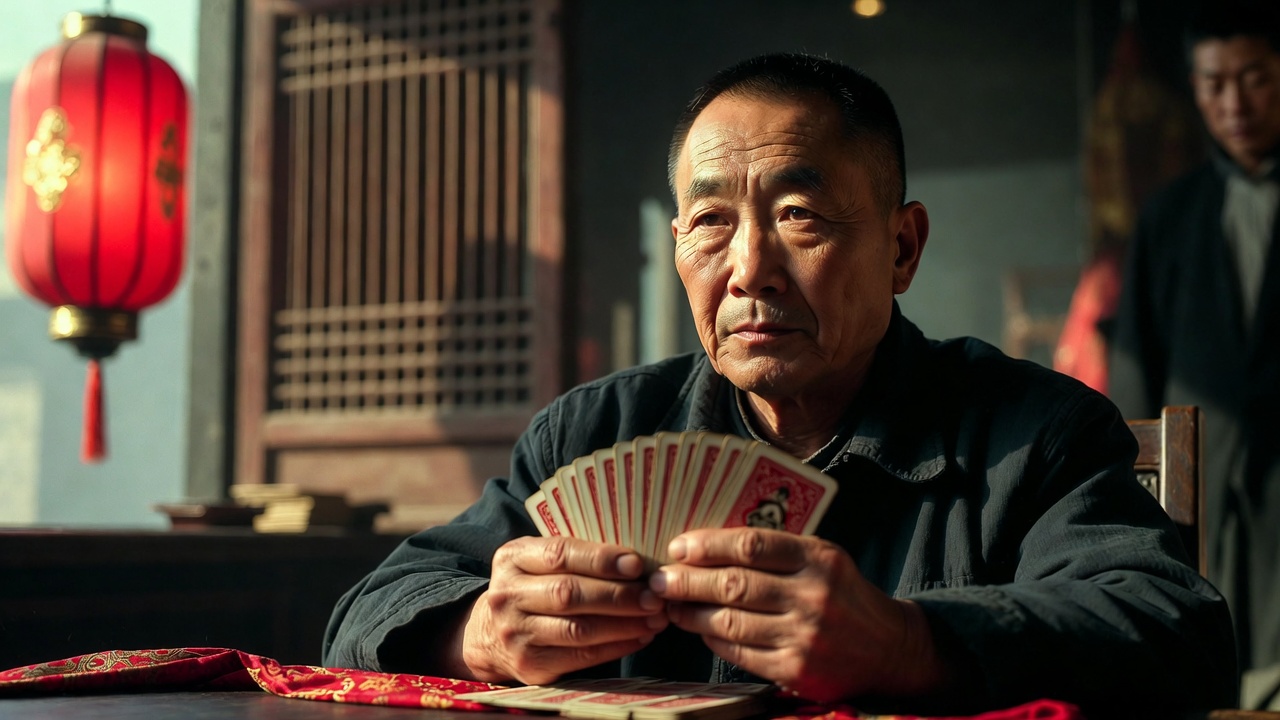
Card games are the beating heart of a Chinese New Year’s Eve gathering. In many households, the card table is set up right after the reunion dinner and does not fold down until well past midnight. Here are the classics.
Dou Di Zhu (斗地主) — Fight the Landlord
If you learn only one Chinese card game in your life, make it Dou Di Zhu. This three-player game uses a single standard deck (with two jokers) and has been wildly popular across mainland China since the 1960s. The name literally means “Fight the Landlord”—a relic of class-struggle metaphors from the era—but during Spring Festival, it is purely recreational.
How it works: One player is designated the “Landlord” (地主) and plays against the other two “Peasants” (农民), who form a temporary alliance. The Landlord gets three extra cards from the deck and must play them all before the Peasants empty their hands. It involves bluffing, hand management, and shifting alliances, making it fast, dramatic, and very noisy.
Why it is perfect for Chúxī: Dou Di Zhu needs only three players, takes about 10–15 minutes per round, and works equally well with a ¥1-per-round wager or no stakes at all. Families often run mini-tournaments with candy or snack prizes. It is also available on nearly every Chinese mobile app, so you can play with relatives who could not make it home.
Chinese Poker (十三张 / Shísān Zhāng)
Chinese Poker, known in Mandarin as Shísān Zhāng (“Thirteen Cards”), is a staple at family gatherings. Each player receives 13 cards and arranges them into three hands: a front hand (3 cards), a middle hand (5 cards), and a back hand (5 cards). The back must be the strongest hand, the front the weakest.
It requires two to four players, a standard 52-card deck, and no chips. Scoring is done by comparing each hand against other players’ corresponding hands. The beauty of this game is that it rewards patience and strategic thinking over pure luck—making it a level playing field for grandparents and grandchildren alike.
Ban Luck (万力) — The Hokkien Blackjack
In southern Chinese and Southeast Asian families—especially in Singapore, Malaysia, and Fujian—no Chinese New Year is complete without Ban Luck. The name comes from Hokkien pronunciation of 万力 (wàn lì, “ten thousand efforts”), and in Mandarin the game is called 二十一点 (Èrshíyī diǎn)—literally “21 points.”
It is essentially Blackjack with local twists, particularly around the role of the dealer. Children traditionally play at the same table as adults, just with smaller bets funded by their freshly received hóngbāo money. As one Singaporean writer recalls, it was a rite of passage: flush with red packet cash, kids felt the thrill of winning (or losing) alongside the grown-ups.
How to Play Mahjong During Chinese New Year Celebrations
No discussion of Chinese New Year games is complete without mahjong (麻将 / májiàng). This tile-based game, which originated in 19th-century China, is practically synonymous with family gatherings during the Spring Festival.
The Basics
Mahjong is played by four players using 144 tiles engraved with Chinese characters and symbols. The goal is to build a complete hand of 14 tiles by drawing and discarding. A winning hand typically consists of four sets (three-of-a-kind or runs) and one pair. Games combine skill, strategy, memory, and a healthy dose of luck.
Why Mahjong Rules Chinese New Year’s Eve
There are several reasons mahjong dominates Chúxī night:
It is deeply social. Four players sit around a table for hours, talking, joking, and gently trash-talking. In a culture that values family togetherness, mahjong forces face-to-face interaction in a way few modern activities do.
It spans generations. Grandparents who have been playing for decades sit across from teenagers who are still learning the tiles. The game rewards experience, so elders often have a genuine edge—which they enjoy enormously.
It is regionally diverse. Mahjong rules vary significantly across China. In Guangdong and Hong Kong, Cantonese-style mahjong reigns. In Sichuan, the local “Blood Fight to the End” (血战到底) variant keeps all four players active until the very last hand. In Shanghai, the rules favor speed. This means every family has its own “house rules,” and debating those rules is half the fun.
It sounds lucky. The clatter of tiles on the table is considered an auspicious noise—much like firecrackers, the sound symbolically drives away evil spirits and bad fortune.
Tips for Beginners
If you are new to mahjong, do not be intimidated. Start by learning the three tile suits (bamboo, circles, and characters) and the basic concept of sets and pairs. Most families are happy to walk a newcomer through the first few rounds. Just be prepared: once you start, you may not stop until 3 AM.
Fun Red Envelope Games and Hóngbāo Activities for All Ages
The red envelope (红包 / hóngbāo) is the most iconic symbol of Chinese New Year generosity. Traditionally, married adults and elders give hóngbāo filled with crisp new bills to children and unmarried younger relatives. The red color symbolizes good luck and is believed to ward off evil spirits. But hóngbāo are not just for giving—they make excellent game props too.
The Red Envelope Hunt (红包大搜索)
Think of this as an Easter egg hunt, Chinese New Year style. Before the game begins, adults hide red envelopes around the house—under couch cushions, behind picture frames, inside shoes, on bookshelves. Each envelope contains a small amount of money, candy, or a handwritten fortune.
Set a timer for five minutes and let the kids (and competitive uncles) loose. The person who collects the most envelopes wins a bonus “golden envelope” with a larger prize. For toddlers ages 3–5, hide the envelopes in obvious spots like under pillows or on low shelves. For older kids and adults, get creative—tape one inside the refrigerator or slip one between book pages.
This game ties directly into the cultural belief that searching for hóngbāo symbolizes actively seeking good fortune in the new year. It is physical, exciting, and works for groups of any size.
WeChat Red Envelope Grab (微信抢红包)
Since WeChat launched its digital red envelope feature in 2014, the virtual hóngbāo has become a Chinese New Year phenomenon. In a family or friend group chat, one person sends a red envelope with a set total amount, which gets divided randomly among the first people to tap and “grab” it. The person who receives the smallest amount sends the next round.
The excitement is instant and addictive. Every time a new red envelope pops up in the chat, thumbs race to tap it open. The random distribution adds a gambling thrill, and the rapid-fire pace keeps everyone glued to their phones (with permission, on this one night).
Pro tip: Set a house rule that whoever grabs the “luckiest” amount (the largest share in a round) must perform a dare, sing a song, or tell a joke. This turns a digital game into a living-room spectacle.
Hóngbāo Tower Challenge
Stack plastic cups in a tower, placing a red envelope between each layer. Players take turns trying to yank out an envelope without toppling the tower. It is harder than it sounds—and the laughter when the cups come crashing down is worth every fallen penny.
Easy Chinese New Year Party Games for Kids and Toddlers
Little ones need games that are simple to explain, fast to play, and forgiving enough that nobody cries. These games work for children ages 3–12 and double as ways to teach Chinese cultural traditions.
The Chopstick Challenge (筷子夹夹乐)
Place a bowl of small items—marbles, peanuts, wrapped candies, or cotton balls—at one end of the table and an empty bowl at the other. Each player uses chopsticks to transfer as many items as possible in 60 seconds. The player with the most items wins.
Why kids love it: It is fast, competitive, and they get to eat the candy afterward. Why parents love it: It secretly builds fine motor skills and chopstick technique. Adjust the difficulty by changing the objects—cotton balls are slippery and hilarious for younger children; peanuts are standard for older kids.
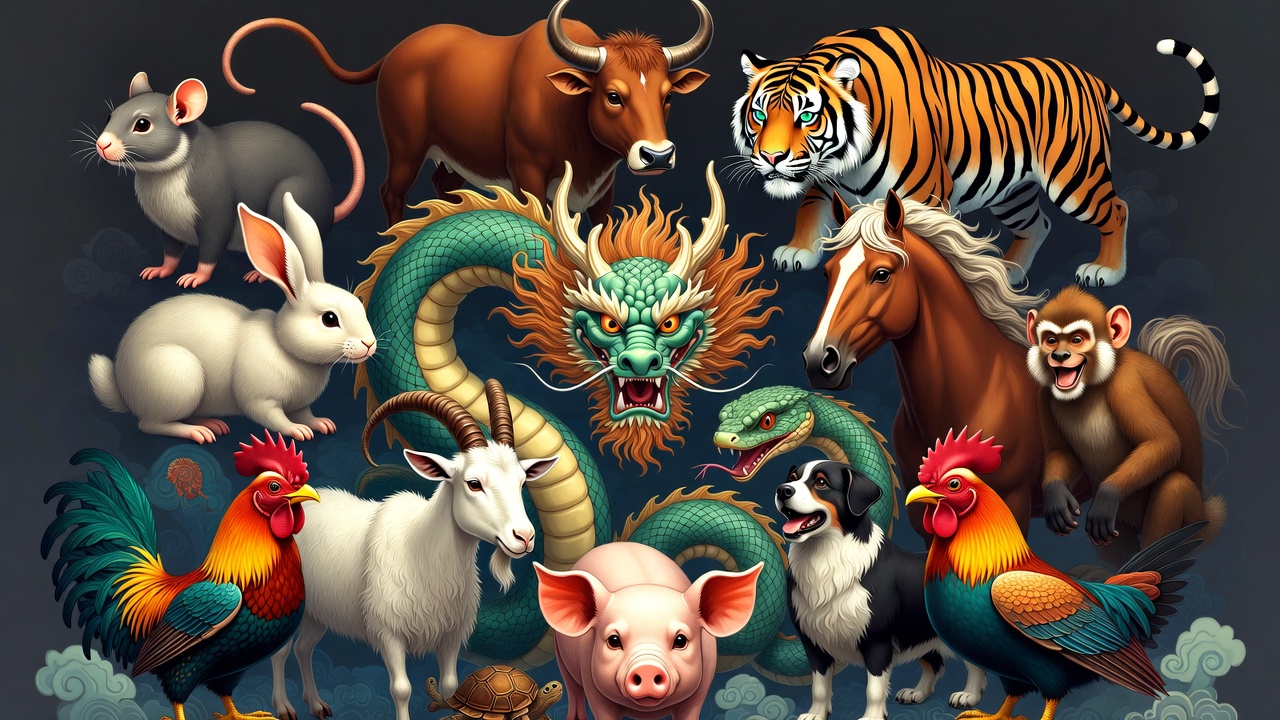
Zodiac Animal Matching Game
Print or draw cards showing the 12 Chinese zodiac animals on one set and their corresponding years or personality traits on another. Spread all cards face-down on the table. Players take turns flipping two cards at a time, trying to make a match. The player with the most pairs wins.
Since 2026 is the Year of the Horse, you can add bonus points for anyone who matches the Horse card first. This game teaches kids the zodiac cycle in a hands-on way and works well for 2–6 players.
Guess the Zodiac (生肖猜猜乐)
Write short clues about zodiac animals on slips of paper. For example: “I am brave and known for my roar” (Tiger), or “I gallop fast and love freedom” (Horse). One player reads a clue aloud, and others race to shout the correct animal. Each correct answer earns a point.
This is a great game for mixed-age groups because you can write easier clues for younger children and trickier ones for adults. It also works beautifully as a quick warm-up game before the main event of mahjong or cards.
Creative Chinese New Year Activities the Whole Family Can Enjoy Together
Not every Chúxī activity needs to be competitive. These hands-on traditions are quieter, more artistic, and bring the family together in a different way.
Dumpling Wrapping Race (包饺子比赛)
In northern China, making dumplings (饺子 / jiǎozi) on New Year’s Eve is one of the most beloved family traditions. Why not turn it into a friendly competition? Give everyone the same amount of dough and filling, set a 10-minute timer, and see who can wrap the most beautiful (or the most) dumplings.
Some families hide a coin or a peanut inside one lucky dumpling. Whoever bites into it during the midnight feast is said to have especially good fortune in the coming year. This tradition traces back centuries—the crescent shape of the dumpling resembles ancient Chinese gold ingots, symbolizing wealth and prosperity.
Chinese Paper Cutting (剪纸 / Jiǎnzhǐ)
Give each family member red paper, scissors, and a template (plenty of free ones are available online). Set a timer and see who can create the most detailed or creative design. Common motifs include the zodiac animal of the year (a horse for 2026), the character 福 (fú, fortune), flowers, and fish.
Display the finished pieces on windows or walls—this is a real Spring Festival tradition that dates back to the 6th century. Paper cutting is meditative, creative, and produces decorations you will actually use. It works best with 2–5 participants.
Chinese Calligraphy Challenge (写春联)
Prepare ink, brushes, and strips of red paper. Family members take turns writing 春联 (chūnlián)—Spring Festival couplets—or auspicious words like 福 (fortune), 春 (spring), or 马到成功 (mǎ dào chéng gōng, “success upon the horse’s arrival,” a perfect phrase for the Year of the Horse). The best calligraphy gets posted on the front door.
Even if nobody in the family is a trained calligrapher, the act of holding a brush and concentrating on each stroke together is a bonding experience. Younger children can practice writing simple characters while adults attempt the more complex couplets. It is slow, peaceful, and a welcome contrast to the chaos of card games.
Chinese New Year Trivia and Quiz Games for Family Gatherings
Trivia games inject energy and education into any gathering. They are perfect for the gap between dinner and the midnight countdown.
Spring Festival Trivia Challenge
Prepare 15–20 questions covering Chinese New Year traditions, zodiac animals, lucky foods, and cultural customs. Divide into teams or play individually. Here are some sample questions to get you started:
| Question | Answer |
|---|---|
| What zodiac animal represents 2026? | The Horse (specifically, the Fire Horse) |
| How often does the Fire Horse year occur? | Once every 60 years |
| What is the name of the tradition of staying up on New Year’s Eve? | 守岁 (shǒu suì) |
| What shape do dumplings resemble, and what does it symbolize? | Gold ingots; wealth |
| Why is the character 福 often hung upside-down? | “倒” (upside-down) sounds like “到” (arrived), so it means “fortune has arrived” |
| What year did the CCTV Spring Festival Gala first air? | 1983 |
| Name three lucky foods for New Year’s Eve dinner. | Fish, dumplings, sticky rice cake (年糕), spring rolls, tangyuan |
| What color should you avoid wearing during Chinese New Year? | White and black (associated with mourning) |
Award small prizes for correct answers—candy, red envelopes with fortunes, or the honor of choosing the next game.
Lantern Riddle Guessing (猜灯谜)
Lantern riddles are a traditional activity most associated with the Lantern Festival (元宵节, the 15th day of the New Year), but they work perfectly on New Year’s Eve too. Write riddles on strips of red paper and hang them around the room or attach them to decorative lanterns.
Traditional lantern riddles are wordplay-based and often involve Chinese characters. For example: “A king sits inside a wall” → Answer: 国 (guó, “country”—the character shows 玉, jade/king, inside 囗, an enclosure). For non-Chinese speakers, you can adapt with English riddles themed around animals, luck, or food.
Digital and Mobile Games to Play with Relatives on Chinese New Year
Technology has not replaced traditional Chúxī games—it has expanded them. Here is how families blend old and new in 2026.
The Spring Festival Gala Drinking Game (春晚游戏)
The CCTV Spring Festival Gala runs for about 4.5 hours, from 8 PM until just past midnight. Families across China have invented informal “bingo” or drinking-game versions to keep the viewing lively. Create a card with predictions before the show starts:
- A singer hits an impossibly high note → everyone claps
- A comedy sketch mentions the internet → take a sip of tea (or something stronger)
- The hosts say “Happy New Year” before midnight → everyone stands up
- A dance number features traditional costumes → award a point
- A segment features robots or AI technology → first person to shout “未来!” (future!) wins a candy
The 2026 Gala, with its Horse-themed mascots Qiqi, Jiji, Chichi, and Chengcheng, is likely to feature plenty of equestrian imagery—so add “horse appears on screen” to your bingo card.
Mobile Mahjong and Online Card Games
For family members who cannot travel home for the holiday, digital mahjong platforms and card game apps allow remote play. Popular options in China include Tencent Mahjong and the built-in Dou Di Zhu games on WeChat Mini Programs. Set up a video call so you can see each other’s reactions—half the fun of playing cards is watching Grandma’s poker face crack.
AI Red Envelope Campaigns
In 2026, Chinese tech giants have gone all-in on Lunar New Year digital promotions. ByteDance’s Doubao chatbot is a sponsored presence at the Spring Festival Gala, Alibaba’s Qwen app is distributing coupons and near-free bubble tea through its AI interface, and WeChat’s own AI chatbot Yuanbao launched a sharing campaign. While these are marketing-driven, they have become part of the holiday ritual for many families—swiping and tapping to “grab” digital red envelopes is now as much a part of Chúxī as cracking melon seeds.
Outdoor Chinese New Year Games and Neighborhood Activities
Not all Chúxī fun happens indoors. In many communities, the hours before and after midnight spill outside.
Fireworks and Firecracker Countdown
The moment the clock strikes midnight, the sky over much of China erupts. In areas where fireworks are still permitted, families gather outside to set off firecrackers and watch the display. It is tradition that the person who lights the first firecracker of the new year receives good luck. In cities where fireworks are banned due to air pollution and safety regulations, electronic firecrackers and digital fireworks have become popular alternatives—they deliver the noise and sparkle without the smoke.
Tug-of-War and Sack Races
In villages and smaller towns, community-organized tug-of-war competitions, sack races, and relay races bring neighbors together during the extended Spring Festival holiday. These are especially common from the second to the fifth day of the new year, when families visit relatives and everyone is looking for outdoor fun.
Lion Dance “Follow the Leader”
If you are lucky enough to see a lion dance performance in your neighborhood, encourage the kids to join in. Children often mimic the lion’s movements or toss lettuce (生菜, which sounds like “growing wealth” in Cantonese) to the lion for good luck. It is joyful, physical, and unforgettable.
Quick Reference: Best Chinese New Year’s Eve Games by Group Size and Age
Not sure which game fits your family? Use this table to find the perfect match.
| Game | Players | Best Ages | Time per Round | Materials Needed |
|---|---|---|---|---|
| Mahjong | 4 | 12+ | 30–90 min | Mahjong set |
| Dou Di Zhu (Fight the Landlord) | 3 | 10+ | 10–15 min | Standard card deck + 2 jokers |
| Chinese Poker (Shísān Zhāng) | 2–4 | 12+ | 15–20 min | Standard card deck |
| Ban Luck (Blackjack variant) | 3–8 | 8+ | 10 min | Standard card deck |
| Red Envelope Hunt | 3+ | 3+ | 5–10 min | Red envelopes, small prizes |
| WeChat Red Envelope Grab | 3+ | 13+ | Ongoing | Smartphones with WeChat |
| Chopstick Challenge | 2+ | 4+ | 2–3 min | Chopsticks, small items, bowls |
| Zodiac Matching | 2–6 | 5+ | 10–15 min | Printed zodiac cards |
| Dumpling Wrapping Race | 2+ | 6+ | 10–15 min | Dough, filling, rolling pins |
| Paper Cutting | 2–5 | 6+ | 15–20 min | Red paper, scissors, templates |
| Spring Festival Trivia | 3+ | 8+ | 15–20 min | Prepared questions |
| Lantern Riddle Guessing | 3+ | 10+ | 15–30 min | Written riddles, paper strips |
| Gala Bingo/Prediction Game | 2+ | 10+ | 4+ hours | Bingo cards, TV |
| Hóngbāo Tower | 2+ | 5+ | 5–10 min | Plastic cups, red envelopes |
How to Keep the Shǒu Suì Spirit Alive All Night Long
The secret to a successful Chinese New Year’s Eve is variety and pacing. Here is a sample timeline that has worked at many a family gathering:
6:00–8:00 PM — The Reunion Dinner (年夜饭). The most important meal of the year. Focus on food, toasts, and catching up. No games yet—this is sacred family time.
8:00–10:00 PM — Gala + Light Games. Turn on the Spring Festival Gala. Play Gala Bingo. Hand out red envelopes to the kids. Start the Chopstick Challenge or Zodiac Trivia while snacking.
10:00 PM–Midnight — The Main Event. Break out the mahjong set or the card decks. This is when the serious (but friendly) competition happens. Dou Di Zhu tournaments, Chinese Poker showdowns, or extended mahjong sessions carry the family through to midnight.
Midnight — The Countdown. Firecrackers, fireworks, or a collective shout of “新年快乐! (Xīnnián kuàilè!)” and “马年快乐! (Mǎ nián kuàilè!)” for the Year of the Horse. Exchange final red envelopes. Hug everyone.
After Midnight — Wind Down. Quieter games like paper cutting, calligraphy, or simply chatting with tea and melon seeds. Those who can stay awake play one more round of cards. No one is judged for dozing off on the couch—the custom only requires staying up until midnight to be fulfilled.
Final Thoughts: What Games Really Mean on Chinese New Year’s Eve
Every game on this list—whether it is a centuries-old tile game or a 10-second WeChat red envelope grab—serves the same purpose. It brings people together. In a culture where the Spring Festival is defined by family reunion, games are the glue that holds the evening together. They give shy cousins a reason to talk, they let grandparents show off their strategic brilliance, and they give children a taste of grown-up fun.
The Year of the Fire Horse gallops in with bold, untamed energy. So play boldly this Chúxī. Bet a few extra peanuts on that mahjong hand. Hide the red envelopes in truly devious spots. Let the kids stay up past midnight. And when the firecrackers finally fade and the last card is played, you will have something better than good luck: you will have a night your family remembers.
马到成功! May success arrive with the Horse.
Have your own favorite Chinese New Year’s Eve family game? Share it in the comments—we are always looking for new traditions to try.