By a lifelong student of world festivals and customs — from the rice paddies of Guizhou to the neon-lit streets of Shanghai, this guide is written with the warmth of someone who has sat at many round tables on many New Year’s Eves.
February 16, 2026. That is the date circled in red on hundreds of millions of calendars across China and beyond. It is Chinese New Year’s Eve — the night of the 年夜饭 (nián yè fàn), the Reunion Dinner, the single most important meal of the entire year. And in 2026, this cherished tradition carries extra weight: the Spring Festival was inscribed on UNESCO’s Representative List of the Intangible Cultural Heritage of Humanity in December 2024, confirming what every Chinese family already knew — this festival belongs to all of humanity.
This year, we gallop into the Year of the Fire Horse (丙午年), a rare and powerful zodiac combination that appears only once every 60 years. The Horse symbolizes vitality, freedom, and unstoppable momentum. The Fire element adds passion and drive. Together, they set the tone for a New Year’s Eve celebration that should be bold, warm, and unforgettable.
Whether you are a first-generation immigrant recreating your grandmother’s recipes in a small apartment abroad, or a seasoned host welcoming three generations under one roof in Chengdu, this guide will help you plan every detail — from the menu to the midnight firecrackers.
Why the Chinese New Year Reunion Dinner Is the Most Important Meal of the Year
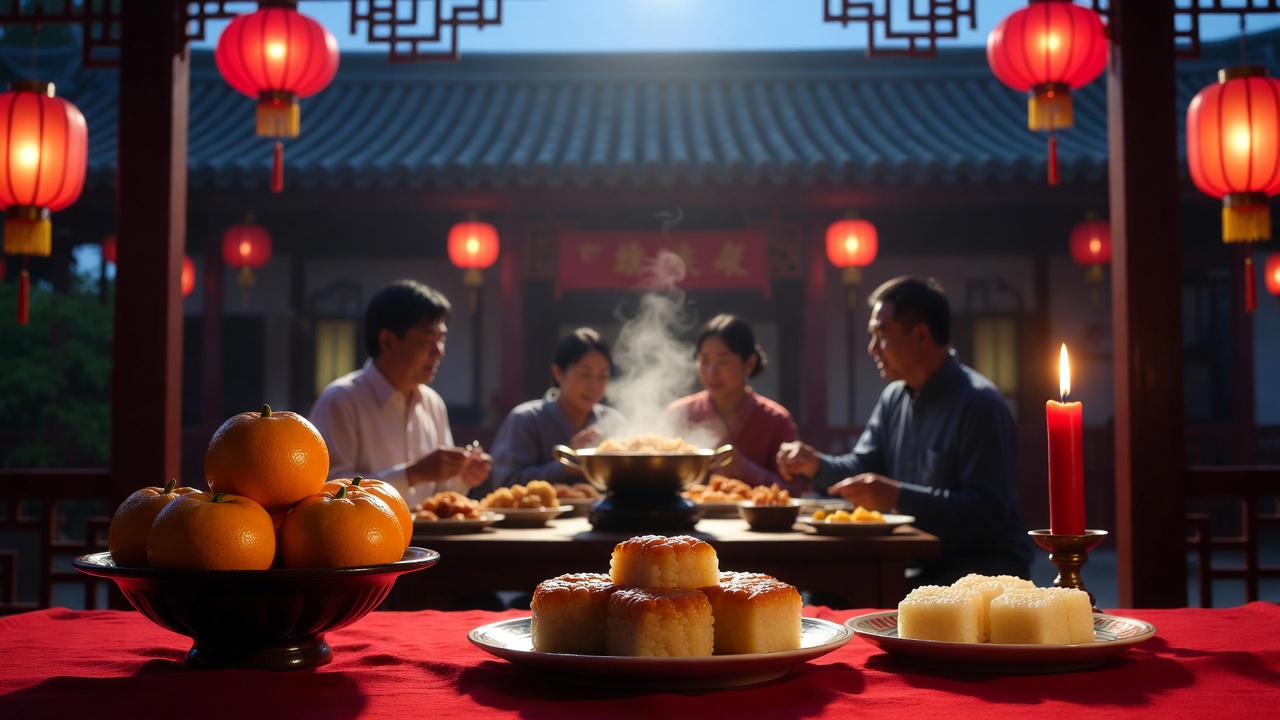
In Chinese culture, no meal carries more emotional weight than the Reunion Dinner. Called 团圆饭 (tuán yuán fàn) — literally “togetherness meal” — it takes place on the evening of New Year’s Eve, which falls on Monday, February 16, 2026.
The significance is simple but profound. For a society where adult children often live and work hundreds or thousands of kilometers from their parents, this dinner is the one night when the whole family must sit together. It is the reason behind 春运 (chūn yùn), the Spring Festival travel rush — the largest annual human migration on Earth, with billions of passenger trips made over a 40-day window. Train tickets sell out within seconds. Flights triple in price. Highways become parking lots. All so that a son can sit next to his mother, and a granddaughter can pour tea for her grandfather.
The dinner typically begins early — around 5:00 or 5:30 PM, before sunset — and stretches well past midnight. It is not a quick meal. It is an entire evening of eating, drinking, talking, laughing, watching television, and counting down the seconds to the new year.
Traditionally, the dinner takes place at the home of the family’s most senior members. In rural China, this usually means the 老家 (lǎo jiā) — the ancestral hometown. In modern cities, many families now celebrate in apartments or even at restaurants that offer special New Year’s Eve banquet packages. But the spirit remains the same: come home, be together, eat well.
How to Plan a Traditional Chinese New Year’s Eve Menu for the Year of the Horse
The menu for a Reunion Dinner is never random. Every dish is chosen for its symbolic meaning, usually based on wordplay (homophones in Mandarin or Cantonese), visual resemblance, or cultural association. Planning the menu is an act of hope — you are literally cooking your wishes for the coming year.
Here is a guide to the essential dishes and their meanings:
The Must-Have Dishes and Their Symbolism
| Dish | Chinese Name | Symbolism | Key Rule |
|---|---|---|---|
| Whole Fish | 鱼 (yú) | Abundance and surplus (sounds like 余, “surplus”) | Serve whole with head and tail; leave leftovers for New Year’s Day |
| Dumplings | 饺子 (jiǎo zi) | Wealth (shaped like ancient gold ingots) | Wrap as a family; some families hide a coin inside one dumpling for extra luck |
| Whole Chicken | 鸡 (jī) | Prosperity and togetherness (sounds like 吉, “good fortune”) | Serve with head and feet to symbolize completeness |
| Spring Rolls | 春卷 (chūn juǎn) | Wealth (golden color resembles gold bars) | Best when homemade and fried until crisp |
| Niangao (Rice Cake) | 年糕 (nián gāo) | Rising higher each year (sounds like “year high”) | Can be steamed, pan-fried, or stir-fried |
| Longevity Noodles | 长寿面 (cháng shòu miàn) | Long life | Never cut or break the noodle while eating |
| Tangyuan (Glutinous Rice Balls) | 汤圆 (tāng yuán) | Family reunion and togetherness (sounds like 团圆, “reunion”) | Popular in southern China |
| Hot Pot | 火锅 (huǒ guō) | Family unity (everyone gathers around one pot) | Traditional in northern China; the shared pot represents harmony |
Regional Differences You Should Know
The Reunion Dinner varies widely across China’s regions:
Northern China (Beijing, Shandong, Dongbei): Dumplings are the undisputed centerpiece. Families spend the entire afternoon wrapping hundreds of them by hand — a bonding ritual in itself. Fish is often braised in a rich, dark soy sauce (红烧, hóng shāo), giving it an auspicious red-brown color. Hot pot is also very common.
Southern China (Guangdong, Fujian, Shanghai): Steamed fish is preferred for its clean, delicate flavor. Tangyuan replaces dumplings as the symbolic star. Cantonese families may also prepare specialty items like wax-cured duck, Chinese sausage (腊肠, là cháng), and seafood such as lobster and abalone. In Guangdong, the phrase “盆满钵满” (pén mǎn bō mǎn, “full bowls and full basins”) describes the ideal spread.
Southeast Asian Chinese Communities (Singapore, Malaysia): The iconic 捞鱼生 (lāo yú shēng), or “Lo Hei,” is a raw fish salad that everyone tosses high into the air with chopsticks. The higher you toss, the greater your fortune. This tradition is unique to the Chinese diaspora in Southeast Asia and has no equivalent in mainland China.
Foods to Avoid on New Year’s Eve
Not all dishes are welcome at the Reunion Dinner table. Here are a few traditional taboos:
Sour cabbage (酸菜): Its sour taste and association with poverty make it unwelcome. Even sour cabbage-stuffed dumplings are off-limits on this night.
Tofu: Its white color is linked to funeral traditions in many regions and does not match the festive red theme.
Porridge: Traditionally associated with poverty. The Reunion Dinner should feel abundant and overflowing.
Step-by-Step Guide to Decorating Your Home for Chinese New Year 2026
Decoration is not merely cosmetic during the Spring Festival. It is a ritual of renewal. Before the decorations go up, the house must be thoroughly cleaned — a tradition called 扫尘 (sǎo chén), meaning “sweeping away the dust.” This symbolizes clearing out the bad luck of the old year to make room for fresh blessings.
Here is how to prepare your home for the Year of the Fire Horse:
1. Spring Couplets (春联, chūn lián)
These are pairs of red paper banners inscribed with poetic phrases in black or gold calligraphy. One goes on each side of the front door, with a horizontal banner across the top. The phrases express wishes for good fortune, health, and prosperity. For 2026, look for couplets that reference the Horse — themes of galloping forward, strength, and momentum match the year perfectly.
2. The Character 福 (fú, “Blessing”)
A red diamond-shaped paper with the character 福 is hung on the front door — upside down. Why? Because the word for “upside down” (倒, dào) sounds like “arrive” (到, dào). So an inverted 福 means “blessings have arrived.”
3. Red Lanterns (红灯笼, hóng dēng long)
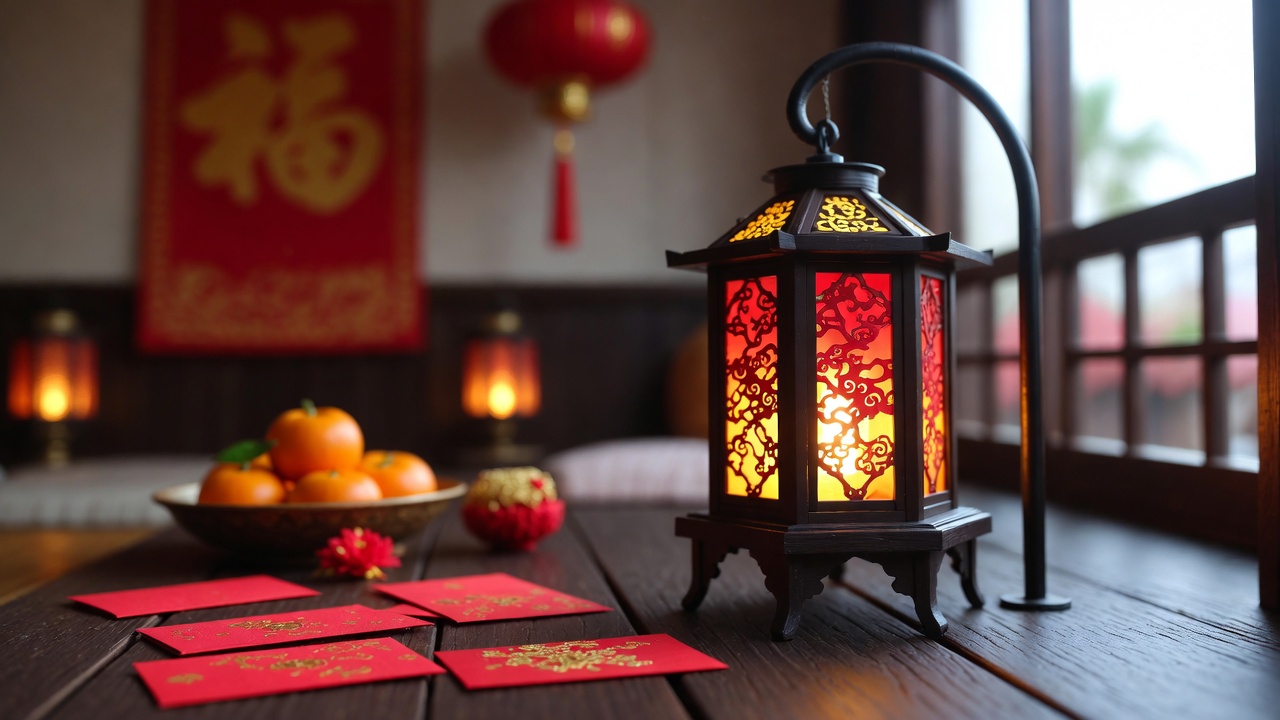
Hang red lanterns at the entrance or in the living room. They symbolize prosperity and a bright future. In 2026, you might find lanterns featuring horse motifs or the four official Spring Festival Gala mascots — Qiqi, Jiji, Chichi, and Chengcheng.
4. Paper Window Cuttings (窗花, chuāng huā)
These delicate red paper-cut designs are affixed to windows. Traditional patterns include fish, flowers, and the zodiac animal of the year. For 2026, horse-themed paper cuttings will be everywhere.
5. Kumquat and Mandarin Orange Trees
In southern China, especially Guangdong and Hong Kong, families display potted kumquat trees (金桔, jīn jú) in the home. The golden fruits symbolize wealth and good luck. Bowls of mandarin oranges placed around the house serve the same purpose — their Chinese name sounds like “gold” and “luck.”
6. Fresh Flowers
Peach blossoms (桃花, táo huā) represent romance and growth. Narcissus (水仙, shuǐ xiān) symbolize good fortune. Orchids represent refinement. A vase of plum blossoms signals resilience. Choose flowers that are starting to bloom — this represents new beginnings.
How to Watch the CCTV Spring Festival Gala 2026 With Your Family
No Chinese New Year’s Eve is complete without the Spring Festival Gala — known as 春晚 (chūn wǎn). Produced by China Media Group (CMG), this annual live broadcast holds the Guinness World Record as the most-watched television program on the planet, with the 2020 edition drawing over 1.2 billion viewers.
2026 Gala Details at a Glance
| Detail | Information |
|---|---|
| Date | Monday, February 16, 2026 |
| Air Time | 8:00 PM China Standard Time (CST) |
| Duration | Approximately 4.5 hours (until past midnight) |
| Theme | “Galloping Steed, Onward Unstoppable” (骏马奔腾,势不可挡) |
| Main Venue | CMG Headquarters, Beijing |
| Sub-Venues | Four locations across China |
| Hosts | Ren Luyu, Sa Beining, Neghmet Raxman, Long Yang, Ma Fanshu, and Liu Xinyue |
| How to Watch Abroad | CCTV-1, CCTV’s official YouTube channel, Tencent Video, iQIYI |
What to Expect This Year
The 2026 Gala will feature a mix of popular songs, dance performances, comedy sketches, opera, magic shows, and creative fusion acts. A highlight this year: embodied robots will return to the Gala stage after their viral debut in 2025. The production will also use 8K technology with entirely domestic equipment and debut 3D Vivid Audio Technology for an immersive sound experience.
For overseas viewers, the vertical-screen broadcast will use CMG’s latest ultra-high-definition production technology — perfect for watching on your phone while making dumplings.
How Families Typically Watch
The Gala is background, foreground, and everything in between. Here is the typical pattern:
8:00 PM: The Gala begins. The family finishes the last courses of the Reunion Dinner and settles in front of the TV. Children play on the floor. Grandparents take the best seats.
8:00–10:00 PM: Song and dance performances set a cheerful mood. Family members chat over tea, crack sunflower seeds (瓜子, guā zi), and snack on candied fruits. The comedy sketches (小品, xiǎo pǐn) and cross-talk routines (相声, xiàng sheng) get the biggest laughs and the most heated debates.
10:00 PM–Midnight: The atmosphere grows more reflective. Some families begin wrapping dumplings for the midnight meal. Older relatives share stories from past New Year’s Eves. Children fight sleep.
Midnight (零点, líng diǎn): The countdown begins. Firecrackers explode outside. The family shares the first dumplings of the new year. Elders give out 红包 (hóng bāo) — red envelopes stuffed with money — to children and sometimes to retired seniors. Everyone says “新年快乐!” (xīn nián kuài lè, “Happy New Year!”) or “马年快乐!” (mǎ nián kuài lè, “Happy Horse Year!”).
Red Envelopes and Gift-Giving Etiquette for Chinese New Year 2026
The exchange of 红包 (hóng bāo) — red envelopes filled with money — is one of the most beloved Chinese New Year customs. But there are rules and etiquette that many people, especially those new to the tradition, may not know.
Who Gives and Who Receives?
The general rule: married adults give red envelopes to unmarried younger people and to retired elders. Parents give to children. Grandparents give to grandchildren. Bosses may give to employees. In southern China, especially Guangdong and Hong Kong, red envelopes are called 利是 (lì shì), and married people give them to any unmarried person, regardless of age.
How Much Money Should You Put Inside?
There is no fixed amount, but the number matters:
Even numbers are preferred. Amounts like ¥200, ¥600, ¥800, or ¥1,000 are common. The number 8 is especially lucky because it sounds like “发” (fā, “to prosper”).
Avoid the number 4. It sounds like “死” (sǐ, “death”) in Mandarin and Cantonese.
New, crisp bills are a must. Many families visit the bank before the holiday to exchange old bills for fresh ones. The crispness of the bill symbolizes a fresh start.
Digital Red Envelopes
In 2026, digital red envelopes on WeChat (微信) and Alipay (支付宝) are just as popular as physical ones. WeChat’s annual red envelope feature has become a massive social event. During the Gala, audiences can even win virtual red envelopes by shaking their smartphones — a tradition that began in 2015 and has only grown more popular.
Chinese New Year’s Eve Activities Beyond the Dinner Table
The Reunion Dinner is the heart of the evening, but it is far from the only tradition. Here is what fills the hours between dusk and dawn:
Staying Up All Night (守岁, shǒu suì)
This ancient custom means “guarding the year.” Family members stay awake through midnight and often into the early morning hours. For children, staying up late is itself a thrill. For adults, it is a meditative act — a conscious farewell to the old year and a watchful welcome to the new one. Tradition holds that staying up late on New Year’s Eve brings longevity to your parents.
Firecrackers and Fireworks (放鞭炮, fàng biān pào)
The legend goes like this: in ancient times, a terrifying beast called 年 (Nián) attacked villages every New Year’s Eve. People discovered that the creature feared loud noises, bright lights, and the color red. So they set off firecrackers, lit candles, and wore red. The tradition stuck.
Today, firecrackers are set off at midnight to welcome the new year with a bang. In large cities like Beijing and Shanghai, regulations have tightened in recent years due to air quality and safety concerns, but fireworks displays remain spectacular in many areas. Smaller towns and rural areas still erupt in a continuous symphony of crackling and booming that can last for hours.
Playing Mahjong (打麻将, dǎ má jiàng)
For many families, a few rounds of mahjong after dinner are as essential as the dumplings themselves. The clatter of tiles is the soundtrack of Chinese New Year. Some families play for small stakes; others just play for bragging rights. Either way, the game keeps multiple generations engaged and talking late into the night.
Honoring Ancestors (祭祖, jì zǔ)
Before the Reunion Dinner begins, many families pay respects to their ancestors. This may involve visiting grave sites earlier in the day, setting up a small altar at home with offerings of food and incense, or simply adding an extra place setting at the dinner table for the deceased. The message is clear: even those who have passed are part of the reunion.
How to Celebrate Chinese New Year’s Eve If You Live Overseas
For the vast Chinese diaspora — and for anyone who has fallen in love with Chinese culture — celebrating New Year’s Eve abroad comes with unique challenges and creative solutions.
Recreate the Essentials at Home
You do not need a perfect 12-course banquet. Focus on the dishes that matter most to your family. A whole steamed fish, a plate of dumplings wrapped by hand, and a bowl of tangyuan can carry the full emotional weight of the holiday. The act of cooking together is itself a form of reunion.
Connect With Family Remotely
If you cannot be at the table with your parents, video call them during the dinner. Many families now prop up a tablet at the table so that distant members can “join” the meal. It is not the same as being there — everyone knows that — but it is better than silence.
Find Your Local Community
Major cities around the world host Chinese New Year celebrations. London, San Francisco, Sydney, Vancouver, Singapore, and many others put on parades, temple fairs, and public countdowns. Check your local Chinatown for events. Many Chinese community organizations also host communal Reunion Dinners for people who are far from home.
Stream the Gala
The Spring Festival Gala is available on YouTube and streaming platforms worldwide. Even if you do not understand every word, putting it on in the background creates an atmosphere that is immediately familiar to anyone who grew up with this tradition.
What Makes the 2026 Year of the Fire Horse Special for Your Reunion
The Year of the Fire Horse is not just another zodiac year. It is a once-in-60-years event. The last Fire Horse year was 1966. The next one will be 2086. This rarity gives the 2026 celebration an extra layer of significance.
In Chinese astrology, the Horse represents energy, confidence, and a love of freedom. People born in Horse years (1942, 1954, 1966, 1978, 1990, 2002, 2014, 2026) are said to be charismatic, quick-thinking, and adventurous. When paired with the Fire element, these traits are amplified — passion burns brighter, ambition runs hotter, and the drive for change becomes irresistible.
How to Bring Fire Horse Energy Into Your Celebration
Lucky colors: Red, gold, and green are the recommended hues for 2026. Use them in your decorations, table settings, and clothing.
Lucky numbers: 2, 3, 7, and 9. Consider incorporating these into your red envelope amounts or the number of dishes on your table.
Horse-themed decorations: Look for paper cuttings, figurines, and calligraphy featuring the Horse. The official Gala mascots — four ponies named Qiqi, Jiji, Chichi, and Chengcheng — make charming decorations for families with children.
Ben Ming Nian (本命年) reminder: If you or a family member were born in a Horse year, 2026 is your Ben Ming Nian — your zodiac birth year. Tradition holds that this year may bring extra challenges. The remedy? Wear red — red underwear, red socks, a red bracelet. This wards off bad luck and invites blessings.
A Complete Timeline for Hosting Chinese New Year’s Eve 2026
Here is a practical hour-by-hour plan for the big night:
| Time | Activity |
|---|---|
| 1–2 weeks before | Deep-clean the house (扫尘). Buy decorations, new clothes, and gifts. Stock up on snacks, drinks, and ingredients. |
| 2–3 days before | Marinate meats. Prepare sauces. Pre-chop vegetables. Make dumpling filling. |
| Morning of Feb 16 | Hang spring couplets, lanterns, and paper cuttings. Set up the ancestral altar. Arrange flowers and fruit displays. |
| Early afternoon | Begin cooking the main dishes. Start wrapping dumplings as a family. |
| 5:00–5:30 PM | Offer food at the ancestral altar. Light incense. Pay respects. |
| 5:30–6:00 PM | Sit down for the Reunion Dinner. The most senior family member typically takes the seat of honor. |
| 6:00–8:00 PM | Enjoy the feast. Toast with 白酒 (báijiǔ) or other drinks. Share stories and laughter. |
| 8:00 PM | Turn on the Spring Festival Gala. Settle in with tea, snacks, and sunflower seeds. |
| 10:00–11:30 PM | Wrap a fresh batch of dumplings for the midnight meal. Children receive red envelopes. |
| Midnight | Count down together. Set off firecrackers (where permitted). Boil the midnight dumplings. Exchange blessings: “新年快乐!马年大吉!” |
| After midnight | Stay up as long as you can (守岁). Play mahjong, cards, or simply talk. |
Common Greetings and Blessings for Chinese New Year 2026
End your evening — and begin your new year — with the right words. Here are some essential greetings for the Year of the Horse:
| Chinese | Pinyin | English Meaning |
|---|---|---|
| 新年快乐 | Xīn nián kuài lè | Happy New Year |
| 恭喜发财 | Gōng xǐ fā cái | Wishing you prosperity |
| 马年快乐 | Mǎ nián kuài lè | Happy Year of the Horse |
| 马到成功 | Mǎ dào chéng gōng | Success upon the Horse’s arrival (instant success) |
| 龙马精神 | Lóng mǎ jīng shén | Spirit of the Dragon and Horse (vigor and vitality) |
| 万事如意 | Wàn shì rú yì | May all your wishes come true |
| 身体健康 | Shēn tǐ jiàn kāng | Wishing you good health |
| 阖家欢乐 | Hé jiā huān lè | Happiness for the whole family |
The phrase 马到成功 is especially fitting for 2026 — it literally means that success comes as soon as the Horse arrives.
Final Thoughts: What the Reunion Dinner Really Means
After all the planning, shopping, cooking, decorating, and cleaning, the Reunion Dinner comes down to something that cannot be bought or prepared in advance: presence.
The round table is round for a reason. There are no head seats and no foot seats. Everyone is equal. Everyone is included. The shape itself is a symbol — of completeness, of unity, of the unbroken circle of family.
In 2026, as the Fire Horse charges forward with passion and purpose, take a moment at your table to look around. Notice who is there. Notice the laughter, the clattering chopsticks, the TV playing softly in the background, the grandparent who insists you eat more, the child who falls asleep in someone’s lap before midnight.
That is what the Reunion Dinner is really about. Not the food, not the decorations, not the red envelopes — though all of those things are wonderful. It is about the simple, radical, ancient act of going home.
马年快乐。新年快乐。阖家团圆。
Happy Year of the Horse. Happy New Year. May your family be together.