A journey into the sacred craft of torma and mani butter art that has illuminated Tibetan monasteries for over 600 years
The air in Lhasa carries a particular crispness in February. Prayer flags snap against the wind sweeping down from the Himalayas. Inside the Jokhang Temple, monks work through the night, their breath visible in the lamplight. Their fingers, numbed by ice water, shape blocks of yak butter into intricate flowers, deities, and cosmic mandalas. This is the ancient tradition of Losar butter sculptures—a sacred art form that transforms the humblest kitchen staple into ephemeral masterpieces celebrating the Tibetan New Year.
For travelers seeking authentic cultural experiences beyond the ordinary, witnessing the creation and display of these butter sculptures during Losar offers a profound window into Tibetan Buddhist spirituality, artistic mastery, and community celebration. This comprehensive guide explores everything you need to know about this remarkable tradition.
What Is Losar and Why Do Tibetans Celebrate the New Year with Butter Sculptures?
Losar (ལོ་གསར་), literally meaning “new year” in Tibetan, stands as the most significant festival in the Tibetan calendar. The celebration typically falls between late January and early March, determined by the lunisolar Tibetan calendar. In 2024, Losar marked the beginning of the Year of the Wood Dragon on February 10th, while 2025 celebrations commenced on February 28th, ushering in the Year of the Wood Snake.
The tradition of creating butter sculptures during Losar traces its origins to the 15th century, when Je Tsongkhapa, founder of the Gelug school of Tibetan Buddhism, experienced a profound dream. In this vision, he saw thorns transform into brilliant lamps and weeds become exquisite flowers. Inspired by this spiritual revelation, Tsongkhapa organized the first Mönlam Chenmo (Great Prayer Festival) in 1409 at Jokhang Temple.
To commemorate his vision and invite blessings for the new year, Tsongkhapa commissioned monks to create elaborate sculptures from yak butter. This inaugural display featured offerings to the Buddha and quickly became an integral component of Losar celebrations across the Tibetan plateau.
| Losar Timeline | Event |
|---|---|
| 29th day of 12th month | House cleaning and preparation of guthuk soup |
| 30th day (New Year’s Eve) | Family gatherings, butter lamp lighting |
| 1st day of 1st month | Family celebrations, visiting monasteries |
| 3rd–15th day | Public festivities, butter sculpture displays |
| 15th day (Chunga Choepa) | Grand butter sculpture exhibition, Butter Lamp Festival |
The culmination of butter sculpture artistry occurs on the 15th day of the first Tibetan month, known as Chunga Choepa or the Butter Lamp Festival. This evening transforms monastery courtyards and public squares into galleries of illuminated sculptural wonders.
The Sacred Origins of Tibetan Butter Sculpture Art and Buddhist Offerings
Understanding butter sculptures requires appreciating their place within the broader tradition of torma (གཏོར་མ་)—sculpted ritual offerings central to Tibetan Buddhist practice. The word torma derives from the Tibetan verb “to scatter” or “to distribute,” reflecting the offering’s purpose of sharing merit with all sentient beings.
The Spiritual Significance of Butter as a Medium
Why butter? In the harsh conditions of the Tibetan plateau, yak butter represented precious sustenance. Offering something so valuable demonstrated the highest form of devotion and generosity. The Buddha taught that offerings should involve some sacrifice from the giver—butter, as a primary food source and fuel for lamps, perfectly embodied this principle.
Beyond practical value, butter carries profound symbolic meaning in Buddhist philosophy:
- Impermanence (Anicca): Butter sculptures melt, teaching practitioners that all phenomena are transient
- Transformation: The humble food becomes sacred art, mirroring spiritual awakening
- Light: When burned in lamps, butter illuminates darkness, representing wisdom dispelling ignorance
- Purity: The white color symbolizes the pure mind free from defilements
The tradition also connects to the Five Sense Offerings in Tibetan Buddhism:
- Form (sight) – Flowers and butter sculptures
- Sound – Music and chanting
- Smell – Incense
- Taste – Food and water
- Touch – Silk fabrics
Butter sculptures address the offering of beautiful forms, created with such skill that viewing them generates joy and merit for both artists and observers.
How Tibetan Monks Create Butter Sculptures: Traditional Techniques and Methods
The creation of Losar butter sculptures demands extraordinary skill, patience, and physical endurance. The process, largely unchanged for six centuries, represents one of the world’s most challenging sculptural traditions.
Preparing the Butter Sculpture Medium
Traditional butter sculptures use yak butter (མར་), though contemporary artists sometimes incorporate sheep butter or vegetable-based alternatives. Fresh butter arrives at monasteries in large blocks, often donated by nomadic herders as merit-making offerings.
The preparation process unfolds in specific stages:
- Washing: Fresh butter is repeatedly washed in cold water to remove impurities and milk solids
- Kneading: Artists work the butter by hand until it achieves a smooth, clay-like consistency
- Coloring: Natural mineral pigments and modern vegetable dyes are incorporated to create vibrant hues
- Aging: The prepared material rests in cold storage until needed
Traditional Color Pigments Used in Butter Sculptures:
| Color | Traditional Source | Symbolic Meaning |
|---|---|---|
| Yellow/Gold | Saffron, turmeric | Buddha body, prosperity |
| Red/Orange | Vermillion, ochre | Fire, power, life force |
| Blue | Lapis lazuli, indigo | Sky, wisdom, healing |
| Green | Malachite, plant dyes | Activity, success, nature |
| White | Pure butter | Purity, peace, truth |
| Black | Carbon, mineral soot | Wrathful deities, protection |
Working in Freezing Temperatures
Here lies the greatest challenge of butter sculpture creation: the material melts at body temperature. To maintain workability, monks must sculpt in temperatures near or below freezing. Historically, artists worked outdoors during winter nights. Today, monasteries may use refrigerated rooms, but many artists still prefer traditional cold conditions for optimal results.
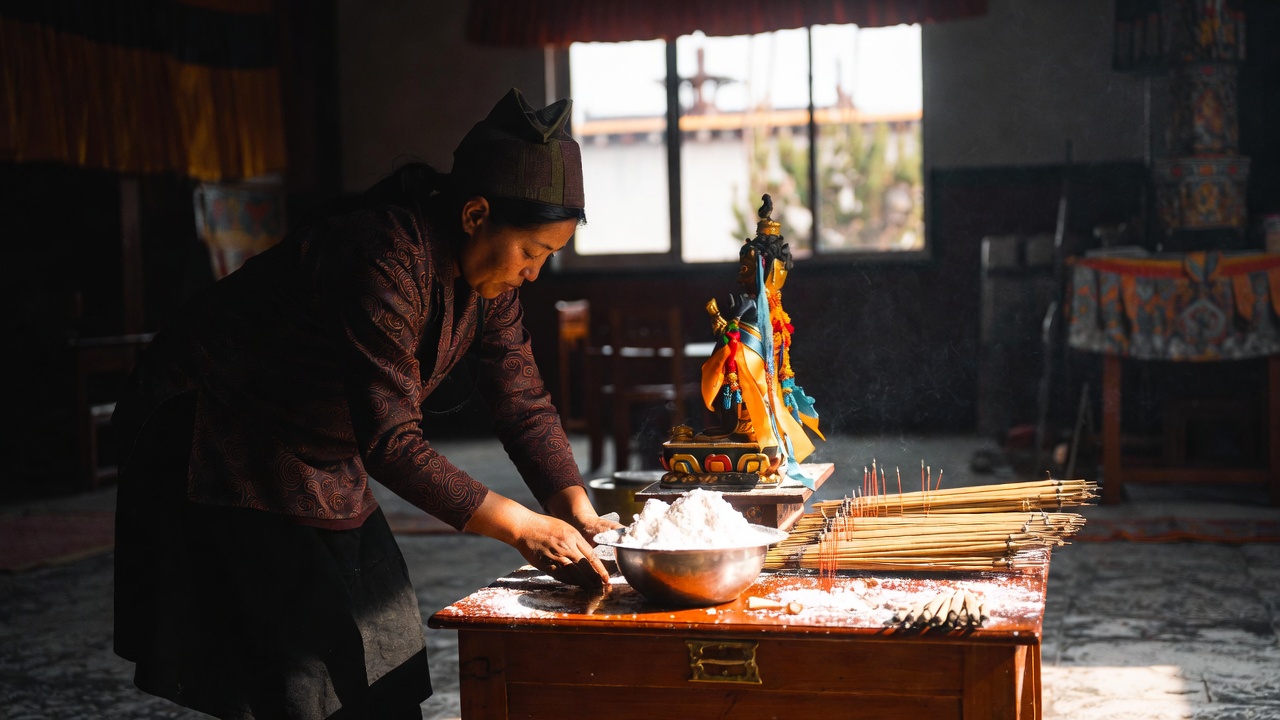
Before handling the butter, sculptors repeatedly plunge their hands into buckets of ice water mixed with crushed ice. This numbs the fingers and prevents body heat from softening the material. Master sculptors describe the sensation as simultaneously painful and meditative—the discomfort becomes part of their spiritual practice.
Building the Armature and Basic Forms
Large butter sculptures require internal support structures. Artists construct wooden or wire armatures wrapped in fabric or paper to provide stability and reduce the amount of butter needed for massive pieces.
The building process follows established sequences:
- Core construction: The central armature is erected and padded
- Base layer: White or undyed butter forms the foundational shapes
- Detail layer: Colored butter adds features, ornaments, and fine elements
- Surface finishing: Final textures and patterns are applied with specialized tools
Traditional Tools of the Butter Sculpture Artist
Tibetan butter sculptors employ a variety of specialized implements, many handmade and passed down through generations:
- Shing-shel – Wooden spatulas of various sizes for shaping large areas
- Kha-ri – Fine metal needles and picks for detailed work
- Tsa-ra – Textured stamps for creating repetitive patterns
- Kong-ma – Scrapers for smoothing surfaces
- Tho-ba – Small hammers for packing butter
- Template sets – Paper or metal guides for consistent proportions
Common Motifs and Themes in Losar Butter Sculpture Displays
The imagery depicted in Losar butter sculptures draws from the rich wellspring of Tibetan Buddhist iconography. While artists exercise creative freedom, certain motifs appear consistently across traditions and regions.
Buddhist Deities and Enlightened Beings
Representations of Buddhas, Bodhisattvas, and protective deities form the centerpiece of most butter sculpture displays. These figures are rendered according to strict iconographic standards (known as thangka proportions), ensuring proper religious authenticity.
Commonly depicted figures include:
- Shakyamuni Buddha – The historical Buddha, often shown in meditation or teaching pose
- Avalokiteshvara (Chenrezig) – Bodhisattva of compassion, special protector of Tibet
- Manjushri – Bodhisattva of wisdom, depicted with sword and scripture
- Tara (Green and White) – Female Bodhisattva of compassionate action
- Tsongkhapa – Founder of the Gelug school, shown with pointed yellow hat
- Padmasambhava (Guru Rinpoche) – Eighth-century master who established Buddhism in Tibet
The Eight Auspicious Symbols of Tibetan Buddhism
The Ashtamangala (བཀྲ་ཤིས་རྟགས་བརྱད་) appear throughout Losar butter sculpture displays, either as standalone pieces or integrated into larger compositions:
| Symbol | Tibetan Name | Meaning |
|---|---|---|
| Parasol | Gdugs | Protection, royalty |
| Golden Fish (pair) | Gser-nya | Freedom, fertility, abundance |
| Treasure Vase | Gter-chen-po’i bum-pa | Spiritual and material wealth |
| Lotus | Padma | Purity, enlightenment |
| Conch Shell | Dung-dkar | Buddha’s teachings spreading |
| Endless Knot | Dpal-be’u | Interconnection, wisdom and compassion united |
| Victory Banner | Rgyal-mtshan | Victory of dharma over ignorance |
| Dharma Wheel | ‘Khor-lo | Buddha’s teachings, the Eightfold Path |
Flowers, Animals, and Natural Forms
Beyond religious iconography, butter sculptors create extraordinary representations of the natural world:
- Lotus flowers in full bloom, buds, and seed pods
- Chrysanthemums symbolizing longevity
- Peonies representing wealth and honor
- Snow lions – mythical creatures embodying fearlessness
- Dragons – associated with power and the Chinese zodiac influence
- Peacocks – able to consume poison without harm, symbolizing transformation
- Deer – recalling Buddha’s first teaching at Deer Park
Narrative Scenes and Jataka Tales
Some ambitious displays recreate entire scenes from Buddhist literature. The Jataka tales—stories of Buddha’s previous lives—provide popular subject matter. Sculptors might depict the Buddha as a compassionate deer, a generous prince, or a self-sacrificing rabbit, teaching moral lessons through visual storytelling.
The Butter Lamp Festival: Chunga Choepa Celebrations on the 15th Day of Losar
The apex of Losar butter sculpture tradition arrives with Chunga Choepa (ཆོ་འཕྲུལ་ཆེན་པོ་), the Butter Lamp Festival celebrated on the 15th day of the first Tibetan month. This evening commemorates the historical Buddha’s display of miraculous powers at Sravasti, where he defeated six non-Buddhist teachers in philosophical debate and demonstrated supernatural abilities.
Historical Development of the Butter Lamp Festival
According to Buddhist history, after his victory at Sravasti, Shakyamuni Buddha performed fifteen days of miracles to inspire faith in his followers. The 15th day marked the most spectacular display. Tibetans celebrate this occasion by filling monastery courtyards with butter lamps and sculptures, recreating through human artistry a glimpse of the Buddha’s miraculous manifestations.
The festival gained institutional importance through Tsongkhapa’s establishment of the Mönlam Chenmo. At its height in pre-1959 Tibet, the Lhasa celebrations drew thousands of monks and pilgrims from across the region. Monasteries competed to produce the most impressive butter sculpture displays, some reaching heights of ten meters or more.
What to Expect at a Traditional Butter Lamp Festival
Visitors to the Butter Lamp Festival experience a feast for the senses:
Visual spectacle: As darkness falls, thousands of butter lamps illuminate intricate sculptures arranged on tiered wooden frames (torma-khen). The flickering light animates the figures, creating an almost supernatural atmosphere.
Sound: Monks chant prayers and mantras while long horns (dungchen), cymbals (silnyen), and drums provide ceremonial music.
Crowds: Pilgrims circumambulate the displays, spinning prayer wheels and prostrating. The press of bodies in narrow monastery lanes can be overwhelming but speaks to the festival’s continued importance.
Duration: The main display typically runs from dusk until late evening. Some locations maintain sculptures through the night.
Where to Experience Authentic Losar Butter Sculptures in Tibet and Beyond
For travelers wishing to witness this extraordinary tradition firsthand, several locations offer exceptional opportunities.
Monasteries in Lhasa, Tibet
Jokhang Temple remains ground zero for Losar butter sculpture traditions. Located in the heart of Lhasa’s old town, this seventh-century temple hosts significant displays during the Butter Lamp Festival. The sculptures are arranged in the courtyard and along the Barkhor—the sacred circumambulation path surrounding the temple.
Sera Monastery, approximately 5 kilometers north of Lhasa, features its own impressive butter sculpture tradition. This Gelug institution, founded in 1419, maintains strong connections to Tsongkhapa’s original vision.
Drepung Monastery, once the world’s largest monastery with over 10,000 monks, creates notable butter sculptures in its assembly halls and courtyards.
Kumbum Monastery in Qinghai Province
Located near Xining in Qinghai Province, Kumbum Monastery (Ta’er Temple) stands as perhaps the most famous center for butter sculpture artistry. Founded in 1583 at the birthplace of Tsongkhapa, Kumbum has developed a distinctive sculptural tradition recognized by UNESCO.
The monastery’s annual Butter Sculpture Festival attracts visitors from across China and beyond. Kumbum artists are renowned for their:
- Technical virtuosity in fine detail
- Incorporation of contemporary themes alongside traditional imagery
- Larger-than-life sculptural installations
- Year-round butter sculpture displays in dedicated galleries
Labrang Monastery in Gansu Province
Labrang Tashi Kyil, located in Xiahe, Gansu Province, represents the largest Tibetan monastery outside the Tibet Autonomous Region. Its Mönlam Festival features butter sculpture displays rivaling those of Lhasa.
Labrang’s tradition emphasizes:
- Elaborate butter flowers with thousands of petals
- Complex multi-figure narrative scenes
- Strong preservation of classical techniques
Tibetan Communities in Exile
The Tibetan diaspora has successfully transplanted butter sculpture traditions to communities worldwide:
Dharamsala, India – Home to the Dalai Lama and the Tibetan government-in-exile, Dharamsala’s monasteries create notable butter sculptures during Losar.
Kathmandu Valley, Nepal – Boudhanath Stupa’s surrounding monasteries maintain active butter sculpture programs.
Buddhist Centers Worldwide – From New York to Sydney, Tibetan Buddhist centers increasingly feature butter sculpture displays during Losar, making this tradition accessible to global audiences.
The Symbolism of Colors in Tibetan Butter Sculpture Artwork
Color carries profound meaning in Tibetan Buddhist art, and butter sculpture is no exception. Understanding the symbolic language of color enriches the viewing experience.
The Five Buddha Families and Their Colors
Tibetan Buddhist iconography organizes enlightened qualities into Five Buddha Families, each associated with specific colors, directions, and transformative powers:
| Buddha Family | Color | Direction | Affliction Transformed | Wisdom Attained |
|---|---|---|---|---|
| Vairochana | White | Center | Ignorance | All-Encompassing Wisdom |
| Akshobhya | Blue | East | Anger | Mirror-like Wisdom |
| Ratnasambhava | Yellow | South | Pride | Wisdom of Equality |
| Amitabha | Red | West | Desire | Discriminating Wisdom |
| Amoghasiddhi | Green | North | Jealousy | All-Accomplishing Wisdom |
Artists employ these color associations when depicting deities, ensuring iconographic accuracy and symbolic resonance.
Peaceful Versus Wrathful Deity Coloration
The appearance of deities in Tibetan art reflects their function:
Peaceful deities typically appear with:
- Soft pastel coloration
- White or golden skin tones
- Flowing silks in gentle hues
- Serene expressions
Wrathful deities display:
- Intense, saturated colors
- Dark blue, black, or red skin
- Flames and fierce ornamentation
- Terrifying expressions (representing the destruction of ego, not anger)
Regional Variations in Color Palette
Different Tibetan regions have developed distinct color preferences:
Central Tibet (U-Tsang) – Classical palette with strong gold, red, and blue Eastern Tibet (Kham) – Vibrant, saturated colors with pink and orange accents Amdo Region – More pastel tones with green and turquoise emphasis Exile Traditions – Adaptation to available materials, sometimes more varied colors
Preserving an Ancient Art: Challenges Facing Butter Sculpture Tradition Today
The butter sculpture tradition faces significant pressures in the contemporary world. Understanding these challenges helps visitors appreciate the urgency of cultural preservation.
Climate Change and Temperature Challenges
Rising global temperatures pose existential threats to butter sculpture. Traditional outdoor work becomes increasingly difficult as winters warm. Even in Tibet, monks report:
- Shorter working seasons due to warmer weather
- Greater reliance on artificial refrigeration
- Accelerated melting of completed sculptures
- Changes in butter consistency due to warmer storage
Loss of Master Artists and Knowledge Transmission
The turbulent history of the 20th century disrupted traditional apprenticeship systems. The Cultural Revolution (1966-1976) saw the destruction of monasteries and persecution of religious practitioners. Many master sculptors were killed, imprisoned, or forced to abandon their craft.
Today’s revival faces challenges:
- Few surviving masters of pre-1959 techniques
- Limited documentation of advanced methods
- Young monks sometimes preferring other vocations
- Economic pressures pulling potential artists elsewhere
Commercialization and Authenticity Concerns
Tourism has brought both benefits and concerns:
Positive impacts:
- Increased awareness and appreciation
- Financial support for monasteries
- Documentation through photography and video
- International interest in preservation
Concerns:
- Pressure to perform on tourist schedules rather than religious calendar
- Simplification of designs for mass viewing
- Risk of treating sacred art as mere spectacle
- Competition with other attractions for monastery resources
How to Respectfully Experience Butter Sculptures as a Cultural Traveler
Visiting butter sculpture displays during Losar requires sensitivity and preparation. Following proper etiquette ensures a meaningful experience while respecting sacred traditions.
Understanding Monastery Protocols
When visiting Tibetan monasteries during Losar:
Dress modestly: Cover shoulders and knees. Avoid revealing clothing.
Remove hats: In temple interiors, remove head coverings as a sign of respect.
Circumambulate clockwise: When walking around sacred objects or buildings, always move in a clockwise direction.
Ask before photographing: Some monasteries prohibit photography of butter sculptures. Always ask permission first.
Avoid touching: Never touch butter sculptures or other sacred objects.
Make offerings: Small monetary donations to butter lamp funds support the tradition.
Silence: Maintain quiet reverence inside temple spaces.
Best Practices for Photography
If photography is permitted:
- No flash: Flash photography can disturb worshippers and potentially affect sculptures
- Stable position: Avoid jostling others while positioning for shots
- Respectful subjects: Don’t photograph individuals without permission
- Keep moving: Don’t block others’ views for extended periods
- Storage: Back up images; these experiences may be once-in-a-lifetime
Engaging Meaningfully with the Tradition
Beyond passive observation, visitors can engage more deeply:
Light a butter lamp: Many monasteries sell small butter lamps for visitors to light. This traditional act generates merit and connects you to the offering tradition.
Make a donation: Contributions to monastery butter sculpture funds directly support the artists.
Attend teachings: Some monasteries offer Losar dharma talks open to visitors.
Learn basic prayers: Even memorizing “Om Mani Padme Hum” demonstrates respect.
Take time: Don’t rush through. Butter sculptures reward extended contemplation.
The Spiritual Philosophy Behind Ephemeral Butter Art and Impermanence
Perhaps no aspect of butter sculpture tradition speaks more powerfully than its impermanence. These intricate works of art, created over weeks of painstaking labor in freezing conditions, inevitably melt. This is not a flaw but a feature—a profound teaching embedded in the art form itself.
Buddhist Teachings on Impermanence (Anicca)
The Buddha identified impermanence as one of the Three Marks of Existence. All conditioned phenomena—our bodies, our possessions, our thoughts, our civilizations—arise, persist briefly, and pass away. Attachment to impermanent things causes suffering.
Butter sculptures embody this teaching perfectly. Visitors experience beauty while knowing it cannot last. The melting sculpture mirrors our own mortality and the passing of all we hold dear.
The Practice of Non-Attachment
For the monks who create butter sculptures, the process becomes spiritual practice:
- Present-moment awareness: Each moment of creation is complete in itself
- Ego dissolution: The work serves the dharma, not personal fame
- Generosity: Creating something beautiful to offer, not to keep
- Acceptance: Welcoming the sculpture’s eventual dissolution with equanimity
One butter sculpture master from Kumbum Monastery reportedly said: “We create these offerings knowing they will melt. That knowing is the teaching. The butter remembers the shape of our prayers long after it flows away.”
Connections to Sand Mandala Traditions
Butter sculptures share philosophical ground with sand mandalas (དཀྱིལ་འཁོར་)—another Tibetan Buddhist art form intentionally destroyed after completion. Both traditions teach:
- The value of process over product
- Beauty in impermanence
- Liberation through letting go
- Merit generated through sacred creation
- The emptiness of all phenomena
Recipes and Traditions: How Butter Connects to Tibetan New Year Foods
Butter appears not only in sculptures during Losar but permeates the festival’s culinary traditions. Understanding these connections reveals butter’s central importance in Tibetan life.
Po Cha: The Traditional Tibetan Butter Tea
Po cha (བོད་ཇ་), or Tibetan butter tea, anchors daily life on the high plateau. During Losar, families prepare especially rich versions to serve guests. The drink consists of:
- Strong black tea (traditionally brick tea from Yunnan)
- Yak butter
- Salt
- Sometimes milk
The ingredients are churned together in a dongmo (cylindrical churn) until emulsified into a thick, warming beverage. Po cha provides essential calories and fat in the harsh mountain climate.
During Losar, offering butter tea to guests demonstrates hospitality and generosity. Cups are refilled continuously—an empty cup suggests the host’s inattention.
Khapse: Fried Butter Pastries for the New Year
Khapse (ཁ་ཟས་), deep-fried pastries, appear on every Tibetan table during Losar. Made from flour, butter, sugar, and eggs, these treats are shaped into intricate forms:
| Khapse Type | Shape | Symbolism |
|---|---|---|
| Drokha | Ear-shaped | Listening to dharma |
| Ache Lhamo | Animal forms | Zodiac, nature |
| Khatsan | Knot patterns | Endless prosperity |
| Tro-gu | Round balls | Completeness |
| Khura | Twisted strips | Interconnection |
Families create elaborate khapse towers called dre-kar, displayed prominently throughout the Losar season.
Dresil: Sweet Saffron Rice with Butter
Dresil represents special occasion food served during Losar and at weddings. The dish combines:
- Steamed rice
- Melted butter
- Saffron for golden color
- Raisins and dried fruits
- Sugar
The golden color signifies prosperity, while the sweetness welcomes an auspicious new year.
Modern Innovations in Butter Sculpture Technique and Presentation
While deeply traditional, butter sculpture art continues to evolve. Contemporary artists and monasteries have introduced innovations while maintaining core techniques.
Refrigeration and Climate Control
Modern refrigeration technology has transformed butter sculpture practice:
- Extended working seasons: Artists can now work year-round in controlled environments
- Longer display periods: Cooled galleries maintain sculptures for weeks or months
- Improved detail: Consistent temperatures allow finer work
- Health and safety: Reduced physical strain on artists
Some monasteries, like Kumbum, now maintain permanent butter sculpture galleries where works can be viewed throughout the year—a significant departure from the traditional ephemeral displays.
Contemporary Subject Matter
While traditional religious themes predominate, some artists incorporate contemporary elements:
- Depictions of modern Buddhist teachers alongside historical figures
- World heritage sites and famous landmarks
- Current events and social themes (though usually in secular contexts)
- Fusion of Tibetan and Chinese artistic elements
The 2008 Beijing Olympics, for example, inspired butter sculpture mascots at Kumbum Monastery.
Documentation and Digital Preservation
Technology enables unprecedented documentation:
- High-resolution photography captures details before melting
- 3D scanning creates permanent digital records
- Video documentation preserves creation processes
- Online galleries share sculptures globally
- Academic study ensures knowledge transmission
Organizations like the Tibetan and Himalayan Library at the University of Virginia work to document and preserve visual records of butter sculpture traditions.
Planning Your Losar Trip: Best Times and Tips for Seeing Butter Sculptures
Experiencing Losar butter sculptures requires careful planning. Here’s practical guidance for cultural travelers.
Understanding the Tibetan Calendar
The Tibetan calendar is lunisolar, meaning Losar falls on different dates each year according to the Gregorian calendar. Generally expect:
- Late January to early March for Losar celebrations
- 15th day (about two weeks after New Year’s Day) for Butter Lamp Festival
- Check specific dates each year, as Tibetan and Chinese New Year don’t always align
Upcoming Losar Dates:
| Year | Tibetan Year | Losar Date (Gregorian) | Animal Sign |
|---|---|---|---|
| 2025 | 2152 | February 28 | Wood Snake |
| 2026 | 2153 | February 17 | Fire Horse |
| 2027 | 2154 | February 6 | Fire Sheep |
Travel Permits and Access
Visiting Tibet requires planning for permits and restrictions:
- Tibet Travel Permit: Required for all foreign visitors
- Alien’s Travel Permit: Needed for areas outside Lhasa
- Military Permit: Required for some border regions
- Organized tours: Independent travel is not permitted; you must book through a licensed agency
Permits can take several weeks to process. Begin arrangements at least 2-3 months before travel.
Important: Tibet may close to foreign tourists during sensitive periods. Always confirm access before booking.
Alternative Destinations
If Tibet proves inaccessible, consider:
Qinghai Province, China: Kumbum Monastery near Xining offers easier access with similarly impressive butter sculptures.
Gansu Province, China: Labrang Monastery in Xiahe provides authentic experiences without Tibet permits.
Sichuan Province, China: The Tibetan areas of western Sichuan (Kham region) feature Losar celebrations.
Nepal: Kathmandu’s Tibetan monasteries celebrate Losar with butter sculptures.
India: Dharamsala and Ladakh host vibrant exile community celebrations.
What to Pack
Winter travel in Tibetan regions demands preparation:
- Layered clothing: Temperatures may range from -20°C to 10°C in a single day
- Sun protection: High altitude intensifies UV radiation
- Altitude sickness medication: Consult your doctor about Diamox
- Cash: Rural areas may lack card payment facilities
- Camera gear: Cold drains batteries quickly; bring extras
- Respectful clothing: For monastery visits
The Future of Tibetan Butter Sculpture: Preservation Efforts and Cultural Continuity
Butter sculpture tradition stands at a crossroads. Understanding current preservation efforts illuminates both challenges and hopes.
UNESCO Recognition and Documentation
Tibetan butter sculpture art gained recognition through UNESCO’s Representative List of the Intangible Cultural Heritage of Humanity. This designation brought:
- International awareness of the tradition
- Funding for preservation efforts
- Academic documentation programs
- Exchange programs between practitioners
However, UNESCO listing also raises complex questions about authenticity and change when traditions become heritage.
Training New Generations of Artists
Several monasteries have established formal training programs:
Kumbum Monastery operates a butter sculpture school where young monks study for years under master artists. Students learn:
- Traditional iconographic proportions
- Color mixing and application
- Tool making and use
- Religious context and meaning
Sera Monastery (both in Lhasa and its exile counterpart in India) maintains teaching lineages for butter sculpture.
Secular art schools in Qinghai and other Tibetan regions include butter sculpture in curricula.
Community Engagement and Tourism
Thoughtful tourism can support preservation:
- Ethical tours: Choose operators committed to respectful cultural engagement
- Direct support: Donations to monastery arts programs fund materials and training
- Buying art: Purchasing photographs, books, or related crafts supports artists
- Advocacy: Sharing experiences raises awareness of preservation needs
Digital Documentation Projects
Several initiatives work to create permanent records:
- The Tibet Album at the Pitt Rivers Museum documents historical photographs
- Asian Art Museum digitization projects preserve visual records
- Local initiatives in Tibetan communities film creation processes
- Academic partnerships between monasteries and universities ensure knowledge transfer
Connecting Butter Sculptures to Broader Tibetan Buddhist Art Traditions
Butter sculpture exists within a rich ecosystem of Tibetan Buddhist artistic expression. Understanding these connections enriches appreciation of the butter medium.
Thangka Painting Traditions
Thangka (ཐང་ཀ་) paintings—scroll-mounted images on cloth—share iconographic rules with butter sculpture. Both traditions:
- Follow precise proportional guidelines for deity depiction
- Use symbolic color associations
- Require initiation and religious training
- Serve as meditation supports and teaching tools
Many butter sculpture artists also train in thangka painting, and designs often translate between media.
Sacred Architecture and Sculpture
Tibetan stupas (མཆོད་རྟེན་, chörtens) and temple sculpture inform butter work:
- Architectural forms appear in butter as miniature shrines
- Metal and clay sculpture techniques inspire butter methods
- Temple decoration motifs recur in butter compositions
Mandala Traditions
Mandalas—geometric representations of enlightened realms—appear in multiple Tibetan art forms:
- Sand mandalas (colored sand)
- Painted mandalas (thangka)
- Three-dimensional mandalas (sculpture)
- Butter mandalas (Losar offerings)
Each medium offers distinct qualities, but all serve the same contemplative purpose: visualization of enlightened reality.
Conclusion: Why Losar Butter Sculptures Matter in a Changing World
In an age of digital reproduction and permanent archives, the Tibetan tradition of creating ephemeral butter sculptures offers a profound counter-narrative. These works remind us that beauty need not be permanent to be meaningful. Indeed, their impermanence is precisely what makes them so moving.
For travelers fortunate enough to witness butter sculptures during Losar, the experience transcends tourism. Standing in a monastery courtyard illuminated by thousands of butter lamps, surrounded by intricate sculptures that will melt within days, we glimpse something essential about the human condition. We create. We offer. We let go.
The monks who shape these offerings through freezing nights teach us about devotion, skill, and the wisdom of non-attachment. The pilgrims who circumambulate the displays teach us about faith and continuity. The butter itself—humble, practical, precious—teaches us that the sacred can emerge from the everyday.
As you plan your journey to witness Losar butter sculptures, remember that you participate in a tradition spanning six centuries. Your presence, your attention, your respectful engagement all contribute to the living stream of this remarkable art form. In witnessing impermanence, you help preserve something eternal.
Tashi Delek (བཀྲ་ཤིས་བདེ་ལེགས་)—may you have good fortune, and may your travels be blessed.
Frequently Asked Questions About Losar Butter Sculptures
What is the best time of year to see butter sculptures in Tibet?
The 15th day of the first Tibetan month (usually February or early March) offers the most spectacular displays during the Butter Lamp Festival. However, some monasteries like Kumbum maintain year-round galleries.
How long do butter sculptures last before melting?
Traditional outdoor displays last only one to several days depending on temperature. Climate-controlled galleries can preserve sculptures for weeks or months.
Can visitors try making butter sculptures?
Some Buddhist centers and cultural programs offer butter sculpture workshops for visitors. The Rubin Museum in New York and various Tibetan Buddhist centers occasionally host such events.
Why is yak butter specifically used?
Yak butter has a higher melting point than cow butter and is the traditional fat source on the Tibetan plateau. It also carries cultural and religious significance as a precious offering.
Are there vegetarian alternatives to yak butter used today?
Yes, some contemporary artists use vegetable-based margarines or blended plant fats, especially outside Tibet where yak butter is unavailable.
How can I support butter sculpture preservation?
You can donate to monastery butter lamp funds, support ethical tourism operators, purchase related arts and crafts, and share awareness of this tradition.
Glossary of Tibetan Terms Related to Butter Sculptures and Losar
| Tibetan Term | Pronunciation | Meaning |
|---|---|---|
| ལོ་གསར་ | Losar | New Year |
| མར་ | Mar | Butter |
| གཏོར་མ་ | Torma | Ritual offering sculpture |
| མཆོད་པ་ | Chöpa | Offering |
| སྨོན་ལམ་ཆེན་མོ་ | Mönlam Chenmo | Great Prayer Festival |
| ཆོ་འཕྲུལ་ཆེན་པོ་ | Chunga Choepa | Butter Lamp Festival (15th day) |
| བཀྲ་ཤིས་བདེ་ལེགས་ | Tashi Delek | Good fortune greeting |
| དགེ་ལུགས་ | Gelug | Yellow Hat school of Tibetan Buddhism |
| བོད་ཇ་ | Po cha | Tibetan butter tea |
| ཁ་ཟས་ | Khapse | Fried pastry |