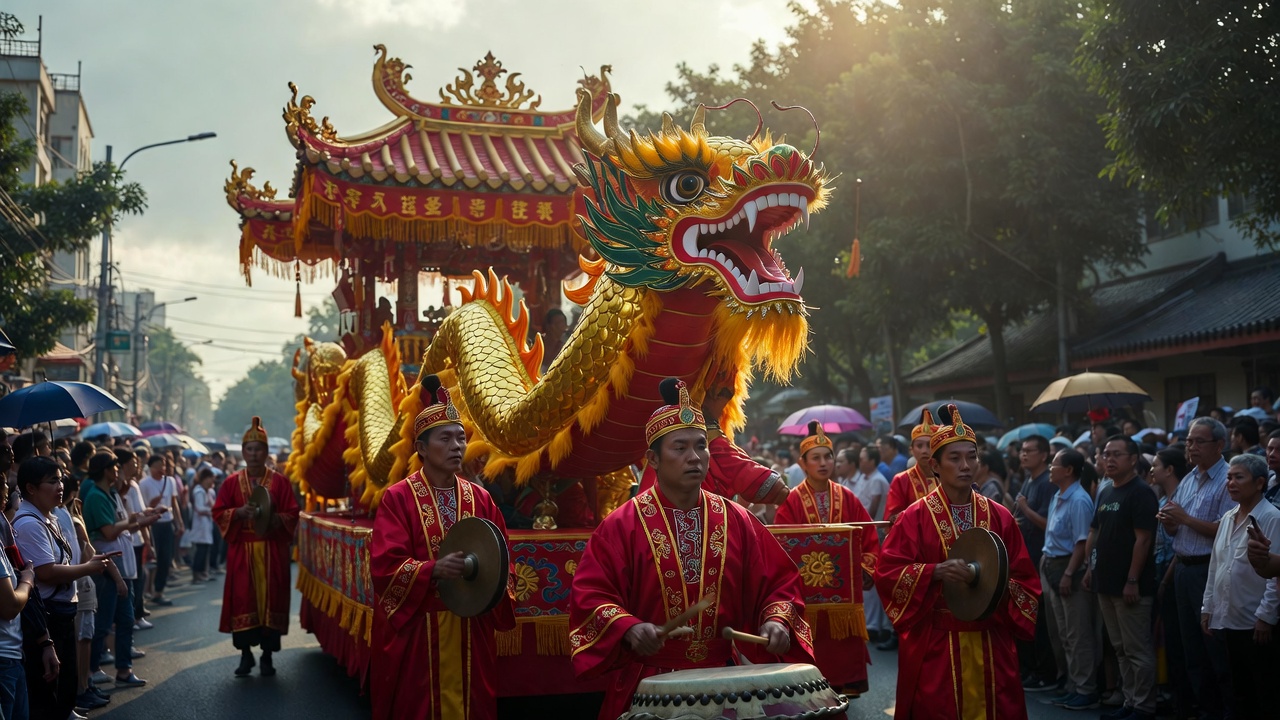
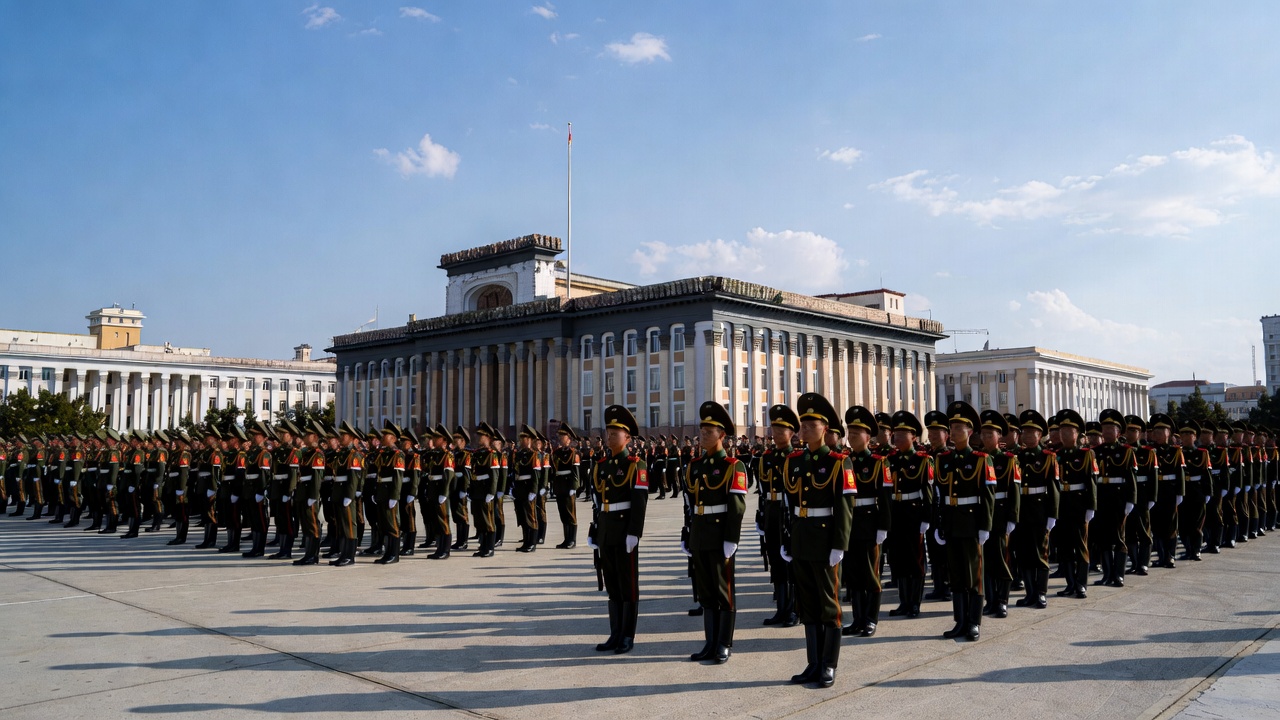
Every February 8, the broad avenues of Pyongyang come alive with a spectacle that few outsiders ever witness firsthand. Columns of soldiers march in lockstep across Kim Il Sung Square. Brass bands fill the winter air with patriotic marches. Civilians lay flowers at bronze statues and war memorials. This is Military Foundation Day — the anniversary of the formal creation of the Korean People’s Army (KPA) on February 8, 1948.
For travelers and scholars drawn to the Korean Peninsula’s complex history, this date carries enormous weight. The KPA was born seven months before the Democratic People’s Republic of Korea (DPRK) itself was proclaimed. Its founding story weaves together anti-Japanese guerrilla resistance, Soviet Cold War strategy, Chinese revolutionary veterans, and the fierce personal ambitions of Kim Il Sung. Understanding how the KPA came into being is essential for anyone seeking to grasp why the Korean Peninsula remains one of the most heavily militarized places on Earth — and why the echoes of 1948 still shape global security headlines in 2026.
This article traces the full arc of that history. We will follow the guerrilla fighters who battled Japanese occupation across the frozen forests of Manchuria. We will examine the Soviet occupation that midwifed the KPA into existence. We will explore the Korean War that transformed a fledgling army into a battle-hardened force. And we will bring the story into the present, where KPA soldiers have appeared on a European battlefield for the first time in the army’s history.
What Is the Korean People’s Army and Why Does the February 8 Founding Date Matter?
The Korean People’s Army — known in Korean as 조선인민군 (Chosŏn inmin’gun) — is the combined military force of North Korea. It is not merely a defense organization. Under the charter of the Workers’ Party of Korea (WPK), the KPA is formally described as “the revolutionary armed forces of the Workers’ Party of Korea.” It answers directly to the WPK Central Military Commission, which is chaired by the party’s general secretary — currently Kim Jong Un.
The KPA today consists of five branches:
| Branch | Role |
|---|---|
| Korean People’s Army Ground Force (KPAGF) | Land-based operations; the largest branch by personnel |
| Korean People’s Army Air and Anti-Air Force (KPAAF) | Air defense, aerial combat, and anti-aircraft systems |
| Korean People’s Navy (KPN) | Coastal defense, submarine operations, and patrol |
| Strategic Force | Ballistic missile operations, including nuclear-capable systems |
| Special Operations Force (KPASOF) | Infiltration, sabotage, and unconventional warfare |
With an estimated 1.32 million active-duty personnel and several million more in reserve and paramilitary formations, the KPA is one of the largest standing armies in the world. According to the 2025 U.S. Defense Intelligence Agency Worldwide Threat Assessment, North Korea “remains one of the most militarized nations in the world with more than 1 million active duty personnel and more than 7 million reserve and paramilitary personnel.”
February 8, 1948 matters because it marks the day that this enormous military institution was formally created — before the North Korean state itself existed. The army preceded the government. That sequence is not accidental. It reflects a core belief in North Korean ideology: that armed force is the foundation upon which everything else — the state, the party, the revolution — must be built.
Anti-Japanese Guerrilla Roots: How the KPA Traces Its Origins to the 1930s Resistance
To understand the KPA’s founding, you must go back further than 1948. The army’s ideological and organizational roots reach into the harsh winter landscapes of Manchuria during the 1930s and 1940s.
After Japan annexed Korea in 1910, Korean resistance took many forms. Some independence fighters operated from exile governments in Shanghai and Chongqing. Others took up arms in the rugged border region between northeastern China and the Korean Peninsula. Among them was a young guerrilla fighter named Kim Song Ju, who would later adopt the name Kim Il Sung.
The Northeast Anti-Japanese United Army
During the 1930s, Korean and Chinese guerrillas fought together against the Japanese occupation of Manchuria. These resistance groups were eventually reorganized into the Northeast Anti-Japanese United Army, a loose coalition of partisan bands operating under the influence of the Chinese Communist Party. Korean fighters within this network conducted raids on Japanese military outposts, attacked supply lines, and launched cross-border strikes against colonial institutions inside Korea.
North Korean historiography claims that on April 25, 1932, Kim Il Sung established the Korean People’s Revolutionary Army (KPRA) — an anti-Japanese guerrilla unit — in Ando County, Manchuria. This date would later play a significant role in the politics of the KPA’s founding anniversary, as we will discuss below.
Retreat to the Soviet Union
By the early 1940s, the Japanese Kwantung Army had launched relentless campaigns to crush the guerrilla resistance in Manchuria. Facing overwhelming force, many fighters from the Northeast Anti-Japanese United Army retreated across the border into Soviet territory in 1941.
There, in the Soviet Far East, these Korean and Chinese guerrillas were reorganized into a special unit known as the 88th Independent Infantry Brigade under Soviet command. Kim Il Sung served as a company commander with the rank of captain in this Soviet formation. The brigade trained rigorously according to Soviet military standards. This period was critical. It gave the future leaders of the KPA their first exposure to modern military organization — structured ranks, coordinated tactics, formalized command chains — all modeled on the Red Army.
When Japan surrendered unconditionally on August 15, 1945, these Soviet-trained Korean officers were ready to return home. They arrived in northern Korea alongside the Soviet Red Army, which occupied the territory north of the 38th Parallel under agreements reached with the United States at the end of World War II. These men — forged in guerrilla war and polished by Soviet training — would form the nucleus of what became the Korean People’s Army.
Soviet Influence on the Formation of the North Korean Military Between 1945 and 1948
The period between Japan’s surrender in August 1945 and the KPA’s formal establishment in February 1948 was one of intense military organization under Soviet supervision. Understanding this period is essential for grasping how the KPA took shape.
Building the Constabulary
After the Soviet occupation began, roughly two thousand Koreans with experience in the Soviet Red Army were dispatched across northern Korea to organize local security and constabulary forces. These efforts began on October 21, 1945, when the first constabulary units were authorized under Soviet military headquarters.
A railroad security force was created on January 11, 1946, to protect the country’s rail infrastructure. On August 15, 1946, a central security organization was established in Pyongyang to integrate and oversee the expanding security apparatus.
Military Education Takes Root
Alongside these constabulary forces, the Soviets helped establish military training institutions. The Pyongyang Military Academy, headed by Kim Chaek (a close ally of Kim Il Sung), was founded in October 1945. It trained officers for the new public security and constabulary units. Graduates of this academy went on to lead the police and security forces across northern Korea.
The Central Constabulary Academy followed in 1946. It would later become the KPA Military Academy in December 1948. These schools trained a generation of political and military officers who would staff the new armed forces.
| Institution | Founded | Later Became |
|---|---|---|
| Pyongyang Military Academy | October 1945 | No. 2 KPA Officers School (January 1949) |
| Central Constabulary Academy | 1946 | KPA Military Academy (December 1948) |
Soviet Equipment and Doctrine
The Soviet Union did not merely advise — it armed. Before the Korean War broke out, the Soviets equipped the KPA with modern tanks, trucks, artillery, and small arms. According to the U.S. Army’s official history of the Korean War, “about three thousand Russians were active in the Army program before June 1950.” Soviet military training films were standard fare. Every aspect of doctrine — from infantry tactics to logistics — bore a Soviet imprint.
In the spring of 1950, particularly large shipments of arms arrived from the Soviet Union. Captured North Korean documents later revealed that Soviet merchant ships from Vladivostok were unloading weapons and ammunition at the port of Ch’ongjin as late as May 1950. Markings on captured equipment showed it had been manufactured in the USSR in 1949 and 1950 — far too recent to have been left behind when Soviet occupation forces withdrew.
The implications were clear: Moscow was deliberately building North Korea’s military capacity in the years before the Korean War.
The Formal Founding of the Korean People’s Army on February 8, 1948
The formal creation of the KPA followed a carefully orchestrated sequence of events in early February 1948.
On February 4, 1948, the State Security Department — a forerunner to the Ministry of People’s Defense — was established as part of the Interim People’s Committee. This new body took over the administrative functions needed to run a national military.
Three days later, on February 7, the Fourth Plenary Session of the People’s Assembly approved a plan to formally separate the roles of the military from those of the police. This was a decisive bureaucratic step. It signaled the creation of a distinct, professional armed force rather than an armed branch of the civil police.
The next day — February 8, 1948 — the formal creation of the Korean People’s Army was officially announced. Kim Il Sung delivered a speech at a founding ceremony held in the plaza in front of Pyongyang Station, accompanied by a military band. The moment was carefully staged to project strength and national purpose.
At its founding, the KPA was organized under a new Ministry of Defense, which controlled:
- A central guard battalion
- Two infantry divisions
- An independent mixed and combined arms brigade
The army that emerged was small but professional. Its officer corps was drawn from three main sources:
- Soviet-trained guerrilla veterans — men who had fought with the 88th Brigade and returned with the Red Army
- Chinese Civil War veterans — ethnic Koreans who had served in the Chinese People’s Liberation Army (PLA)
- Locally recruited and trained officers — graduates of the new military academies
This multi-source composition gave the KPA a diverse pool of combat experience — from Manchurian guerrilla campaigns to Soviet conventional warfare doctrine to Chinese revolutionary tactics.
The Chinese Korean Veterans
A major source of early KPA manpower came from ethnic Korean soldiers who had fought in the Chinese Civil War. The Korean Volunteer Army (Chosŏn Ŭiyonggun) had been established in Yan’an, China, during the anti-Japanese war years. After Japan’s defeat, many ethnic Korean soldiers remained in China and fought alongside the Chinese Communist forces during the civil war against the Nationalists.
As China moved toward disarmament following the Communist victory in 1949, these Korean units were transferred to North Korea. Between July and August 1949, approximately 20,000 soldiers entered North Korea, bringing their Chinese-issued equipment with them. By 1950, additional waves brought the total number of Chinese Korean veterans joining the KPA to a figure that significantly bolstered its ranks. According to the Imperial War Museum’s account of the Korean War, the KPA was established “from Korean communist guerrillas who had previously served with the Chinese People’s Liberation Army, but were ‘advised’ by Soviet personnel.”
These Chinese Korean veterans brought battlefield experience that proved invaluable in the opening phase of the Korean War. However, as the war progressed, many of these elite units suffered devastating casualties.
Two Founding Dates for the KPA: Why North Korea Changed the Army Anniversary
One of the most peculiar aspects of KPA history is the existence of two competing founding dates: February 8, 1948, and April 25, 1932. The shifts between these dates reveal much about the internal politics of the Kim dynasty.
The Original Date: February 8, 1948
From the KPA’s founding until 1977, the official date of establishment was February 8, 1948. This was the date celebrated as Military Foundation Day with parades, speeches, and commemorative events.
The Shift to April 25, 1932
In 1978, the North Korean government retroactively changed the founding date to April 25, 1932. The rationale was ideological. By claiming that Kim Il Sung had established the Korean People’s Revolutionary Army (KPRA) on that date in Manchuria, the regime could argue that the KPA’s roots stretched back to the anti-Japanese guerrilla struggle. This change served to elevate Kim Il Sung’s personal role in military history and reinforce the concept of the “Kim Il Sung revolutionary tradition.”
From 1978 until 2014, April 25 was the sole officially celebrated army founding day. February 8 fell out of use.
The Return to February 8
Under Kim Jong Un, the pendulum swung back. In 2015, Kim Jong Un restored February 8 as a recognized army day. By 2018, the regime formally separated the two dates:
- April 25 became the founding date of the Korean People’s Revolutionary Army (the guerrilla predecessor)
- February 8 was reinstated as the founding date of the Korean People’s Army (the modern military)
By 2019, the KPA’s official establishment date had been fully reverted to February 8, 1948. This change allowed Kim Jong Un to honor both dates while reasserting the significance of the formal, modern military institution.
| Period | Official KPA Founding Date | Reason |
|---|---|---|
| 1948–1977 | February 8, 1948 | Original founding date |
| 1978–2014 | April 25, 1932 | Retroactive change to honor Kim Il Sung’s guerrilla legacy |
| 2015–present | February 8, 1948 (restored) | Kim Jong Un reinstated the original date; April 25 reserved for KPRA |
The shifting dates are not merely bureaucratic trivia. They reflect how each generation of Kim family leadership has used history as a tool to legitimize its rule. Dates, anniversaries, and origin stories are political instruments in North Korea — managed and revised as the needs of the regime evolve.
How the Korean War Shaped the KPA Into a Battle-Hardened Military Force
The Korean War (1950–1953) was the defining crucible of the KPA. It transformed the army from a newly organized force into one of the most battle-tested militaries in East Asia.
The Opening Offensive
On June 25, 1950, the KPA launched a massive invasion of South Korea. By mid-1950, the North Korean force consisted of ten infantry divisions and supporting units, totaling approximately 223,000 troops. The Republic of Korea (ROK) Army, by contrast, was poorly equipped and largely unprepared.
The KPA drove south with shocking speed. Seoul fell within three days. South Korean and American forces were pushed into a desperate defensive perimeter around the southeastern port city of Pusan (modern-day Busan). The KPA’s Soviet-supplied T-34 tanks proved devastating against South Korean forces, who had no comparable armor.
The Tide Turns
The KPA’s rapid advance stalled when United Nations forces, led by the United States, intervened. General Douglas MacArthur ordered an audacious amphibious landing at Inchon on September 15, 1950. The landing cut off KPA supply lines and forced a rapid retreat. The KPA lost an estimated 70,000 of its 100,000-strong force in the autumn of 1950.
When UN forces pushed north toward the Chinese border, China entered the war in October 1950. Hundreds of thousands of Chinese troops — the Chinese People’s Volunteer Army — poured across the Yalu River. The conflict settled into a brutal stalemate that lasted until the Armistice Agreement was signed on July 27, 1953.
Legacy of the War
The Korean War killed approximately 3 million people and left the peninsula physically devastated. No peace treaty was ever signed. The armistice merely halted hostilities along the Korean Demilitarized Zone (DMZ) — a heavily fortified border that remains in place today.
For the KPA, the war left several lasting legacies:
- Battle experience that shaped doctrine for decades
- Deep institutional hostility toward the United States and South Korea
- A commitment to massive military buildup to prevent another near-defeat
- Dependence on Chinese and Soviet military aid that would continue through the Cold War
The war also cemented the Kim family’s grip on power. Kim Il Sung used the conflict to purge political rivals and consolidate one-man rule. The KPA became inseparable from the Kim dynasty — a relationship that persists to this day.
The Songun Military-First Policy and Its Impact on North Korean Society
No discussion of the KPA’s role in North Korean life is complete without examining Songun (선군) — the “military-first” political ideology that has shaped the country since the 1990s.
Origins of Songun
The word Songun translates literally as “military first” — son (선) meaning “first” and gun (군) meaning “military.” While its ideological roots are traced to Kim Il Sung’s guerrilla activities in the 1930s, the policy is most closely associated with Kim Jong Il, who formalized it during the crisis years of the 1990s.
The collapse of the Soviet Union in 1991 was catastrophic for North Korea. Moscow had been Pyongyang’s primary source of military hardware, economic aid, and diplomatic support. The loss of Soviet patronage triggered a devastating economic crisis and famine (known as the “Arduous March”) that killed hundreds of thousands of North Koreans between 1994 and 1998.
In response, Kim Jong Il turned to the military as the anchor of regime survival. In 1995, he formally adopted the Songun policy, placing the KPA at the center of national politics, resource allocation, and decision-making. The philosophy was blunt: without the army, nothing else — not the economy, not the party, not the state — could survive.
Songun in Practice
Under Songun, military spending consumed an enormous share of North Korea’s national budget. While official figures claimed defense accounted for 15.8 percent of the state budget in 2010, most outside analysts estimated the true figure at 25 to 33 percent of all government spending.
The policy meant that the military received priority access to food, fuel, and resources — even as ordinary citizens went hungry. Military officers gained prominent roles in the Workers’ Party of Korea. The KPA was portrayed not merely as a defensive force but as the vanguard of socialist construction.
Kim Jong Un and the Evolution of Songun
When Kim Jong Un assumed power following his father’s death in December 2011, he inherited the Songun framework but gradually shifted its emphasis. While maintaining enormous military investment, Kim Jong Un pivoted toward technological modernization — fast-tracking ballistic missile development, nuclear weapons programs, and cyber warfare capabilities.
The term “Songun” itself has evolved. According to North Korea analyst Fyodor Tertitskiy, the word has largely lost its original precise meaning and now functions more broadly as a label for anything the regime considers “good.” Yet the underlying reality remains unchanged: the KPA occupies a central and privileged position in North Korean life that has no parallel in most other countries.
How Military Foundation Day Is Celebrated Across North Korea Today
Military Foundation Day (February 8) is one of North Korea’s most significant public holidays. It is a day of national pageantry, collective remembrance, and political theater.
The Pyongyang Military Parade
The centerpiece of the celebration is the military parade on Kim Il Sung Square. Soldiers from all five branches of the KPA march in precise formation past a reviewing stand. Tanks, armored vehicles, and mobile missile launchers roll through the streets. In recent years, these parades have featured increasingly advanced weapons systems — including intercontinental ballistic missiles (ICBMs) — designed to project strength to both domestic and international audiences.
The parade is attended by the Supreme Leader in his capacity as Supreme Commander of the Armed Forces. High-ranking military and party officials line the grandstand. The event is broadcast on Korean Central Television, typically on a tape-delayed basis.
Commemorative Events Nationwide
Beyond the capital, celebrations take place across the country:
- Commemorative assemblies are held in major cities and military garrisons
- Art performances and concerts take place at theaters in Pyongyang and provincial centers
- Demonstrations and rallies featuring workers, students, and soldiers fill public squares
- Flower-laying ceremonies occur at statues of Kim Il Sung and Kim Jong Il
- Servicemen and civilians are permitted time off from work to participate
Banquets and Leadership Appearances
The Supreme Leader often hosts banquets for senior military officers as part of the celebrations. During the 2023 Military Foundation Day, Kim Jong Un visited lodging quarters for KPA generals and attended a banquet at the Yanggakdo Hotel with his wife Ri Sol Ju and daughter Kim Ju Ae. The appearance of the leader’s family underscores the deeply personal connection between the Kim dynasty and the military.
Cultural Significance for Visitors
For the small number of foreign visitors permitted to enter North Korea, Military Foundation Day offers a rare window into the country’s martial culture. Tour operators specializing in DPRK travel note that anniversary years — particularly those ending in 0 or 5 — tend to feature the most elaborate celebrations, including large-scale parades. The atmosphere is festive but unmistakably political. Every element of the celebration reinforces the regime’s narrative: that the KPA, the party, and the Kim family are one inseparable whole.
North Korea’s Military Strength in 2026: From 1948 Founding to Modern Superpower Ambitions
The KPA of 2026 is vastly different from the small force that was announced in that plaza in front of Pyongyang Station in 1948. Yet its core mission — defending the Kim regime and projecting power on the Korean Peninsula — has remained remarkably consistent.
Personnel and Manpower
North Korea maintains one of the world’s largest military forces relative to its population. Key figures for 2026 include:
| Category | Estimated Figure |
|---|---|
| Active-duty personnel | ~1.32 million |
| Reserve and paramilitary forces | ~5–7 million |
| Percentage of population in military service | ~29.9% (active, reserve, or paramilitary) |
According to the 2026 Global Firepower ranking, North Korea holds a Power Index score of 0.6016 and is ranked 34th out of 145 countries in overall conventional military strength. South Korea, by comparison, ranks 5th.
Ground Forces
The KPA Ground Force is the backbone of North Korea’s military. It fields approximately 4,300 tanks — mostly older Soviet-era T-55 and T-62 models along with indigenous designs like the Chonma-ho and Songun-915. The ground forces also operate roughly 2,500 armored personnel carriers and 8,600 artillery pieces, including self-propelled guns and multiple rocket launcher systems.
The sheer volume of artillery concentrated near the DMZ represents one of the KPA’s most potent threats. Military analysts have long warned that in any conflict, North Korea could launch devastating artillery barrages against Seoul, which lies just 35 miles south of the border.
Nuclear and Missile Programs
The most dramatic change since 1948 has been North Korea’s development of nuclear weapons and ballistic missiles. According to the Council on Foreign Relations, estimates suggest North Korea could possess fissile material for over 100 nuclear weapons as of the mid-2020s. A 2021 RAND Corporation report projected that Pyongyang could stockpile around 200 nuclear weapons by 2027.
The KPA’s Strategic Force operates a growing arsenal of ballistic missiles, including:
- Hwasong-series ICBMs — capable of reaching the continental United States
- KN-series medium-range ballistic missiles — targeting Japan and U.S. bases in the Pacific
- Pukguksong submarine-launched ballistic missiles (SLBMs) — designed for second-strike capability
- Tactical short-range ballistic missiles — for battlefield use on the Korean Peninsula
Air and Naval Forces
The KPA Air and Anti-Air Force operates approximately 500+ combat aircraft, primarily Soviet-era and Chinese-origin models such as the MiG-29, MiG-21, and Su-25. While most of this fleet is outdated by modern standards, North Korea compensates with extensive air defense systems and missile-based deterrence.
The Korean People’s Navy operates roughly 430 vessels, predominantly small patrol boats, frigates, and corvettes. More significantly, it maintains approximately 70 submarines, including midget submarines designed for infiltration and special operations. In April 2025, Kim Jong Un launched what was described as the country’s largest naval destroyer, signaling ambitions to project maritime power beyond coastal defense.
KPA Soldiers in Russia’s War Against Ukraine: A New Chapter in North Korean Military History
Perhaps the most startling development in the KPA’s recent history is its direct military involvement in Russia’s war against Ukraine — the first time North Korean troops have engaged in active combat operations outside the Korean Peninsula since 1953.
The Deployment to Kursk
In October 2024, multiple intelligence agencies confirmed that North Korea had begun sending soldiers to Russia. The initial deployment was estimated at 10,000 to 12,000 troops, including special forces drawn from the KPA’s Storm Corps. These soldiers were transported by Russian ships to Vladivostok, where they received Russian uniforms and documentation to conceal their identities.
The troops were deployed to Russia’s Kursk region, where Ukrainian forces had launched a surprise incursion in the summer of 2024. Their mission was to help Russian forces recapture territory held by Ukraine.
Battlefield Performance and Adaptation
Initial reports described North Korean soldiers using outdated infantry tactics and suffering heavy casualties. However, according to reporting by NPR in June 2025, the troops adapted with remarkable speed. Ukrainian commanders noted that KPA soldiers quickly learned electronic warfare and drone operations — skills that had no precedent in their training.
Captain Oleh Shyriaiev, commander of Ukraine’s 225th Separate Assault Brigade, told NPR: the North Korean forces evolved rapidly from employing World War II-era tactics to effectively operating with drones on the modern battlefield. Ukrainian medics who engaged the North Koreans described them as physically fit, disciplined, and cohesive — qualities that contrasted with some Russian units.
Casualties and Acknowledgment
Estimates of North Korean casualties have varied widely. South Korean intelligence reported that roughly 3,000 North Korean soldiers were killed or wounded during the initial deployment. In April 2025, North Korea publicly confirmed for the first time that it had sent troops to Russia, with Kim Jong Un acknowledging casualties.
In December 2025, Kim Jong Un presided over a ceremony in Pyongyang honoring the 528th Regiment of Engineers, which had been deployed to Kursk for approximately 120 days. He posthumously honored nine soldiers killed during the mission. This public ceremony was a striking departure from North Korea’s usual secrecy about military operations.
Ongoing and Expanding Involvement
The KPA’s involvement in Russia’s war has continued into 2026. According to reports from South Korean intelligence cited by The Moscow Times, North Korea has provided Russia with several million artillery shells, along with missiles and rocket systems. South Korea’s Defense Intelligence Agency estimated that North Korea shipped more than 12 million artillery shells in total by mid-2025.
In exchange, Russia has reportedly provided North Korea with military technology transfers, including battlefield data from North Korean ballistic missiles that has allowed Pyongyang to improve their accuracy. According to the Council on Foreign Relations, Russia is also supporting the development of North Korea’s satellite and nuclear programs, though the full extent of this cooperation remains unclear.
The deployment has profound implications for the Korean Peninsula. As North Korean soldiers gain real combat experience with modern weapons — particularly drones, electronic warfare, and combined arms tactics — they bring those lessons back to a military that has not fought a war since 1953. South Korean defense officials have expressed concern that this battlefield knowledge could shift the security balance on the peninsula.
Key Timeline of the Korean People’s Army: From Guerrilla Bands to Nuclear-Armed Force
| Year | Event |
|---|---|
| 1932 | Kim Il Sung reportedly establishes anti-Japanese guerrilla units in Manchuria (later claimed as the founding of the KPRA) |
| 1941 | Korean guerrillas retreat into Soviet territory; reorganized into the 88th Independent Infantry Brigade |
| 1945 | Japan surrenders; Soviet forces occupy northern Korea; constabulary forces organized |
| October 1945 | Pyongyang Military Academy established under Soviet guidance |
| August 1946 | Central security organization founded in Pyongyang |
| February 4, 1948 | State Security Department created under the Interim People’s Committee |
| February 8, 1948 | Korean People’s Army formally established |
| September 9, 1948 | Democratic People’s Republic of Korea (DPRK) proclaimed |
| June 25, 1950 | KPA invades South Korea; Korean War begins |
| July 27, 1953 | Armistice signed; Korean War hostilities end |
| 1978 | Official KPA founding date changed to April 25, 1932 |
| 1991 | Kim Jong Il appointed Supreme Commander of the KPA |
| 1995 | Kim Jong Il formalizes the Songun (Military First) policy |
| 2006 | North Korea conducts its first nuclear weapon test |
| 2011 | Kim Jong Un assumes power following Kim Jong Il’s death |
| 2015 | Kim Jong Un restores February 8 as a recognized army day |
| 2017 | North Korea tests Hwasong-15 ICBM, claiming capability to reach the U.S. mainland |
| 2018 | February 8 formally reinstated as KPA founding date |
| 2024 | North Korean troops deployed to Russia’s Kursk region |
| April 2025 | North Korea publicly confirms troop deployment to Russia |
| 2025–2026 | KPA involvement in Russia’s war continues; additional deployments reported |
How the Juche Idea and Self-Reliance Doctrine Shaped the KPA’s Development
The KPA did not develop in an ideological vacuum. Its growth has been deeply shaped by Juche (주체) — North Korea’s official state ideology of national self-reliance.
Juche and Military Independence
Juche, often translated as “self-reliance,” was articulated by Kim Il Sung beginning in the 1950s. Applied to military affairs, it meant that North Korea should strive to produce its own weapons, develop its own doctrine, and reduce dependence on foreign patrons. This was a particularly pressing concern during the Sino-Soviet split of the 1960s, when tensions between China and the Soviet Union forced Pyongyang to navigate between its two most important allies.
Kim Il Sung leveraged the rivalry between Beijing and Moscow to extract military aid from both sides while pursuing an independent defense industry. North Korea began producing its own versions of Soviet weapons — tanks, artillery pieces, small arms — often with modifications tailored to the peninsula’s mountainous terrain.
The Defense Industry Today
By 2026, North Korea operates a substantial domestic defense industry. While much of its conventional equipment remains based on Cold War-era designs, the country has made notable advances in several areas:
- Ballistic missiles — indigenous designs ranging from short-range tactical weapons to ICBMs
- Nuclear weapons — an expanding arsenal estimated at 40 to 50 warheads (with fissile material for potentially many more)
- Submarine technology — including diesel-electric submarines capable of launching ballistic missiles
- Cyber warfare — a growing capability used for espionage, financial theft, and potential military disruption
- Drone technology — rapidly advancing, accelerated by lessons learned from the Ukraine conflict
The Juche principle continues to drive North Korea’s military development, even as the country increasingly relies on its partnership with Russia for technology transfers and battlefield experience.
North Korea’s Military Holidays and Their Cultural Significance for Travelers
For travelers interested in the Korean Peninsula’s martial culture, North Korea’s calendar is punctuated by several military-related holidays. Each offers a different window into how the regime uses history, ceremony, and spectacle to reinforce its authority.
Major Military and National Holidays
| Date | Holiday | Significance |
|---|---|---|
| February 8 | Military Foundation Day | Founding of the KPA (1948) |
| February 16 | Day of the Shining Star | Birthday of Kim Jong Il |
| April 15 | Day of the Sun | Birthday of Kim Il Sung |
| April 25 | KPRA Founding Day | Founding of the Korean People’s Revolutionary Army (1932) |
| July 27 | Victory Day | Anniversary of the Korean War Armistice (1953) |
| August 25 | Day of Songun | Commemorates Kim Jong Il’s military-first leadership |
| September 9 | Day of the Foundation of the Republic | Founding of the DPRK (1948) |
| October 10 | Party Foundation Day | Founding of the Workers’ Party of Korea (1945) |
Each of these holidays features its own distinctive ceremonies. Military Foundation Day and KPRA Founding Day focus specifically on the armed forces. Victory Day commemorates the end of the Korean War (which North Korea characterizes as a triumph). The Day of Songun celebrates Kim Jong Il’s military-first leadership.
For the rare foreign visitor, anniversary years that are multiples of five or ten tend to produce the most spectacular celebrations, including large-scale military parades with the newest weapons systems on display.
Cultural Etiquette for Visitors
Travelers who visit North Korea during military holidays should be aware that these occasions are treated with deep solemnity. Respectful behavior at monuments, memorials, and statues is not optional — it is required. Photography may be restricted during certain events. Visitors are typically expected to lay flowers or bow at statues of the leaders. Understanding the cultural weight of these holidays is essential for anyone who wishes to experience them respectfully.
Why the KPA’s 1948 Origins Still Matter for Global Security in 2026
The Korean People’s Army was born from guerrilla resistance, Soviet sponsorship, and Cold War rivalry. Nearly eight decades later, the consequences of that founding continue to ripple across the globe.
The Korean Peninsula remains technically at war. No peace treaty has ever been signed. More than 28,500 U.S. military personnel are stationed in South Korea to deter North Korean aggression. The DMZ is one of the most heavily fortified borders on Earth.
North Korea’s nuclear arsenal — a direct outgrowth of the KPA’s drive for self-sufficient military power — threatens not only South Korea and Japan but potentially the U.S. homeland. The Lowy Institute’s 2025 Asia Power Index noted that North Korea’s overall power score rose significantly, with particular gains in military capability and resilience driven by improvements to its nuclear deterrent.
And now, for the first time since the Korean War, KPA soldiers are fighting and dying on a foreign battlefield. Their deployment to Russia’s war in Ukraine has introduced a new variable into an already volatile security environment. The combat experience these soldiers bring home — in drone warfare, electronic countermeasures, and combined arms operations — could reshape the military balance on the Korean Peninsula for years to come.
Conclusion: The Enduring Legacy of February 8, 1948
Every founding story is also a story about power — who holds it, how it was won, and what must be done to keep it. The founding of the Korean People’s Army on February 8, 1948, is no exception.
From the frozen guerrilla camps of Manchuria to the Soviet-supervised constabulary forces of the late 1940s, from the devastation of the Korean War to the nuclear-armed force of today, the KPA has been the instrument through which three generations of Kim family leaders have maintained their grip on North Korea. The army came before the state. In many ways, it still comes first.
For travelers, scholars, and anyone seeking to understand one of the world’s most opaque and militarized countries, the story of the KPA’s origins offers a crucial key. It explains why the military holds such an extraordinary position in North Korean society. It illuminates why anniversaries, parades, and founding myths are treated as matters of national survival. And it reveals the deep historical currents — Japanese colonialism, Soviet strategy, Cold War rivalry, and family dynasty — that still flow beneath the surface of the Korean Peninsula’s uneasy peace.
As February 8 comes around once more in 2026, the soldiers marching across Kim Il Sung Square carry with them the weight of all that history. And the world watches, as it has for nearly eighty years, to see where that history leads next.