A comprehensive guide to traditional Tibetan New Year preparations, sacred purification practices, and meaningful offerings that honor centuries of Himalayan wisdom
Every year, as winter loosens its grip on the high plateaus of Tibet and the Himalayan regions, a profound transformation begins in homes, monasteries, and villages across the Tibetan Buddhist world. Losar, the Tibetan New Year, marks not merely the turning of a calendar page but a complete spiritual and physical renewal that has been practiced for over two thousand years. The weeks leading up to this sacred celebration are filled with meticulous preparation, ancient rituals, and the creation of offerings that connect practitioners to their ancestors and the divine.
For those seeking to understand or participate in these traditions—whether you’re a traveler planning a Himalayan journey, a practitioner of Tibetan Buddhism, or simply someone drawn to the profound wisdom embedded in these customs—this guide offers an in-depth exploration of how to properly prepare for Losar through traditional cleaning rituals and the arrangement of auspicious offerings.
What Is Losar and Why Is It Important in Tibetan Culture?
Losar (ལོ་གསར་ in Tibetan script) translates directly as “New Year,” with lo meaning “year” and sar meaning “new.” This celebration typically falls between late January and early March, determined by the Tibetan lunar calendar. The exact date shifts annually, much like Chinese New Year, as it follows the cycles of the moon rather than the Gregorian calendar.
The origins of Losar predate Buddhism’s arrival in Tibet, reaching back to the ancient Bön religion that flourished across the Tibetan plateau. According to historical records preserved by the Library of Tibetan Works & Archives, early Losar celebrations were connected to agricultural cycles and involved burning incense to appease local spirits and deities. When Buddhism took root in Tibet during the seventh century, these indigenous practices merged with Buddhist philosophy, creating the rich tapestry of rituals we see today.
Losar holds significance on multiple levels:
| Dimension | Meaning |
|---|---|
| Spiritual | Opportunity for karmic purification and setting positive intentions |
| Social | Time for family reunification and community celebration |
| Cultural | Preservation of Tibetan identity and ancestral traditions |
| Agricultural | Marks the approaching end of winter and hope for abundant harvests |
| Personal | Moment for self-reflection and fresh beginnings |
The celebration typically spans fifteen days, with the first three days holding the greatest significance. However, preparations begin weeks in advance, with the final month of the old year—known as Gutor—dedicated to cleansing, settling debts, and making peace with any conflicts.
Understanding the Tibetan Calendar and Losar Date Calculation
Before diving into preparations, understanding when Losar occurs is essential for proper timing of rituals. The Tibetan calendar is a sophisticated lunisolar system that incorporates elements from both Indian and Chinese astronomical traditions.
Key characteristics of the Tibetan calendar:
- Based on lunar months of 29 or 30 days
- Includes periodic intercalary months to align with solar year
- Each year is associated with one of twelve animals and one of five elements
- Days are designated as auspicious or inauspicious based on complex astrological calculations
The Tibetan calendar divides the year into twelve or thirteen months, with Losar falling on the first day of the first month. Because the calendar is lunar-based, this date can fall anywhere from late January to early March in the Western calendar.
The 60-year cycle, known as Rabjung, combines the twelve animals (Mouse, Ox, Tiger, Rabbit, Dragon, Snake, Horse, Sheep, Monkey, Bird, Dog, and Pig) with five elements (Wood, Fire, Earth, Metal, and Water). Each element governs two consecutive years—first in its male aspect, then female. This creates unique year designations like “Female Water Rabbit” or “Male Fire Dragon.”
For those planning travel to Tibet or Tibetan communities for Losar, checking the exact date well in advance is crucial. Websites like Treasury of Lives and Rigpa Wiki provide reliable information on Tibetan calendar dates and their correspondence to Western dates.
Traditional Tibetan House Cleaning Before Losar: Spiritual Significance
The cleaning that precedes Losar is far more than spring housekeeping. Known as champa gugu or the “sweeping away of the year,” this ritual cleaning carries profound spiritual implications that transform a mundane task into a sacred practice.
The Philosophy Behind Pre-Losar Cleaning
In Tibetan Buddhist thought, physical cleanliness and spiritual purity are intimately connected. The dust, dirt, and clutter accumulated over the year symbolize negative karma, obstacles, and stagnant energy that must be removed to make way for fresh blessings. By thoroughly cleaning one’s home, practitioners believe they are simultaneously purifying their minds and creating space for positive energies to enter.
This philosophy manifests in several beliefs:
- Accumulated dirt represents accumulated negativity — Just as dust settles gradually throughout the year, negative karmic imprints accumulate through unwholesome thoughts, speech, and actions
- Cleaning creates merit — The effort expended in cleaning, when performed with proper motivation, generates positive karma
- A clean space invites auspicious energies — Deities, protectors, and positive forces are believed to be attracted to clean, well-maintained environments
- Disorder reflects and influences mental states — A cluttered environment contributes to mental confusion, while an orderly space supports clarity
The great Tibetan master Milarepa famously emphasized that external cleanliness supports internal purity. His teachings, preserved in traditional texts and accessible through the 84000 Translation Project, speak to the interconnection between our physical environments and spiritual states.
When to Begin the Annual Tibetan New Year Home Cleaning
Traditionally, the most intensive cleaning begins on the 29th day of the twelfth Tibetan month, just two days before Losar. This day is known as Gutor (དགུ་གཏོར་), literally meaning “the offering of the 29th.” However, many families begin lighter cleaning and organizing work several weeks earlier.
Recommended cleaning timeline:
| Time Before Losar | Activities |
|---|---|
| 4 weeks before | Sort belongings, discard unnecessary items, repair broken objects |
| 2-3 weeks before | Deep clean storage areas, wash curtains and bedding |
| 1 week before | Clean walls, windows, and major surfaces |
| 2-3 days before | Final thorough cleaning of entire home |
| Day before (Gutor) | Ritual sweeping, disposal of accumulated dust |
This graduated approach ensures thorough cleanliness while preventing exhaustion and allowing proper attention to the spiritual dimensions of the practice.
Step-by-Step Guide to Losar Cleaning Rituals and Practices
The actual cleaning process follows specific traditions that vary somewhat between regions—Tibetans from Amdo may have slightly different customs than those from Kham or U-Tsang—but certain core practices remain consistent across the Tibetan world.
Gathering Traditional Cleaning Supplies
Before beginning, gather the following materials:
Essential supplies:
- Juniper branches (shukpa) for sweeping and fumigation
- White cloth for wiping sacred objects
- Barley flour (tsampa) for ritual purposes
- Clean water, ideally collected from a natural spring
- New broom designated specifically for Losar cleaning
- Incense (preferably Tibetan poe or juniper incense)
- White fabric for covering clean surfaces
- Copper or brass containers for lustral water
Many of these items can be sourced from Tibetan communities or specialty shops. For those outside Tibet, online retailers specializing in Tibetan Buddhist supplies offer authentic materials.
The Sacred Art of Tibetan Ritual Sweeping
Sweeping for Losar differs from everyday cleaning through its intentionality and technique. The practice transforms a simple act into a meditation on impermanence and purification.
How to perform ritual sweeping:
- Set your motivation — Before picking up the broom, pause and generate the intention to purify not just dust but all obstacles, negativity, and hindrances to enlightenment for yourself and all beings
- Begin from the shrine room — If you have a home shrine or altar, start here. This honors the sacred objects and allows the positive energy of this space to flow outward through the rest of the home
- Sweep toward the door — Always move dust and debris toward the exit, symbolizing the expulsion of negativity from your space
- Use conscious breathing — Coordinate your sweeping with breath, imagining that you inhale pure energy and exhale obstacles with each stroke
- Recite mantras — Many practitioners recite Om Mani Padme Hum or the short Vajrasattva mantra while sweeping, further empowering the purification
- Collect and dispose properly — Gathered dust should be collected in a container and disposed of outside the home, preferably at a crossroads where the negativity can dissipate
Important sweeping taboos:
- Never sweep after sunset on Gutor, as this might sweep away newly arriving blessings
- Avoid sweeping toward the shrine room or kitchen hearth
- Don’t sweep on the first day of Losar—this is believed to sweep away good fortune
Deep Cleaning Every Room with Spiritual Awareness
Each room in a Tibetan home holds particular significance, and cleaning approaches should reflect this.
Kitchen cleaning:
The kitchen, centered around the hearth, is considered one of the most sacred spaces in a Tibetan home. The hearth traditionally houses protective deities. Cleaning here requires special care:
- Remove all old food that won’t be consumed before Losar
- Scour cooking vessels until they shine
- Clean the hearth area meticulously
- Offer a small amount of tsampa and butter to the hearth deity before cleaning
- Replace any worn or damaged cooking implements
Shrine room cleaning:
The shrine or altar requires the most delicate attention:
- Remove all offering bowls and wash them thoroughly
- Dust sacred texts and images with a white cloth, never with ordinary cleaning materials
- Clean butter lamp holders and remove old butter
- Refresh any water offerings
- Polish brass or copper implements
- Replace old khata (ceremonial scarves) with fresh ones
Living spaces:
- Beat rugs and carpets outside (traditionally done early morning when negative energies are believed to be dormant)
- Wash or wipe down all furniture
- Clean thoroughly behind and under heavy items
- Air out bedding in sunlight when possible
- Wash all window coverings
Entry areas:
The threshold of a home holds particular importance as the boundary between outside and inside, public and private, ordinary and sacred:
- Clean door frames completely
- Wash or replace door curtains
- Clear any clutter from entryways
- Ensure the path to your door is clean and welcoming
How to Perform Tibetan Fumigation Ceremony (Sang) at Home
One of the most powerful purification practices performed before Losar is Sang (བསང་), the juniper fumigation ceremony. This ancient ritual predates Buddhism in Tibet and remains central to both secular and religious purification.
Understanding the Sang Fumigation Ritual
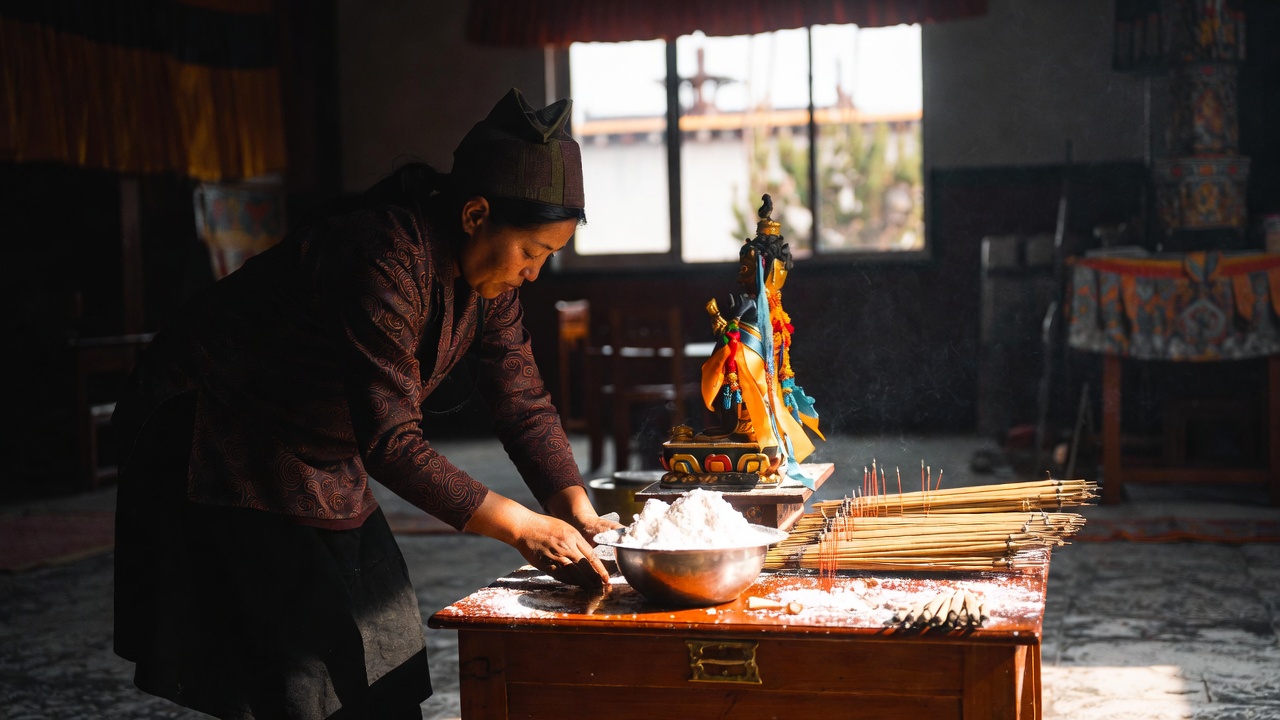
Sang involves burning juniper branches, often mixed with other aromatic substances, to produce fragrant smoke that purifies spaces, beings, and objects. The practice derives from the understanding that smoke rises toward the heavens, carrying prayers and offerings to the divine realms while simultaneously cleansing everything it touches.
The smoke serves multiple purposes:
- Purifies physical spaces of stagnant and negative energy
- Makes offerings to local deities and protectors
- Creates a pleasing atmosphere for enlightened beings
- Clears obstacles to spiritual practice
- Protects against harmful influences
Materials Needed for Home Sang Ceremony
Primary materials:
- Fresh or dried juniper branches (shukpa)—the most essential ingredient
- Juniper berries if available
- White flour or tsampa
- Small amounts of the “three whites”: milk, butter, yogurt
- Small amounts of the “three sweets”: honey, sugar, molasses
- Clean water
- A fire-safe container (traditionally an incense burner or metal bowl)
- Matches or lighter
- Optional: prepared Sang powder available from Tibetan suppliers
The three whites and three sweets represent purity and the sweetness of dharma, making the offering more pleasing to enlightened beings.
Step-by-Step Sang Fumigation Instructions
- Choose the right time — Early morning, particularly at sunrise, is considered most auspicious. The days leading up to Losar, especially the 29th day (Gutor), are ideal times for Sang
- Prepare your space — Set up outdoors if possible, or near an open window. Ensure good ventilation and fire safety
- Arrange materials — Place juniper branches in your container. Sprinkle with tsampa and small amounts of the three whites and three sweets
- Light the fire — Ignite the juniper. The goal is fragrant smoke, not flames, so once lit, the fire should be allowed to smolder
- Generate motivation — Recite the following or similar words: “By the power of this pure smoke, may all negativity be purified, all beings be benefited, and all obstacles be removed”
- Recite the Sang prayer — Traditional texts include specific prayers. A common short version is: “Ki ki so so lha gyalo” — “Victory to the gods!”
- Carry the smoke throughout your home — Walk through each room, allowing smoke to reach all corners. Pay special attention to dark areas, corners, and thresholds
- Conclude at the shrine — End by offering smoke to your sacred objects
- Allow smoke to dissipate naturally — Open windows and doors to let the smoke (and the negativity it has absorbed) exit
Safety considerations:
- Never leave burning materials unattended
- Keep away from flammable objects and surfaces
- Ensure adequate ventilation
- Have water nearby in case of emergency
Essential Auspicious Offerings for Tibetan New Year Altar
With the home thoroughly cleaned and purified, attention turns to preparing the offerings that will grace altars and shrine rooms during Losar. These offerings follow strict traditional guidelines, with each element carrying symbolic significance.
The Losar Altar Setup and Arrangement
A proper Losar altar, known as a chösum or shrine, should include several key elements arranged in a specific order. The arrangement follows the principle of offering the most precious items to the Three Jewels (Buddha, Dharma, Sangha) and protective deities.
Standard altar layout (front to back):
| Row | Contents |
|---|---|
| Back row (highest) | Buddha image or statue, sacred texts (wrapped in cloth), stupa if available |
| Middle row | Photographs of teachers/lamas, special religious objects |
| Front row | Seven offering bowls, butter lamps, special Losar offerings |
| Table surface | Fresh khata, flowers, incense holder |
Traditional Seven Offering Bowls (Yönchap)
The seven offering bowls represent offerings to the senses and have been a central part of Tibetan Buddhist practice for centuries. They should be arranged in a straight line with a grain of rice width between each bowl.
The seven offerings:
- Water for drinking (Argham) — Represents the purity of mind, offered to quench thirst
- Water for bathing (Padhyam) — Symbolizes cleansing of negativities
- Flowers (Pushpe) — Represent beauty and the impermanence of all phenomena
- Incense (Dhupe) — Symbolizes ethical discipline and carries prayers heavenward
- Light (Aloke) — Represents wisdom that dispels the darkness of ignorance
- Perfumed water (Gandhe) — Symbolizes perseverance and devotion
- Food offerings (Naividya) — Represent spiritual nourishment; often includes fruit or specially prepared items
Proper bowl filling technique:
- Fill in the morning, preferably before sunrise
- Pour water steadily, neither too fast nor too slow
- Fill to approximately one grain of rice below the rim (overfilling suggests a mind overwhelmed with desire; underfilling suggests insufficient generosity)
- Empty and clean bowls each evening
- Always fill from left to right, empty from right to left
Creating the Chemar (Offering of Roasted Barley and Butter)
The chemar (ཕྱེ་མར་) is perhaps the most distinctive Losar offering. This ceremonial container holds roasted barley flour (tsampa) on one side and butter mixed with tsampa on the other, decorated with colorful butter sculptures and ears of barley.
What you need:
- A traditional wooden chemar container (or two matching bowls)
- Roasted barley flour (tsampa)
- Fresh butter
- Colored butter (made by mixing butter with natural dyes)
- Dried barley ears (dru gu)
- Symbolic decorations
How to prepare chemar:
- Prepare the container — Traditional chemar containers are rectangular wooden boxes divided in half. If unavailable, use two matching decorative bowls
- Fill one side with tsampa — Heap the roasted barley flour generously, shaping it into a mound
- Fill the other side with butter-tsampa mixture — Combine fresh butter with enough tsampa to make it moldable. Form into a mound
- Insert barley ears — Place dried barley stalks with intact grain heads into both mounds, arranged decoratively
- Add butter decorations — Using colored butter, create small symbolic shapes to place atop the mounds. Common designs include:
- Sun and moon symbols
- Eternal knots
- Lotus flowers
- The word tashi delek (བཀྲ་ཤིས་བདེ་ལེགས་) meaning “good fortune”
- Place fresh khata — Drape a white ceremonial scarf around or beneath the chemar
The chemar represents abundance and prosperity. During Losar celebrations, family members and guests take pinches from both sides, throwing a small amount into the air as an offering before tasting.
Preparing Dresi: The Sweet Saffron Rice Offering
Dresi (འབྲས་སིལ་), sometimes spelled dre-si, is a special sweet rice dish essential for Losar celebrations. This auspicious food combines rice with butter, dried fruits, and saffron, creating a golden-colored dish that symbolizes wealth and good fortune.
Dresi recipe:
Ingredients:
- 2 cups white rice (preferably long-grain)
- 4 tablespoons butter
- ½ cup sugar or honey
- Pinch of saffron threads
- ¼ cup raisins
- ¼ cup dried apricots, chopped
- 2 tablespoons dried goji berries (traditional) or dried cranberries
- Small handful of raw cashews or walnuts
- ¼ teaspoon cardamom powder (optional)
Preparation:
- Soak saffron threads in 2 tablespoons of warm water for 10 minutes
- Cook rice until just tender, slightly firm
- In a large pan, melt butter over medium heat
- Add cooked rice and stir gently to coat with butter
- Add sugar or honey and saffron with its soaking liquid
- Fold in dried fruits and nuts
- Cook on low heat, stirring occasionally, until everything is well combined and rice takes on golden color
- Serve warm or at room temperature
A portion of dresi is always offered on the altar before being served to family members.
Guthuk: The Traditional Losar Eve Soup with Hidden Symbols
On the 29th day, families prepare guthuk (དགུ་ཐུག་), a hearty noodle soup containing hidden symbolic objects that predict the character or fortune of whoever finds them.
The soup traditionally contains:
- Hand-pulled noodles made extra thick
- Various vegetables
- Meat (in non-vegetarian households)
- Small dough balls containing hidden objects
Common hidden symbols and their meanings:
| Object | Tibetan Name | Meaning |
|---|---|---|
| Wool | བལ་ | Gentle, kind nature |
| Coal | སོལ་བ་ | Black heart, unkind |
| Chili | མར་ཆ་ | Sharp tongue, talkative |
| Salt | ཚྭ་ | Lazy |
| Sun and moon | ཉི་ཟླ་ | Religious inclination |
| White pebble | རྡོ་དཀར་ | Pure heart |
| Paper with prayers | ཤོག་བུ་ | Scholarly |
How to make symbolic dough balls:
- Prepare a simple dough from flour and water
- Create small dumplings, tucking a symbolic object inside each
- Seal carefully so objects remain hidden
- Add to the soup during cooking
When family members find objects in their bowls, they announce what they’ve found amid much laughter. The custom allows for gentle teasing while reinforcing family bonds.
Spiritual Preparation: Dharma Practices Before Losar
Beyond physical preparations, Losar requires spiritual readiness. The final month of the Tibetan year is considered especially powerful for clearing karmic debts and obstacles.
Vajrasattva Purification Practice for the New Year
The Vajrasattva practice is the premier purification method in Tibetan Buddhism. Many practitioners intensify their Vajrasattva recitations in the weeks before Losar, aiming to complete a significant number of the 100-syllable mantra.
Basic Vajrasattva practice overview:
- Visualization — Imagine Vajrasattva, brilliant white in color, seated on a lotus and moon disc above your head
- Recitation — Chant the 100-syllable mantra while visualizing purifying nectar flowing from Vajrasattva into your body
- Confession — Acknowledge and regret negative actions while imagining them being washed away
- Resolution — Commit to avoiding harmful actions in the future
- Dissolution — Vajrasattva melts into light and dissolves into you, purifying all traces of negativity
For detailed instructions on Vajrasattva practice, resources from Tergar International and FPMT provide authentic guidance suitable for various levels of practitioners.
Lamp Offerings and Butter Lamp Meditation
Butter lamps hold central importance in Tibetan spiritual practice, and their significance intensifies during Losar. The light represents wisdom dispelling the darkness of ignorance.
Setting up butter lamps:
- Use pure butter or vegetable-based lamp oil
- Traditional butter lamps are small metal bowls with wicks
- Arrange an odd number on your altar (3, 5, 7, or more)
- Light from an existing flame if possible, rather than matches (this preserves the continuity of sacred fire)
Lamp offering prayer:
“By this offering of light, may all beings attain the light of wisdom, dispelling the darkness of ignorance throughout all time and space.”
Reciting Prayers and Mantras for Removing Obstacles
Specific prayers are recommended during the pre-Losar period:
Common practices include:
- Tara prayers — Green Tara swiftly removes obstacles; many practitioners recite her mantra (Om Tare Tuttare Ture Soha) 108 times or more daily
- Guru Rinpoche prayers — The Seven Line Prayer invokes the blessings of Padmasambhava
- Protector prayers — Prayers to dharma protectors request their assistance in removing obstacles
- Smoke offering prayers — Specific texts accompany the Sang fumigation ritual
- Confession prayers — The 35 Buddhas Confession prayer is particularly powerful for purification
The Lotsawa House website offers free translations of many traditional Tibetan prayers suitable for these practices.
Decorating Your Home for Losar Celebrations
After cleaning and preparing offerings, decorating transforms the home into a welcoming space for the New Year’s blessings.
Tibetan New Year Decorations and Their Meanings
Traditional decorations include:
Khata (ceremonial scarves):
White silk or synthetic scarves symbolizing purity and compassion. Drape fresh khatas over:
- Sacred images and texts
- Photographs of teachers
- Door frames
- Furniture in reception areas
Auspicious symbols:
The Eight Auspicious Symbols (tashi tagye) frequently appear in Losar decorations:
- Parasol — Protection from suffering
- Golden fish — Freedom and spiritual liberation
- Treasure vase — Abundance and wealth
- Lotus — Purity and enlightenment
- Conch shell — The spread of dharma
- Endless knot — Interconnection of all phenomena
- Victory banner — Triumph over obstacles
- Dharma wheel — The Buddha’s teachings
Prayer flags:
New prayer flags should be hung before Losar, ideally on an auspicious day determined by the Tibetan calendar. Faded flags from the previous year are traditionally burned rather than thrown away.
Dru gu (barley plants):
Fresh barley shoots grown in shallow dishes represent fertility and the hope for good harvests. Begin growing these about two weeks before Losar:
- Soak barley seeds overnight
- Spread on shallow dishes with moist cotton or paper towels
- Keep in a warm, dark place until sprouts appear
- Move to light and water daily
- By Losar, you should have tender green shoots several inches tall
Entrance and Door Decorations for Good Fortune
The threshold requires special attention as the boundary between your sanctified home and the outside world.
Traditional entrance decorations:
- Fresh juniper branches hung beside the door
- White or multi-colored fabric strips
- Painted or drawn auspicious symbols
- New door curtains in auspicious colors (often featuring the endless knot)
- Clean, well-maintained threshold
Some families create torma (ritual sculptures made from tsampa and butter) to place near entrances, inviting protective energies while warding off negative influences.
Regional Variations in Losar Preparations Across Tibet and the Himalayan Region
While core elements remain consistent, Losar preparations vary across different Tibetan regions and Himalayan communities that have adopted Tibetan Buddhist customs.
Losar in Amdo: Eastern Tibet Traditions
Amdo, in northeastern Tibet, maintains distinct customs reflecting its unique cultural blend:
- Emphasis on horse culture — Decorating horses and stables is considered important
- Specific foods — Amdo-style momos (dumplings) feature prominently
- Extended celebrations — Some Amdo communities celebrate for up to a month
- Distinctive offerings — Local variations in altar arrangements reflect regional aesthetics
Kham Region Losar Customs
Kham, in eastern Tibet, known for its warrior traditions and distinctive dialect:
- Strong emphasis on physical prowess — Archery contests and horse racing may be part of celebrations
- Robust food traditions — Khampa cuisine tends toward heartier fare
- Musical traditions — Specific songs and dances particular to Kham
- Local deity offerings — Regional mountain deities receive special attention
Losar Celebrations in Nepal and India
Tibetan refugee communities in Nepal (particularly Kathmandu Valley and Solu Khumbu) and India (especially Dharamsala and South Indian settlements) have preserved and adapted traditions:
Nepal variations:
- Integration with local Nepali customs in some areas
- Strong monastic participation from the numerous monasteries
- Public celebrations including traditional performances
India variations:
- Guidance from the Central Tibetan Administration influences community celebrations
- Large public gatherings in Dharamsala, often including teachings from His Holiness the Dalai Lama
- Adaptations to available ingredients and supplies
Sherpa and Himalayan Buddhist Losar Traditions
The Sherpa people of Nepal’s Khumbu region celebrate Losar with customs that blend Tibetan traditions with local practices:
- Strong connection to Tengboche Monastery — Monastic celebrations draw communities together
- Mountain deity offerings — Special reverence for local peaks including Chomolungma (Everest)
- Yak butter preparations — Local dairy products feature prominently in offerings
- Community gatherings — Entire villages celebrate together
Modern Adaptations: Celebrating Losar in Western Countries
For Tibetan diaspora communities and practitioners living in Western countries, celebrating Losar requires adaptation while maintaining essential elements.
Creating Authentic Losar Atmosphere Away from Tibet
Practical suggestions:
- Connect with local Tibetan communities — Most major cities have Tibetan associations that organize Losar events
- Source authentic materials — Tibetan shops (online and physical) provide ritual items
- Adapt recipes to available ingredients — Acceptable substitutions exist for hard-to-find items
- Maintain the spirit over the letter — Proper motivation matters more than perfect execution
Ingredient Substitutions for Traditional Losar Foods
When traditional ingredients prove unavailable:
| Traditional | Acceptable Substitute |
|---|---|
| Yak butter | High-quality unsalted cow’s butter |
| Tsampa (roasted barley flour) | Roasted whole wheat flour (similar but not identical) |
| Dried yak meat | Beef jerky or dried beef |
| Chang (barley beer) | Non-alcoholic alternatives for offerings |
| Saffron | Turmeric (for color, though flavor differs) |
| Goji berries | Dried cranberries or raisins |
Virtual Losar Celebrations and Online Resources
Modern technology allows for meaningful celebrations even in isolation:
- Online teachings — Major Tibetan Buddhist centers stream Losar teachings
- Virtual community gatherings — Video calls connect dispersed community members
- Digital learning resources — Websites offer instructions for home practice
- Social media connections — Tibetan communities worldwide share celebrations online
What Not to Do During Losar: Taboos and Prohibitions
Understanding what to avoid is as important as knowing what to do. Traditional prohibitions during Losar ensure the New Year begins without inauspicious omens.
Actions to Avoid on Losar Day
Strict traditional prohibitions:
- No sweeping — Sweeping on the first day sweeps away good fortune
- No arguing — Conflicts on Losar set negative patterns for the year
- No crying — Tears portend a sorrowful year
- No garbage disposal — Avoid removing anything from the home on the first day
- No washing clothes — Water usage is minimized (though personal cleanliness is fine)
- No purchasing on credit — Start the year debt-free if possible
- No cooking after midnight on New Year’s Eve — All food should be prepared in advance
Words and Topics to Avoid
Language carries power, and certain topics are avoided during Losar:
- Death or illness — Avoid discussing negative health matters
- Financial difficulties — Don’t dwell on debt or losses
- Past conflicts — The new year offers fresh beginning
- Inauspicious numbers — Even numbers (except 8) are sometimes avoided in certain contexts
Behavioral Guidelines for Good Fortune
Recommended behaviors:
- Wake early — Being the first awake brings good luck
- Wear clean, preferably new clothes — Fresh garments symbolize fresh starts
- Speak kindly — First words of the year should be positive
- Eat well — Abundance at the first meal promises abundance throughout the year
- Visit elders — Paying respect to seniors honors tradition
- Give generously — Generosity at Losar multiplies throughout the year
The Three Days of Losar: A Complete Celebration Guide
While preparation occupies weeks, the main celebration spans three primary days, each with distinct focuses and activities.
Lama Losar (First Day of Tibetan New Year)
The first day, Lama Losar, is devoted to religious observance and family:
Morning activities:
- Rise before dawn
- Dress in finest clothes (traditionally chuba, the Tibetan robe)
- Prepare altar offerings including fresh water
- Light butter lamps and incense
- Recite prayers for the new year
- First meal features khapse (fried pastries) and dresi
Family celebration:
- Elders receive respect and gifts
- Children receive new clothes and treats
- Family members exchange tashi delek greetings
- Everyone partakes of chemar offerings
Religious observance:
- Visit local temple or monastery if possible
- Make offerings to the Three Jewels
- Receive blessings from lamas
- Participate in community prayers
Gyalpo Losar (King’s New Year)
The second day traditionally honors the secular ruler and focuses on community:
Community activities:
- Visit friends and neighbors
- Exchange khatas and good wishes
- Share food and drink
- Participate in community entertainment
Traditional entertainments:
- Tibetan opera (lhamo) performances
- Traditional dancing
- Singing traditional songs
- Games and contests
Choe-kyong Losar (Protector’s Day)
The third day honors dharma protectors:
Religious activities:
- Prayers to protective deities
- Offerings at protector shrines
- Community rituals at monasteries
- Hanging new prayer flags
Public celebrations:
- Horse racing in traditional communities
- Picnics and outdoor gatherings
- Extended family reunions
- Final visits before returning to normal life
Frequently Asked Questions About Preparing for Losar
What is the significance of cleaning before Tibetan New Year?
Cleaning before Losar removes accumulated negative energy and creates space for positive blessings. The practice connects physical cleanliness with spiritual purity, reflecting the Buddhist understanding that external conditions affect internal states. Thorough cleaning also demonstrates respect for the sacred time and the enlightened beings invited during celebrations.
When should I start preparing for Losar?
Begin light preparations about four weeks before Losar. Intensive cleaning typically occurs in the final week, with the most significant ritual cleaning on the 29th day (Gutor). Food preparations begin several days before, and offerings should be complete by New Year’s Eve.
Can non-Tibetans celebrate Losar?
Absolutely. Losar welcomes all sincere participants. Non-Tibetans should approach the celebration respectfully, learning about traditions’ meanings rather than treating them superficially. Participating in local Tibetan community celebrations provides excellent opportunities for authentic experience with guidance from community members.
What foods are essential for Losar?
Key foods include khapse (fried pastries in various shapes), dresi (sweet saffron rice), guthuk (soup with symbolic dumplings eaten on the 29th), chemar (the ceremonial offering of tsampa and butter), and momos (dumplings). Each region has additional specialties.
How do I set up a Losar altar at home?
Begin with a clean, dedicated space. Arrange images of the Buddha, sacred texts, and photographs of teachers at the back. Place seven offering bowls in front, filled each morning with fresh water. Add butter lamps, incense, flowers, and special Losar offerings like chemar and dresi. Drape fresh khatas over sacred objects.
What mantras should I recite during Losar preparations?
Om Mani Padme Hum (the mantra of Avalokiteshvara) is always appropriate. For purification, the Vajrasattva mantra is highly recommended. Om Tare Tuttare Ture Soha (Green Tara’s mantra) removes obstacles. Specific prayers for Losar are available from Tibetan Buddhist centers and online resources like Lotsawa House.
How long does Losar celebration last?
The formal celebration spans fifteen days, with the first three days holding the greatest significance. Many people return to normal work after three days while continuing festive mood throughout the fifteen-day period. Some communities, particularly in Amdo, extend celebrations even longer.
Conclusion: Embracing the Spirit of Renewal in Losar Preparations
The weeks of preparation leading to Losar embody a profound truth recognized by Tibetan culture: meaningful celebration requires meaningful preparation. The cleaning rituals that transform homes from ordinary spaces into sanctified environments, the careful arrangement of offerings that honor enlightened beings, and the spiritual practices that purify accumulated negativity—all these preparations make Losar’s blessings possible.
For those encountering these traditions for the first time, the depth and intentionality may seem overwhelming. Yet the essence remains simple: create cleanliness, cultivate generosity, and approach the new year with pure motivation. Whether you perform every ritual with perfect traditional precision or simply clean your home with mindful awareness while setting positive intentions, you participate in the spirit of Losar.
The cleaning rituals remind us that renewal requires letting go—of dirt, of clutter, of negative habits, of old resentments. The offerings remind us that generosity opens the heart and invites blessings. The prayers remind us that we are part of something larger than ourselves, connected to countless beings who have celebrated this turning of the year across millennia.
As you prepare for Losar, whether in a traditional Tibetan home, a monastery in Nepal, or an apartment in New York, you join a living tradition that has renewed hearts and homes for over two thousand years. May your preparations be joyful, your offerings be abundant, and your new year be filled with tashi delek—good fortune, auspiciousness, and all happiness.
Tashi Delek and warmest wishes for a prosperous Losar celebration!
Additional Resources for Losar Preparation
Organizations and Communities:
- Central Tibetan Administration — Official Tibetan government-in-exile
- Office of Tibet, London — European Tibetan resources
- International Campaign for Tibet — Advocacy and cultural information
Dharma Centers and Teachings:
- FPMT — Foundation for the Preservation of the Mahayana Tradition
- Tergar International — Meditation and practice resources
- Shambhala — Tibetan Buddhist teachings and community
Academic and Cultural Resources:
- Tibetan Buddhist Resource Center — Digital library of Tibetan texts
- Library of Tibetan Works & Archives — Dharamsala-based research institution
- Lotsawa House — Translations of Tibetan Buddhist texts
Supplies and Materials:
- DharmaShop — Tibetan Buddhist supplies
- Tibetan Spirit — Incense, ritual items, and more
This article was written with deep respect for Tibetan culture and Buddhist traditions. Information has been gathered from traditional sources, academic research, and direct communication with Tibetan community members. For those seeking to practice these traditions seriously, guidance from qualified teachers is always recommended.