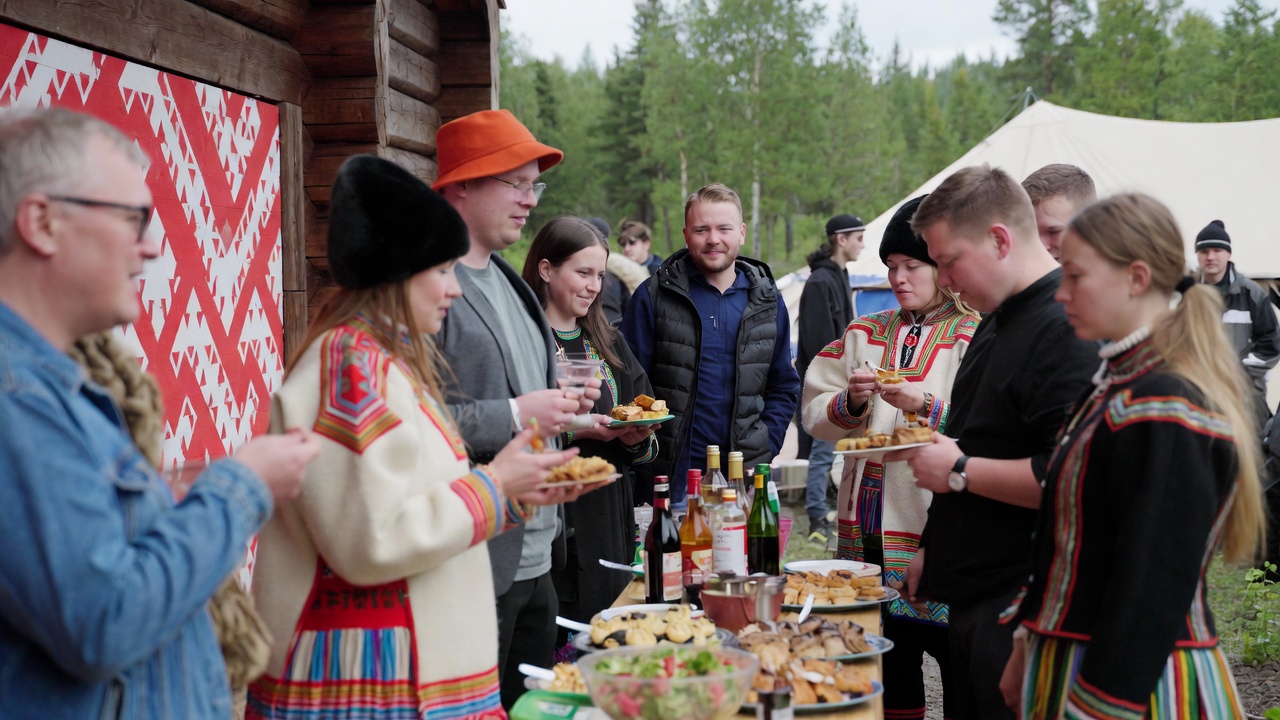
Every year on February 6, a tide of red, green, blue, and yellow washes across the Arctic. Flags rise over town halls from Tromsø to Inari. The haunting vibrato of a joik drifts from a schoolyard in Kautokeino. In the highest tower of Oslo City Hall, bells ring out the melody of the Sámi national anthem. This is Sámi National Day — or Sámi álbmotbeaivi — a celebration that belongs to no single country but to an entire people scattered across four nations.
And at the heart of it all, as with every great cultural celebration, is food.
This guide takes you deep into the culinary traditions of the Sámi people on their most important day. You will learn how to prepare authentic reindeer recipes that have been passed down through generations of herders, foragers, and Arctic families. You will discover what makes reindeer meat one of the healthiest proteins on the planet. And you will come away with a genuine understanding of why these dishes matter — not just as meals, but as acts of cultural survival.
Lihkku beivviin. Happy Sámi National Day.
What Is Sámi National Day and Why Is It Celebrated on February 6?
Sámi National Day marks the anniversary of the first Sámi congress, held on February 6, 1917, in Trondheim, Norway. That gathering was groundbreaking. For the first time, Norwegian and Swedish Sámi crossed national borders to sit together and address shared problems — issues of land rights, language suppression, and cultural erasure.
The idea of a formal national day took shape much later. In 1992, delegates at the 15th Sámi Conference in Helsinki passed a resolution declaring February 6 as the official Sámi National Day. The resolution stated that the day belongs to all Sámi, regardless of where they live. The following year, in 1993, the first celebration took place in Jokkmokk, Sweden, coinciding with the United Nations International Year of Indigenous People.
Since then, the day has grown steadily. In Norway, it is now compulsory for municipal buildings to fly the Norwegian flag on February 6, with the option of raising the Sámi flag alongside it. Schools hold assemblies. Cities host concerts, exhibitions, and reindeer races. In 2026, the holiday falls on a Friday, which means many communities extend celebrations into the weekend with markets, family gatherings, and communal feasts.
Key facts about Sámi National Day:
| Detail | Information |
|---|---|
| Date | February 6 (every year) |
| First celebrated | 1993, Jokkmokk, Sweden |
| Commemorates | First Sámi congress, Trondheim, 1917 |
| Countries | Norway, Sweden, Finland, Russia |
| Greeting | Lihkku beivviin (“Congratulations on the day”) |
| Symbol | The Sámi flag (adopted 1986) |
| 2026 day | Friday |
The Sámi are the only recognized Indigenous people of the European Union. Their homeland, Sápmi, stretches across the northern reaches of Scandinavia and the Kola Peninsula of Russia. Population estimates hover around 80,000 people — roughly 50,000 in Norway, 20,000 in Sweden, 8,000 in Finland, and 2,000 in Russia, according to sweden.se.
Who Are the Sámi People and What Role Does Reindeer Play in Their Culture?
To understand Sámi food, you must first understand the reindeer.
The Sámi have lived alongside reindeer for thousands of years. Archaeological evidence suggests this relationship stretches back over 10,000 years, to the end of the last Ice Age when reindeer migrated into what is now Scandinavia. At first, the Sámi were hunters. They tracked wild herds across the tundra, relying on the animals for meat, fur, tools, and transportation. It was not until roughly the 17th century that large-scale reindeer herding — true nomadism with domesticated herds — became the dominant way of life for many Sámi communities.
Today, only about 10% of the Sámi population is directly involved in reindeer herding. In Norway, approximately 3,000 people work in reindeer husbandry, with the largest concentration in the county of Finnmark. Sweden has around 260,000 semi-domesticated reindeer spread across 51 Sámi communities. In Finland, reindeer herding is also significant, and reindeer meat from Finnish Lapland has even been granted Protected Designation of Origin (PDO) status by the European Union.
But here is the crucial thing: even among the majority of Sámi who no longer herd, the reindeer remains central to cultural identity. It shapes language, art, clothing, spirituality, and — above all — food. The traditional Sámi approach to reindeer is what contemporary food writers might call “nose to tail.” Every part of the animal is used. The meat feeds families. The blood becomes pancakes and dumplings. The bones enrich broth. The marrow is eaten as a delicacy. The fat is rendered for cooking. The hide becomes shoes and gloves. Even the antlers are carved into tools and art.
In Norway, only Sámi people or those with Sámi descent are legally permitted to herd reindeer. This legal protection reflects the depth of the bond between people and animal. When you eat a Sámi reindeer dish, you are not simply eating dinner. You are participating in a tradition that stretches back millennia.
Traditional Sámi Food Culture: What the Indigenous People of the Arctic Eat
Sámi cuisine is shaped by one overwhelming fact: the Arctic is harsh. Growing seasons are short. Temperatures plunge. Darkness lasts for months. In this environment, food traditions developed around preservation, portability, and making the most of every available calorie.
The Sámi recognize eight seasons, not four. Each season brings different foods. Spring offers birch sap and the first green shoots of mountain sorrel. Summer means cloudberries, blueberries, and fresh fish from rivers swollen with snowmelt. Autumn is the season of mushroom foraging and the great reindeer round-up, when animals are sorted, marked, and slaughtered. Winter is the domain of preserved meats, dried fish, and the slow-cooked stews that warm families gathered around a fire inside a lávvu — the traditional Sámi tent.
The core ingredients of Sámi cooking are:
- Reindeer meat — the foundation of the cuisine, prepared fresh, dried, smoked, salted, or cured
- Fish — especially salmon, trout, and Arctic char from rivers and mountain lakes
- Berries — lingonberries, cloudberries, and blueberries, eaten fresh or preserved as jam
- Bread — flatbreads like gáhkko, baked over open fire or on a griddle
- Blood — used in pancakes, dumplings, and sausages; a vital source of iron
- Wild herbs — juniper, Arctic thyme, caraway, angelica, and mountain sorrel
- Barley and grains — adapted to cold climates, used in porridges and bread
What strikes many visitors about Sámi cooking is its simplicity. Dishes rarely rely on complex spice blends or elaborate techniques. The philosophy is to let the quality of the raw ingredient speak. A well-raised, free-ranging reindeer that has spent its life eating wild lichen, herbs, and berries in the Arctic tundra produces meat with a depth of flavor that needs very little embellishment. Salt and pepper. Perhaps some juniper. A side of lingonberry jam for contrast. That is often enough.
This is not minimalism for its own sake. It is the refined wisdom of a people who have spent centuries learning exactly what the land can provide and how to honor it.
Why Reindeer Meat Is One of the Healthiest Proteins You Can Eat
Before we dive into recipes, it is worth understanding why reindeer meat deserves a place in any health-conscious kitchen. The nutritional profile of this Arctic protein is genuinely remarkable.
A landmark study from the University of Tromsø by researcher Ammar Eltayeb Ali Hassan found that semi-domesticated reindeer meat is extraordinarily lean, with a total fat content of just 2%. For comparison, beef typically contains around 9% fat, and lamb can reach as high as 17%. Despite being so lean, reindeer meat is packed with nutrients that most people struggle to get enough of.
Reindeer meat nutritional highlights (per 100g serving):
| Nutrient | Reindeer Meat | Compared to Beef |
|---|---|---|
| Fat | ~2–4g | ~9g |
| Protein | 20–24g | ~26g |
| Vitamin B12 | More than 2x higher | Baseline |
| Iron | Significantly higher | Baseline |
| Zinc | Higher | Baseline |
| Selenium | Higher | Baseline |
| Omega-3 fatty acids | Comparable to seafood | Much lower |
The omega-3 content is perhaps the most surprising finding. According to Hassan’s research, published through the University of Tromsø’s Faculty of Health Sciences, reindeer meat contains concentrations of docosapentaenoic acid and α-linolenic acid that are comparable to levels found in crab, mussels, oysters, and scampi. A 100-gram serving provides the daily recommended dose of both omega-3 and omega-6 fatty acids, as reported by Science Norway.
The reason for this exceptional nutritional profile lies in the reindeer’s diet. These animals feed primarily on lichen — a slow-growing Arctic plant that is extremely nutrient-dense — along with wild herbs, mosses, and berries. They roam freely across vast stretches of tundra and forest. There are no feedlots. No grain-based fattening programs. The result is meat that is naturally lean, rich in micronutrients, and free from the concerns that surround industrial meat production.
For the Sámi, none of this is news. They have known for centuries that reindeer meat sustains health through the brutal Arctic winter. Modern science is simply catching up.
How to Make Bidos: The Traditional Sámi Reindeer Stew Recipe for National Day
If there is one dish that defines Sámi National Day, it is bidos (also spelled bidus or biđos). This is the celebratory stew — the dish served at weddings, confirmations, festivals, and national holidays. Walk into any communal gathering on February 6, from a village in Kautokeino to a cultural center in Tromsø, and you will almost certainly find a large pot of bidos simmering over a fire.
Bidos is not a complicated dish. That is part of its beauty. As Visit Norway’s Norwegian Cookbook notes, the flavor of bidos varies from cook to cook and day to day. No two batches taste exactly the same, because the central magic lies in the slow development of a rich broth as the reindeer meat releases its deep, distinctive flavor into the water.
Before potatoes arrived in Scandinavia in the 18th century, bidos would have been served simply with bread. Today, the classic accompaniments are gáhkko (Sámi flatbread) and lingonberry jam.
Bidos Recipe — Traditional Sámi Reindeer Stew
Serves: 4–6 Prep time: 15 minutes Cook time: 1 hour to 1.5 hours
Ingredients:
- 500g (1.1 lb) reindeer meat, cut into large chunks (bone-in pieces are traditional and add richness)
- 4 medium potatoes, peeled and cut into rough chunks
- 3 carrots, peeled and sliced into thick rounds
- 1 large onion, sliced
- 2 tablespoons butter or reindeer fat
- 2 tablespoons flour (optional, for thickening)
- 1 liter (4 cups) water
- Salt and pepper to taste
Optional traditional additions:
- Reindeer heart, cut into pieces
- A splash of caramel food coloring (for a deeper brown color — a common Norwegian pantry item)
- Dried thyme
Method:
- Brown the meat. Melt the butter in a heavy-bottomed pot or Dutch oven over medium-high heat. Toss the reindeer pieces with flour, salt, and pepper. Add them to the pot and brown evenly on all sides. Take your time here — good browning builds the base of flavor.
- Add the onion. Once the meat is browned, add the sliced onion and cook for 2–3 minutes until it softens.
- Add water and simmer. Pour in the water. It should just cover the meat. Bring to a gentle simmer. Reduce the heat to low and let it cook, uncovered, for 35–40 minutes. Skim off any foam or scum that rises to the surface.
- Add vegetables. Add the potatoes and carrots. Continue simmering gently for another 25–30 minutes, until the vegetables are tender and the broth has developed a rich, meaty depth.
- Adjust and serve. Taste for salt and pepper. If you want a thicker stew, mix a tablespoon of flour with cold water in a jar, shake until smooth, and stir into the pot. Let it simmer for a few more minutes.
- Serve in deep bowls with generous slices of gáhkko or other flatbread and a spoonful of raw stirred lingonberries or lingonberry jam on the side.
Cook’s notes: The key to authentic bidos is patience and simplicity. Do not overload it with herbs and spices. The reindeer meat should be the star. If you cannot source reindeer, venison or elk are reasonable substitutes, though the flavor will be different. As food writer Nevyana Ayyash of North Wild Kitchen puts it plainly: you will have a stew, but not bidos. The distinct richness comes from the reindeer itself.
How to Cook Finnbiff: Creamy Norwegian Reindeer Stew with Juniper Berries
If bidos is the ancient tradition, finnbiff is its more widely known cousin. This creamy, aromatic stew is found on restaurant menus across Norway and has become one of the country’s most beloved comfort foods. The dish has deep roots in Sámi cooking, but it has been embraced by the broader Norwegian culinary world.
The name “finnbiff” refers not just to the stew but also to the method of preparing the meat. Traditionally, the reindeer meat is frozen and then sliced paper-thin while still partially frozen — a technique that likely originated as a practical method of preservation in the days before refrigeration. The thin slices cook quickly and absorb the flavors of the sauce beautifully.
Finnbiff Recipe — Creamy Reindeer Stew with Mushrooms
Serves: 4 Prep time: 10 minutes Cook time: 35–45 minutes
Ingredients:
- 400g (14 oz) reinskav (thinly sliced frozen reindeer meat, thawed slightly — still best when half-frozen for slicing)
- 200g (7 oz) mushrooms, sliced (a mix of wild mushrooms is ideal; button mushrooms work too)
- 100g (3.5 oz) bacon, diced
- 1 medium onion, finely chopped
- 1 clove garlic, minced (optional)
- 200ml (¾ cup) heavy cream
- 100ml (⅓ cup) milk
- 200ml (¾ cup) water or beef broth
- 8–10 juniper berries, lightly crushed
- 1 sprig fresh thyme (or ½ teaspoon dried)
- 2 tablespoons butter
- 1 tablespoon flour (optional, for thickening)
- Salt and pepper to taste
Optional:
- 50g brunost (Norwegian brown goat cheese), grated — adds a sweet, caramel-like depth
- Fresh parsley for garnish
Method:
- Cook the bacon and mushrooms. Melt a tablespoon of butter in a large frying pan. Add the diced bacon and cook until it begins to crisp. Add the mushrooms and cook until golden. Transfer everything to a heavy pot or casserole dish.
- Sear the meat. Reheat the frying pan with a little more butter. Working in batches over high heat, quickly brown the thinly sliced reindeer meat. Do not crowd the pan — you want a sear, not a steam. Transfer each batch to the pot.
- Build the sauce. Add the onion and garlic to the pan and cook for 2 minutes. Add the water or broth, cream, and milk. Stir in the crushed juniper berries and thyme leaves. If using brunost, add it now and stir until it melts into the sauce.
- Simmer. Pour the sauce over the meat and mushrooms in the pot. Bring to a gentle simmer and cook for 30–40 minutes until the meat is tender and the sauce has thickened.
- Adjust thickness. If the sauce is too thin, mix flour with a splash of cold milk and stir it in. Simmer for a few more minutes.
- Serve with mashed or boiled potatoes, a generous spoonful of lingonberry jam, and warm flatbread or lefse.
Why juniper matters: Juniper berries are not just a flavor choice — they are a deeply traditional Arctic ingredient. They grow wild across Sápmi and have been used by the Sámi for centuries in cooking, smoking meat, and even traditional medicine. Their piney, slightly citrusy flavor is the perfect partner for the rich, gamey taste of reindeer. Crush them lightly with the flat of a knife before adding them to release their essential oils.
What Is Suovas and How to Prepare Traditional Sámi Smoked Reindeer Meat
Suovas (pronounced roughly “SOO-oh-vas”) is one of the cornerstones of Sámi food culture. It is reindeer meat that has been dry-salted and then cold-smoked for an extended period, traditionally over birch wood. The result is a deeply flavored, long-lasting preserved meat that Sámi herders carried with them on their nomadic journeys across the tundra.
The word “suovas” is actually a protected term in Sweden, reflecting the cultural significance of this preparation. As noted by Sharing Sweden, suovas is a staple of Sámi cuisine and is often served with bread, roasted over an open fire, or sliced thin and eaten as part of a larger meal.
The smoking process traditionally takes more than eight hours, and historically it was one of the primary ways the Sámi preserved meat for months at a time. The cold-smoking occurs at temperatures no higher than about 30°C (86°F) and can extend over three to six weeks for the most traditional preparations.
How to Serve Suovas at Home
While true cold-smoking requires specialized equipment and time, you can enjoy suovas in several ways:
If you can buy pre-made suovas (available from Scandinavian specialty stores and some online retailers):
- Slice it thin and serve on dark rye bread with a smear of butter
- Pan-fry slices until lightly crisped and serve with gáhkko and lingonberries
- Add thin strips to scrambled eggs or a hearty Arctic breakfast
- Serve as part of a Sámi-style charcuterie board alongside smoked fish, cloudberry jam, brunost, and flatbread
If you want to approximate the flavor at home:
- Salt a piece of reindeer loin or shoulder generously with coarse sea salt. Let it cure in the refrigerator for 24–48 hours.
- Rinse the salt off and pat the meat dry.
- If you have a home smoker, cold-smoke the meat with birch or alder wood chips at a low temperature (below 30°C / 86°F) for as long as practical — even 4–6 hours will give you a hint of the traditional flavor.
- Alternatively, you can hot-smoke the meat at a low temperature (around 80–90°C / 175–195°F) for 2–3 hours for a quicker result, though the texture will differ from true suovas.
How to Make Gáhkko: Traditional Sámi Flatbread Recipe Served on National Day
No Sámi feast is complete without gáhkko (also written gáhkku or gaahkoe). This soft, thick flatbread is the traditional companion to bidos and suovas. It is the bread that Sámi families have baked over campfires for generations, the bread that traveling herders packed as dry ingredients in their bags and mixed with water wherever they stopped.
According to the Slow Food Foundation’s Ark of Taste, the traditional Sámi ember bread was originally made with just wheat flour, water, and a pinch of salt. Barley flour, rye flour, and even reindeer lichen were sometimes mixed in to add density. Over time, sweeteners like syrup were added — not just for flavor, but because the syrup helped keep the bread soft and pliable during long journeys, preventing it from crumbling in a herder’s backpack.
Festive versions of gáhkko, like those served on Sámi National Day, are often flavored with anise or fennel seeds and sweetened with a touch of dark syrup.
Gáhkko Recipe — Sámi Flatbread
Makes: 6–8 breads Prep time: 15 minutes (plus 1 hour resting) Cook time: 3–4 minutes per bread
Ingredients:
- 500ml (2 cups) wheat flour
- 100ml (⅓ cup) rye flour (optional, for a more rustic texture)
- 1 teaspoon baking powder
- ½ teaspoon salt
- 1 teaspoon anise seeds or fennel seeds, lightly crushed
- 2 tablespoons dark syrup (Swedish mörk sirap or British golden/dark treacle)
- 250ml (1 cup) water or milk (milk makes a slightly crispier result)
- 1 tablespoon rapeseed oil or melted butter
Method:
- Mix dry ingredients. Combine both flours, baking powder, salt, and crushed anise seeds in a large bowl.
- Add wet ingredients. Warm the water or milk to lukewarm. Stir in the syrup and oil. Pour the liquid into the dry ingredients and mix until a smooth, soft dough forms. It should not be sticky — add a little more flour if needed.
- Rest the dough. Cover with a cloth and let it rest for about 1 hour at room temperature.
- Shape and cook. Divide the dough into 6–8 pieces. Roll each piece into a ball, then flatten into rounds about 1cm (½ inch) thick. Heat a dry frying pan or griddle over medium heat. Cook each bread for 2–3 minutes per side until golden brown spots appear and the bread is cooked through.
- Keep warm by wrapping cooked breads in a clean kitchen towel.
For the full experience: If you have access to an outdoor fire pit or barbecue, cook the gáhkko on a cast-iron griddle over open flames. The smoke adds an extra dimension of flavor that connects directly to the traditional Sámi method. As Arctic Grub notes, gáhkko was historically made this way — dry ingredients packed for the journey, water added on site, and bread baked over whatever fire was available.
Sámi Blood Pancakes: A Traditional Reindeer Blood Recipe from Lapland
This is the dish that separates the curious from the truly adventurous. Blood pancakes (blodplättar in Swedish) are a staple of traditional northern Scandinavian cooking, and the Sámi version uses reindeer blood in place of eggs to bind the batter. The result is a dark, savory, iron-rich pancake that is nothing like the sweet breakfast pancakes most people know.
Blood as a cooking ingredient may sound startling to outsiders, but for the Sámi, it is simply another expression of the nose-to-tail philosophy. When a reindeer is slaughtered, the blood is carefully collected and used in multiple dishes — pancakes, dumplings (gumppus), and sausages. In supermarkets across Lapland, you can buy small containers of reindeer blood right alongside the regular groceries.
Sámi Reindeer Blood Pancakes
Serves: 4 Prep time: 10 minutes Cook time: 15 minutes
Ingredients:
- 200ml (¾ cup) reindeer blood (if unavailable, pork or beef blood can substitute, though the flavor differs)
- 200ml (¾ cup) milk
- 150ml (⅔ cup) flour (wheat, rye, or a mix of both)
- ½ teaspoon salt
- Reindeer fat or butter for frying
To serve:
- Lingonberry jam
- Thinly sliced suovas (smoked reindeer)
- A drizzle of dark syrup (optional)
Method:
- Make the batter. Whisk together the reindeer blood, milk, flour, and salt until smooth. The batter should be the consistency of regular pancake batter.
- Heat the pan. Melt a generous amount of reindeer fat or butter in a frying pan over medium heat.
- Cook the pancakes. Pour small amounts of batter into the pan. Cook for 2–3 minutes per side, until firm and cooked through. The pancakes will be very dark — almost black — which is normal.
- Serve warm with lingonberry jam and sliced suovas on the side.
Cultural note: Blood pancakes are traditionally considered a nutritious, high-iron meal — particularly important during the long, dark Arctic winter. They were historically eaten as breakfast or a quick, energy-dense meal. If the idea of cooking with blood is too far outside your comfort zone, there is absolutely no shame in that. Simply understanding that such dishes exist is a way of respecting the resourcefulness of Sámi food culture.
Gurpi: How to Cook Traditional Sámi Reindeer Sausage
Gurpi is a traditional Sámi sausage made from salted reindeer mince wrapped in reindeer tripe and then cold-smoked. It represents the Sámi commitment to using every part of the animal — a practice born of necessity in the Arctic and carried forward as a point of cultural pride.
As Sharing Sweden describes it, gurpi is typically sliced and fried, and it works well in both modern and traditional culinary settings. The flavor is rich, smoky, and deeply savory — a concentrated expression of the reindeer itself.
Gurpi is most commonly purchased ready-made from Sámi producers and specialty markets, particularly during festivals and at the famous Jokkmokk Winter Market in Sweden, which takes place annually in early February — often overlapping with Sámi National Day celebrations.
How to Serve Gurpi
- Slice into rounds and pan-fry in butter until the edges crisp. Serve with mashed potatoes and lingonberries.
- Add to bidos during the last 15 minutes of cooking for extra richness.
- Include on a Sámi-inspired tasting board alongside suovas, smoked fish, gáhkko, and cloudberry jam.
Sámi National Day Desserts: Cloudberry Cream and Lingonberry Recipes
After the savory richness of reindeer stew and smoked meat, Sámi celebrations typically end with something sweet — and here, the wild berries of the Arctic take center stage.
Cloudberry Cream (Multekrem)
Cloudberries (multe in Norwegian, luomi in Northern Sámi) are the gold of the Arctic. These small, amber-colored berries grow wild in boggy mountain areas across Sápmi and ripen for only a few weeks in late summer. They are intensely flavored — tart, sweet, and slightly musky — and are considered a true delicacy.
Ingredients:
- 200g (7 oz) cloudberries (fresh or thawed from frozen)
- 300ml (1¼ cups) heavy cream
- 2–3 tablespoons sugar (adjust to taste)
Method:
- Whip the cream until it holds soft peaks.
- Gently fold in the cloudberries and sugar. Some people mash the berries slightly; others leave them whole for texture.
- Serve immediately in small bowls or glasses.
Raw Stirred Lingonberries (Rårörda Lingon)
This is the condiment that appears at every Sámi table. Unlike cooked jam, raw stirred lingonberries are simply fresh or thawed berries mixed with sugar and left to macerate. The result is a bright, tart-sweet accompaniment that cuts through the richness of reindeer meat perfectly.
Ingredients:
- 500g (1.1 lb) lingonberries (fresh or frozen)
- 150–200g (¾–1 cup) sugar
Method:
- If using frozen berries, thaw them completely.
- Stir the sugar into the berries. Mash slightly with a fork if you prefer a smoother texture, or leave them mostly whole.
- Let the mixture sit in the refrigerator for at least a few hours before serving. It will keep for weeks in the fridge.
Where to Buy Reindeer Meat Outside of Scandinavia
One of the most common questions from readers eager to try these recipes is: Where can I actually buy reindeer meat?
The good news is that availability has expanded significantly in recent years, driven by growing global interest in sustainable, heritage proteins.
Options by region:
| Region | Where to Look |
|---|---|
| Scandinavia | Regular supermarkets, butcher shops, and markets. Reinskav (sliced reindeer) is a common freezer item. |
| United Kingdom | Specialty game dealers such as Kezie Foods, which imports Scandinavian reindeer. |
| United States | Alaskan reindeer sausage from producers like Alaska Sausage. Exotic meat retailers. Some venison can substitute. |
| Finland (Lapland) | Producers like Pokka Reindeer Meat in Rovaniemi ship internationally to businesses. Canned reindeer is widely available. |
| Online (EU/International) | Swedish Wild ships Swedish reindeer meat across the EU. |
If you cannot source reindeer meat, the best substitutes are:
- Venison (deer) — the closest in flavor and leanness
- Elk or moose — another lean, gamey Scandinavian meat
- Caribou — actually the same species as reindeer (Rangifer tarandus), but the term “caribou” refers to wild populations in North America
Keep in mind that while these substitutes will produce delicious stews and dishes, the specific flavor of reindeer — shaped by a diet of lichen, Arctic herbs, and wild berries — is unique and cannot be perfectly replicated.
How to Host a Sámi National Day Dinner Party at Home
Whether you live in Oslo, London, New York, or Tokyo, you can celebrate Sámi National Day with an authentic dinner that honors the culture and cuisine of Europe’s only Indigenous people. Here is a suggested menu and timeline:
Suggested Sámi National Day Menu
| Course | Dish | Key Ingredient |
|---|---|---|
| Appetizer | Suovas on rye bread with butter and lingonberries | Smoked reindeer |
| Bread | Gáhkko (Sámi flatbread with anise) | Wheat and rye flour |
| Main course | Bidos (traditional reindeer stew) | Reindeer, potatoes, carrots |
| Side | Raw stirred lingonberries | Lingonberries, sugar |
| Dessert | Cloudberry cream (multekrem) | Cloudberries, cream |
| Drink | Coffee boiled over fire (or strong filter coffee) | Coffee |
Setting the Scene
- Play joik music. Joik is the traditional Sámi vocal art — one of the oldest folk music traditions in Europe. Search for artists like Mari Boine, Sofia Jannok, or Maxida Märak on your preferred streaming service.
- Learn the greeting. Welcome your guests with “Lihkku beivviin” (Happy Sámi National Day).
- Share the story. Tell your guests about the first Sámi congress in 1917, the fight for cultural recognition, and what the day means to Sámi communities across four countries.
- Serve coffee generously. No Sámi gathering is complete without coffee. Traditionally, it is boiled directly over an open fire — strong, dark, and piping hot. If you cannot make a campfire, brew the strongest filter coffee you can manage.
Sámi Food Traditions That Are Gaining Popularity in Modern Nordic Cuisine
Sámi food culture is experiencing a remarkable renaissance. What was once marginalized or dismissed as “primitive” is now celebrated by some of the Nordic world’s most acclaimed chefs and food writers.
In Jokkmokk, Sweden, food artists like Eva Gunnare and reindeer herder Helena Länta have created Njálgge — a multi-course Sámi dining experience that takes guests through all eight Sámi seasons via more than 20 dishes. The meal features everything from birch sap sorbet to pan-fried suovas and gáhkku, showcasing the extraordinary range and sophistication of Sámi food traditions. As described by Swedish Lapland, the Sámi word njálgge means “tasty” — and by all accounts, the experience is unforgettable.
This revival is not just about fine dining. It reflects a broader cultural movement in which the Sámi are reclaiming ownership of their food heritage. For decades, Norwegianization and Swedification policies actively suppressed Sámi language, clothing, and customs. Food was affected, too. Traditional ingredients like reindeer blood and dried fish were sometimes treated as embarrassing relics of a “backward” way of life.
Today, the tide has turned. Young Sámi chefs and food entrepreneurs are proudly reviving ancestral recipes. The Sámi Food Festival and events at the Jokkmokk Winter Market draw visitors from around the world. Reindeer meat from Finnish Lapland holds EU Protected Designation of Origin status — a formal recognition of its unique quality and cultural significance. The concepts that the broader food world now celebrates under labels like “foraging,” “nose-to-tail eating,” “slow food,” and “farm-to-table” are simply how the Sámi have always lived.
Frequently Asked Questions About Sámi National Day Food and Reindeer Recipes
What is the most famous Sámi dish? Bidos (reindeer stew) is widely considered the national dish of the Sámi people. It is the most commonly served food at Sámi National Day celebrations, weddings, and other festivals.
Is it ethical to eat reindeer meat? Reindeer in Scandinavia are semi-domesticated but live freely in their natural habitats, grazing on wild plants across vast stretches of tundra and forest. This is one of the most sustainable and ethical forms of meat production in the world. The animals are not confined to feedlots or given industrial feeds. Reindeer herding also supports the cultural survival of Sámi communities.
What does reindeer meat taste like? Reindeer has a clean, slightly sweet, and mildly gamey flavor. It is leaner and more delicate than beef. The taste is influenced by the animal’s diet of wild lichen, herbs, and berries. Many people compare it to high-quality venison but with its own distinct character.
Can I make bidos without reindeer meat? You can make a similar stew with venison, elk, or even beef, but the characteristic flavor of bidos comes specifically from reindeer. Substitutions will produce a tasty stew, but not an authentic bidos.
What are lingonberries and where can I find them? Lingonberries are small, tart red berries native to northern Europe. They are available frozen at IKEA stores worldwide, in Scandinavian specialty shops, and increasingly in the international sections of major supermarkets. Lingonberry jam is also widely available.
Are there vegetarian versions of Sámi dishes? Some modern cooks have experimented with plant-based versions of bidos, replacing reindeer with wild mushrooms and plant-based protein. While these dishes can be delicious in their own right, they are contemporary adaptations rather than traditional Sámi recipes.
Celebrating Sámi Culture Through Food: A Final Reflection
There is a phrase in Northern Sámi: “Birget”. It means to manage, to cope, to get by — to survive. For the Sámi, birget is not just a word. It is a philosophy etched into every aspect of their culture, from the way they follow the reindeer across seasonal migrations to the way they cook.
Every dish in this guide tells that story. Bidos is birget — a simple stew that transforms tough cuts of meat into something nourishing and beautiful. Suovas is birget — a method of preservation that kept families fed across months of darkness. Gáhkko is birget — dry ingredients packed for a journey, mixed with water wherever the road led, baked over whatever fire could be built.
When you cook these dishes — whether on February 6 or any other day — you are doing more than following a recipe. You are honoring one of Europe’s oldest living food traditions. You are connecting with a people who have thrived in one of the harshest environments on earth for thousands of years. And you are keeping those traditions alive for the next generation.
So light a fire, if you can. Put a pot on. Boil some coffee. And raise a cup.
Lihkku beivviin. Happy Sámi National Day, 2026.