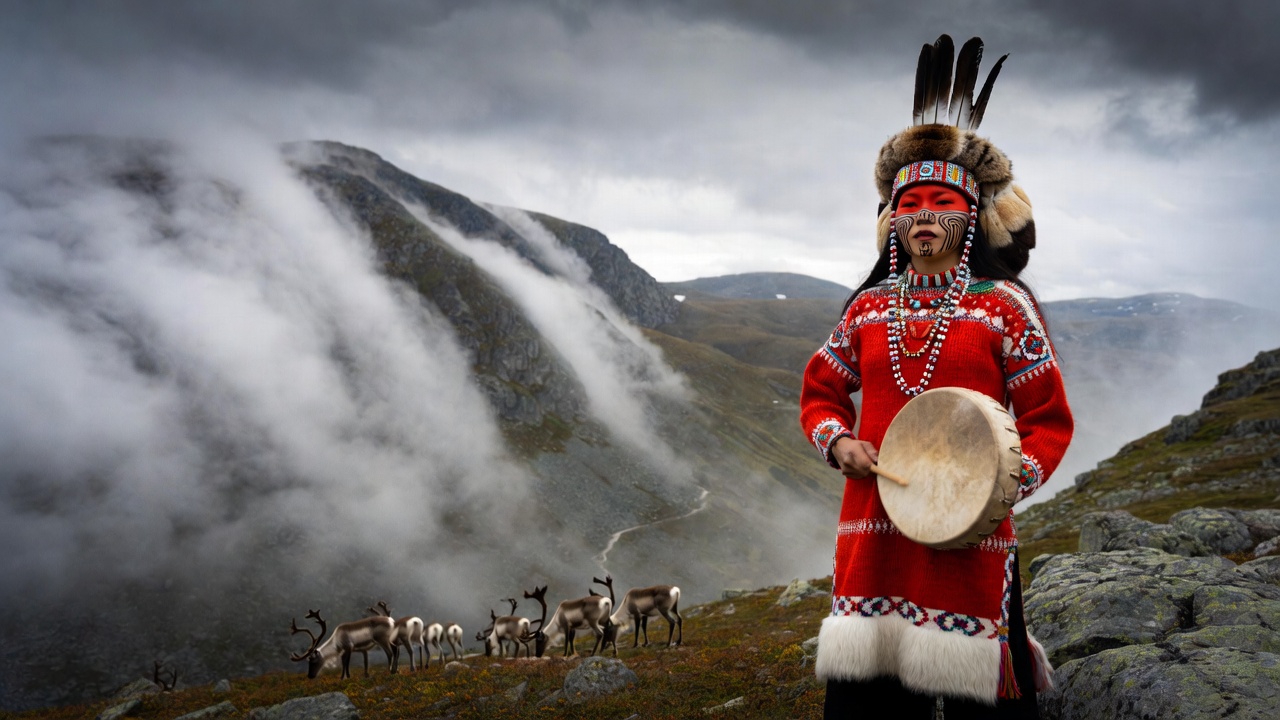
Lihkku sámi álbmotbeivviin! That is Northern Sámi for “Happy Sámi National Day.” Every year on February 6, the Sámi people — Europe’s only recognized Indigenous population within the EU — celebrate their shared heritage across four nations. From the snow-dusted mountains of northern Norway to the frozen tundra of Russia’s Kola Peninsula, this day is a powerful expression of cultural survival. Yet despite growing global awareness, Sámi National Day remains surrounded by stubborn myths, outdated stereotypes, and well-meaning but incorrect assumptions.
This guide sets the record straight. Below, we separate fact from fiction, explore the real history behind February 6, and honor a culture that has thrived in the Arctic for thousands of years. Whether you are planning a trip to Sápmi, researching Indigenous European cultures, or simply curious, read on. You might be surprised by how much you did not know.
What Is Sámi National Day and Why Is It Celebrated on February 6?
Before we debunk myths, let us establish the basics. Sámi National Day (Sámi álbmotbeaivi) is an ethnic national day celebrated annually on February 6. It is not tied to any single country. Instead, it unites the Sámi population living across Norway, Sweden, Finland, and Russia.
The date itself is deeply meaningful. On February 6, 1917, the first Sámi congress was held in Trondheim, Norway. This congress was a landmark event. It was the first time Norwegian and Swedish Sámi crossed national borders to meet, discuss shared concerns, and seek common solutions. The gathering was organized by Elsa Laula Renberg, a remarkable Sámi activist and one of the great figures of Indigenous rights in Scandinavia.
The decision to mark February 6 as a national day came much later. In 1992, at the 15th Sámi Conference in Helsinki, Finland, delegates passed a formal resolution. They declared that the day should be observed by all Sámi, regardless of which country they call home. The resolution also stated that the Sámi flag should be flown and the Sámi anthem sung in the local Sámi language on this date.
The first official celebration took place in 1993 in Jokkmokk, Sweden, coinciding with the United Nations’ proclamation of the International Year of Indigenous People. Since then, the holiday has grown steadily. Today, the governments of Norway, Sweden, and Finland all recommend general flagging on February 6.
In 2026, Sámi National Day falls on a Friday, which means celebrations in many communities extend into a full weekend of cultural events, markets, concerts, and gatherings. In Tromsø, Norway, the annual Sámi Week runs from February 1 to 8 and features lectures, concerts, reindeer racing, and lasso-throwing competitions. In Stockholm, the open-air museum Skansen hosts events in collaboration with the Stockholm Sámi Association, offering food, handicrafts, joik performances, and historical exhibitions.
| Key Facts About Sámi National Day | |
|---|---|
| Date | February 6 (annually) |
| First Congress | February 6, 1917, in Trondheim, Norway |
| Resolution Passed | 1992, 15th Sámi Conference, Helsinki |
| First Celebration | 1993, Jokkmokk, Sweden |
| Countries Involved | Norway, Sweden, Finland, Russia |
| Sámi Population | Estimated 80,000–100,000 |
| Day in 2026 | Friday |
Who Are the Sámi People? Indigenous History of Northern Europe Explained
One of the most common misunderstandings about the Sámi is the basic question of who they actually are. Many people outside Scandinavia have never heard of them. Others confuse them with a general Nordic population. So let us be clear.
The Sámi are the Indigenous people of Sápmi, a region that stretches across the northern parts of Norway, Sweden, Finland, and the Kola Peninsula of Russia. Sápmi is not a country. It is a cultural and geographical homeland — an area roughly the size of Sweden — that has been inhabited by the Sámi for thousands of years. Archaeological evidence suggests human habitation in these northern territories dating back to at least 8,000 BCE.
The Sámi speak a group of related languages that belong to the Uralic language family. There are nine recognized Sámi languages, of which three are in active daily use in Norway: Northern Sámi, Lule Sámi, and Southern Sámi. These languages are not dialects of Norwegian, Swedish, or Finnish. They are entirely distinct. Northern Sámi is the most widely spoken, with communities in all three Nordic countries.
The total Sámi population is estimated at approximately 80,000 to 100,000 people, though exact numbers are difficult to establish because census methods vary across countries and many people of Sámi heritage do not self-identify due to the lasting effects of assimilation policies. The largest concentration lives in Norway, where roughly 50,000 Sámi reside. Sweden is home to about 20,000, Finland to about 8,000, and Russia’s Kola Peninsula to approximately 2,000.
The Sámi have their own parliaments in Norway, Sweden, and Finland — elected bodies that advise on policy affecting Sámi communities. Norway’s Sámi Parliament (Sámediggi) was established in 1989 and is located in Karasjok, in the far north. These parliaments represent a modern political expression of a people whose self-governance traditions stretch back centuries through the siida system — cooperative communities that managed land, herds, and resources collectively.
Myth: All Sámi People Are Reindeer Herders — The Biggest Misconception
This is, without question, the most persistent and widespread myth about the Sámi. The idea that all Sámi are nomadic reindeer herders is simply not true, and it never was.
As the Milwaukee Public Museum states plainly: the misconception that all Sámi are reindeer herders stems from the way they have been portrayed in historical records. The vast majority of Sámi are not — and never were — herders.
Here are the actual numbers. As of recent data, only about 10% of the Sámi population has any connection to reindeer herding. In Norway, roughly 2,800 to 3,000 people are actively involved in full-time reindeer husbandry. In Scandinavia as a whole, about 6,500 Sámi engage in reindeer herding. That is a small fraction of the total population.
Historically, the Sámi pursued a wide variety of livelihoods. Coastal Sámi communities relied on fishing. Others depended on hunting, fur trapping, and gathering. Some practiced small-scale agriculture and sheep herding. The reindeer-herding Sámi — sometimes called Mountain Sámi — were one subgroup among many. The diversity of Sámi economic life has always been much richer than the single image of a herder following reindeer across the tundra.
Today, the majority of Sámi live in towns and cities. They work in every sector of the modern economy — education, healthcare, technology, media, the arts, government, and business. Reducing the entire Sámi identity to reindeer herding is not only inaccurate; it erases the full breadth of their cultural and economic life.
That said, reindeer herding remains deeply important to Sámi culture. It is far more than an occupation. It is a living tradition, a connection to the land, and a system of knowledge passed down through generations. In Norway and Sweden, reindeer herding is legally reserved for Sámi people in designated areas, a recognition of its cultural significance. The Sámi language itself contains over 318 distinct concepts for describing snow, ice, and frozen ground — a vocabulary that reflects centuries of herding expertise in Arctic conditions.
| Sámi Livelihoods: Historical and Modern | |
|---|---|
| Reindeer herding | ~10% of Sámi today |
| Coastal fishing | Traditional livelihood for Sea Sámi |
| Hunting and trapping | Historically widespread |
| Sheep herding | Practiced in some regions |
| Handicrafts (duodji) | Traditional art form, still practiced |
| Modern professions | Majority of Sámi today |
Myth: The Sámi Are “Lapps” or “Laplanders” — Why These Terms Are Considered Offensive
You may have encountered the terms “Lapp,” “Lapps,” or “Laplanders” in older books, maps, or travel brochures. These words were once common in English and other European languages. Today, however, many Sámi consider them derogatory.
The word “Lapp” was never a Sámi word. It was an external label, likely of Scandinavian or Finnish origin. Over centuries, it became associated with colonial attitudes, racial stereotyping, and the long era of forced assimilation. Using it today signals, whether intentionally or not, an outdated and disrespectful view.
The Sámi have always had their own name for themselves. In Northern Sámi, they are the Sámit (the Sámi people) or Sápmelaš (of Sámi kin). The word Sápmi refers to their homeland. These are the correct, respectful terms.
The name “Lapland” survives as a geographic label. Finland’s northernmost region is officially called Lappi in Finnish. But this does not change the fact that the people themselves prefer to be called Sámi. When writing or speaking about them, use Sámi (also spelled Sami or Saami). It is a simple matter of respect.
Myth: Sámi Culture Is a Thing of the Past — The Living Culture of Sápmi Today
Another damaging misconception is the idea that Sámi culture belongs to a distant, frozen-in-time past. Some people imagine the Sámi only through the lens of museum exhibits — colorful costumes behind glass, drums in display cases, and black-and-white photographs. This could not be further from the truth.
Sámi culture is alive, dynamic, and evolving. Consider just a few examples from recent years:
- Joik, the traditional Sámi vocal art form, has experienced a remarkable resurgence. Joik is not “singing about” something. It is singing the essence of a person, place, or animal. This ancient art form has been adapted into contemporary music, fusion genres, and international collaborations. Sámi artists like Mari Boine and Sofia Jannok have brought joik to global audiences.
- Sámi literature is flourishing. In 2023, Sámi Swedish author Ann-Helén Laestadius published Stolen, a novel about Sámi life in Sweden. It was adapted into a Netflix film in 2024, bringing Sámi stories to millions of viewers worldwide.
- Sámi fashion based on the traditional gákti (the Sámi garment) has inspired both cultural pride and creative design. The gákti is not a costume. It is living clothing, worn at celebrations, confirmations, weddings, and National Day. Each region’s gákti has distinct patterns and colors that identify the wearer’s community.
- Sámi media has expanded significantly. There are Sámi-language radio and television programs, newspapers, and digital platforms. Norway’s NRK Sápmi provides daily news and cultural programming in Northern Sámi.
- Duodji, the Sámi handicraft tradition, continues to be practiced and passed down. It includes work in leather, bone, wood, pewter thread, and reindeer horn. Duodji is not souvenir craft. It is a sophisticated art form with deep cultural significance.
The Sámi are not a relic. They are a people building their future while honoring their past. Treating them as a historical curiosity is both inaccurate and disrespectful.
The Dark History Behind Sámi National Day: Forced Assimilation and Norwegianization
To truly understand why Sámi National Day matters, you must reckon with a painful chapter of Nordic history. The celebration on February 6 is not just a party. It is an act of cultural resilience against decades of deliberate suppression.
From the mid-1800s until well into the 1960s, the governments of Norway, Sweden, and Finland pursued systematic assimilation policies aimed at erasing Sámi language, culture, and identity. In Norway, this is known as Norwegianization (fornorskningspolitikken). Similar policies existed in Sweden (Swedification) and Finland.
The Norwegian government’s approach was explicit. In 1851, the Storting (parliament) established a special fund specifically to finance the Norwegianization of the Sámi. Sámi children were sent to state-run boarding schools where they were forbidden to speak their own language. They were punished — sometimes physically — if they used Sámi. The goal was to sever children from their families, their language, and their culture.
As historian Henry Minde has documented, this policy unfolded in phases from 1851 to the 1980s. During the most intense period, from roughly 1900 to 1940, anyone who wanted to buy or lease state lands in Finnmark had to prove knowledge of Norwegian and register with a Norwegian name. Place names across the north were systematically changed from Sámi to Norwegian. Census categories grouped Sámi ethnicity alongside “blind, deaf, and insane” until 1920.
The effects were devastating. Many Sámi families came to reject their own identity. Speaking Sámi became a source of shame rather than pride. An entire generation grew up unable to communicate with their grandparents in their ancestral language.
In 1997, King Harald V of Norway made a historic acknowledgment. He declared: “The state of Norway was founded on the territory of two peoples — the Sámi people and the Norwegians.” He offered a formal apology for the injustice of the Norwegianization policy. This was the first time a Norwegian state representative had done so.
More recently, in 2023, Norway’s Truth and Reconciliation Commission delivered its final report to the Storting after five years of work. The 700-page document detailed centuries of forced assimilation and its ongoing consequences. The report collected over 760 personal accounts from affected individuals. In November 2024, the Norwegian Parliament offered a formal apology for the historical injustice against the Sámi, the Kvens, and the Forest Finns.
Sweden and Finland have launched their own truth and reconciliation processes, though both have faced criticism for insufficient resources and commitment.
Understanding this history transforms the meaning of Sámi National Day. When you see the Sámi flag raised on February 6, know that it represents not just celebration — but survival.
Myth: The Sámi Flag Has Always Existed — The Real Story Behind the Sámi Flag
The Sámi flag is one of the most recognizable symbols of Indigenous Europe. Its vibrant design — a circle of blue and red over stripes of red, green, yellow, and blue — evokes the Arctic landscape and the Sámi spiritual connection to the sun and moon. But contrary to what some assume, the flag is relatively new.
The Sámi flag was officially adopted on August 15, 1986, at the 13th Nordic Sámi Conference in Åre, Sweden. The design was created by Astrid Båhl, a Sámi artist from Skibotn in northern Norway. Before this, the Sámi did not have a single unifying flag.
The flag’s symbolism is rooted in Sámi tradition and poetry:
- The circle represents both the sun (red half) and the moon (blue half). It draws inspiration from a Sámi poem that describes the Sámi as “the sons and daughters of the sun.”
- The red stripe symbolizes fire and warmth.
- The blue stripe represents water and the sky.
- The green stripe stands for nature and the land.
- The yellow stripe represents the sun.
Today, the flag is flown on public buildings across the Nordic countries on February 6. In Oslo, the bells of the city hall tower play the Sámi national anthem as the flag is raised — a moving moment that would have been unthinkable just a few decades ago.
Myth: Sámi Spirituality Is Just “Shamanism” — Understanding Traditional Sámi Beliefs
Western writers have often reduced Sámi spirituality to a generic label of “shamanism.” While there are shamanic elements in traditional Sámi belief, this oversimplification misrepresents a rich, complex, and regionally varied spiritual tradition.
Traditional Sámi spiritual practice is rooted in animism — the belief that all significant natural objects possess a spirit. Animals, plants, rocks, rivers, and mountains were understood as living beings worthy of respect. This was not a primitive worldview. It was a sophisticated understanding of ecological interconnection, developed over millennia of living in close relationship with the Arctic environment.
Key elements of traditional Sámi spirituality include:
- The noaidi (shaman or spiritual mediator) served as a bridge between the human world and the spirit world. The noaidi used a ceremonial drum painted with cosmological symbols to enter trance states and communicate with spirits.
- The Sámi drum (runebomme or goavddis) was central to spiritual practice. During the Christianization of Sápmi, missionaries and colonial authorities systematically destroyed these drums. Very few originals survive today. Each drum was unique, decorated with symbols representing the owner’s spiritual world.
- Bear worship was an important tradition. The bear was considered sacred, and elaborate ceremonies surrounded the bear hunt.
- Sieidi — sacred natural formations, often unusual rocks or stone formations — served as places of offering and connection with the spirit world.
- The Sámi pantheon included figures such as Beaivi (the Sun), Horagalles (the thunder god), Máttaráhkká (the mother goddess), and Rana Niejta (the daughter of the green, fertile earth).
The suppression of Sámi spirituality began during the missionary campaigns of the 1600s and 1700s. Church authorities viewed Sámi beliefs as devil worship. They confiscated drums, destroyed sacred sites, and prosecuted Sámi practitioners of traditional religion. Several Sámi were executed for alleged sorcery during the witch trials of the 17th century.
Today, there is a growing interest in reclaiming and understanding traditional Sámi spiritual practices. This revival is approached with care and respect for the sacred nature of these traditions.
Myth: The Sámi Have No Traditional Dance Culture — Debunking a Lesser-Known Misconception
Here is a myth that even some Scandinavians believe: that the Sámi have no traditional dance culture. This is incorrect.
The misconception arises because, unlike many other Indigenous peoples, traditional dance is not a prominent visible marker of Sámi identity in the way that, for example, joik is. Dance did not become a public performance tradition in the same way as in some other cultures. But that does not mean it did not exist.
Historical sources from the 16th and 17th centuries describe ecstatic ritual dances (lihkadus) associated with spiritual practice. These movements were connected to the noaidi’s trance experiences. Among the Skolt Sámi and Sámi communities on the Kola Peninsula, partner and group dances have been part of cultural life since at least the 1800s. These include square dances, couple dances, circle dances, and singing games, influenced by Karelian and Northern Russian dance traditions.
The Sámi contemporary dance company Kompani Nomad has worked to research and reimagine historical Sámi dance forms through modern performance, drawing on old descriptions of ritual movement to create new artistic expressions.
The Fosen Wind Farm Conflict: Indigenous Rights vs. Green Energy in 2026
No discussion of Sámi affairs in 2026 is complete without addressing the Fosen wind farm conflict — a case that has drawn global attention to the tension between renewable energy development and Indigenous rights.
The conflict centers on two large wind farms — Storheia and Roan — on the Fosen Peninsula in central Norway’s Trøndelag region. Together, these facilities comprise 151 wind turbines and produce roughly 1.9 terawatt hours of electricity annually — about 20% of all wind power production in Norway.
The problem? The wind farms were built on traditional winter grazing lands used by Sámi reindeer herders for centuries. In October 2021, Norway’s Supreme Court ruled unanimously that the licenses for these wind farms were invalid. The court found that the construction violated Article 27 of the UN International Covenant on Civil and Political Rights (ICCPR), which protects the right of minorities to enjoy their own culture. The court explicitly stated that reindeer herding is a protected cultural practice under this article.
Despite this ruling, the wind farms continued to operate. For over 500 days after the Supreme Court decision, nothing changed on the ground. This sparked a wave of protests. In February 2023, Sámi activists and supporters — including Swedish climate activist Greta Thunberg — blocked the entrances to several Norwegian government ministries in Oslo. The demonstrations drew international media coverage and forced a public reckoning.
In March 2024, the Norwegian government and the Sámi herders reached a partial agreement. The deal allows the wind farms to remain in operation but includes several provisions:
- Procurement of additional winter grazing rights for the affected herders
- A veto right for the herders over any plans to extend the wind farms’ operating licenses past 2045
- Financial compensation and grants to strengthen Sámi culture
In the summer of 2025, Norway’s Supreme Court overturned the fines imposed on the Fosen protesters — a decision celebrated as a victory for democratic protest.
The Fosen case is far from over. It remains one of the most significant Indigenous rights cases in modern European history and a critical test of whether governments can balance climate goals with the rights of the people most directly affected by energy projects.
Myth: Sámi National Day Is Only Celebrated in Norway — The Pan-Sápmi Celebration
Some people assume that Sámi National Day is a Norwegian holiday. After all, Norway has the largest Sámi population, and much of the global media coverage focuses on Norwegian events. But this assumption misses the point entirely.
The 1992 resolution that established the holiday was explicit: Sámi National Day is for all Sámi, regardless of where they live. It is celebrated across all four countries of Sápmi — and increasingly, by Sámi diaspora communities around the world.
Here is what celebrations look like in each country:
Norway: The most visible celebrations take place in Norway, where the Sámi flag flies alongside the Norwegian flag on public buildings. In Oslo, the city hall tower bells play the Sámi national anthem at the flag-raising ceremony. Schools across the country dedicate lessons to Sámi culture and history in the week leading up to February 6. Tromsø’s Sámi Week is one of the largest annual events. The Norwegian Sámi Parliament in Karasjok holds official ceremonies.
Sweden: Celebrations are growing in prominence. Skansen in Stockholm hosts a major public program in collaboration with the Stockholm Sámi Association. Jokkmokk — site of the famous Jokkmokk Winter Market, which has been held since 1605 — hosts events throughout February. The Sámi flag is recommended for general flagging.
Finland: The Sámi National Day has been included in almanacs published by the University of Helsinki since 2004. Finnish authorities recommend flagging. Events take place in the Sámi homeland municipalities of Enontekiö, Inari, Sodankylä, and Utsjoki. The Finnish Sámi Parliament in Inari holds formal observances.
Russia: The situation for the approximately 2,000 Sámi on the Kola Peninsula is more complex. Political and social conditions have made public celebration more difficult. Nevertheless, Sámi cultural organizations in the region mark the day. By coincidence, February 6 was also historically the date of the Kola Sobbar — an annual assembly where Sámi of the Kola Peninsula met with Russian authorities to discuss community issues. This assembly, active during the late 1800s, has been called the “first Sámi Parliament” by researcher Johan Albert Kalstad.
How to Celebrate Sámi National Day Respectfully as a Visitor in 2026
If you are traveling in northern Scandinavia around February 6, you may have the chance to witness or participate in Sámi National Day events. Here is how to do so respectfully.
Do:
- Listen and learn. This is a day for the Sámi people to tell their story. Attend public events, museum exhibitions, concerts, and lectures with an open mind.
- Try traditional food. Reindeer meat (reinsdyrkjøtt) prepared in traditional ways — such as bidos (a hearty stew with reindeer meat, potatoes, and carrots) — is often available at markets and events. Smoked fish and dried reindeer meat are other traditional offerings.
- Support Sámi artisans. Purchase authentic Sámi handicrafts (duodji) directly from Sámi makers. Look for items made of reindeer leather, bone, pewter thread, and birch wood. Be wary of mass-produced imitations.
- Learn a greeting. In Northern Sámi, you can say “Lihkku beivviin!” (Happy day!) to congratulate someone. In Norwegian, “Gratulerer med dagen” is used.
- Visit a Sámi museum or cultural center. Excellent options include the Sámi Parliament visitor center in Karasjok, the RiddoDuottarMuseat Sámi museum network, and the Àjtte Swedish Mountain and Sámi Museum in Jokkmokk.
Do Not:
- Do not wear a gákti unless you are Sámi or have been explicitly invited to do so. The gákti carries deep personal and regional significance.
- Do not call the Sámi “Lapps” or “Laplanders.” Use the word Sámi.
- Do not treat Sámi culture as entertainment. Approach events with the same respect you would give to any cultural celebration.
- Do not assume all Sámi herd reindeer or live in lavvu tents. Most Sámi live modern lives in towns and cities.
Sámi Languages Are Endangered — What You Should Know About Language Revitalization
Of the nine Sámi languages, several are critically endangered. This is one of the most urgent challenges facing the Sámi people today — and it is a direct result of the assimilation policies described earlier.
Here is the current state of Sámi languages:
| Language | Approximate Speakers | Status |
|---|---|---|
| Northern Sámi | ~25,000 | Most widely spoken; still under pressure |
| Lule Sámi | ~2,000 | Endangered |
| Southern Sámi | ~500 | Severely endangered |
| Inari Sámi | ~400 | Severely endangered |
| Skolt Sámi | ~300 | Severely endangered |
| Kildin Sámi | ~100 | Critically endangered |
| Ter Sámi | ~2 | Nearly extinct |
| Pite Sámi | ~30 | Critically endangered |
| Ume Sámi | ~10 | Nearly extinct |
The Norwegian Truth and Reconciliation Commission’s 2023 report made clear that language loss is one of the most devastating consequences of forced assimilation. Linguist Pia Lane, a member of the Commission, has spoken about how many Sámi, Kven, and Forest Finnish people mourn the languages they were never given the chance to learn. The boarding school system robbed generations of their mother tongue. Children returned home unable to communicate with their own families.
Today, revitalization efforts are underway across Sápmi. Language nests — immersive preschool programs where only Sámi is spoken — have been established in several communities. Sámi-language education is now a legal right in Norway, Sweden, and Finland, though access to qualified teachers remains a challenge. Digital tools, language apps, and social media content in Sámi languages are helping a new generation reconnect with their linguistic heritage.
Despite these efforts, the situation remains fragile. Several Sámi languages may not survive another generation without sustained investment and political will.
Myth: The Sámi Are a Homogeneous Group — The Diversity Within Sápmi
Outsiders often speak of “the Sámi” as though they are a single, uniform group. In reality, Sámi culture is remarkably diverse, varying significantly across regions, languages, and livelihoods.
Consider the differences between just a few Sámi groups:
- Sea Sámi (Coastal Sámi) traditionally lived along the fjords of northern Norway, relying on fishing and maritime resources. Their way of life was distinct from the reindeer-herding Mountain Sámi.
- Forest Sámi lived in the inland forested areas, combining small-scale reindeer herding, hunting, and fishing.
- Mountain Sámi practiced the large-scale nomadic reindeer herding that is most associated with Sámi identity internationally.
- Skolt Sámi of Finland and Russia have their own distinct language, traditions, and Orthodox Christian heritage — quite different from the Lutheran tradition of most Western Sámi.
- Southern Sámi of central Scandinavia speak their own language and have their own cultural traditions. The Supreme Court’s Fosen ruling specifically noted that the Southern Sámi are a “minority within a minority” and therefore in an especially vulnerable position.
With nine distinct languages, multiple livelihood traditions, diverse religious histories, and communities spread across four countries, the Sámi are anything but homogeneous. Recognizing this diversity is essential to understanding and respecting their culture.
Myth: Sámi Rights Are Fully Protected in Scandinavia Today
Scandinavia is often held up as a model of progressive governance and human rights. And indeed, the Nordic countries have taken significant steps to recognize Sámi rights — from establishing Sámi parliaments to enshrining language rights in law. But the picture is far more complicated than it appears.
The Fosen case is just one example of ongoing rights violations. Other issues include:
- Land rights remain contested. Sámi communities continue to face pressure from mining, forestry, wind power development, military expansion, and tourism on their traditional lands. The Sámi parliaments have advisory roles but limited legal power to block development projects.
- The Norwegian Sámi Parliament operates on a limited budget. It has been noted that its annual budget is lower than that of Oslo’s opera house — yet it is tasked with preserving an entire people’s language, culture, and rights.
- Climate change poses an existential threat. The Arctic is warming nearly four times faster than the rest of the planet. This directly affects reindeer herding by disrupting migration routes, altering snow conditions, and increasing the prevalence of parasitic insects. Research suggests the global reindeer population could decline by more than 50% by 2100.
- Finland’s definition of who is Sámi has been a source of ongoing controversy. The criteria for inclusion on the Sámi electoral register have been debated for years, with some arguing that the current definition is too restrictive and others arguing it must be protected from dilution.
- Russia’s Sámi face the most difficult conditions. Political restrictions, lack of institutional recognition, and the broader constraints on Indigenous rights in Russia have limited the Kola Sámi’s ability to maintain and develop their culture.
The 2023 Truth and Reconciliation Commission report was a crucial step. But as Silje Karine Muotka, President of the Norwegian Sámi Parliament, has emphasized, an apology alone does not repair broken trust. Reconciliation requires addressing the structural inequalities that continue to affect Sámi communities.
What the Sámi National Anthem Means and Why It Matters
The Sámi national anthem, “Sámi soga lávlla” (Song of the Sámi People), holds a special place in Sámi cultural identity. The text was written by Isak Saba, a Sámi politician and teacher who was the first Sámi member of the Norwegian Parliament. The melody was composed by Arne Sørli.
The anthem was officially adopted at the 15th Sámi Conference in 1986. It speaks of the Sámi homeland — its mountains, waters, and winds — with a tone of deep belonging and quiet pride. It is sung in the local Sámi language at celebrations across Sápmi, and its performance on February 6 is one of the most emotionally resonant moments of the day.
Hearing the anthem played from the tower of Oslo City Hall on Sámi National Day morning, while the Sámi flag is raised over the Norwegian capital, carries enormous symbolic weight. It is a public declaration that the Sámi are not a footnote in Nordic history. They are a foundational people whose presence and rights are acknowledged at the highest levels.
Planning Your Visit to Sápmi: Best Places to Experience Sámi Culture in 2026
For those inspired to experience Sámi culture firsthand, here are some of the best destinations and events in 2026:
| Destination | Country | Highlights |
|---|---|---|
| Tromsø — Sámi Week | Norway | Lectures, concerts, reindeer racing, lasso-throwing (Feb 1–8) |
| Karasjok | Norway | Sámi Parliament, cultural centers, Indigenous art galleries |
| Kautokeino | Norway | Sámi University of Applied Sciences, Easter Festival |
| Jokkmokk Winter Market | Sweden | Annual market since 1605, handicrafts, food, culture (early February) |
| Skansen, Stockholm | Sweden | Sámi National Day events in collaboration with Sámi Association |
| Inari | Finland | Siida Sámi Museum, Sámi Parliament of Finland, wilderness experiences |
| Enontekiö | Finland | Sámi cultural events, Arctic landscape |
When visiting, remember that Sápmi is not a theme park. The communities you visit are real places where people live and work. Approach your travels with humility and genuine curiosity.
Frequently Asked Questions About Sámi National Day 2026
Is Sámi National Day a public holiday? No. It is not an official public holiday in any country. However, it is a recognized flag day in Norway, Sweden, and Finland. Schools and public institutions hold special events and programs.
Can non-Sámi people celebrate Sámi National Day? Yes. The day is an opportunity for everyone to learn about Sámi culture and history. Public events and celebrations are generally open to all. The best way to participate is to listen, learn, and show support.
What is the Sámi flag? The Sámi flag was adopted in 1986. It features a circle of blue and red (representing the moon and sun) over horizontal stripes of red, green, yellow, and blue. It was designed by Astrid Båhl of Skibotn, Norway.
How do you say “Happy Sámi National Day” in Sámi? In Northern Sámi: “Lihkku sámi álbmotbeivviin!” In Inari Sámi: “Pyeri säämi aalmugpeeivi!” In Southern Sámi: “Læhkoe saemiej åålmegebiejjine!”
How many Sámi languages are there? There are nine recognized Sámi languages. Three are in active daily use in Norway. Several are critically endangered.
Why Sámi National Day Matters More Than Ever in 2026
In a world grappling with climate change, Indigenous rights, cultural preservation, and the tensions between development and tradition, the Sámi experience speaks to some of the most pressing questions of our time.
Sámi National Day is not a quaint folk tradition. It is a living declaration of cultural survival. It commemorates the moment in 1917 when Sámi from different nations first came together to speak with a common voice. It honors the generations who endured forced assimilation and fought to keep their languages, traditions, and identity alive. And it looks forward — to a future where Sámi children grow up speaking their own languages, where reindeer can graze on ancestral lands, and where Indigenous rights are not weighed against corporate profits.
On February 6, 2026, when the Sámi flag rises over city halls from Oslo to Inari, remember what it represents. Not just a celebration. A statement. We are here. We have always been here. And we are not going anywhere.
Lihkku sámi álbmotbeivviin. Happy Sámi National Day.