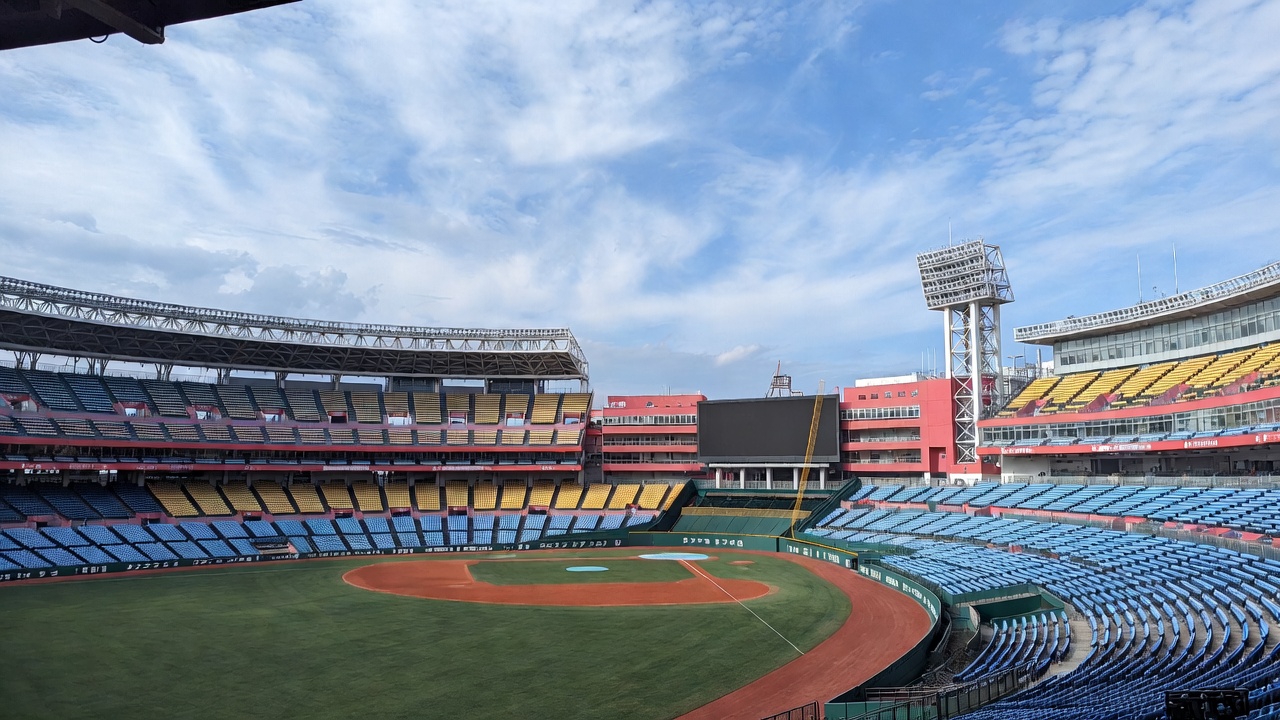
There is a moment, right before the first pitch of a Japanese baseball game, when you realize you have traveled far beyond sport. The brass band in the outfield stands begins to play. Forty thousand voices rise in unison, each fan knowing every word of every player’s personal cheer song. Beer vendors — cheerful young women carrying miniature kegs on their backs — weave through the aisles. The smell of fresh yakitori mingles with ocean breezes, or perhaps the earthy scent of a century-old infield. This is Nippon Professional Baseball, and this is why its stadiums are not just places to watch a game. They are living monuments to Japan’s deepest cultural passions.
Japan’s love affair with baseball stretches back to 1872, when an American teacher first introduced the sport to students in Tokyo. The professional league was founded in 1936. Today, NPB consists of 12 teams divided into the Central League and the Pacific League, each playing a 143-game regular season from late March through October. In the 2025 season, NPB drew over 27 million fans — an average of 31,515 per game — setting a new all-time attendance record for the second straight year. The Fukuoka SoftBank Hawks claimed the 2025 Japan Series championship, defeating the Hanshin Tigers four games to one.
But raw numbers do not capture the experience. Each of the 12 stadiums in NPB tells a story. Some are nearly a century old. Some are gleaming examples of 21st-century engineering. All of them are pilgrimage sites for fans who treat baseball not merely as entertainment, but as a form of community identity. This guide walks you through the most iconic NPB stadiums, covering their history, atmosphere, and practical travel tips, so that you can plan the perfect Japanese baseball stadium tour in 2026.
Best Baseball Stadiums in Japan: A Quick-Reference Table of All 12 NPB Stadiums
Before diving into detailed profiles, here is a summary of every current NPB stadium. Use this table to compare capacities, opening years, and the teams that call them home.
| Stadium | Team | League | City | Capacity | Opened | Surface |
|---|---|---|---|---|---|---|
| Hanshin Koshien Stadium | Hanshin Tigers | Central | Nishinomiya, Hyogo | ~47,000 | 1924 | Natural grass |
| Meiji Jingu Stadium | Tokyo Yakult Swallows | Central | Shinjuku, Tokyo | ~37,900 | 1926 | Natural grass |
| Tokyo Dome | Yomiuri Giants | Central | Bunkyo, Tokyo | ~46,000 | 1988 | Artificial turf |
| Yokohama Stadium | Yokohama DeNA BayStars | Central | Yokohama, Kanagawa | ~34,000 | 1978 | Artificial turf |
| Vantelin Dome Nagoya | Chunichi Dragons | Central | Nagoya, Aichi | ~40,500 | 1997 | Artificial turf |
| Mazda Zoom-Zoom Stadium | Hiroshima Toyo Carp | Central | Hiroshima | ~33,000 | 2009 | Natural grass |
| ES CON Field Hokkaido | Hokkaido Nippon-Ham Fighters | Pacific | Kitahiroshima, Hokkaido | ~35,000 | 2023 | Natural grass |
| Rakuten Mobile Park Miyagi | Tohoku Rakuten Golden Eagles | Pacific | Sendai, Miyagi | ~30,000 | 2005 | Artificial turf |
| Mizuho PayPay Dome Fukuoka | Fukuoka SoftBank Hawks | Pacific | Fukuoka | ~40,000 | 1993 | Artificial turf |
| Belluna Dome | Saitama Seibu Lions | Pacific | Tokorozawa, Saitama | ~33,500 | 1979 | Artificial turf |
| ZOZO Marine Stadium | Chiba Lotte Marines | Pacific | Chiba | ~30,000 | 1990 | Artificial turf |
| Kyocera Dome Osaka | Orix Buffaloes | Pacific | Osaka | ~36,600 | 1997 | Artificial turf |
Now, let us explore the most iconic of these venues in detail.
Hanshin Koshien Stadium: The Sacred Ground of Japanese High School and Professional Baseball
No conversation about Japanese baseball stadiums can begin anywhere other than Koshien. This is not just a stadium. It is, without exaggeration, the most revered baseball ground in all of Asia.
A Century of History at Japan’s Oldest Professional Ballpark
Koshien Stadium opened on August 1, 1924, in Nishinomiya City, Hyogo Prefecture — situated between Osaka and Kobe. At the time, it was the largest stadium in Asia, with a capacity of 55,000 spectators. Its name derives from the traditional Chinese zodiac: the year 1924 marked the auspicious first pairing in the 60-year sexagenary cycle, known as kōshi (甲子). The English rendering, Koshien, has become synonymous with baseball itself in the Japanese imagination.
The stadium was originally built to host the National High School Baseball Championship. This summer tournament, along with its spring counterpart (the National High School Baseball Invitational Tournament), continues to dominate Japanese television and newspaper coverage every year. For high school players across all 47 prefectures, simply playing a game at Koshien is the dream of a lifetime. Participants famously collect a small handful of the infield dirt as a sacred souvenir.
In 1936, the Osaka Tigers — now known as the Hanshin Tigers — made Koshien their home. They have played there ever since, making it the longest-tenured team-stadium relationship in Japanese professional baseball. The Tigers must vacate the stadium during the high school tournaments each year, a stretch that their long-suffering fans call the “Road of Death” (shi no rōdo) because it forces an extended road trip.
What Makes Koshien Special for Visitors
Today, Koshien has a seating capacity of approximately 47,808. It is one of the few active professional ballparks in the world where Babe Ruth and Lou Gehrig once played — during their famous 1934 barnstorming tour of Japan. A bronze plaque outside the stadium commemorates that visit.
The stadium is famous for several distinctive features:
- Ivy-covered exterior walls, giving it a visual kinship with Chicago’s Wrigley Field.
- An all-natural-dirt infield, the last of its kind in professional baseball worldwide.
- A powerful ocean headwind from the nearby coast, making it a notorious pitcher’s park.
- The 7th-inning balloon release, where tens of thousands of fans simultaneously launch colored jet balloons into the night sky.
The Museum of Hanshin Koshien Stadium, located beneath the left-field stands, chronicles the venue’s 100-year history with displays about the Tigers, the high school tournaments, and the stadium’s architectural evolution. Koshien celebrated its centennial anniversary in August 2024, an occasion marked by nationwide media coverage and special events.
Getting there: Koshien Station on the Hanshin Main Line is a two-minute walk from the stadium. From central Osaka (Umeda Station), the ride takes roughly 20 minutes.
Tokyo Dome: Home of the Yomiuri Giants and Japan’s Most Famous Indoor Baseball Stadium
If Koshien is baseball’s spiritual home, the Tokyo Dome is its commercial and cultural epicenter. The home of the legendary Yomiuri Giants — often called the “New York Yankees of Japan” — this indoor arena has been a fixture of Tokyo’s entertainment landscape since it opened in 1988.
The “Big Egg” — How Tokyo Built Its First Domed Stadium
The Tokyo Dome was built on the site of the old Korakuen Stadium in Bunkyo Ward, Tokyo. Construction began in 1985, and the finished product cost roughly $280 million. Its distinctive white, egg-shaped roof — which earned it the enduring nickname “The Big Egg” — is an air-supported structure made of flexible fiberglass membrane, kept aloft by pressurized air pumped at 150,000 cubic meters per hour. The design was modeled after the now-demolished Hubert H. Humphrey Metrodome in Minneapolis.
The Dome’s seating capacity for baseball games is approximately 46,000, though it can hold up to 55,000 for concerts and other events. It was the first domed stadium built in Japan and inspired a wave of similar construction across the country during the 1990s.
Why the Tokyo Dome Matters Beyond Baseball
The Tokyo Dome is far more than a ballpark. It is a cultural measurement unit in Japan. Real estate listings and news reports routinely describe areas as “three Tokyo Domes” or “five Tokyo Domes” in size. The phrase has entered everyday Japanese vocabulary.
The Dome is also home to the Japanese Baseball Hall of Fame and Museum, which chronicles the sport’s history from its introduction in the 1870s to the present day. Major League Baseball has staged regular-season openers at the Tokyo Dome multiple times, including the 2025 season opener between the Los Angeles Dodgers and Chicago Cubs.
For the Yomiuri Giants, the Tokyo Dome hosts approximately 70 home games per year. The team’s dominance — they hold a record 22 Japan Series championships — makes any Giants home game a major event. Tickets can be competitive, though the famously packed stands of the Matsui era have given way to somewhat easier availability.
The stadium sits within Tokyo Dome City, a sprawling entertainment complex that includes an amusement park (with the Thunder Dolphin roller coaster), a Ferris wheel, restaurants, shops, and the Spa LaQua natural hot springs facility. It is a full day’s outing, even without a game to attend.
Getting there: The closest station is Korakuen (Tokyo Metro Marunouchi and Nanboku Lines). Suidobashi Station on the JR Sobu Line is also a short walk. Both are under 15 minutes from central Tokyo.
ES CON Field Hokkaido: Japan’s Newest and Most Innovative NPB Stadium in 2026
When the Hokkaido Nippon-Ham Fighters opened ES CON Field Hokkaido on March 30, 2023, they did not just unveil a new stadium. They introduced a completely new concept to Japanese baseball: the suburban ballpark village.
Why the Fighters Left Sapporo Dome for a Brand-New Ballpark
The Fighters had played at Sapporo Dome since relocating from Tokyo in 2004. But the arrangement was deeply frustrating. The multi-purpose dome was owned by the city of Sapporo, not the team. The Fighters were paying approximately ¥16 million (about $108,000) per game just to rent the facility, and they received no revenue from concessions or advertising during their own home games. The annual cost topped ¥1.3 billion.
In 2016, when the suburban city of Kitahiroshima offered 20 hectares of land for a new stadium, the Fighters seized the opportunity. Construction began in 2020, with the project costing an estimated ¥60 billion ($530 million). The stadium was designed by Obayashi Corporation and HKS Architects, the same American firm that designed the Texas Rangers’ Globe Life Field.
What Makes ES CON Field a World-Class Baseball Experience
ES CON Field seats approximately 35,000 for baseball (up to 35,000 for events). Its standout features make it unlike any stadium previously built in Japan:
- Retractable roof: Only the second in NPB history (after Fukuoka’s dome). Designed to withstand up to 14 feet (4.3 meters) of snow, critical for Hokkaido’s harsh winters.
- Natural grass playing surface: One of only three natural turf fields in NPB. The glass walls and retractable roof allow sunlight to promote turf growth year-round.
- A massive glass wall along the south side, inspired by traditional Hokkaido gable-roof architecture (gasshō-zukuri), floods the interior with natural light and offers views of the surrounding landscape.
- Twin LED video boards measuring 86 meters wide by 16 meters high — among the largest in the world.
- Tower 11, a five-story building beyond left field named after franchise legends Yu Darvish and Shohei Ohtani (both wore the number 11). It houses a bar, restaurant, and an onsen (hot spring bath) where fans can literally soak in natural hot spring water while watching the game.
The stadium is the centerpiece of Hokkaido Ballpark F Village, a 32-hectare entertainment district that includes a hotel, a brewery, retail shops, agricultural research facilities, and even senior housing. The concept is designed so that the complex operates 365 days a year, not just on game days.
Getting there: A 19-minute walk or five-minute shuttle (¥200) from JR Kitahiroshima Station. A new dedicated train station is expected to open near the park around 2027.
Meiji Jingu Stadium: Tokyo’s Oldest Ballpark and the Future of Japanese Baseball Architecture
Walking through the tree-lined streets of the Meiji Jingu Gaien park complex in central Tokyo, you might not expect to find a professional baseball stadium. Yet there it sits: Meiji Jingu Stadium, a relic from 1926, tucked between the ginkgo trees and shrine grounds of one of Tokyo’s most serene neighborhoods.
A 100-Year-Old Stadium Where Babe Ruth Once Played
Meiji Jingu Stadium opened in 1926 as the property of the Meiji Shrine. It is the second-oldest baseball stadium in Japan (after Koshien) and one of only four remaining professional ballparks in the world where Babe Ruth played — alongside Wrigley Field, Fenway Park, and Koshien itself.
The stadium holds approximately 37,933 spectators and is the home of the Tokyo Yakult Swallows. It also hosts the prestigious Tokyo Big6 Baseball League, a university competition that dates to 1925. Because the university games take priority during daytime hours, Swallows home games are almost always played at night.
The Umbrella Tradition and Why Fans Love This Aging Ballpark
Swallows fans are instantly recognizable by their trademark: small green vinyl umbrellas. Whenever the team scores a run, the entire home crowd opens their umbrellas and waves them in unison while singing the team’s fight song, “Tokyo Ondo.” The tradition reportedly began when a resourceful fan suggested that everyone cheer with something they already owned at home.
The stadium’s charm lies partly in its imperfections. The seats are tight. The facilities are sparse — there are no luxury boxes and not even enough restrooms for a full crowd. The legroom is minimal. Yet visitors consistently describe Jingu as having the most intimate, authentic atmosphere in all of Japanese baseball. Surrounded by mature trees and located just minutes from Shibuya, it feels like a ballpark that time forgot.
The Controversial Redevelopment Plan for Meiji Jingu Gaien
That timelessness, however, may be ending. The Tokyo metropolitan government, in partnership with Meiji Shrine and several private developers, has approved plans to demolish Jingu Stadium and the neighboring Chichibunomiya Rugby Stadium. A new covered baseball stadium will be built on the rugby stadium’s current site, with the old baseball grounds converted to a new rugby venue and commercial buildings.
The project has generated significant public controversy. Residents and activists have protested the potential destruction of nearby 100-year-old ginkgo trees and the loss of the Gaien district’s distinctive green, tranquil character. For now, the current Jingu Stadium is expected to remain the Swallows’ home until at least 2031, so visitors in 2026 can still experience this remarkable piece of history.
Getting there: A five-minute walk from Gaienmae Station on the Tokyo Metro Ginza Line. JR Shinanomachi Station is also within walking distance.
Mazda Zoom-Zoom Stadium Hiroshima: The Emotional Heart of Japanese Baseball
There is no stadium in NPB where the relationship between a city and its team runs deeper than in Hiroshima. The Hiroshima Toyo Carp and their home at Mazda Zoom-Zoom Stadium represent something far greater than sport. They represent resilience, community, and the ability to rebuild from the unimaginable.
From the Ashes: How the Hiroshima Carp Were Born from Postwar Recovery
The Carp were founded in 1949 by a group of local residents and businesses as an act of civic reconstruction. Just four years after the atomic bombing of August 6, 1945, the people of Hiroshima decided that a baseball team would be a symbol of their city’s recovery. The team was named partly for the carp that inhabit the Ota River and partly for Hiroshima Castle, nicknamed “Carp Castle.”
The early years were brutal. Without a wealthy corporate sponsor, the Carp finished last in the league in both 1950 and 1951. There was serious talk of disbanding the team. But the people of Hiroshima refused to let that happen. Community fundraising kept the Carp alive. In 1968, automaker Toyo Kogyo (now Mazda) became the team’s corporate sponsor. In 1975, the Carp became the first Japanese professional baseball team to hire a foreign manager — American Joe Lutz — and won their first league championship that same year.
The Stadium That Matches Hiroshima’s Passion for the Carp
The current stadium, officially the New Hiroshima Municipal Stadium, opened on April 10, 2009, replacing the old Hiroshima Municipal Stadium that stood near ground zero of the atomic bombing. Mazda Motor Corporation holds the naming rights.
With a capacity of roughly 33,000, the stadium features:
- An asymmetrical field design, rare in Japanese baseball, inspired by American retro-classic ballparks.
- A natural grass playing surface.
- Wide concourses with some of the best food concessions in NPB.
- A variety of creative seating options, including areas where fans can watch the game while lounging or lying down.
- Outstanding sightlines from virtually every seat in the house.
The stadium sits alongside the Sanyo Shinkansen bullet train tracks, a 10-minute walk from Hiroshima Station. On game days, finding the stadium is effortless — just follow the river of fans dressed head to toe in the Carp’s signature red.
Every year around August 6, the Carp host a special game called “Peace Night” to honor the victims of the atomic bombing and pray for world peace. It is one of the most moving events in all of Japanese sport.
Getting there: A 10-minute walk southeast from JR Hiroshima Station. On game days, follow “Carp Road” along the railroad tracks.
Mizuho PayPay Dome Fukuoka: Japan’s First Retractable-Roof Stadium and Home of the Dominant Hawks
On the coast of Fukuoka, overlooking the waters of Hakata Bay, stands the silver dome that has been the seat of a baseball dynasty. Mizuho PayPay Dome Fukuoka (commonly still referred to as PayPay Dome or Fukuoka Dome) is the home of the Fukuoka SoftBank Hawks, the most successful NPB franchise of the 21st century.
The Silver Dome on the Fukuoka Waterfront
The stadium opened in 1993 as the Fukuoka Dome. It was Japan’s first stadium with a retractable roof — a technological marvel at the time and a source of local pride. The roof’s three panels slide apart to reveal the sky on clear evenings, though the operation reportedly costs about ¥1 million each time.
The dome seats approximately 40,000 and has gone through a series of naming-rights changes reflecting its corporate ownership history: Fukuoka Dome, Yahoo! Japan Dome, Fukuoka Yafuoku! Dome, and Fukuoka PayPay Dome. As of 2024, it carries the name Mizuho PayPay Dome Fukuoka.
The Hawks Dynasty and What Makes This Stadium Worth Visiting
The SoftBank Hawks have built one of the great modern dynasties in professional baseball. They won the Japan Series in 2011, and then claimed an extraordinary run of championships from 2014 through 2020 (seven consecutive league titles, six Japan Series titles in seven years). They added another championship in 2025, defeating the Hanshin Tigers.
The in-game entertainment at PayPay Dome is among the most polished in NPB. If the Hawks win, fans are treated to a full post-game celebration including fireworks, a laser show, and a live performance. The roof opens dramatically during the celebration. Even after the final out, thousands of fans remain in their seats for the show, interviews with the game’s star player, and a communal singing of the team fight song.
Adjacent to the stadium is the Hawks Town entertainment complex, which includes the Hilton Fukuoka Sea Hawk Hotel (with rooms overlooking the field), the OH Sadaharu Museum dedicated to the legendary slugger, and the immersive teamLab Forest digital art experience.
Getting there: A 15-minute walk from Tojinmachi Station on the Fukuoka City Subway Kuko Line. Direct buses also run from Hakata Station and Tenjin Station.
Yokohama Stadium: Where Japanese Baseball Meets Chinatown and the Waterfront
Affectionately known as “Hamasta” (a portmanteau of Yokohama and Stadium), Yokohama Stadium occupies one of the most scenic locations in all of NPB. It sits in the heart of Yokohama Park, just steps from the bustling streets of Yokohama Chinatown — the largest Chinatown in Japan — and the elegant Yamashita Park waterfront promenade.
A Ballpark Reborn for the Olympic Stage
The current stadium dates to 1978 and is home to the Yokohama DeNA BayStars, the 2024 Japan Series champions. It underwent a significant renovation ahead of the 2020 Tokyo Olympic Games (held in 2021), when it served as the primary venue for the Olympic baseball and softball competitions. The renovations expanded capacity to approximately 34,000 and modernized many of the facilities.
The field dimensions are compact, but a five-meter-high outfield wall keeps the park from becoming an extreme hitter’s haven. The atmosphere on game nights is lively and accessible. The BayStars’ fan base has grown considerably in recent years, fueled by the team’s improved on-field performance and savvy marketing.
Why Yokohama Is a Perfect Day-Trip Stadium
Yokohama Stadium’s biggest advantage for visitors is its surroundings. Before or after a game, you can:
- Explore Yokohama Chinatown, sampling steamed pork buns (nikuman), dumplings, and Cantonese roast duck.
- Stroll along the Yokohama waterfront to the Red Brick Warehouse shopping district.
- Visit the Cup Noodle Museum or the Ramen Museum nearby.
The combination of accessible baseball and world-class dining makes Hamasta a favorite stop on any multi-city NPB stadium tour.
Getting there: A two-minute walk from JR Kannai Station (Keihin-Tohoku/Negishi Line). About 35 minutes by train from central Tokyo.
Vantelin Dome Nagoya: The Chunichi Dragons and Baseball in Japan’s Industrial Heartland
Nagoya, Japan’s fourth-largest city and the industrial heart of the Chubu region, is home to the Chunichi Dragons and their Vantelin Dome Nagoya (formerly Nagoya Dome). Opened in 1997, the dome seats approximately 40,500 and is one of the larger venues in NPB.
The Dragons are one of the original franchises of Japanese professional baseball, founded in 1936. Their fan base is loyal and deeply regional, and the team plays a brand of baseball historically built around strong pitching and disciplined defense. The dome itself is a solid, modern indoor venue, though it lacks the distinctive architectural character of some newer NPB stadiums.
For visitors, Nagoya offers a rich cultural backdrop. The city is famous for its unique regional cuisine — miso katsu (breaded pork cutlet with miso sauce), hitsumabushi (grilled eel served three ways), and tebasaki (spicy chicken wings). Nagoya Castle, with its iconic golden shachihoko (mythical dolphin-fish) roof ornaments, is a short trip from the dome.
Getting there: Nagoya Dome-mae Yada Station on the Meijo Subway Line, about a five-minute walk.
Belluna Dome: The Covered Amphitheater in the Hills of Saitama
The Saitama Seibu Lions play in one of the most unusual venues in professional baseball anywhere in the world. Belluna Dome (formerly MetLife Dome, Seibu Dome) in Tokorozawa, Saitama began life as an open-air stadium in 1979 before a roof was added in 1999. The result is a curious hybrid: a covered stadium with open sides that allows the natural elements to flow freely through the seating bowl.
In spring and autumn, this can be pleasant. In the humid depths of a Japanese summer, it can be sweltering. In early spring, it can be genuinely cold. The stadium seats roughly 33,500 and is surrounded by wooded hills, giving it a distinctly suburban, almost pastoral character compared to the urban intensity of Tokyo’s ballparks.
Despite the quirky conditions, Belluna Dome has its devoted fans. The train ride from central Tokyo on the Seibu Railway line passes through increasingly green and hilly terrain, and the station is located right outside the stadium gates — one of the most convenient stadium-to-station connections in all of NPB.
Getting there: Seibu-Kyujo-Mae Station on the Seibu Sayama Line is directly adjacent to the stadium. About 40 minutes from Ikebukuro Station in Tokyo.
ZOZO Marine Stadium: Ocean Breezes and the Loudest Fans in the Pacific League
The Chiba Lotte Marines play at ZOZO Marine Stadium on the Tokyo Bay waterfront in Chiba City. Opened in 1990, the stadium holds approximately 30,000 fans and is known for two things above all else: fierce coastal winds and electrifying fan culture.
The Marines’ cheering section is widely considered the most enthusiastic in all of NPB. Fan chants are coordinated with military-grade precision. The energy in the outfield stands is relentless from the first pitch to the last.
The winds blowing in from Tokyo Bay can make conditions genuinely cold in spring and autumn, so visitors should plan accordingly. On the other hand, the breeze keeps the stadium relatively cool even in summer. An upper deck covered by a roof provides some shelter, but the overall experience is one of bracing, open-air baseball.
Notably, the city of Chiba has announced plans to build a new 33,000-seat stadium adjacent to the Makuhari Messe convention center, with an estimated opening around 2034. The new facility is reportedly inspired by the ES CON Field model of year-round operation.
Getting there: Kaihimmakuhari Station on the JR Keiyo Line, about a 15-minute walk. The station is roughly 40 minutes from Tokyo Station.
Rakuten Mobile Park Miyagi: Baseball and Resilience in the Tohoku Region
The Tohoku Rakuten Golden Eagles, NPB’s youngest franchise (established in 2005), play at Rakuten Mobile Park Miyagi in Sendai, the largest city in the Tohoku region of northern Honshu.
Sendai and the Golden Eagles share a bond forged in adversity. When the devastating Great East Japan Earthquake and tsunami struck on March 11, 2011, the Tohoku region suffered catastrophic damage. The Golden Eagles’ 2013 championship — led by ace pitcher Masahiro Tanaka, who went an extraordinary 24-0 with a 1.27 ERA during the regular season — became a symbol of hope and recovery for the entire region.
The stadium holds approximately 30,000 and has been modernized in recent years with upgraded technology and fan experience features. Sendai itself is a pleasant, leafy city known as the “City of Trees” (mori no miyako), famous for its Tanabata Festival in August and its local specialty, gyutan (grilled beef tongue).
Getting there: About a 100-minute bullet train ride from Tokyo to Sendai Station, then a short bus or taxi ride to the park.
Kyocera Dome Osaka: The Orix Buffaloes and the Kansai Region’s Other Ballpark
While the Hanshin Tigers dominate the Kansai region’s baseball conversation, the Orix Buffaloes quietly maintain a loyal following at Kyocera Dome Osaka. The dome opened in 1997 and seats roughly 36,600. It serves as a versatile venue for concerts and events in addition to baseball.
The Buffaloes carry a complex legacy. They were formed in 2005 from the merger of the Orix BlueWave (home team of Ichiro Suzuki during his NPB career) and the Osaka Kintetsu Buffaloes. That merger, which reduced NPB from 12 to 11 teams, prompted the creation of the Rakuten Golden Eagles as an expansion franchise to restore the league to its traditional 12-team format.
Kyocera Dome also serves as the Tigers’ temporary home during the high school baseball tournaments at Koshien, meaning fans in Osaka can catch Tigers games here during the summer.
Getting there: Dome-mae Chiyozaki Station on the Hanshin Namba Line or the Osaka Metro Nagahori Tsurumi-ryokuchi Line, about a one-minute walk.
How to Plan the Ultimate Japanese Baseball Stadium Tour in 2026
Visiting all 12 NPB stadiums in a single trip is the ultimate goal for dedicated baseball travelers. Here is practical advice for making it happen.
Best Time to Visit NPB Stadiums During the Regular Season
The NPB regular season runs from late March through September, with the postseason (Climax Series and Japan Series) extending into October and sometimes November. The best window for a stadium tour is late May through June, when interleague play means you can see both Central and Pacific League teams in action across multiple cities.
The 2026 All-Star Games will be held on July 28 at the Tokyo Dome and July 29 in Toyama, offering a rare chance to see the best NPB players in one place.
Tips for Buying NPB Tickets as a Foreign Visitor
- Most teams release tickets 4–8 weeks before each game series. The Carp and Tigers are exceptions — they sell their entire season of tickets at the start of spring.
- Popular teams sell out quickly. Tickets for the Giants, Tigers, Carp, and Hawks are the hardest to obtain, especially on weekends.
- Online ticketing is increasingly accessible to foreign visitors. Many teams accept Apple Pay and Google Pay through their ticketing platforms. Convenience store ticket pickup (at Lawson, 7-Eleven, or FamilyMart) is another common option.
- Same-day tickets are available for less popular matchups — just arrive at the stadium box office early.
The Japan Rail Pass and Getting Between NPB Stadiums
A Japan Rail Pass (JR Pass) is essential for a multi-city stadium tour. The Shinkansen bullet train connects most major NPB cities:
- Tokyo to Sendai: ~100 minutes
- Tokyo to Nagoya: ~100 minutes
- Tokyo to Osaka/Kobe (for Koshien): ~150 minutes
- Osaka to Hiroshima: ~90 minutes
- Hiroshima to Fukuoka: ~60 minutes
- Tokyo to Kitahiroshima (for ES CON Field): Fly to New Chitose Airport (~90 minutes), then train to Kitahiroshima (~30 minutes)
The Future of NPB Stadiums: New Ballpark Projects Coming by 2030
The stadium landscape in Japanese baseball is changing rapidly. As of 2026, three NPB teams — the Yakult Swallows, Yomiuri Giants, and Chiba Lotte Marines — have announced plans to build new stadiums.
- The Swallows will build a new covered ballpark on the site of the current Chichibunomiya Rugby Stadium, adjacent to Meiji Jingu. Completion is targeted for approximately 2032.
- The Yomiuri Giants are part of a consortium that won the bid to redevelop the former Tsukiji fish market site in central Tokyo. The new stadium will anchor a massive mixed-use development. Completion is expected around 2030.
- The Chiba Lotte Marines plan to build a new 33,000-seat open-roof stadium near the Makuhari Messe, modeled after ES CON Field’s 365-day operation concept. Opening is projected around 2034.
These projects suggest that Japanese baseball is entering a new golden age of stadium design, one that blends cutting-edge architecture, entertainment villages, and community-centered planning.
What to Eat at Japanese Baseball Stadiums: A Guide to NPB Stadium Food Culture
No Japanese baseball experience is complete without eating. Stadium food in Japan is a world apart from the standard hot dogs and nachos of American ballparks.
Signature Foods You Will Find at Most NPB Stadiums
- Bento boxes (bentō): Beautifully arranged boxed meals featuring rice, grilled meat or fish, pickled vegetables, and seasonal sides. Many stadiums sell limited-edition bento created in collaboration with team players or coaches.
- Yakitori: Grilled chicken skewers, a classic Japanese pub food and a stadium staple.
- Takoyaki: Fried octopus balls, especially popular at Kansai-region stadiums (Koshien, Kyocera Dome).
- Edamame and karaage: Steamed soybeans and Japanese fried chicken, the perfect pairing with a cold beer.
- Curry rice: Many stadiums have signature curry dishes. Koshien’s “Koshien Curry” has been served since the stadium’s opening in 1924.
The Famous Beer Vendors of Japanese Baseball
One of the most charming features of NPB games is the beer vendor system. Young women and men — known informally as “biiru-uri no ko” — carry miniature beer kegs on their backs and walk the aisles throughout the game, pouring fresh draft beer at each customer’s seat. They are a beloved institution of Japanese baseball culture. A cup typically costs around ¥700–900 (roughly $5–7 USD).
Most stadiums also sell an impressive variety of alcoholic beverages beyond beer, including chuhai (shochu highballs), sake, and highballs (whisky and soda). Each stadium tends to have its own specialty drinks and local craft beer options.
Why Watching a Baseball Game in Japan Is a Must-Do Cultural Experience
For travelers who have never attended a Japanese baseball game, the experience transcends sport in ways that are difficult to convey in words.
The organized cheering is the most immediately striking difference from Western baseball. Each team’s fans maintain a designated cheering section, typically in the outfield stands, led by a cheer captain with a megaphone, accompanied by a brass band and drum corps. Every player has a unique personal cheer song that fans sing during their at-bats. When the opposing team bats, the home fans fall silent and allow the visiting fans their turn to cheer. This alternating pattern of thunderous noise and respectful quiet is deeply Japanese in its etiquette.
At the bottom of the 7th inning (the Japanese equivalent of the 7th-inning stretch), fans throughout the stadium simultaneously inflate and release jet balloons — long, narrow balloons that whistle as they fly through the air. The sight of tens of thousands of colored balloons spiraling into the night sky above a brightly lit stadium is one of the signature visual spectacles of Japanese sport.
And perhaps most importantly, the stadiums are immaculately clean. Fans bring their own trash bags and carry out their garbage. There is no litter on the ground. This basic courtesy reflects the broader Japanese cultural values of mottainai (not being wasteful) and communal responsibility.
Final Thoughts: Every NPB Stadium Tells a Story Worth Hearing
Japanese baseball stadiums are not interchangeable arenas. Each one is a product of its city’s history, geography, economy, and spirit. Koshien carries the weight of a century of high school dreams. ES CON Field looks toward a gleaming future. Mazda Zoom-Zoom Stadium holds the memory of a city that refused to die. Meiji Jingu sits quietly in the trees, counting down its final seasons before the wrecking ball arrives.
If you are planning a trip to Japan in 2026, make room in your itinerary for at least one baseball game. You do not need to understand the sport. You do not need to speak Japanese. You just need to show up, buy a bento and a cold beer, and let the crowd carry you. The stadiums of Nippon Professional Baseball will do the rest.
Have you visited an NPB stadium? Share your favorite ballpark experience in the comments below.