
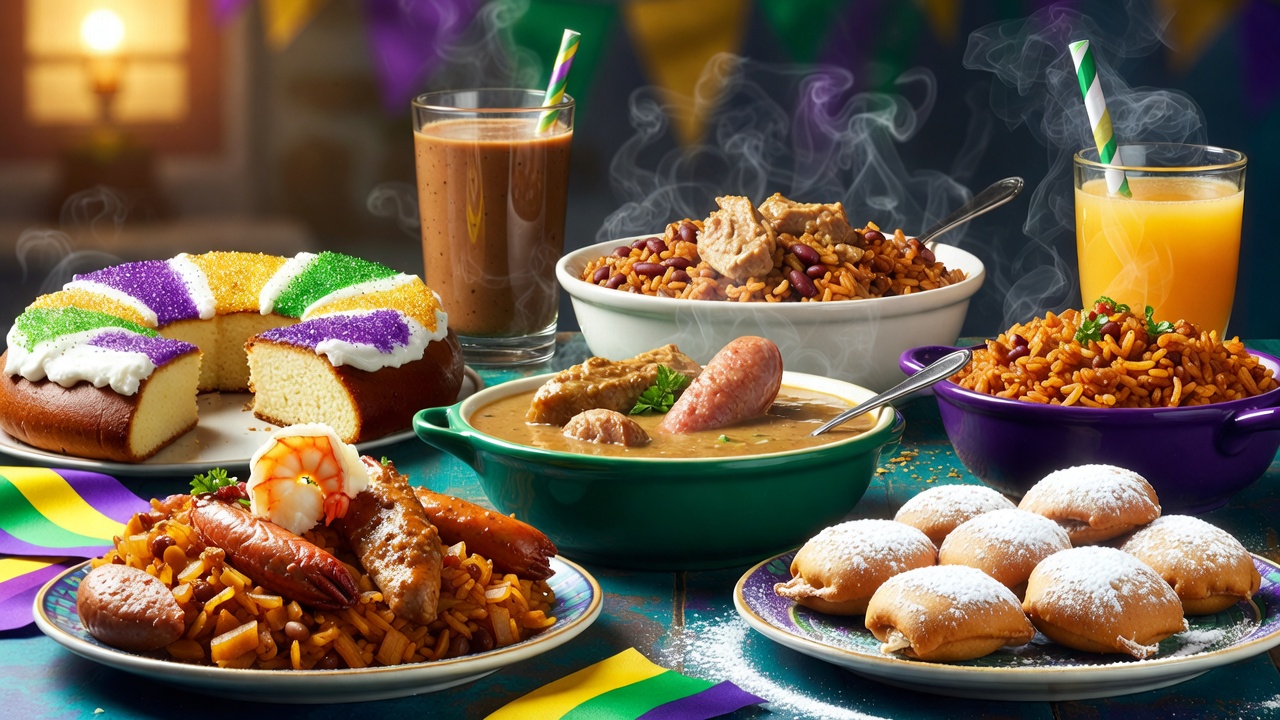
Food is central to Mardi Gras, from the king cake hiding its tiny baby to New Orleans staples like gumbo, jambalaya, and beignets.
This guide rounds up 20 traditional Mardi Gras foods to try, the dishes and sweets that define Carnival season in New Orleans and beyond, with notes on what makes each one special.
What Makes Mardi Gras Food So Special?
Before we dive into the menu, let’s talk history.
Mardi Gras means “Fat Tuesday” in French. It marks the last day of indulgence before Lent begins. Historically, people emptied their pantries of rich foods, butter, eggs, meat, sugar, before the 40-day fasting period.
This tradition created a celebration centered on excess. On eating well. On savoring every bite.
Louisiana’s unique cultural blend shaped these dishes. French, Spanish, African, Caribbean, and Native American influences collide in every pot. The result? Some of the most distinctive regional cuisine in America.
The 20 Best Traditional Mardi Gras Foods to Experience
1. King Cake: The Crown Jewel of Mardi Gras Desserts
No Mardi Gras celebration is complete without King Cake.
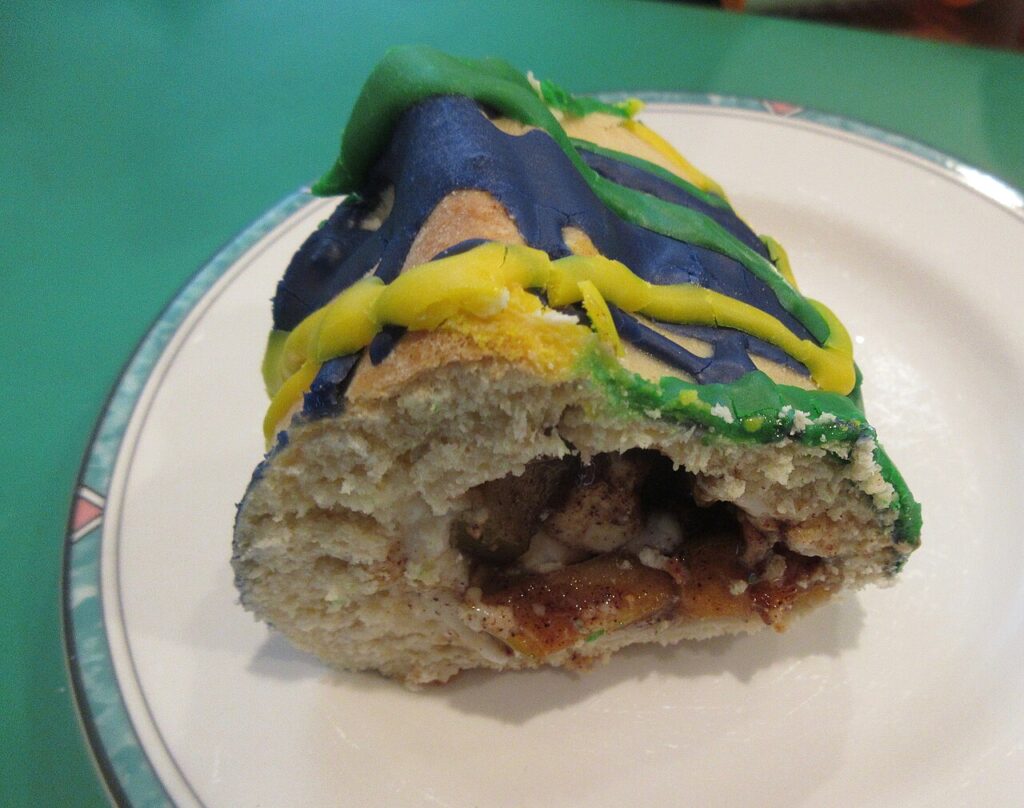
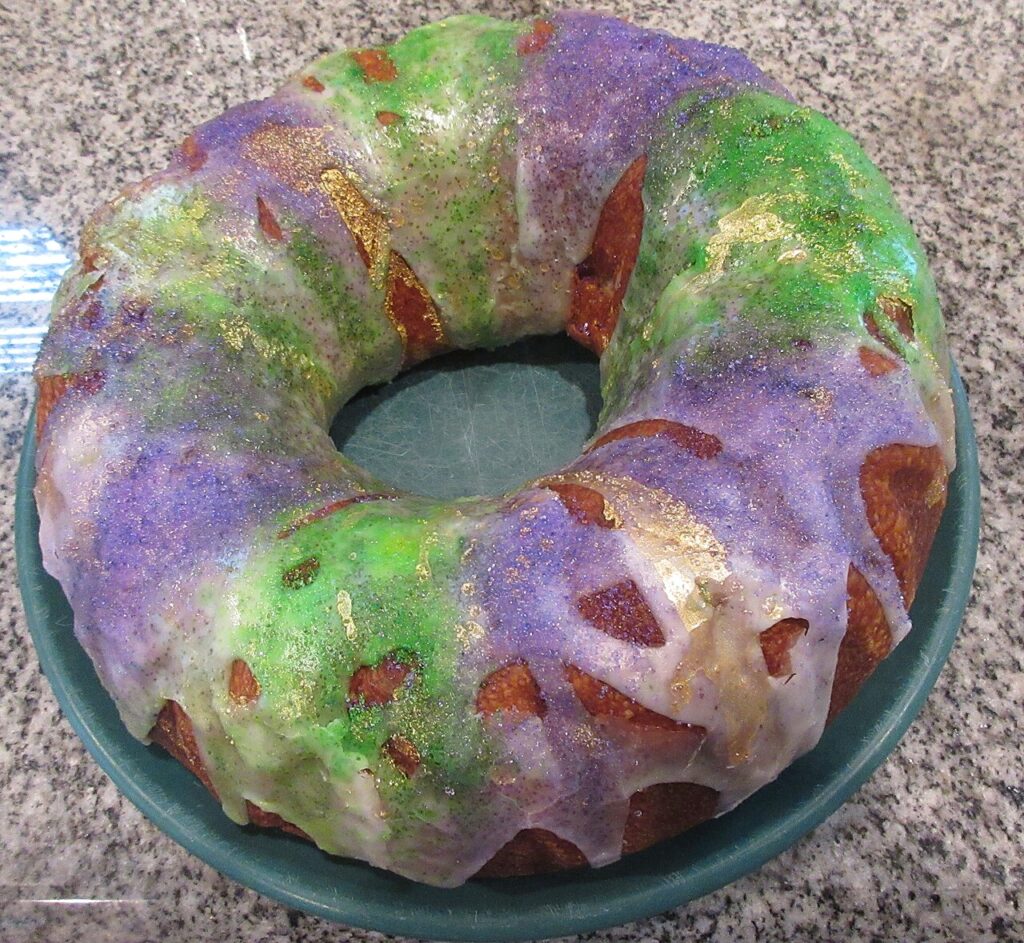
This oval-shaped pastry wears the official Mardi Gras colors: purple (justice), green (faith), and gold (power). The dough resembles a cinnamon roll, twisted into a ring and topped with sweet icing and colored sugar.
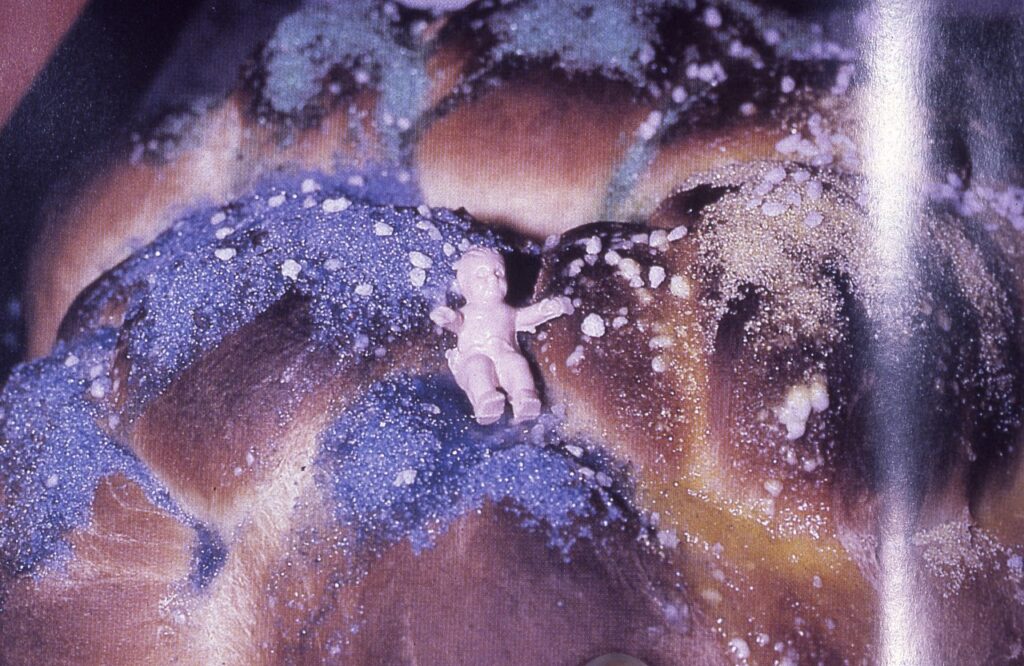
Here’s the fun part: Every King Cake hides a tiny plastic baby inside. Whoever finds it must host the next party or buy the next cake.
| King Cake Quick Facts | Details |
|---|---|
| Season | January 6 (King’s Day) through Fat Tuesday |
| Traditional Fillings | Cinnamon, cream cheese, praline, fruit |
| Baby Tradition | Finder hosts next gathering |
| Best Bakeries | Dong Phuong, Haydel’s, Gambino’s |
Pro tip: The best King Cake in New Orleans often comes from unexpected places. Vietnamese-owned Dong Phuong Bakery consistently wins local polls.
2. Gumbo: Louisiana’s Iconic Stew You Can’t Miss
Gumbo is the soul of Louisiana cooking.
This thick, hearty stew starts with a roux, flour and fat cooked low and slow until it turns the color of chocolate. Then comes the “holy trinity” of Cajun cooking: onion, celery, and bell pepper.
Two main styles exist:
- Creole gumbo uses tomatoes and typically features seafood
- Cajun gumbo skips tomatoes and often showcases andouille sausage and chicken
Every family guards their recipe like treasure. Arguments over the “right” way to make gumbo have probably ended friendships.
Served over rice, gumbo warms you from the inside out. Perfect for those chilly February parade nights.
3. Jambalaya: The One-Pot Wonder of Cajun Cuisine
Think of jambalaya as Louisiana’s answer to paella.
This rice dish absorbs all the flavors of its ingredients, typically chicken, andouille sausage, and shrimp. The Cajun version cooks everything together, creating a drier, more intense flavor. The Creole version adds tomatoes for a wetter, redder dish.
What makes jambalaya perfect for Mardi Gras?
It feeds a crowd. It’s relatively easy to make in large batches. And it tastes even better the next day.
4. Crawfish Boil: The Ultimate Louisiana Seafood Experience
Crawfish season overlaps perfectly with Mardi Gras.
A proper crawfish boil is a social event. Pounds of live crawfish get dumped into massive pots of heavily seasoned boiling water along with corn, potatoes, garlic, and sausage. Everything cooks together, then gets spread across newspaper-covered tables.
How to eat crawfish like a local:
- Twist the tail from the body
- Pinch the tail and pull out the meat
- Suck the head (yes, really, that’s where the flavor lives)
Beginners might feel awkward at first. Keep going. By your second pound, you’ll have the technique down.
5. Beignets: New Orleans’ Famous French Doughnuts
These pillowy squares of fried dough need no introduction.
Café Du Monde made beignets famous, but bakeries across the city serve them fresh and hot. They arrive buried under a snowstorm of powdered sugar. Breathing while eating is not recommended unless you want to inhale sugar.
Best enjoyed:
- At 2 AM after a night of revelry
- With café au lait (chicory coffee with hot milk)
- While sitting at a sidewalk table watching the world go by
Beignets represent the French influence on New Orleans cuisine at its sweetest.
6. Po’boys: The Legendary New Orleans Sandwich
The po’boy isn’t just a sandwich. It’s an institution.
Born during a 1929 streetcar workers’ strike, this overstuffed creation uses crusty French bread to cradle everything from fried shrimp to roast beef. The bread matters. Authentic po’boy bread comes crispy outside, fluffy inside.
Most popular po’boy fillings:
- Fried shrimp or oysters
- Roast beef with gravy (“debris”)
- Soft-shell crab
- Catfish
- Hot sausage
Ordering tip: “Dressed” means lettuce, tomato, pickles, and mayo. Know what you want before you reach the counter.
7. Muffuletta: The Italian Sandwich That Conquered New Orleans
Central Grocery invented this monster in 1906.
The muffuletta stacks Italian cold cuts, salami, ham, mortadella, with provolone cheese on a massive round sesame bread. The secret weapon? Olive salad. This tangy, oily mix of chopped olives, vegetables, and herbs soaks into the bread overnight.
One sandwich easily feeds two people. Maybe three.
Where to find the best muffuletta in New Orleans:
- Central Grocery (the original)
- Cochon Butcher
- Napoleon House
8. Red Beans and Rice: Monday’s Traditional Louisiana Comfort Food
Traditionally, New Orleans families ate red beans and rice every Monday.
Why Monday? Laundry day. Women needed a dish that could simmer unattended while they washed clothes. The result: creamy red kidney beans slow-cooked with ham hocks, andouille sausage, and the holy trinity, served over fluffy white rice.
Louis Armstrong loved this dish so much he signed his letters “Red beans and ricely yours.”
Simple. Satisfying. Quintessentially New Orleans.
9. Boudin: Cajun Sausage Worth Seeking Out
Boudin represents Cajun ingenuity at its finest.
This pork sausage contains rice, onions, peppers, and generous amounts of seasoning, all stuffed into a casing. Unlike other sausages, you squeeze the filling out and discard the casing, though some people eat it all.
Two main varieties:
- Boudin blanc (white): The standard rice-and-pork version
- Boudin rouge (red): Contains blood, harder to find but deeply traditional
Gas stations across Acadiana sell boudin from warming cases. Don’t let the setting fool you. Some of the best boudin comes from the humblest sources.
10. Crawfish Étouffée: A Rich Creole Classic
Étouffée means “smothered” in French. The name tells you everything.
Crawfish tails swim in a rich, buttery, roux-based sauce loaded with garlic and seasoning. It arrives over rice, steaming and fragrant. The sauce coats your mouth with layers of flavor, spicy, savory, slightly sweet from the crawfish.
This dish showcases what Louisiana cooking does best: transforming humble ingredients into something extraordinary.
11. Bananas Foster: The Flambéed Dessert Born in New Orleans
Brennan’s Restaurant created this showstopper in 1951.
Bananas cook in butter, brown sugar, cinnamon, and rum. Then the rum ignites. Flames leap from the pan. The alcohol burns off, leaving concentrated sweetness behind. Everything gets spooned over vanilla ice cream.
Watching a skilled chef prepare bananas foster tableside remains one of the great New Orleans dining experiences.
12. Pralines: The Classic Southern Pecan Candy
These creamy pecan confections melt on your tongue.
Pronounced “PRAH-leens” in New Orleans (not “PRAY-leens”), these candies combine sugar, butter, cream, and pecans into a fudge-like patty. They’re intensely sweet. One or two satisfies most cravings.
Praline shops line the French Quarter. Aunt Sally’s and Loretta’s both make excellent versions. Watch them being made fresh for the full experience.
13. Bread Pudding with Whiskey Sauce: A Decadent Louisiana Tradition
New Orleans doesn’t waste stale bread. It transforms it.
Cubed French bread soaks in a mixture of eggs, cream, sugar, and spices, then bakes until golden and custardy. The whiskey sauce, buttery, boozy, completely irresponsible, pools around each serving.
This dessert embodies the Mardi Gras spirit: indulgent, excessive, impossible to regret.
14. Oysters Rockefeller: The Elegant Appetizer from Antoine’s
Antoine’s Restaurant invented this dish in 1889. The original recipe remains secret.
Fresh oysters on the half shell get topped with a green sauce (not spinach, despite what most imitators use) and breadcrumbs, then broiled until bubbling. The name honors John D. Rockefeller, the dish is that rich.
Other popular New Orleans oyster preparations:
| Style | Description |
|---|---|
| Chargrilled | Cooked over flames with garlic butter and Parmesan |
| Bienville | Topped with shrimp, mushrooms, and béchamel |
| Raw on the half shell | Served with cocktail sauce, horseradish, and lemon |
| Fried | Cornmeal-crusted and served in po’boys |
15. Shrimp and Grits: Southern Comfort Meets Coastal Flavor
This Low Country classic found a home in Louisiana.
Creamy stone-ground grits provide the foundation. Gulf shrimp, sautéed with bacon, garlic, and tomatoes in a spicy sauce, crown the top. The combination works breakfast, lunch, or dinner.
New Orleans puts its own spin on the dish with heavier Creole seasoning and often a splash of beer in the sauce.
16. Dirty Rice: The Cajun Side Dish with Bold Flavor
The name comes from the appearance. Chicken livers and gizzards, finely chopped and cooked with rice, give this side dish its “dirty” look.
Don’t let that scare you off.
Dirty rice delivers deep, savory, meaty flavor in every bite. It’s a perfect accompaniment to fried chicken or served alongside gumbo. Many locals eat it as a main course.
17. Andouille Sausage: The Smoky Star of Louisiana Cooking
This coarse-ground smoked pork sausage defines Louisiana cuisine.
French and German immigrants brought sausage-making traditions. Louisiana’s indigenous and African influences added heavy seasoning and smoking techniques. The result: a distinctly American creation.
Andouille appears in gumbo, jambalaya, and red beans and rice. It’s the connective tissue of Louisiana cooking, showing up everywhere, tying everything together.
Best andouille producers:
- LaPlace (the “Andouille Capital of the World”)
- Jacob’s
- Wayne Jacob’s Smokehouse
18. Cajun Meat Pies: Fried Hand Pies Packed with Spiced Meat
Natchitoches meat pies have fed travelers since the 1700s.
These half-moon shaped pastries contain spiced ground beef and pork, crimped into dough and deep-fried until golden. They’re portable. They’re filling. They’re perfect parade food.
Lasyone’s in Natchitoches makes the most famous version, but you’ll find meat pies throughout Louisiana during Mardi Gras season.
19. Hurricane Cocktail: The Iconic New Orleans Party Drink
Pat O’Brien’s invented this rum-based drink to use up excess rum during World War II.
The recipe combines light and dark rum with passion fruit syrup and citrus juice. It arrives in a distinctive hurricane lamp-shaped glass, dangerously easy to drink despite its strength.
Fair warning: Hurricanes taste like fruit punch but pack a serious wallop. Pace yourself.
20. Sazerac: America’s First Cocktail
New Orleans claims the Sazerac as America’s original cocktail.
Rye whiskey, a sugar cube, Peychaud’s bitters, and an absinthe rinse combine into something sophisticated and slightly medicinal. The Sazerac Bar at the Roosevelt Hotel serves the definitive version in proper old-fashioned glasses.
This isn’t a party drink. It’s a contemplative sipper. Perfect for the quiet hours after the parades end.
Quick Reference: Traditional Mardi Gras Foods by Category
| Category | Must-Try Dishes |
|---|---|
| Main Courses | Gumbo, Jambalaya, Crawfish Boil, Étouffée |
| Sandwiches | Po’boy, Muffuletta |
| Sides | Red Beans and Rice, Dirty Rice, Boudin |
| Seafood | Oysters Rockefeller, Shrimp and Grits, Fried Crawfish |
| Desserts | King Cake, Beignets, Bananas Foster, Bread Pudding, Pralines |
| Drinks | Hurricane, Sazerac, Café au Lait |
Tips for Eating Your Way Through Mardi Gras
Plan your food crawl strategically. The French Quarter offers convenience, but locals often prefer neighborhood spots in Mid-City, the Marigny, and Uptown.
Arrive hungry. Portions run generous. Prices stay reasonable.
Don’t skip the humble places. Some of the best food comes from corner stores, gas stations, and walk-up windows.
Try everything once. Chicken gizzards in your rice? Sucking crawfish heads? This is the time to be adventurous.
Pace yourself on drinks. Those Hurricanes and Hand Grenades catch up with you. Eat something substantial before the parade.
Bringing Mardi Gras Flavors Home
Can’t make it to New Orleans this year? Many local favorites ship nationwide.
- Café Du Monde sells beignet mix online
- Gambino’s and other bakeries ship King Cakes across the country
- Louisiana Crawfish Company delivers live crawfish for boils
- Zatarain’s makes accessible (if not entirely authentic) Cajun seasoning and rice mixes
Nothing beats being there. But a King Cake shared with friends on Fat Tuesday brings a little New Orleans magic wherever you are.
Final Thoughts: Why Mardi Gras Food Matters
Food tells the story of a place. And nowhere tells its story through food better than New Orleans.
Every dish on this list carries history. The French colonists who brought beignets. The African cooks who transformed humble ingredients into gumbo. The Italian immigrants who created the muffuletta. The Cajun exiles who stretched every scrap into something delicious.
Mardi Gras celebrates all of it. The excess before the fast. The community before the solitude. The shared meal before we scatter.
So grab a plate. Find a spot at the table. And laissez les bons temps rouler, let the good times roll.
Have you tried any of these traditional Mardi Gras foods? Share your favorites in the comments below. And if you’re planning a trip to New Orleans for Carnival, check out our guides to the best parade routes, accommodation tips, and essential packing lists.
Creole vs. Cajun: The Two Cuisines Behind the Feast
Almost every dish on a Mardi Gras table traces back to one of two distinct Louisiana cooking traditions, and knowing the difference makes the food easier to understand. Creole cooking developed in the city of New Orleans, drawing on French, Spanish, African, Italian, and Caribbean influences. It is often described as “city cooking,” shaped by access to markets, imported ingredients, and the kitchens of well-to-do households. Creole dishes frequently use tomatoes, butter, cream, and a wider range of seafood, which is why Creole gumbo often includes tomatoes while many cooks consider a tomato-based gumbo unmistakably Creole.
Cajun cooking comes from the rural areas of south Louisiana, settled by Acadian French exiles who were forced out of Canada in the 1700s. This is country cooking built on what the land and bayous provided: rice, pork, freshwater crawfish, and game. Cajun food tends to be rustic and one-pot, leaning on a dark roux, the “holy trinity” of onion, celery, and bell pepper, and bold seasoning. A Cajun gumbo usually skips tomatoes and gets its depth from a long-cooked roux instead.
At Mardi Gras the two traditions sit side by side. The elegant restaurant dishes of the French Quarter tend to be Creole, while the boiled crawfish, boudin, and andouille that fuel street celebrations are firmly Cajun. Many modern menus blur the line entirely, and that overlap is part of what gives Carnival food its range, from refined to deeply casual within the same afternoon.
Historic New Orleans Restaurants and Where to Eat the Classics
New Orleans has some of the oldest continuously operating restaurants in the United States, and many of them are tied directly to the dishes associated with Carnival. Eating at these institutions is a way to taste the originals where they were created.
- Antoine’s (founded 1840) in the French Quarter is the oldest family-run restaurant in the country. It claims the invention of oysters Rockefeller and remains a destination for old-line Creole dining.
- Galatoire’s (1905) on Bourbon Street is famous for its Friday lunches, seersucker crowds, and dishes like shrimp remoulade and trout meuniere.
- Commander’s Palace in the Garden District opened in 1893 and helped launch the careers of chefs Paul Prudhomme and Emeril Lagasse. It is closely linked with the popularizing of bread pudding souffle and its jazz brunch.
- Cafe du Monde (1862) in the French Market is the go-to for beignets dusted in powdered sugar and chicory cafe au lait, open around the clock.
- Dooky Chase’s Restaurant in Treme, led for decades by the late chef Leah Chase, is a landmark of Creole cooking and African American history, known for its gumbo and its role as a meeting place during the Civil Rights era.
- Central Grocery on Decatur Street is the birthplace of the muffuletta, created by Sicilian immigrant Salvatore Lupo in 1906.
- Willie Mae’s Scotch House in Treme is celebrated for its fried chicken and red beans, and earned national recognition after rebuilding following Hurricane Katrina.
During Carnival these restaurants fill quickly, so reservations well in advance are essential for the sit-down rooms, while spots like Cafe du Monde and Central Grocery work fine for a walk-up bite between parades.
The Food Rhythm of Carnival Season
Mardi Gras is not a single day of eating but the climax of a season with its own food calendar. Understanding that rhythm explains why certain dishes appear when they do.
King Cake Season Begins at Epiphany
Carnival officially opens on January 6, the feast of Epiphany, also called Twelfth Night or Kings’ Day. From that morning until Fat Tuesday, king cakes appear in bakeries, offices, and homes across the city. By tradition, whoever finds the small plastic baby hidden inside the cake is responsible for hosting the next gathering or buying the following cake, which keeps the rotation going for weeks.
Lundi Gras and Boiled Seafood
The Monday before Fat Tuesday is Lundi Gras, French for “Fat Monday.” It has become a day for big boiled seafood gatherings, with families and friends gathering around tables piled with crawfish, shrimp, corn, and potatoes. The casual, communal nature of a seafood boil makes it the natural lead-in to the main event.
Fat Tuesday and the Fasting That Follows
“Mardi Gras” is French for “Fat Tuesday,” and the name is literal. The day marks the last chance to feast before Ash Wednesday begins Lent, the Christian season of fasting and penance leading to Easter. Historically, households used up rich foods like meat, eggs, butter, and fat before the lean weeks ahead, which is exactly why the day became associated with indulgence. The feasting on Tuesday gives way to abstinence on Wednesday, and many locals shift toward simpler meals and meatless Fridays for the next forty days.
Vegetarian and Vegan Options at Mardi Gras
Louisiana food has a reputation for meat and seafood, but the Catholic tradition of meatless Fridays during Lent actually pushed local cooks to develop strong vegetable-based dishes, and plenty of them are easy to enjoy during Carnival.
- Red beans and rice can be made entirely plant-based by leaving out the sausage and seasoning with smoked paprika, bay, and the trinity.
- Gumbo z’herbes (gumbo des herbes) is a traditional green gumbo made with many kinds of leafy greens, historically eaten during Lent and famously served at Dooky Chase’s on Holy Thursday.
- Maque choux is a Cajun corn dish with peppers, onion, and tomato that is satisfying on its own.
- Fried okra, stewed okra, and dirty rice made with mushrooms instead of giblets all adapt well for vegetarians.
- Beignets and pralines are naturally meat-free, and many beignets are vegetarian, though those avoiding dairy should check the recipe.
A growing number of New Orleans restaurants now offer dedicated vegan menus, and several food stalls along parade routes sell fried vegetables, charred corn, and fruit ices, so plant-based eaters are far from stuck.
The Drink Culture of New Orleans
Food and drink are inseparable in New Orleans, and the city is considered a cradle of the American cocktail. Beyond the famous Hurricane and Sazerac, several other drinks belong on any Mardi Gras list.
- Sazerac is the official cocktail of New Orleans, built on rye whiskey or cognac, Peychaud’s bitters, sugar, and a rinse of absinthe.
- Ramos gin fizz, created at the Imperial Cabinet Saloon in the 1880s, blends gin, citrus, cream, egg white, and orange flower water into a frothy brunch drink.
- Vieux Carre, named for the French Quarter and invented at the Hotel Monteleone’s Carousel Bar, mixes rye, cognac, sweet vermouth, Benedictine, and bitters.
- Abita beer, brewed across Lake Pontchartrain in Abita Springs, is the local craft staple, with Amber and Purple Haze among the popular pours.
- Frozen daiquiris sold from drive-through and walk-up shops are a New Orleans institution and a common parade-route refreshment.
- Cafe au lait, the chicory-laced coffee served with milk at Cafe du Monde, is the non-alcoholic classic that pairs with beignets at any hour.
Louisiana’s open-container rules in designated areas mean drinks travel with the crowd, but pacing matters during long parade days, and water between rounds is always a good idea.
Building a Mardi Gras Menu at Home
You do not need to be in New Orleans to throw a proper Carnival meal. The key is balancing a make-ahead main, a few easy sides, a dessert, and a signature drink so the host can actually enjoy the party.
A Sample Spread
- Main: a big pot of gumbo or jambalaya, both of which improve when made a day ahead and reheated.
- Sides: red beans and rice, dirty rice, and a simple green salad to cut the richness.
- Starters: shrimp remoulade or a tray of muffuletta wedges that can be sliced just before guests arrive.
- Dessert: a store-bought or homemade king cake, plus pralines or bread pudding.
- Drinks: a batch of Sazeracs or Hurricanes, Abita beer on ice, and chicory coffee for the end of the night.
For decor, the traditional colors of purple (justice), green (faith), and gold (power) are easy to work into a table with ribbon, napkins, and beads. If you cannot find a king cake locally, many New Orleans bakeries ship them nationwide during Carnival season. Cook the heavy items in advance, keep the seasoning bold, and let the music and colors do the rest.
More Mardi Gras & Carnival Guides
Explore the rest of our Mardi Gras coverage, and Carnival celebrations in other cities:
- Mardi Gras 2026: The Ultimate Guide (Start Here)
- Mardi Gras 2026 Calendar: When Parades Start
- Creative Mardi Gras Party Ideas
- DIY Mardi Gras Decorations: Purple, Green & Gold
- What to Wear to Mardi Gras: Costume Ideas
- Is Mardi Gras Family-Friendly? Best Spots
- Why We Throw Beads: Mardi Gras Traditions
- Mardi Gras vs. Fat Tuesday: The Difference
- The Best Authentic King Cake Recipe
- What Is King Cake? Meaning of the Baby and Colours
- Rio Carnival 2026: Complete Guide (Brazil)
- Venice Carnival 2026: Complete Guide (Italy)
- Quebec Winter Carnival 2026: Full Guide (Canada)
- Nice Carnival 2026 Guide (France)
Frequently Asked Questions
What food is Mardi Gras known for?
King cake is the signature treat, alongside New Orleans staples such as gumbo, jambalaya, crawfish, po’boys, and beignets.
What is king cake?
King cake is a ring-shaped, cinnamon pastry decorated in purple, green, and gold, with a tiny baby hidden inside.
What do you eat on Fat Tuesday?
Traditionally rich, hearty foods before the fasting of Lent, including king cake, fried treats, and Creole and Cajun dishes.
When is Mardi Gras 2026?
Mardi Gras 2026 falls on Tuesday, February 17.