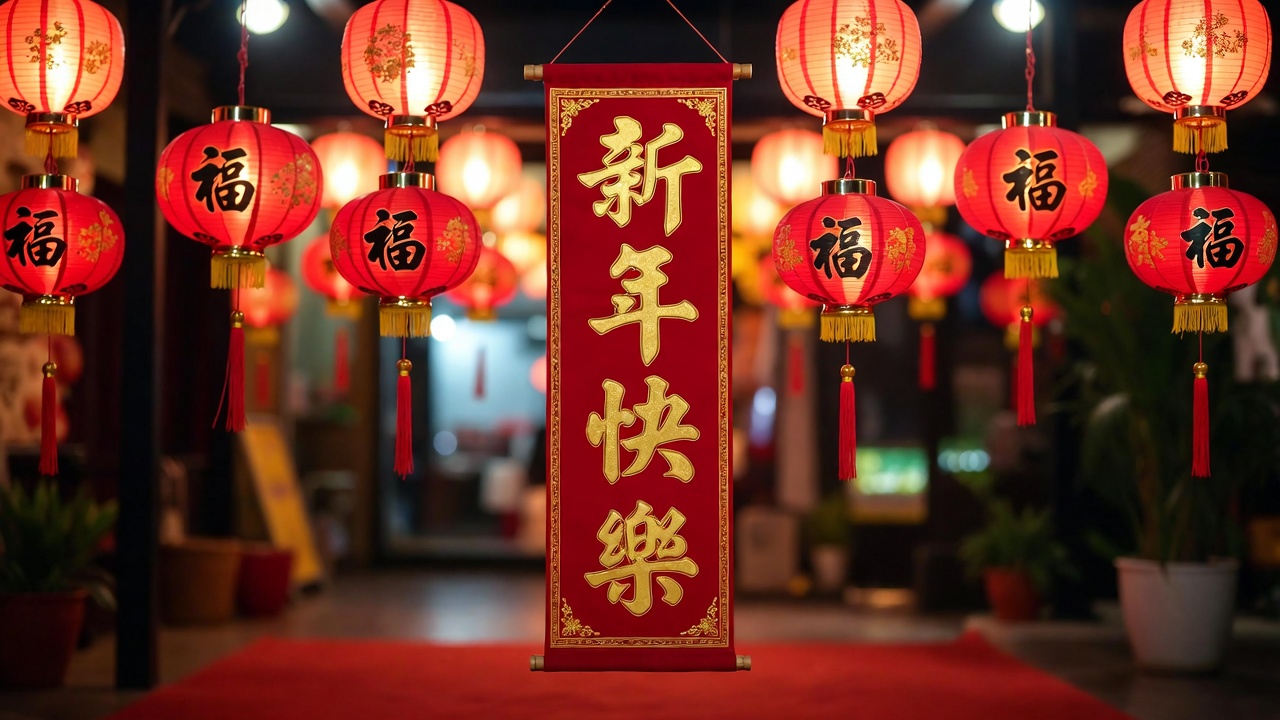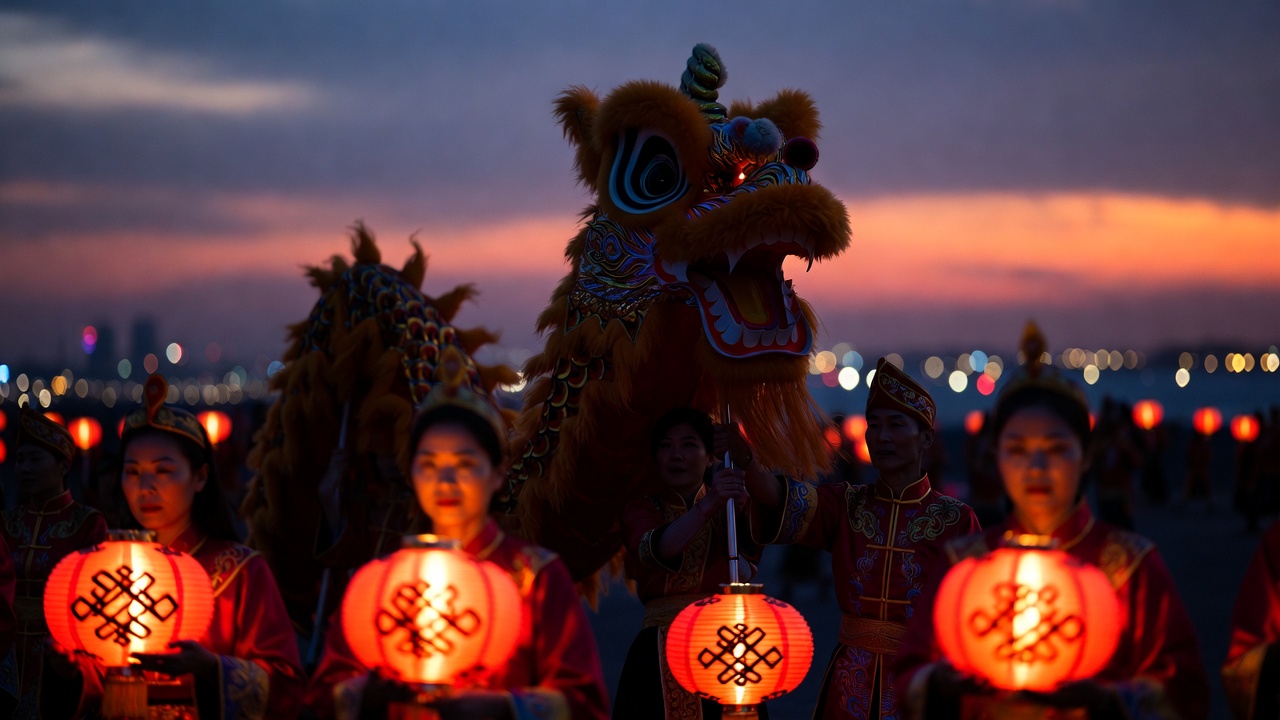
The glow of red lanterns. The sweet scent of tangyuan floating from kitchen windows. The sound of laughter as someone shouts the answer to a riddle and wins a small prize. This is the Chinese Lantern Festival — and in 2026, it falls on March 3rd, the 15th day of the first lunar month in the Year of the Snake.
For over 2,000 years, one tradition has stood at the heart of this celebration: 猜灯谜 (cāi dēng mí), or “guessing lantern riddles.” Families, friends, and strangers gather beneath paper lanterns, reading clever puzzles written on slips of red paper — and racing to crack the answer first.
Whether you are planning to celebrate the Lantern Festival in 2026, hosting a cultural event at school, or simply love a good brain teaser, this guide is for you. Below, you will find a complete collection of lantern riddles organized from easy to hard, along with answers, cultural context, and tips for solving them like a true riddle master.
What Are Chinese Lantern Festival Riddles? A Beginner’s Guide
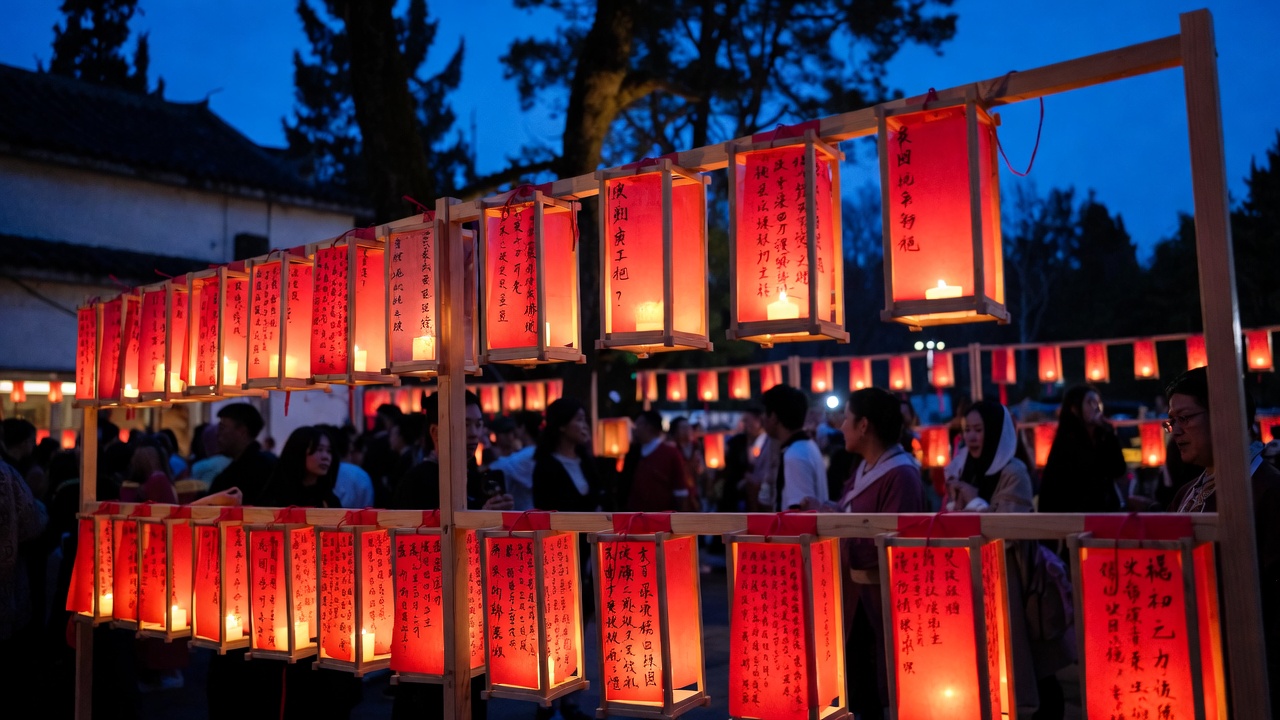
Lantern riddles — called 灯谜 (dēng mí) in Mandarin — are puzzles written on lanterns or on slips of paper attached to lanterns. They are displayed during the Lantern Festival (元宵节, Yuánxiāo Jié) and sometimes during the Mid-Autumn Festival.
The tradition dates back to the Song Dynasty (960–1279 CE). According to historical records, Zhou Mi’s Memoirs of Life in Southern Song’s Capital of Hangzhou contains the earliest known reference to people attaching riddles to lanterns. By the Qing Dynasty, the practice had become wildly popular — partly thanks to the beloved novel Dream of the Red Chamber (红楼梦), which features several lantern riddle scenes.
Here is what makes these riddles special:
- They are not just word games. Traditional lantern riddles often involve Chinese characters, idioms, historical figures, or place names.
- They come with a category hint. A riddle might say “guess a Chinese character” or “guess an animal” to narrow the field.
- Solving one was considered heroic. Because the riddles were so hard, people called them 文虎 (wén hǔ) — meaning “literary tiger.” Cracking a riddle was called “shooting the tiger.”
- Winners get prizes. At temple fairs and festival events across China, correct answers earn you small gifts — a toy, a snack, or a lucky trinket.
Today, lantern riddles live on at temple fairs in Beijing, Nanjing, Chengdu, and hundreds of smaller cities. They are also popular online, shared across social media every Lantern Festival season. The 2026 Taiwan Lantern Festival in Chiayi County and the Beijing World Park Lantern Carnival are both expected to feature riddle-guessing booths this year.
How to Solve Lantern Riddles: Tips and Tricks for Beginners
Before diving into the riddles, it helps to understand how they work. A Chinese riddle has three parts:
| Part | Chinese Term | What It Means |
|---|---|---|
| The Riddle | 谜面 (mí miàn) | The clue or description you read |
| The Category | 谜目 (mí mù) | The type of answer expected (e.g., a character, animal, object) |
| The Answer | 谜底 (mí dǐ) | The solution |
Five strategies for solving lantern riddles:
- Read the category first. If the riddle says “guess a Chinese character,” you know the answer is a single character — not a word or phrase.
- Think about character structure. Many riddles break Chinese characters into their component parts (radicals, strokes). A riddle might describe the pieces of a character rather than its meaning.
- Watch for wordplay. Chinese is full of homophones. A riddle that sounds like it describes a river might actually point to a word that sounds like a river.
- Consider double meanings. Phrases like “half of something” might mean literally half of a character — take the left side or the right side.
- Do not overthink it. The best riddles have simple, elegant answers that make you slap your forehead and say, “Of course!”
Easy Lantern Festival Riddles with Answers for Kids and Families
These riddles are perfect for children, students, and anyone new to the tradition. They describe everyday objects, animals, and nature in playful language. No knowledge of Chinese characters is needed.
Riddle 1: The Night’s Round Face
A round, bright face appears every night, shining in all directions. It is not afraid of wind or rain — only clouds that hide it.
Answer: The Moon 🌕
Why it fits the Lantern Festival: The festival celebrates the first full moon of the lunar new year. Looking up at the bright moon is a core part of the night’s traditions.
Riddle 2: The Silent Hunter
It sleeps during the day and is great at catching mice. It washes its face without water and walks very quietly.
Answer: A Cat 🐱
Riddle 3: The Tiny Builders
Small body, but great strength. Hardworking and united. Sometimes carrying food, sometimes digging tunnels.
Answer: An Ant 🐜
Riddle 4: The Loyal Maiden
This lovely maiden eats no meat but eats only leaves. She labors each day, spinning and weaving for the benefit of others.
Answer: A Silkworm 🐛
Cultural note: Silk production has been central to Chinese culture for over 5,000 years. The silkworm is a beloved symbol of hard work and selflessness.
Riddle 5: The Eternal Runner
I am always running but never move from my spot.
Answer: A River 🌊
Riddle 6: The Loyal Guardian
He devotes his life to looking after the house. He is most faithful and never complains, yet his owner still ties him up.
Answer: A Dog 🐕
Riddle 7: The Shrinking Elder
I am tall when I am young and short when I am old.
Answer: A Candle 🕯️
Why it fits the festival: Candles light the lanterns. This riddle is a classic at Lantern Festival events because the answer is literally glowing above you as you read it.
Riddle 8: The Impossible Holder
I am full of holes but still hold water.
Answer: A Sponge
Riddle 9: The Invisible Footprints
The more you take, the more you leave behind.
Answer: Footsteps 👣
Riddle 10: The Festival Food
Round and sweet, floating in warm soup. Families eat me together to wish for togetherness and reunion.
Answer: Tangyuan (汤圆) — Sweet Glutinous Rice Balls 🍡
Cultural note: Tangyuan is the signature food of the Lantern Festival. The round shape symbolizes family unity and completeness. In southern China, they are called tangyuan; in the north, yuanxiao. Both are made of glutinous rice, but the preparation methods differ.
Medium-Difficulty Lantern Festival Riddles with Answers
These riddles require a bit more lateral thinking. Some involve wordplay. Others play with concepts in clever ways. They are ideal for teens, adults, and anyone who enjoys a mental workout.
Riddle 11: The One-Sided Owner
What belongs to you, but other people use it more than you?
Answer: Your Name
Riddle 12: The Teapot Paradox
What begins with T, ends with T, and has T in it?
Answer: A Teapot 🫖
Riddle 13: The Uncatchable Catch
What can you catch but never throw?
Answer: A Cold 🤧
Riddle 14: The Hungry Darkness
The more of this there is, the less you see.
Answer: Darkness
Riddle 15: The Letter Trick
A word I know, six letters it contains. Remove one letter and twelve remains.
Answer: “Dozens” (remove the “d” and you get “ozens” — no; actually, remove the “s” and rearrange… The answer is “Dozens”: remove the “d-o-z-e-n” to leave… )
Actually, the classic answer: “Dozens” — remove “d,” and “ozens” remains? No. The traditional answer is the word “Dozens.” Remove one letter (the “s”) and you get “Dozen” = 12. ✅
Answer: Dozens (remove the “s” and “dozen” = 12 remains)
Riddle 16: The Short Word
What five-letter word becomes shorter when you add two letters to it?
Answer: “Short” (add “e-r” to make “shorter”)
Riddle 17: The One-Way Traveler
What goes up but never comes back down?
Answer: Your Age
Riddle 18: The Handless Timekeeper
I have hands but no fingers. I have a face but no eyes.
Answer: A Clock ⏰
Riddle 19: The Keymaster
I have keys but no locks. I have space but no room. You can enter but cannot go inside.
Answer: A Keyboard ⌨️
Riddle 20: The Festival Sky
I am red and loud. I scare away bad spirits. People light me during festivals to celebrate.
Answer: Firecrackers 🧨
Cultural note: Firecrackers have been part of Chinese New Year and Lantern Festival celebrations for centuries. The loud noise was believed to drive away the mythical beast Nian (年兽) and evil spirits. While many Chinese cities have restricted firecracker use in recent years for safety and air quality reasons, the tradition remains strong in rural areas and smaller cities.
Traditional Chinese Character Riddles (字谜) with Answers and Explanations
These are the authentic heart of the Lantern Festival riddle tradition. Each riddle leads to a single Chinese character as its answer. The clues describe how the character looks when broken into its component parts.
These riddles are harder for non-Chinese speakers, but the explanations below make them accessible to everyone. They are a wonderful window into how the Chinese writing system works.
Riddle 21: Eleven Mouths in One Family
一家十一口 — “There are eleven mouths in one family.” (Guess a Chinese character)
Answer: 吉 (jí) — meaning “lucky” or “auspicious”
How it works: The character 十 (ten) + 一 (one) + 口 (mouth) = 吉. Stack 十 on top of 一, then place 口 below. The pieces fit together to form 吉 — one of the most auspicious characters in Chinese culture.
Riddle 22: Eat Half, Take Half
吃一半,拿一半 — “Eat one half and take away the other half.” (Guess a Chinese character)
Answer: 哈 (hā) — meaning “ha” (as in laughter)
How it works: Take half of the character 吃 (eat) — specifically the right side 乞 — no. Actually: 吃 is made of 口 + 乞. 拿 is made of 合 + 手. Take one half from each: 口 (from 吃) + 合 (from 拿) = 哈.
Riddle 23: One Person and One Mouth
一人一张口,口下长只手 — “One person has one mouth, under which there is a hand.” (Guess a Chinese character)
Answer: 拿 (ná) — meaning “to take” or “to hold”
How it works: 人 (person) + 一 (one) + 口 (mouth) combine to form 合 at the top. Below that sits 手 (hand). Together: 合 + 手 = 拿.
Riddle 24: The Ox’s Tail in One Bite
一口吃掉牛尾巴 — “Eat up an ox’s tail in one gulp.” (Guess a Chinese character)
Answer: 告 (gào) — meaning “to tell” or “to announce”
How it works: Take the character 牛 (ox) and look at its “tail” — the bottom part. Then combine it with 口 (mouth/bite). Place 牛 on top of 口 and you get 告.
Riddle 25: A Dog with Four Mouths
一条狗四个口 — “A dog has four mouths.” (Guess a Chinese character)
Answer: 器 (qì) — meaning “tool,” “instrument,” or “vessel”
How it works: The character 器 contains the character 犬 (dog) in the center, surrounded by four 口 (mouth) characters — one in each corner.
Riddle 26: Ninety-Nine
Guess a Chinese character based on the number 99.
Answer: 白 (bái) — meaning “white”
How it works: The character for “one hundred” is 百 (bǎi). Remove the horizontal stroke 一 (one) from the top, and you get 白. Since 100 − 1 = 99, the number 99 points to 白.
Riddle 27: Fifteen Days
十五天 — “Fifteen days.” (Guess a Chinese character)
Answer: 胖 (pàng) — meaning “fat”
How it works: The character 胖 is made of 月 (month) + 半 (half). Half a month equals fifteen days. So “fifteen days” = 半月 — and when you combine those components, you get 胖.
Riddle 28: Ten Mouths and One Heart
十张口,一颗心 — “Ten mouths, one heart.” (Guess a Chinese character)
Answer: 思 (sī) — meaning “to think” or “to ponder”
How it works: 十 (ten) + 口 (mouth) combined can suggest the top portion of the character. 心 (heart) sits at the bottom. The character 思 has 田 on top (which contains elements suggestive of 十 and 口) and 心 below.
Hard Lantern Festival Riddles for Advanced Players
These riddles will challenge even experienced puzzle lovers. They require cultural knowledge, creative thinking, and sometimes a deep understanding of Chinese language or literature.
Riddle 29: The Museum Painting
A man looks at a painting in a museum and says: “Brothers and sisters I have none, but that man’s father is my father’s son.” Who is in the painting?
Answer: His son.
Explanation: “My father’s son” = himself (since he has no brothers or sisters). So “that man’s father is me” means the man in the painting is his son.
Riddle 30: The Two Suns
左边一个太阳,右边一个太阳,站在太阳上,反而不见光。 “There is a sun on the left and a sun on the right. But when you stand on the suns, you cannot see the light.” (Guess a Chinese character)
Answer: 暗 (àn) — meaning “dark”
How it works: 日 (sun) + 日 (sun) + 立 (stand) combine to form parts of the character 暗. The irony: two suns together, yet the meaning is “darkness.” This riddle is beloved for its poetic contradiction.
Riddle 31: The Old Friend
老朋友 — “An old friend.” (Guess a Chinese character)
Answer: 故 (gù) — meaning “old,” “former,” or “reason”
How it works: Another way to say “old” in Chinese is 故, which also carries the meaning of “former” or “past.” The character 故 can be broken down into 古 (ancient) + 攵 (a variant of a hand radical). But the real trick is recognizing that 故人 is a classical Chinese word meaning “old friend.” So the answer is simply the character that means “old” in this literary context.
Riddle 32: The Double Wood
双木不成林 — “Two trees do not make a forest.” (Guess a Chinese character)
Answer: 相 (xiāng) — meaning “mutual” or “each other”
How it works: Normally, 木 (tree) + 木 (tree) = 林 (forest). But the riddle says they do not make 林. Instead, the two 木 are arranged differently — one becomes 木 and the other transforms into 目 (eye). Together: 木 + 目 = 相.
Riddle 33: The Emperor’s Riddle
I have no voice, yet I answer every question. I have no body, yet I travel the world. I can be ancient or brand new. Scholars prize me, but children enjoy me too.
Answer: A Book 📖
Riddle 34: The Three-Part Light
I am born in fire, shaped by breath, and killed by wind. I dance but have no feet. I eat but have no mouth.
Answer: A Flame / Candle Flame 🔥
Riddle 35: The Paradox of Darkness
What room can you never enter?
Answer: A Mushroom 🍄
Riddle 36: Take Off the Poor Hat
摘掉穷帽子,摘掉穷根子 — “Take off the torn hat, get rid of the root of poverty.” (Guess a Chinese character)
Answer: 八 (bā) — meaning “eight”
How it works: The character 穷 (poor) has a “hat” (the top radical 穴) and a “root” (the bottom component 力). Remove both the top and the bottom, and you are left with 八 — the number eight, which in Chinese culture symbolizes wealth and prosperity because it sounds like 发 (fā, meaning “to prosper”).
Lantern Festival Riddles About Chinese Culture and Traditions
These riddles tie directly to the customs, food, and symbols of the Lantern Festival itself. They make great conversation starters at festival gatherings.
Riddle 37: The Festival Itself
What Chinese celebration marks the first full moon of the lunar year, features glowing decorations carried through the streets, and ends the Spring Festival season?
Answer: The Lantern Festival (元宵节)
Riddle 38: The Symbol of Reunion
I am round like the full moon. I am sweet on the inside. Families eat me together in warm soup, and my shape means togetherness.
Answer: Tangyuan (汤圆)
Riddle 39: The Dance of Power
Many people control me, but I am one creature. I have a long body and a fearsome head. I dance through the streets to bring good luck and fortune.
Answer: A Dragon (in a Dragon Dance) 🐉
Riddle 40: The Festival Color
I am the color of luck, joy, and celebration. I hang on doors, wrap gifts, and light up lanterns. Without me, Chinese New Year would look naked.
Answer: Red (红色) ❤️
Printable Lantern Festival Riddle List: Quick Reference Table
Here is a summary table for easy reference. Print it, bring it to your celebration, and stump your friends and family.
| # | Riddle (Short Version) | Difficulty | Answer |
|---|---|---|---|
| 1 | Round face, shines every night, fears only clouds | Easy | The Moon |
| 2 | Sleeps by day, catches mice, walks silently | Easy | A Cat |
| 3 | Small body, great strength, digs tunnels | Easy | An Ant |
| 4 | Eats leaves, spins silk for others | Easy | A Silkworm |
| 5 | Always running, never moves | Easy | A River |
| 6 | Guards the house, faithful but tied up | Easy | A Dog |
| 7 | Tall when young, short when old | Easy | A Candle |
| 8 | Full of holes, holds water | Easy | A Sponge |
| 9 | The more you take, the more you leave behind | Easy | Footsteps |
| 10 | Round, sweet, floating in soup | Easy | Tangyuan |
| 11 | Belongs to you, others use it more | Medium | Your Name |
| 12 | Begins with T, ends with T, has T inside | Medium | A Teapot |
| 13 | You can catch it but not throw it | Medium | A Cold |
| 14 | The more there is, the less you see | Medium | Darkness |
| 15 | Six letters; remove one and twelve remains | Medium | Dozens |
| 16 | Five letters; add two and it gets shorter | Medium | Short |
| 17 | Goes up but never comes down | Medium | Your Age |
| 18 | Has hands but no fingers, a face but no eyes | Medium | A Clock |
| 19 | Has keys but no locks, space but no room | Medium | A Keyboard |
| 20 | Red and loud, scares evil spirits | Medium | Firecrackers |
| 21 | 一家十一口 (Eleven mouths in a family) | Hard | 吉 (jí) — Lucky |
| 22 | 吃一半,拿一半 (Eat half, take half) | Hard | 哈 (hā) — Ha! |
| 23 | 一人一张口,口下长只手 | Hard | 拿 (ná) — To take |
| 24 | 一口吃掉牛尾巴 (Bite off the ox tail) | Hard | 告 (gào) — To tell |
| 25 | 一条狗四个口 (A dog with four mouths) | Hard | 器 (qì) — Vessel |
| 26 | 99 (Ninety-nine) | Hard | 白 (bái) — White |
| 27 | 十五天 (Fifteen days) | Hard | 胖 (pàng) — Fat |
| 28 | 十张口,一颗心 (Ten mouths, one heart) | Hard | 思 (sī) — To think |
| 29 | That man’s father is my father’s son | Hard | His son |
| 30 | Two suns, yet no light | Hard | 暗 (àn) — Dark |
When Is the Lantern Festival in 2026? Key Dates and Celebrations
The 2026 Chinese Lantern Festival takes place on Tuesday, March 3, 2026. This is the 15th day of the first month in the Chinese lunar calendar and marks the official end of the Chinese New Year (Spring Festival) period.
Here are some major 2026 Lantern Festival events worth knowing:
| Event | Location | Dates |
|---|---|---|
| 2026 Taiwan Lantern Festival | Chiayi County, Taiwan | March 3–15, 2026 |
| Beijing Jingcai Lantern Carnival | Beijing World Park, China | January–March 2026 |
| Zigong International Dinosaur Lantern Festival | Zigong, Sichuan, China | January–March 2026 |
| Yu Garden Lantern Festival | Shanghai, China | Late February–March 2026 |
| San Gabriel Lantern Festival | San Gabriel, California, USA | March 21–22, 2026 |
In 2026 — the Year of the Snake — expect lantern displays themed around the snake zodiac animal, with designs blending traditional craftsmanship and modern LED and drone technology.
Fun fact: The Lantern Festival has been recognized as a national intangible cultural heritage of China since June 2008.
The History Behind Lantern Riddles: From Imperial Courts to Modern Festivals
The practice of guessing riddles is old, but lantern riddles as a specific art form developed over centuries.
Han Dynasty (206 BC – 220 AD): The earliest Lantern Festival celebrations began during this period. Emperor Ming of Han, a supporter of Buddhism, ordered lanterns to be lit in temples and palaces on the 15th night of the first lunar month to honor the Buddha. The Buddhist custom gradually spread to the common people.
Song Dynasty (960–1279): The custom of writing riddles on lanterns emerged. According to historical records, the Song Dynasty festival lasted five days, from the 14th to the 18th of the first month. Riddles were written on notes and pasted onto lanterns. Those who guessed correctly received small rewards. This is when the term “shooting the literary tiger” was born.
Ming Dynasty (1368–1644): Celebrations expanded to ten full days. Dengshikou (灯市口) in Beijing became the famous lantern-selling street. During this period, riddle compilations began to appear in print.
Qing Dynasty (1644–1912): Lantern riddles reached peak popularity. The novel Dream of the Red Chamber featured lantern riddle scenes, helping spread the tradition across all of China.
Modern era: Today, lantern riddles are shared on WeChat, Weibo, Douyin (TikTok China), and at in-person events. Schools and community centers across Asia and in Chinese communities worldwide host riddle-guessing activities each year.
How to Host Your Own Lantern Festival Riddle Party at Home
You do not need to be in China to enjoy this tradition. Here is how to bring it to life anywhere in the world.
What you need:
- Paper lanterns (red is traditional, but any color works)
- Slips of paper and markers
- String to hang the riddles on the lanterns
- Small prizes (candy, stickers, lucky red envelopes)
- A bowl of tangyuan (glutinous rice ball kits are available at most Asian grocery stores)
How to play:
- Write riddles on small strips of paper. Use the riddles in this article or create your own.
- Fold each strip and attach it to a lantern with string or tape.
- Hang the lanterns around your home, yard, or party space.
- Guests walk around, read the riddles, and write down their guesses.
- After a set time, reveal the answers. The person with the most correct guesses wins a prize.
- Enjoy tangyuan together as a family to close the evening.
Tip for kids: Use the easy riddles (1–10) from this list. You can also draw picture clues on the back of each strip to give younger children a hint.
Tip for adults: Use the Chinese character riddles (21–30) to really test your group. Even non-Chinese speakers can enjoy these when you explain the character-building logic behind each answer.
Why Lantern Festival Riddles Matter: Cultural Significance and Modern Revival
Lantern riddles are more than a parlor game. They carry real cultural weight.
Language preservation. Character-based riddles teach the structure of Chinese writing in a playful way. For Chinese language learners around the world, they are a valuable study tool that builds vocabulary, teaches radicals, and encourages creative thinking about how characters are constructed.
Social bonding. In ancient China, the Lantern Festival was one of the rare nights when unmarried women were allowed to leave the house. Young men and women would mingle at lantern fairs, solving riddles side by side. Some historians call the Lantern Festival the original Chinese Valentine’s Day — predating the Qixi Festival (七夕).
Intellectual tradition. Riddles were not just for fun. Historical records show that imperial advisers sometimes used lantern riddles to deliver sensitive advice to the emperor. If the suggestion was poorly received, they could reinterpret the riddle’s meaning. It was a clever form of political communication hiding in plain sight.
Modern relevance. In 2026, lantern riddle apps, online riddle competitions, and social media challenges keep the tradition alive for a new generation. The blending of ancient wordplay with modern technology ensures that this art form will endure.
Frequently Asked Questions About Lantern Festival Riddles
Q: What is the Lantern Festival called in Chinese? A: It is called 元宵节 (Yuánxiāo Jié). It is also known as the Shangyuan Festival (上元节).
Q: When is the Lantern Festival in 2026? A: March 3, 2026 — the 15th day of the first lunar month.
Q: Are lantern riddles only in Chinese? A: Traditional riddles are in Chinese, but English-language riddles are also popular at Lantern Festival celebrations worldwide. This article includes both types.
Q: What food is eaten during the Lantern Festival? A: Tangyuan (汤圆) in southern China and yuanxiao (元宵) in northern China. Both are glutinous rice balls, but tangyuan are shaped by hand while yuanxiao are rolled in dry glutinous rice flour.
Q: How do you greet someone on the Lantern Festival? A: Say “元宵节快乐!” (Yuánxiāo jié kuàilè!) — meaning “Happy Lantern Festival!”
Q: Can I use these riddles at a school or community event? A: Absolutely. These riddles are perfect for cultural events, classroom activities, Chinese New Year celebrations, and family gatherings. Print the reference table above and hang the riddles on paper lanterns for an authentic experience.
Final Thoughts: Let the Lanterns Light Your Way
The Lantern Festival is a night of light, laughter, and cleverness. Whether you are sitting under glowing red lanterns at a temple fair in Nanjing or hanging paper lanterns in your living room in Los Angeles, the tradition of guessing riddles connects you to over two millennia of Chinese cultural history.
This March 3rd, gather your family. Make a pot of sweet tangyuan. Hang some riddles on lanterns. And see who can “shoot the literary tiger” first.
元宵节快乐!Happy Lantern Festival 2026! 🏮