In the weeks before Chinese New Year, homes, shops, and whole streets turn red and gold. The transformation is not just festive decoration; almost every item carries a specific wish for the year ahead, a coded language of luck written in paper, cloth, and light. From the couplets pasted beside the door to the upside-down character of fortune, each decoration says something. This guide explains the traditional decorations of Chinese New Year, what each one means, and how to use them to dress your home for the Spring Festival.
Why Everything Is Red and Gold
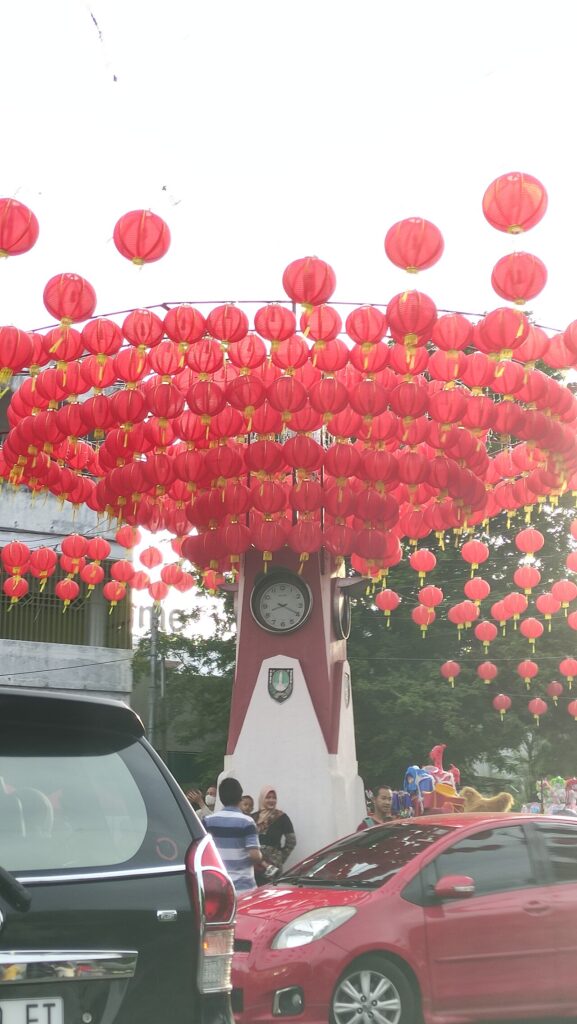
The colours come first, because they underpin everything else. Red is the colour of luck, joy, and protection in Chinese culture, tracing back to the legend of Nian, the New Year beast that feared the colour red. To surround the home in red is to ward off bad luck and invite good fortune. Gold, and the bright yellow that stands in for it, represents wealth and prosperity, so the pairing of red and gold is a wish for a year that is both lucky and rich. Almost every New Year decoration draws on this palette, which is why the season is so instantly recognisable.
Red Lanterns
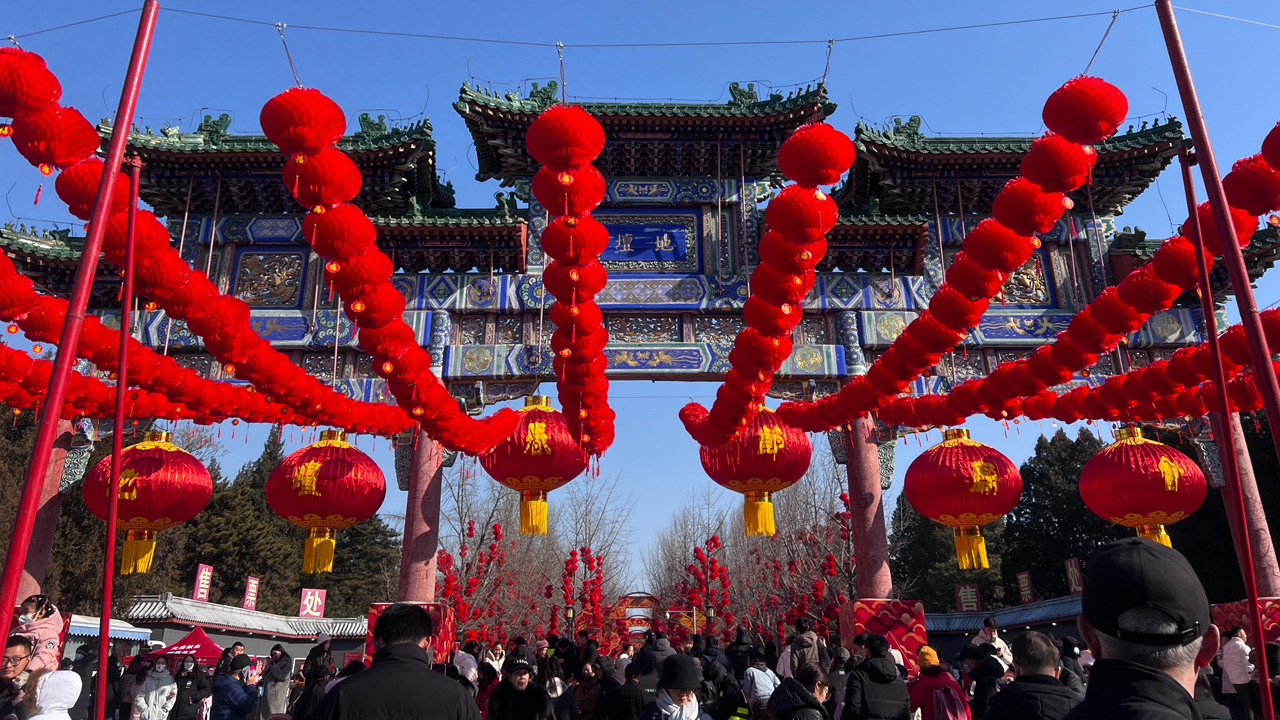
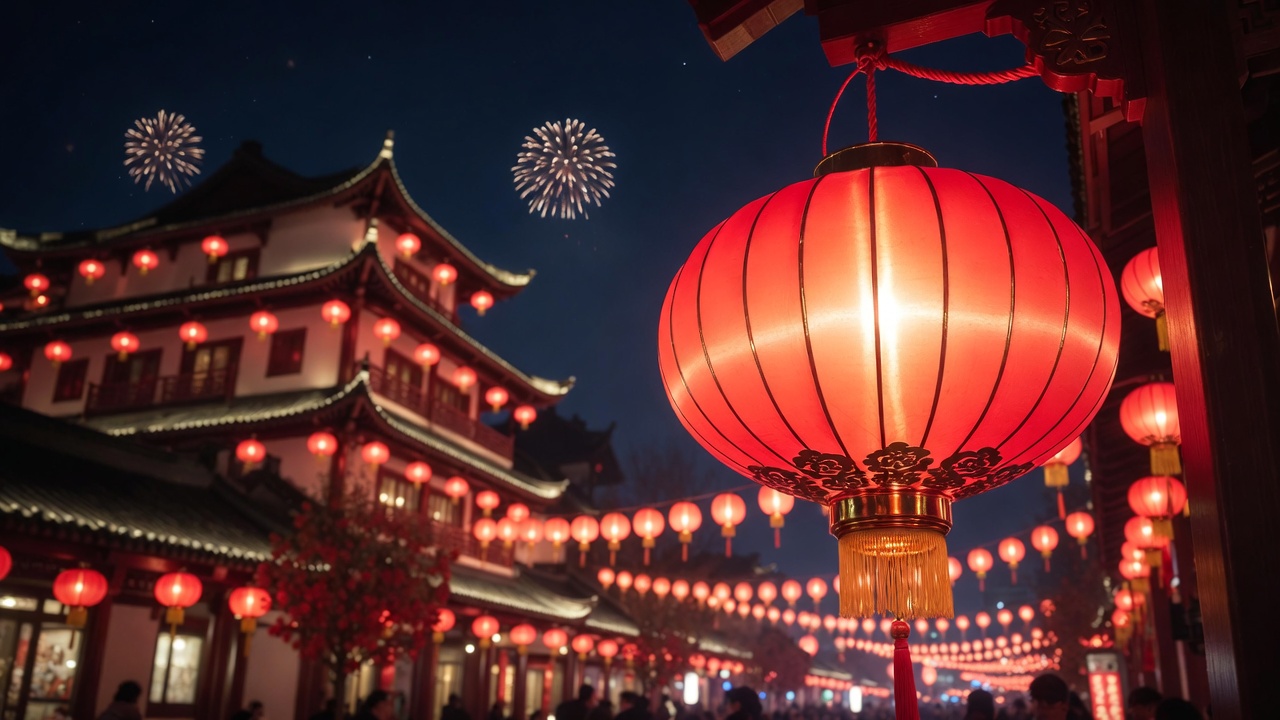
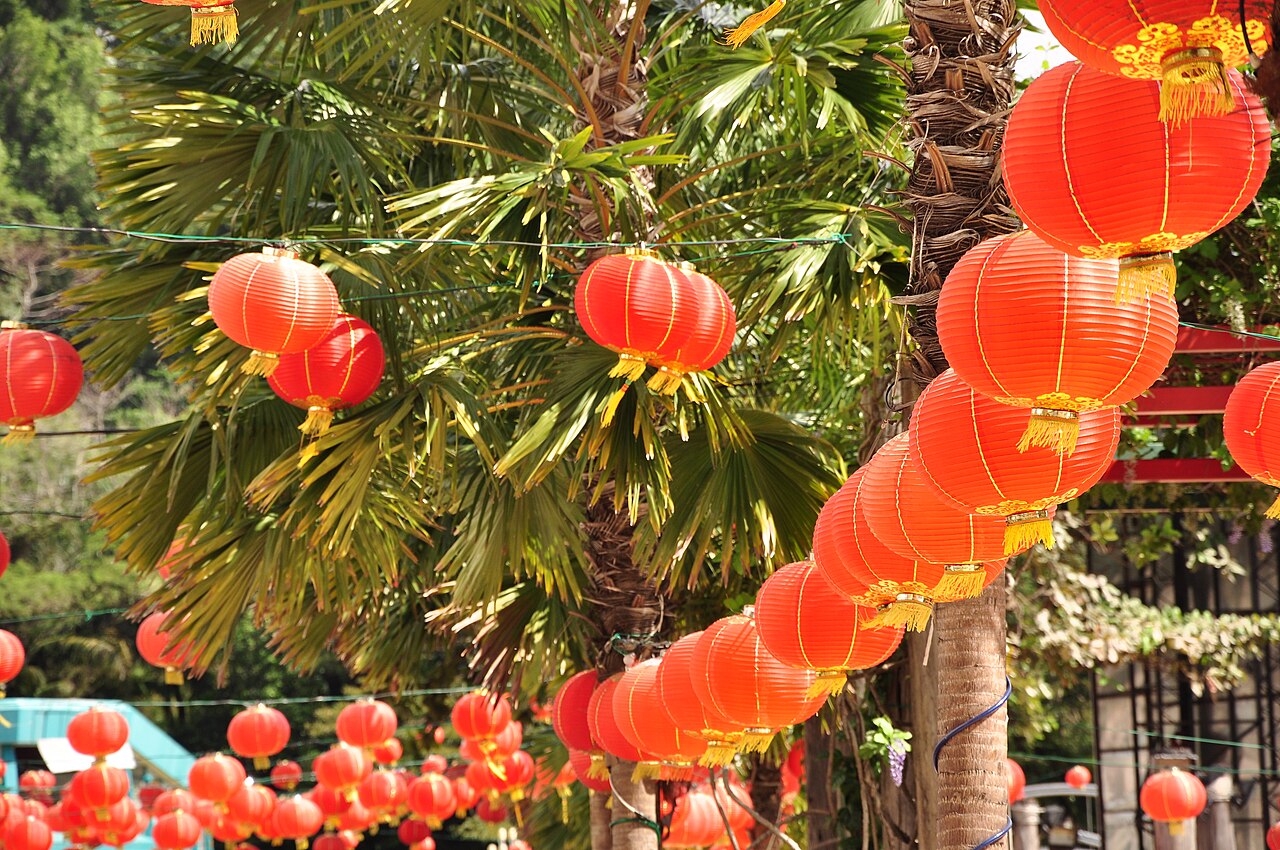
Round red lanterns are among the most iconic decorations of the festival, hung in doorways, along streets, and in temples and shopping centres. Their round shape symbolises wholeness and reunion, their red colour brings luck, and their light is believed to drive away darkness and bad fortune, a echo of the lamps once lit to frighten off the Nian beast. Often inscribed with the characters for good fortune or wealth, or with the year’s zodiac animal, they fill the night of the New Year with a warm red glow that has become the visual signature of the season.
Spring Couplets (Chunlian)
Spring couplets, chūnlián, are pairs of poetic lines written in black or gold ink on red paper and pasted on either side of the front door, with a shorter horizontal scroll above. The two vertical lines form a matched couplet, balanced in meaning and rhythm, expressing wishes for happiness, prosperity, longevity, or a good harvest in the year ahead. The art of writing them is a respected calligraphic tradition, and although printed couplets are now common, many families still value a hand-brushed set. Reading the couplets on a neighbour’s door is one of the small pleasures of the New Year.
The Fu Character, Hung Upside Down
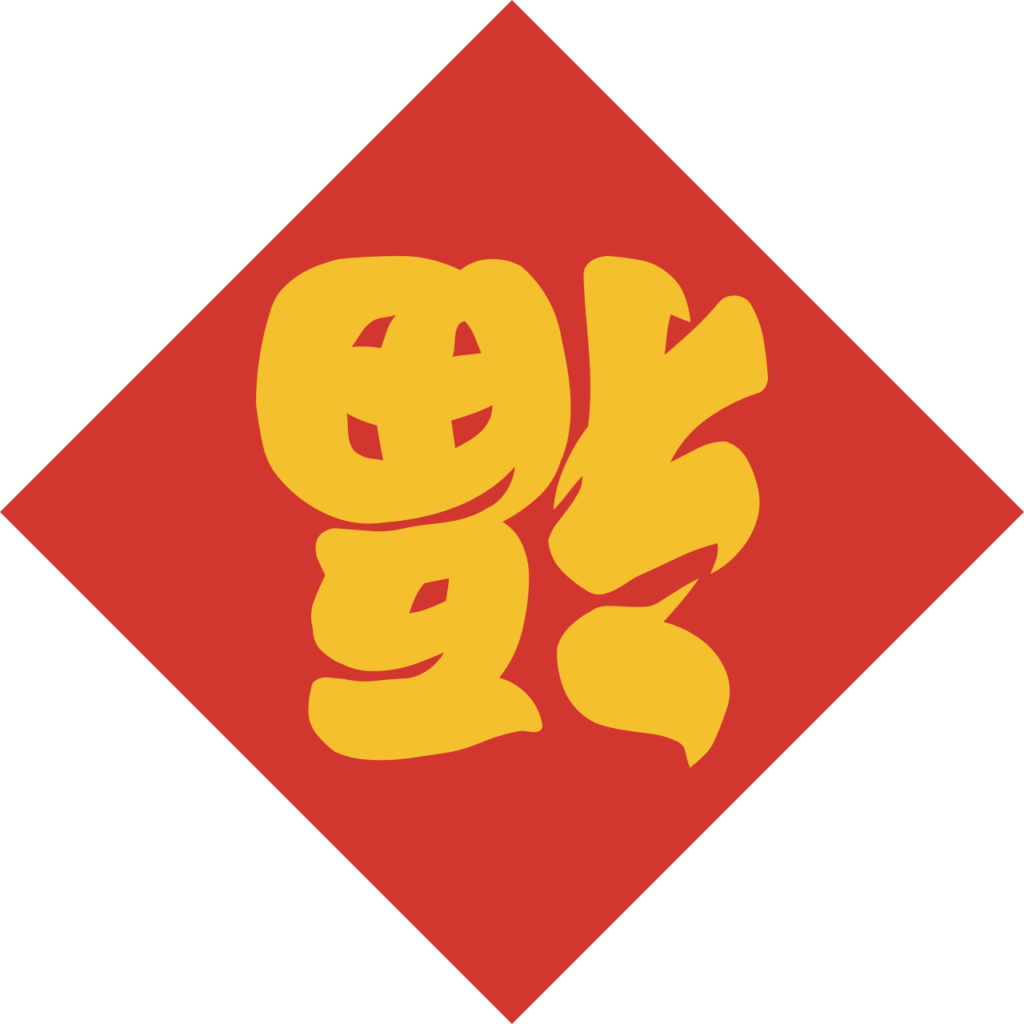
A single character appears on doors and walls across the Chinese world at New Year: fú (福), meaning good fortune or happiness. Most striking is the custom of hanging it upside down. The reason is a pun: the word for “upside down,” dào (倒), sounds exactly like the word for “to arrive,” dào (到), so an inverted fu announces that good fortune has arrived. Pasted on the front door, on cabinets, and on windows, the fu character is the most concentrated expression of everything the festival wishes for.
Paper Cutting and Window Flowers (Jianzhi)
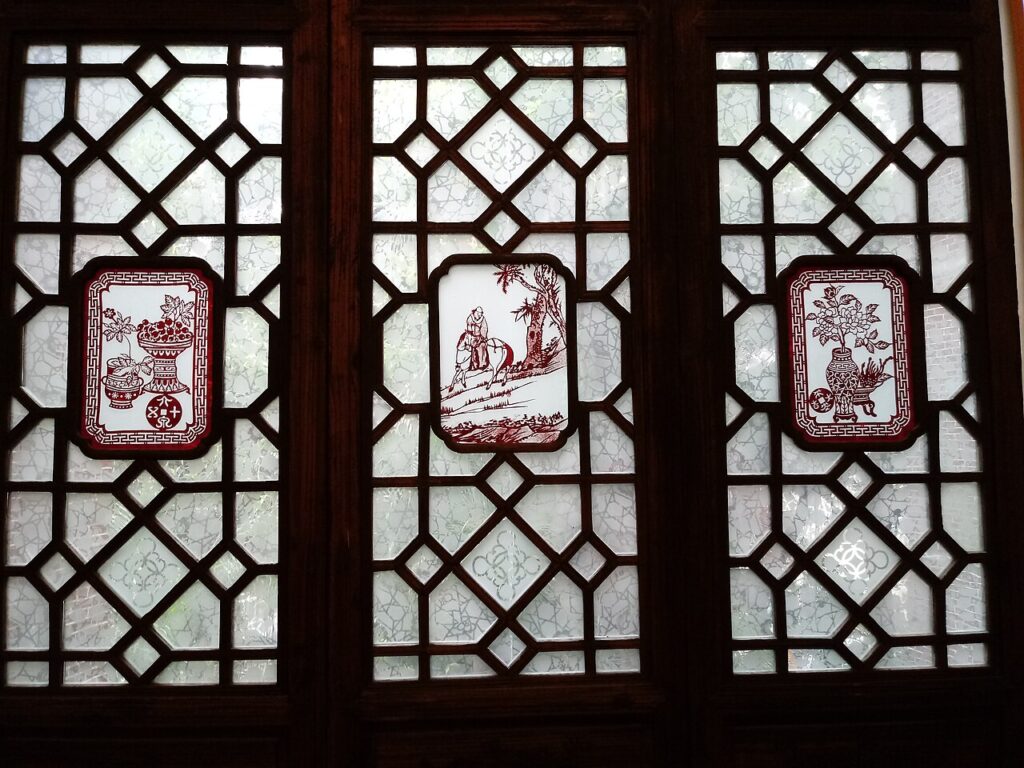
The delicate folk art of paper cutting, jiǎnzhǐ, produces intricate red designs that are pasted onto windows, where they are known as window flowers. Cut by hand from red paper with scissors or a knife, the designs depict auspicious symbols: the year’s zodiac animal, blooming flowers, fish for surplus, the fu character, and scenes of plenty. Backlit by the window, they cast lacy red patterns into the room and are one of the most beautiful and personal of the New Year decorations, often made by hand within the family.
Door Gods (Menshen)
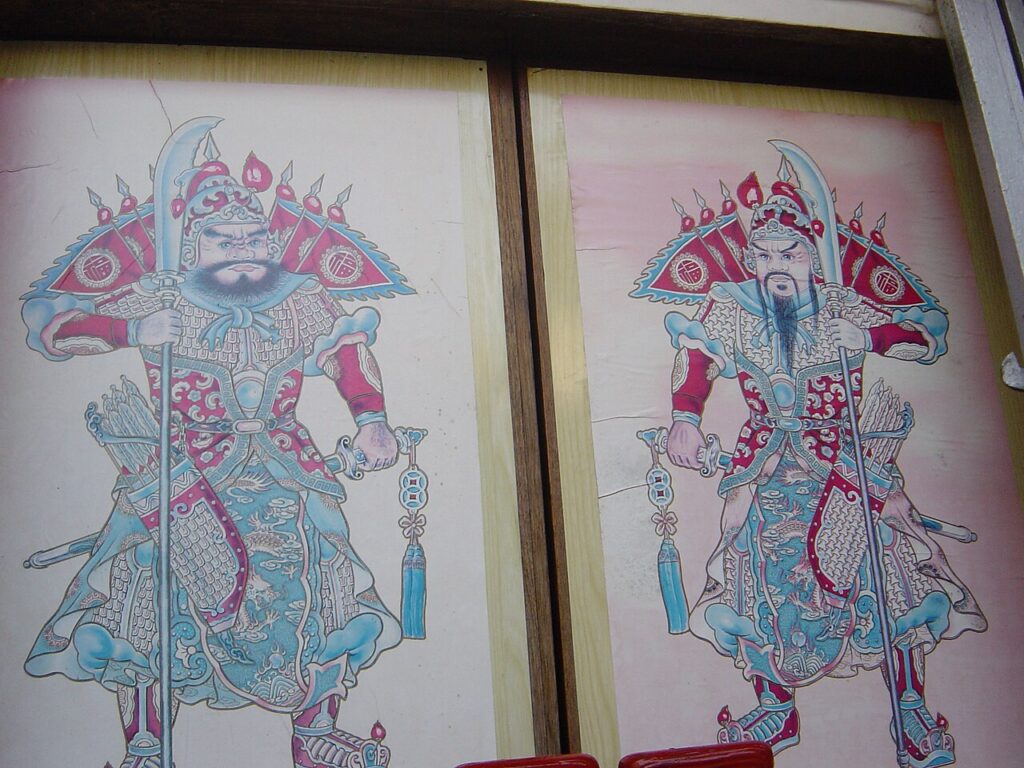
On many traditional doors, a pair of fierce painted warriors stands guard: the door gods, ménshén, whose images are pasted one on each side of the entrance to protect the household from evil spirits and bad luck. The custom is ancient, and the two figures are usually identified as a pair of loyal Tang dynasty generals who, in legend, guarded an emperor’s door against nightmares so faithfully that their portraits were hung in their place. Bold and colourful, the door gods turn the front entrance into a protected threshold for the year.
New Year Paintings (Nianhua)
New Year paintings, niánhuà, are brightly coloured woodblock folk prints hung indoors during the festival, depicting auspicious scenes: chubby babies holding fish, the gods of wealth and longevity, harvest abundance, and figures from folklore. Once a major popular art form produced in famous printmaking towns, nianhua express wishes for prosperity, fertility, and a good year in cheerful, vivid imagery. Though less common than they once were, they remain a beloved part of traditional New Year decor and a window into Chinese folk belief.
Kumquat Trees and Lucky Plants
Living plants bring their own meanings to the New Year home, especially in the south and in Hong Kong, where flower markets are a major part of the celebration. The kumquat tree is the most prized: its name in Cantonese contains the sound for gold and for luck, and its many small golden fruits represent wealth and a fruitful year. Blossoming plum and peach branches symbolise renewal and romance, narcissus is associated with good fortune and is timed to bloom at the New Year, and pots of lucky bamboo and orchids fill homes with the promise of growth and prosperity.
Chinese Knots and Hanging Ornaments
Intricate decorative knots, the Zhōngguó jié or Chinese knots, are tied from a single length of red cord into symmetrical, looped designs and hung on walls, doors, and gifts. Their endless interweaving and symmetry symbolise unity, continuity, and good luck, and many incorporate tassels, jade, or charms. Together with hanging ornaments shaped like fish, coins, lanterns, and the year’s zodiac animal, they add movement and detail to the red-and-gold scheme.
Firecrackers and the Sound of the New Year
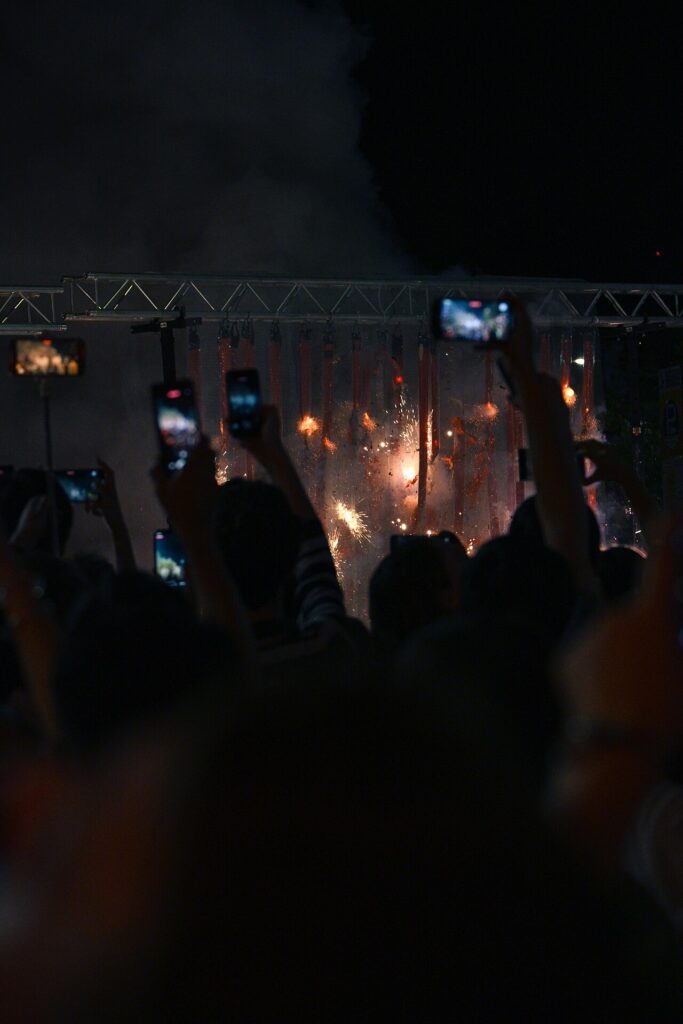
Not every decoration is silent. Strings of red firecrackers, real or decorative, are hung and set off to drive away evil spirits and bad luck with their noise and their lucky red colour, another inheritance from the legend of the Nian beast. Where real firecrackers are restricted, as they now are in many cities for safety and air quality, decorative red firecracker strings are hung as ornaments instead, keeping the symbolism without the bang.
How to Decorate Your Home for the New Year
Putting it all together is mostly a matter of timing and the front door. Decorations traditionally go up in the days before New Year’s Eve, after the home has been thoroughly cleaned, since you want the old year’s bad luck swept out before the new luck is invited in. Start with the entrance: paste the spring couplets on either side of the door with the horizontal scroll above, add the fu character, and hang a pair of red lanterns. Move inward with window flowers on the glass, a fu on cabinets and walls, nianhua and Chinese knots in the living room, and lucky plants and a tray of oranges to finish. Keep to the red-and-gold palette, favour even-numbered and paired arrangements, and feature the year’s zodiac animal where you can. The decorations traditionally stay up until the Lantern Festival, fifteen days later, which closes the season.
Reading the Spring Couplets
The spring couplets deserve a closer look, because they are small works of literature as well as decoration. A complete set has three parts: an upper scroll on the right of the door, a lower scroll on the left, and a horizontal scroll across the top, traditionally read from right to left in the classical manner. The two vertical lines must match in length, balance in tone, and complement each other in meaning, so that together they form a single elegant wish. Writing them well is a respected calligraphic skill, and in the weeks before the festival, calligraphers and community volunteers set up tables to brush couplets for neighbours. Even mass-printed sets follow the same ancient form, carrying poetry to every doorway.
The Year’s Zodiac Animal
Each New Year brings a wave of decorations featuring the animal of the coming year, and 2026, the Year of the Horse, fills shops and homes with horse motifs: horses on couplets and lanterns, horse paper cuttings in windows, and horse figurines and ornaments. Incorporating the year’s animal is thought to align the home with the energy of the year, and it gives each New Year a slightly different look. The horse, a symbol of speed, strength, and success, lends itself naturally to images of momentum and good fortune galloping in.
Lucky Plants, One by One
Living decorations are central to the southern and Cantonese New Year. The kumquat tree, heavy with small golden fruit, is the most prized, its name a play on the words for gold and luck. Plum and peach blossoms, forced to bloom at the New Year, symbolise renewal, perseverance, and romance, their flowers opening on bare winter branches. Narcissus, carefully timed to flower during the festival, is thought to bring good fortune and prosperity, especially if it blooms exactly on New Year’s Day. Lucky bamboo stands for steady upward growth, while orchids and pussy willow, with its silver buds, round out a home filled with the promise of growth and abundance.
Colour and Number Rules
Decorating well means following a few quiet rules. Red and gold dominate, with black and white avoided as colours of mourning. Auspicious numbers shape arrangements: things are displayed in pairs and even numbers, since good fortune comes in twos, while the unlucky four is avoided. Symmetry is prized, which is why couplets come in matched pairs and lanterns are hung two by two. Even the placement follows logic, with the most powerful symbols, the couplets and the fu, given pride of place at the front door, the home’s threshold to the year.
Regional Differences and the Flower Markets
How a home is decorated depends on where it is. In the north, the emphasis falls on paper, couplets, window flowers, and door gods, in keeping with a long tradition of folk papercraft. In the south, and especially in Hong Kong and Guangdong, living plants take centre stage, and the New Year flower markets become a major event in their own right, vast night markets where families buy kumquat trees, blossoming branches, and narcissus in the days before the festival. Choosing the family’s New Year plant at the flower market is, for many southern households, as much a part of the season as the reunion dinner itself.
Other Ornaments and Hanging Charms
Smaller decorations fill in the scheme. Spinning paper pinwheels, associated with turning fortunes in a good direction, are popular at temple fairs and with children. Small embroidered sachets and blessing bags are hung for luck, and strings of ornaments shaped like fish, gold coins, lanterns, firecrackers, and the zodiac animal dangle from doorways, plants, and ceilings. Chinese knots in red cord, tied into symmetrical looped designs, hang on walls and gifts as symbols of unity and unbroken good fortune. Together these details give the New Year home its layered, glittering richness.
Modern and Do-It-Yourself Decorations
The tradition keeps evolving. Cities now mount enormous public displays, LED light shows, illuminated zodiac sculptures, and themed installations in shopping centres and along rivers, that draw huge crowds. At home, many families enjoy making their own decorations, especially paper cuttings and couplets, as a craft to share with children and a way to pass on the customs. Reusable and sustainable decorations are increasingly popular as an alternative to single-use paper, keeping the symbolism while reducing waste. However it is made, the goal remains the same: to wrap the home in luck.
When to Put Them Up and Take Them Down
Timing closes the circle. Decorations traditionally go up only after the home has had its thorough pre-festival cleaning, in the final days before New Year’s Eve, so that the old year’s bad luck is gone before the new luck is invited in. They stay up through the fifteen days of the festival and come down after the Lantern Festival, which marks the formal end of the celebration. Some keep certain pieces, the fu character or a Chinese knot, up year round, but the couplets and seasonal items are refreshed each year, pasted over or replaced so that each New Year arrives with its decorations bright and new.
The Legend Behind the Red
The colour that saturates the festival has a story behind it. According to the legend of Nian, a fearsome beast emerged at the turn of each year to menace villages, until people discovered that it was terrified of three things: the colour red, bright light, and loud noise. They began pasting red paper on their doors, hanging red lanterns, lighting lamps through the night, and setting off firecrackers, and the beast never troubled them again. Whether or not anyone ever believed in Nian literally, the legend explains the whole visual grammar of the New Year: the red couplets and lanterns, the bright lights, and the firecrackers are, in this telling, the descendants of an ancient defence that hardened into a celebration. Knowing the story makes the decorations feel less like ornament and more like an inherited act of protection.
Decorating a Small Home or Apartment
You do not need a large house with a traditional courtyard to decorate for the New Year. A modern apartment can be dressed beautifully with a few well-chosen pieces. Start, as always, at the front door, with a fu character and a pair of small couplets, the single most important gesture. Add a couple of red lanterns, a few window flowers on the glass, and a small kumquat plant or a vase of blossoming branches on a table. A red tablecloth, a bowl of mandarin oranges, and a Chinese knot on the wall complete the effect. The point is not quantity but the front door and the colour; even a small space, framed in red and gold at the threshold, reads unmistakably as a home ready for the New Year.
Common Decorating Mistakes to Avoid
A few missteps are easy to avoid once you know them. Do not hang the spring couplets in the wrong order; the upper line belongs on the right of the door as you face it, the lower on the left, following the classical right-to-left reading. Do not decorate before cleaning, since the whole logic is to clear out the old year first. Avoid black and white in the colour scheme, and steer clear of arrangements built on the number four. Take care, too, that an upside-down fu is a deliberate choice on a door or cabinet, where it means fortune has arrived, rather than an accident. Get the threshold right, keep to red and gold, mind the couplet order, and the rest falls into place.
A Home That Speaks in Red and Gold
What makes Chinese New Year decoration so special is that none of it is merely decorative. Every lantern, couplet, and paper cut is a sentence in a language of hope, the home itself turned into a wish for luck, wealth, longevity, and family togetherness. Dress your space with that in mind and it becomes more than festive; it becomes a declaration of everything you want for the year. There is a quiet wisdom in this. A home dressed for the New Year is a home that has paused to clean itself, to gather its family, and to state out loud, in colour and symbol, what it hopes for. Hang the first red lantern and paste the first couplet, and you join a tradition that families across the Chinese world have kept for centuries, writing their hopes onto the walls in red and gold and inviting the year to read them. The decorations come down after fifteen days, when the Lantern Festival ends the season, but the wishes they carry, for luck, wealth, health, and a family kept close, are meant to last the whole year through, long after the lanterns themselves are taken down. To understand the wider customs these decorations belong to, see our complete guide to Chinese New Year, and for the words to match the setting, our guide to Chinese New Year greetings.
Frequently Asked Questions
Why are Chinese New Year decorations red and gold?
Red is the colour of luck, joy, and protection, tracing back to the legend of the Nian beast that feared red, while gold represents wealth. Together they wish for a year that is both lucky and prosperous.
Why is the fu character hung upside down?
The word for upside down, dao, sounds the same as the word for to arrive, dao. An upside-down fu therefore announces that good fortune has arrived.
What are spring couplets?
Spring couplets, or chunlian, are pairs of poetic lines written in ink on red paper and pasted on either side of the front door, with a shorter horizontal scroll above, expressing wishes for the year ahead.
When should you put up and take down New Year decorations?
Decorations traditionally go up in the days before New Year’s Eve, after the home has been cleaned, and stay up until the Lantern Festival on the fifteenth day, which closes the season.
What are window flowers?
Window flowers are jianzhi, intricate red paper cuttings pasted onto windows. Backlit by the glass, they cast lacy red patterns into the room and depict auspicious symbols such as the zodiac animal, flowers, and the fu character.