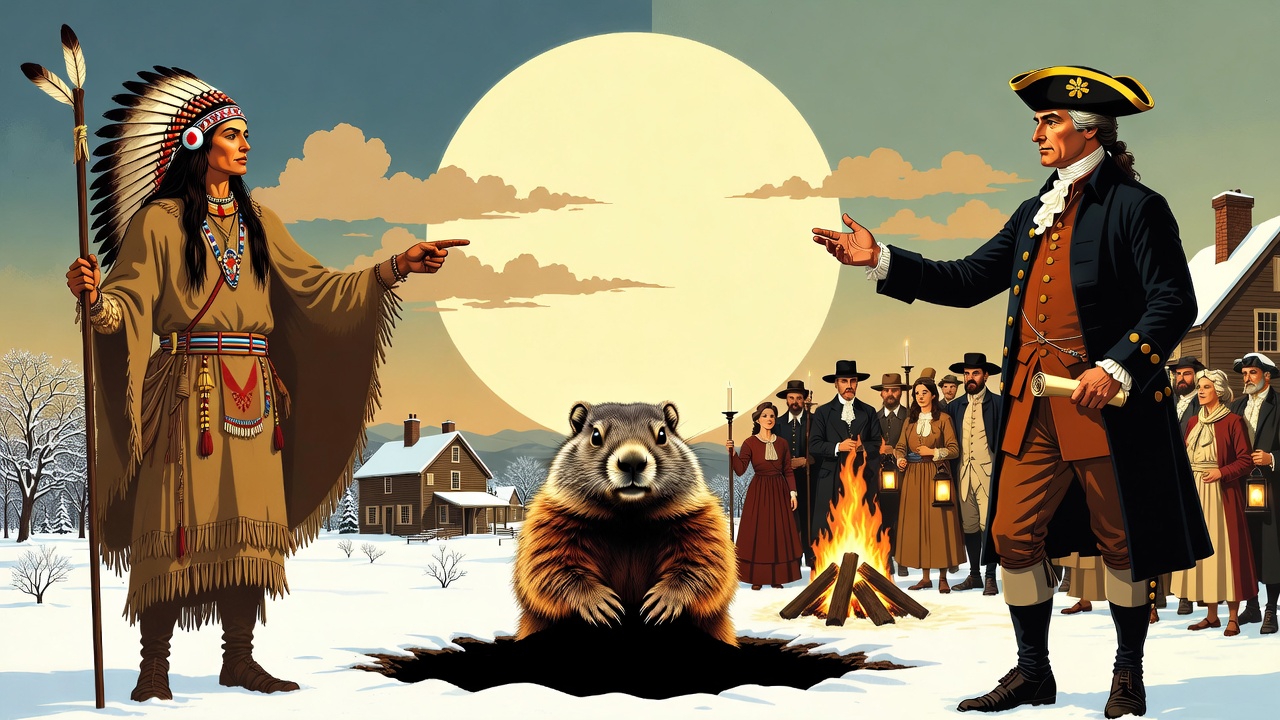
Picture this: a crowd of thousands gathers in the predawn darkness of a frozen Pennsylvania hillside, breath visible in the frigid air, all waiting with bated breath for… a groundhog. Welcome to America’s strangest national obsession. Each year on February 2nd, this furry forecaster named Phil waddles into the spotlight to determine whether we’ll endure six more weeks of winter or celebrate an early spring. It sounds absurd—and it absolutely is—yet Groundhog Day has captivated the American imagination for nearly 140 years. So what’s the story behind this delightfully bizarre celebration?
Whether you’re a trivia enthusiast, a folklore aficionado, or simply curious about why we trust a groundhog with our meteorological futures, this comprehensive guide answers 100 of the most fascinating questions about Groundhog Day. Let’s dig in!
Part 1: The History and Origins of Groundhog Day in America
What is the Ancient History Behind Groundhog Day Traditions?
Q1: What is Groundhog Day?
Groundhog Day is an annual American and Canadian tradition observed on February 2nd, in which a groundhog emerges from its burrow. According to folklore, if the groundhog sees its shadow due to clear weather, it will retreat to its den, predicting six more weeks of winter. If it doesn’t see its shadow because of cloudiness, spring will arrive early.
Q2: When did Groundhog Day first begin in the United States?
The first official Groundhog Day celebration in the United States took place on February 2, 1887, in Punxsutawney, Pennsylvania. A local newspaper editor, Clymer Freas, promoted the event, and a group called the Punxsutawney Groundhog Club made the trek to Gobbler’s Knob to consult the groundhog.
Q3: What ancient European traditions influenced Groundhog Day?
Groundhog Day has roots in the ancient Celtic festival of Imbolc, which marked the midpoint between the winter solstice and spring equinox. It was also influenced by the Christian holiday of Candlemas, celebrated on February 2nd, which involved clergy blessing candles for winter. Weather predictions were associated with this day.
Q4: What is the Candlemas connection to Groundhog Day weather prediction?
An old English poem captures the Candlemas-weather connection:
“If Candlemas be fair and bright, Winter has another flight. If Candlemas brings clouds and rain, Winter will not come again.”
This rhyme directly parallels the shadow/no-shadow logic of Groundhog Day.
Q5: Why did German immigrants choose the groundhog as a weather predictor?
German immigrants who settled in Pennsylvania brought their tradition of using a hedgehog (der Dachs) for weather prediction. Finding no hedgehogs in America, they substituted the abundant groundhog, which had similar hibernation patterns and emerged around the same time of year.
| European Animal | American Substitute | Reason for Change |
|---|---|---|
| Hedgehog (Germany) | Groundhog | No hedgehogs in North America |
| Badger (Germany) | Groundhog | Similar burrowing behavior |
| Bear (Various) | Groundhog | Groundhogs more accessible and less dangerous |
Q6: What does the date February 2nd represent astronomically?
February 2nd falls approximately halfway between the winter solstice (around December 21) and the spring equinox (around March 20). This “cross-quarter day” was significant in ancient agricultural societies for planning planting seasons.
Q7: How did Pennsylvania Dutch culture shape Groundhog Day customs?
The Pennsylvania Dutch (German) communities in central Pennsylvania preserved and adapted Old World traditions. They called the day “Grundsaudaag” and integrated groundhog watching into their agricultural calendar as a practical (if whimsical) weather forecasting method.
Part 2: All About Punxsutawney Phil, the Famous Weather-Predicting Groundhog
Who is Punxsutawney Phil and Why is He Famous?
Q8: Who is Punxsutawney Phil?
Punxsutawney Phil is the most famous groundhog in the world. He resides in Punxsutawney, Pennsylvania, and has been the official weather-predicting groundhog since 1887. According to legend, there has been only one Phil, kept alive by drinking a magical “elixir of life.”
Q9: Where exactly does Punxsutawney Phil live?
Phil lives in a climate-controlled burrow called “Phil’s Burrow” at the Punxsutawney Memorial Library. During the Groundhog Day ceremony, he’s brought to Gobbler’s Knob, a small hill just outside the town, for his weather prediction.
Q10: How old is Punxsutawney Phil according to legend?
According to the Punxsutawney Groundhog Club’s official mythology, Phil is over 135 years old. They claim he drinks a magical “Groundhog Punch” elixir every summer that grants him seven more years of life.
Q11: What is the Inner Circle of the Groundhog Club?
The Inner Circle is a group of local dignitaries who plan the annual Groundhog Day celebration and care for Phil year-round. They wear top hats and tuxedos and speak “Groundhogese”—a language only the current president can understand.
Q12: How does Phil communicate his weather prediction?
Phil “speaks” in Groundhogese to the president of the Inner Circle, who then translates the prediction for the crowd. The prediction is read from an ornate scroll during the ceremony at Gobbler’s Knob.
Q13: What are Punxsutawney Phil’s prediction statistics over the years?
Phil has made over 130 predictions since 1887. According to the Groundhog Club, Phil is correct 100% of the time. However, independent meteorological analyses suggest his accuracy is closer to 39-40%—roughly equivalent to a coin flip.
| Prediction Type | Number of Times | Percentage |
|---|---|---|
| Six More Weeks of Winter (Saw Shadow) | ~105 times | ~80% |
| Early Spring (No Shadow) | ~20 times | ~15% |
| No Record Available | ~7 times | ~5% |
Q14: Has Punxsutawney Phil ever been wrong about his prediction?
According to the Groundhog Club, Phil is never wrong—humans are simply “wrong in their interpretation.” In reality, studies by meteorologists show Phil’s predictions match actual weather outcomes only about 39% of the time.
Q15: What happens to Phil the rest of the year?
Phil lives comfortably in his burrow at the library with his “wife,” Phyllis. He makes occasional public appearances at festivals and events, but mostly enjoys a quiet life with his handlers providing specialized care.
Q16: Does Punxsutawney Phil have a wife?
Yes! Phil’s wife is named Phyllis. According to Groundhog Club lore, she doesn’t receive the magical elixir, so she’s not immortal. The couple has no children because, as the club explains, the elixir prevents reproduction.
Q17: What does Punxsutawney Phil eat?
Phil enjoys a diet of dog food, vegetables, and fruits. His favorites reportedly include bananas, carrots, and kale. During winter months, his diet is adjusted to help him maintain a healthy hibernation weight.
Part 3: Understanding Groundhog Day Celebrations Across North America
How Do Different Cities Celebrate Groundhog Day?
Q18: Is Punxsutawney the only place that celebrates Groundhog Day?
No! Many towns across the United States and Canada have their own weather-predicting groundhogs and celebrations. Some of the most famous include Staten Island Chuck, Wiarton Willie, General Beauregard Lee, and Buckeye Chuck.
Q19: Who is Staten Island Chuck?
Staten Island Chuck is New York City’s official groundhog, residing at the Staten Island Zoo. He’s been making predictions since 1981 and is known for having a slightly better accuracy rate than Phil.
Q20: Who is Wiarton Willie, Canada’s famous groundhog?
Wiarton Willie is Canada’s most famous weather-predicting groundhog, based in Wiarton, Ontario. An albino groundhog, Willie has been making predictions since 1956, and his festival attracts thousands of visitors annually.
Q21: Who is General Beauregard Lee?
General Beauregard Lee is Georgia’s official groundhog, residing at the Yellow River Game Ranch (formerly) and now at Dauset Trails Nature Center. He lives in a miniature Southern plantation home called “Weathering Heights.”
| Groundhog | Location | Notable Feature |
|---|---|---|
| Punxsutawney Phil | Pennsylvania | Most famous; “immortal” |
| Staten Island Chuck | New York | Higher accuracy rate |
| Wiarton Willie | Ontario, Canada | Albino groundhog |
| General Beauregard Lee | Georgia | Lives in mini mansion |
| Buckeye Chuck | Ohio | Ohio’s official groundhog |
| Shubenacadie Sam | Nova Scotia | First to predict (easternmost) |
| Jimmy the Groundhog | Wisconsin | Has bitten a mayor |
| Dunkirk Dave | New York | Claims second-longest lineage |
Q22: Which groundhog makes its prediction first each year?
Shubenacadie Sam in Nova Scotia, Canada, makes the first prediction each Groundhog Day because of the Atlantic Time Zone. He emerges about an hour before Punxsutawney Phil.
Q23: Have any famous groundhogs ever bitten someone?
Yes! In 2015, Jimmy the Groundhog bit the ear of Sun Prairie, Wisconsin mayor Jonathan Freund during the ceremony. The mayor required stitches but took it in good humor, and Jimmy retained his position.
Q24: How many people attend the Punxsutawney celebration?
The Punxsutawney Groundhog Day celebration attracts between 15,000 and 40,000 visitors annually. The largest crowd ever—an estimated 40,000 people—attended in 1997, the year after the movie “Groundhog Day” was released.
Q25: What time does the Groundhog Day ceremony take place?
The official ceremony at Gobbler’s Knob begins around 7:25 AM Eastern Time. However, festivities start much earlier, with people arriving before dawn to secure good viewing spots.
Part 4: The Science Behind Groundhog Hibernation and Weather Prediction
Do Groundhogs Actually Predict Weather Accurately?
Q26: Can groundhogs really predict the weather?
Scientifically speaking, no. Groundhogs have no ability to forecast weather patterns. The tradition is rooted in folklore, not meteorology. Studies show that groundhog predictions are no more accurate than random chance.
Q27: What is the actual accuracy rate of groundhog predictions?
According to NOAA (National Oceanic and Atmospheric Administration) and various meteorological analyses, Punxsutawney Phil’s predictions are accurate approximately 39% of the time—meaning random guessing would yield better results.
Q28: Why do groundhogs emerge from hibernation in early February?
Groundhogs typically emerge from hibernation in late January to early February to begin searching for mates. This natural behavior coincides with Groundhog Day, which is why the tradition developed around this specific date.
Q29: What happens to a groundhog’s body during hibernation?
During hibernation, a groundhog’s heart rate drops from 80-100 beats per minute to just 4-5 beats. Their body temperature falls from 99°F to as low as 37°F, and they breathe only once every six minutes.
Q30: How long do groundhogs hibernate?
Groundhogs typically hibernate for approximately 150 days, from late October through late January or early February. This is one of the longest hibernation periods of any North American animal.
| Hibernation Fact | Normal State | Hibernation State |
|---|---|---|
| Heart Rate | 80-100 bpm | 4-5 bpm |
| Body Temperature | 99°F (37°C) | 37°F (3°C) |
| Breathing Rate | 16 breaths/min | 1 breath/6 min |
| Weight Loss | N/A | Up to 50% body weight |
Q31: What is the scientific name for a groundhog?
The groundhog’s scientific name is Marmota monax. They belong to the squirrel family (Sciuridae) and are the largest members of the marmot genus found in North America.
Q32: Are groundhogs and woodchucks the same animal?
Yes! Groundhog, woodchuck, and whistle-pig are all common names for the same animal: Marmota monax. The name “woodchuck” comes from the Algonquian word “wuchak.”
Q33: How much wood could a woodchuck chuck?
While this tongue-twister is playful nonsense, a wildlife biologist at Cornell University calculated that if a woodchuck could chuck wood, it could move approximately 700 pounds of dirt when digging a burrow—so theoretically, about 700 pounds of wood.
Q34: What is a groundhog shadow actually caused by?
A groundhog sees its shadow simply due to sunny conditions. When the sun is bright and unobstructed by clouds, any opaque object will cast a shadow. There’s nothing mystical about it—just basic physics.
Q35: Is there any scientific basis for using February 2nd as a weather predictor?
Interestingly, yes—sort of. Cross-quarter days (halfway points between solstices and equinoxes) have historically been used for agricultural planning. However, the shadow method itself has no meteorological validity.
Part 5: Groundhog Day in Popular Culture and Media
How Did the Movie Groundhog Day Change the Holiday Forever?
Q36: What is the 1993 movie “Groundhog Day” about?
“Groundhog Day” (1993) stars Bill Murray as Phil Connors, a cynical TV weatherman who becomes trapped in a time loop, reliving February 2nd repeatedly in Punxsutawney. The film became a cultural phenomenon and revitalized interest in the holiday.
Q37: How did the movie “Groundhog Day” affect tourism in Punxsutawney?
The movie dramatically increased tourism. Before 1993, the celebration attracted around 2,000 people. After the film’s release, attendance surged to 30,000-40,000, transforming Punxsutawney into a major tourist destination.
Q38: Was “Groundhog Day” actually filmed in Punxsutawney?
Most of the movie was filmed in Woodstock, Illinois, not Punxsutawney. The town square scenes, the bed-and-breakfast, and the diner were all in Woodstock. Only a few establishing shots were filmed in the actual Punxsutawney.
Q39: How many times did Bill Murray’s character relive Groundhog Day in the movie?
Director Harold Ramis estimated that Phil Connors was trapped for approximately 10 years, though some analyses suggest it could be anywhere from 8 to over 30 years based on the skills he acquires.
Q40: Why did “Groundhog Day” become such a cultural phenomenon?
The film resonated due to its existential themes of self-improvement, redemption, and breaking out of life’s ruts. The phrase “groundhog day” entered common parlance to describe any repetitive, monotonous situation.
Q41: Has Groundhog Day been featured in other movies or TV shows?
Yes! Numerous TV shows have created “Groundhog Day” homage episodes featuring time loops, including “The X-Files,” “Supernatural,” “Buffy the Vampire Slayer,” “Star Trek: The Next Generation,” and many others.
| TV Show | Episode Title | Air Date |
|---|---|---|
| The X-Files | “Monday” | 1999 |
| Supernatural | “Mystery Spot” | 2008 |
| Buffy | “Life Serial” | 2001 |
| Community | “App Development and Condiments” (sort of) | 2014 |
| Russian Doll | Entire Series | 2019 |
Q42: Are there any songs about Groundhog Day?
The most famous is “I Got You Babe” by Sonny & Cher, which plays repeatedly in the movie whenever Bill Murray’s character wakes up. This song has become synonymous with Groundhog Day.
Q43: Has Punxsutawney Phil ever appeared on television?
Phil has appeared on numerous television programs, including “The Today Show,” “Good Morning America,” and “The Oprah Winfrey Show.” He’s become a genuine American celebrity.
Q44: Is there a Groundhog Day musical?
Yes! “Groundhog Day: The Musical” premiered in London’s West End in 2016 and moved to Broadway in 2017. It received critical acclaim and won the Olivier Award for Best New Musical.
Part 6: Fun Facts and Trivia About Groundhogs and Groundhog Day
What Are the Most Surprising Groundhog Day Facts?
Q45: How many groundhogs are there in North America?
There are no precise counts, but groundhogs are abundant throughout eastern North America. They’re found from Alabama to Alaska, with populations particularly dense in the northeastern United States and southeastern Canada.
Q46: How fast can a groundhog run?
Despite their chunky appearance, groundhogs can run up to 8 miles per hour. They’re also excellent swimmers and can climb trees to escape predators.
Q47: How much does the average groundhog weigh?
Adult groundhogs typically weigh between 5-14 pounds, depending on the season. They’re heaviest in fall before hibernation and may lose up to half their body weight during winter.
Q48: What are groundhog burrows like?
Groundhog burrows are engineering marvels, extending up to 66 feet in length with multiple chambers for sleeping, nesting, and waste. They have at least two entrances for escape and can be up to 5 feet deep.
Q49: Are groundhogs social animals?
Groundhogs are generally solitary except during mating season and when raising young. However, they’re not aggressive and may share territory boundaries with neighbors.
Q50: What predators do groundhogs face?
Groundhogs are prey for foxes, coyotes, wolves, bobcats, hawks, owls, and domestic dogs. Their burrows provide excellent protection, and they’re always alert for danger.
Q51: Do groundhogs make any sounds?
Yes! Groundhogs make a sharp whistle when alarmed, earning them the nickname “whistle-pig.” They also chatter their teeth, squeal, and make low barks.
Q52: What’s the weirdest Groundhog Day tradition?
In Milltown, New Jersey, they celebrate with “Milltown Mel.” When Mel passed away in 2022 just before Groundhog Day, organizers scrambled to find a substitute—showing how seriously some towns take their groundhog duties.
Q53: Has Groundhog Day ever been canceled?
The official Punxsutawney celebration has never been canceled, though crowds were limited during the COVID-19 pandemic in 2021. The tradition continued with virtual viewing options.
Q54: What happens if Punxsutawney Phil dies before Groundhog Day?
The Groundhog Club has a succession plan. A new Phil is quietly introduced, and the legend of the “immortal” Phil continues. They never publicly acknowledge when a groundhog passes away.
Q55: How long do groundhogs live in the wild?
Wild groundhogs typically live 3-6 years, while captive groundhogs (like Punxsutawney Phil) can live up to 14 years with proper care.
Part 7: Groundhog Day Traditions, Recipes, and Celebration Ideas
How to Celebrate Groundhog Day at Home with Family
Q56: What are popular Groundhog Day foods?
Traditional Groundhog Day foods include:
- Groundhog-shaped cookies and cakes
- Punxsutawney Punch (a fruit punch)
- Groundhog burrow brownies
- Shadow cookies (chocolate/vanilla)
- Groundhog sandwiches (sloppy joes shaped like groundhogs)
Q57: Are there any traditional Groundhog Day drinks?
The most famous is “Groundhog Punch,” inspired by Phil’s mythical elixir. Recipes vary, but typically include fruit juices, ginger ale, and sherbet. Some adult versions add champagne or rum.
Q58: What are fun Groundhog Day activities for kids?
Popular activities include:
- Shadow tracing and art projects
- Groundhog puppet making
- Weather prediction charts
- Groundhog burrow building with blankets
- Watching the ceremony live online
- Reading groundhog-themed books
Q59: Is there special Groundhog Day music or songs for children?
Yes! Popular children’s songs include “Groundhog Day” by Laurie Berkner, various adaptations of traditional tunes, and educational songs about hibernation and shadows.
Q60: What crafts are popular for Groundhog Day?
Common crafts include paper bag groundhog puppets, shadow box dioramas, pop-up groundhog cards, groundhog masks, and weather prediction wheels.
Q61: Do any schools celebrate Groundhog Day?
Many elementary schools incorporate Groundhog Day into lessons about weather, seasons, hibernation, and American folklore. It’s a perfect opportunity for interdisciplinary teaching.
Q62: Are there Groundhog Day greeting cards?
Yes! Several greeting card companies produce Groundhog Day cards. They typically feature humorous takes on the shadow prediction or Bill Murray movie references.
Q63: What do people wear to Groundhog Day celebrations?
At Gobbler’s Knob, attendees often wear warm winter clothing, groundhog-themed hats, and brown clothing. The Inner Circle wears traditional top hats and tuxedos.
Part 8: Regional and International Groundhog Day Variations
Do Other Countries Celebrate Groundhog Day?
Q64: Do other countries have groundhog-like traditions?
Yes! Germany uses the badger for predictions (Dachstag), while Serbia has a similar tradition involving bears. The concept of cross-quarter day weather prediction exists in many cultures.
Q65: How is Groundhog Day celebrated in Canada?
Canada embraces Groundhog Day enthusiastically, with Wiarton Willie being the most famous Canadian groundhog. Other Canadian groundhogs include Shubenacadie Sam (Nova Scotia) and Manitoba Merv.
Q66: Is February 2nd significant in other cultures?
February 2nd is celebrated as:
- Candlemas in Christian traditions
- Imbolc in Celtic/Pagan traditions
- St. Brigid’s Day in Ireland
- La Candelaria in Latin America
Q67: What is Imbolc and how does it relate to Groundhog Day?
Imbolc is an ancient Celtic festival marking the beginning of spring. Associated with the goddess Brigid, it celebrates the lengthening of days and was traditionally a time for weather divination.
Q68: How do Indigenous North American cultures view groundhogs?
Many Indigenous cultures have their own stories about groundhogs. The Lenape (Delaware) people, whose territory included Pennsylvania, viewed groundhogs as connected to the earth and seasonal cycles.
Q69: Do any U.S. states NOT observe Groundhog Day?
No state officially prohibits Groundhog Day, but states without native groundhog populations (like those in the Desert Southwest) typically don’t have major celebrations or official groundhog ambassadors.
Q70: What southern states have Groundhog Day traditions?
Georgia celebrates with General Beauregard Lee. Other southern groundhogs include:
- Sir Walter Wally (North Carolina)
- Smith Lake Jake (Alabama)
- French Creek Freddie (West Virginia)
Part 9: The Future of Groundhog Day and Conservation
How is Climate Change Affecting Groundhog Day Predictions?
Q71: Has climate change affected Groundhog Day?
Climate change has altered groundhog emergence patterns. Warmer winters mean groundhogs sometimes emerge earlier, and the traditional six-week prediction has become even less reliable.
Q72: Are groundhog populations threatened?
Groundhogs are currently not endangered and are considered a species of “least concern.” In some areas, they’re even considered pests due to their burrowing habits damaging foundations and gardens.
Q73: How do wildlife experts feel about Groundhog Day celebrations?
Opinions vary. Some conservationists appreciate the attention to wildlife, while others express concerns about stress on the animals during public appearances. Most celebrity groundhogs receive excellent care.
Q74: What conservation efforts involve groundhogs?
Groundhogs play important ecological roles, and their burrows provide homes for many other species. Conservation efforts focus on maintaining habitat connectivity and reducing road mortality.
Q75: Will Groundhog Day traditions continue in the future?
Almost certainly! The tradition has survived over 135 years and adapted to changing times. Its combination of folklore, humor, and community celebration ensures its continued relevance.
Part 10: Groundhog Day Quick Questions Lightning Round
Fast Facts About Groundhog Day You Need to Know
Q76: What day of the week does Groundhog Day fall on in 2026?
Groundhog Day 2026 falls on Monday, February 2nd.
Q77: Is Groundhog Day a federal holiday?
No, Groundhog Day is not a federal holiday. It’s a cultural observance with no official government recognition requiring time off work.
Q78: What time zone is the Punxsutawney ceremony in?
Eastern Time (ET). The ceremony typically occurs around 7:25 AM ET.
Q79: Can you visit Punxsutawney Phil year-round?
Yes! Phil is on display at the Punxsutawney Memorial Library year-round, and visitors can see him through a window into his burrow.
Q80: What is Gobbler’s Knob?
Gobbler’s Knob is a small hill in a rural area about 2 miles from downtown Punxsutawney. It’s been the site of the official Groundhog Day ceremony since 1887.
Q81: How do you spell Punxsutawney?
P-U-N-X-S-U-T-A-W-N-E-Y. The name comes from the Lenape word meaning “town of the sandflies” or “town of the mosquitoes.”
Q82: What state is Punxsutawney in?
Pennsylvania. Specifically, Punxsutawney is located in Jefferson County in west-central Pennsylvania.
Q83: How far is Punxsutawney from Pittsburgh?
Punxsutawney is approximately 84 miles (about 1.5 hours by car) northeast of Pittsburgh.
Q84: Can you bring pets to the Groundhog Day celebration?
Pets are generally discouraged due to crowd safety, noise levels, and potential stress to Phil. Check the official Groundhog Club website for current policies.
Q85: Is there an official Groundhog Day website?
Yes! The Punxsutawney Groundhog Club maintains www.groundhog.org with official information, history, and live streaming of the ceremony.
Part 11: Expert Perspectives on Groundhog Day Folklore
What Do Historians and Folklorists Say About Groundhog Day?
Q86: How do folklorists classify Groundhog Day?
Folklorists classify Groundhog Day as a calendrical custom—a traditional practice tied to a specific date that marks seasonal transitions. It combines elements of animal divination, weather lore, and community festival.
Q87: Is Groundhog Day considered “living folklore”?
Absolutely! Groundhog Day is one of America’s best examples of living folklore—a tradition that continues to evolve while maintaining its core elements. It has successfully adapted to mass media and modern tourism.
Q88: What makes Groundhog Day uniquely American?
While rooted in European traditions, Groundhog Day’s specific form is uniquely American. The substitution of the groundhog, the theatrical presentation, and the blend of earnestness and self-aware humor are distinctly American characteristics.
Q89: How has Groundhog Day avoided becoming obsolete?
Groundhog Day has survived by:
- Embracing its own absurdity
- Welcoming media attention
- Creating memorable characters (Phil)
- Inspiring cultural references (the movie)
- Providing community gathering opportunities
Q90: What role does humor play in Groundhog Day’s endurance?
Humor is essential. Unlike other folk traditions that demand belief, Groundhog Day invites participation regardless of belief. People can enjoy it ironically or earnestly—it works either way.
Part 12: Your Groundhog Day Questions Answered
Common Questions People Ask About Groundhog Day
Q91: Why is it called “Groundhog” Day and not “Woodchuck” Day?
“Groundhog” was the more common term in Pennsylvania German communities where the tradition developed. “Woodchuck” is more prevalent in New England, while Southerners sometimes say “whistle-pig.”
Q92: What should I do if I see a groundhog in my yard?
Enjoy watching from a distance! Groundhogs are generally harmless but can damage gardens. If they become problematic, contact local wildlife management for humane deterrent options.
Q93: Is Groundhog Day related to Shadow Day?
“Shadow Day” sometimes refers to Groundhog Day activities in schools, where children study shadows and make predictions. It’s an educational extension of the holiday rather than a separate tradition.
Q94: Can groundhogs be kept as pets?
In most U.S. states, keeping groundhogs as pets is illegal or requires special permits. They’re wild animals with specific needs that are difficult to meet in domestic settings.
Q95: What’s the difference between a groundhog and a prairie dog?
Groundhogs are larger (5-14 lbs vs. 1-3 lbs), live in eastern North America (prairie dogs in the west), are solitary (prairie dogs are highly social), and hibernate (prairie dogs don’t truly hibernate).
| Feature | Groundhog | Prairie Dog |
|---|---|---|
| Size | 5-14 lbs | 1-3 lbs |
| Region | Eastern North America | Western North America |
| Social Structure | Solitary | Colonial |
| Hibernation | True hibernation | Torpor only |
| Burrow Depth | Up to 5 feet | Up to 10 feet |
Q96: Do groundhogs ever not emerge on February 2nd?
In nature, emergence varies by location and weather conditions. Celebrity groundhogs are always brought out for ceremonies, but wild groundhogs might emerge days or weeks later.
Q97: Has any groundhog prediction ever been tested scientifically?
Yes! Multiple meteorological studies have analyzed historical predictions against actual weather data. The consistent finding is that groundhog predictions perform at or below chance levels.
Q98: Why do we still celebrate if the predictions don’t work?
Because Groundhog Day isn’t really about accurate weather prediction—it’s about community, tradition, hope for spring, and enjoying a bit of collective whimsy during the doldrums of winter.
Q99: What’s the best way to watch Groundhog Day coverage?
Options include:
- Attending in person at Gobbler’s Knob
- Watching the live stream at groundhog.org
- Tuning into major network morning shows
- Following @GroundhogClub on social media
Q100: Why should we care about Groundhog Day?
Groundhog Day matters because it represents something increasingly rare in modern life: a tradition that brings people together for pure, simple joy. It asks nothing of us except to pause, smile, and hope for spring. In a world of serious problems, sometimes we need a chubby rodent to remind us that life can also be delightfully absurd.
Conclusion: The Enduring Magic of Groundhog Day in American Culture
As we’ve journeyed through these 100 questions and answers, one thing becomes clear: Groundhog Day is far more than a quirky folk tradition about weather prediction. It’s a living piece of American cultural heritage that connects us to our agricultural past, our immigrant ancestors, and our shared hope that spring will always return.
Whether Phil sees his shadow or not this February 2nd, the real magic of Groundhog Day lies not in its meteorological accuracy but in its ability to bring millions of people together in anticipation of warmer days ahead. It reminds us that even in our high-tech world of satellite weather forecasts and climate models, there’s still room for a little folkloric fun.
So this Groundhog Day, whether you’re bundled up at Gobbler’s Knob or watching from your couch, take a moment to appreciate this wonderfully weird American tradition. And remember: regardless of what any groundhog says, spring always comes eventually.