Worldwide Public Holidays, Festivals & International Observances
Why Do We Celebrate Groundhog Day? A Deep Dive into the Holiday’s Roots
Posted on
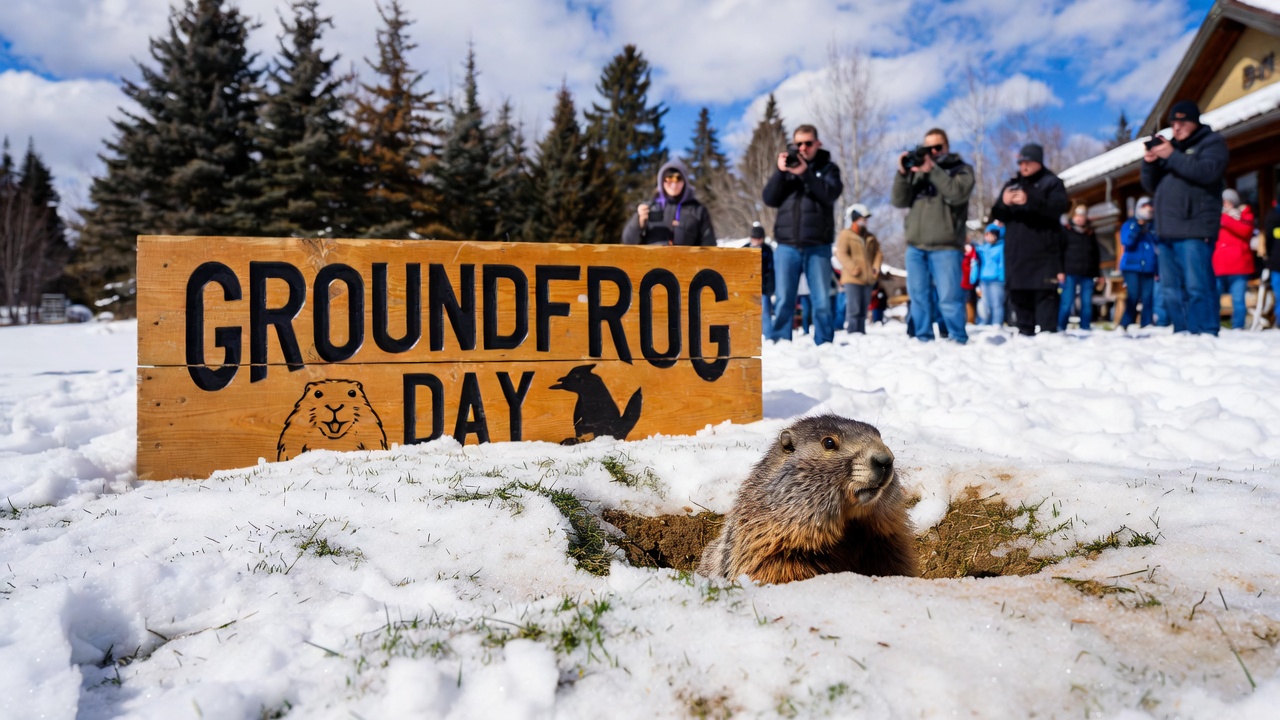
Every February 2, North America turns its attention to a groundhog and its shadow. Groundhog Day is the folk tradition that says if the groundhog sees its shadow, winter will last six more weeks; if it does not, spring will come early. In 2026 it falls on Monday, February 2.
This guide explains why we celebrate Groundhog Day: where the custom came from, how it works, the role of Punxsutawney Phil, and why it still draws crowds and cameras each year.
Introduction: The Curious Appeal of Groundhog Day
Every February 2nd, millions of Americans turn their attention to a small Pennsylvania town where a groundhog named Phil emerges from his burrow to deliver a meteorological verdict. It’s a peculiar spectacle, men in top hats consulting a rodent about the weather, and yet Groundhog Day endures as one of America’s most beloved quirky holidays. But why? What compels us to gather around a groundhog’s den in the dead of winter, hoping for an early spring?
The answer lies not in the accuracy of Phil’s predictions (spoiler: they’re not great), but in something far more profound, a blend of ancient traditions, immigrant customs, agricultural anxieties, and the universal human longing for winter’s end. Let’s burrow deep into this fascinating holiday.
Quick Facts About Groundhog Day:
Fact
Detail
Date
February 2nd every year
Location of main celebration
Gobbler’s Knob, Punxsutawney, Pennsylvania
First official celebration
1887
Most famous groundhog
Punxsutawney Phil
Prediction accuracy
Approximately 39%
Annual visitors to Punxsutawney
15,000-40,000+
Countries that celebrate
USA, Canada
What Is the History and Origin of Groundhog Day in America?
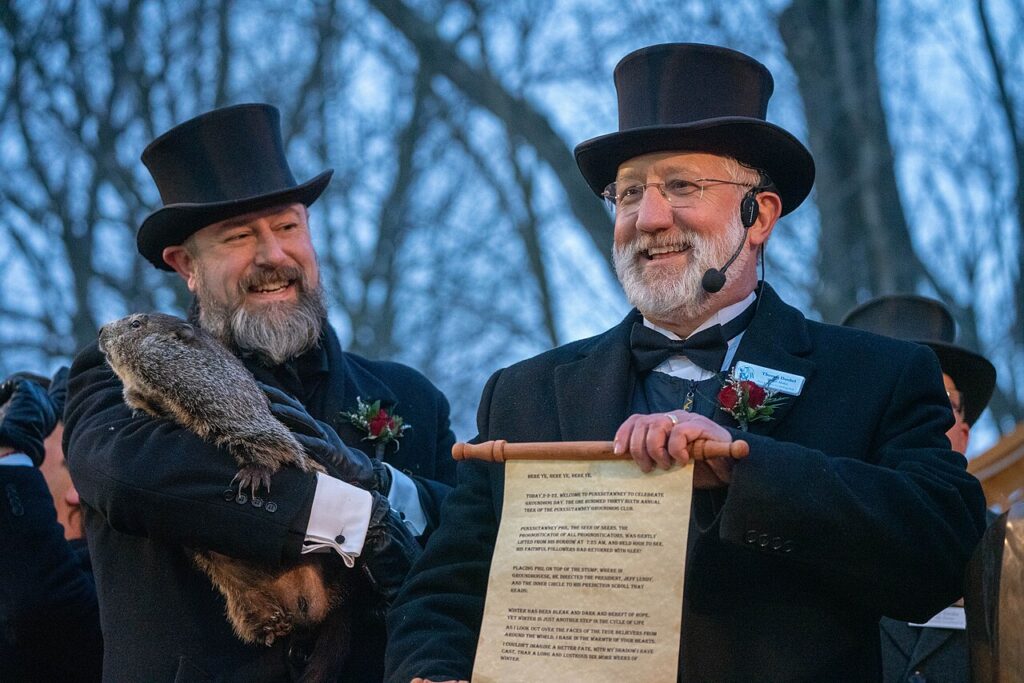
Groundhog Day as we know it today was born in the hills of western Pennsylvania, but its conception occurred centuries earlier and an ocean away. The holiday’s American debut is traditionally dated to February 2, 1887, when a group of groundhog hunters from Punxsutawney, Pennsylvania, calling themselves the Punxsutawney Groundhog Club, trekked to a site called Gobbler’s Knob to consult their local woodchuck about the coming weather.
The Punxsutawney Spirit newspaper declared Phil “the official weather-predicting groundhog” that year, and a tradition was codified. But these Pennsylvania German settlers weren’t inventing something new, they were adapting something very old.
Complete Timeline of Groundhog Day History
Year
Key Milestone
Significance
~500 BCE
Celtic Imbolc celebrations
Ancient origins of February weather divination
350 CE
Candlemas established
Christian adaptation of pagan traditions
1600s-1700s
German immigration to Pennsylvania
Badger Day customs arrive in America
1841
First known American reference
Diary entry mentions groundhog weather prediction
1886
Punxsutawney Groundhog Club formed
Organization that would formalize the tradition
1887
First official Groundhog Day
Gobbler’s Knob ceremony established
1899
Phil given official name
Groundhog named after King Philip
1966
First Groundhog Day festival
Multi-day celebration begins
1993
Groundhog Day film released
Holiday achieves national prominence
2001
Pennsylvania declares official holiday
State recognition of cultural significance
2020
Record attendance
Over 40,000 visitors at Gobbler’s Knob
The Pennsylvania Germans (often mistakenly called “Pennsylvania Dutch”) brought with them a rich tradition of weather folklore, animal prognostication, and calendar customs tied to the agricultural cycle. In their homeland, the badger or bear served as the seasonal prophet. In America, lacking badgers, they found a suitable substitute in the abundant groundhog, Marmota monax, a creature whose hibernation patterns made it a natural candidate for the role.
How Does the Ancient Celtic Festival of Imbolc Connect to Groundhog Day?
To truly understand Groundhog Day, we must travel back nearly two millennia to the Celtic festival of Imbolc (pronounced “IM-bulk” or “ih-MOLG”), celebrated around February 1st-2nd. Imbolc marked the midpoint between the winter solstice and the spring equinox, a liminal moment when the ancient Celts believed the veil between seasons grew thin.
Imbolc was sacred to Brigid, the goddess of fire, poetry, and healing, who later became syncretized with the Christian Saint Brigid of Kildare. The festival celebrated the first stirrings of spring: ewes beginning to lactate (the name “Imbolc” likely derives from i mbolg, meaning “in the belly,” referring to pregnant ewes), the lengthening days, and the promise of agricultural renewal.
Core Elements of Imbolc That Echo in Groundhog Day
Imbolc Element
Groundhog Day Parallel
Significance
Weather divination
Shadow prediction
Forecasting remaining winter
Animal omens
Groundhog emergence
Creature behavior as prophecy
Shadow/light symbolism
Shadow = more winter
Sunny day paradoxically negative
Threshold celebration
February 2nd timing
Marking seasonal transition
Brigid’s fire
Candlemas candles
Light symbolism persists
Community gathering
Gobbler’s Knob ceremony
Collective ritual observance
Additional Imbolc traditions that influenced Groundhog Day:
Weather divination: The Celts closely observed weather patterns on Imbolc, believing the day’s conditions predicted the coming season
Animal omens: Serpents and other creatures emerging from the earth were seen as prophetic signs
The shadow motif: Fair weather (which creates shadows) was paradoxically seen as a bad omen, suggesting winter’s grip remained strong
Threshold celebration: Marking the transition between seasons with communal ritual
The shadow superstition is particularly important. In Celtic tradition, a bright Imbolc day, when the Cailleach (the divine hag of winter) could easily gather firewood, meant she intended to extend winter’s reign. A gloomy day suggested she was asleep and spring would come soon. This counterintuitive logic, sunny equals bad news, cloudy equals good, survives intact in Groundhog Day tradition.
What Is the Connection Between Candlemas and Groundhog Day Traditions?
When Christianity spread through Celtic and Germanic Europe, the Church employed a familiar strategy: rather than eradicating pagan festivals, it Christianized them. Imbolc became Candlemas, celebrated on February 2nd to commemorate the presentation of Jesus at the Temple and the purification of the Virgin Mary, forty days after Christmas.
Candlemas became one of the most important dates in the medieval Christian calendar. Churches blessed candles for the coming year, and the day’s weather was scrutinized with an almost obsessive intensity. A medieval English rhyme captures the prevailing wisdom:
If Candlemas be fair and bright,Winter has another flight.If Candlemas brings clouds and rain,Winter will not come again.
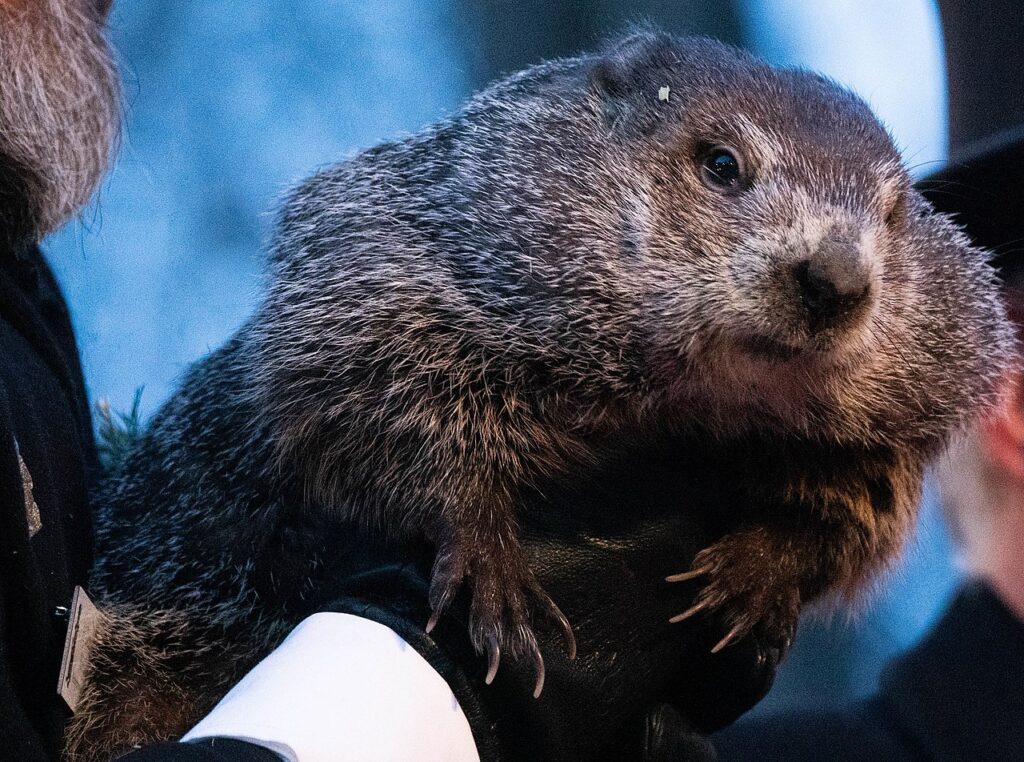
Photo: Anthony Quintano from Mount Laurel, United States / Wikimedia Commons (CC BY 2.0)
This proverb, with regional variations found across Europe from Scotland to Serbia, preserves the same paradoxical logic as its Celtic predecessor and anticipates the groundhog’s shadow perfectly.
European Weather Prediction Traditions by Country
Country
Tradition Name
Prognosticating Animal
Date Observed
Germany
Dachstag (Badger Day)
Badger
February 2nd
France
Chandeleur
Bear
February 2nd
United Kingdom
Candlemas
Hedgehog
February 2nd
Scotland
Candlemas
No animal (weather only)
February 2nd
Ireland
St. Brigid’s Day/Imbolc
Serpent
February 1st
Alpine Regions
Bear Day
Bear
February 2nd
Serbia
Sretenje
No animal
February 15th
Poland
Matki Boskiej Gromnicznej
No animal
February 2nd
German immigrants brought “Dachstag” or Badger Day customs with them to Pennsylvania. In Germany, a badger emerging on Candlemas and seeing its shadow meant six more weeks of winter. The logic was agricultural and practical: clear skies in early February often preceded late-winter cold snaps that could devastate early-planted crops. Farmers learned to distrust false springs.
Why Did Pennsylvania Germans Choose the Groundhog as a Weather Predictor?
The substitution of the groundhog for the European badger represents a fascinating case of cultural adaptation, what folklorists call “localization” or “oikotypification.” When German settlers arrived in Pennsylvania in the 17th and 18th centuries, they found no badgers. But they did find an abundance of groundhogs, which shared several key characteristics with their traditional weather prophet:
Biological Comparison: European Badger vs. American Groundhog
Characteristic
European Badger
American Groundhog
Scientific name
Meles meles
Marmota monax
Hibernation
Partial (torpor)
True hibernation
Emergence timing
Variable
Early February
Burrowing behavior
Extensive
Extensive
Geographic range
Europe
Eastern North America
Visibility
Nocturnal, shy
Diurnal, observable
Size
15-30 lbs
5-14 lbs
Biological similarities that made the groundhog an ideal substitute:
Hibernation patterns: Groundhogs are true hibernators, entering a deep winter sleep and emerging in early February, perfectly timed for Candlemas
Burrowing behavior: Like badgers, groundhogs create elaborate underground dens, making their emergence symbolically powerful
Visibility: Groundhogs were common throughout Pennsylvania farmland and easily observable
Size and temperament: Large enough to be impressive, docile enough to be handled
The Pennsylvania Germans also brought a rich tradition of Grundsaudaag (Groundhog Day in Pennsylvania Dutch dialect), integrating the holiday into their distinctive cultural calendar alongside other customs like Belsnickeling at Christmas and elaborate Easter traditions.
Early celebrations were informal, farmers noting groundhog activity, hunters gathering to observe the creatures, communities sharing weather predictions. But the formalization in Punxsutawney created a focal point, transforming scattered folk practice into a coherent public celebration.
How Accurate Are Groundhog Day Predictions and What Does Science Say?
Let’s address the question that skeptics inevitably raise: does this actually work?
The short answer is no. Studies of Punxsutawney Phil’s predictions show an accuracy rate of approximately 39%, worse than a coin flip. The Stormfax Almanac, which has tracked Phil’s predictions since 1887, found no statistically significant correlation between the groundhog’s verdict and actual weather patterns in the subsequent six weeks.
Groundhog Prediction Accuracy by Source
Analysis Source
Years Analyzed
Accuracy Rate
Methodology
Stormfax Almanac
1887-present
~39%
Historical comparison
National Climatic Data Center
1988-2023
36%
Temperature analysis
Canadian Groundhog Study
1999-2023
37%
Multi-groundhog comparison
NOAA Analysis
Multiple decades
No correlation
Statistical modeling
Random chance baseline
N/A
50%
Probability theory
Punxsutawney Phil’s Prediction History
Prediction
Total Count (1887-2024)
Percentage
Saw shadow (6 more weeks of winter)
~107 times
~78%
No shadow (early spring)
~20 times
~15%
No record
~10 times
~7%
But here’s what’s fascinating from a folkloristic perspective: the accuracy doesn’t matter. Groundhog Day has never truly been about meteorological prediction, it’s about something far more essential to the human experience.
What Groundhog Day actually provides:
A psychological midpoint: February 2nd falls roughly halfway through winter, offering a moment to acknowledge hardship while anticipating relief
Communal ritual: Shared celebration creates social bonds during an isolating season
Narrative structure: The “will he or won’t he” drama provides satisfying storytelling
Connection to nature: In an increasingly urbanized world, attending to an animal’s behavior reconnects us to ecological rhythms
Sanctioned silliness: The holiday gives permission for absurdist fun during a dreary time
The tradition persists not despite its inaccuracy but independent of it. We’re not really asking Phil about the weather; we’re asking for permission to hope.
What Indigenous North American Traditions Involve Animal Weather Prediction?
While Groundhog Day is primarily a European-American tradition, it’s worth noting that indigenous North American cultures developed their own sophisticated systems of phenological observation, reading natural signs to understand seasonal patterns.
Many Native American nations observed animal behavior as part of complex environmental knowledge systems, though their approaches differed fundamentally from European prognostication traditions.
Indigenous Animal Observation Practices Across North America
Nation/Region
Animal Observed
Purpose
Key Difference from European Tradition
Eastern Woodlands
Woolly bear caterpillar
Winter severity indicator
Part of holistic environmental assessment
Great Plains
Buffalo behavior
Weather and migration patterns
Integrated with hunting practices
Pacific Northwest
Salmon runs
Seasonal timing
Connected to ceremonial calendar
Southwest
Bird migration
Planting timing
Agricultural planning tool
Northern Nations
Bear emergence
Spring arrival
Part of broader ecological awareness
Great Lakes
Frog calls
Planting signals
Community-verified observations
Examples of indigenous animal observation practices:
Woolly bear caterpillar readings: Various Eastern Woodlands peoples observed caterpillar coloration as one of many environmental indicators
Bear emergence: Some Northern nations noted bear activity as part of broader seasonal awareness
Insect and amphibian activity: The appearance of certain creatures signaled appropriate times for planting, harvesting, or moving
It’s crucial to note that indigenous environmental knowledge differs from European fortune-telling traditions in important ways. Native American observations were typically part of holistic ecological understanding rather than isolated predictions, integrated with detailed knowledge of local conditions, practical rather than superstitious, and refined over generations of careful observation.
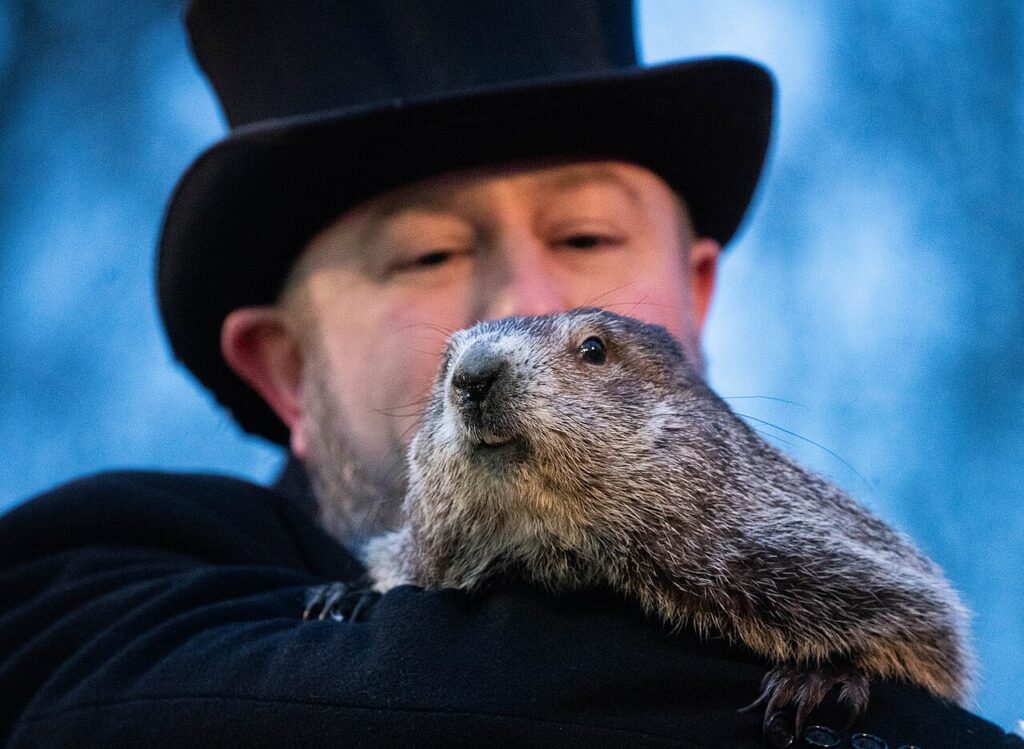
Photo: Anthony Quintano from Mount Laurel, United States / Wikimedia Commons (CC BY 2.0)
The comparison illuminates something important: humans everywhere have sought to read nature’s signs. The specific forms these practices take, whether a Pennsylvania groundhog or a Lakota star calendar, reflect cultural values and environmental contexts, but the underlying impulse is universal.
How Did the 1993 Film Groundhog Day Transform the Holiday’s Cultural Meaning?
No discussion of Groundhog Day would be complete without acknowledging the seismic impact of Harold Ramis’s 1993 film Groundhog Day, starring Bill Murray as Phil Connors, a cynical weatherman trapped in a time loop, reliving February 2nd in Punxsutawney indefinitely.
The film transformed the holiday’s cultural meaning in several profound ways:
Before the film: Groundhog Day was a charming regional curiosity, known primarily in Pennsylvania and among Americans with Germanic heritage.
After the film: The holiday became a national phenomenon and, more remarkably, a philosophical and spiritual touchstone.
Groundhog Day Film: Key Facts and Impact
Category
Detail
Release date
February 12, 1993
Director
Harold Ramis
Stars
Bill Murray, Andie MacDowell
Box office
$105 million worldwide
Rotten Tomatoes score
96%
Time loop duration (estimated)
10-10,000+ years (debated)
Library of Congress selection
2006 (National Film Registry)
Impact on Punxsutawney tourism
300%+ increase
Philosophical and Religious Parallels in the Film
Tradition
Parallel Concept
How the Film Illustrates It
Buddhism
Samsara (cycle of rebirth)
Phil repeats days until enlightened
Christianity
Purgatory, redemption
Suffering leads to moral transformation
Judaism
Teshuvah (repentance)
Daily opportunities for improvement
Existentialism
Creating meaning
Phil finds purpose despite absurdity
Hinduism
Karma cycle
Actions have consequences across cycles
Stoicism
Focus on controllables
Phil masters himself, not circumstances
Secular self-help
Habit formation
10,000 hours of practice concept
Religious leaders, philosophers, and psychologists have all claimed the film as illustrating their principles. The phrase “groundhog day” entered common parlance as a metaphor for any repetitive, seemingly inescapable situation.
Attendance at Gobbler’s Knob increased dramatically following the film’s release. What had been a gathering of hundreds became a pilgrimage of tens of thousands. The film didn’t just publicize the holiday, it added layers of meaning that transformed casual observers into participants in something that felt meaningful.
What Makes Groundhog Day Celebrations Unique in American Folk Culture?
Groundhog Day occupies a peculiar niche in American folk culture, it’s simultaneously earnest and ironic, traditional and absurd, local and national. This duality is key to its endurance.
Characteristics that make Groundhog Day distinctive:
Participatory absurdism: Unlike holidays that demand solemn observance, Groundhog Day invites playful engagement with its own ridiculousness
Regional anchor with national reach: The Punxsutawney celebration provides an authentic “folk” center while the holiday radiates outward
Low stakes: No gifts to buy, no family obligations to navigate, no religious requirements, just pure, optional fun
Media-friendly spectacle: The ceremony is perfectly designed for news coverage, ensuring annual visibility
Customizable: Communities across North America have created their own groundhog mascots, enabling local ownership
Famous Groundhogs Across North America
Groundhog Name
Location
Notable Feature
Years Active
Punxsutawney Phil
Punxsutawney, PA
The original; “immortal” via magic elixir
1887-present
Staten Island Chuck
New York City, NY
Has bitten Mayor Bloomberg
1981-present
Wiarton Willie
Wiarton, Ontario
Albino groundhog; Canadian celebrity
1956-present
General Beauregard Lee
Jackson, GA
Has honorary doctorate from UGA
1981-present
Buckeye Chuck
Marion, OH
Ohio’s official groundhog
1979-present
Birmingham Bill
Birmingham, AL
Replaced after predecessor “escaped”
2012-present
Chattanooga Chuck
Chattanooga, TN
Tennessee’s representative
1998-present
Dunkirk Dave
Dunkirk, NY
Claims higher accuracy than Phil
1960-present
French Creek Freddie
West Virginia
Claimed higher accuracy rate
1978-present
Shubenacadie Sam
Nova Scotia
First to predict (Atlantic Time)
1999-present
The proliferation of regional groundhogs demonstrates the holiday’s vitality. Rather than diluting the tradition, these local mascots extend it, creating a network of observances that strengthens the holiday’s overall cultural presence.
When Is Groundhog Day 2025 and What Time Does the Ceremony Start?
For those planning to celebrate, here are the essential details for Groundhog Day 2025:
Groundhog Day 2025 Schedule
Event
Date
Time (EST)
Location
Groundhog Day 2025
Sunday, February 2, 2025
All day
Nationwide
Gobbler’s Knob ceremony
February 2, 2025
~7:25 AM
Punxsutawney, PA
Pre-dawn entertainment
February 2, 2025
3:00 AM – 7:00 AM
Gobbler’s Knob
Phil’s prediction announcement
February 2, 2025
Approximately 7:25 AM
Gobbler’s Knob
Staten Island Chuck ceremony
February 2, 2025
7:30 AM
Staten Island Zoo, NY
Wiarton Willie ceremony
February 2, 2025
8:00 AM
Wiarton, Ontario
Upcoming Groundhog Day Dates
Year
Date
Day of Week
2025
February 2
Sunday
2026
February 2
Monday
2027
February 2
Tuesday
2028
February 2
Wednesday
2029
February 2
Friday
2030
February 2
Saturday
How to watch the ceremony:
In person: Arrive at Gobbler’s Knob by 3:00 AM for best viewing
Live stream: Visit the official Punxsutawney Groundhog Club website
Television: Major news networks typically carry live coverage
Social media: Follow @GroundhogClub on Twitter/X for updates
How to Visit Punxsutawney Pennsylvania for Groundhog Day Celebrations
Planning a pilgrimage to the Groundhog Day capital of the world? Here’s your complete guide:
Getting to Punxsutawney
Departure City
Distance
Drive Time
Nearest Airport
Pittsburgh, PA
84 miles
1.5 hours
Pittsburgh International (PIT)
State College, PA
70 miles
1.5 hours
University Park (SCE)
Cleveland, OH
150 miles
2.5 hours
Cleveland Hopkins (CLE)
Philadelphia, PA
260 miles
4.5 hours
Philadelphia International (PHL)
New York City, NY
340 miles
5.5 hours
Multiple options
Punxsutawney Groundhog Day Festival Events
Event
Date
Description
Groundhog Day Eve Celebration
February 1
Downtown festivities, live music
Inner Circle Banquet
February 1
Formal dinner (ticket required)
Gobbler’s Knob Ceremony
February 2
Main prediction event
Downtown Celebration
February 2
Continued festivities post-prediction
Phil’s Burrow Visit
Year-round
Visit Phil at the library
Essential tips for visitors:
Book accommodations early: Hotels within 50 miles sell out months in advance
Dress warmly: February temperatures average 15-30°F (-9 to -1°C)
Arrive very early: Gates open at 3:00 AM; parking fills quickly
Consider the festival: Multi-day events offer more than just the ceremony
Visit Phil year-round: Phil lives at the Punxsutawney Memorial Library and can be visited anytime
What Happens If the Groundhog Sees His Shadow? The Tradition Explained
Understanding the groundhog’s prediction is central to the holiday. Here’s a complete breakdown:
Photo: Anthony Quintano / Wikimedia Commons (CC BY 2.0)
The Shadow Prediction Explained
Scenario
Weather Condition
Prediction
Folk Logic
Groundhog sees shadow
Sunny, clear day
6 more weeks of winter
Clear weather = cold snap coming
Groundhog doesn’t see shadow
Cloudy, overcast day
Early spring
Clouds = winter losing strength
Historical Prediction Results (1887-2024)
Outcome
Number of Times
Percentage
Shadow seen (more winter)
~107
~78%
No shadow (early spring)
~20
~15%
No record available
~10
~7%
The counterintuitive logic explained:
The prediction seems backward at first, why would a sunny day mean more winter? The reasoning traces back to agricultural wisdom:
Clear February skies often preceded Arctic cold fronts
Farmers observed that “false springs” were followed by killing frosts
Cloudy conditions typically indicated a weather pattern change
The groundhog’s fear of its shadow symbolizes nature’s hesitation
This folk wisdom, while not scientifically validated, reflects generations of weather observation in agricultural communities.
Fun Groundhog Day Activities and Crafts for Kids and Families
Groundhog Day offers wonderful opportunities for family-friendly educational activities:
Groundhog Day Crafts for Kids
Craft
Age Range
Materials Needed
Time Required
Paper plate groundhog
3-6 years
Paper plate, brown paint, googly eyes
20 minutes
Shadow puppet theater
5-10 years
Cardstock, popsicle sticks, flashlight
30 minutes
Groundhog burrow diorama
7-12 years
Shoebox, craft supplies, toy groundhog
45 minutes
Weather prediction journal
6-12 years
Notebook, thermometer, colored pencils
Ongoing
Pop-up groundhog card
5-10 years
Construction paper, scissors, glue
25 minutes
Educational Groundhog Day Activities
Activity
Learning Focus
Description
Shadow science experiment
Physics
Explore how shadows form and change
Hibernation research project
Biology
Learn about animal hibernation patterns
Weather prediction tracking
Meteorology
Compare Phil’s prediction to actual weather
Groundhog habitat study
Ecology
Research groundhog behavior and habitats
Pennsylvania Dutch culture lesson
History
Explore immigrant traditions
Film analysis (older kids)
Philosophy
Discuss themes in Groundhog Day movie
Shadow experiment for kids:
On Groundhog Day morning, go outside at sunrise
Mark where your shadow falls with chalk
Return every hour and mark the new shadow position
Discuss: Why do shadows change? When are they longest/shortest?
Connect to the groundhog tradition: Would you see your shadow today?
Traditional Groundhog Day Food and Recipes to Celebrate February 2nd
While Groundhog Day doesn’t have the elaborate food traditions of Thanksgiving, several culinary customs have emerged:
Traditional Groundhog Day Foods
Food
Origin
Significance
Groundhog-shaped cookies
Modern American
Festive celebration treat
Punxsutawney Punch
Punxsutawney tradition
Warm punch for cold ceremony mornings
Pennsylvania Dutch dishes
Historical
Honoring the holiday’s ethnic roots
Breakfast casseroles
Practical
Easy to serve before early ceremonies
Chocolate groundhog candy
Commercial
Kid-friendly celebration
Pennsylvania Dutch Recipes Perfect for Groundhog Day
Dish
Description
Why It Fits
Shoofly Pie
Molasses-based pie
Traditional PA Dutch dessert
Scrapple
Pork and cornmeal dish
Hearty winter breakfast
Chicken Pot Pie
Noodle-based stew
Warming comfort food
Fastnachts
Fried dough pastries
Traditional February treat
Apple Butter
Spiced apple spread
Pantry staple for winter
Easy Groundhog Day Breakfast Menu
For early risers watching the ceremony:
Course
Suggestion
Prep Time
Main dish
Make-ahead breakfast casserole
Prep night before
Side
Fresh fruit platter
10 minutes
Drink
Hot chocolate or coffee
5 minutes
Treat
Groundhog-shaped pancakes
20 minutes
For kids
Shadow cookies
Prep night before
Fascinating Groundhog Facts: How Long Do Groundhogs Live and More
Understanding the real animal behind the legend adds depth to the celebration:
Groundhog Biology Facts
Characteristic
Detail
Scientific name
Marmota monax
Other names
Woodchuck, whistle pig, land beaver
Average weight
5-14 pounds (2-6 kg)
Length
16-26 inches (41-66 cm)
Lifespan (wild)
3-6 years
Lifespan (captivity)
Up to 14 years
Hibernation period
October to February
Body temperature during hibernation
As low as 35°F (2°C)
Heart rate during hibernation
4-10 beats per minute
Groundhog Behavior and Habitat
Aspect
Information
Habitat
Eastern North America, meadows, forest edges
Burrow depth
2-6 feet underground
Burrow length
Up to 66 feet of tunnels
Diet
Grasses, clover, berries, agricultural crops
Predators
Foxes, coyotes, hawks, dogs
Mating season
March-April
Litter size
2-6 pups
Swimming ability
Excellent swimmers
Climbing ability
Can climb trees when threatened
Fun groundhog facts:
Groundhogs are excellent swimmers and climbers, despite their chubby appearance
They can whistle, hence the nickname “whistle pig”
One groundhog can move 35 cubic feet of dirt creating a burrow
They’re the largest members of the squirrel family in their range
Punxsutawney Phil supposedly drinks “groundhog punch” to achieve immortality (according to legend)
How Old Is Punxsutawney Phil?
According to the Groundhog Club’s official position, Phil is immortal, the same groundhog since 1887, sustained by a magical “elixir of life” administered each summer. In reality, groundhogs live 6-8 years in captivity, so there have been many Phils over the decades.
Best Groundhog Day Movies and TV Episodes to Watch
Celebrate the holiday with entertainment that honors the tradition:
Movies About Groundhog Day and Time Loops
Title
Year
Type
Platform
Rating
Groundhog Day
1993
Comedy
Various streaming
PG
Palm Springs
2020
Comedy
Hulu
R
Happy Death Day
2017
Horror-comedy
Various streaming
PG-13
Edge of Tomorrow
2014
Sci-fi action
Various streaming
PG-13
Russian Doll (series)
2019
Drama-comedy
Netflix
TV-MA
Before I Fall
2017
Drama
Various streaming
PG-13
TV Episodes Featuring Groundhog Day
Show
Episode
Season/Episode
Description
The Simpsons
“Groundhog Day”
Various parodies
Multiple references
Supernatural
“Mystery Spot”
S3E11
Time loop episode
Stargate SG-1
“Window of Opportunity”
S4E6
Classic time loop
Buffy the Vampire Slayer
“Life Serial”
S6E5
Time loop segment
Parks and Recreation
“Groundhog Day”
S2E1
Punxsutawney parody
Brooklyn Nine-Nine
Multiple
Various
Groundhog Day references
Why Do We Still Need Seasonal Rituals Like Groundhog Day Today?
In an age of satellite weather prediction and climate-controlled environments, why does Groundhog Day persist? The answer reveals something essential about human psychology and cultural need.
Psychological Functions of Seasonal Rituals
Function
How Groundhog Day Fulfills It
Modern Relevance
Temporal orientation
Marks winter’s midpoint
Combats digital time blur
Hope cultivation
Promises winter’s eventual end
Mental health benefits
Community formation
Shared national experience
Counters social isolation
Nature connection
Attention to animal behavior
Antidote to urbanization
Playful ritual
Sanctioned silliness
Stress relief
Cultural continuity
Links to ancestral traditions
Identity and belonging
Psychological functions of seasonal rituals:
Temporal orientation: Rituals mark time, helping us navigate the year’s passage with intention rather than passive drift
Hope management: Groundhog Day arrives when winter feels interminable, offering a structured moment to process frustration and cultivate optimism
Community formation: Shared rituals create belonging, even among strangers who’ve never met but celebrate together in spirit
Connection to place: In a mobile, rootless society, holidays tied to specific locations offer vicarious sense of groundedness
Ecological awareness: Attending to an animal’s emergence reconnects us, however symbolically, to natural rhythms we’ve largely abandoned
The holiday also serves what anthropologist Victor Turner called a “liminal” function, creating a threshold space where normal rules are suspended. On Groundhog Day, we collectively agree to pretend that a rodent’s shadow matters. This shared pretense, this willing suspension of disbelief, is itself valuable, exercising our capacity for imagination and play.
Conclusion: What Groundhog Day Teaches Us About Folk Traditions and Ourselves
Groundhog Day is a palimpsest, a document written over many times, with earlier texts visible beneath later ones. Celtic fire festivals, Christian holy days, German badger lore, Pennsylvania Dutch farming customs, American media spectacle, and Hollywood philosophy all layer atop one another, creating something richer than any single source.
Photo: Anthony Quintano from Mount Laurel, United States / Wikimedia Commons (CC BY 2.0)
When we watch Phil emerge on February 2nd, we participate in a tradition stretching back millennia, even if we don’t consciously recognize it. We join countless generations who have stood at winter’s midpoint, scanning the horizon for signs of spring, hoping against hope that warmth will return.
The groundhog will see his shadow or he won’t. Winter will end when it ends, regardless of rodent prophecy. But we’ll keep watching, keep gathering, keep hoping. That’s what humans do. And in that watching, gathering, and hoping, we find something more valuable than accurate weather prediction: we find each other, and we find our place in the long human story of marking time’s passage with meaning, ritual, and just a touch of absurdity.
See you at Gobbler’s Knob.
More Groundhog Day Guides
Explore the rest of our Groundhog Day coverage, from its history to activities and forecasts:
Frequently Asked Questions About Groundhog Day (FAQ)
General Questions
Q: Why do we celebrate Groundhog Day on February 2nd?
A: February 2nd marks the midpoint between the winter solstice and spring equinox. This date was significant in Celtic (Imbolc) and Christian (Candlemas) traditions as a time to assess winter’s remaining duration. German immigrants brought animal-based weather prediction customs to Pennsylvania, where the groundhog replaced the European badger.
Q: Is Groundhog Day a federal holiday in the United States?
A: No, Groundhog Day is not a federal holiday. It is an informal observance. However, Pennsylvania has recognized it as an official state holiday since 2001.
Q: How old is Punxsutawney Phil?
A: According to the Groundhog Club’s lore, Phil is immortal, the same groundhog since 1887, kept alive by a magical “elixir of life.” In reality, groundhogs typically live 6-14 years in captivity, so there have been numerous Phils throughout history.
Prediction Questions
Q: What does it mean if the groundhog sees his shadow?
A: If the groundhog sees his shadow (indicating a sunny day), tradition says there will be six more weeks of winter. If he doesn’t see his shadow (cloudy day), spring will arrive early.
Q: How accurate are Punxsutawney Phil’s predictions?
A: Studies show Phil’s predictions are accurate approximately 39% of the time, less accurate than random chance (50%). The tradition’s value lies in its cultural significance rather than meteorological reliability.
Q: Has the groundhog ever not made a prediction?
A: In rare instances, weather conditions or other factors have complicated the ceremony, but the Inner Circle always announces a prediction. The show goes on regardless of circumstances.
Photo: Anthony Quintano from Mount Laurel, United States / Wikimedia Commons (CC BY 2.0)
Visiting Punxsutawney
Q: How many people attend the Groundhog Day ceremony at Gobbler’s Knob?
A: Annual attendance ranges from 15,000 to over 40,000 visitors, depending on weather conditions and the day of the week. The 1993 film significantly increased attendance.
Q: What time does the Groundhog Day ceremony start?
A: The official prediction occurs around 7:25 AM Eastern Time, but festivities begin at 3:00 AM with entertainment and activities at Gobbler’s Knob.
Q: Can I visit Punxsutawney Phil year-round?
A: Yes! Phil and his companion groundhogs live at the Punxsutawney Memorial Library, where visitors can see them throughout the year.
Historical Questions
Q: What is the connection between Groundhog Day and Candlemas?
A: Candlemas is a Christian holiday celebrated on February 2nd that incorporated older pagan traditions of weather prediction. The medieval proverb “If Candlemas be fair and bright, winter has another flight” directly parallels the groundhog shadow tradition.
Q: What is Imbolc and how does it relate to Groundhog Day?
A: Imbolc is an ancient Celtic festival marking winter’s midpoint, celebrated around February 1st-2nd. It involved weather divination and attention to animal behavior, traditions that evolved through Candlemas into modern Groundhog Day.
Q: Why did German immigrants use a groundhog instead of a badger?
A: European immigrants brought “Badger Day” (Dachstag) traditions to Pennsylvania, but badgers weren’t native to the region. The groundhog, with similar burrowing and hibernation habits, became the American substitute.
Glossary of Groundhog Day Terms
Term
Definition
Candlemas
Christian feast day on February 2nd commemorating the presentation of Jesus at the Temple; incorporates weather prediction traditions
Dachstag
German “Badger Day”; the European precursor to American Groundhog Day
Gobbler’s Knob
The rural hilltop location outside Punxsutawney where the official ceremony takes place
Groundhog
A large rodent (Marmota monax) also known as a woodchuck or whistle pig
Groundhog Club Inner Circle
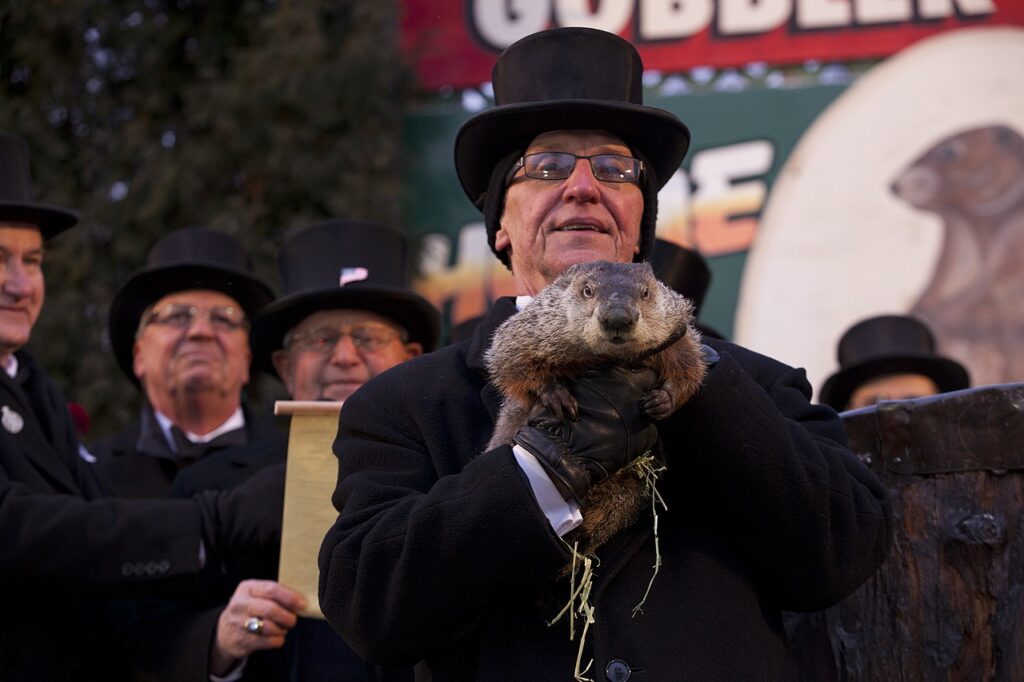
The organization of top-hatted men who conduct the official ceremony and “interpret” Phil’s prediction
Grundsaudaag
Pennsylvania Dutch (German) term for Groundhog Day
Imbolc
Ancient Celtic festival marking winter’s midpoint, celebrated around February 1st-2nd
Marmota monax
Scientific name for the groundhog species
Phenology
The study of cyclic and seasonal natural phenomena, especially in relation to climate
Prognostication
The act of making a prediction about future events
Punxsutawney
Borough in Jefferson County, Pennsylvania; the “Weather Capital of the World”
Punxsutawney Phil
The official weather-predicting groundhog of Punxsutawney, Pennsylvania
Shadow prediction
The tradition that a groundhog seeing its shadow indicates six more weeks of winter
Woodchuck
Alternative common name for the groundhog
Share This Article
Found this deep dive into Groundhog Day history helpful? Share it with fellow folklore enthusiasts!
Suggested social media caption: “Ever wondered why we let a groundhog predict the weather? The answer involves ancient Celtic festivals, German immigrants, and a 1993 Bill Murray movie. 🐿️ #GroundhogDay #AmericanFolklore #PunxsutawneyPhil”
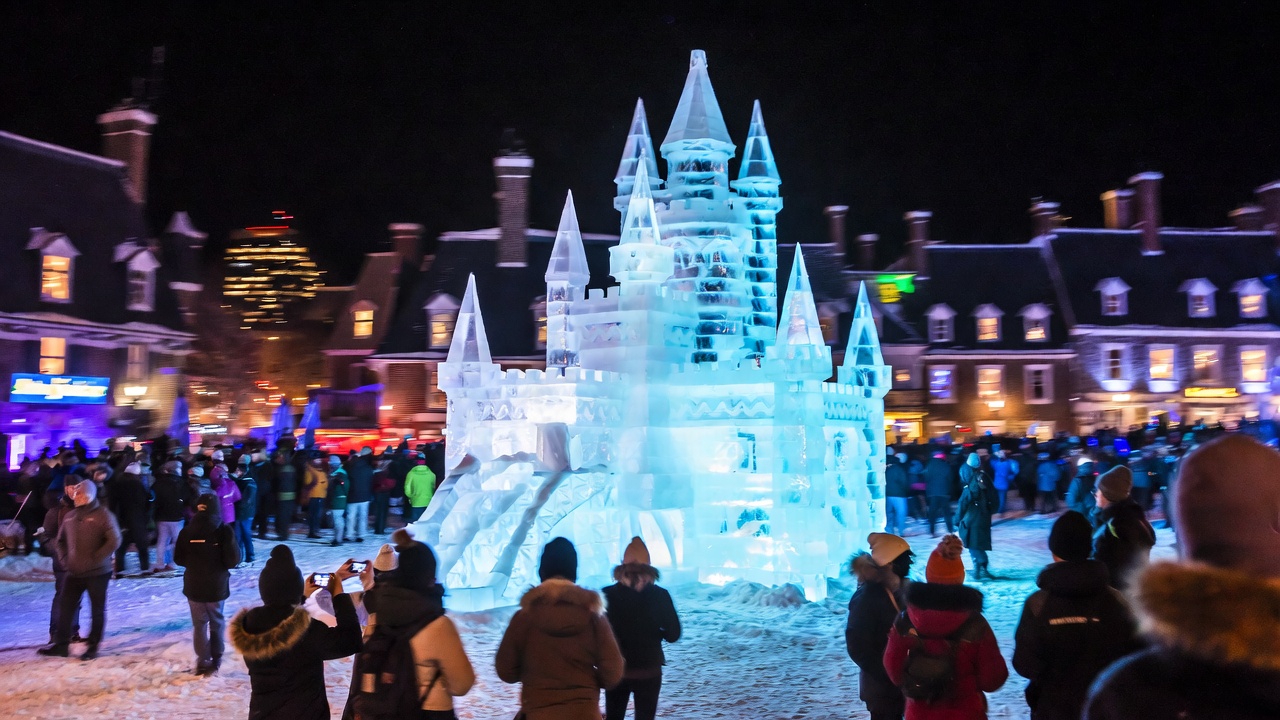
Entry to the Quebec Winter Carnival centres on the Bonhomme effigy, the small figure that acts as your pass to the events. This guide explains Quebec Winter Carnival tickets and the effigy for 2026: what the effigy is, how to get one, and what it gives you access to. What […]
The Quebec Winter Carnival is one of the most family-friendly winter festivals anywhere, with snow slides, sculptures, and Bonhomme himself. This guide covers the Quebec Winter Carnival with kids in 2026: the best family activities, practical tips, and how to keep everyone warm. What Is the Quebec Winter Carnival and […]
Family Day 2026 falls on Monday, February 16. That means a glorious three-day weekend stretching from Saturday, February 14 through Monday, February 16 — the perfect excuse to unplug, reconnect, and create memories that stick. Whether you are a lifelong Canadian or a newcomer still finding your footing in this […]