A complete guide to traditional Lunar New Year dishes and their symbolic meanings for the Year of the Snake
When red lanterns sway in the crisp winter air and families gather from near and far, the heart of Chinese New Year beats strongest around the dinner table. Food is more than sustenance during the Spring Festival (春节)—it is a language of blessings, a bridge between generations, and a carefully crafted message of hope for the year ahead.
The Chinese New Year reunion dinner, known as 年夜饭 (Nián Yè Fàn), represents the most important meal of the entire year. Every dish placed on the table carries deep cultural significance. The symbolism comes from homophones (words that sound alike), visual resemblance to auspicious objects, or long-standing folk traditions passed down through millennia.
As we prepare to welcome the Year of the Snake in 2026, understanding these culinary traditions becomes more meaningful than ever. The Snake embodies wisdom, elegance, and renewal—qualities reflected in many traditional dishes that grace Lunar New Year tables across China and Chinese communities worldwide.
This comprehensive guide explores 30 lucky Chinese New Year foods that promise wealth, prosperity, longevity, and happiness. Whether you are hosting your own celebration or simply curious about these rich traditions, you will discover the fascinating stories behind each dish and learn why these foods remain essential to the world’s largest annual human migration and celebration.
Why Food Symbolism Matters During Chinese New Year
The practice of eating symbolic foods during Chinese New Year traces back over 3,500 years to ancient agricultural traditions. Early celebrations centered on offerings to deities and ancestors, asking for bountiful harvests in the coming seasons. Over time, specific dishes became associated with particular blessings based on linguistic wordplay, visual resemblance, or historical legends.
Chinese culture places enormous emphasis on homophones—words that sound the same but carry different meanings. This linguistic feature creates layers of meaning in everyday conversation and becomes especially powerful during festival celebrations. A fish is never just a fish at the reunion dinner; it carries the weight of generations of hope for surplus and abundance.
The number eight (八, bā) plays a special role in Chinese New Year food traditions. This number sounds similar to the word for “prosperity” or “wealth” (发, fā), making it extremely auspicious. You will notice that many traditional recipes, arrangements, and serving sizes incorporate this lucky number.
| Symbolic Element | Meaning | Example Foods |
|---|---|---|
| Gold/Yellow color | Wealth and prosperity | Spring rolls, oranges, fried foods |
| Round shape | Unity and togetherness | Tang yuan, oranges, coins in dumplings |
| Whole presentation | Completeness and harmony | Whole fish, whole chicken |
| Long shape | Longevity | Noodles, certain vegetables |
| Red color | Good fortune and joy | Red bean paste, red dates |
Understanding these principles helps explain why certain foods appear on every Chinese New Year table, regardless of regional variations. Now let us explore the 30 essential lucky foods that can bring you wealth and prosperity.
Lucky Fish Dishes for Abundance and Surplus
1. Whole Steamed Fish (清蒸鱼)
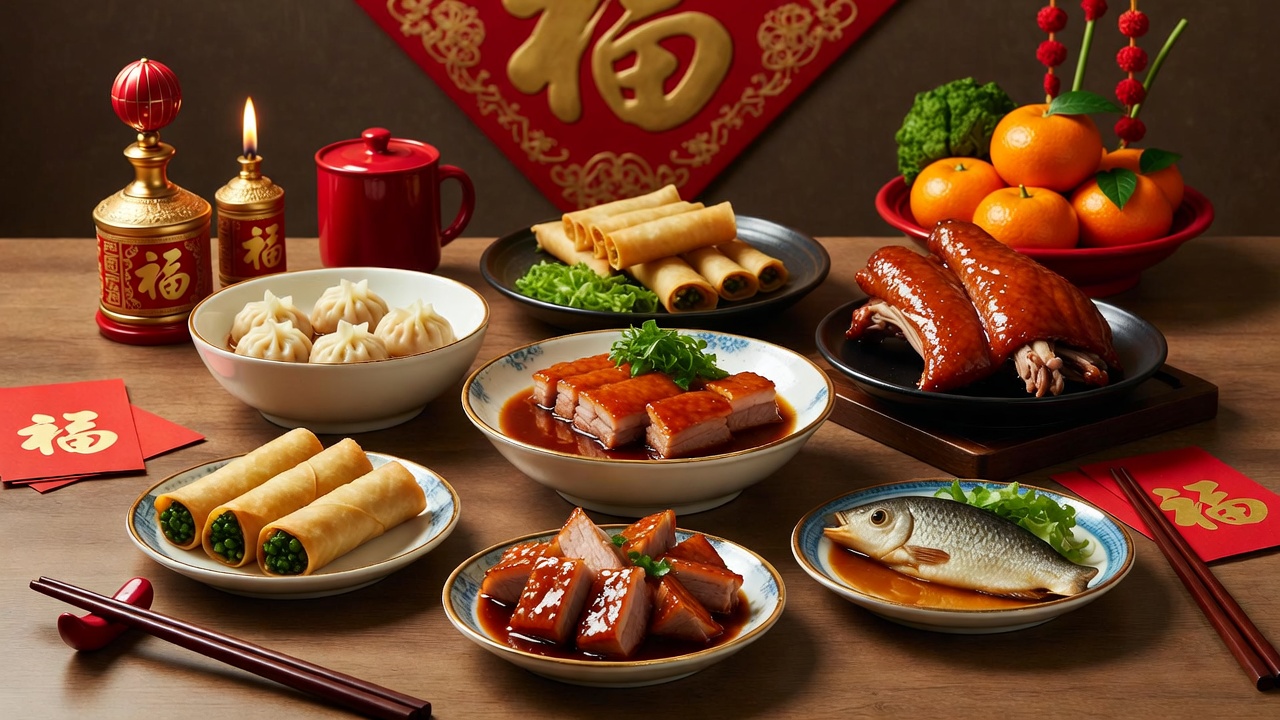
No Chinese New Year dinner is complete without a whole fish at the center of the table. The Chinese word for fish, 鱼 (yú), sounds identical to the word for “surplus” or “abundance” 余 (yú). This creates the popular blessing 年年有余 (Nián nián yǒu yú)—”May you have abundance year after year.”
The fish must be served whole, with head and tail intact. This presentation symbolizes a good beginning and a good ending. It also represents harmony and completeness within the family. The head should face the most senior or honored guest at the table as a sign of respect.
Important dining etiquette: In many families, particularly in southern China, diners eat only the middle section of the fish on New Year’s Eve. The head and tail remain untouched, carrying the blessing of surplus into the new year. Additionally, you should never flip the fish over after finishing one side. This action is considered extremely unlucky, as it symbolizes a boat capsizing. Instead, remove the bones and continue eating from the same side.
The most common preparation method is steaming, which preserves the delicate flavor while creating an elegant presentation. Julienned ginger and scallions top the fish, followed by a drizzle of soy-based sauce and sizzling hot oil.
2. Crucian Carp (鲫鱼, Jì Yú)
Among the various fish species, crucian carp holds special significance. The first character of its Chinese name sounds like 吉 (jí), meaning “good luck” or “auspiciousness.” Eating crucian carp is believed to bring extraordinary good fortune throughout the coming year.
3. Chinese Mud Carp (鲤鱼, Lǐ Yú)
The mud carp, also known as common carp, carries its own blessing. The first syllable of its name sounds like 礼 (lǐ), meaning “gifts.” Serving this fish expresses wishes for receiving blessings and presents. In Chinese mythology, the carp also represents perseverance and success, as it is said to swim upstream and leap over the Dragon Gate to transform into a dragon.
4. Catfish (鲶鱼, Nián Yú)
The catfish offers perhaps the most direct linguistic blessing. Its Chinese name sounds exactly like 年余 (nián yú), meaning “year surplus.” Eating catfish is a wish for abundance that lasts the entire year. Some families eat one catfish on New Year’s Eve and another on New Year’s Day, doubling the blessing of continuous prosperity.
Traditional Chinese Dumplings and Their Wealth Symbolism
5. Jiaozi Dumplings (饺子)
Dumplings (饺子, jiǎozi) stand as the most iconic Chinese New Year food, particularly in northern China. With a history spanning over 1,800 years, these crescent-shaped parcels carry profound meaning for the new year celebration.
The shape of jiaozi resembles ancient Chinese gold ingots (元宝, yuánbǎo), the boat-shaped currency used during the Ming dynasty. Eating dumplings symbolizes consuming wealth and inviting prosperity into your life. The more dumplings you eat during Spring Festival, according to tradition, the more money you will earn throughout the year.
The name “jiaozi” itself contains hidden meaning. It sounds like 交子 (jiāo zǐ), where 交 (jiāo) means “exchange” and 子 (zǐ) refers to the midnight hour. Together, the phrase represents the exchange between the old and new year. Families traditionally prepare and eat dumplings at midnight, marking the precise moment of transition.
Lucky dumpling fillings and their meanings:
| Filling | Chinese Name | Symbolic Meaning |
|---|---|---|
| Celery | 芹菜 (qíncài) | Diligence leads to wealth |
| Leek | 韭菜 (jiǔcài) | Everlasting prosperity |
| Cabbage | 白菜 (báicài) | Hundred ways to make fortune |
| Fish | 鱼 (yú) | Surplus and abundance |
| Pork and Bamboo | 丝丝齐齐 (sī sī qí qí) | Everything you need will be available |
Some families hide a coin, peanut, or candy inside a random dumpling. The person who discovers this treasure is believed to receive the best luck and greatest wealth in the coming year. In the Suzhou region, eggs are included with dumplings—the dumpling represents silver ingots while the egg symbolizes gold.
The making of dumplings is also a treasured family bonding activity. During New Year preparations, every family member participates in wrapping. In certain regions, a new daughter-in-law must demonstrate her dumpling-making skills to be fully accepted into the family.
6. Wontons (馄饨, Húntun)
Wontons share similar symbolism with dumplings but feature thinner wrappers and typically swim in a warm broth. Their shape also resembles Chinese silver ingots, making them another dish that invites wealth and treasure.
In some regions, families cook dumplings and noodles together in the same pot. This combination is called “gold silk and gold ingots” (金丝金元宝), doubling the wishes for prosperity. The noodles represent the golden threads of fortune woven through the new year.
Spring Rolls: The Golden Bars of Prosperity
7. Traditional Spring Rolls (春卷, Chūn Juǎn)
Spring rolls are perhaps the most visually obvious symbol of wealth on the Chinese New Year table. Their golden-yellow color and cylindrical shape directly resemble bars of gold. The lucky saying 黄金万两 (Huángjīn wàn liǎng)—”a ton of gold”—accompanies this popular dish.
Despite their global fame as “egg rolls,” the authentic Chinese name translates to “spring rolls” because they are eaten during the Spring Festival (立春, Lì Chūn). The tradition dates back to the Jin dynasty (265-420 CE), when people arranged spring rolls with vegetables on plates to celebrate the arrival of spring.
Spring rolls can be prepared in multiple ways: deep-fried (most common), steamed, or baked. Fillings vary by region but typically include combinations of pork, bean sprouts, shredded carrots, cabbage, and other fresh vegetables. The crunch of the wrapper combined with the savory filling creates a textural experience that delights diners of all ages.
The ingredients inside spring rolls carry additional meaning:
- Carrots represent growth
- Cabbage symbolizes abundance
- Mushrooms denote wealth
- Vermicelli noodles promise longevity
Nian Gao Sticky Rice Cake for Success and Growth
8. Nian Gao (年糕)
Nian gao, the sticky rice cake, ranks among China’s most famous and beloved New Year desserts. Its name creates a powerful blessing through homophonic wordplay. 年糕 (niángāo) sounds exactly like 年高 (nián gāo), meaning “year higher” or “higher year.”
Eating nian gao expresses the wish for improvement in all aspects of life—income, health, career, knowledge, and even height for children. Each year should bring greater success than the last. Parents often tell children that eating nian gao will help them grow taller, adding a playful dimension to this serious blessing.
The origins of nian gao trace back over 2,000 years to the Wei and Jin dynasties. According to one legend, the Kitchen God uses nian gao as an offering before reporting to the Jade Emperor at year’s end. The sticky texture would seal his mouth shut, preventing any negative reports about the household.
Regional variations of nian gao:
| Region | Style | Characteristics |
|---|---|---|
| Southern China | Savory | Cooked with vegetables, meat, pork strips |
| Northern China | Sweet | Contains sugar, sometimes lard, rose petals, or osmanthus |
| Shanghai | White | Simple glutinous rice flavor |
| Beijing | Jujube | Studded with red dates |
The round shape of many nian gao varieties represents togetherness and completeness. The cake is primarily made from glutinous rice flour and brown sugar, creating a chewy, satisfying texture. When the cake becomes stale after a few days, you can slice it and pan-fry or steam the pieces until soft again.
Longevity Noodles for a Long and Healthy Life
9. Longevity Noodles (长寿面, Chángshòu Miàn)
Longevity noodles carry one of the most straightforward symbols on the Chinese New Year table. Their exceptional length represents a long life. The tradition of eating these noodles dates back more than 1,000 years and extends beyond New Year to birthdays and other celebrations, especially for elders.
The key feature of longevity noodles is that they must remain uncut and unbroken. Each noodle should be as long as possible, ideally made from a single continuous strand. Breaking the noodles during preparation or eating is considered extremely inauspicious, as it symbolizes cutting short one’s lifespan.
Traditional preparation methods include:
- Served in broth in a bowl (more common in the south)
- Pan-fried and served on a plate (more common in the north)
The authentic version uses yi mein or e-fu noodles, which you can find at Asian markets. These wheat noodles have a slightly chewy texture and absorb sauces beautifully. However, any long noodle can substitute when making this dish at home.
Eating longevity noodles on New Year’s Day symbolizes that everything will proceed smoothly in the coming year. The continuous strand represents an uninterrupted flow of good fortune and blessings.
Tang Yuan Sweet Rice Balls for Family Unity
10. Tang Yuan (汤圆)
Tang yuan, also called yuan xiao, are sweet glutinous rice balls that hold special significance during the Lantern Festival, which marks the end of the 16-day Chinese New Year celebration. However, in southern China, families enjoy tang yuan throughout the entire Spring Festival period.
The round shape of tang yuan directly symbolizes reunion, unity, and togetherness. The name itself reinforces this meaning—汤圆 (tāngyuán) sounds remarkably similar to 团圆 (tuányuán), meaning “reunion” or “to gather together.” The popular blessing 团团圆圆 (Tuántuán yuányuán) wishes for a happy family reunion.
These soft, chewy rice balls are traditionally filled with sweet black sesame paste or ground peanuts. Modern variations include red bean paste, matcha, and even creative fillings like peanut butter or Nutella. Tang yuan are typically served warm in a sweet ginger syrup, creating a comforting dessert perfect for cold winter nights.
The history of tang yuan stretches back to the Tang Dynasty (618-906 CE). The BBC reports that the name was changed from “yuanxiao” to “tangyuan” in the early 1900s when Chinese President Yuan Shikai ordered the change because “yuanxiao” sounded like “remove Yuan.”
Making tang yuan together has become a beloved family activity. The simple dough of glutinous rice flour and water allows children to participate, and the act of shaping the round balls reinforces the theme of family togetherness that defines Chinese New Year.
Whole Chicken Symbolism in Chinese New Year Celebrations
11. Whole Roast or Braised Chicken (全鸡)
A whole chicken graces nearly every Chinese New Year table for multiple interconnected reasons. The Chinese word for chicken, 鸡 (jī), is a homophone for 吉 (jí), meaning “good luck” and “prosperity.” This linguistic connection makes chicken an essential component of the reunion dinner.
The chicken must be served whole—head, feet, and all—to symbolize unity, wholeness, and completeness. It also represents “a good beginning and a good end” to the year. Cutting the chicken before serving would diminish these powerful blessings.
Interesting tradition: The chicken feet are typically reserved for the family’s primary breadwinner. The word for “talons” or “claws” is a homophone of the word for “grab.” By eating the feet, the breadwinner is thought to gain the ability to “grab onto” wealth and opportunities in the coming year.
Before the family consumes the chicken, it is traditionally offered to ancestors and deities first. This practice honors those who came before while asking for their blessings and protection in the new year.
Common preparations include:
- White-cut chicken (白切鸡): Poached in seasoned water until tender
- Soy sauce chicken (豉油鸡): Braised in aromatic soy sauce
- Roast chicken (烧鸡): Roasted until the skin turns golden and crispy
The simplicity of these preparations—often using just ginger, soy sauce, and basic seasonings—allows the natural flavor of the chicken to shine while maintaining the auspicious whole presentation.
Lucky Meat Dishes: Pork, Duck, and Beyond
12. Pork (猪肉)
Pork represents wealth, strength, and abundant blessings in Chinese culture. It is often referred to as the “big meat” (大肉, dà ròu) at reunion dinners, indicating its central importance to the feast.
China consumes and produces more pork than any other country in the world. This deep cultural connection explains why pork appears in numerous forms during Chinese New Year:
- Braised pork belly (红烧肉): Sweet, savory, and meltingly tender
- Steamed pork (蒸肉): Expresses wishes for a prosperous new year
- Twice-cooked pork (回锅肉): Symbolizes returning home and family reunion
- Char siu (叉烧): Cantonese-style barbecued pork with a sweet glaze
The historical significance of pork in Chinese New Year relates to China’s long struggle against poverty. Having pork on the table signified that a family had achieved a level of prosperity worth celebrating. This association continues today, even as economic conditions have improved dramatically.
13. Duck (鸭子)
Roast duck is one of the most popular dishes at Chinese New Year dinner, whether you celebrate at home or at a restaurant in a Chinatown community. While duck doesn’t carry as direct a symbolic meaning as some other meats, its rich flavor and crispy skin make it a centerpiece of celebration.
Peking duck (北京烤鸭) from Beijing is especially prized. The elaborate preparation involves air-drying the duck, glazing it with maltose, and roasting until the skin achieves perfect crispness. It is traditionally served with thin pancakes, scallions, cucumber, and sweet bean sauce.
14. Beef and Lamb (牛肉与羊肉)
For families wanting to elevate their celebration, beef and lamb make excellent additions to the reunion dinner table. These meats symbolize strength, greatness, and prosperity in the new year. They also represent the ability to overcome obstacles and achieve ambitious goals.
Shrimp and Seafood for Happiness and Good Fortune
15. Shrimp (虾)
Shrimp is particularly popular among Cantonese families during Chinese New Year celebrations. The Cantonese word for shrimp, 虾 (hā), sounds remarkably similar to laughter and happiness. Eating shrimp is therefore believed to bring joy, liveliness, and good fortune.
Shrimp are often prepared in ways that highlight their vibrant red-orange color, which is itself considered lucky. Common preparations include:
- Salt and pepper shrimp: Crispy and aromatic
- Crystal shrimp dumplings (虾饺): Translucent wrappers with plump shrimp filling
- Shrimp toast: A popular appetizer with roots in both Chinese and Western cuisine
The curved shape of shrimp also resembles ancient jade ornaments, adding another layer of auspicious meaning.
16. Lion’s Head Meatballs (狮子头)
Lion’s head meatballs are large, tender pork meatballs that are especially popular in Shanghai and the surrounding Jiangsu region. The name refers to the lion, which represents power, prosperity, and good luck in Chinese culture.
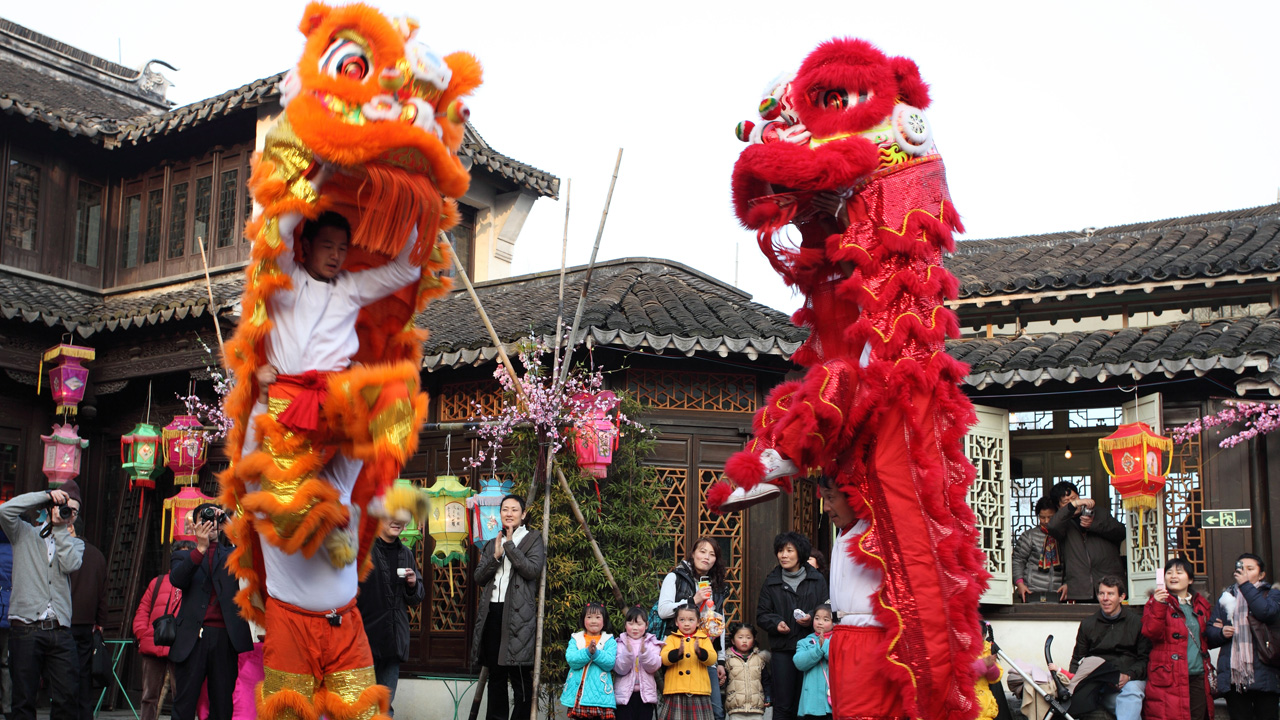
These oversized meatballs are typically braised with Chinese cabbage until incredibly tender. The dish is often served during New Year celebrations because the lion symbolism connects to the lion dances that are essential to Spring Festival festivities.
Chinese New Year Vegetables That Bring Wealth
Vegetables play an important role in the Chinese New Year feast, signifying spring, renewal, energy, progress, and wealth. Specific vegetables carry their own unique blessings based on linguistic associations and visual symbolism.
17. Lettuce (生菜, Shēngcài)
Lettuce holds tremendous importance in Cantonese celebrations. The Chinese word for lettuce sounds like “generating fortune” or “growing wealth.” This makes it an essential element for festive dishes and even features prominently in lion dances, where performers “eat” lettuce hung from doorways to symbolize consuming good fortune.
Simple stir-fried lettuce is a cherished New Year dish. The sequence of buying lettuce, bringing it home, cooking it, and eating it is considered a complete recipe for luck and prosperity.
18. Bok Choy (小白菜)
Baby bok choy symbolizes wealth, luck, and good fortune for the future. Its jade-green color represents freshness and renewal, while its compact shape evokes unity. The name in Cantonese sounds like “prosperity,” adding linguistic meaning to its visual appeal.
19. Chinese Cabbage (大白菜)
Chinese cabbage (also called napa cabbage) is a popular winter vegetable whose name in Chinese, 旺菜 (wàngcài), sounds like “prosperous.” It symbolizes wealth and appears in many dishes, from stir-fries to hot pots to dumpling fillings.
20. Bamboo Shoots (竹笋, Zhúsǔn)
Bamboo shoots represent resilience, steady progress, and new beginnings. The Chinese phrase for bamboo shoots is associated with forward movement and continuous growth. They appear in soups, stir-fries, and as fillings for dumplings.
In some regions, a filling of meat and bamboo strips is called 丝丝齐齐 (sī sī qí qí), meaning “everything needed will be available”—a wish for comprehensive abundance.
21. Lotus Root (莲藕, Liánǒu)
Lotus root sounds like “continuous” in Chinese, symbolizing abundance that never ends. The vegetable’s distinctive appearance—with multiple holes running through each slice—also represents the idea of seeing things clearly and having an open mind in the new year.
When purchasing lotus root, look for specimens with a natural brown-yellow color. Avoid artificially whitened roots, which may have been bleached with chemicals.
Lucky Fruits for the Lunar New Year
22. Tangerines and Oranges (橘子与橙子)
Citrus fruits dominate Chinese New Year decorations, gifts, and desserts. They are considered lucky on multiple levels:
- Oranges (橙, chéng) sound like the word for “success” (成)
- Tangerines (桔, jú) contain the character for luck (吉)
- The golden color resembles gold and wealth
- The round shape represents wholeness and unity
Displaying tangerines with stems and leaves intact is preferred, as this wishes friends and family a long, fertile life. Citrus fruits are commonly given as gifts alongside red envelopes during New Year visits.
23. Pomelos (柚子, Yòuzi)
Pomelos are large citrus fruits particularly popular in southern China. The Chinese word for pomelo sounds like “to have” (有, yǒu) and “again” (又, yòu), suggesting continuous prosperity. The saying goes: the more pomelo you eat, the more wealth it will bring.
Their impressive size makes pomelos eye-catching centerpieces for New Year displays. The thick peel can be carved into decorative shapes or candied as a sweet treat.
24. Kumquats (金桔, Jīnjú)
Kumquats are small, golden fruits whose name literally translates to “golden tangerine.” They symbolize good luck and prosperity. Giving someone a kumquat tree is a popular Lunar New Year gift, especially in Korean and Vietnamese communities, representing wishes for a prosperous year ahead.
Traditional Chinese New Year Desserts and Sweets
Sweet treats symbolize wishes for a sweet life in Chinese culture. Desserts are therefore an integral part of every Chinese New Year celebration.
25. Fa Gao – Prosperity Cake (发糕)
Fa gao is a steamed sponge cake with a name that directly translates to blessing. The character 发 (fā) is the same as in 发财 (fācái), meaning “to get rich” or “to make a fortune.” Eating fa gao expresses the wish for financial prosperity.
The unique feature of fa gao is its split top. When properly made, the cake rises and bursts into 3-4 distinct segments during steaming. The more pronounced these splits, the better the luck they bring. Families hold their breath when lifting the steamer lid, hoping to see a beautifully “bloomed” cake.
26. Sesame Balls (煎堆, Jiānduī)
Sesame balls are deep-fried glutinous rice balls filled with sweet red bean paste and coated in white sesame seeds. They are:
- Crispy on the outside
- Chewy on the inside
- Golden in color, symbolizing prosperity
The round shape represents family unity, while the golden hue ushers in wealth. The way sesame balls puff up during frying symbolizes prosperity and growth—like a family’s fortune expanding in the new year.
27. Almond Cookies (杏仁饼)
Golden, crumbly almond cookies are a traditional Cantonese dessert that resembles coins, making them popular symbols of good fortune. These cookies are often given as gifts and served to guests during New Year visits.
The nutty flavor comes from both almond flour and almond extract. A blanched almond pressed into the center of each cookie adds visual appeal and reinforces the coin-like appearance.
28. Peanut Brittle (花生糖)
Peanuts are known as “longevity nuts” (长生果) in Chinese culture, symbolizing vitality and a long life. Peanut brittle combines this auspicious ingredient with sweet maltose or sugar, creating a crunchy treat that brings blessings with every bite.
The candy is often made at home during New Year preparations. Families break the brittle into pieces to share with guests, spreading good fortune throughout the community.
The Tray of Togetherness: Snacks and Candies
29. Tray of Togetherness (全盒, Quánhé)
The Tray of Togetherness (also called the Candy Box) is a round, sectioned container filled with sweet treats. Its round shape represents peace and family harmony. The tray traditionally contains six or eight compartments, as six symbolizes luck and eight symbolizes fortune.
Common items in the Tray of Togetherness:
| Item | Symbolism |
|---|---|
| Candied melon | Growth and good health |
| Red melon seeds | Happiness and joy |
| Lychee nuts | Strong family ties |
| Kumquats | Gold and prosperity |
| Candied lotus seeds | Many children |
| Candied lotus root | Abundance and continuous blessings |
| Peanuts | Long life |
| Longans | Many sons |
The tray is often offered to guests immediately upon their arrival during New Year visits. Taking some candies from the tray is considered accepting and sharing in the host’s good fortune.
30. Eight Treasure Rice (八宝饭)
Eight Treasure Rice is a sweet glutinous rice dish studded with eight different precious ingredients—nuts, dried fruits, and sweet fillings. The number eight holds special significance, as it sounds like the word for “prosperity” in Chinese.
Typical treasures include:
- Lotus seeds
- Red dates (jujubes)
- Longan
- Goji berries
- Red bean paste
- Pine nuts
- Dried apricots
- Candied winter melon
Each ingredient carries its own blessing, creating a dish that offers comprehensive good fortune. The rice is pressed into a bowl, inverted onto a plate, and decorated beautifully before serving. It can be enjoyed as a dessert or eaten throughout the day as a sweet breakfast treat.
Foods to Avoid During Chinese New Year
Just as certain foods bring luck, others are considered inauspicious and should be avoided during the Spring Festival:
Porridge (粥): In ancient China, porridge was associated with poverty. Eating it on the first day of the Lunar New Year suggests the whole year will be difficult. Only the poorest families relied on porridge as their staple food.
Pumpkin (南瓜): The Chinese name for pumpkin sounds like the word for “difficult” or “hardship.” In the past, pumpkins were commonly seen on funeral tables, making them inappropriate for celebratory meals.
Breaking noodles: Cutting or breaking longevity noodles is extremely inauspicious, as it symbolizes cutting short one’s life or fortune.
Flipping fish: Never turn a fish over after eating one side. This action resembles a boat capsizing and brings bad luck to anyone who travels.
How to Plan Your Lucky Chinese New Year Feast
Creating an authentic Chinese New Year meal requires thoughtful planning. Here are key principles to guide your celebration:
Balance symbolism and practicality. Include at least one dish from each major category—fish, meat, poultry, vegetables, and sweets. This ensures comprehensive blessings while providing a varied, satisfying meal.
Consider your guests. Traditional preparation methods matter most for the symbolic dishes. The fish should be whole, the chicken complete, and the noodles unbroken. For other dishes, feel free to adapt recipes to suit dietary preferences.
Time your meal correctly. The most important dinner occurs on New Year’s Eve. Dumplings are traditionally eaten at midnight. Tang yuan is served throughout the festival period, with special emphasis on the Lantern Festival (the 15th day).
Shop for quality ingredients. Fresh fish, vibrant citrus fruits, and high-quality glutinous rice make noticeable differences in both flavor and appearance. Visit Asian markets for specialty items like lotus seeds, dried longan, and red dates.
Involve the whole family. Making dumplings, shaping tang yuan, and arranging the Tray of Togetherness are all activities that bring family members together. The process of preparation is as meaningful as the meal itself.
Bringing Prosperity to Your Table This Lunar New Year
The 30 lucky foods described in this guide represent more than culinary traditions—they embody thousands of years of hopes, dreams, and blessings passed down through generations. When you steam a whole fish, wrap dumplings with loved ones, or share sesame balls with neighbors, you participate in one of humanity’s oldest and largest celebrations.
As we enter the Year of the Snake in 2026, may these auspicious foods bring you and your family:
- 年年有余 (Nián nián yǒu yú): Surplus and abundance year after year
- 恭喜发财 (Gōngxǐ fācái): Happiness and prosperity
- 身体健康 (Shēntǐ jiànkāng): Good health
- 万事如意 (Wànshì rúyì): May all your wishes come true
Whether you celebrate with a grand feast or a simple meal of noodles and dumplings, the blessings remain the same. Happy Chinese New Year! 新年快乐!
Quick Reference: 30 Lucky Chinese New Year Foods Summary Table
| # | Food | Chinese Name | Primary Symbolism |
|---|---|---|---|
| 1 | Whole Steamed Fish | 清蒸鱼 | Surplus and abundance |
| 2 | Crucian Carp | 鲫鱼 | Good luck |
| 3 | Chinese Mud Carp | 鲤鱼 | Gifts and blessings |
| 4 | Catfish | 鲶鱼 | Year-long surplus |
| 5 | Jiaozi Dumplings | 饺子 | Wealth and prosperity |
| 6 | Wontons | 馄饨 | Treasure and riches |
| 7 | Spring Rolls | 春卷 | Gold bars, wealth |
| 8 | Nian Gao | 年糕 | Rising success |
| 9 | Longevity Noodles | 长寿面 | Long life |
| 10 | Tang Yuan | 汤圆 | Family reunion |
| 11 | Whole Chicken | 全鸡 | Unity and completeness |
| 12 | Pork | 猪肉 | Strength and abundance |
| 13 | Duck | 鸭子 | Celebration and joy |
| 14 | Beef/Lamb | 牛羊肉 | Strength and greatness |
| 15 | Shrimp | 虾 | Happiness and laughter |
| 16 | Lion’s Head Meatballs | 狮子头 | Power and prosperity |
| 17 | Lettuce | 生菜 | Growing fortune |
| 18 | Bok Choy | 小白菜 | Wealth and luck |
| 19 | Chinese Cabbage | 大白菜 | Prosperity |
| 20 | Bamboo Shoots | 竹笋 | Progress and growth |
| 21 | Lotus Root | 莲藕 | Continuous abundance |
| 22 | Tangerines/Oranges | 橘橙 | Success and luck |
| 23 | Pomelos | 柚子 | Continuous prosperity |
| 24 | Kumquats | 金桔 | Gold and prosperity |
| 25 | Fa Gao | 发糕 | Making fortune |
| 26 | Sesame Balls | 煎堆 | Family unity, wealth |
| 27 | Almond Cookies | 杏仁饼 | Coins and fortune |
| 28 | Peanut Brittle | 花生糖 | Longevity |
| 29 | Tray of Togetherness | 全盒 | Harmony and unity |
| 30 | Eight Treasure Rice | 八宝饭 | Comprehensive blessings |
This guide was researched and written with deep respect for Chinese cultural traditions and the families who keep them alive across generations. May your Year of the Snake be filled with wisdom, renewal, and abundant prosperity.