No celebration in the world leans on food quite like Chinese New Year. The festival table is not just generous; it is a coded message of hopes for the year ahead, where almost every dish earns its place by sounding like, or looking like, something auspicious. Learn the meanings and an ordinary spread turns into a feast of wishes for wealth, long life, family unity, and good fortune. Here are the lucky foods that appear on tables across the Chinese-speaking world, what each one means, and why it belongs at your New Year meal.
Why Food Carries So Much Meaning
The logic behind nearly every lucky New Year food is the homophone: the Chinese language is full of words that sound alike, and a dish whose name echoes a lucky word is believed to carry that good fortune to whoever eats it. Fish sounds like surplus, rice cake sounds like a higher year, and so the food becomes a kind of edible wordplay. Other foods earn their luck through appearance instead, resembling gold ingots, coins, or bars of gold, while a few carry meaning through colour or shape. This is why presentation and completeness matter so much at the New Year table: a fish should be whole, a chicken served entire, and the luckiest foods displayed with pride.
Fish: Surplus Year After Year
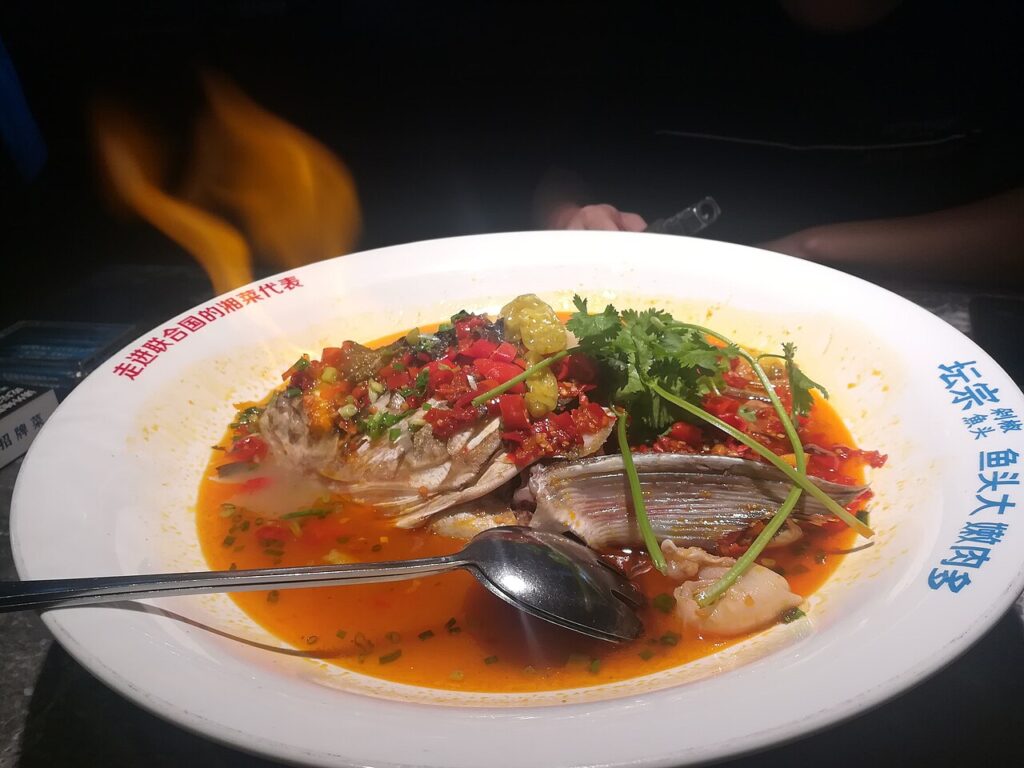
Fish is the single most important lucky food of the New Year. The word for fish, yú (鱼), sounds exactly like the word for surplus or abundance (余), so eating fish expresses the wish niánnián yǒuyú (年年有余), “may you have a surplus every year.” The fish is usually served whole, with head and tail intact, to represent a good start and finish to the year, and tradition holds that some of it should be left uneaten overnight, so that the surplus literally carries over into the new year. In many families the fish is the last dish served and the one nobody quite finishes on purpose. Steamed fish with ginger and scallion is the classic preparation, though regional styles vary widely.
Dumplings: Ingots of Wealth
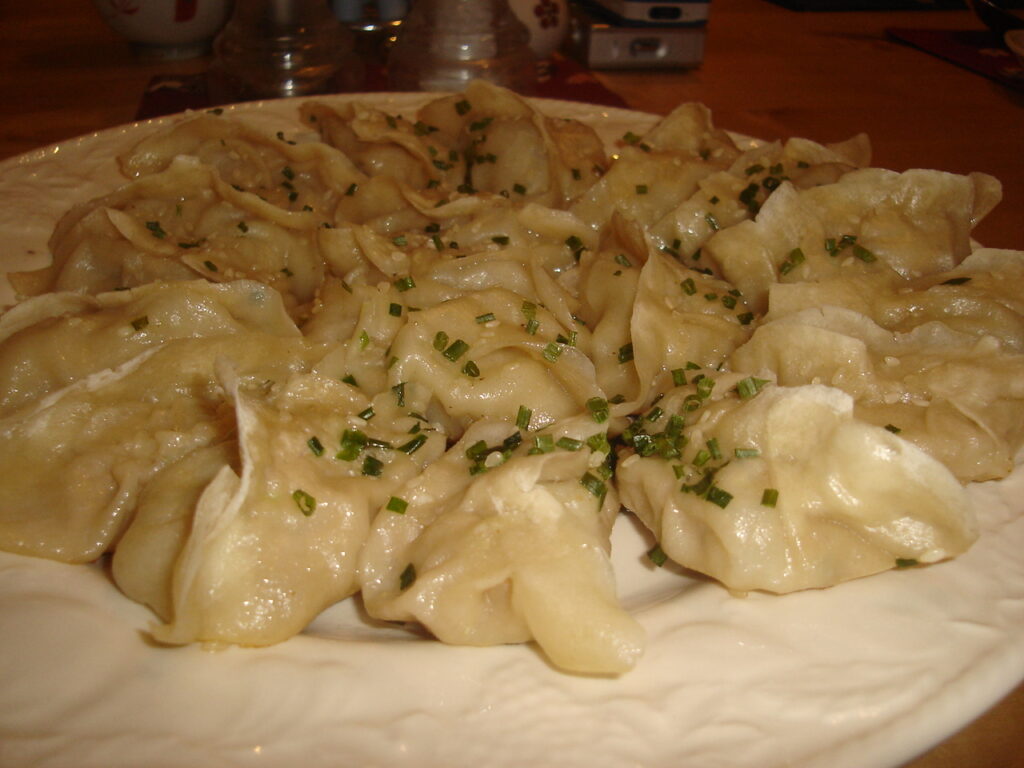
In northern China especially, dumplings (饺子, jiǎozi) are the defining New Year food, eaten in great numbers and often wrapped by the whole family together on New Year’s Eve. Their shape is the point: a plump dumpling resembles a yuanbao, the boat-shaped silver and gold ingot once used as currency, so eating them stands for ushering in wealth. The more dumplings you eat at New Year, tradition jokes, the more money you will make. A common custom is to hide a clean coin inside one dumpling; whoever bites into it is promised a especially lucky and prosperous year. Families also fill dumplings with auspicious ingredients, and our step-by-step recipe for authentic jiaozi walks through the wrapping itself.
Spring Rolls: Bars of Gold
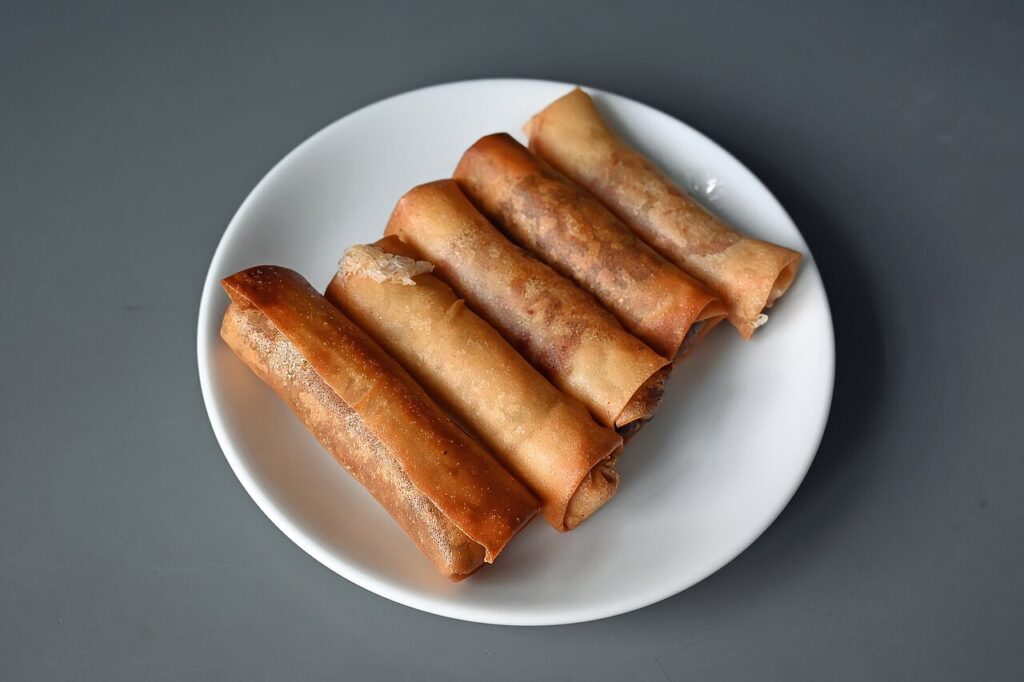
Crisp, golden, and shaped like little bars when fried, spring rolls (春卷, chūnjuǎn) evoke gold bars and so stand for wealth and a prosperous year. Their name also nods to the Spring Festival itself. Filled with vegetables, meat, or a sweet bean paste and fried until golden, they are a favourite across southern China and among the diaspora, where their resemblance to gold ingots makes them a fixture of the New Year table.
Nian Gao: Reaching Higher Each Year
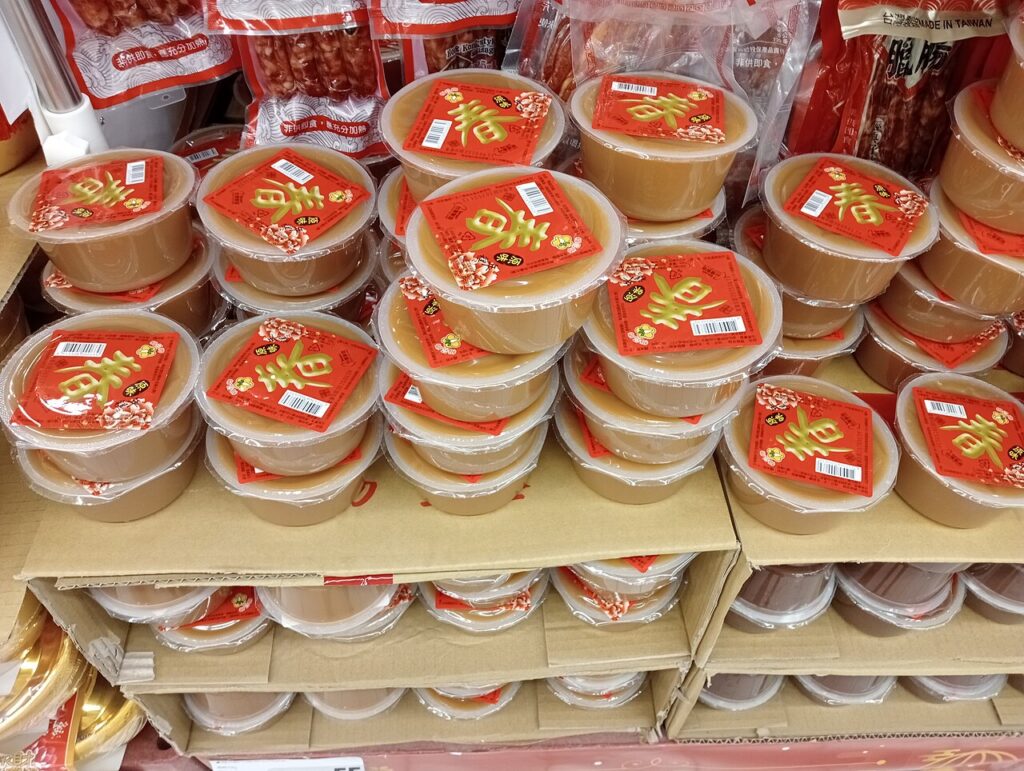
Glutinous rice cake, niángāo (年糕), is one of the most symbolically loaded foods of the festival. Its name is a homophone for “higher year” (年高), expressing the wish to rise higher with each passing year, in income, in position, in health, or in a child’s growth and grades. The sticky, dense cake comes in countless regional forms, from the sweet brown-sugar version of the south to savoury sliced niangao stir-fried in the east. Its stickiness carries its own meaning of family togetherness, binding the household close.
Longevity Noodles: A Long and Healthy Life
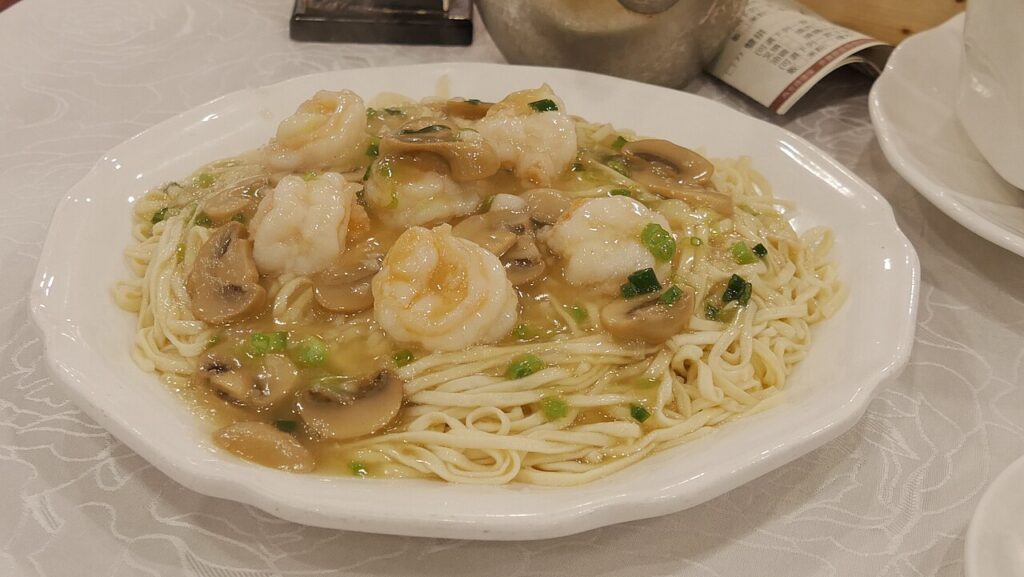
Longevity noodles (长寿面, chángshòu miàn) are exactly what their name promises: a wish for long life. The defining feature is length. The noodles are made as long as possible and, crucially, should never be cut or broken, since their unbroken strand represents an unbroken, lengthy life. The traditional way to eat them is to slurp a whole noodle without biting through it. Served in broth or stir-fried, they appear at birthdays as well as the New Year, wherever long life is the wish.
Tang Yuan: The Roundness of Reunion
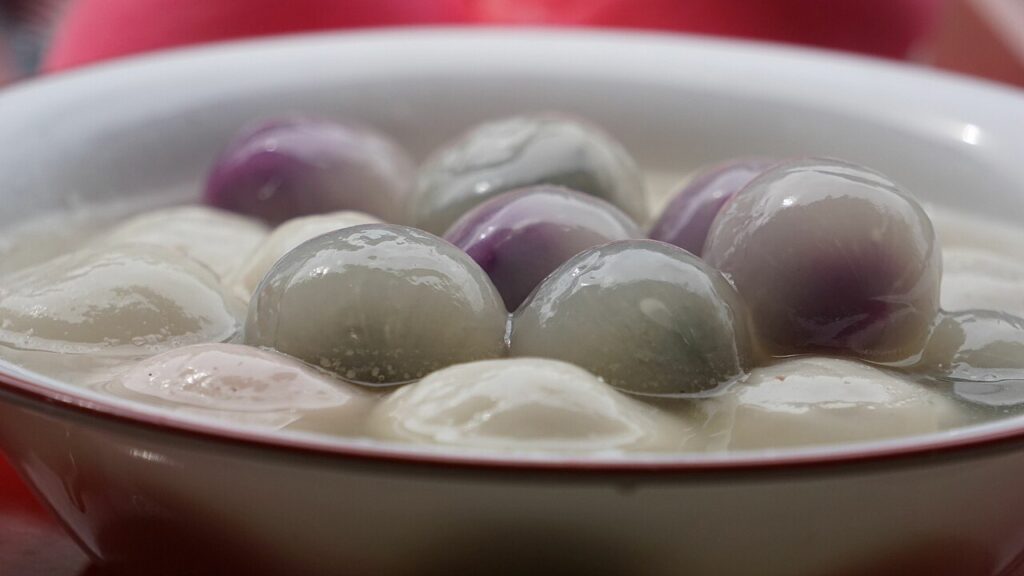
Sweet glutinous rice balls, tāngyuán (汤圆), are beloved in southern China and central to the Lantern Festival that closes the New Year season. Their perfectly round shape, and the round bowl they are served in, symbolises wholeness, completeness, and the reunion of the family. The name itself echoes the word for reunion, tuányuán. Filled with sweet sesame, peanut, or red bean paste and served in a warm syrup, they are comfort and symbolism in a single bite.
Whole Chicken: Family Wholeness
A chicken served whole, head and feet included, represents completeness and the unity of the family, as well as a good marriage and the joining of families. In Chinese, chicken (鸡, jī) also carries associations of good fortune and prosperity. Like the fish, the chicken’s wholeness is the point: serving it entire stands for a complete and harmonious family, and it is often offered to ancestors before the living share it.
Other Lucky Meats: Pork and Duck
Beyond chicken, the New Year table often features pork and duck. A whole roast pig or a generous pork dish stands for strength, wealth, and abundance, while pork’s richness signals a prosperous household. Duck represents fidelity and, when served whole, completeness, and is especially common in southern and Cantonese feasts. Together with the chicken and fish, these dishes turn the table into a display of plenty.
Shrimp and Seafood: Laughter and Happiness
In Cantonese, the word for shrimp, hā, sounds like laughter, so shrimp dishes stand for happiness, liveliness, and good fortune. Their bright red colour when cooked adds to the auspicious effect, since red is the luckiest colour of the festival. Other seafood, such as scallops, oysters, and abalone, also appear on more elaborate tables, each carrying its own associations of wealth and a good year, particularly in coastal and southern Chinese cooking.
Lucky Vegetables That Bring Wealth
Several vegetables earn their place through wordplay. Lettuce (生菜, shēngcài) sounds like “growing wealth” or “making money,” so it appears in dishes and, famously, in the lion dance, where the lion “eats” a head of lettuce to bring a business luck. The black hair-like algae known as fat choy (发菜) sounds like the phrase for “getting rich” (发财), making it a prized, if controversial, festive ingredient. Chinese garlic chives signal eternity, lotus root suggests abundance, and a whole leafy green like Chinese cabbage stands for a fresh, prosperous start.
Lucky Fruits for the New Year
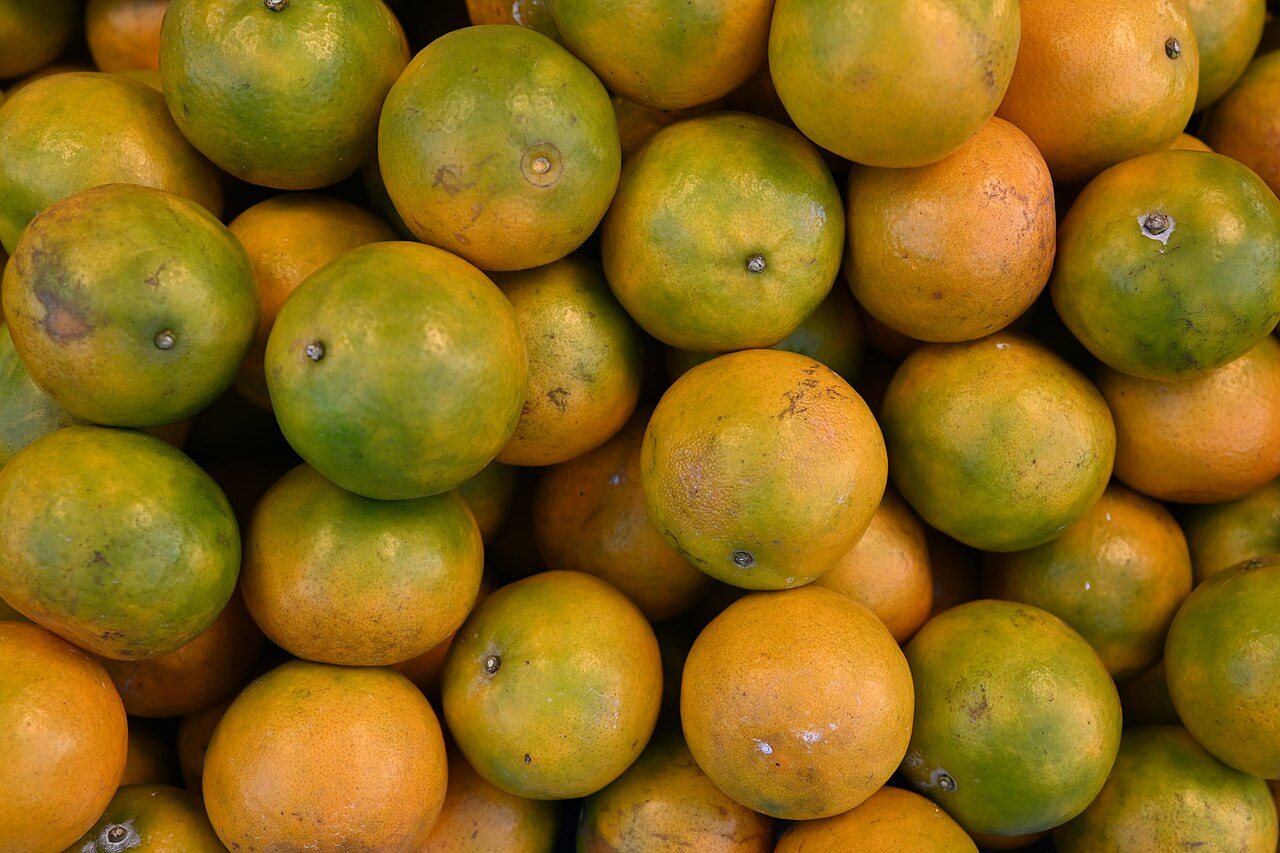
Fruit is everywhere at the New Year, both eaten and displayed. Mandarin oranges and tangerines are the most important: the word for orange resembles the word for luck, and the gold colour suggests wealth, so bowls of them are given as gifts and piled in homes. Pomelos, large and round, signal abundance and family unity, their name echoing a word for prosperity. Apples (苹果, píngguǒ) suggest peace, since their name contains the sound for “peace” (平). These fruits are often presented in pairs or even numbers, since good things come in twos.
Sweets, Candy, and the Tray of Togetherness
Sweet foods carry the wish for a sweet year. The centrepiece is the Tray of Togetherness (全盒, quánhé), a round or eight-sided box divided into compartments, each holding a snack with its own meaning: melon seeds for fertility and abundance, candied lotus seed for many children, candied melon for growth and health, candied coconut for togetherness, peanuts for long life, and red dates for prosperity and a sweet life. Offered to every guest who visits, the tray is a portable summary of all the New Year’s wishes. The number eight, lucky for its sound, often shapes the box’s eight compartments.
Fa Gao: The Cake That Blooms
Steamed sponge cake known as fā gāo (发糕) is a New Year favourite whose name contains the same lucky fā as the word for prosperity and the greeting gōngxǐ fācái. As it steams, the top splits open and “blooms,” and the more it bursts, the more good fortune it is said to promise for the year. Often dyed in festive pink or red, these little cakes are both a treat and a wish for the family’s prosperity to flourish and grow.
Foods to Avoid at New Year
Just as some foods invite luck, a few are avoided. Porridge or congee is traditionally skipped on the first day, since it was historically the food of the poor and eating it might invite poverty. Anything that must be cut with a knife can be seen as “cutting off” good fortune, which is one reason long noodles are left uncut and many dishes are prepared in advance. White foods are sometimes downplayed because white is associated with mourning, and some families avoid eating any meat on the first morning out of Buddhist observance, choosing a vegetarian dish called jai instead.
Planning Your Lucky New Year Feast
Building a lucky menu is mostly a matter of covering the key wishes. Aim to include a whole fish for surplus, a whole chicken for family unity, dumplings or spring rolls for wealth, a leafy green for a fresh start, noodles for long life, and something sweet, niangao or tangyuan, for a sweet and rising year. Round out the table with mandarin oranges and a tray of togetherness for guests. An even number of dishes is preferred, and the most auspicious foods should be served whole and displayed generously. These dishes vary by region, and the differences between northern and southern tables are explored in our guide to regional Chinese New Year food traditions. The full New Year’s Eve meal that brings them together is covered in our guide to the reunion dinner.
Regional New Year Cakes Beyond Nian Gao
Nian gao is only the most famous of the festival’s steamed cakes. In Cantonese homes the savoury turnip cake, lo bak go, made from shredded radish, rice flour, and bits of cured meat and dried shrimp, is pan-fried until golden and eaten through the holiday, its name carrying a wish for good fortune. Taro cake and water chestnut cake follow the same idea, each a steamed, sliceable cake whose name or ingredients hint at prosperity. These cakes are made in large batches before the New Year and reheated as needed, a practical food that is also a parade of edible good wishes.
Eight-Treasure Rice and Festive Sweets
Among the sweet dishes, eight-treasure rice, bā bǎo fàn, holds a place of honour, especially in eastern China. It is a mound of sweet glutinous rice studded with eight kinds of dried and candied fruit and nuts, often with a sweet bean paste centre, the number eight chosen for its lucky sound. Served warm at the end of the meal, it bundles abundance, sweetness, and the auspicious eight into a single celebratory dish.
Jai: The Lucky Vegetarian Dish
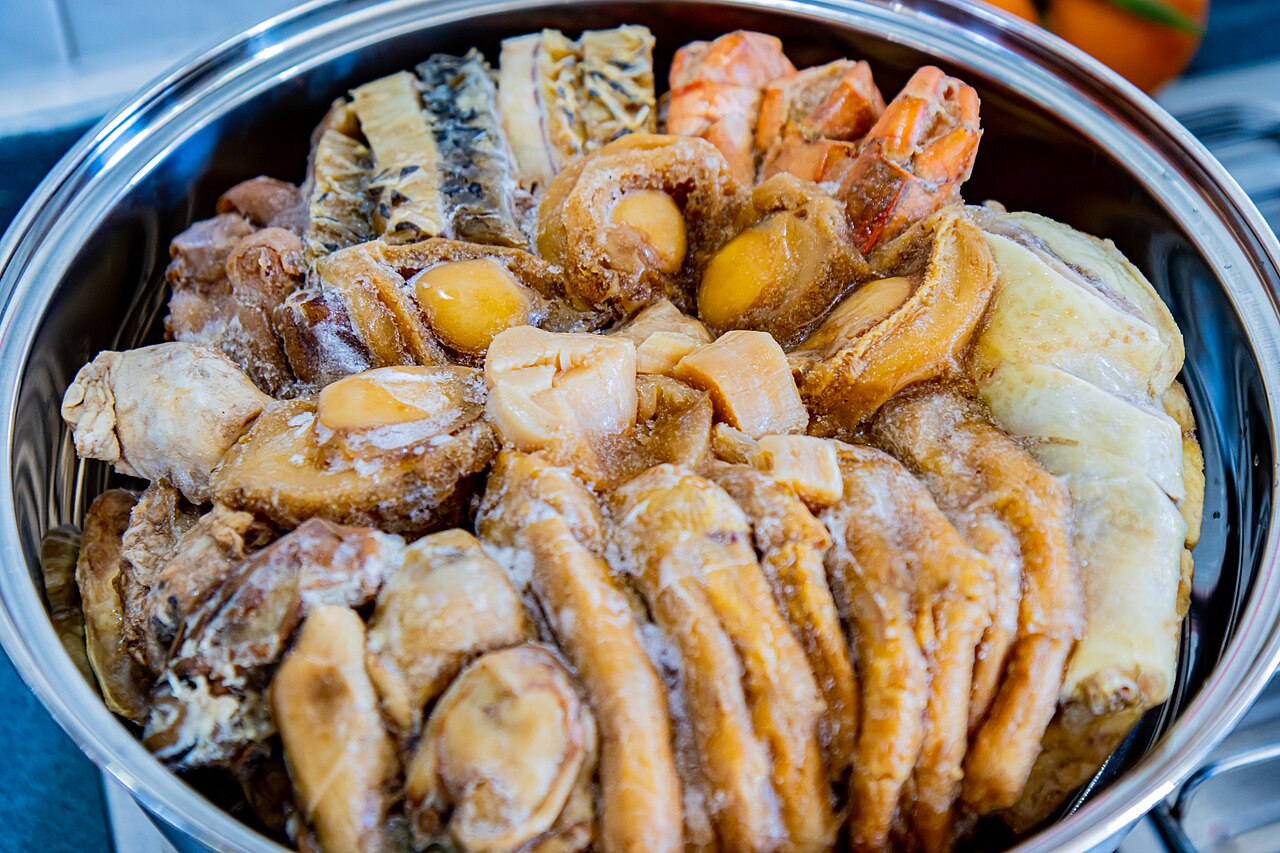
Many families eat a vegetarian dish on the first morning of the New Year, both for Buddhist observance and for the auspicious meanings packed into its ingredients. Known as jai or Buddha’s Delight, it is a braise of items chosen for their lucky names: black moss hair for prosperity, dried oysters for good business, lotus root for abundance, fermented bean curd, bamboo shoots, and various mushrooms and vegetables. Eating jai is believed to cleanse the body and invite a fortunate, peaceful start to the year.
The Candy Box, Item by Item
The Tray of Togetherness rewards a closer look, because each snack is a specific wish. Melon seeds, dyed red, stand for abundance and many descendants. Candied lotus seeds wish the family many children. Candied winter melon promises growth and good health. Longan and lychee suggest strong family bonds, peanuts a long life, and red dates a sweet and prosperous year. Even the kumquats represent gold and wealth. Offered to every visitor, the tray turns hospitality itself into a recital of the year’s hopes, and refusing a sweet from it is gently discouraged, since accepting is to accept the good wishes within.
Lucky Fruits, in More Detail
Beyond mandarin oranges, several fruits carry their own New Year meanings. The pomelo, large and round, stands for abundance, family unity, and continuous prosperity. Pomegranates, full of seeds, wish for many children. Persimmons, whose name plays on a word for things going as one wishes, suggest that everything will go well. Apples sound like the word for peace, and grapes, growing in clusters, hint at a fruitful and abundant year. Displayed in bowls and given as gifts, these fruits decorate the home as much as they feed it.
Lucky Drinks and the Tea of Respect
Drinks join the food in carrying meaning. Tea is central, and one of the gentlest customs of the New Year is younger family members serving tea to their elders, sometimes kneeling, as a gesture of respect and gratitude that is often answered with a red envelope. Toasts of rice wine or grain spirit accompany the meal with wishes for health and prosperity. Even the act of pouring for one another, never only for oneself, expresses the togetherness the festival celebrates.
How the Menu Shifts Across the Fifteen Days
The festival’s food is not confined to the reunion dinner. The first day may bring the vegetarian jai; the fifth day, when the God of Wealth is welcomed, is a time for dumplings again in the north; and the season closes on the fifteenth night, the Lantern Festival, with bowls of tangyuan, whose roundness mirrors the first full moon of the year. Each stage of the long celebration has its own foods, so the eating, like the festival itself, unfolds over more than two weeks rather than a single night.
Matching the Food to the Words
Part of the pleasure of the New Year table is voicing the wish a dish represents as it is served. Setting down the fish, a host might offer niánnián yǒuyú, for surplus; passing the nian gao, a wish to rise higher; handing a child an orange, a wish for good fortune. Knowing the right phrases turns serving the meal into a kind of blessing, and the full vocabulary is collected in our guide to Chinese New Year greetings.
Food as a New Year Gift
Much of the festival’s food never reaches the host’s own table, because so much of it is given away. Visiting relatives and friends during the New Year, people carry gifts of food: boxes of nian gao and biscuits, tins of candied snacks, premium dried ingredients, and baskets of mandarin oranges, always offered in pairs or even numbers for luck. Oranges in particular are exchanged in twos, the guest bringing a pair and the host returning a pair, so that good fortune is passed back and forth rather than taken. To give food at the New Year is to give a wish for the other family’s prosperity, which is why the markets overflow in the days before the holiday and why no one arrives at a New Year visit empty-handed.
A Table Full of Wishes
What makes the Chinese New Year table so special is that every dish does double duty, feeding the family and voicing a hope. A whole fish is dinner and a wish for surplus; a plate of dumplings is a meal and a prayer for wealth; a bowl of tangyuan is dessert and a wish to stay together. You do not need every food on this list to celebrate well, but knowing what each one means turns the meal into something richer: a shared, edible expression of everything a family wants for the year to come. These dishes are one part of a much larger celebration, explored in full in our complete guide to Chinese New Year. And to greet your guests with the right words as you serve, see our guide to Chinese New Year greetings.
Frequently Asked Questions
What foods are lucky for Chinese New Year?
The most important lucky foods are whole fish (for surplus), dumplings (for wealth), glutinous rice cake or niangao (for rising higher), spring rolls (for gold), sweet rice balls or tangyuan (for reunion), uncut longevity noodles (for long life), and mandarin oranges (for luck and gold).
Why is fish eaten at Chinese New Year?
The word for fish, yu, sounds like the word for surplus, so eating fish expresses the wish for abundance year after year. The fish is served whole and often left partly uneaten so the surplus carries into the new year.
Why are dumplings considered lucky?
Dumplings are shaped like the gold and silver ingots once used as money, so they symbolise incoming wealth. They are eaten especially in northern China, and a clean coin is sometimes hidden in one to bring the finder a lucky year.
What does nian gao symbolise?
Nian gao, glutinous rice cake, is a homophone for “higher year,” expressing the wish to rise higher in the year ahead, whether in income, position, health, or a child’s growth.
What is the Tray of Togetherness?
It is a round or eight-sided box divided into compartments, each holding an auspicious snack such as melon seeds, candied lotus seed, candied melon, peanuts, and red dates, offered to every guest as a portable summary of the New Year’s wishes.
Which foods should be avoided at Chinese New Year?
Plain porridge or congee is traditionally avoided on the first day because of its association with poverty, foods that must be cut can symbolise cutting off luck, and white foods are sometimes downplayed because white is linked to mourning.