On New Year’s Eve in northern China, the whole family gathers around the table not to eat but to make: to roll, fill, and pleat hundreds of dumplings to be boiled at the stroke of midnight. Jiaozi are the defining food of the northern New Year, shaped like the gold ingots of old to wish for wealth, and wrapping them together is as much a part of the celebration as eating them. This guide walks through making authentic Chinese dumplings from scratch, the dough, the filling, the folding, and the cooking, so you can bring the tradition to your own New Year’s Eve.
Why Dumplings Mean So Much at New Year
Dumplings carry more meaning than almost any other New Year food. Their plump, curved shape resembles the yuanbao, the gold and silver ingots once used as money, so eating them is a wish to usher in wealth, and the more you eat, the more prosperous your year is said to be. The timing matters too: in the north they are eaten at midnight on New Year’s Eve, because the moment when the old year meets the new is itself called jiaozi, a near-homophone for the dumpling, so eating them marks the junction of the years. Wrapping them together as a family is part of the ritual, and the lucky coin hidden in one dumpling adds a thrill of fortune. Their place in the wider feast is explored in our guides to lucky New Year foods and the reunion dinner.
A Short History of the Dumpling
Dumplings have a long pedigree in China, often traced back nearly two thousand years. A popular legend credits their invention to the Han dynasty physician Zhang Zhongjing, who is said to have wrapped warming medicinal ingredients in dough shaped like little ears to treat frostbitten villagers in winter. Whatever their true origin, jiaozi became a staple of northern Chinese cooking and a fixture of the New Year, and they remain one of the most beloved foods in the country, made fresh at home for the most important nights of the year.
What You Will Need
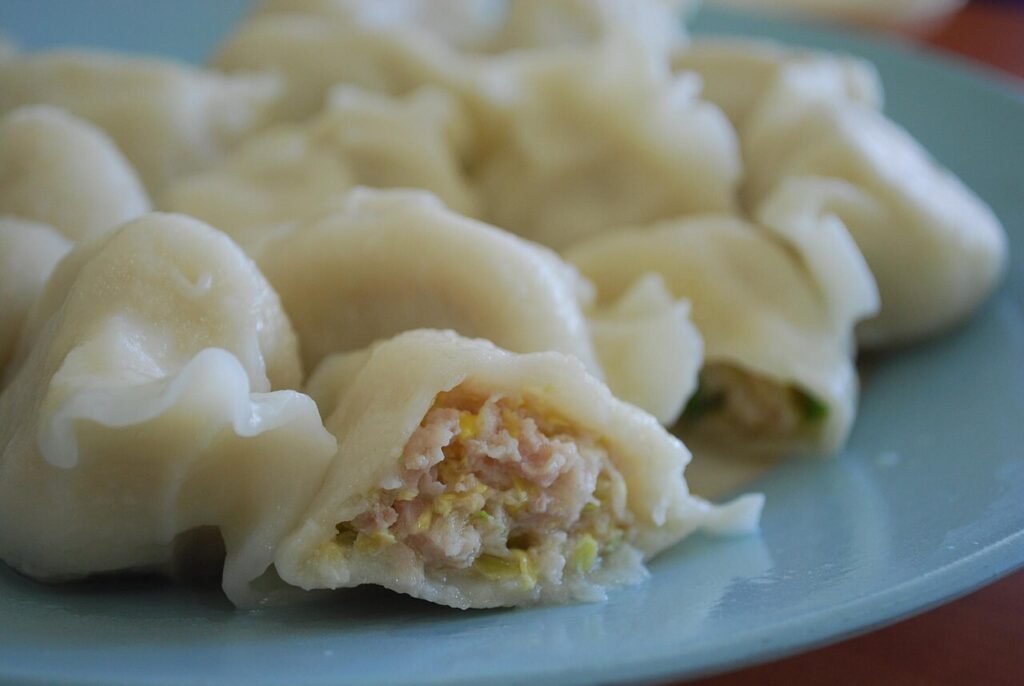
Authentic jiaozi have two parts: a simple dough and a flavourful filling. For the dough, you need only all-purpose flour and water, in a rough ratio of about two parts flour to one part water by weight, plus a pinch of salt. For a classic pork and napa cabbage filling, the most traditional New Year choice, you will need ground pork (with some fat for juiciness), finely chopped napa cabbage, fresh ginger, spring onion, light soy sauce, Shaoxing wine, sesame oil, white pepper, and salt. The proportions are forgiving, and once you know the method you can vary the filling freely.
Making the Dough
Mix the flour and salt, then add the water gradually, stirring with chopsticks until rough flakes form, and bring it together with your hands. Knead the dough on a clean surface for about eight to ten minutes, until it is smooth and elastic and springs back when pressed. The kneading develops the gluten that gives the wrappers their characteristic chew. Cover the dough with a damp cloth and let it rest for at least thirty minutes; this relaxes the gluten and makes the dough far easier to roll. Resting is not optional, as an unrested dough will fight you at every turn.
Rolling the Wrappers
Once rested, roll the dough into a long rope and cut it into small, even pieces, each about the size of a walnut. Press each piece flat, then roll it into a thin round wrapper about eight centimetres across, keeping the centre slightly thicker than the edges so the dumpling has a sturdy base and delicate, easy-to-seal rim. Rolling good wrappers takes practice, so do not worry if your first ones are uneven. If time is short, store-bought wrappers are a perfectly respectable shortcut used even in many Chinese homes, and they let you skip straight to the filling and folding.
Preparing the Filling
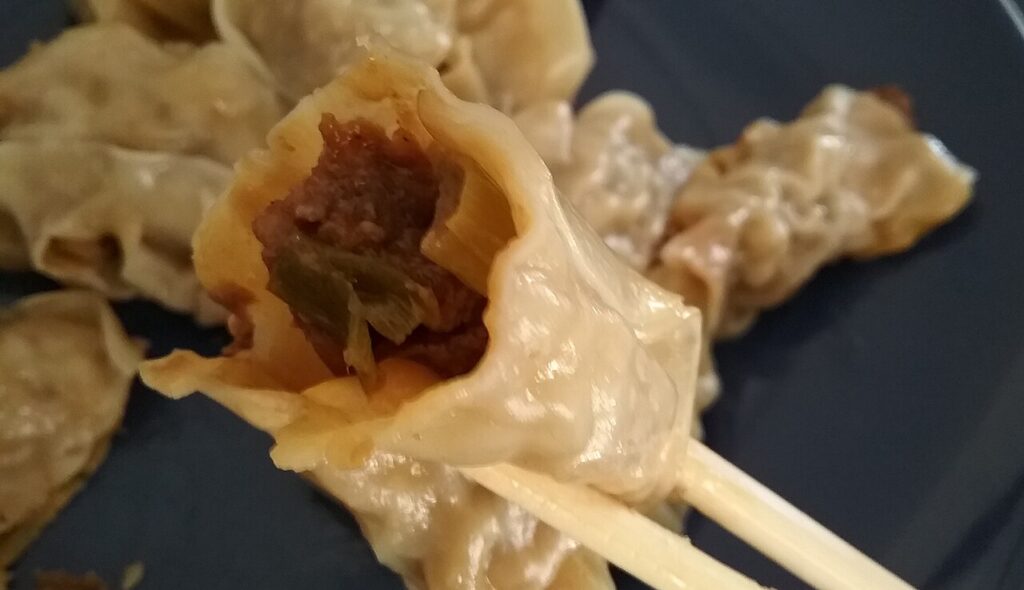
The filling rewards a little technique. Finely chop the napa cabbage, sprinkle it with salt, let it sit for ten minutes, then squeeze out as much water as you can; this crucial step keeps the filling from turning watery and bursting the wrappers. Combine the pork with the grated ginger, chopped spring onion, soy sauce, wine, sesame oil, white pepper, and salt, and stir vigorously in one direction until the mixture becomes sticky and cohesive, which helps it hold together and stay juicy. Fold in the squeezed cabbage last. Stirring consistently in a single direction is a small secret that gives the filling the right springy texture.
Folding the Dumplings
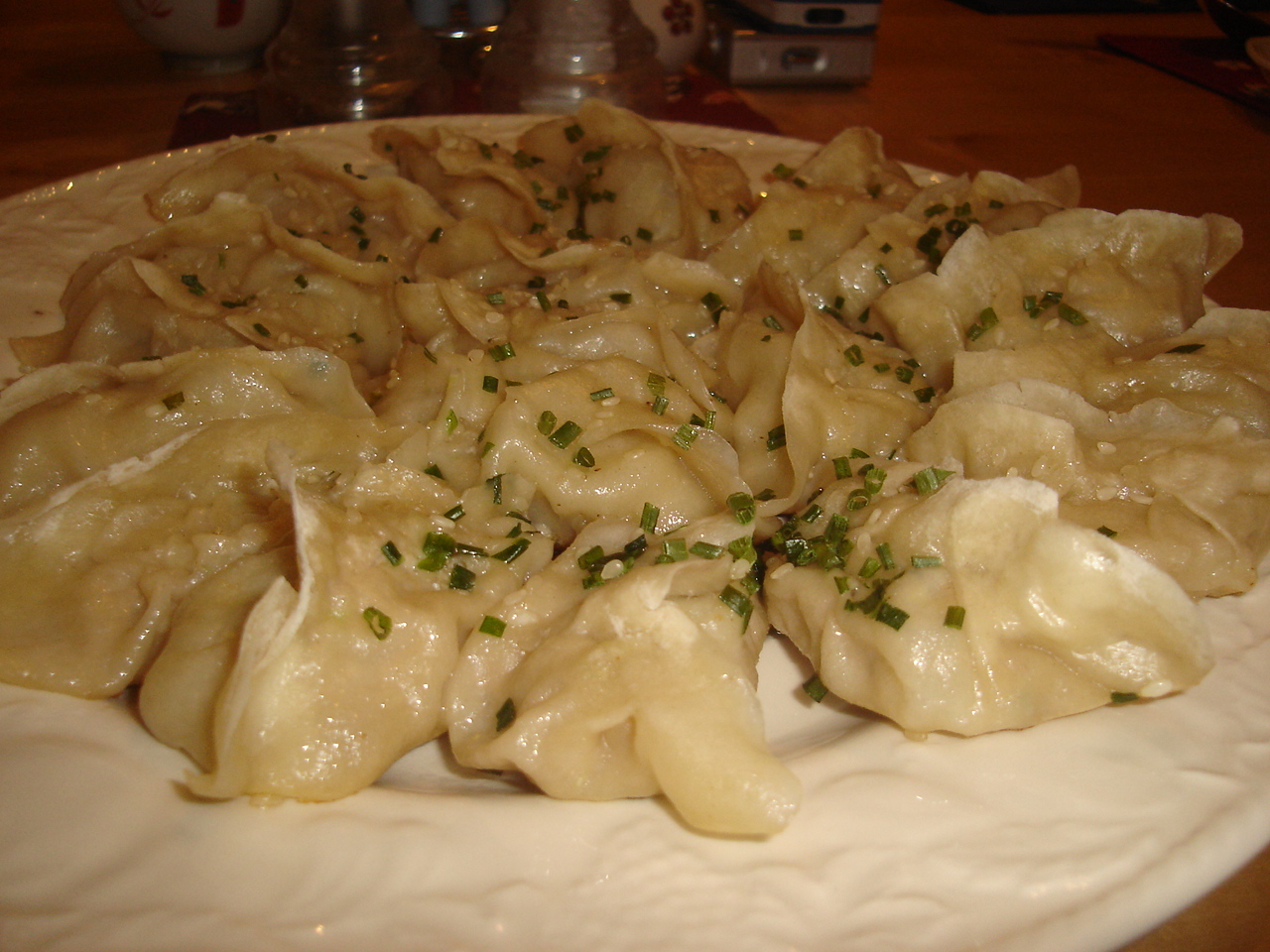
To assemble, place a spoonful of filling in the centre of a wrapper, taking care not to overfill. Moisten the rim with a little water, fold the wrapper in half over the filling, and pinch it closed at the centre. The classic look comes from pleating: starting at one side, fold a series of small pleats along the front edge and press each onto the flat back edge, working toward the centre, then repeat from the other side. The pleats are not just decorative; they seal the dumpling firmly and give it the plump, ingot-like curve. Plenty of home cooks simply pinch the edge shut in a neat seam, which works just as well for boiling. With a little practice the rhythm of fold, pinch, and press becomes meditative, which is exactly why families do it together.
The Lucky Coin
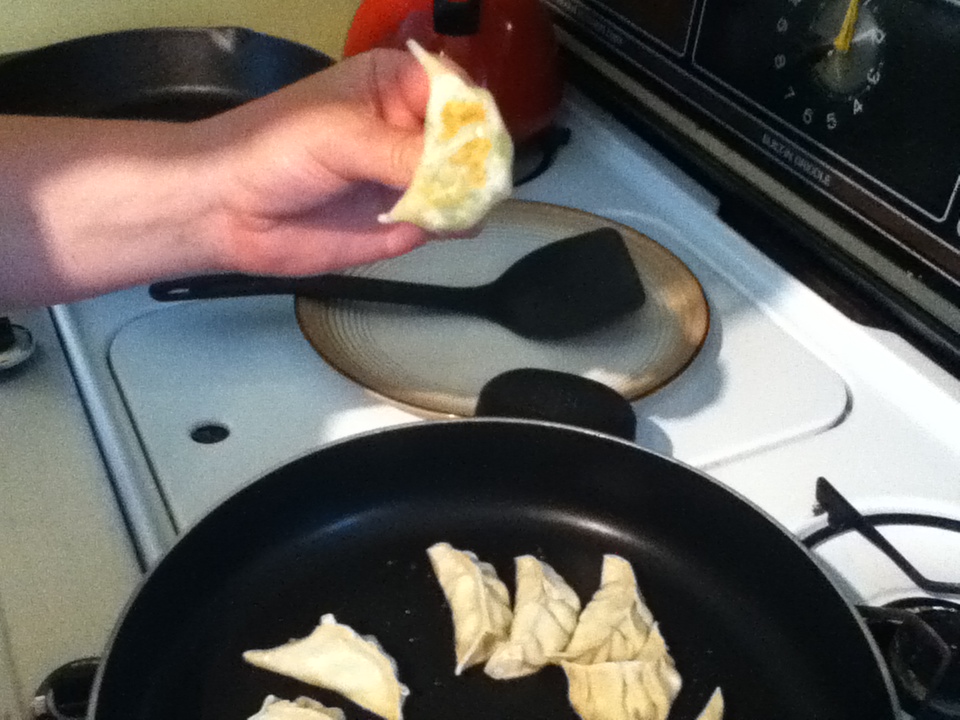
A cherished New Year custom is to hide a single clean coin inside one of the dumplings. Whoever bites into it is promised an especially lucky and prosperous year, and the search for the coin dumpling adds a note of suspense to the meal. If you keep the tradition, wash the coin well and wrap it carefully, and warn younger children to eat with care.
Three Ways to Cook Them
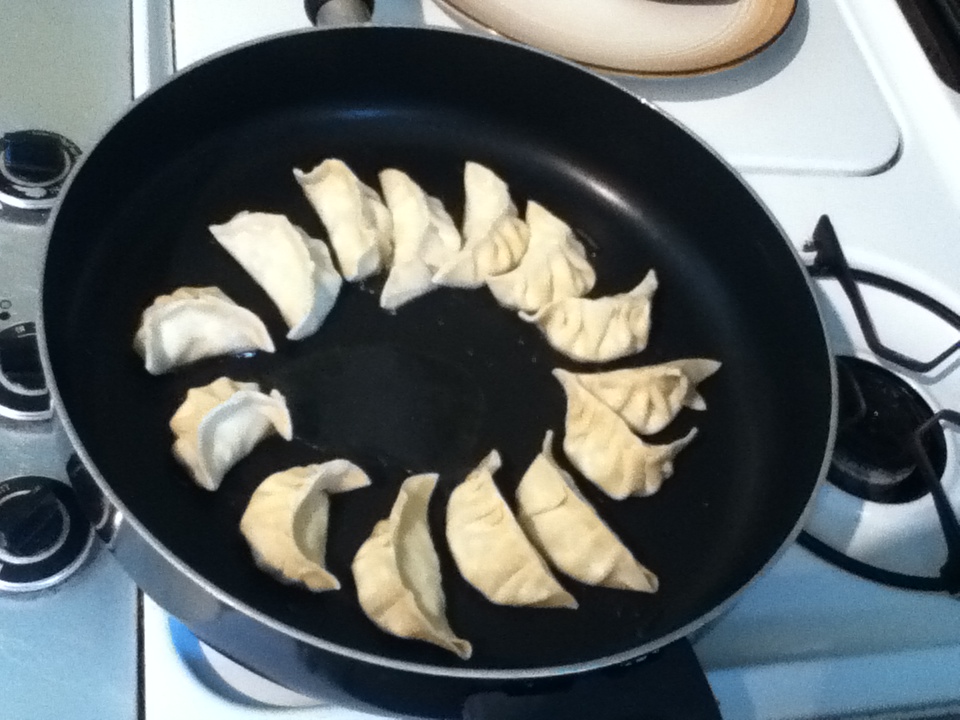
Jiaozi can be cooked three classic ways, each producing a different dumpling. Boiling is the traditional New Year method: drop the dumplings into a large pot of boiling water, stir gently so they do not stick, and when the water returns to a boil add a small cup of cold water. Repeat this twice; the cold-water trick keeps the temperature even so the wrappers cook through without bursting before the filling is done. The dumplings are ready when they float and look plump and glossy. Steaming gives a softer, more delicate wrapper: arrange the dumplings on a lined steamer basket, not touching, and steam for about ten minutes. Pan-frying produces the famous potstickers, or guotie: fry the dumplings flat-side down until golden, add a splash of water, cover to steam them through, then uncover and let the bottoms crisp again. Each method has its devotees.
The Dipping Sauce
A good dipping sauce completes the dumpling. The simplest and most traditional is a mix of black Chinese vinegar and light soy sauce, often with a few slivers of fresh ginger, and a little chilli oil for those who like heat. Some add a touch of sesame oil, minced garlic, or sugar to balance it. The sharp vinegar cuts the richness of the pork and is, for many, an inseparable part of the experience; in much of the north, the vinegar is considered as important as the dumpling itself.
Making Ahead and Freezing
Dumplings freeze beautifully, which is why families make them in large batches. To freeze, arrange the uncooked dumplings in a single layer on a tray, not touching, and freeze until solid, then transfer them to a bag. Cook them straight from frozen, adding a minute or two to the cooking time; there is no need to thaw. A freezer stocked with homemade dumplings is one of the small luxuries of having made a New Year batch, ready for any quick meal in the weeks that follow.
Common Problems and How to Fix Them
A few troubles catch out first-time dumpling makers. If the wrappers burst while boiling, the filling was likely too wet, so squeeze the cabbage more thoroughly next time, or you overfilled them. If they stick to the pot or to each other, stir gently as soon as they go in and keep them moving. If the dough is hard to roll, it probably needs more resting. If the seams open, you used too much filling or too little water to seal, or did not press the edges firmly. None of these are fatal, and dumpling-making is forgiving; even an imperfect dumpling, boiled and dipped in vinegar, tastes wonderful.
Equipment You Will Need
Dumpling-making needs surprisingly little specialised kit. A large mixing bowl, a clean work surface, and a rolling pin are the essentials, with a small thin rolling pin, if you have one, making the wrappers easier to roll. A large pot is needed for boiling, a bamboo or metal steamer for steaming, and a wide non-stick or cast-iron pan with a lid for potstickers. A bench scraper helps with portioning the dough, and a damp cloth to keep dough and finished dumplings from drying out is invaluable. Beyond that, the most important tools are your hands and a little patience.
Filling Variations to Try
While pork and napa cabbage is the classic New Year filling, the possibilities are endless once you know the method. Pork and chive is another northern favourite, fragrant and rich. Lamb and carrot or lamb and coriander is popular in the north and northwest. Prawn, or prawn combined with pork, makes a luxurious dumpling, while the celebrated three fresh filling, sanxian, combines pork, prawn, and Chinese chives or egg. For a meat-free version, a vegetarian filling of egg, chives, mushroom, and glass noodles is delicious and traditional, eaten by many families on the first day of the New Year. Keep the same techniques, squeezing watery vegetables and stirring in one direction, and any filling will work.
Dumpling Shapes and Their Meanings
The way a dumpling is folded can carry meaning of its own. The simple pleated half-moon is the everyday shape, but for the New Year some families fashion more elaborate forms: dumplings pinched into the shape of plump ingots to emphasise wealth, or sealed with a decorative rope-like crimp around the edge. Others make a few dumplings sweet, or shape them differently, to mark them out as the lucky coin dumpling. The folding is a craft passed down through families, and a grandmother’s particular pleat is its own small heirloom.
When to Eat Them for Luck
Timing is part of the tradition. In the north, the most important dumplings are eaten at midnight on New Year’s Eve, at the junction of the years, and again on the first morning of the New Year. Some families eat them on the fifth day, powu, when the God of Wealth is welcomed, and dumplings reappear at the start of the Lantern Festival that closes the season. Eating dumplings at these auspicious moments is believed to multiply their good fortune, which is why a northern household may make several large batches across the holiday.
What to Serve Alongside
Dumplings can be a meal in themselves, especially when boiled, but they also sit within the larger New Year spread. They pair naturally with simple cold appetisers, a clear soup, and stir-fried greens, and the leftover dumpling cooking water is sometimes drunk as a digestive, in a custom captured by the saying that “the original soup dissolves the original food.” Above all, do not forget the dipping bowl of black vinegar and soy, which most northern diners consider as essential as the dumpling itself. To see how dumplings fit into the full reunion feast, see our guide to hosting the reunion dinner.
Regional Dumpling Traditions
Dumplings vary across China as much as the people who make them. In the northeast, they are hearty and generously filled; in Shandong, prized for their thin skins and balance. The boiled jiaozi of the north gives way, further south and in the Cantonese world, to steamed dim sum dumplings and delicate wontons in soup, which serve different roles at the table. The dumpling is less a single dish than a whole family of foods, and the New Year jiaozi is its most symbolically loaded member. The broader north-south divide in festival food is explored in our guide to regional Chinese New Year food traditions.
Making It a Family Affair
Perhaps the most important ingredient in a New Year dumpling is the company. The tradition is built around the table full of hands: someone rolling wrappers, someone mixing filling, someone teaching a child to pleat, everyone talking as the pile of finished dumplings grows. The work turns a meal into an evening, and the evening into a memory. If you make dumplings only once a year, let it be on New Year’s Eve, and gather as many people around the table as you can. The dumplings will taste better for having been made together.
Dumplings Beyond the New Year
While jiaozi are most closely tied to New Year’s Eve, they belong to other important days as well, which is part of why the skill is worth learning. Many families eat dumplings at the winter solstice, Dongzhi, in a custom linked to the same legend of warming, ear-shaped parcels said to protect against frostbite. They appear at farewells, since a shared meal of dumplings is a traditional send-off for someone leaving on a journey, and at reunions when that person returns. The dumpling, in other words, is the food of thresholds and gatherings throughout the year, with the New Year simply the grandest occasion of all.
Hosting a Dumpling-Making Party
One of the easiest ways to share the tradition is to turn the making into the event itself. Set out bowls of prepared filling and stacks of wrappers, give everyone a small dish of water for sealing, and let guests fill and fold at their own pace while the first batches cook. Beginners need only a quick demonstration of the basic pleat, and imperfect dumplings cook just as well as neat ones. Boiling is the most forgiving method for a crowd, and a couple of dipping sauces let people customise. A dumpling party scales easily, suits all ages, and produces both dinner and a freezer full of leftovers, which is exactly why it has become a popular way to mark the New Year far from home.
A Skill Worth Learning
Making dumplings from scratch can seem daunting at first, but it is among the most rewarding things to learn in any kitchen. The ingredients are humble and cheap, the techniques are simple once practised, and the result is a food that carries centuries of meaning. Master the dough, the filling, and the fold, and you have not only a delicious meal but a living link to one of the oldest New Year traditions in the world, one you can recreate any time the family gathers. Start this New Year, and the skill will stay with you for life.
A Tradition Worth Keeping
What makes New Year dumplings special is not just the eating but the making, the whole family around one table, hands floury, folding hundreds of little parcels of luck as the old year winds down. Children learn the folds from grandparents, stories are told, and the coin dumpling waits somewhere in the pile. Bring the tradition to your own table this year and you gain more than a delicious meal; you join a ritual of togetherness that is the very heart of the festival. There is a reason the dumpling, of all the New Year foods, is the one the whole family makes together rather than simply eats: the wrapping turns cooking into a long, warm evening, and that evening into exactly the kind of memory that calls everyone home again the following year. For the wider customs that surround the dumpling, see our complete guide to Chinese New Year.
Frequently Asked Questions
Why do Chinese people eat dumplings at New Year?
Dumplings are shaped like the gold ingots once used as money, so they symbolise incoming wealth. In the north they are eaten at midnight on New Year’s Eve, because the hour when the old year meets the new is itself called jiaozi, the same word as the dumpling.
What is in a traditional dumpling filling?
The classic New Year filling is ground pork with finely chopped napa cabbage, seasoned with ginger, spring onion, soy sauce, Shaoxing wine, sesame oil, and white pepper. Salting and squeezing the water from the cabbage keeps the filling from turning watery.
How do you cook jiaozi?
There are three traditional methods: boiling (add a cup of cold water each time the pot returns to a boil, three times), steaming for about ten minutes, or pan-frying to make potstickers, where the dumplings are fried, steamed with a splash of water, then crisped again.
Can you freeze homemade dumplings?
Yes. Freeze the uncooked dumplings in a single layer on a tray until solid, then transfer them to a bag. Cook them straight from frozen, adding a minute or two to the cooking time, with no need to thaw.
Why is a coin hidden in a dumpling?
It is a New Year custom: whoever bites into the dumpling containing a clean, well-wrapped coin is promised an especially lucky and prosperous year ahead.
Can I use store-bought dumpling wrappers?
Yes. Ready-made wrappers are a perfectly acceptable shortcut used even in many Chinese homes, letting you skip straight to the filling and folding.