A complete guide to celebrating the Year of the Fire Horse, including festival dates, zodiac insights, lucky foods, time-honored customs, and travel tips for the world’s largest annual celebration.
Introduction: What Makes Chinese New Year 2026 Special?
Chinese New Year 2026 marks the arrival of the Year of the Fire Horse—a vibrant zodiac combination that appears only once every 60 years. This ancient festival, also known as the Spring Festival (春节, Chūnjié) or Lunar New Year, stands as the most significant holiday in Chinese culture. Families across China and throughout the global Chinese diaspora will gather to honor ancestors, share elaborate feasts, and welcome fresh beginnings.
The celebration extends far beyond China’s borders. Communities in Hong Kong, Taiwan, Singapore, Malaysia, Indonesia, Vietnam, Thailand, the Philippines, and Chinatowns worldwide transform their streets with crimson lanterns, thundering firecrackers, and dragon dances. For the estimated 1.5 billion people who observe this holiday, Chinese New Year represents renewal, family unity, and hope for prosperity.
This guide explores everything you need to know about Chinese New Year 2026. We cover the precise festival dates, the meaning behind the Fire Horse zodiac, traditional customs that have endured for millennia, lucky foods to serve at your reunion dinner, and practical travel advice for navigating the world’s largest human migration.
When Is Chinese New Year 2026? Complete Festival Calendar Dates
Chinese New Year 2026 falls on Tuesday, February 17th, marking the first day of the first lunar month. Unlike the fixed Gregorian calendar, the Chinese lunisolar calendar follows moon phases and the Earth’s solar orbit. This means Chinese New Year shifts annually, always landing between January 21st and February 20th.
The festival period spans approximately 16 days, beginning with New Year’s Eve and concluding with the Lantern Festival on the fifteenth day. According to China Highlights, the 2026 celebration officially extends from February 16th (New Year’s Eve) through March 3rd (Lantern Festival).
Key Dates for Chinese New Year 2026
| Date | Event | Significance |
|---|---|---|
| February 16, 2026 | Chinese New Year’s Eve (除夕) | Reunion dinner, staying up late, red envelope giving |
| February 17, 2026 | Chinese New Year’s Day (大年初一) | First day of the Horse year, family visits, fireworks |
| February 18, 2026 | Day 2 (初二) | Married daughters visit parents |
| February 19, 2026 | Day 3 (初三) | Day of rest, avoiding visitors |
| February 20, 2026 | Day 4 (初四) | Welcoming the Kitchen God back |
| February 21, 2026 | Day 5 (初五) | Breaking taboos, reopening businesses |
| February 22, 2026 | Day 6 (初六) | Sending off poverty, resuming normal activities |
| March 3, 2026 | Lantern Festival (元宵节) | Lantern displays, tangyuan eating, riddle solving |
Public Holiday Schedule Across Different Regions
China’s official public holiday for 2026 runs for 8 days, from February 16th to February 22nd. During this period, government offices, banks, factories, and most businesses close their doors. Schools observe an even longer break of approximately four weeks.
Taiwan grants a 5-day holiday from February 16th to 20th in 2026. Hong Kong and Macau observe a 3-day break from February 17th to 19th. Other Southeast Asian nations with significant Chinese populations typically designate 1 to 3 days as public holidays.
What Is the Chinese Zodiac Animal for 2026? Year of the Fire Horse Explained
The Chinese zodiac follows a 12-year cycle, with each year represented by one of twelve animals. 2026 is the Year of the Horse (马年, Mǎ Nián)—the seventh animal in the zodiac sequence. The Horse follows the Snake (2025) and precedes the Goat (2027).
But 2026 carries extra significance. According to the Chinese Five Elements theory, each zodiac year pairs with one of five elements: Wood, Fire, Earth, Metal, or Water. These elements cycle every two years, creating a complete 60-year rotation. 2026 specifically marks the Year of the Fire Horse (丙午年)—a combination that last appeared in 1966 and won’t return until 2086.
Recent and Upcoming Horse Years
| Year | Element | Full Name |
|---|---|---|
| 1954 | Wood | Wood Horse |
| 1966 | Fire | Fire Horse |
| 1978 | Earth | Earth Horse |
| 1990 | Metal | Metal Horse |
| 2002 | Water | Water Horse |
| 2014 | Wood | Wood Horse |
| 2026 | Fire | Fire Horse |
| 2038 | Earth | Earth Horse |
Fire Horse Personality Traits and Characteristics
In Chinese astrology, the Horse symbolizes energy, freedom, determination, and perseverance. People born under this sign tend to be animated, sociable, and adventurous. They possess quick wit, strong communication skills, and natural leadership abilities.
The Fire element amplifies these traits. Fire Horses are known for their:
- Passion and enthusiasm: They approach life with infectious energy
- Independence: They value freedom and resist being controlled
- Courage: They tackle challenges head-on with confidence
- Charisma: They naturally attract attention and admiration
- Impatience: They may make impulsive decisions
- Hot temper: They can be stubborn and quick to anger
According to Travel China Guide, Fire Horse individuals are talented, adventurous, and enjoy challenging themselves. They maintain positive mindsets when facing difficulties and possess sharp intellects with strong learning capabilities.
Famous People Born in the Year of the Horse
Several notable figures share the Horse zodiac sign:
- Paul McCartney (June 18, 1942) – Water Horse
- Angela Merkel (July 17, 1954) – Wood Horse
- Jackie Chan (April 7, 1954) – Wood Horse
- Kobe Bryant (August 23, 1978) – Earth Horse
- Kristen Stewart (April 9, 1990) – Metal Horse
- Greta Thunberg (January 3, 2003) – Water Horse
Lucky Colors, Numbers, and Directions for the Year of the Horse 2026
Chinese astrology assigns specific lucky elements to each zodiac sign. Following these recommendations can enhance fortune and ward off misfortune throughout the year.
Lucky Elements for Horse Zodiac in 2026
| Category | Lucky | Unlucky |
|---|---|---|
| Colors | Red, pink, purple, yellow, brown, green | Blue, white, gold, black |
| Numbers | 2, 3, 7, 8, 9 | 1, 5, 6 |
| Directions | Northeast, southwest, northwest, southeast | North |
| Flowers | Calla lily, jasmine, marigold | — |
Ben Ming Nian: What Happens When Your Zodiac Year Arrives
For those born in Horse years (1942, 1954, 1966, 1978, 1990, 2002, 2014), 2026 represents their Ben Ming Nian (本命年)—their zodiac birth year. Traditionally, this period brings both challenges and opportunities. Chinese culture teaches that clashing with Tai Sui (太岁), the God of Age, during one’s zodiac year may attract bad luck.
To protect against misfortune during Ben Ming Nian, tradition recommends:
- Wearing red: Red underwear, socks, belts, or bracelets throughout the year
- Receiving red items as gifts: The protection works strongest when red items come from family or friends
- Avoiding major life changes: Postponing weddings, home purchases, or career shifts if possible
- Practicing extra caution: Being mindful in daily decisions and actions
The Legend of Nian: Ancient Origins of Chinese New Year Traditions
Understanding Chinese New Year requires knowing its mythological foundation. The most famous origin story involves a fearsome beast called Nian (年兽)—a creature whose name literally means “year.”
The Monster That Shaped Spring Festival Customs
According to ancient legend, Nian lived at the bottom of the sea or deep in the mountains. Once each year, on the final night of the lunar calendar, this beast emerged to devour livestock and villagers. For centuries, people fled to remote mountains on New Year’s Eve to escape Nian’s wrath.
The legend describes Nian as having the body of a bull, the head of a lion, and a single sharp horn. Its ferocious appearance terrified entire communities. Then one year, everything changed.
An elderly stranger arrived in a village on the eve of Nian’s annual visit. While everyone else prepared to evacuate, this mysterious old man promised to drive away the monster if given shelter. Only one kind elderly woman agreed to help him.
When Nian approached the village that night, it encountered something unexpected. Red paper decorations covered the woman’s doors and windows. Candles blazed inside. Most startling of all, bamboo stalks crackled and exploded in the courtyard—the ancient predecessor to firecrackers.
The beast fled in terror. The villagers learned that Nian feared three things: the color red, bright light, and loud noises. From that day forward, people repeated these protective rituals each year, giving birth to the customs still practiced today.
As Britannica notes, this is why Chinese New Year is called Guo Nian (过年), which can be interpreted as both “celebrating the new year” and “overcoming Nian.”
How Ancient Legend Connects to Modern Celebrations
Every major Chinese New Year tradition traces back to the Nian legend:
- Red decorations on doors and windows repel evil spirits
- Firecrackers and fireworks frighten away malevolent forces
- Staying up late on New Year’s Eve ensures survival through the dangerous night
- Family reunion dinners bring loved ones together for safety and solidarity
- New red clothing provides additional protection throughout the coming year
Chinese New Year Eve Reunion Dinner: The Most Important Meal of the Year
The reunion dinner (团圆饭, Tuányuán Fàn) represents the emotional heart of Chinese New Year. Held on New Year’s Eve (February 16th, 2026), this feast brings multiple generations together around the same table. For many families, it marks the only time all year when everyone gathers in one place.
Why the Reunion Dinner Matters in Chinese Culture
China Highlights describes the reunion dinner as “the most important part of the festival and the most important meal of the year.” Big families spanning three or four generations sit around round tables—a shape symbolizing completeness and unity.
The meal typically begins in late afternoon, around 5:00 PM, and continues past midnight. During this time, families:
- Share elaborate dishes with symbolic meanings
- Exchange red envelopes with children and elders
- Watch the CCTV Spring Festival Gala (央视春晚), China’s most-watched television broadcast
- Set off firecrackers at the stroke of midnight
- Stay awake to “guard the year” (守岁, Shǒu Suì)
Traditional Location: Returning to the Ancestral Home
Most reunion dinners take place at the home of the eldest family members—typically grandparents living in rural areas. This tradition drives the massive Chunyun migration, as millions of workers travel from cities back to their ancestral villages.
For younger generations born and raised in urban centers, traveling to the laojia (老家, ancestral hometown) maintains vital connections to family roots and cultural heritage. Increasingly, however, modern families opt for restaurant celebrations, with establishments offering special multi-course banquets.
Lucky Foods to Eat During Chinese New Year for Good Fortune
Food carries profound symbolic meaning during Chinese New Year. Each dish served represents wishes for prosperity, longevity, happiness, or family unity. The symbolism often derives from homophones—Chinese words that sound similar but carry different meanings.
Essential Lucky Foods for the Spring Festival Table
Fish (鱼, Yú) – Abundance and Surplus
Fish appears on virtually every reunion dinner table. The Chinese word for fish (鱼, yú) sounds identical to the word for surplus (余, yú). Eating fish expresses the wish “年年有余” (Niánnián yǒuyú)—”May there be abundance year after year.”
Traditional serving rules:
- Present fish whole with head and tail intact, symbolizing a complete beginning and ending
- Position the fish head toward distinguished guests or elders as a sign of respect
- In southern China, eat only the middle section on New Year’s Eve, saving the head and tail for the following day
Dumplings (饺子, Jiǎozi) – Wealth and Prosperity
Dumplings dominate New Year tables, particularly in northern China. Their crescent shape resembles ancient Chinese gold and silver ingots (元宝, yuánbǎo), making them symbols of wealth. Legend states that the more dumplings you eat during the festival, the more money you’ll earn in the coming year.
Family dumpling traditions:
- Making dumplings together strengthens family bonds
- Some families hide a coin, candy, or peanut inside one dumpling; whoever finds it receives extra luck
- Different fillings carry different meanings: celery (勤财, qíncái) for diligence bringing wealth; cabbage (百财, bǎicái) for a hundred types of fortune
Spring Rolls (春卷, Chūnjuǎn) – Wealth Like Gold Bars
These crispy golden rolls earned their name from the Spring Festival itself. Their color and shape resemble gold bars, inspiring the saying “一条金” (yītiáo jīn)—”a ton of gold.” Spring rolls express wishes for prosperity and fresh beginnings in the new season.
Rice Cake (年糕, Niángāo) – Rising Success
Glutinous rice cake sounds exactly like “higher year” (年高, niángāo), making it a symbol of advancement and growth. Eating niangao expresses hope for promotions, academic achievement, and general improvement year over year.
Whole Chicken (鸡, Jī) – Good Luck and Family Unity
Chicken is a homophone for “luck” (吉, jí) in Chinese. Serving a whole chicken with head and feet symbolizes completeness, family unity, and a good beginning and ending to the year. Tradition holds that the breadwinner should eat the chicken feet to help them “grasp” onto wealth.
Longevity Noodles (长寿面, Chángshòu Miàn) – Long Life
These extra-long noodles, sometimes stretching over two feet, represent longevity. The longer the noodle, the luckier the consumer. Breaking noodles while eating brings bad luck, as it symbolizes a life cut short. Proper technique involves slurping them whole without biting.
Tangyuan (汤圆) – Family Reunion
These sweet glutinous rice balls, served in warm broth, take their name from a word sounding like “reunion” (团圆, tuányuán). Popular throughout southern China, tangyuan express wishes for family togetherness and harmony. Common fillings include black sesame paste, red bean paste, and peanuts.
Foods to Avoid During Chinese New Year
Certain foods carry negative symbolism and should be avoided:
- White tofu: Associated with funerals and mourning
- Porridge: Historically eaten by poor families, symbolizing poverty
- Sour foods: Represent difficulties and hardship
- Lotus root: Its holes suggest “financial leakage”
- Some believe crab and lobster should be avoided—crabs move sideways (representing stagnation) and lobsters can move backward (representing setbacks)
Red Envelopes Tradition: How to Give and Receive Hongbao Properly
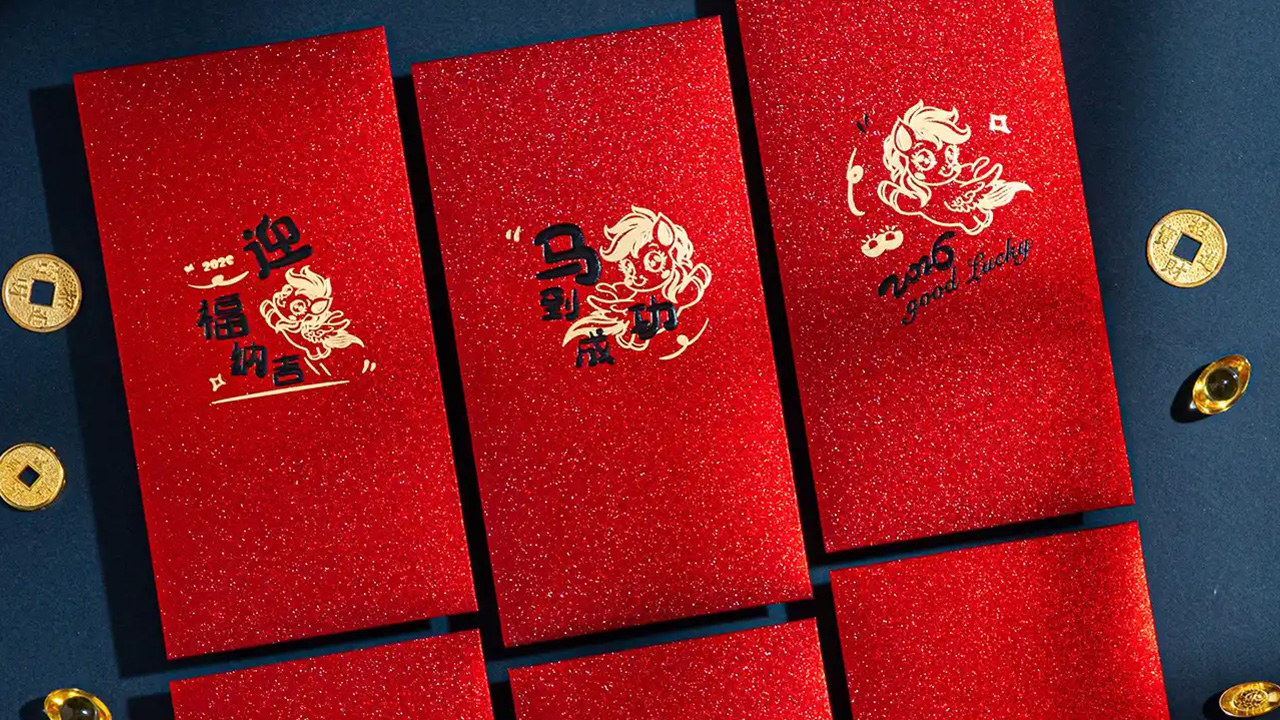
The exchange of red envelopes (红包, hóngbāo in Mandarin; 利是, lai see in Cantonese) ranks among Chinese New Year’s most beloved customs. These bright crimson packets contain money and carry wishes for luck, prosperity, and blessings.
The History and Meaning Behind Lucky Money
According to Dim Sum Warriors, the tradition dates back to the Han Dynasty (202 BC – 220 AD). Originally called 压胜钱 (yā shèng qián), meaning “evil-suppressing money,” early red envelopes contained metal coins carved with auspicious phrases rather than currency.
The red color carries deep significance. In Chinese culture, red represents happiness, prosperity, good fortune, and protection against evil. The practice evolved from ancient beliefs that red packets could ward off a demon named Sui (祟) that terrorized sleeping children on New Year’s Eve.
The money inside is called 压岁钱 (yā suì qián), which can translate as either “age-suppressing money” or “demon-suppressing money”—a linguistic evolution reflecting how the tradition shifted from protection to blessing.
Rules and Etiquette for Red Envelope Exchange
Who gives red envelopes:
- Married individuals give to unmarried people (regardless of age)
- Elders give to younger family members
- Employers give to employees (as year-end bonuses)
- Couples typically give two envelopes (one from each person) in Cantonese culture, or one envelope together in northern China and Taiwan
Who receives red envelopes:
- Children and unmarried adults
- Elderly parents and grandparents
- Service staff encountered during the holiday
Important Guidelines for Giving Hongbao
| Do | Don’t |
|---|---|
| Use crisp, new bills | Give wrinkled or dirty money |
| Choose even amounts (except for funerals) | Include the number 4 (sounds like “death”) |
| Include lucky numbers like 6 (smooth) or 8 (prosperity) | Put coins in envelopes (associated with charity) |
| Present and receive envelopes with both hands | Open envelopes in front of the giver |
| Seal envelopes properly | Leave envelopes unsealed |
According to Google Arts & Culture, long queues form at banks before Chinese New Year as people exchange worn bills for fresh currency.
Digital Red Envelopes in Modern Times
Technology has transformed this ancient practice. Platforms like WeChat and Alipay now facilitate digital red envelope transfers. Users can send virtual hongbao directly to friends’ and family’s smartphones, sometimes even to celebrities. This modern adaptation maintains the gesture’s spirit while accommodating long-distance relationships and busy schedules.
Chunyun 2026: Surviving the World’s Largest Annual Human Migration
The Spring Festival travel rush, known as Chunyun (春运), represents humanity’s largest annual migration. During this 40-day period, hundreds of millions of people traverse China to reunite with families for the holiday.
Record-Breaking Travel Numbers Expected for 2026
According to Xinhua News Agency, inter-regional passenger trips during the 2026 Spring Festival travel rush are projected to reach a record high of 9.5 billion. The National Development and Reform Commission (NDRC) released these figures on January 29, 2026.
Key statistics for Chunyun 2026:
- Duration: February 2 to March 13, 2026 (40 days)
- Total trips: 9.5 billion (projected)
- Self-driving: Approximately 80% of total travel
- Railway passengers: 540 million projected
- Air travelers: 95 million projected
- Daily peak capacity: Over 14,000 passenger trains nationwide
Why Chunyun Creates Such Massive Movement
Several factors drive this extraordinary migration:
- Economic transformation: Hundreds of millions of workers have relocated from rural villages to urban centers for employment
- Cultural obligation: Returning home for reunion dinner carries profound emotional and social importance
- Limited holiday time: With only one or two week-long breaks annually, Spring Festival offers the best opportunity for extended family visits
- School schedules: Four-week breaks allow students to spend significant time in ancestral hometowns
Practical Travel Tips for Navigating Chunyun
Book transportation early: Train tickets become available 15 days before departure. During peak periods, popular routes sell out within minutes of release.
Consider alternative routes: Major city-to-city corridors experience extreme congestion. Indirect itineraries through smaller cities may offer better availability.
Arrive at stations early: Travel China Guide recommends reaching train stations at least 1.5 hours before departure during Chunyun.
Pack light: Crowded conditions make managing heavy luggage difficult. Clearly mark your bags for easy identification.
Dress warmly: Temporary waiting areas outside stations often lack heating or air conditioning.
Keep documents accessible: China’s real-name ticketing policy requires valid identification for all travelers.
Essential Chinese New Year Traditions and Customs You Should Know
Beyond food and red envelopes, Chinese New Year encompasses dozens of customs accumulated over thousands of years. Understanding these practices deepens appreciation for the festival’s cultural significance.
Spring Cleaning Before New Year (大扫除, Dà Sǎochú)
In the days preceding Chinese New Year, families thoroughly clean their homes. This practice, called 大扫除 (dà sǎochú), literally means “big cleaning.”
The Chinese word for dust (尘, chén) sounds similar to the word for “old” (陈, chén). By sweeping away dust, families symbolically expel bad luck from the previous year and prepare their homes to receive fresh fortune. Every corner gets attention—floors, walls, windows, and even cobwebs from ceilings.
Importantly, cleaning is prohibited on New Year’s Day itself. Sweeping on the first day would “sweep away” the newly arrived good luck.
Decorating with Red: Couplets, Lanterns, and Paper Cuttings
Homes, businesses, and streets transform into seas of red during Spring Festival:
Spring couplets (春联, chūnlián) are pairs of poetic phrases written in black ink on red paper, hung on either side of doorframes. These express wishes for prosperity, happiness, and good fortune. The tradition dates back over 1,000 years to when people hung peach wood charms for protection.
Red lanterns (红灯笼, hóng dēnglóng) illuminate homes, streets, parks, and public spaces. They represent hope, warmth, and reunion while driving away evil spirits.
Paper cuttings (剪纸, jiǎnzhǐ) featuring zodiac animals, the character 福 (fú, meaning fortune), and auspicious symbols adorn windows and walls. This folk art tradition spans over 1,500 years.
The character 福 often appears hung upside-down. The Chinese word for “upside-down” (倒, dào) sounds like “arrival” (到, dào), so an inverted 福 signifies “fortune has arrived.”
Firecrackers and Fireworks at Midnight
The stroke of midnight on New Year’s Eve triggers billions of fireworks across China—more than any other time or place on Earth. The deafening explosions serve the same purpose as in the Nian legend: scaring away evil spirits and welcoming the new year with explosive celebration.
In rural areas, firecracker displays can last over an hour, covering roads in red paper remnants and filling the sky with smoke. Urban areas have implemented restrictions due to safety and pollution concerns, though celebrations remain vibrant.
Lion and Dragon Dances
Lion dances (舞狮, wǔshī) and dragon dances (舞龙, wǔlóng) animate streets throughout the festival period. Performers manipulate elaborate costumes to mimic animal movements, accompanied by drums, cymbals, and gongs.
These dances bring prosperity and good luck to homes and businesses. The lion, in particular, connects to the Nian legend—its loud, colorful performance frightens away evil spirits while attracting fortune.
Staying Up Late on New Year’s Eve (守岁, Shǒu Suì)
Many families practice 守岁 (shǒu suì)—literally “guarding the year”—by staying awake through midnight and into New Year’s Day. This tradition carries multiple meanings:
- Protection: Remaining vigilant against the Nian monster
- Longevity: For parents, staying up longer grants them longer life
- Welcoming luck: Being awake ensures you’re present to receive the new year’s fortune
Modern families often fulfill this tradition by watching the CCTV Spring Festival Gala, a marathon variety show running from 8 PM to past midnight.
Taboos and Prohibitions for the First Days
Chinese New Year comes with numerous prohibitions designed to protect good fortune:
On New Year’s Day, avoid:
- Sweeping floors (sweeps away luck)
- Washing hair or clothes (washes away fortune)
- Using knives or scissors (cuts off good luck)
- Breaking dishes (brings misfortune; if something breaks, say “岁岁平安” meaning “peace every year”)
- Eating porridge for breakfast (associated with poverty)
- Saying negative words about death, illness, or misfortune
- Crying or arguing (sets tone for the entire year)
How to Say Happy New Year in Chinese: Greetings and Blessings
Proper greetings enhance Chinese New Year celebrations. Here are essential phrases to master:
Common Chinese New Year Greetings
| Chinese | Pinyin | Meaning |
|---|---|---|
| 新年快乐 | Xīnnián kuàilè | Happy New Year |
| 恭喜发财 | Gōngxǐ fācái | Wishing you prosperity (Kung Hei Fat Choi in Cantonese) |
| 万事如意 | Wànshì rúyì | May all your wishes come true |
| 身体健康 | Shēntǐ jiànkāng | Wishing you good health |
| 马到成功 | Mǎ dào chénggōng | Achieve immediate success (especially appropriate for Horse year) |
| 大吉大利 | Dàjí dàlì | Great luck and prosperity |
| 年年有余 | Niánnián yǒuyú | Abundance year after year |
| 步步高升 | Bùbù gāoshēng | May you rise step by step (career advancement) |
| 心想事成 | Xīnxiǎng shìchéng | May all your heart’s desires come true |
The greeting “恭喜发财” (Gōngxǐ fācái) is often followed by “红包拿来” (hóngbāo ná lái)—”give me a red envelope”—especially by children.
Where to Celebrate Chinese New Year 2026: Top Destinations Worldwide
Chinese New Year celebrations extend across the globe. Whether in Asia or abroad, numerous destinations offer spectacular festivities.
Celebrations in Greater China
Beijing, Mainland China: Temple fairs (庙会, miàohuì) transform parks into traditional marketplaces. Ditan Park, Longtan Park, and the Summer Palace host elaborate events featuring folk performances, games, and street food.
Hong Kong: Victoria Harbour’s fireworks display lights up the iconic skyline. The Tsim Sha Tsui waterfront parade features floats, performers, and celebrities. Flower markets in Victoria Park attract millions of visitors.
Taiwan: Taipei’s Chiang Kai-shek Memorial Hall hosts traditional performances. Pingxi District draws crowds for its famous sky lantern festival, where thousands of illuminated paper lanterns float into the night sky.
Southeast Asian Celebrations
Singapore: Chinatown’s streets blaze with light installations and cultural performances. The Chingay Parade, one of Asia’s largest street celebrations, features elaborate floats and multicultural performances.
Malaysia: Kuala Lumpur and Penang transform their Chinatowns with cultural events. The Thaipusam festival occasionally overlaps, creating unique multicultural celebrations.
Thailand: Bangkok’s Yaowarat Road (Chinatown) hosts one of Southeast Asia’s most vibrant celebrations, with dragon dances, special markets, and temple ceremonies.
Western Celebrations
San Francisco, USA: The oldest and largest Chinese New Year celebration outside Asia, featuring a famous parade with its 268-foot Golden Dragon.
London, UK: Trafalgar Square and Chinatown host Europe’s largest Chinese New Year celebration, attracting over 700,000 visitors.
Sydney, Australia: The Sydney Chinese New Year Festival spans multiple weeks with dragon boat races, food markets, and the Twilight Parade through the city center.
Chinese New Year 2026 Gift-Giving Guide: What to Bring When Visiting
Visiting friends and relatives during Spring Festival requires bringing appropriate gifts. The right present shows respect and thoughtfulness; the wrong one can cause offense.
Appropriate Gifts for Chinese New Year Visits
- Oranges and tangerines: Their golden color resembles wealth; names sound like “luck” (橘, jú) and “gold” (金, jīn)
- High-quality tea: Represents respect and refinement
- Premium alcohol: Particularly Chinese baijiu or imported wines
- Gift boxes of candies and chocolates: Sweetness for a sweet year
- Fruit baskets: Especially pomelos, apples, and grapes
- Health supplements: Show concern for recipients’ wellbeing
Gifts to Avoid
- Clocks: “Giving a clock” (送钟, sòng zhōng) sounds like “attending a funeral” (送终, sòng zhōng)
- Pears: “Sharing pears” (分梨, fēn lí) sounds like “separation” (分离, fēn lí)
- Shoes: “Shoes” (鞋, xié) sounds like “evil” (邪, xié)
- Sharp objects: Scissors or knives symbolize cutting ties
- White or black items: Colors associated with funerals
- Handkerchiefs: Associated with wiping tears and sadness
- Umbrellas: “Umbrella” (伞, sǎn) sounds like “scatter” (散, sàn), implying separation
Planning Your Trip to China During Chinese New Year 2026
Visiting China during Spring Festival offers unique cultural experiences but requires careful planning.
What to Expect During the Holiday Period
Advantages:
- Witnessing authentic cultural celebrations
- Experiencing temple fairs and traditional performances
- Enjoying festively decorated cities
- Reduced crowds at some tourist attractions after the initial rush
Challenges:
- Many businesses, restaurants, and attractions close
- Transportation becomes extremely crowded and expensive
- Hotels in popular destinations book up months in advance
- Service availability decreases significantly
Practical Recommendations for 2026 Visitors
Book accommodation early: Reserve hotels at least 2-3 months before the festival, especially in major cities.
Arrange transportation in advance: Flight and train tickets sell out quickly during Chunyun.
Carry cash: Many smaller businesses close their online payment systems during the holiday.
Confirm attraction hours: Call ahead to verify opening times, as many sites modify schedules.
Plan around the peak: The most congested travel days fall immediately before and after New Year’s Day. Consider arriving well before February 16th or waiting until late February.
Embrace the experience: While challenging logistically, Chinese New Year offers unparalleled cultural immersion unavailable at any other time.
Conclusion: Embracing the Spirit of Chinese New Year 2026
Chinese New Year 2026 ushers in the Year of the Fire Horse—a time of dynamic energy, bold action, and passionate pursuits. Whether you’re celebrating in Beijing or San Francisco, with family or friends, the festival’s core message remains constant: renewal, unity, and hope.
This ancient celebration connects generations through shared meals, time-honored customs, and mutual blessings. The reunion dinner brings families together across vast distances. Red envelopes pass luck from elders to youth. Firecrackers announce fresh beginnings. Lion dances invite prosperity through every doorway.
As you prepare for February 17th, 2026, consider incorporating these traditions into your own celebration. Serve fish for abundance. Display red decorations for protection. Stay up late to guard the year. Most importantly, gather with loved ones to mark another turn in the eternal cycle.
马到成功! (Mǎ dào chénggōng!) May success come to you swiftly, like a victorious horse arriving at the battlefield.
Frequently Asked Questions About Chinese New Year 2026
When does Chinese New Year 2026 start and end?
Chinese New Year 2026 begins on February 17, 2026 (New Year’s Day) and extends through the Lantern Festival on March 3, 2026. New Year’s Eve falls on February 16, 2026.
What animal is 2026 in the Chinese zodiac?
2026 is the Year of the Horse, specifically the Fire Horse. This combination occurs only once every 60 years.
What are the lucky colors for 2026?
Lucky colors for the Horse year include red, pink, purple, yellow, brown, and green. Colors to avoid are blue, white, black, and gold.
What are the lucky numbers for 2026?
Lucky numbers include 2, 3, 7, 8, and 9. Avoid the numbers 1, 4, 5, and 6.
How long is the Chinese New Year holiday in 2026?
China’s official public holiday runs for 8 days (February 16-22, 2026). The broader festival period spans approximately 16 days through the Lantern Festival.
What foods are traditionally eaten during Chinese New Year?
Essential dishes include fish (abundance), dumplings (wealth), spring rolls (prosperity), niangao (rising success), whole chicken (luck), longevity noodles (long life), and tangyuan (family unity).
When should I give red envelopes?
Red envelopes are traditionally exchanged during the reunion dinner on New Year’s Eve and throughout the first few days of the new year. Married individuals give to unmarried people, and elders give to younger family members.
The Cultural Significance of Chinese New Year in the Modern World
Chinese New Year represents far more than a calendar milestone. It embodies the philosophical foundations of Chinese civilization—the cyclical nature of time, the importance of family bonds, the balance between tradition and progress, and humanity’s relationship with nature and the spiritual realm.
In an increasingly globalized world, the Spring Festival serves as a powerful connector. Second and third-generation Chinese diaspora members often reconnect with their heritage through New Year celebrations. Non-Chinese communities embrace the festival’s universal themes of renewal and hope. Cities worldwide now officially recognize the Lunar New Year alongside other cultural holidays.
The Year of the Fire Horse 2026 arrives at a fascinating moment in history. Ancient traditions persist alongside digital red envelopes and video-call reunion dinners. Grandparents share zodiac wisdom with grandchildren who check horoscope apps on their smartphones. Temple visits coexist with social media greetings.
This blending of old and new exemplifies Chinese culture’s remarkable adaptability. The same civilization that invented paper, printing, gunpowder, and the compass continues innovating while preserving 4,000 years of continuous cultural heritage.
As you celebrate Chinese New Year 2026, you participate in this living tradition. Every red envelope exchanged, every dumpling shared, every firecracker lit connects you to countless generations who performed these same rituals—and to future generations who will continue them.
恭喜发财,身体健康! Wishing you prosperity and good health in the Year of the Fire Horse!
This comprehensive guide was researched and written to provide accurate, culturally respectful information about Chinese New Year traditions, the Year of the Horse zodiac, and Spring Festival customs. Sources include China Highlights, Travel China Guide, Xinhua News Agency, the Royal Museums Greenwich, and other authoritative references on Chinese culture and customs.