The most important meal of the year brings families together across generations. Here is everything you need to know about planning, preparing, and hosting an unforgettable Chinese New Year Eve dinner.
The kitchen fills with the fragrance of ginger and soy sauce. Steam rises from bamboo baskets. Laughter echoes through the hallway as relatives remove their shoes at the door. Grandma inspects the fish, ensuring the head points toward the guest of honor. Children chase each other around the dining table, already eyeing the red envelopes tucked into their parents’ pockets.
This scene plays out in millions of homes every year during the Chinese New Year reunion dinner, known as Nian Ye Fan (年夜饭) or Tuan Nian Fan (团年饭). It is, without question, the most significant meal in Chinese culture.
According to Xinhua News Agency, China expects a record 9.5 billion passenger trips during the 2026 Spring Festival travel rush. This 40-day period, called Chunyun, represents the world’s largest annual human migration. The destination? Home. The purpose? This one sacred meal.
Whether you are hosting your first reunion dinner or continuing a family tradition spanning generations, this guide will walk you through every aspect of creating an authentic, meaningful celebration.
What Is Chinese New Year Reunion Dinner and Why Does It Matter
The reunion dinner takes place on Chinese New Year’s Eve, the final evening of the lunar calendar year. In 2026, this falls on February 16th. The meal typically begins in the late afternoon or early evening. Families aim to finish eating before midnight, when fireworks announce the arrival of the new year.
But this dinner is far more than just a meal. It represents the culmination of an entire year. Family members set aside differences. Debts are settled. Old grievances are forgiven. The slate is wiped clean.
The significance runs deep:
- It honors ancestors who came before
- It strengthens bonds between living family members
- It sets the tone for the entire coming year
- It allows parents to pass blessings to children
- It gives children the opportunity to show filial piety to elders
The tradition dates back over 3,000 years to the Shang Dynasty (c. 1600–1046 BCE). Originally rooted in ancestral worship and agricultural rituals, the meal served as a way to give thanks for the harvest and pray for abundance in the coming year.
In traditional Chinese society, extended families lived in multi-generational households. The reunion dinner reinforced social bonds and affirmed respect for elders. Even today, this remains unchanged. The dinner usually takes place at the home of the most senior family member. For married couples, this traditionally means the husband’s parents’ home.
When to Start Planning Your Lunar New Year Eve Dinner
Successful hosting requires advance preparation. The Chinese approach this celebration with deliberate intention. Every detail matters.
Two to Three Weeks Before
Reserve restaurant seating if dining out. Major restaurants in cities like Beijing, Shanghai, and Hong Kong require reservations months in advance. If you are considering a restaurant celebration, book early or expect disappointment.
Begin deep cleaning. Chinese tradition requires thorough house cleaning before the new year. This symbolizes sweeping away bad luck and making room for good fortune. The Chinese word for dust, chen (尘), sounds like the word for old. Cleaning removes the old to welcome the new.
Stock up on decorations. Red is the dominant color. Gold accompanies it. Purchase red lanterns, paper cuttings, spring couplets (chunlian), and any zodiac decorations representing the year’s animal.
One Week Before
Finalize your guest list. Confirm attendance from all family members. The reunion dinner requires full participation. Missing this meal carries significant cultural weight. It suggests neglecting familial duty.
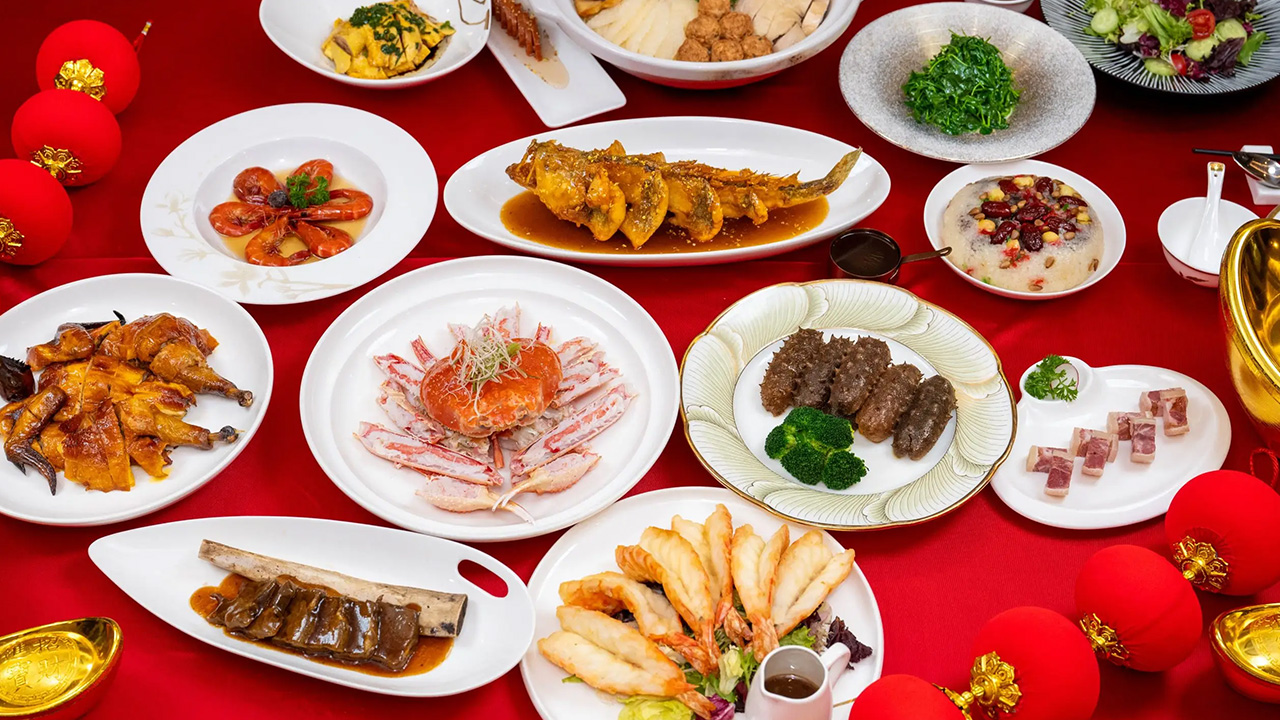
Plan your menu. Consider regional traditions, dietary restrictions, and the symbolic meanings of each dish. Balance is essential. Include a variety of proteins, vegetables, and starches.
Shop for specialty ingredients. Items like whole fish, dried mushrooms, black moss (fat choy), lotus seeds, and specific vegetables may require trips to Asian grocery stores or advance ordering.
Two to Three Days Before
Begin preparing ingredients. Many dishes benefit from advance preparation. Marinate meats. Soak dried ingredients. Make dumpling fillings. Prepare sauces.
Purchase fresh items. Fish, poultry, and vegetables should be bought close to the celebration for optimal freshness. A whole fish must be fresh. Its eyes should be clear, not cloudy.
Day Before
Complete major cooking. Braised dishes, stews, and items meant to be served cold can be finished today. This reduces stress on the actual day.
Set the table. Arrange place settings, decorations, and centerpieces. Ensure you have enough chairs for all guests.
Day Of
Final preparations. Cook dishes that require last-minute attention. Steam the fish. Fry spring rolls. Boil dumplings. Arrange food on platters with attention to visual presentation.
Traditional Chinese New Year Dishes and Their Lucky Meanings
Every dish served at the reunion dinner carries symbolic weight. The Chinese select foods based on visual appearance, name pronunciation, and traditional associations. Understanding these meanings transforms cooking from mere sustenance into cultural expression.
Whole Fish: The Centerpiece of Abundance
Chinese name: 鱼 (Yú)
Symbolism: Surplus, abundance, prosperity
Fish appears on virtually every reunion dinner table across China. The word for fish (yú) sounds identical to the word for surplus (余). Serving fish expresses the wish: “May there be abundance year after year” (nián nián yǒu yú).
Critical preparation rules:
- The fish must be served whole, with head and tail intact
- This represents a good beginning and ending to the year
- Position the fish head toward the guest of honor or eldest family member
- Do not finish the fish. Leave some on the plate overnight
- This leftover symbolizes surplus carrying into the new year
- In regions south of the Yangtze River, the head and tail should remain uneaten until the next day
Popular preparations include steamed fish with ginger and scallion, braised fish in soy sauce, and sweet and sour whole fish.
Dumplings: Wealth Wrapped in Dough
Chinese name: 饺子 (Jiǎozi)
Symbolism: Wealth, prosperity, family togetherness
Dumplings dominate northern Chinese reunion dinners. Their shape resembles ancient Chinese gold ingots (yuanbao), making them powerful emblems of wealth. The word jiaozi also sounds like “change of years,” connecting them to the transition into the new year.
Traditional practices:
- Families gather to wrap dumplings together before the meal
- This collective activity strengthens family bonds
- Some families hide a coin inside one dumpling
- Whoever finds the coin will have extra luck in the coming year
- Dumplings are often eaten at midnight as the clock strikes the new year
Fillings vary by region and family preference. Common options include pork and cabbage, beef and scallion, shrimp, and vegetarian mushroom combinations.
Whole Chicken: Unity and Prosperity
Chinese name: 鸡 (Jī)
Symbolism: Good luck, prosperity, family unity
The word for chicken sounds like jí (吉), meaning auspicious or lucky. Serving a whole chicken, including head and feet, symbolizes completeness, unity, and a good beginning and end to the year.
Special traditions:
- The chicken is typically braised or roasted
- It is often offered first to ancestors at the family altar
- The feet hold particular significance
- The breadwinner traditionally eats the chicken feet
- The word for grabbing (zhua) sounds like the word for chicken talons
- Eating them represents “grabbing onto wealth”
White-cut chicken, soy sauce chicken, and Cantonese roast chicken are popular preparations.
Spring Rolls: Golden Bars of Prosperity
Chinese name: 春卷 (Chūnjuǎn)
Symbolism: Wealth, prosperity, spring
Spring rolls get their name from the Spring Festival. Their golden-yellow color after frying resembles gold bars. Serving them expresses the blessing “a ton of gold” (huangjin wanliang).
These are particularly popular in East China. Fillings typically include julienned vegetables, sometimes with pork or shrimp.
Glutinous Rice Cake: Rising Success
Chinese name: 年糕 (Niángāo)
Symbolism: Advancement, increasing prosperity
This sticky rice cake holds special significance. Its name sounds like “year higher” (nian gao). Eating it expresses wishes for improvement and advancement in the coming year.
Different meanings for different ages:
- For elders: wishes for longevity
- For working adults: wishes for promotion and higher income
- For children: wishes for growth in height and academic achievement
Rice cakes are popular in southern China, especially Guangdong province. They can be steamed, pan-fried, or added to soups.
Sweet Rice Balls: Family Reunion
Chinese name: 汤圆 (Tāngyuán)
Symbolism: Family reunion, togetherness, completeness
These glutinous rice balls take their meaning from their round shape. The Chinese associate roundness with unity and completeness. The word tangyuan also sounds like tuanyuan (团圆), meaning reunion.
While primarily eaten during the Lantern Festival (15 days after New Year), southern Chinese families enjoy them throughout the Spring Festival period. Fillings include black sesame paste, red bean paste, and peanut butter. They are served in warm sweet syrup.
Longevity Noodles: Long Life
Chinese name: 长寿面 (Chángshòu Miàn)
Symbolism: Longevity, long life
These noodles must remain uncut. Their length symbolizes the eater’s lifespan. Breaking them would symbolically shorten one’s life. They are especially popular in northern China on New Year’s Day.
Vegetables: Renewal and Wealth
Symbolism varies by type:
- Lettuce (shēngcài): sounds like “growing wealth”
- Chinese broccoli (gàilán): signifies harmony
- Baby bok choy: represents luck and fortune
- Black moss (fà cài): sounds like “prosperity” (fā cái)
Vegetables balance the richness of meat dishes. They also represent spring, renewal, energy, and progress.
Complete Reunion Dinner Menu Planning for Beginners
Planning a balanced menu requires consideration of variety, symbolism, and practical cooking logistics. Here is a framework for building your menu.
Essential Categories
| Category | Number of Dishes | Examples |
|---|---|---|
| Fish | 1 (mandatory) | Steamed whole fish, braised fish |
| Poultry | 1-2 | Whole roast chicken, duck |
| Pork | 1-2 | Braised pork belly, sweet and sour pork |
| Seafood (optional) | 1-2 | Shrimp, abalone, crab |
| Vegetables | 2-3 | Stir-fried greens, braised mushrooms |
| Dumplings/Rice dishes | 1-2 | Jiaozi, tangyuan, nian gao |
| Soup | 1 | Hot pot broth, chicken soup |
Sample Menu for 8-10 Guests
Appetizers:
- Spring rolls (prosperity)
- Cold cucumber salad
Main dishes:
- Steamed whole sea bass with ginger and scallion (abundance)
- Soy sauce braised whole chicken (unity)
- Red-braised pork belly (strength and wealth)
- Stir-fried shrimp with vegetables (happiness—shrimp sounds like laughter in Cantonese)
Vegetables:
- Garlic sautéed lettuce (growing wealth)
- Braised shiitake mushrooms with bok choy (fortune)
Starches:
- Pork and cabbage dumplings (wealth)—northern style
- Fried rice cakes (advancement)—southern style
Dessert:
- Sweet rice balls in ginger syrup (reunion)
- Fresh fruit plate with oranges and tangerines (luck)
Regional Variations to Consider
Chinese cuisine varies dramatically by region. Understanding these differences helps you create an authentic menu reflecting your family’s heritage.
| Region | Signature Dishes | Characteristics |
|---|---|---|
| Northern China | Dumplings, stews, hand-pulled noodles | Hearty, wheat-based, bold flavors |
| Southern China | Rice cakes, seafood, tangyuan | Lighter, rice-based, subtle seasonings |
| Cantonese | Roast meats, dim sum, seafood | Emphasis on fresh ingredients, natural flavors |
| Sichuan | Spicy dishes, hot pot | Bold spices, numbing peppercorns |
| Shanghainese | Lion’s head meatballs, sweet dishes | Slightly sweet, rich sauces |
| Hakka | Stuffed tofu, braised pork belly | Preserved meats, rustic preparations |
How to Set Up the Perfect Chinese New Year Dinner Table
The table setting communicates as much as the food itself. Every element carries meaning. Attention to detail shows respect for tradition and guests.
The Round Table Tradition
Chinese reunion dinners traditionally take place at round tables. This shape holds deep significance:
- Represents completeness and unity
- Ensures no one sits at a “head” position
- Symbolizes equality among family members
- Facilitates conversation across the table
- Makes sharing dishes easier with a lazy Susan
If you do not have a round table, rectangular tables work fine. However, consider seating arrangements carefully.
Color Scheme: Red, Gold, and Prosperity
Red dominates the color palette. It symbolizes:
- Good luck and fortune
- Vitality and energy
- Protection against evil spirits
- Joy and celebration
Gold complements red. It represents:
- Wealth and prosperity
- Abundance
- Achievement
Avoid these colors:
- White: associated with mourning and funerals
- Black: represents bad luck and death
- Blue: sometimes associated with death in certain regions
Essential Table Elements
Tablecloth or runner: Red is ideal. Gold embroidery adds elegance.
Dinnerware: White plates are acceptable and traditional. Gold-rimmed plates add prosperity symbolism. Red accent plates work well for desserts.
Flatware: Gold utensils enhance the wealth symbolism. Provide both chopsticks and regular utensils for guests unfamiliar with chopstick use.
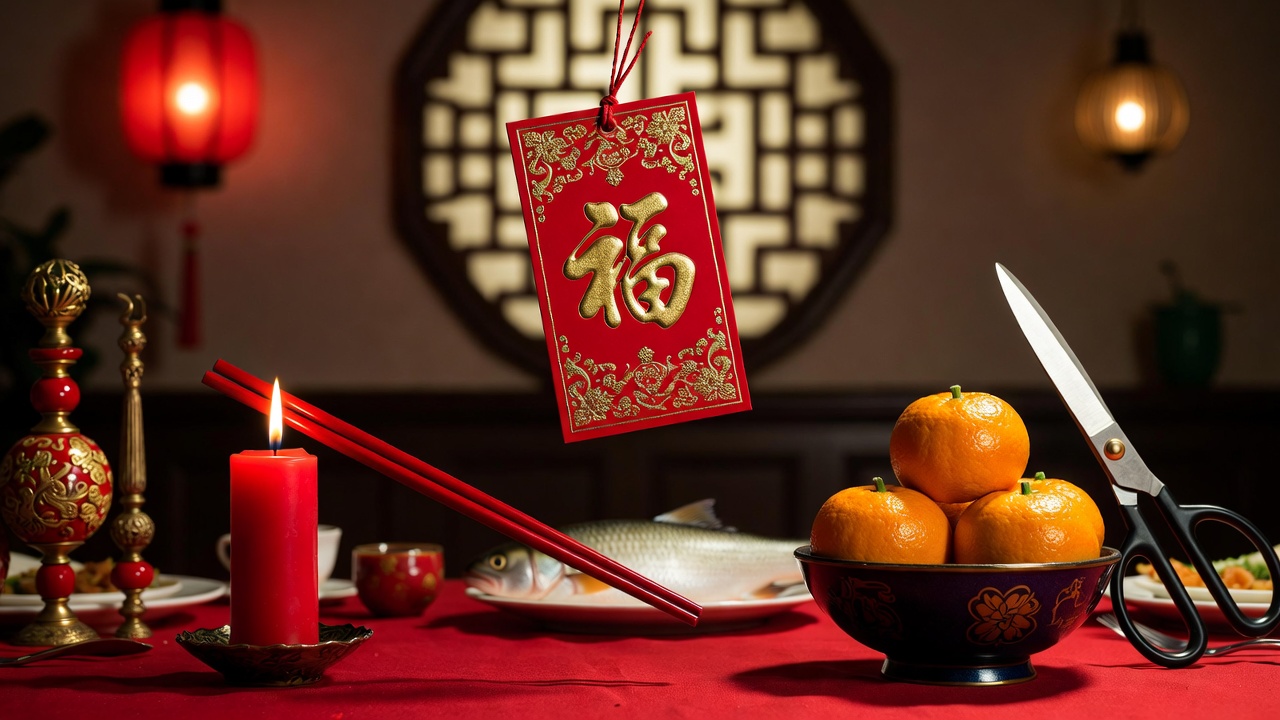
Chopstick rests: Essential for proper placement. Chopsticks should never be stuck upright in rice. This resembles incense at funerals.
Serving dishes: Round platters echo the round table tradition. Use large enough platters for abundant presentation.
Decorative Elements
Centerpiece options:
- Bowl of oranges and tangerines (wealth and luck)
- Blooming orchids or chrysanthemums (prosperity and longevity)
- Kumquat tree (gold and good fortune)
- Candles in red or gold holders
- Arrangement of red flowers
Additional decorations:
- Paper lanterns hanging above the table
- Chinese knots (zhongguo jie) tied around napkins
- Small gold ingot replicas
- Paper cuttings with auspicious designs
- Spring couplets on nearby walls
Red envelopes: Place prepared hongbao near children’s place settings as a decorative element. They will be distributed after dinner.
Red Envelope Etiquette for Chinese New Year Dinner Hosts
The exchange of red envelopes (hongbao in Mandarin, lai see in Cantonese) represents one of the most anticipated traditions of the reunion dinner. Understanding proper etiquette prevents embarrassment and ensures your gestures convey intended blessings.
Who Gives Red Envelopes
Traditional rule: Married individuals give to unmarried individuals.
More specifically:
- Parents give to their children
- Grandparents give to grandchildren
- Married adults give to unmarried relatives, regardless of age
- Employers give to employees
- Elders give to younger family members
Both spouses give separately. Do not make the mistake of giving one envelope from both of you. Each spouse should prepare and give their own envelopes.
Who Receives Red Envelopes
- Children (most common recipients)
- Unmarried adults
- Retired seniors (from working children)
- Service workers you interact with regularly (security guards, cleaners, hairdressers)
How Much Money to Include
The amount matters less than the gesture. However, certain rules apply:
Avoid these numbers:
- 4 in any form (4, 40, 400): sounds like “death” in Chinese
- Odd numbers (except 9): associated with funerals
- 7: considered unlucky in some regions
Preferred numbers:
- 8: sounds like “prosperity” (fā)
- 6: represents smooth progress
- 9: symbolizes longevity (largest single digit)
- Even numbers generally
Suggested amounts by relationship:
| Recipient | Suggested Amount (CNY) | Suggested Amount (USD) |
|---|---|---|
| Your own children | 500-2000 | 100-300 |
| Nieces/nephews | 200-500 | 30-80 |
| Parents/in-laws | 500-2000 | 100-300 |
| Extended family children | 100-200 | 20-40 |
| Service workers | 20-50 | 5-10 |
Presentation Rules
Use new bills only. In the days before New Year, banks see long queues as people exchange old currency for crisp new notes. Wrinkled or torn bills are considered inauspicious.
Use fresh envelopes. Never recycle envelopes from previous years. Each year brings new designs featuring the zodiac animal.
Give and receive with both hands. This shows respect.
Do not open in front of the giver. Wait until you are home or the giver has left. Opening immediately is considered rude.
For children receiving: Traditional practice involves placing the envelope under the pillow overnight. This connects to the legend of protection against evil spirits.
Digital Red Envelopes
Modern families increasingly use digital platforms like WeChat Pay and Alipay to send virtual hongbao. These gained popularity around 2014 and have become mainstream.
Digital envelopes work well for:
- Long-distance relatives who cannot attend in person
- Younger family members comfortable with technology
- Group exchanges in family chat groups
- Gaming elements (randomized amounts in group distributions)
However, many families still prefer physical envelopes for the reunion dinner. The tangible exchange carries emotional weight that digital transfers cannot replicate.
Step by Step Guide to Cooking Chinese New Year Dinner at Home
Executing the reunion dinner requires organization. Here is a practical timeline for the day of the celebration.
Morning (8:00 AM – 12:00 PM)
8:00 AM – Set up your workspace
- Clear countertops
- Gather all equipment: wok, steamer, pots, cutting boards
- Check that all ingredients are ready
- Ensure rice cooker is clean and ready
9:00 AM – Begin long-cooking items
- Start braised dishes (braised pork belly, braised chicken)
- These benefit from slow cooking and reheating
- Prepare stocks and broths
10:00 AM – Prep all vegetables
- Wash and cut all vegetables
- Organize by dish
- Store in containers in refrigerator
- Prepare aromatics (mince garlic, slice ginger, chop scallions)
11:00 AM – Prepare meat and seafood
- Clean and prep fish (or have fishmonger do this)
- Cut meat into portions
- Marinate proteins as needed
- Devein and clean shrimp
Afternoon (12:00 PM – 5:00 PM)
12:00 PM – Take a break and have lunch
- You need energy for the evening
- Clear workspace and wash dishes
- Review timeline and menu
1:00 PM – Make dumplings (if serving)
- Prepare filling if not done previously
- Set up dumpling-making station
- Involve family members in wrapping
- This is a bonding activity
3:00 PM – Final ingredient prep
- Take fish out of refrigerator to come to room temperature
- Arrange all mise en place
- Double-check table settings
- Ensure serving dishes are ready
4:00 PM – Begin cooking appetizers and cold dishes
- Fry spring rolls (keep warm in low oven)
- Prepare cold dishes and salads
- Set out at room temperature items
Evening (5:00 PM – Dinner Time)
5:00 PM – Cook main dishes in order
- Start with dishes that hold well warm
- Braised items can stay on low heat
- Stir-fries should be cooked last (they deteriorate quickly)
5:30 PM – Steam the fish
- This should be done close to serving time
- Steaming takes 10-15 minutes depending on fish size
- Prepare sauce for pouring over fish
6:00 PM – Final preparations
- Boil dumplings (if serving)
- Heat any items that were prepared in advance
- Plate and arrange dishes
- Garnish as needed
6:30 PM – Call family to table
- Perform ancestor worship if this is your tradition
- Offer food at family altar
- Light incense and bow
7:00 PM (approximately) – Begin dinner
- Timing varies by family
- Some start as early as 5:00 PM
- Others wait until 7:00 or 8:00 PM
- The meal continues for several hours
Chinese New Year Dinner Taboos and Superstitions to Avoid
The reunion dinner carries significant superstitious weight. Chinese tradition holds that actions during this time affect the entire coming year. Understanding what to avoid prevents unintentional offense or bad luck.
Words and Language Taboos
Never say these words during the celebration:
- Death, die, dying
- Sick, illness, disease
- Ghost, spirit
- Poor, poverty, broke
- Empty, gone, finished
- Kill, killing
- Break, broken, shattered
- Lose, lost, losing
- Pain, suffering
If you accidentally say something inauspicious, immediately counter with a blessing phrase like “大吉大利” (dàjí dàlì – great luck and prosperity).
Actions to Avoid on New Year’s Eve
Do not break anything. Breaking dishes, glasses, or mirrors symbolizes broken fortune or family discord. Handle items with extra care.
If something does break:
- Immediately say “岁岁平安” (suì suì píng ān – peace year after year)
- The word for “year” (suì) sounds like “broken” (suì)
- This phrase transforms the omen into a blessing
- Wrap the pieces in red paper
- Dispose of them after the fifth day
Do not leave food completely unfinished. While not finishing the fish is intentional, leaving plates completely empty can symbolize lack of abundance. Leave small amounts on serving dishes.
Do not quarrel or argue. Disagreements during the reunion dinner are considered very inauspicious. They set a tone of conflict for the entire year. Even if tensions exist, table them until after the festival.
Do not go to bed early. Staying up late, called shousui (守岁), expresses wishes for the longevity of parents. The later you stay awake, the longer your parents will live, according to tradition. Many families stay up until midnight to hear the New Year bell.
Do not turn off lights. Keep all lights in the house on throughout the night. Light drives away evil spirits and represents hope for a bright year ahead.
Food-Related Taboos
Do not serve broken or chipped dishware. This symbolizes eating into your own wealth. Inspect plates and bowls before use.
Do not finish all the fish. Leftovers must remain for symbolic surplus.
Do not serve congee or porridge on New Year’s Day. Historically considered “poor people’s food,” eating it on New Year’s morning might invite poverty.
Do not eat meat on New Year’s Day morning (in traditional families). The first meal should be vegetarian. Some believe this practice brings good luck for the entire year.
Post-Dinner Taboos
Do not sweep the floor on New Year’s Day. Sweeping symbolizes sweeping away good fortune. If you must clean, sweep from the outer edges of the room inward. Place debris in corners and dispose of it after the fifth day.
Do not wash hair on New Year’s Day. The word for hair (fà) sounds like the word for wealth (fā cái). Washing hair washes away fortune.
Do not use sharp objects. Knives and scissors “cut” good fortune. Most hairdressers close during this period for this reason.
Do not wear white or black. These colors are associated with mourning. Stick to red, gold, orange, and other bright colors.
Modern Adaptations for Hosting Chinese New Year Family Gathering
Contemporary life has transformed how many families celebrate. While core values remain unchanged, practical adaptations help busy families maintain traditions.
Restaurant Reunion Dinners
Increasingly, families opt to dine at restaurants rather than cook at home. This is especially common in urban areas where living spaces are small and kitchens limited.
Advantages:
- Reduces cooking burden on the host
- Professional preparation of difficult dishes
- Elegant atmosphere
- Accommodates larger groups
Considerations:
- Book months in advance
- Confirm the restaurant’s special New Year menu
- Ensure dishes carry proper symbolic meanings
- Request a private room if possible for family intimacy
- Restaurants typically offer two seatings: early (5:00-6:30 PM) and late (7:30-9:00 PM)
Semi-Prepared and Delivery Options
Many families now combine home cooking with purchased items. Supermarkets and e-commerce platforms offer ready-to-cook meal kits. These typically include:
- Pre-made dumplings ready for boiling or frying
- Marinated whole fish requiring only steaming
- Pre-braised meats needing only reheating
- Frozen rice cakes and tangyuan
- Pre-made sauces and condiments
This hybrid approach allows families to participate in cooking without the full burden of preparation from scratch.
Accommodating Different Dietary Needs
Modern families often include members with varied dietary requirements. Here is how to adapt:
Vegetarian guests:
- Many traditional dishes have vegetarian versions
- Buddhist-influenced households serve entirely vegetarian meals on New Year’s Day
- Mock meats made from tofu and mushrooms can substitute
- Focus on vegetables with auspicious meanings (lettuce, bok choy)
- Rice cakes and tangyuan are naturally vegetarian
Guests with allergies:
- Label dishes clearly
- Prepare at least two dishes free from common allergens
- Inform guests of ingredients in advance
- Keep shellfish and nut dishes on separate serving areas
Children’s needs:
- Milder versions of spicy dishes
- Smaller portions on kid-friendly plates
- Involve them in dumpling wrapping
- Give them responsibilities to make them feel included
Virtual Celebrations for Long-Distance Family
When family members cannot gather in person, technology bridges the gap:
- Set up video calls during the meal
- Send ingredients in advance so everyone cooks the same dishes
- Coordinate eating times across time zones
- Exchange digital red envelopes through WeChat Pay
- Share photos and videos throughout the evening
- Play online games together after dinner
The essence of the reunion dinner—connection, love, and hope for the future—transcends physical presence.
Chinese New Year Dinner Activities and Entertainment Ideas
The reunion dinner extends far beyond eating. Families spend hours together, enjoying each other’s company. Traditional activities fill the evening.
The CCTV Spring Festival Gala
The Spring Festival Gala (Chunwan) airs on CCTV from 8:00 PM until midnight. This annual television special is watched by hundreds of millions across China and Chinese communities worldwide.
The program features:
- Song and dance performances
- Comedy skits
- Magic shows
- Traditional Chinese opera
- Acrobatic performances
- Countdown to midnight
While younger generations increasingly criticize the show’s quality, it remains a background presence in most households. The familiar sounds connect generations and create shared experience.
Staying Up to Welcome the New Year (守岁)
Shousui literally means “guarding the year.” Families stay awake until midnight to bid farewell to the old year and welcome the new one.
Activities during this time include:
- Playing mahjong or poker
- Watching television together
- Chatting and catching up on family news
- Sharing memories and stories
- Eating snacks and drinking tea
- Playing with children
Midnight Traditions
When the clock strikes midnight:
- Fireworks explode across the country (where permitted)
- Families may ring bells or gongs
- In some regions, families visit temples to hear the New Year bell
- New Year greetings are exchanged: “新年快乐” (Xīnnián kuàilè – Happy New Year) or “恭喜发财” (Gōngxǐ fācái – Wishing you prosperity)
- Red envelopes are distributed to children
Games for All Ages
Mahjong: The quintessential Chinese game. Four players sit around a table for hours. Many families play all night.
Poker and card games: Equally popular, especially among those who do not know mahjong rules.
Dice games: Simple gambling games with red envelopes as prizes.
Games for children:
- Riddle contests
- Drawing competitions (zodiac animals)
- Red envelope treasure hunts
- Traditional Chinese board games
Frequently Asked Questions About Chinese New Year Reunion Dinner
What time does Chinese New Year dinner start?
Most families begin between 5:00 PM and 8:00 PM. Northern Chinese families tend to start earlier (5:30-6:30 PM) due to colder temperatures and earlier darkness. Southern families may begin later (7:30-8:00 PM). The meal continues for several hours, with families aiming to still be together at midnight.
Can the reunion dinner be held at a restaurant?
Yes. Restaurant celebrations have become increasingly common, especially in urban areas. The key is maintaining the symbolic elements: auspicious dishes, family togetherness, and the exchange of blessings. Book well in advance, as popular restaurants fill months ahead.
What if family members cannot attend in person?
Modern families adapt through video calls, sending gifts in advance, and coordinating virtual participation. While physical presence is ideal, the intention of connection matters most. Some families hold their reunion dinner on a nearby weekend if the actual date is inconvenient.
Do all Chinese families eat dumplings?
No. Dumplings are primarily a northern Chinese tradition. Southern families may instead emphasize rice cakes, tangyuan, or seafood. Regional variations are significant. The unifying element is the whole fish, which appears in nearly all regional traditions.
How long does the reunion dinner last?
Expect three to five hours or more. The meal itself may last two to three hours. Activities before dinner (ancestor worship) and after dinner (games, conversation, TV watching) extend the gathering until midnight or beyond.
Is it okay to bring gifts to someone else’s reunion dinner?
Yes. Appropriate gifts include:
- Oranges or tangerines (symbolizing wealth)
- High-quality tea
- Gift baskets with auspicious foods
- Alcohol (particularly Chinese rice wine)
Avoid clocks (associated with death), sharp objects (cutting relationships), and white or black wrapped gifts (mourning colors).
What should guests wear?
Wear bright colors, especially red, pink, orange, or gold. These represent luck and joy. Avoid white, black, and blue, which are associated with mourning. New clothes are traditional—they symbolize a fresh start.
How do I handle dietary restrictions at the reunion dinner?
Communicate with the host in advance. Offer to bring dishes that accommodate your needs. Most traditional menus can be adapted. Vegetarian options exist for nearly every dish. Focus on what you can eat rather than what you cannot.
Creating Lasting Memories at Your Lunar New Year Celebration
The reunion dinner exists not for perfect execution but for meaningful connection. The grandmother who cannot cook anymore still oversees the kitchen from her chair. The uncle who tells the same stories every year still deserves patient listening. The children making dumplings with more flour on their faces than in the dough are learning traditions they will someday pass on.
Perfection is not the goal. Presence is.
Tips for making the evening memorable:
- Take photographs at the beginning when everyone looks fresh
- Record elders telling stories for future generations
- Let children participate in cooking, even messily
- Say what you appreciate about each family member
- Share hopes for the coming year
- Create new traditions alongside old ones
- Be patient with family tensions—this too shall pass
- Focus on gratitude for the ability to gather
The reunion dinner has survived millennia not because of its recipes but because of what it represents: the enduring importance of family, the belief in new beginnings, and the hope that next year will bring blessings greater than the last.
As you prepare to host your own celebration, remember that you are participating in an unbroken chain of tradition stretching back over three thousand years. The ingredients may vary. The location may change. The faces around the table will inevitably be different as years pass. But the meaning remains constant.
家和万事兴 (Jiā hé wàn shì xīng) — When the family is harmonious, all things prosper.
May your reunion dinner bring joy, peace, and abundance. May the Year of the Snake wrap you in wisdom and renewal. And may your family table always have room for one more.
Summary: Your Chinese New Year Reunion Dinner Checklist
Three weeks before:
- [ ] Deep clean the house
- [ ] Plan guest list and confirm attendance
- [ ] Book restaurant reservations if dining out
- [ ] Purchase decorations
One week before:
- [ ] Finalize menu
- [ ] Shop for specialty ingredients
- [ ] Purchase red envelopes
- [ ] Get crisp new bills from bank
Day before:
- [ ] Complete advance cooking
- [ ] Prepare ingredients
- [ ] Set table and arrange decorations
- [ ] Wrap red envelopes
Day of:
- [ ] Final cooking
- [ ] Last-minute table adjustments
- [ ] Ancestor worship (if practiced)
- [ ] Welcome guests warmly
- [ ] Enjoy the meal and company
- [ ] Exchange blessings and red envelopes
- [ ] Stay up to welcome the new year