China is too vast for a single New Year menu. What lands on the table in a Beijing courtyard looks strikingly different from a Cantonese feast in Guangzhou, and the divide runs along one of the oldest fault lines in Chinese cooking: the wheat-eating north and the rice-eating south. Understanding that split, and the regional specialities layered on top of it, is the key to understanding how more than a billion people eat at the most important meal of their year. This guide maps the regional traditions of Chinese New Year food, from the dumplings of the north to the rice cakes and grand pot feasts of the south.
Why North and South Eat Differently
The basic divide is agricultural. Northern China, with its colder, drier climate, has long been wheat country, so its festival foods are built from flour: dumplings, noodles, steamed buns, and pancakes. Southern China, warmer and wetter, is rice country, so its New Year foods centre on rice and glutinous rice: rice cakes, rice balls, and rice-based snacks. Layered over this staple divide are centuries of regional history, local ingredients, and distinct cooking styles, which together give each part of China its own version of the festive table. The result is not a single Chinese New Year cuisine but a family of regional traditions sharing a common purpose.
The North: Dumplings Above All
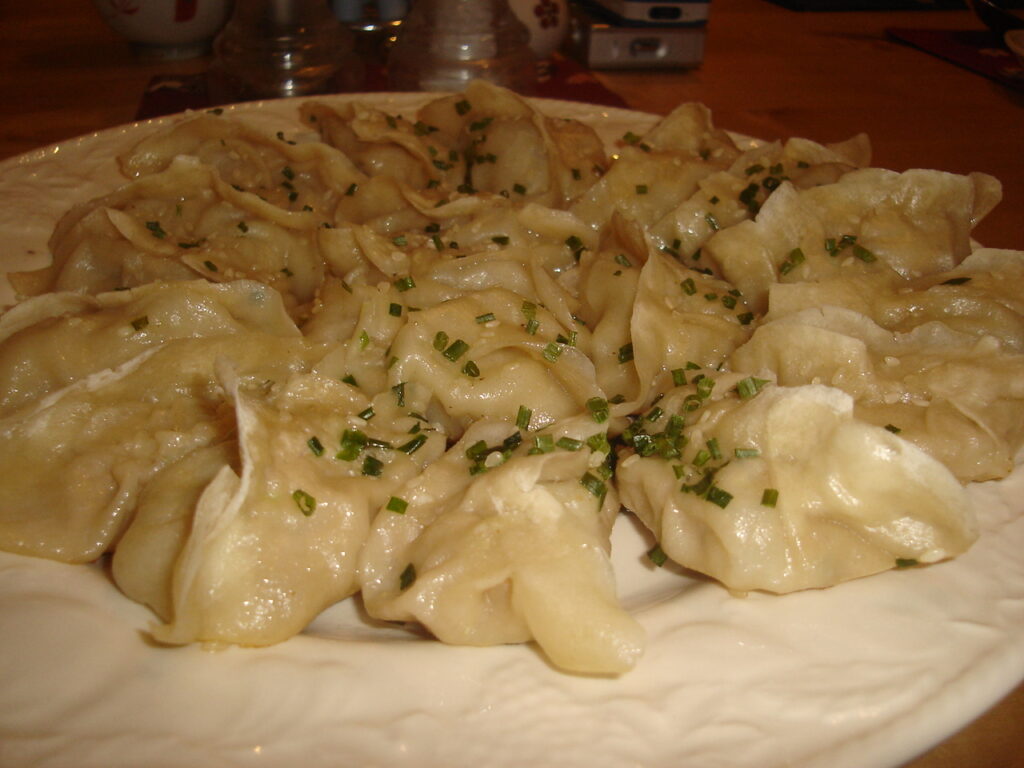
In the north, the New Year is unimaginable without dumplings (饺子, jiǎozi). They are the defining dish, wrapped by the whole family on New Year’s Eve and eaten at the stroke of midnight, when the old year turns to the new. The timing is deliberate: the moment of midnight is called jiāozi as well, a near-homophone for the dumpling, so eating them at that hour marks the junction of the years. Their shape, like the old gold and silver ingots, makes them a wish for wealth, and a clean coin is often hidden in one dumpling to bring the finder a lucky year. Northern families take real pride in hand-wrapping enormous quantities, and the wrapping itself is a social ritual. For the technique, see our guide to making authentic jiaozi.
The North: Noodles, Buns, and the Wheat Table
Beyond dumplings, the northern table showcases the full range of wheat cookery. Long, uncut longevity noodles wish diners a long life. Steamed buns, both plain mantou and filled baozi, appear in abundance, sometimes shaped and dyed for the occasion. In the northeast, hearty stews and pickled napa cabbage suit the deep cold, while across the north the emphasis falls on warmth, substance, and the comforting heft of flour-based food designed to see a family through winter.
The South: Nian Gao and the Rice Table
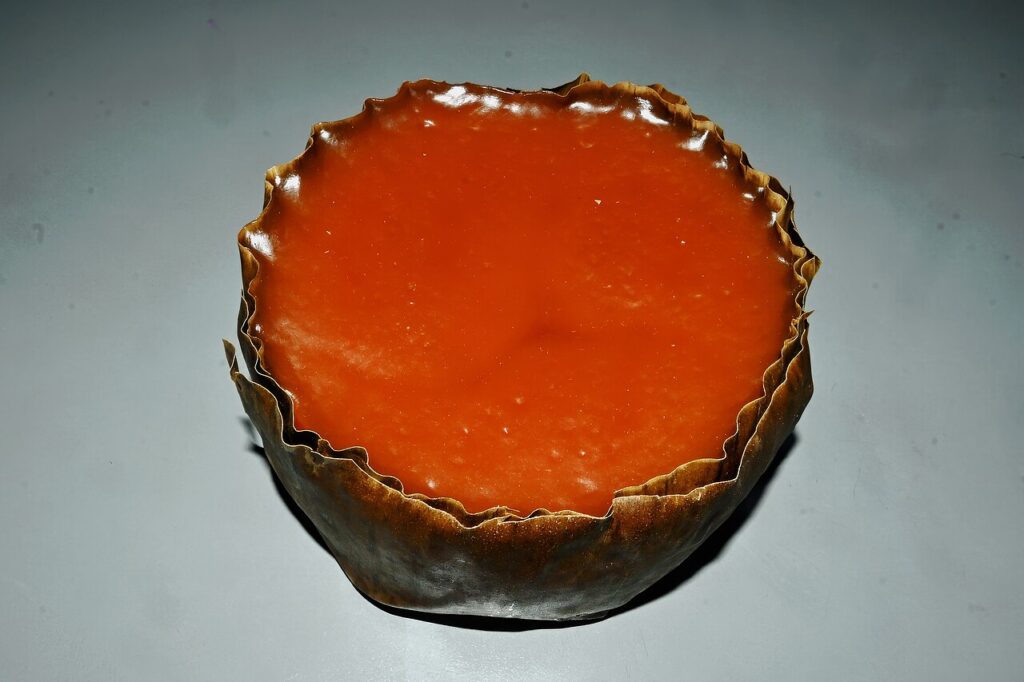
In the south, glutinous rice cake, niángāo (年糕), takes the place dumplings hold in the north. A homophone for “higher year,” it carries the wish to rise higher in the year ahead and is eaten in countless regional forms, sweet brown-sugar versions, savoury sliced cakes stir-fried with vegetables and meat, and pan-fried slices. Rice in all its forms dominates the southern festive table, reflecting the paddy fields that have fed the region for millennia.
Tang Yuan and Yuan Xiao: A Tale of Two Rice Balls
Sweet glutinous rice balls reveal the north-south divide in miniature. In the south they are called tāngyuán (汤圆) and made by wrapping filling inside wet glutinous rice dough by hand, producing a smooth, thin skin. In the north they are yuánxiāo (元宵), made by rolling a solid core of filling in dry glutinous rice flour, layer by layer, which gives a thicker, rougher texture. Both are round, both symbolise reunion and completeness, and both belong to the Lantern Festival that closes the season, but ask a northerner and a southerner which is correct and you will get two firm and different answers.
Fish Across the Regions
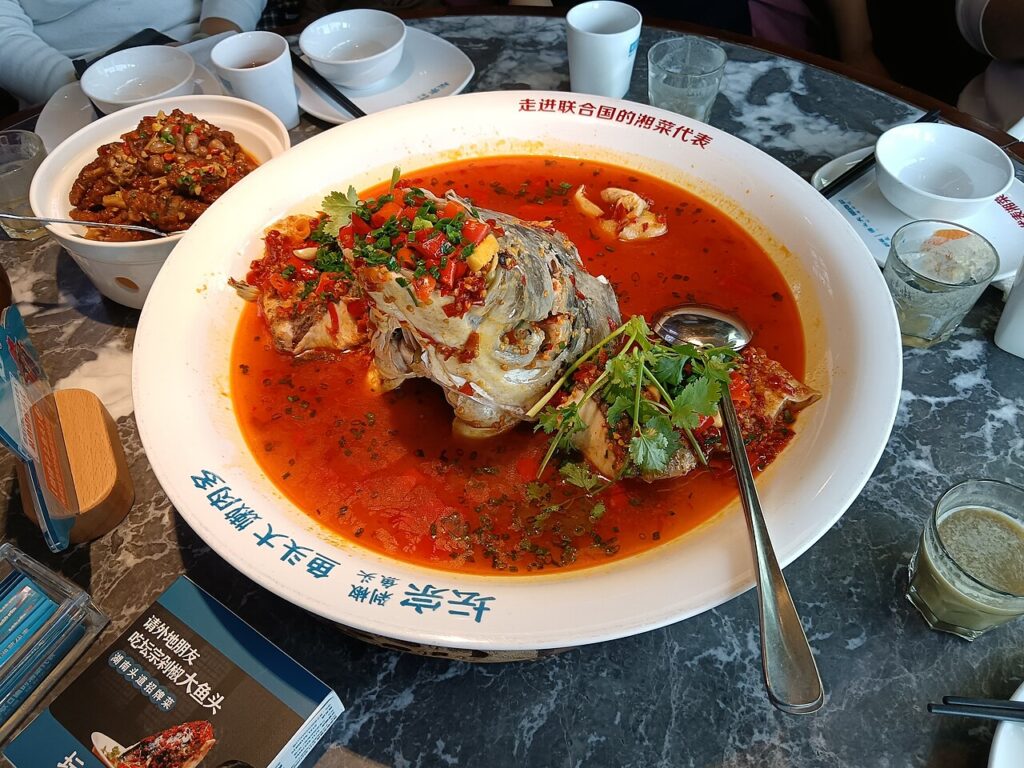
If anything unites the country’s tables, it is fish, eaten everywhere for the surplus its name promises. But the preparation changes with the region. Cantonese cooks favour delicate steaming with ginger and scallion to highlight freshness; Hunan and Sichuan kitchens add heat and bold seasoning; eastern regions lean toward sweeter, soy-rich braises. Wherever it appears, the fish is served whole and partly left over, so that the surplus carries into the new year.
The Cantonese South: Poon Choi and Roast Meats
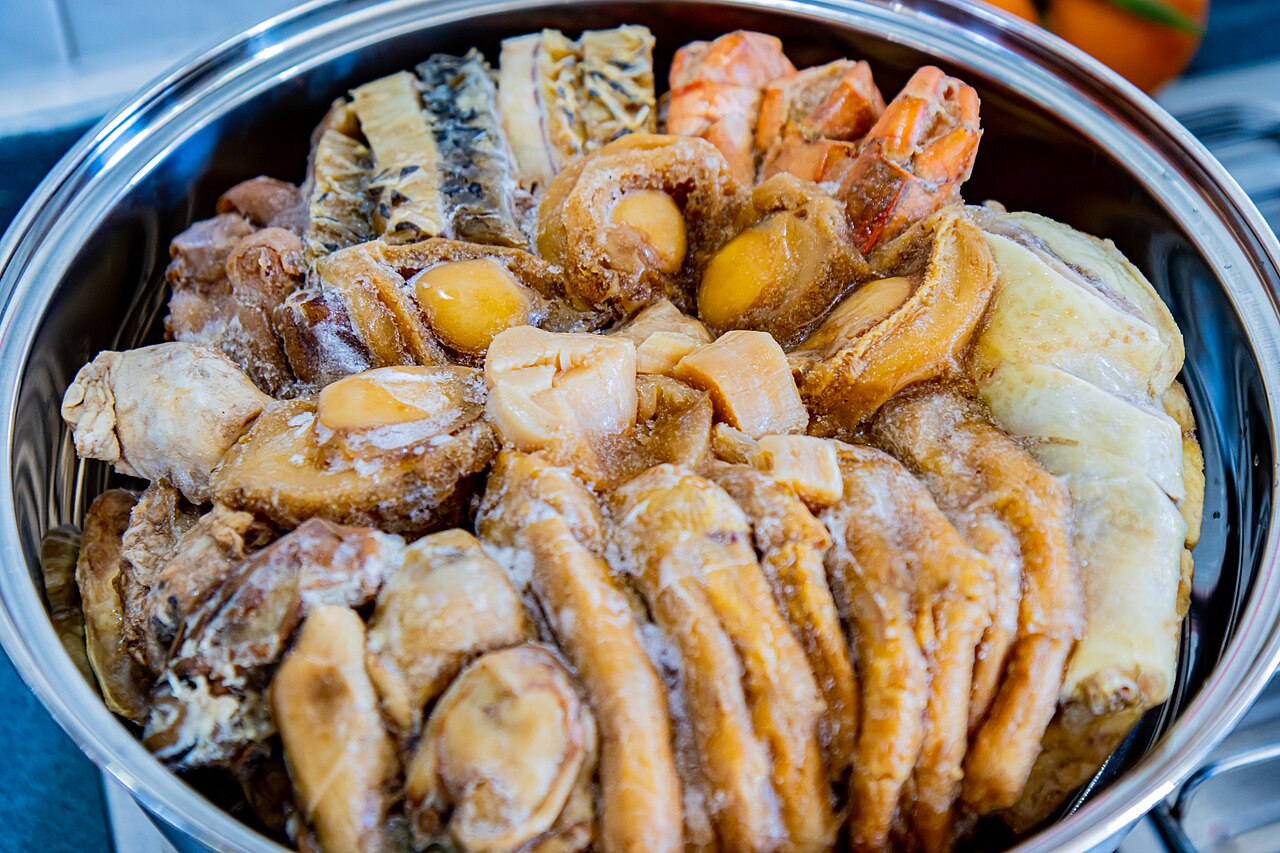
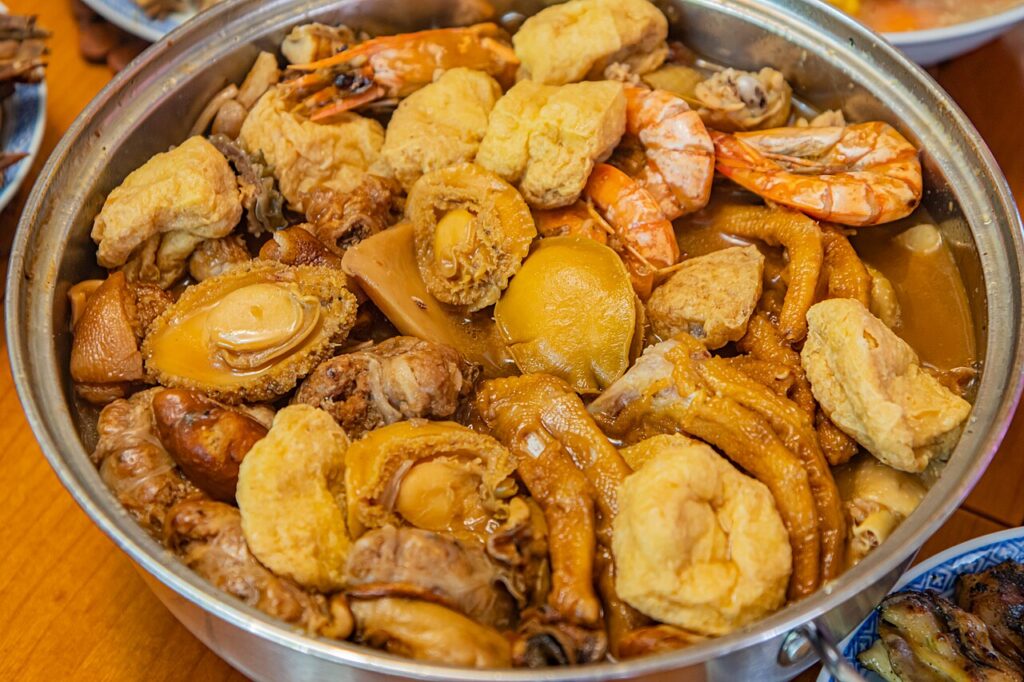
Guangdong and Hong Kong bring some of the most spectacular New Year food in the country. The grand poon choi (盆菜), a “basin feast,” layers expensive ingredients, roast pork, chicken, prawns, dried oysters, mushrooms, abalone, and more, in a single large basin, eaten communally layer by layer as a symbol of abundance and togetherness. Cantonese tables also feature glossy roast meats, steamed fish, and, in the diaspora hubs of Singapore and Malaysia, the tossed raw-fish salad yusheng, or lo hei, which diners lift high with their chopsticks while calling out wishes for prosperity.
Jiangnan and Shanghai: Sweet and Refined
The lower Yangtze region around Shanghai, Suzhou, and Hangzhou favours a sweeter, more delicate style. Festive tables here feature eight-treasure glutinous rice, a sweet steamed dish studded with dried fruit and nuts; smoked and red-braised fish; drunken chicken; and an array of cold appetisers to open the meal. The cooking prizes refinement and balance, and the sweet notes carry their own wish for a sweet year.
Sichuan, Hunan, and the Spicy Interior
In the spice-loving provinces of the southwest, the New Year brings out cured and preserved foods prepared in the weeks before. Wind-dried and smoked cured meats, làròu, along with cured sausages and fish, are a hallmark of Sichuan and Hunan New Year cooking, their preparation beginning long before the festival. The dishes are bold, numbing, and fiery, and the cured meats, hung up to dry through the winter, are a regional symbol of the season as recognisable as any dumpling.
How Climate and Geography Shape the Cooking
The regional differences are not arbitrary; they grew from what each place could grow and how it needed to eat. The cold, wheat-growing north developed hearty, warming, flour-based foods and a tradition of preserving through winter. The temperate, rice-growing south, with year-round access to fresh produce, fish, and seafood, developed lighter, fresher cooking and a focus on rice. Mountainous, humid regions turned to drying, smoking, and pickling to preserve food, while coastal areas built their feasts around the sea. Every regional New Year table is, in a sense, a record of its landscape.
Snacks and Sweets by Region
The differences extend to the snack tray offered to guests. Across the country families set out a Tray of Togetherness filled with candied fruits, seeds, and nuts, but the contents shift by region: candied lotus root and water chestnut in the south, sunflower and melon seeds in the north, and an endless variety of local sweets, fried doughs, and preserved fruits. The steamed prosperity cake fa gao, which “blooms” as it cooks, is popular in the south and among the diaspora as a wish for flourishing fortune.
The Northeast: Stews, Sauerkraut, and Blood Sausage
China’s far northeast, the Dongbei region, has its own robust New Year table shaped by long, bitterly cold winters. Pickled napa cabbage, a regional staple made by fermenting whole cabbages through the winter, anchors the famous suan cai stew with pork and glass noodles. Blood sausage, hearty bone broths, and big one-pot dishes meant to feed a crowd and warm the body define the season here. Dumplings remain essential, but the northeastern table leans more than any other toward the filling, the fermented, and the preserved, the food of a place where fresh vegetables were scarce for months on end.
The Cantonese Diaspora: Yusheng and the Prosperity Toss
Among the Chinese communities of Singapore and Malaysia, one dish has become the unmissable centrepiece of the New Year: yusheng, also called lo hei. It is a colourful salad of raw fish, shredded vegetables, and crunchy condiments, dressed with plum sauce and oil. What makes it special is the ritual: everyone at the table stands, and together they toss the ingredients as high as they can with their chopsticks while shouting out wishes for prosperity, health, and success. The higher the toss, the better the year is said to be. Largely a twentieth-century creation of the Cantonese diaspora, yusheng has become so beloved that it now appears on tables back in southern China as well.
Fujian and Hakka Tables
The southeastern province of Fujian brings its own specialities, including oyster omelettes, fresh spring rolls known as popiah wrapped at the table, and a rich array of seafood reflecting the long coastline. The Hakka people, scattered across southern China and beyond, are known for hearty, salt-forward dishes such as salt-baked chicken, stuffed tofu, and braised pork with preserved mustard greens, food built to travel and keep, in keeping with the community’s long history of migration. Each of these regional cuisines reshapes the New Year table around its own ingredients and history.
Taiwan and the Wider Chinese World
Taiwan’s New Year table blends mainland regional traditions, especially Fujianese and Hakka, with its own local flavour. A hot pot often takes pride of place, surrounded by dishes whose names sound auspicious in the Hokkien dialect, and braised dishes that can simmer through the long evening. Across the wider Chinese world, from the Chinatowns of San Francisco and London to the kitchens of Sydney and Vancouver, families adapt their regional traditions to local ingredients, keeping the symbolic core of the meal while improvising around what the local market can provide.
Cured Meats: The Taste of Preparation
In many parts of southern and western China, the New Year is foreshadowed weeks in advance by the sight of cured meats hanging to dry. Sausages, pork belly, duck, and fish are salted, sometimes smoked, and hung in the winter air to cure, a process begun well before the festival so the meats are ready in time. In Sichuan and Hunan these wind-dried and smoked meats, sliced and steamed or stir-fried, are among the most evocative flavours of the season, and their slow preparation is itself part of the rhythm of the approaching New Year.
Drinks and the Festive Table
The regional table is completed by what is poured as well as what is served. Strong grain spirits, baijiu, accompany toasts in the north, while warm rice wine is favoured in parts of the east and south. Tea is poured throughout, and in many families younger members serve tea to their elders as a mark of respect during the gathering. Whatever the drink, the toasts carry the same wishes for health and prosperity that the food expresses, and the act of pouring for one another is part of the togetherness the meal is built to celebrate.
A Country Tasted Region by Region
To eat your way across a Chinese New Year is to take a tour of the country’s geography and history. The dumplings of a Beijing kitchen, the rice cakes of a Shanghai table, the basin feast of a Hong Kong family, the cured meats of a Sichuan home, and the tossed yusheng of a Singapore restaurant are all the same festival, refracted through a thousand miles of climate, crop, and custom. No single menu can claim to be the authentic one, because the authenticity lies precisely in the variety.
Beijing and the Imperial North
The capital region has its own distinctive New Year table, shaped by centuries as the seat of the imperial court. Alongside the obligatory dumplings, Beijing families enjoy festive versions of dishes that once graced palace banquets, and the city’s temple fairs fill with stalls selling sugar-coated haws on a stick, fried dough, and other northern street snacks. The northern preference for wheat shows everywhere, from the steamed buns shaped into auspicious forms to the thick wheat-flour pancakes that wrap festive fillings, a cuisine built for warmth and substance in the cold dry winters of the plain.
Sweet South, Savoury North
One of the clearest differences between the two halves of the country is the balance of sweet and savoury. Southern cooking, especially around Shanghai and the lower Yangtze, embraces sweetness, glazing meats, sweetening sauces, and finishing meals with sweet rice dishes. Northern cooking leans savoury and salt-forward, with vinegar and garlic playing larger roles than sugar. Even the shared foods diverge along these lines: a southern nian gao is often sweet with brown sugar, while a northern household might slice its rice cake into a savoury stir-fry. The same festival, in other words, tastes noticeably different depending on which side of the divide you sit.
Lantern Festival Foods, North and South
The regional split persists right to the festival’s final night. The Lantern Festival that closes the season is marked everywhere with round glutinous rice balls, but true to form the south eats hand-wrapped tangyuan while the north eats rolled yuanxiao. The two are cousins rather than twins, differing in how they are made and in texture, and the gentle rivalry over which is the real thing is a perfect miniature of the larger north-south story that runs through the whole festival.
The Meaning of Leftovers and Gifts of Food
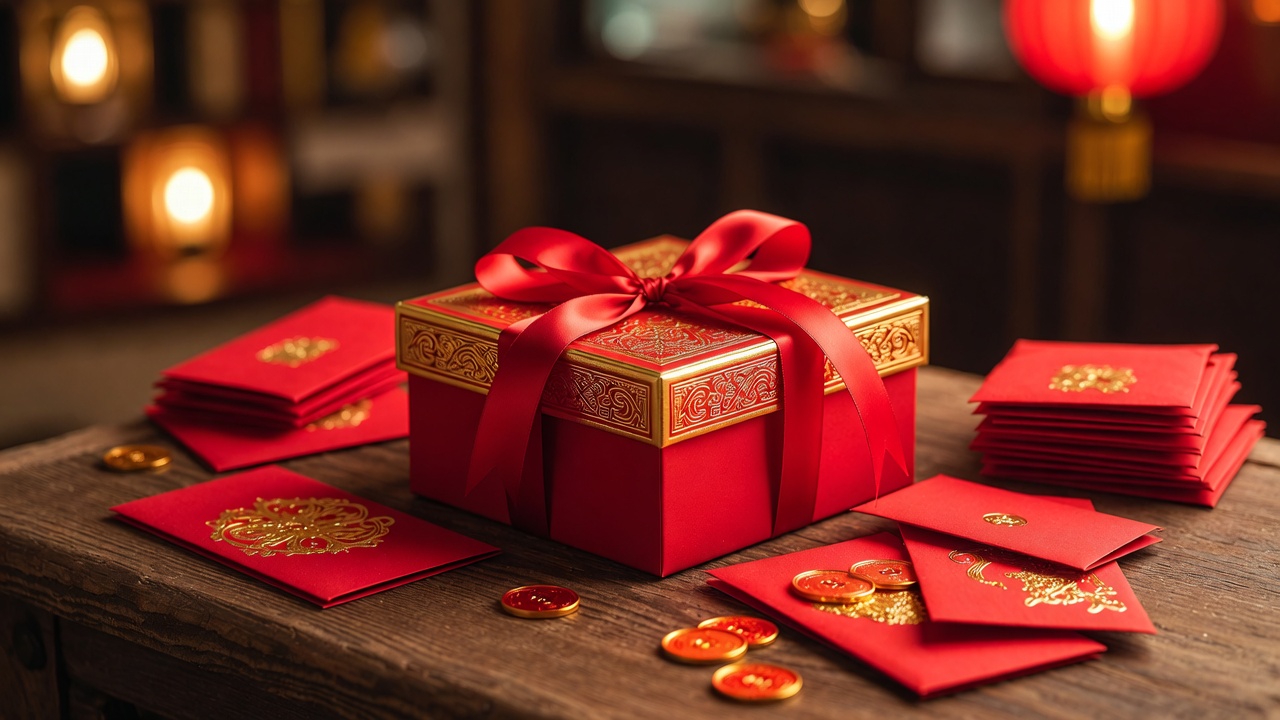
Across every region, food at the New Year is meant to be abundant to the point of surplus, and that surplus carries meaning. Leftovers, especially of fish, are kept on purpose so that the year’s plenty spills into the next. Food is also a primary New Year gift: boxes of nian gao, tins of biscuits, baskets of mandarin oranges, and premium ingredients are exchanged between families and given to elders, always in auspicious pairs or even numbers. To give food at the New Year is to give a wish for the recipient’s prosperity, and the regional specialities of one’s home often travel as gifts to relatives elsewhere.
How Migration Mixed the Map
Modern China has scrambled the old regional boundaries. Decades of internal migration have carried northerners south and southerners north, and the great Spring Festival travel rush each year sends hundreds of millions of people back to home regions whose food they then bring back to the cities. A family in Shenzhen might serve both dumplings and nian gao; a Beijing household might add a Cantonese steamed fish. The clean north-south line is increasingly a spectrum, and many urban tables now blend traditions that would once have stayed a thousand kilometres apart, a delicious side effect of a country on the move.
Reading a Region in a Single Meal
For a traveller or a curious eater, the New Year table is the fastest way to understand where you are in China. The grain on the plate tells you the climate; the cooking method tells you the history; the flavours tell you the local palate; and the specific lucky dishes tell you the dialect and its puns. To sit at a New Year table anywhere in the Chinese world is to taste a place, which is why no two regional feasts are quite alike and why each is fiercely, proudly its own. And that, in the end, is the point of paying attention to where a New Year dish comes from: every plate is a small act of belonging, a family saying through its food exactly who it is and where its roots lie.
One Festival, Many Tables
For all these differences, every regional table is reaching for the same things: surplus, wealth, long life, togetherness, and a sweet and rising year. The north says it with a dumpling and the south with a rice cake, but the wish underneath is identical. That is the quiet beauty of Chinese New Year food: a single festival expressed in a thousand local dialects of the kitchen, each family certain that its own way is the right one. To learn what each of these dishes means, see our guide to lucky Chinese New Year foods and their symbolism, and for the meal that gathers them all, our guide to the reunion dinner. The wider customs of the festival are covered in our complete guide to Chinese New Year.
Frequently Asked Questions
Why do northern and southern China eat different New Year foods?
The divide follows agriculture and climate. The colder, drier north is wheat country, so its festival foods are dumplings, noodles, and steamed buns. The warmer, wetter south is rice country, so its foods centre on rice cakes and rice balls.
What do northern Chinese eat for the New Year?
Dumplings are the defining northern food, wrapped by the family and eaten at midnight on New Year’s Eve. The northern table also features longevity noodles, steamed buns, and hearty winter dishes.
What do southern Chinese eat for the New Year?
Southern tables centre on rice-based foods such as glutinous rice cake (niangao) and sweet rice balls (tangyuan). Cantonese feasts add poon choi, roast meats, and steamed fish, and the diaspora enjoys the tossed salad yusheng.
What is the difference between tangyuan and yuanxiao?
Both are round glutinous rice balls symbolising reunion, but the south wraps filling inside wet dough to make smooth-skinned tangyuan, while the north rolls a solid filling in dry rice flour to make rougher yuanxiao.
What is poon choi?
Poon choi is a Cantonese “basin feast” that layers many premium ingredients, such as roast pork, chicken, prawns, dried oysters, mushrooms, and abalone, in one large basin, eaten communally as a symbol of abundance and togetherness.