Lunar New Year vs. Chinese New Year: What’s the Difference?

# Lunar New Year vs. Chinese New Year: What's the Difference? *Last Updated: February 2025 | Reading Time: 25 minutes* Every year, as winter loosens its grip on the northern hemisphere, **over two billion people worldwide** gather to celebrate one of humanity's oldest and most vibrant festivals. Red lanterns illuminate streets from Beijing to San Francisco. Families reunite over steaming dumplings and rice cakes. Children clutch red envelopes filled with lucky money. But what exactly should we call this celebration? Is it **Lunar New Year**? **Chinese New Year**? **Spring Festival**? The answer depends on who you ask, where you are, and which cultural lens you're looking through. This question has sparked debates in newsrooms, corporate boardrooms, and even the halls of government. Yet beneath the terminology lies a rich tapestry of traditions spanning thousands of years and dozens of cultures. Understanding the difference between these terms isn't just about political correctness. It's about appreciating the beautiful diversity of celebrations that mark this time of year. In this comprehensive guide, we'll explore the origins, cultural significance, and regional variations of this beloved festival. Whether you're planning to travel during the holiday season, seeking to understand your colleagues' traditions, or simply curious about world cultures, this article will give you everything you need to know. --- ## What Is the Lunar New Year and When Is It Celebrated? The **Lunar New Year** refers to the beginning of a new year according to calendars based on lunar or lunisolar cycles. Unlike the Gregorian calendar used in most Western countries, which follows the Earth's orbit around the sun, lunar calendars track the moon's phases. Here's the key distinction that many people miss: the calendar used for East Asian Lunar New Year celebrations is technically a **lunisolar calendar**, not a purely lunar one. This means it incorporates both the moon's phases and the sun's position. The Islamic calendar, by contrast, is a purely lunar calendar. This is why Islamic holidays drift through the seasons over time, while the Lunar New Year always falls between January 21 and February 20 on the Gregorian calendar. ### How Is the Lunar New Year Date Determined? The date of the Lunar New Year is calculated using a precise astronomical formula: **The Lunar New Year falls on the second new moon after the winter solstice** (occasionally the third, if a leap month occurs). The winter solstice occurs around December 21-22 each year. After this date, astronomers wait for two new moons. When the second new moon appears, that day marks the start of the Lunar New Year. | Year | Lunar New Year Date | Zodiac Animal | |------|---------------------|---------------| | 2024 | February 10 | Dragon | | 2025 | January 29 | Snake | | 2026 | February 17 | Horse | | 2027 | February 6 | Goat | | 2028 | January 26 | Monkey | | 2029 | February 13 | Rooster | | 2030 | February 3 | Dog | The celebration typically lasts **15 to 16 days**, starting on New Year's Eve and concluding with the Lantern Festival on the fifteenth day of the first lunar month. However, the duration varies by country and culture. --- ## Chinese New Year: Origin, History, and Cultural Significance **Chinese New Year** specifically refers to the celebration of the new year according to the traditional Chinese lunisolar calendar. The festival has been observed for approximately **3,500 years**, with origins traced back to the Shang Dynasty (c. 1600–1046 BCE). ### The Ancient Origins of Chinese New Year During the Shang Dynasty, people performed ritual sacrifices to gods and ancestors at the end of each year. These ceremonies expressed gratitude for the harvest and sought blessings for the coming agricultural season. By the Han Dynasty (202 BCE–220 CE), the celebration had taken a more recognizable form. Certain customs became standardized, including: - Burning bamboo to create loud cracking sounds - Family reunions and feasting - Honoring ancestors through offerings The festival continued to evolve through subsequent dynasties. The Tang and Song dynasties saw increased prosperity, which brought more elaborate celebrations. Setting off firecrackers, visiting relatives, and eating dumplings became integral parts of the tradition. ### The Legend of Nian: Why Red and Loud Noises? One of the most enduring myths explains why the color red and loud noises dominate Chinese New Year celebrations. According to legend, a mythical beast called **Nian** (年, meaning "year") emerged from the sea or mountains every New Year's Eve to attack villages. The creature devoured livestock, crops, and even children. One day, an old wise man discovered that Nian feared three things: 1. **The color red** 2. **Loud noises** 3. **Fire and bright lights** Armed with this knowledge, villagers hung red lanterns and scrolls on their doors. They lit firecrackers and bonfires. When Nian arrived, the creature fled in terror and never returned. This legend explains the ubiquitous red decorations, explosive fireworks, and bright lanterns that characterize Chinese New Year celebrations to this day. ### Why Is Chinese New Year Also Called Spring Festival? In China, the official name for the celebration is **Spring Festival** (春节, Chūnjié). This name was formally adopted in 1914 during the early Republic of China era. When the Republic of China was established in 1912, the government adopted the Gregorian calendar for official purposes. To distinguish between the Western New Year on January 1 and the traditional Chinese celebration, authorities designated different names for each. The Gregorian New Year became known as **Yuándàn** (元旦, "The First Day"). The traditional lunar new year celebration received the name **Spring Festival**. The "spring" reference reflects the festival's connection to the traditional Chinese calendar's solar terms. The celebration occurs near **Lìchūn** (立春, "Start of Spring"), which marks the beginning of spring in the traditional East Asian calendar. After 1949, the People's Republic of China retained the "Spring Festival" terminology. Today, within mainland China, "Spring Festival" remains the most common name for the holiday. --- ## How Many Countries Celebrate Lunar New Year Around the World? The Lunar New Year is celebrated across **more than 15 countries** as an official public holiday. Hundreds of millions more participate in celebrations within diaspora communities worldwide. ### Countries Where Lunar New Year Is a Public Holiday | Country | Local Name | Duration | |---------|------------|----------| | China | Spring Festival (春节) | 7-8 days | | Taiwan | Traditional Chinese New Year | 5-6 days | | South Korea | Seollal (설날) | 3 days | | North Korea | Seollal | 3 days | | Vietnam | Tết Nguyên Đán | 7 days | | Singapore | Chinese New Year | 2 days | | Malaysia | Chinese New Year | 2 days | | Indonesia | Imlek | 1 day | | Philippines | Chinese New Year | 1 day | | Brunei | Chinese New Year | 1 day | | Mongolia | Tsagaan Sar | 3 days | ### Significant Celebrations in Western Countries The Lunar New Year has also gained recognition in Western nations with substantial Asian populations: **United States:** - California and New York have designated Lunar New Year as an official state holiday - San Francisco hosts one of the largest Chinese New Year parades outside Asia - The U.S. is home to approximately **5.4 million people of Chinese descent**, **2.3 million Vietnamese Americans**, and **2 million Korean Americans** **United Kingdom:** - London's Chinatown hosts major celebrations - Trafalgar Square features performances and cultural activities **Australia:** - Sydney holds the largest Lunar New Year celebration in the Southern Hemisphere - Melbourne's celebrations attract hundreds of thousands of visitors **Canada:** - Vancouver and Toronto host major festivities - The Lunar New Year is recognized as an official observance in several provinces ### United Nations Recognition of Lunar New Year In December 2023, the **United Nations unanimously passed a resolution** recognizing the Lunar New Year as an official UN floating holiday. Starting in 2024, UN bodies are encouraged to avoid scheduling meetings on this day. This historic recognition acknowledged the celebration's significance across multiple cultures, specifically mentioning its observance in China, Vietnam, Singapore, Malaysia, Korea, Japan, Canada, and Suriname. --- ## Korean New Year (Seollal): Unique Traditions and Customs **Seollal** (설날) is Korea's celebration of the Lunar New Year. While it shares the same calendar date as Chinese New Year, Seollal has distinct traditions rooted in Korean culture, Confucian values, and indigenous beliefs. ### Historical Background of Seollal The earliest recorded references to Korean New Year celebrations appear in 7th-century Chinese historical texts, including the Book of Sui and the Old Book of Tang. These documents describe celebrations in the Silla Kingdom. Korea's own historical record, the **Samguk Yusa** (Memorabilia of the Three Kingdoms), compiled in the 13th century, documents New Year celebrations dating back to 488 CE under the 21st King of Silla. During Japanese colonial rule (1910-1945), authorities suppressed Seollal celebrations and attempted to replace them with the Japanese New Year on January 1. After Korea's liberation in 1945, Seollal was gradually restored. By the 1980s, strong public sentiment led to the holiday's full reinstatement as a national celebration. ### Seollal Traditions: Sebae, Charye, and More **Charye (차례)** - Ancestral Rites: The morning of Seollal begins with charye, a ceremonial rite honoring ancestors. Families prepare an elaborate table with traditional foods arranged according to specific rules. Family members perform deep bows toward the ancestral table to express gratitude and seek blessings. **Sebae (세배)** - Formal Bowing: After charye, younger family members perform sebae, a deep formal bow to elders. Children and younger relatives kneel and bow deeply while reciting the traditional greeting: **"새해 복 많이 받으세요"** (Saehae bok mani badeuseyo), meaning "May you receive many blessings in the new year." In return, elders offer words of wisdom and **sebaetdon** (세뱃돈), money placed in colorful envelopes. Unlike Chinese red envelopes, Korean lucky money traditionally comes in **white or colorful silk pouches** or decorated envelopes. **Hanbok** - Traditional Clothing: Many Koreans wear **hanbok**, traditional Korean clothing, during Seollal. Though this practice has declined among younger generations, it remains an important tradition, especially during charye and sebae ceremonies. ### Traditional Korean New Year Foods **Tteokguk (떡국)** - Rice Cake Soup: This is the quintessential Seollal dish. A clear broth contains thinly sliced rice cakes, beef, eggs, and green onions. Eating tteokguk symbolizes gaining an additional year of age. The round white rice cake slices represent coins, symbolizing prosperity for the new year. **Jeon (전)** - Korean Pancakes: Various savory pancakes accompany the feast. Types include kimchi jeon, seafood jeon, and vegetable jeon. These are often served with a spicy dipping sauce made from soy sauce, vinegar, and gochugaru (Korean chili flakes). **Japchae (잡채)** - Glass Noodles: This stir-fried noodle dish features sweet potato starch noodles, beef, vegetables, and a sweet soy-based sauce. Originally created for Korean royalty, japchae has become a staple at celebrations. ### Traditional Seollal Games **Yutnori (윷놀이):** This traditional board game involves throwing four wooden sticks and moving tokens around a board based on how the sticks land. Families often play competitively, with much laughter and playful rivalry. **Jegichagi:** Similar to hacky sack, players kick a small shuttlecock-like object and try to keep it aloft as long as possible. **Neolttwigi:** A traditional seesaw game where players stand on opposite ends of a board and take turns launching each other into the air. --- ## Vietnamese Tết: A Distinct Celebration of the Lunar New Year **Tết Nguyên Đán** (commonly shortened to **Tết**) is Vietnam's most important holiday. The name translates to "Feast of the First Morning" in Sino-Vietnamese. While Tết shares the same calendar date as Chinese New Year and Korean Seollal, it has evolved into a distinctly Vietnamese celebration. ### Historical Roots of Tết Tết's origins intertwine with Vietnam's complex relationship with China. During the Han Dynasty's rule over Vietnam, Chinese cultural practices, including the Lunar New Year celebration, took root in Vietnamese society. Over centuries, Vietnamese communities reshaped these borrowed elements through their own cultural lens. The celebration absorbed indigenous traditions, Buddhist practices, and uniquely Vietnamese customs. Today, Tết reflects this rich cultural synthesis while maintaining its distinct Vietnamese identity. ### Key Differences Between Vietnamese and Chinese Zodiac The Vietnamese zodiac is nearly identical to the Chinese zodiac, with **three notable substitutions**: | Position | Chinese Zodiac | Vietnamese Zodiac | |----------|----------------|-------------------| | 2nd | Ox | Buffalo (Trâu) | | 4th | Rabbit | Cat (Mèo) | | 8th | Sheep | Goat (Dê) | The cat's inclusion in the Vietnamese zodiac is particularly intriguing. Several theories explain this difference: 1. **Linguistic theory:** The ancient Chinese word for rabbit, "mao," sounds similar to "mèo," the Vietnamese word for cat 2. **Environmental theory:** Rabbits are less common in Vietnam's tropical climate, while cats were familiar household animals 3. **Cultural adaptation:** Cats held important roles in Vietnamese agricultural society as mouse-catchers in rice stores ### Tết Traditions and Customs **Ông Công, Ông Táo (Kitchen Gods Day):** One week before Tết, on the 23rd day of the 12th lunar month, Vietnamese families observe Kitchen Gods Day. According to tradition, three deities—Ông Công (Land Genie) and Ông Táo (the two Kitchen Gods)—watch over each household throughout the year. On this day, they ascend to heaven on the backs of carp to report the family's deeds to the Jade Emperor. Vietnamese families release live carp into rivers and ponds, symbolically providing transportation for the gods' heavenly journey. They also prepare offerings and clean the family altar. **Xông Đất (First Footer):** The first person to enter a home after midnight on New Year's Eve holds tremendous significance. Vietnamese believe this person's character and fortune will influence the family's luck for the entire year. Families often arrange in advance for a successful, moral, and compatible person to be their "first footer." This custom is taken so seriously that some people avoid visiting friends on New Year's Day unless specifically invited. **Hái Lộc (Gathering Fortune):** After midnight services at pagodas and temples, worshippers gather small branches, buds, or leaves from sacred trees. These "lộc" (fortune/blessing) symbols are brought home to attract prosperity for the new year. ### Traditional Tết Foods **Bánh Chưng and Bánh Tét:** These sticky rice cakes are perhaps the most iconic Tết foods. Both contain glutinous rice, mung beans, and pork, wrapped in banana or dong leaves. - **Bánh chưng** (square-shaped) is more popular in northern Vietnam and represents the Earth - **Bánh tét** (cylindrical) dominates southern Vietnam and symbolizes the moon According to legend, bánh chưng was invented over 2,000 years ago by Lang Lieu, a prince competing for the throne. His creative dish, representing the earth, impressed his father, the Hung King, who named him heir. **Mứt Tết (Candied Fruits):** Families prepare various candied and dried fruits, including coconut, ginger, kumquat, and lotus seeds. These colorful treats are offered to guests and symbolize sweetness in the new year. **Thịt Kho Hột Vịt:** This braised pork and duck egg dish is a southern Vietnamese specialty. The dark, caramelized sauce and rich flavors represent warmth and abundance. ### Tết Flowers and Decorations **Hoa Mai (Yellow Apricot Blossom):** In southern Vietnam, the bright yellow mai flower is the quintessential Tết symbol. Its golden color represents prosperity and good fortune. Families display mai branches prominently in their homes. **Hoa Đào (Pink Peach Blossom):** Northern Vietnam favors the delicate pink đào (peach blossom). These flowers thrive in the cooler northern climate and symbolize vitality and renewal. **Cây Quất (Kumquat Tree):** Both north and south display kumquat trees during Tết. The abundant orange fruits symbolize wealth and prosperity. Families choose trees with many fruits and some still-green fruits, representing growth and future potential. --- ## Is It Offensive to Say Chinese New Year Instead of Lunar New Year? This question has generated significant debate in recent years, particularly in multicultural societies like the United States, Canada, and Australia. Understanding the nuances can help you navigate these conversations with cultural sensitivity. ### The Case for Using "Lunar New Year" Advocates for "Lunar New Year" make several arguments: **Inclusivity:** The celebration isn't exclusive to Chinese culture. Koreans, Vietnamese, Mongolians, and many other groups have their own distinct traditions. Using "Chinese New Year" may inadvertently erase these cultures. **Historical accuracy:** Many of these celebrations developed independently or were adapted to reflect local cultures rather than being directly imported from China. **Avoiding assumptions:** Not everyone celebrating in late January or early February identifies as Chinese or celebrates according to Chinese traditions. ### The Case for Using "Chinese New Year" Others maintain that "Chinese New Year" remains appropriate: **Historical origins:** The lunisolar calendar underlying these celebrations originated in China and spread through Chinese cultural influence. **Common usage:** In many Asian communities, "Chinese New Year" is the standard English translation used without controversy. **Specificity:** When referring specifically to Chinese traditions and customs, "Chinese New Year" is more accurate than the broader "Lunar New Year." ### The Practical Approach Context matters significantly. Here are some guidelines: **Use "Chinese New Year" when:** - Discussing specifically Chinese traditions, foods, or customs - Speaking with someone who identifies the celebration this way - Referring to celebrations in predominantly Chinese communities **Use "Lunar New Year" when:** - Addressing a diverse audience - Speaking in official or inclusive settings - Unsure of someone's specific cultural background **Use the specific name when you know it:** - Seollal for Korean celebrations - Tết for Vietnamese celebrations - Tsagaan Sar for Mongolian celebrations - Spring Festival when speaking with mainland Chinese Many organizations, including large corporations and government agencies, have adopted "Lunar New Year" for official communications. This shift reflects growing awareness of cultural diversity rather than a judgment that "Chinese New Year" is inherently wrong. --- ## Spring Festival vs. Chinese New Year: Understanding the Terminology Within China, you'll most commonly hear the celebration called **Spring Festival** (春节, Chūnjié). Understanding why helps clarify the relationship between these terms. ### The 1912 Calendar Reform When the Republic of China was founded in 1912 under Sun Yat-sen, the new government adopted the Gregorian calendar for official purposes. This created a need to distinguish between two "new years": 1. **Yuándàn (元旦):** The Gregorian New Year on January 1 2. **Spring Festival (春节):** The traditional lunisolar new year The name "Spring Festival" was formally proposed by Yuan Shikai in 1914 and became the official designation. The term connects the celebration to its agricultural roots and its timing near the "Start of Spring" solar term. ### Cultural Revolution Suppression During the Cultural Revolution (1966-1976), the Communist Party attempted to suppress traditional celebrations. Authorities declared that the public should "change customs" and have a "revolutionized and fighting Spring Festival." Workers were required to continue laboring through the holiday period. This suppression proved deeply unpopular. After the Cultural Revolution ended, traditional celebrations resumed. In 1996, China established a week-long national holiday for Spring Festival, creating the massive annual migration known as **Chunyun** (春运, "Spring Migration"). ### Modern Usage Patterns Today, the terminology breaks down roughly as follows: **Within mainland China:** - "Spring Festival" is the official and most common term - "Chinese New Year" is understood but less frequently used **Among Chinese diaspora:** - Both "Chinese New Year" and "Lunar New Year" are common - Older generations may prefer "Chinese New Year" - Younger generations in Western countries increasingly use "Lunar New Year" **International English usage:** - "Chinese New Year" remains widely used and understood - "Lunar New Year" is increasingly preferred in official and inclusive contexts - Both terms appear in major publications and government communications ### UNESCO Recognition In December 2024, UNESCO added **"Spring Festival, social practices of the Chinese people in celebration of traditional new year"** to its Representative List of the Intangible Cultural Heritage of Humanity. This recognition specifically acknowledges the Chinese celebration while noting the holiday's significance to multiple cultures. --- ## How Long Does Lunar New Year Last? Festival Duration by Country One common misconception is that the Lunar New Year is a single-day celebration. In reality, the festival spans multiple days or even weeks, varying significantly by country and tradition. ### China: 15-16 Days of Celebration The traditional Chinese celebration lasts from **New Year's Eve until the Lantern Festival** on the 15th day of the first lunar month. However, the official public holiday typically spans **7-8 days**. **Key dates in the Chinese celebration:** | Day | Event | Traditional Activities | |-----|-------|----------------------| | Day Before | New Year's Eve | Reunion dinner, staying up late | | Day 1 | New Year's Day | Wearing new clothes, visiting parents | | Day 2 | Son-in-law Day | Visiting in-laws | | Day 5 | God of Wealth Day | Welcoming prosperity | | Day 7 | Renri (Human's Day) | Celebrating humanity's creation | | Day 15 | Lantern Festival | Lantern displays, eating tangyuan | ### South Korea: 3-Day Public Holiday Seollal officially encompasses **three days**: the day before, the day of, and the day after the Lunar New Year. Most Koreans use this time to travel home, perform ancestral rites, and spend time with family. The relatively short official holiday creates intense travel pressure. Transportation systems operate at maximum capacity as millions return to their hometowns. ### Vietnam: 7-Day Holiday with Extended Celebrations Tết officially lasts **approximately one week** for workers, though celebrations and preparations extend much longer: - **Preparations begin 10-14 days before Tết:** Cleaning, shopping, decorating - **Kitchen Gods Day:** 7 days before Tết - **New Year's Eve through Day 3:** Most intense celebrations - **Day 3:** Visiting teachers to show respect - **Rằm Tháng Giêng (15th day):** First full moon celebrations at pagodas ### Mongolia: Tsagaan Sar (3 Days) Mongolia's **Tsagaan Sar** (White Moon) celebration spans three days. Unlike other Lunar New Year celebrations, Tsagaan Sar may fall on different dates due to differences in the Mongolian lunisolar calendar. In 2025, for example, Tsagaan Sar occurred on March 1-3, about a month after Chinese New Year. ### Celebrations in Western Countries In Western countries, Lunar New Year celebrations are typically condensed into weekends or single days due to work and school schedules: - **United States:** Major parades and festivals usually occur on the nearest weekend - **United Kingdom:** Celebrations in London's Chinatown span 2-3 days - **Australia:** Sydney's Lunar Festival runs for about 2-3 weeks with various events --- ## What Zodiac Animal Is 2025 and 2026? Year of the Snake and Horse Each Lunar New Year ushers in a new zodiac animal. Understanding the zodiac system helps you appreciate greetings, decorations, and cultural references during the celebration. ### The Chinese Zodiac Cycle Explained The Chinese zodiac follows a **12-year cycle**, with each year represented by one of twelve animals: 1. Rat (鼠, Shǔ) 2. Ox (牛, Niú) 3. Tiger (虎, Hǔ) 4. Rabbit (兔, Tù) 5. Dragon (龙, Lóng) 6. Snake (蛇, Shé) 7. Horse (马, Mǎ) 8. Goat (羊, Yáng) 9. Monkey (猴, Hóu) 10. Rooster (鸡, Jī) 11. Dog (狗, Gǒu) 12. Pig (猪, Zhū) ### The Five Elements: A 60-Year Cycle The 12 animals combine with **five elements** (Wood, Fire, Earth, Metal, Water) to create a **60-year cycle** called the sexagenary cycle. Each element appears with each animal twice (once in yang form, once in yin form), creating 60 unique combinations. | Year | Zodiac | Element | Full Designation | |------|--------|---------|-----------------| | 2024 | Dragon | Wood | Yang Wood Dragon | | 2025 | Snake | Wood | Yin Wood Snake | | 2026 | Horse | Fire | Yang Fire Horse | | 2027 | Goat | Fire | Yin Fire Goat | ### 2025: Year of the Wood Snake The **Year of the Snake** began on January 29, 2025, and continues until February 16, 2026. **Snake personality characteristics (according to Chinese astrology):** - Intelligent and wise - Calm and sophisticated - Determined and ambitious - Private and mysterious - Good intuition The snake is associated with wisdom, transformation, and healing in Chinese culture. People born in Snake years are said to be deep thinkers who pursue their goals with quiet determination. ### 2026: Year of the Fire Horse February 17, 2026, will usher in the **Year of the Fire Horse**—a combination that occurs only once every 60 years. **Horse personality characteristics:** - Energetic and adventurous - Independent and free-spirited - Quick-witted and confident - Social and charismatic - Hardworking and determined The **Fire Horse** year is considered particularly significant. In East Asian cultures, especially historically in Japan, the Fire Horse was associated with strong, potentially difficult personalities. This superstition has largely faded in modern times, though awareness of the Fire Horse year persists. ### Important Note on Zodiac Signs Your zodiac sign is determined by the **Lunar New Year date, not January 1**. Someone born on February 1, 2025, would be a Dragon (the 2024 zodiac), not a Snake, because the 2025 Lunar New Year began on January 29. --- ## Best Places to Celebrate Lunar New Year for Travelers Experiencing the Lunar New Year firsthand offers unforgettable cultural immersion. Here are premier destinations for travelers seeking authentic celebrations. ### Top Destinations in Asia **Hong Kong:** Hong Kong offers a spectacular combination of traditional celebrations and modern entertainment. Highlights include: - Victoria Harbour fireworks display - International Chinese New Year Night Parade in Tsim Sha Tsui - Flower markets in Victoria Park - Lion and dragon dances throughout the city - Horse racing at Sha Tin Racecourse on New Year's Day **Taiwan:** Taiwan preserves many traditional customs that have evolved differently from mainland China: - Taipei hosts the **Pingxi Sky Lantern Festival** around Lantern Festival - Traditional temples offer authentic worship experiences - Night markets showcase festive foods - Smaller crowds than mainland China **Singapore:** This multicultural city-state offers accessible English-language celebrations: - Chinatown light-up along Eu Tong Sen Street and New Bridge Road - **River Hongbao** carnival along Marina Bay - Chingay Parade featuring performers from around the world - Universal Studios Singapore special events **Seoul, South Korea:** Experience Seollal traditions in the Korean capital: - Folk villages like **Namsangol Hanok Village** host traditional activities - Palace museums offer special programs - Traditional markets showcase Seollal foods - Relatively quiet city as many residents travel home **Hanoi and Ho Chi Minh City, Vietnam:** Vietnam offers a unique Tết experience: - Flower markets transform cities 1-2 weeks before Tết - Temples fill with worshippers, especially around midnight - Cities become notably quieter as residents return to home provinces - Post-Tết travel offers fewer crowds at tourist sites ### Top Destinations Outside Asia **San Francisco, USA:** Home to one of the largest Chinese communities outside Asia: - **Chinese New Year Parade** (the largest outside Asia) - Chinatown festivities spanning several weeks - Flower Fair at Grant Avenue - Community celebrations throughout the Bay Area **London, United Kingdom:** Europe's largest Lunar New Year celebration: - Trafalgar Square main stage performances - Chinatown festivities in the West End - Parade through central London - Cultural performances at Leicester Square **Sydney, Australia:** The Southern Hemisphere's premier celebration: - **Sydney Lunar Festival** spanning nearly three weeks - Dragon boat races in Darling Harbour - Lantern displays throughout Chinatown - Lunar New Year markets ### Travel Tips for Lunar New Year **Book early:** Transportation and accommodation prices surge during this period. Book **3-6 months in advance** for popular destinations. **Expect closures:** Many businesses, especially in Asia, close for part of the holiday. Verify operating hours for restaurants, shops, and attractions. **Embrace the crowds (or avoid them):** Major cities experience massive crowds during celebrations. If you prefer quieter travel, consider visiting: - Just before the holiday begins - During the middle days (Day 4-6) when many families are at home - After the Lantern Festival concludes **Respect local customs:** Learn basic etiquette for the country you're visiting: - Don't wear all white or all black (associated with funerals) - Avoid giving certain gifts (clocks, sharp objects, anything in sets of four) - Show respect at temples and during traditional ceremonies --- ## How to Wish Someone Happy Lunar New Year in Different Languages Knowing the appropriate greeting shows cultural awareness and respect. Here are common New Year wishes in several languages. ### Mandarin Chinese **恭喜发财** (Gōngxǐ fācái) - Meaning: "Wishing you prosperity" - The most famous greeting, especially in business contexts **新年快乐** (Xīnnián kuàilè) - Meaning: "Happy New Year" - General purpose greeting **万事如意** (Wànshì rúyì) - Meaning: "May all your wishes come true" - Popular for written messages ### Cantonese Chinese **恭喜发财** (Gung hei fat choi) - Same characters as Mandarin, Cantonese pronunciation - Most common greeting in Hong Kong and Cantonese communities **新年快乐** (San nin faai lok) - "Happy New Year" in Cantonese ### Korean **새해 복 많이 받으세요** (Saehae bok mani badeuseyo) - Meaning: "May you receive many blessings in the New Year" - The standard Seollal greeting **새해 복 많이 받아** (Saehae bok mani bada) - Informal version for close friends and younger people ### Vietnamese **Chúc mừng năm mới** (Chook moong nam moy) - Meaning: "Happy New Year" - General purpose greeting **Cung chúc tân xuân** (Coong chook tan swun) - Meaning: "Gracious wishes of the new spring" - More formal greeting ### Mongolian **Сар шинэдээ сайхан шинэлээрэй** (Sar shinedee saikhan shineleerey) - Traditional Tsagaan Sar greeting - Meaning: "Have a good New Year" --- ## Lunar New Year Traditions: Red Envelopes, Foods, and Decorations Despite regional variations, certain traditions appear across multiple cultures celebrating the Lunar New Year. ### Red Envelopes and Lucky Money **Red envelopes** (红包, hóngbāo in Mandarin; lai see in Cantonese; lì xì in Vietnamese; sebaetdon envelopes in Korean) contain **lucky money** given from elders to children and unmarried younger people. **Gifting etiquette:** - Always use **new, crisp bills** (not wrinkled or torn) - Amounts should typically be **even numbers** (except avoiding 4, which sounds like "death") - Numbers ending in **8** are particularly auspicious (sounds like "prosperity") - In some traditions, amounts should be **in pairs** (e.g., 88, 168, 888) **Cultural variations:** - **Chinese:** Red envelopes (红包) - **Vietnamese:** Red envelopes (lì xì or bao lì xì) - **Korean:** Colorful silk pouches or decorated envelopes, not necessarily red ### Auspicious Foods and Their Meanings Food plays a central role in Lunar New Year celebrations. Many dishes carry symbolic meanings: | Food | Symbolism | Where Common | |------|-----------|--------------| | Fish (entire) | Abundance, surplus | China | | Dumplings | Wealth (shape resembles gold ingots) | Northern China | | Rice cakes (niángāo) | Growth and progress | China, Korea | | Long noodles | Longevity | Throughout Asia | | Tangyuan | Family togetherness | China (Lantern Festival) | | Tteokguk | Gaining a year of age | Korea | | Bánh chưng/bánh tét | Earth and prosperity | Vietnam | **Things to avoid eating:** - In some traditions, porridge is considered "poor man's food" and avoided on New Year's Day - Certain vegetables are avoided as they symbolize poverty ### Home Decorations and Their Meanings **Red decorations** dominate Lunar New Year displays: **Spring couplets (春联, chūnlián):** Red paper strips with calligraphy hung on either side of doorways. They typically feature auspicious phrases wishing prosperity, happiness, and good fortune. **Fu character (福):** The character meaning "blessing" or "good fortune" is often displayed upside-down. This is intentional: "inverted" (倒, dào) sounds like "arrived" (到, dào), so an upside-down 福 means "fortune has arrived." **Paper cuttings:** Intricate red paper designs featuring zodiac animals, auspicious symbols, and decorative patterns adorn windows and walls. **Lanterns:** Red lanterns hang outside homes and businesses. Their round shape symbolizes completeness and unity. **Flowers:** - Peach blossoms (Northern China, Vietnam) - Plum blossoms - Orchids (symbolizing fertility) - Kumquat trees (symbolizing wealth) - Narcissus (symbolizing prosperity) --- ## The Significance of the Lunar Calendar: Understanding Lunisolar Timekeeping To truly understand why the Lunar New Year falls on different dates each year, it helps to understand the calendar system behind it. ### What Makes It "Lunisolar"? The traditional Chinese calendar is **lunisolar**, meaning it incorporates both lunar and solar elements: **Lunar component:** - Each month begins on a **new moon** - Months are either 29 or 30 days long - 12 lunar months total approximately 354 days **Solar component:** - The year is divided into **24 solar terms** (节气, jiéqì) - These solar terms track the sun's position and mark agricultural seasons - The calendar ensures the winter solstice always falls in the 11th month ### The Leap Month Solution A 12-month lunar year is about 11 days shorter than a solar year. Without correction, seasonal events would drift through the calendar over time. The Chinese calendar solves this by adding a **leap month** approximately every 2-3 years (seven times in every 19-year cycle). This extra month ensures the calendar stays aligned with the seasons. The placement of leap months follows specific rules based on the 24 solar terms. When a lunar month doesn't contain certain "mid-term" solar terms, it becomes a leap month. ### 24 Solar Terms: The Agricultural Guide The 24 solar terms were crucial for traditional agricultural planning. They include: **Spring terms:** - 立春 (Lìchūn) - Start of Spring - 雨水 (Yǔshuǐ) - Rain Water - 惊蛰 (Jīngzhé) - Awakening of Insects **Summer terms:** - 立夏 (Lìxià) - Start of Summer - 夏至 (Xiàzhì) - Summer Solstice **Autumn terms:** - 立秋 (Lìqiū) - Start of Autumn - 秋分 (Qiūfēn) - Autumn Equinox **Winter terms:** - 立冬 (Lìdōng) - Start of Winter - 冬至 (Dōngzhì) - Winter Solstice The Winter Solstice is particularly important: the calendar ensures it always falls in the 11th lunar month. --- ## Frequently Asked Questions About Lunar New Year ### Is Lunar New Year the same as Chinese New Year? Not exactly. **Chinese New Year** refers specifically to the celebration according to Chinese tradition. **Lunar New Year** is a broader term encompassing Chinese, Korean, Vietnamese, and other celebrations that share the same calendar date but have distinct traditions. ### Why does the Lunar New Year date change every year? The Lunar New Year follows the lunisolar calendar, which tracks moon phases. Since the lunar cycle doesn't align perfectly with the solar year, the date shifts annually on the Gregorian calendar, always falling between January 21 and February 20. ### What shouldn't you do during Lunar New Year? Common taboos include: - **Sweeping or cleaning on New Year's Day** (sweeps away good luck) - **Using sharp objects like scissors or knives** (cuts off fortune) - **Washing hair** (washes away luck) - **Wearing black or white** (funeral colors) - **Speaking about death or illness** - **Breaking dishes** (though if accidentally broken, say "碎碎平安" meaning "peace year after year," which sounds like "broken") ### How long do Lunar New Year celebrations last? This varies by country: - **China:** 15-16 days (New Year's Eve to Lantern Festival) - **Korea:** 3 days (official public holiday) - **Vietnam:** 7 days (official holiday, with extended preparations) - **Western countries:** Usually condensed to weekend celebrations ### What is the proper greeting for Lunar New Year? It depends on the culture: - **Chinese:** 恭喜发财 (Gōngxǐ fācái) or 新年快乐 (Xīnnián kuàilè) - **Korean:** 새해 복 많이 받으세요 (Saehae bok mani badeuseyo) - **Vietnamese:** Chúc mừng năm mới - **General English:** "Happy Lunar New Year" is appropriate for diverse audiences ### Is it disrespectful to say "Chinese New Year"? This is context-dependent. "Chinese New Year" is appropriate when specifically discussing Chinese traditions or speaking with someone who prefers that term. In diverse settings or official contexts, "Lunar New Year" is more inclusive. The most respectful approach is to use the specific name for each culture (Seollal, Tết, Spring Festival) when you know someone's background. ### What gifts should you avoid giving? Across most cultures celebrating the Lunar New Year, avoid: - **Clocks** (象征死亡, symbolizes death in Chinese) - **Sharp objects** (cuts off relationships) - **Shoes** (sounds like "evil" in Cantonese) - **White or black wrapping** (funeral colors) - **Sets of four items** (four sounds like "death" in Chinese) - **Handkerchiefs** (associated with funerals) ### Do Japanese people celebrate Lunar New Year? Japan **officially switched to the Gregorian New Year in 1873** following the Meiji Restoration. Most Japanese celebrate New Year on January 1. However, Lunar New Year celebrations persist in: - Japanese Chinatowns (Yokohama, Kobe, Nagasaki) - The Ryukyu Islands (Okinawa Prefecture) - Some Buddhist communities --- ## Conclusion: Embracing Cultural Diversity in the Lunar New Year The debate over "Lunar New Year" versus "Chinese New Year" reflects something beautiful about our interconnected world: **cultures share, adapt, and transform traditions across borders and centuries**. Whether you call it **Spring Festival**, **Chinese New Year**, **Seollal**, **Tết**, or simply **Lunar New Year**, you're participating in a celebration that connects billions of people across the globe. Each culture has added its own flavors, customs, and meanings while preserving the core themes of family reunion, ancestral honor, and hope for prosperity. As this holiday continues to gain recognition worldwide—from UN recognition to state holidays in California and New York—understanding its diverse expressions becomes increasingly valuable. The family gathering around tteokguk in Seoul shares something profound with the family preparing bánh chưng in Hanoi and the family watching fireworks over Hong Kong's Victoria Harbour. **Key takeaways from this guide:** 1. **Lunar New Year** is the inclusive term for celebrations across multiple Asian cultures sharing the same lunisolar calendar date 2. **Chinese New Year** or **Spring Festival** specifically refers to Chinese traditions, though the calendar originated in China 3. **Different cultures have distinct traditions**: Korean Seollal features sebae bowing and tteokguk soup; Vietnamese Tết includes the cat zodiac and bánh chưng cakes 4. The celebration falls on **the second new moon after the winter solstice**, between January 21 and February 20 5. **Over two billion people** celebrate globally across more than 15 countries with official public holidays 6. The **12-year zodiac cycle** combined with five elements creates a 60-year cycle; 2025 is the Year of the Wood Snake, and 2026 will be the Year of the Fire Horse 7. **Context determines appropriate terminology**: use specific names when you know someone's cultural background, and use "Lunar New Year" in inclusive settings As the lanterns glow and firecrackers echo across the world this season, we're reminded that despite our diverse traditions, humanity shares common hopes: health, prosperity, family togetherness, and the promise of new beginnings. **Gōngxǐ fācái. Saehae bok mani badeuseyo. Chúc mừng năm mới.** Happy Lunar New Year. --- *Did you find this guide helpful? Share it with friends who want to understand the rich traditions of the Lunar New Year. For more cultural travel insights and festival guides, explore our blog's destinations section.* --- ## References and Further Reading - Library of Congress, Congressional Research Service: "Lunar New Year: Fact Sheet" (2025) - UNESCO: "Spring festival, social practices of the Chinese people in celebration of traditional new year" (2024) - Korea Tourism Organization: Seollal Travel Guide - Vietnam Tourism Board: Tết Celebration Information - China Highlights: Lunar New Year Travel Resources - TIME Magazine: "5 Things to Know About Lunar New Year" (2025) - Rocky Mountain PBS: "Why the Lunar New Year isn't really a lunar new year" (2024) *Note: All statistics and facts in this article are sourced from reputable organizations and government resources. Dates and zodiac information are calculated according to traditional lunisolar calendar systems.*

Every year, as winter loosens its grip on the northern hemisphere, over two billion people worldwide gather to celebrate one of humanity’s oldest and most vibrant festivals. Red lanterns illuminate streets from Beijing to San Francisco. Families reunite over steaming dumplings and rice cakes. Children clutch red envelopes filled with lucky money. But what exactly should we call this celebration?

Is it Lunar New Year? Chinese New Year? Spring Festival? The answer depends on who you ask, where you are, and which cultural lens you’re looking through.

This question has sparked debates in newsrooms, corporate boardrooms, and even the halls of government. Yet beneath the terminology lies a rich tapestry of traditions spanning thousands of years and dozens of cultures. Understanding the difference between these terms isn’t just about political correctness. It’s about appreciating the beautiful diversity of celebrations that mark this time of year.

In this comprehensive guide, we’ll explore the origins, cultural significance, and regional variations of this beloved festival. Whether you’re planning to travel during the holiday season, seeking to understand your colleagues’ traditions, or simply curious about world cultures, this article will give you everything you need to know.


What Is the Lunar New Year and When Is It Celebrated?

The Lunar New Year refers to the beginning of a new year according to calendars based on lunar or lunisolar cycles. Unlike the Gregorian calendar used in most Western countries, which follows the Earth’s orbit around the sun, lunar calendars track the moon’s phases.

Here’s the key distinction that many people miss: the calendar used for East Asian Lunar New Year celebrations is technically a lunisolar calendar, not a purely lunar one. This means it incorporates both the moon’s phases and the sun’s position. The Islamic calendar, by contrast, is a purely lunar calendar. This is why Islamic holidays drift through the seasons over time, while the Lunar New Year always falls between January 21 and February 20 on the Gregorian calendar.

How Is the Lunar New Year Date Determined?

The date of the Lunar New Year is calculated using a precise astronomical formula:

The Lunar New Year falls on the second new moon after the winter solstice (occasionally the third, if a leap month occurs).

The winter solstice occurs around December 21-22 each year. After this date, astronomers wait for two new moons. When the second new moon appears, that day marks the start of the Lunar New Year.

YearLunar New Year DateZodiac Animal
2025January 29Snake
2026February 17Horse
2027February 6Goat
2028January 26Monkey
2029February 13Rooster
2030February 3Dog
2031January 23Pig

The celebration typically lasts 15 to 16 days, starting on New Year’s Eve and concluding with the Lantern Festival on the fifteenth day of the first lunar month. However, the duration varies by country and culture.


Chinese New Year: Origin, History, and Cultural Significance

Chinese New Year specifically refers to the celebration of the new year according to the traditional Chinese lunisolar calendar. The festival has been observed for approximately 3,500 years, with origins traced back to the Shang Dynasty (c. 1600–1046 BCE).

The Ancient Origins of Chinese New Year

During the Shang Dynasty, people performed ritual sacrifices to gods and ancestors at the end of each year. These ceremonies expressed gratitude for the harvest and sought blessings for the coming agricultural season.

By the Han Dynasty (202 BCE–220 CE), the celebration had taken a more recognizable form. Certain customs became standardized, including:

  • Burning bamboo to create loud cracking sounds
  • Family reunions and feasting
  • Honoring ancestors through offerings

The festival continued to evolve through subsequent dynasties. The Tang and Song dynasties saw increased prosperity, which brought more elaborate celebrations. Setting off firecrackers, visiting relatives, and eating dumplings became integral parts of the tradition.

The Legend of Nian: Why Red and Loud Noises?

One of the most enduring myths explains why the color red and loud noises dominate Chinese New Year celebrations.

According to legend, a mythical beast called Nian (年, meaning “year”) emerged from the sea or mountains every New Year’s Eve to attack villages. The creature devoured livestock, crops, and even children.

One day, an old wise man discovered that Nian feared three things:

  1. The color red
  2. Loud noises
  3. Fire and bright lights

Armed with this knowledge, villagers hung red lanterns and scrolls on their doors. They lit firecrackers and bonfires. When Nian arrived, the creature fled in terror and never returned.

This legend explains the ubiquitous red decorations, explosive fireworks, and bright lanterns that characterize Chinese New Year celebrations to this day.

Why Is Chinese New Year Also Called Spring Festival?

In China, the official name for the celebration is Spring Festival (春节, Chūnjié). This name was formally adopted in 1914 during the early Republic of China era.

When the Republic of China was established in 1912, the government adopted the Gregorian calendar for official purposes. To distinguish between the Western New Year on January 1 and the traditional Chinese celebration, authorities designated different names for each.

The Gregorian New Year became known as Yuándàn (元旦, “The First Day”). The traditional lunar new year celebration received the name Spring Festival. The “spring” reference reflects the festival’s connection to the traditional Chinese calendar’s solar terms. The celebration occurs near Lìchūn (立春, “Start of Spring”), which marks the beginning of spring in the traditional East Asian calendar.

After 1949, the People’s Republic of China retained the “Spring Festival” terminology. Today, within mainland China, “Spring Festival” remains the most common name for the holiday.


How Many Countries Celebrate Lunar New Year Around the World?

The Lunar New Year is celebrated across more than 15 countries as an official public holiday. Hundreds of millions more participate in celebrations within diaspora communities worldwide.

Countries Where Lunar New Year Is a Public Holiday

CountryLocal NameDuration
ChinaSpring Festival (春节)7-8 days
TaiwanTraditional Chinese New Year5-6 days
South KoreaSeollal (설날)3 days
North KoreaSeollal3 days
VietnamTết Nguyên Đán7 days
SingaporeChinese New Year2 days
MalaysiaChinese New Year2 days
IndonesiaImlek1 day
PhilippinesChinese New Year1 day
BruneiChinese New Year1 day
MongoliaTsagaan Sar3 days

Significant Celebrations in Western Countries

The Lunar New Year has also gained recognition in Western nations with substantial Asian populations:

United States:

  • California and New York have designated Lunar New Year as an official state holiday
  • San Francisco hosts one of the largest Chinese New Year parades outside Asia, scheduled for Saturday, March 7, 2026
  • The U.S. is home to approximately 5.4 million people of Chinese descent, 2.3 million Vietnamese Americans, and 2 million Korean Americans

United Kingdom:

  • London’s Chinatown hosts major celebrations
  • Trafalgar Square features performances and cultural activities

Australia:

  • Sydney holds the largest Lunar New Year celebration in the Southern Hemisphere
  • Melbourne’s celebrations attract hundreds of thousands of visitors

Canada:

  • Vancouver and Toronto host major festivities
  • The Lunar New Year is recognized as an official observance in several provinces

United Nations Recognition of Lunar New Year

In December 2023, the United Nations unanimously passed a resolution recognizing the Lunar New Year as an official UN floating holiday. Since 2024, UN bodies have been encouraged to avoid scheduling meetings on this day.

This historic recognition acknowledged the celebration’s significance across multiple cultures, specifically mentioning its observance in China, Vietnam, Singapore, Malaysia, Korea, Japan, Canada, and Suriname.


Korean New Year (Seollal): Unique Traditions and Customs

Seollal (설날) is Korea’s celebration of the Lunar New Year. While it shares the same calendar date as Chinese New Year, Seollal has distinct traditions rooted in Korean culture, Confucian values, and indigenous beliefs.

Historical Background of Seollal

The earliest recorded references to Korean New Year celebrations appear in 7th-century Chinese historical texts, including the Book of Sui and the Old Book of Tang. These documents describe celebrations in the Silla Kingdom.

Korea’s own historical record, the Samguk Yusa (Memorabilia of the Three Kingdoms), compiled in the 13th century, documents New Year celebrations dating back to 488 CE under the 21st King of Silla.

During Japanese colonial rule (1910-1945), authorities suppressed Seollal celebrations and attempted to replace them with the Japanese New Year on January 1. After Korea’s liberation in 1945, Seollal was gradually restored. By the 1980s, strong public sentiment led to the holiday’s full reinstatement as a national celebration.

Seollal Traditions: Sebae, Charye, and More

Charye (차례) – Ancestral Rites: The morning of Seollal begins with charye, a ceremonial rite honoring ancestors. Families prepare an elaborate table with traditional foods arranged according to specific rules. Family members perform deep bows toward the ancestral table to express gratitude and seek blessings.

Sebae (세배) – Formal Bowing: After charye, younger family members perform sebae, a deep formal bow to elders. Children and younger relatives kneel and bow deeply while reciting the traditional greeting: “새해 복 많이 받으세요” (Saehae bok mani badeuseyo), meaning “May you receive many blessings in the new year.”

In return, elders offer words of wisdom and sebaetdon (세뱃돈), money placed in colorful envelopes. Unlike Chinese red envelopes, Korean lucky money traditionally comes in white or colorful silk pouches or decorated envelopes.

Hanbok – Traditional Clothing: Many Koreans wear hanbok, traditional Korean clothing, during Seollal. Though this practice has declined among younger generations, it remains an important tradition, especially during charye and sebae ceremonies.

Traditional Korean New Year Foods

Tteokguk (떡국) – Rice Cake Soup: This is the quintessential Seollal dish. A clear broth contains thinly sliced rice cakes, beef, eggs, and green onions. Eating tteokguk symbolizes gaining an additional year of age. The round white rice cake slices represent coins, symbolizing prosperity for the new year.

Jeon (전) – Korean Pancakes: Various savory pancakes accompany the feast. Types include kimchi jeon, seafood jeon, and vegetable jeon. These are often served with a spicy dipping sauce made from soy sauce, vinegar, and gochugaru (Korean chili flakes).

Japchae (잡채) – Glass Noodles: This stir-fried noodle dish features sweet potato starch noodles, beef, vegetables, and a sweet soy-based sauce. Originally created for Korean royalty, japchae has become a staple at celebrations.

Traditional Seollal Games

Yutnori (윷놀이): This traditional board game involves throwing four wooden sticks and moving tokens around a board based on how the sticks land. Families often play competitively, with much laughter and playful rivalry.

Jegichagi: Similar to hacky sack, players kick a small shuttlecock-like object and try to keep it aloft as long as possible.

Neolttwigi: A traditional seesaw game where players stand on opposite ends of a board and take turns launching each other into the air.


Vietnamese Tết: A Distinct Celebration of the Lunar New Year

Tết Nguyên Đán (commonly shortened to Tết) is Vietnam’s most important holiday. The name translates to “Feast of the First Morning” in Sino-Vietnamese. While Tết shares the same calendar date as Chinese New Year and Korean Seollal, it has evolved into a distinctly Vietnamese celebration.

Historical Roots of Tết

Tết’s origins intertwine with Vietnam’s complex relationship with China. During the Han Dynasty’s rule over Vietnam, Chinese cultural practices, including the Lunar New Year celebration, took root in Vietnamese society.

Over centuries, Vietnamese communities reshaped these borrowed elements through their own cultural lens. The celebration absorbed indigenous traditions, Buddhist practices, and uniquely Vietnamese customs. Today, Tết reflects this rich cultural synthesis while maintaining its distinct Vietnamese identity.

Key Differences Between Vietnamese and Chinese Zodiac

The Vietnamese zodiac is nearly identical to the Chinese zodiac, with three notable substitutions:

PositionChinese ZodiacVietnamese Zodiac
2ndOxBuffalo (Trâu)
4thRabbitCat (Mèo)
8thSheepGoat (Dê)

The cat’s inclusion in the Vietnamese zodiac is particularly intriguing. Several theories explain this difference:

  1. Linguistic theory: The ancient Chinese word for rabbit, “mao,” sounds similar to “mèo,” the Vietnamese word for cat
  2. Environmental theory: Rabbits are less common in Vietnam’s tropical climate, while cats were familiar household animals
  3. Cultural adaptation: Cats held important roles in Vietnamese agricultural society as mouse-catchers in rice stores

Tết Traditions and Customs

Ông Công, Ông Táo (Kitchen Gods Day): One week before Tết, on the 23rd day of the 12th lunar month, Vietnamese families observe Kitchen Gods Day. According to tradition, three deities—Ông Công (Land Genie) and Ông Táo (the two Kitchen Gods)—watch over each household throughout the year. On this day, they ascend to heaven on the backs of carp to report the family’s deeds to the Jade Emperor.

Vietnamese families release live carp into rivers and ponds, symbolically providing transportation for the gods’ heavenly journey. They also prepare offerings and clean the family altar.

Xông Đất (First Footer): The first person to enter a home after midnight on New Year’s Eve holds tremendous significance. Vietnamese believe this person’s character and fortune will influence the family’s luck for the entire year.

Families often arrange in advance for a successful, moral, and compatible person to be their “first footer.” This custom is taken so seriously that some people avoid visiting friends on New Year’s Day unless specifically invited.

Hái Lộc (Gathering Fortune): After midnight services at pagodas and temples, worshippers gather small branches, buds, or leaves from sacred trees. These “lộc” (fortune/blessing) symbols are brought home to attract prosperity for the new year.

Traditional Tết Foods

Bánh Chưng and Bánh Tét: These sticky rice cakes are perhaps the most iconic Tết foods. Both contain glutinous rice, mung beans, and pork, wrapped in banana or dong leaves.

  • Bánh chưng (square-shaped) is more popular in northern Vietnam and represents the Earth
  • Bánh tét (cylindrical) dominates southern Vietnam and symbolizes the moon

According to legend, bánh chưng was invented over 2,000 years ago by Lang Lieu, a prince competing for the throne. His creative dish, representing the earth, impressed his father, the Hung King, who named him heir.

Mứt Tết (Candied Fruits): Families prepare various candied and dried fruits, including coconut, ginger, kumquat, and lotus seeds. These colorful treats are offered to guests and symbolize sweetness in the new year.

Thịt Kho Hột Vịt: This braised pork and duck egg dish is a southern Vietnamese specialty. The dark, caramelized sauce and rich flavors represent warmth and abundance.

Tết Flowers and Decorations

Hoa Mai (Yellow Apricot Blossom): In southern Vietnam, the bright yellow mai flower is the quintessential Tết symbol. Its golden color represents prosperity and good fortune. Families display mai branches prominently in their homes.

Hoa Đào (Pink Peach Blossom): Northern Vietnam favors the delicate pink đào (peach blossom). These flowers thrive in the cooler northern climate and symbolize vitality and renewal.

Cây Quất (Kumquat Tree): Both north and south display kumquat trees during Tết. The abundant orange fruits symbolize wealth and prosperity. Families choose trees with many fruits and some still-green fruits, representing growth and future potential.


Is It Offensive to Say Chinese New Year Instead of Lunar New Year?

This question has generated significant debate in recent years, particularly in multicultural societies like the United States, Canada, and Australia. Understanding the nuances can help you navigate these conversations with cultural sensitivity.

The Case for Using “Lunar New Year”

Advocates for “Lunar New Year” make several arguments:

Inclusivity: The celebration isn’t exclusive to Chinese culture. Koreans, Vietnamese, Mongolians, and many other groups have their own distinct traditions. Using “Chinese New Year” may inadvertently erase these cultures.

Historical accuracy: Many of these celebrations developed independently or were adapted to reflect local cultures rather than being directly imported from China.

Avoiding assumptions: Not everyone celebrating in late January or early February identifies as Chinese or celebrates according to Chinese traditions.

The Case for Using “Chinese New Year”

Others maintain that “Chinese New Year” remains appropriate:

Historical origins: The lunisolar calendar underlying these celebrations originated in China and spread through Chinese cultural influence.

Common usage: In many Asian communities, “Chinese New Year” is the standard English translation used without controversy.

Specificity: When referring specifically to Chinese traditions and customs, “Chinese New Year” is more accurate than the broader “Lunar New Year.”

The Practical Approach

Context matters significantly. Here are some guidelines:

Use “Chinese New Year” when:

  • Discussing specifically Chinese traditions, foods, or customs
  • Speaking with someone who identifies the celebration this way
  • Referring to celebrations in predominantly Chinese communities

Use “Lunar New Year” when:

  • Addressing a diverse audience
  • Speaking in official or inclusive settings
  • Unsure of someone’s specific cultural background

Use the specific name when you know it:

  • Seollal for Korean celebrations
  • Tết for Vietnamese celebrations
  • Tsagaan Sar for Mongolian celebrations
  • Spring Festival when speaking with mainland Chinese

Many organizations, including large corporations and government agencies, have adopted “Lunar New Year” for official communications. This shift reflects growing awareness of cultural diversity rather than a judgment that “Chinese New Year” is inherently wrong.


Spring Festival vs. Chinese New Year: Understanding the Terminology

Within China, you’ll most commonly hear the celebration called Spring Festival (春节, Chūnjié). Understanding why helps clarify the relationship between these terms.

The 1912 Calendar Reform

When the Republic of China was founded in 1912 under Sun Yat-sen, the new government adopted the Gregorian calendar for official purposes. This created a need to distinguish between two “new years”:

  1. Yuándàn (元旦): The Gregorian New Year on January 1
  2. Spring Festival (春节): The traditional lunisolar new year

The name “Spring Festival” was formally proposed by Yuan Shikai in 1914 and became the official designation. The term connects the celebration to its agricultural roots and its timing near the “Start of Spring” solar term.

Cultural Revolution Suppression

During the Cultural Revolution (1966-1976), the Communist Party attempted to suppress traditional celebrations. Authorities declared that the public should “change customs” and have a “revolutionized and fighting Spring Festival.” Workers were required to continue laboring through the holiday period.

This suppression proved deeply unpopular. After the Cultural Revolution ended, traditional celebrations resumed. In 1996, China established a week-long national holiday for Spring Festival, creating the massive annual migration known as Chunyun (春运, “Spring Migration”).

Modern Usage Patterns

Today, the terminology breaks down roughly as follows:

Within mainland China:

  • “Spring Festival” is the official and most common term
  • “Chinese New Year” is understood but less frequently used

Among Chinese diaspora:

  • Both “Chinese New Year” and “Lunar New Year” are common
  • Older generations may prefer “Chinese New Year”
  • Younger generations in Western countries increasingly use “Lunar New Year”

International English usage:

  • “Chinese New Year” remains widely used and understood
  • “Lunar New Year” is increasingly preferred in official and inclusive contexts
  • Both terms appear in major publications and government communications

UNESCO Recognition

In 2024, UNESCO added “Spring Festival, social practices of the Chinese people in celebration of traditional new year” to its Representative List of the Intangible Cultural Heritage of Humanity. This recognition specifically acknowledges the Chinese celebration while noting the holiday’s significance to multiple cultures.


How Long Does Lunar New Year Last? Festival Duration by Country

One common misconception is that the Lunar New Year is a single-day celebration. In reality, the festival spans multiple days or even weeks, varying significantly by country and tradition.

China: 15-16 Days of Celebration

The traditional Chinese celebration lasts from New Year’s Eve until the Lantern Festival on the 15th day of the first lunar month. In 2026, this spans from February 16 to March 3. The official public holiday runs for 8 days (February 17-23, 2026).

Key dates in the 2026 Chinese celebration:

DayDateEventTraditional Activities
EveFeb 16New Year’s EveReunion dinner, staying up late
Day 1Feb 17New Year’s DayWearing new clothes, visiting parents
Day 2Feb 18Son-in-law DayVisiting in-laws
Day 5Feb 21God of Wealth DayWelcoming prosperity
Day 7Feb 23Renri (Human’s Day)Celebrating humanity’s creation
Day 15Mar 3Lantern FestivalLantern displays, eating tangyuan

South Korea: 3-Day Public Holiday

This year, Seollal falls on February 17, 2026, with the official three-day public holiday spanning February 16-18. Most Koreans use this time to travel home, perform ancestral rites, and spend time with family.

The relatively short official holiday creates intense travel pressure. Transportation systems operate at maximum capacity as millions return to their hometowns.

Vietnam: 7-9 Day Holiday with Extended Celebrations

Tết 2026 officially spans 9 days for workers (February 14-22, 2026), though celebrations and preparations extend much longer:

  • Preparations begin 10-14 days before Tết: Cleaning, shopping, decorating
  • Kitchen Gods Day (February 9, 2026): 7 days before Tết
  • New Year’s Eve (February 16) through Day 3: Most intense celebrations
  • Day 3: Visiting teachers to show respect
  • Rằm Tháng Giêng (March 3, 2026): First full moon celebrations at pagodas

Mongolia: Tsagaan Sar (3 Days)

Mongolia’s Tsagaan Sar (White Moon) celebration spans three days. Unlike other Lunar New Year celebrations, Tsagaan Sar may fall on different dates due to differences in the Mongolian lunisolar calendar. In 2026, Tsagaan Sar falls on February 28 to March 2, about two weeks after Chinese New Year.

Celebrations in Western Countries

In Western countries, Lunar New Year celebrations are typically condensed into weekends or single days due to work and school schedules:

  • United States: Major parades and festivals usually occur on the nearest weekend
  • United Kingdom: Celebrations in London’s Chinatown span 2-3 days
  • Australia: Sydney’s Lunar Festival runs for about 2-3 weeks with various events

What Zodiac Animal Is 2026? Year of the Fire Horse Explained

Each Lunar New Year ushers in a new zodiac animal. The year 2026 is particularly special—it marks the Year of the Fire Horse, a powerful combination that occurs only once every 60 years. Understanding the zodiac system helps you appreciate greetings, decorations, and cultural references during the celebration.

The Chinese Zodiac Cycle Explained

The Chinese zodiac follows a 12-year cycle, with each year represented by one of twelve animals:

  1. Rat (鼠, Shǔ)
  2. Ox (牛, Niú)
  3. Tiger (虎, Hǔ)
  4. Rabbit (兔, Tù)
  5. Dragon (龙, Lóng)
  6. Snake (蛇, Shé)
  7. Horse (马, Mǎ)
  8. Goat (羊, Yáng)
  9. Monkey (猴, Hóu)
  10. Rooster (鸡, Jī)
  11. Dog (狗, Gǒu)
  12. Pig (猪, Zhū)

The Five Elements: A 60-Year Cycle

The 12 animals combine with five elements (Wood, Fire, Earth, Metal, Water) to create a 60-year cycle called the sexagenary cycle. Each element appears with each animal twice (once in yang form, once in yin form), creating 60 unique combinations.

YearZodiacElementFull Designation
2025SnakeWoodYin Wood Snake
2026HorseFireYang Fire Horse
2027GoatFireYin Fire Goat
2028MonkeyEarthYang Earth Monkey

2026: Year of the Fire Horse

The Year of the Horse began on February 17, 2026, and continues until February 5, 2027. This year is particularly special because it’s a Fire Horse year—a powerful combination that occurs only once every 60 years.

Horse personality characteristics (according to Chinese astrology):

  • Energetic and adventurous
  • Independent and free-spirited
  • Quick-witted and confident
  • Social and charismatic
  • Hardworking and determined

The Horse symbolizes strength, speed, freedom, and perseverance in Chinese culture. There is a well-known phrase “马到成功” (mǎ dào chénggōng), meaning “success upon the arrival of the horse,” which represents achieving swift and smooth success.

The Fire element intensifies the Horse’s already dynamic nature. Fire Horse years are associated with boldness, passion, charisma, and transformative energy. People born in Fire Horse years are often described as natural leaders with an unwavering drive for success.

2027: Year of the Fire Goat

February 6, 2027, will usher in the Year of the Fire Goat.

Goat personality characteristics:

  • Creative and artistic
  • Gentle and compassionate
  • Calm and peace-loving
  • Intuitive and sensitive
  • Family-oriented and loyal

Important Note on Zodiac Signs

Your zodiac sign is determined by the Lunar New Year date, not January 1. Someone born on February 1, 2026, would be a Snake (the 2025 zodiac), not a Horse, because the 2026 Lunar New Year began on February 17.


Best Places to Celebrate Lunar New Year for Travelers

Experiencing the Lunar New Year firsthand offers unforgettable cultural immersion. Here are premier destinations for travelers seeking authentic celebrations.

Top Destinations in Asia

Hong Kong: Hong Kong offers a spectacular combination of traditional celebrations and modern entertainment. Highlights include:

  • Victoria Harbour fireworks display
  • International Chinese New Year Night Parade in Tsim Sha Tsui
  • Flower markets in Victoria Park
  • Lion and dragon dances throughout the city
  • Horse racing at Sha Tin Racecourse on New Year’s Day

Taiwan: Taiwan preserves many traditional customs that have evolved differently from mainland China:

  • Taipei hosts the Pingxi Sky Lantern Festival around Lantern Festival
  • Traditional temples offer authentic worship experiences
  • Night markets showcase festive foods
  • Smaller crowds than mainland China

Singapore: This multicultural city-state offers accessible English-language celebrations:

  • Chinatown light-up along Eu Tong Sen Street and New Bridge Road
  • River Hongbao carnival along Marina Bay
  • Chingay Parade featuring performers from around the world
  • Universal Studios Singapore special events

Seoul, South Korea: Experience Seollal traditions in the Korean capital:

  • Folk villages like Namsangol Hanok Village host traditional activities
  • Palace museums offer special programs
  • Traditional markets showcase Seollal foods
  • Relatively quiet city as many residents travel home

Hanoi and Ho Chi Minh City, Vietnam: Vietnam offers a unique Tết experience:

  • Flower markets transform cities 1-2 weeks before Tết
  • Temples fill with worshippers, especially around midnight
  • Cities become notably quieter as residents return to home provinces
  • Post-Tết travel offers fewer crowds at tourist sites

Top Destinations Outside Asia

San Francisco, USA: Home to one of the largest Chinese communities outside Asia:

  • Chinese New Year Parade on Saturday, March 7, 2026 (the largest outside Asia and one of the few nighttime parades)
  • Chinatown festivities spanning several weeks
  • Flower Fair at Grant Avenue
  • Community celebrations throughout the Bay Area

London, United Kingdom: Europe’s largest Lunar New Year celebration:

  • Trafalgar Square main stage performances
  • Chinatown festivities in the West End
  • Parade through central London featuring lion and dragon dances
  • Cultural performances at Leicester Square

Sydney, Australia: The Southern Hemisphere’s premier celebration:

  • Sydney Lunar Festival spanning nearly three weeks
  • Dragon boat races in Darling Harbour
  • Lantern displays throughout Chinatown
  • Lunar New Year markets

New York City, USA: Manhattan’s Chinatown hosts vibrant celebrations:

  • Parade featuring costumed performers, lion dancers, and firecrackers
  • Firecracker ceremony in Chinatown
  • Cultural events throughout the city

Travel Tips for Lunar New Year

Book early: Transportation and accommodation prices surge during this period. Book 3-6 months in advance for popular destinations.

Expect closures: Many businesses, especially in Asia, close for part of the holiday. Verify operating hours for restaurants, shops, and attractions.

Embrace the crowds (or avoid them): Major cities experience massive crowds during celebrations. If you prefer quieter travel, consider visiting:

  • Just before the holiday begins
  • During the middle days (Day 4-6) when many families are at home
  • After the Lantern Festival concludes

Respect local customs: Learn basic etiquette for the country you’re visiting:

  • Don’t wear all white or all black (associated with funerals)
  • Avoid giving certain gifts (clocks, sharp objects, anything in sets of four)
  • Show respect at temples and during traditional ceremonies

How to Wish Someone Happy Lunar New Year in Different Languages

Knowing the appropriate greeting shows cultural awareness and respect. Here are common New Year wishes in several languages.

Mandarin Chinese

恭喜发财 (Gōngxǐ fācái)

  • Meaning: “Wishing you prosperity”
  • The most famous greeting, especially in business contexts

新年快乐 (Xīnnián kuàilè)

  • Meaning: “Happy New Year”
  • General purpose greeting

万事如意 (Wànshì rúyì)

  • Meaning: “May all your wishes come true”
  • Popular for written messages

Cantonese Chinese

恭喜发财 (Gung hei fat choi)

  • Same characters as Mandarin, Cantonese pronunciation
  • Most common greeting in Hong Kong and Cantonese communities

新年快乐 (San nin faai lok)

  • “Happy New Year” in Cantonese

Korean

새해 복 많이 받으세요 (Saehae bok mani badeuseyo)

  • Meaning: “May you receive many blessings in the New Year”
  • The standard Seollal greeting

새해 복 많이 받아 (Saehae bok mani bada)

  • Informal version for close friends and younger people

Vietnamese

Chúc mừng năm mới (Chook moong nam moy)

  • Meaning: “Happy New Year”
  • General purpose greeting

Cung chúc tân xuân (Coong chook tan swun)

  • Meaning: “Gracious wishes of the new spring”
  • More formal greeting

Mongolian

Сар шинэдээ сайхан шинэлээрэй (Sar shinedee saikhan shineleerey)

  • Traditional Tsagaan Sar greeting
  • Meaning: “Have a good New Year”

Lunar New Year Traditions: Red Envelopes, Foods, and Decorations

Despite regional variations, certain traditions appear across multiple cultures celebrating the Lunar New Year.

Red Envelopes and Lucky Money

Red envelopes (红包, hóngbāo in Mandarin; lai see in Cantonese; lì xì in Vietnamese; sebaetdon envelopes in Korean) contain lucky money given from elders to children and unmarried younger people.

Gifting etiquette:

  • Always use new, crisp bills (not wrinkled or torn)
  • Amounts should typically be even numbers (except avoiding 4, which sounds like “death”)
  • Numbers ending in 8 are particularly auspicious (sounds like “prosperity”)
  • In some traditions, amounts should be in pairs (e.g., 88, 168, 888)

Cultural variations:

  • Chinese: Red envelopes (红包)
  • Vietnamese: Red envelopes (lì xì or bao lì xì)
  • Korean: Colorful silk pouches or decorated envelopes, not necessarily red

Auspicious Foods and Their Meanings

Food plays a central role in Lunar New Year celebrations. Many dishes carry symbolic meanings:

FoodSymbolismWhere Common
Fish (entire)Abundance, surplusChina
DumplingsWealth (shape resembles gold ingots)Northern China
Rice cakes (niángāo)Growth and progressChina, Korea
Long noodlesLongevityThroughout Asia
TangyuanFamily togethernessChina (Lantern Festival)
TteokgukGaining a year of ageKorea
Bánh chưng/bánh tétEarth and prosperityVietnam

Things to avoid eating:

  • In some traditions, porridge is considered “poor man’s food” and avoided on New Year’s Day
  • Certain vegetables are avoided as they symbolize poverty

Home Decorations and Their Meanings

Red decorations dominate Lunar New Year displays:

Spring couplets (春联, chūnlián): Red paper strips with calligraphy hung on either side of doorways. They typically feature auspicious phrases wishing prosperity, happiness, and good fortune.

Fu character (福): The character meaning “blessing” or “good fortune” is often displayed upside-down. This is intentional: “inverted” (倒, dào) sounds like “arrived” (到, dào), so an upside-down 福 means “fortune has arrived.”

Paper cuttings: Intricate red paper designs featuring zodiac animals, auspicious symbols, and decorative patterns adorn windows and walls.

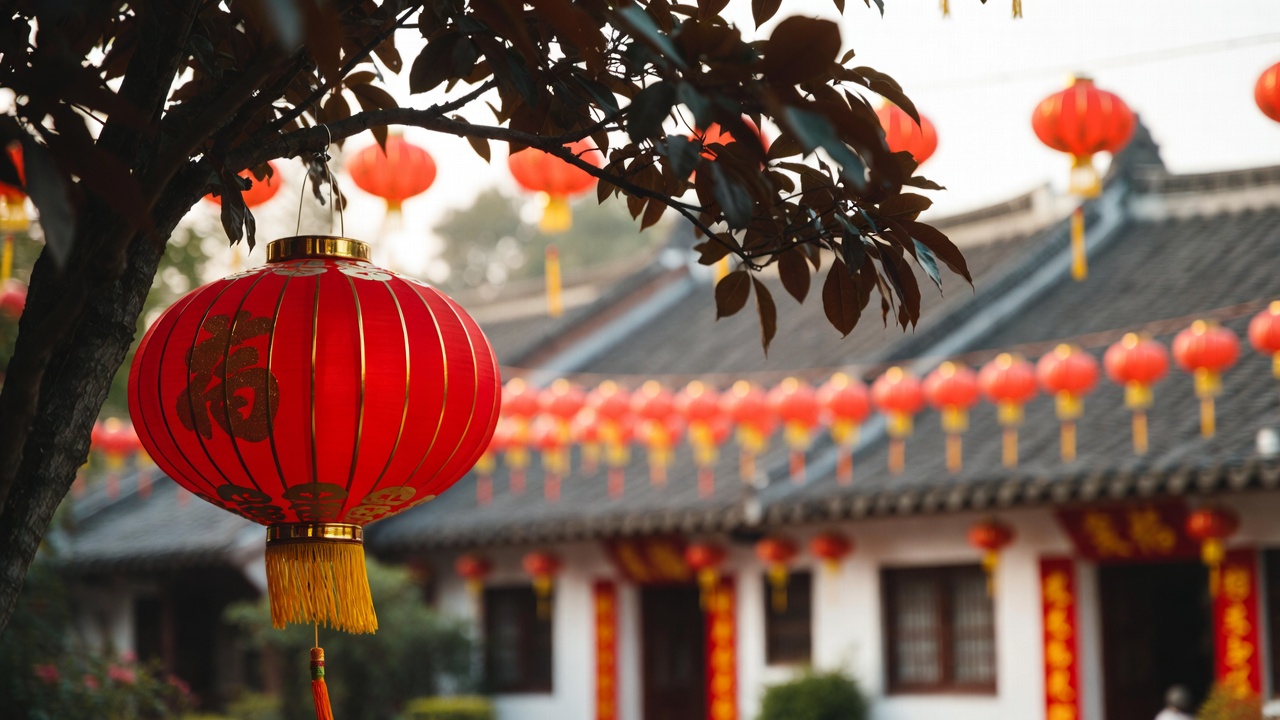
Lanterns: Red lanterns hang outside homes and businesses. Their round shape symbolizes completeness and unity.

Flowers:

  • Peach blossoms (Northern China, Vietnam)
  • Plum blossoms
  • Orchids (symbolizing fertility)
  • Kumquat trees (symbolizing wealth)
  • Narcissus (symbolizing prosperity)

The Significance of the Lunar Calendar: Understanding Lunisolar Timekeeping

To truly understand why the Lunar New Year falls on different dates each year, it helps to understand the calendar system behind it.

What Makes It “Lunisolar”?

The traditional Chinese calendar is lunisolar, meaning it incorporates both lunar and solar elements:

Lunar component:

  • Each month begins on a new moon
  • Months are either 29 or 30 days long
  • 12 lunar months total approximately 354 days

Solar component:

  • The year is divided into 24 solar terms (节气, jiéqì)
  • These solar terms track the sun’s position and mark agricultural seasons
  • The calendar ensures the winter solstice always falls in the 11th month

The Leap Month Solution

A 12-month lunar year is about 11 days shorter than a solar year. Without correction, seasonal events would drift through the calendar over time.

The Chinese calendar solves this by adding a leap month approximately every 2-3 years (seven times in every 19-year cycle). This extra month ensures the calendar stays aligned with the seasons.

The placement of leap months follows specific rules based on the 24 solar terms. When a lunar month doesn’t contain certain “mid-term” solar terms, it becomes a leap month.

24 Solar Terms: The Agricultural Guide

The 24 solar terms were crucial for traditional agricultural planning. They include:

Spring terms:

  • 立春 (Lìchūn) – Start of Spring
  • 雨水 (Yǔshuǐ) – Rain Water
  • 惊蛰 (Jīngzhé) – Awakening of Insects

Summer terms:

  • 立夏 (Lìxià) – Start of Summer
  • 夏至 (Xiàzhì) – Summer Solstice

Autumn terms:

  • 立秋 (Lìqiū) – Start of Autumn
  • 秋分 (Qiūfēn) – Autumn Equinox

Winter terms:

  • 立冬 (Lìdōng) – Start of Winter
  • 冬至 (Dōngzhì) – Winter Solstice

The Winter Solstice is particularly important: the calendar ensures it always falls in the 11th lunar month.


Frequently Asked Questions About Lunar New Year

Is Lunar New Year the same as Chinese New Year?

Not exactly. Chinese New Year refers specifically to the celebration according to Chinese tradition. Lunar New Year is a broader term encompassing Chinese, Korean, Vietnamese, and other celebrations that share the same calendar date but have distinct traditions.

Why does the Lunar New Year date change every year?

The Lunar New Year follows the lunisolar calendar, which tracks moon phases. Since the lunar cycle doesn’t align perfectly with the solar year, the date shifts annually on the Gregorian calendar, always falling between January 21 and February 20.

What shouldn’t you do during Lunar New Year?

Common taboos include:

  • Sweeping or cleaning on New Year’s Day (sweeps away good luck)
  • Using sharp objects like scissors or knives (cuts off fortune)
  • Washing hair (washes away luck)
  • Wearing black or white (funeral colors)
  • Speaking about death or illness
  • Breaking dishes (though if accidentally broken, say “碎碎平安” meaning “peace year after year,” which sounds like “broken”)

How long do Lunar New Year celebrations last?

This varies by country:

  • China: 15-16 days (New Year’s Eve to Lantern Festival); in 2026, February 16 to March 3
  • Korea: 3 days (official public holiday); in 2026, February 16-18
  • Vietnam: 7-9 days (official holiday, with extended preparations); in 2026, February 14-22
  • Western countries: Usually condensed to weekend celebrations

What is the proper greeting for Lunar New Year?

It depends on the culture:

  • Chinese: 恭喜发财 (Gōngxǐ fācái) or 新年快乐 (Xīnnián kuàilè)
  • Korean: 새해 복 많이 받으세요 (Saehae bok mani badeuseyo)
  • Vietnamese: Chúc mừng năm mới
  • General English: “Happy Lunar New Year” is appropriate for diverse audiences

Is it disrespectful to say “Chinese New Year”?

This is context-dependent. “Chinese New Year” is appropriate when specifically discussing Chinese traditions or speaking with someone who prefers that term. In diverse settings or official contexts, “Lunar New Year” is more inclusive. The most respectful approach is to use the specific name for each culture (Seollal, Tết, Spring Festival) when you know someone’s background.

What gifts should you avoid giving?

Across most cultures celebrating the Lunar New Year, avoid:

  • Clocks (象征死亡, symbolizes death in Chinese)
  • Sharp objects (cuts off relationships)
  • Shoes (sounds like “evil” in Cantonese)
  • White or black wrapping (funeral colors)
  • Sets of four items (four sounds like “death” in Chinese)
  • Handkerchiefs (associated with funerals)

Do Japanese people celebrate Lunar New Year?

Japan officially switched to the Gregorian New Year in 1873 following the Meiji Restoration. Most Japanese celebrate New Year on January 1. However, Lunar New Year celebrations persist in:

  • Japanese Chinatowns (Yokohama, Kobe, Nagasaki)
  • The Ryukyu Islands (Okinawa Prefecture)
  • Some Buddhist communities

Conclusion: Embracing Cultural Diversity in the Lunar New Year

The debate over “Lunar New Year” versus “Chinese New Year” reflects something beautiful about our interconnected world: cultures share, adapt, and transform traditions across borders and centuries.

Whether you call it Spring Festival, Chinese New Year, Seollal, Tết, or simply Lunar New Year, you’re participating in a celebration that connects billions of people across the globe. Each culture has added its own flavors, customs, and meanings while preserving the core themes of family reunion, ancestral honor, and hope for prosperity.

As this holiday continues to gain recognition worldwide—from UN recognition to state holidays in California and New York—understanding its diverse expressions becomes increasingly valuable. The family gathering around tteokguk in Seoul shares something profound with the family preparing bánh chưng in Hanoi and the family watching fireworks over Hong Kong’s Victoria Harbour.

Key takeaways from this guide:

  1. Lunar New Year is the inclusive term for celebrations across multiple Asian cultures sharing the same lunisolar calendar date
  2. Chinese New Year or Spring Festival specifically refers to Chinese traditions, though the calendar originated in China
  3. Different cultures have distinct traditions: Korean Seollal features sebae bowing and tteokguk soup; Vietnamese Tết includes the cat zodiac and bánh chưng cakes
  4. The celebration falls on the second new moon after the winter solstice, between January 21 and February 20
  5. Over two billion people celebrate globally across more than 15 countries with official public holidays
  6. The 12-year zodiac cycle combined with five elements creates a 60-year cycle; 2026 is the Year of the Fire Horse, and 2027 will be the Year of the Fire Goat
  7. Context determines appropriate terminology: use specific names when you know someone’s cultural background, and use “Lunar New Year” in inclusive settings

As the lanterns glow and firecrackers echo across the world this Year of the Fire Horse, we’re reminded that despite our diverse traditions, humanity shares common hopes: health, prosperity, family togetherness, and the promise of new beginnings.

Gōngxǐ fācái. Saehae bok mani badeuseyo. Chúc mừng năm mới.

Happy Lunar New Year.


Did you find this guide helpful? Share it with friends who want to understand the rich traditions of the Lunar New Year. For more cultural travel insights and festival guides, explore our blog’s destinations section.
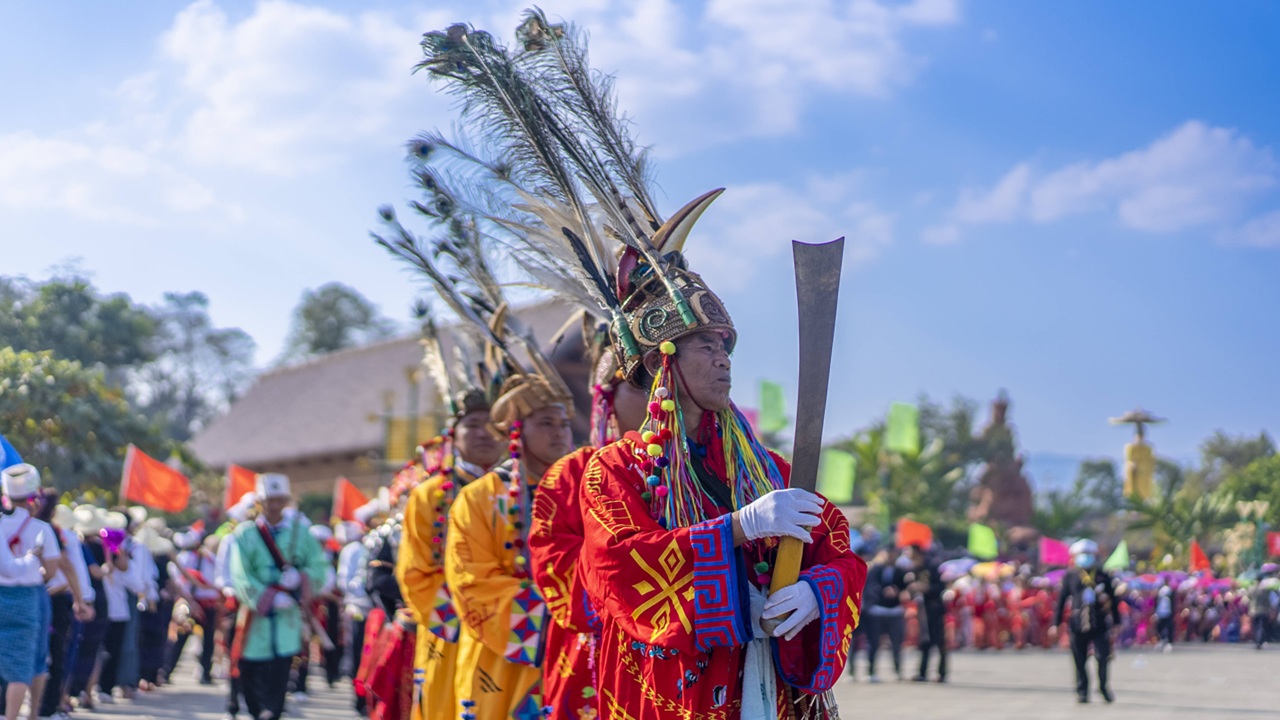
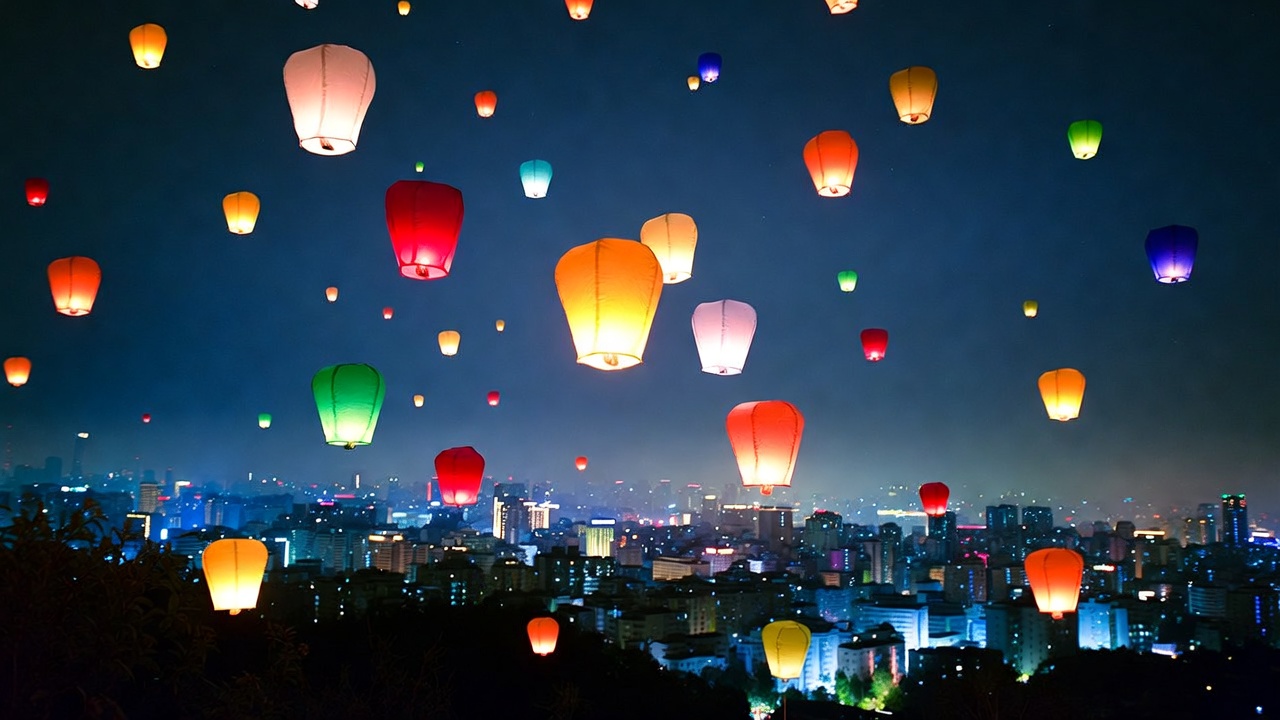
Leave a Reply

Your email address will not be published. Required fields are marked *