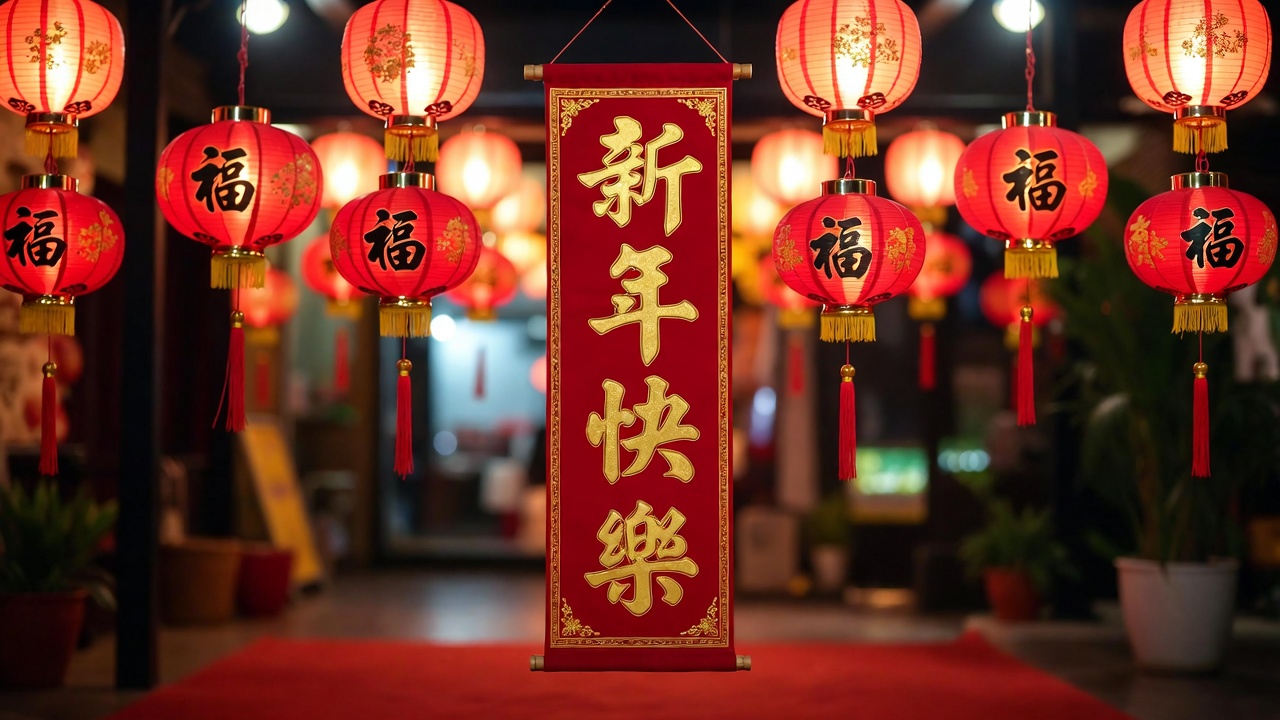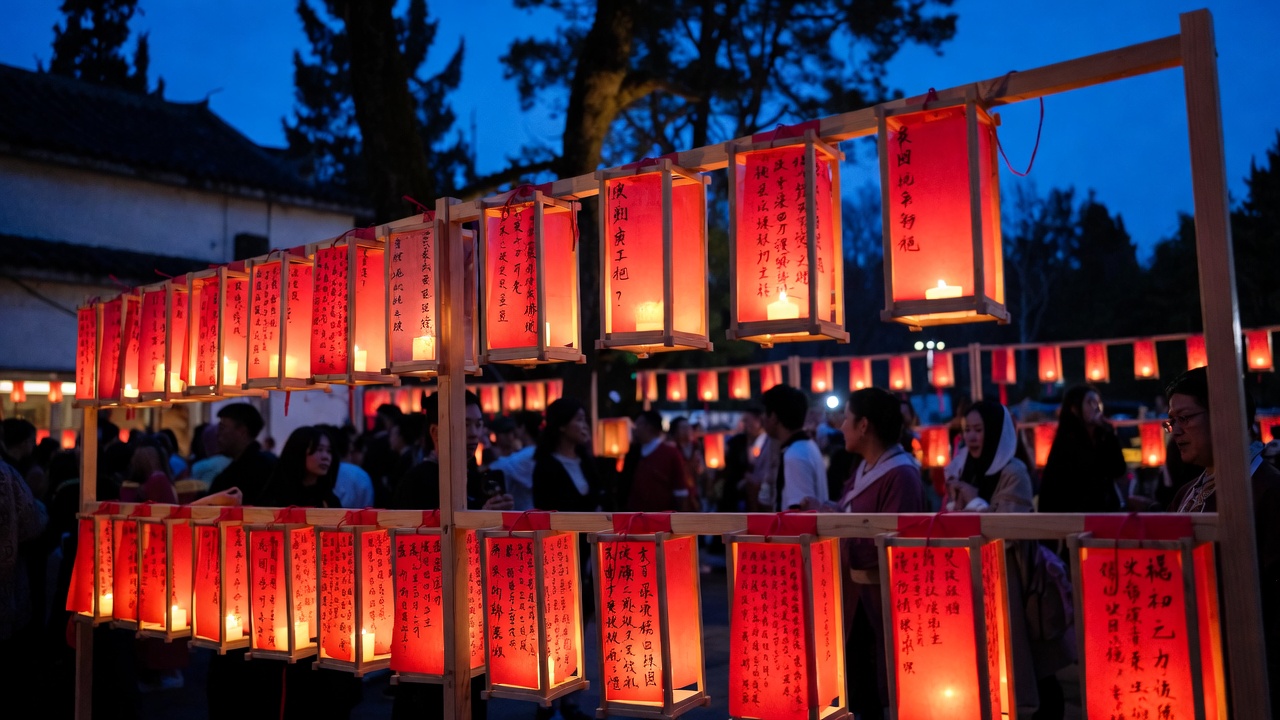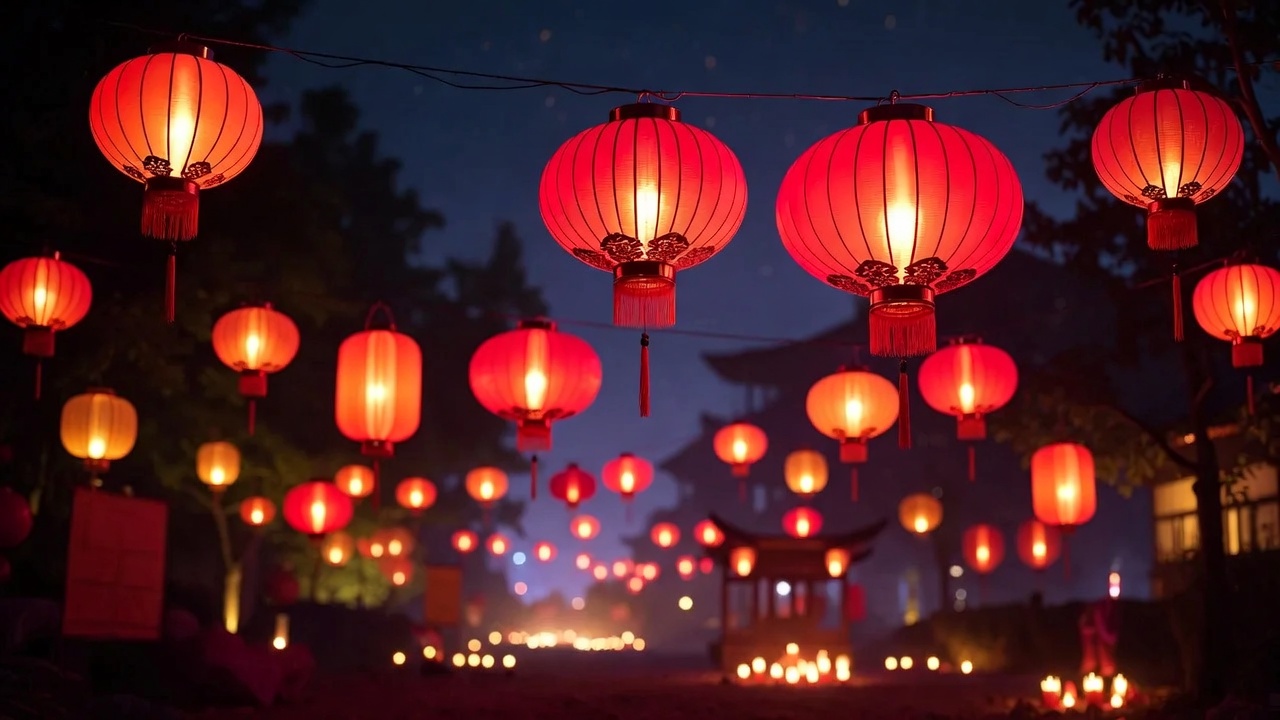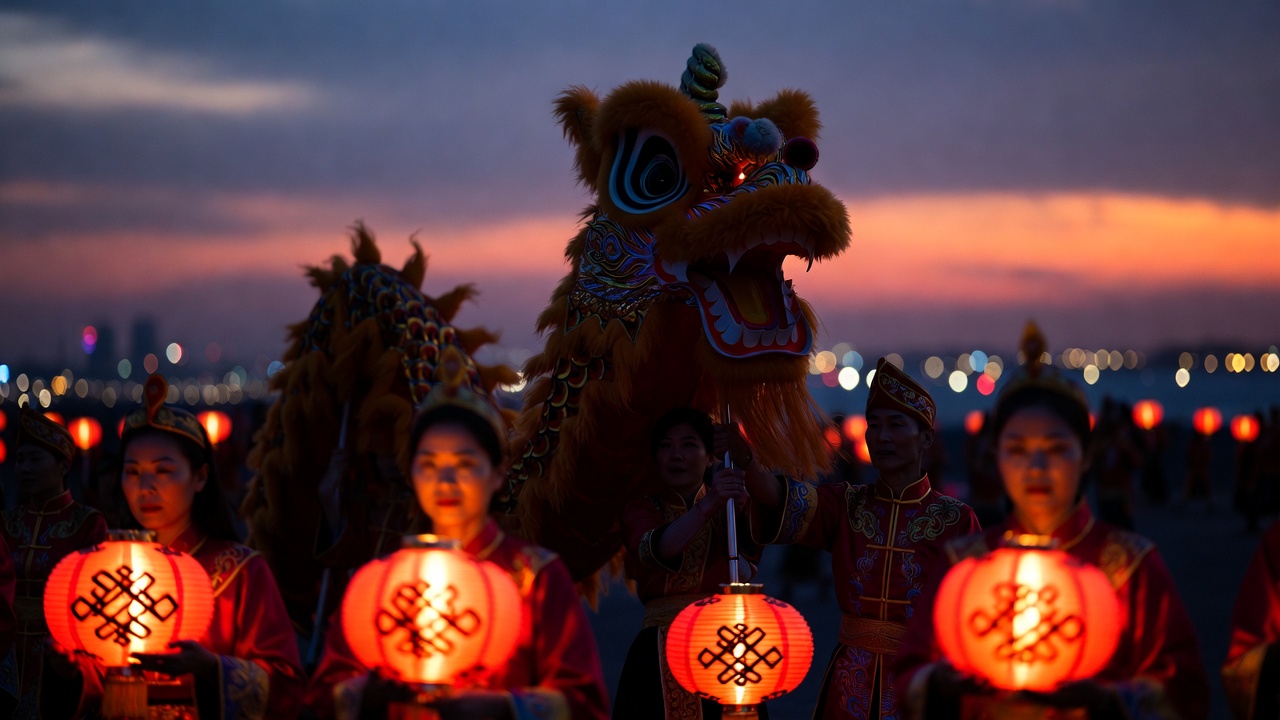
Walking through the streets of Beijing, Shanghai, or any Chinatown around the world during the Spring Festival, you are greeted by a sea of red and gold. Red lanterns sway gently in the winter breeze. Intricate paper cuttings adorn windows like frozen lace. Door gods stand guard with fierce expressions. The air itself seems to hum with ancient wishes for prosperity, health, and happiness.
Chinese New Year decorations are not mere ornaments. They are visual prayers—each color, symbol, and placement carries centuries of meaning. Understanding these decorations opens a window into the soul of Chinese culture, revealing beliefs about fortune, family, and the eternal dance between humans and the cosmos.
This comprehensive guide explores every major Chinese New Year decoration, from the iconic red lanterns to the lesser-known door gods. You will discover their historical origins, symbolic meanings, and how they continue to transform homes and hearts today.
Why Are Chinese New Year Decorations Red and Gold? Understanding the Colors of the Spring Festival
Before diving into specific decorations, we must understand the palette that defines them. Red dominates Chinese New Year because it represents happiness, prosperity, and vitality in Chinese culture. But this preference has deeper roots than mere aesthetic choice.
The Legend of Nian and the Power of Red
According to ancient Chinese folklore, a fearsome beast called Nian (年) emerged from the sea or mountains each New Year’s Eve. This monster terrorized villages, devouring crops, livestock, and even children. The villagers lived in terror until they discovered Nian’s weaknesses: loud noises, fire, and the color red.
Armed with this knowledge, they hung red decorations, lit fires, and set off firecrackers. The strategy worked—Nian fled and never returned. From this legend, the tradition of decorating with red during the Spring Festival was born.
The Cultural Significance of Red in China
Beyond the Nian legend, red holds profound meaning in Chinese philosophy and aesthetics:
| Symbolism | Meaning |
|---|---|
| Fire Element | In the Five Elements theory, red represents fire—energy, passion, and transformation |
| Good Fortune | Red is the color of luck and prosperity |
| Celebration | Used at weddings, births, and festivals |
| Protection | Believed to ward off evil spirits |
| Life Force | Associated with blood and vital energy |
Gold: The Color of Wealth and Imperial Power
Gold complements red throughout Chinese New Year decorations. This color represents wealth, prosperity, and success. Historically, gold was associated with the emperor and the highest levels of achievement. Yellow (gold’s close relative) was once reserved exclusively for imperial use.
During the Spring Festival, gold appears in calligraphy characters, lantern trims, and decorative elements. It reinforces the message of incoming prosperity.
Red Lanterns in Chinese New Year: History, Meaning, and Modern Display
No Chinese New Year decoration is more iconic than the red lantern (红灯笼, hóng dēnglóng). These glowing beacons transform ordinary streets into rivers of light during the festival season.
The Ancient Origins of Chinese Lanterns
Chinese lanterns have illuminated celebrations for over 2,000 years. According to historical records, paper lanterns existed as early as the Eastern Han Dynasty (25-220 CE). During this period, Emperor Ming of Han ordered lanterns lit to honor the Buddha, as Buddhist monks traditionally lit lanterns on the fifteenth day of the first lunar month.
The lantern tradition gained momentum during the Tang Dynasty (618-907 CE). This golden age of Chinese civilization saw lantern displays last three days. The emperor even lifted the curfew so people could enjoy the festivities day and night.
Why Chinese Families Hang Red Lanterns for Lunar New Year
Red lanterns serve multiple purposes during the Spring Festival:
- Driving away evil spirits: The bright light and red color are believed to scare away malevolent forces
- Welcoming good fortune: Hanging lanterns signals that the household welcomes prosperity
- Celebrating family reunion: The warm glow represents the warmth of family togetherness
- Marking the festive season: Lanterns create a visible transformation from ordinary time to sacred celebration
Traditional vs. Modern Red Lanterns
Traditional red lanterns were crafted from bamboo, wood, and paper or silk. Artisans painted them with auspicious designs or Chinese characters. Today, while traditional techniques continue in some regions, many families use:
- Electric LED lanterns: Safer and longer-lasting
- Fabric-based lanterns: More durable than paper
- Collapsible designs: Easy to store between festivals
- Giant display lanterns: Used for public celebrations
The Lantern Festival: Culmination of Chinese New Year Celebrations
The Lantern Festival (元宵节, Yuánxiāojié) falls on the fifteenth day of the first lunar month. This marks the official end of the Chinese New Year celebrations. During this festival:
- Families gather again for reunion dinners
- Lantern displays reach their peak magnificence
- People solve riddles written on lanterns
- Lion and dragon dances fill the streets
- Sweet rice balls called tangyuan (汤圆) are eaten
The round tangyuan symbolize family togetherness—the pronunciation sounds similar to “reunion” (团圆, tuányuán).
Spring Festival Couplets (Chunlian): Red Banners with Golden Wishes for the New Year
Spring Festival couplets (春联, chūnlián) are paired poetic phrases written in elegant Chinese calligraphy. These red banners with black or gold characters frame doorways across China, Taiwan, Hong Kong, and Chinese communities worldwide.
The History of Chinese New Year Couplets and Door Decorations
The tradition of couplets evolved from an ancient practice called Taofu (桃符)—peach wood charms hung to ward off evil spirits. The Chinese believed peach wood possessed magical protective powers.
According to the Mountain and Sea Classic (山海经), an ancient text, a giant peach tree grew in the East Sea. Its branches served as the gate between the spirit world and the mortal realm. Two deities, Shentu (神荼) and Yulü (鬱壘), guarded this gate. Any evil spirits attempting to enter the mortal world were captured and fed to tigers.
People began carving these guardians’ names on peach wood boards to protect their homes. By the Zhou Dynasty (1046-256 BCE), this practice was well established.
How Peach Wood Charms Became Paper Couplets
The transformation from wooden charms to paper couplets occurred gradually:
- Tang Dynasty (618-907): Paired poetic lines became popular alongside the wooden charms
- Song Dynasty (960-1279): Paper couplets began appearing on doors; the poet Wang Anshi wrote a famous poem describing the scene
- Ming Dynasty (1368-1644): Emperor Zhu Yuanzhang popularized couplets, reportedly coining the term “春联” and mandating red paper
- Qing Dynasty (1644-1912): The art form reached its peak, with elaborate couplets adorning everything from palace halls to humble cottages
Understanding the Structure of Spring Festival Couplets
A complete set of Spring Festival couplets includes three parts:
| Component | Chinese Name | Placement | Description |
|---|---|---|---|
| Upper scroll | 上联 (shànglián) | Right side of door | First line of the poetic pair |
| Lower scroll | 下联 (xiàlián) | Left side of door | Second line, corresponding to the first |
| Horizontal scroll | 横批 (héngpī) | Above the door | Four-character summary of the couplet’s meaning |
Rules for Writing and Reading Couplets
Traditional couplets follow strict literary conventions:
- Both lines must have equal characters (typically 5, 7, 9, or 11)
- The tone patterns must mirror each other
- Corresponding characters must share related meanings
- The last character of the upper scroll uses an oblique tone
- The last character of the lower scroll uses a level tone
Reading direction: If the horizontal scroll reads left to right, the upper scroll is on the left. If it reads right to left (traditional style), the upper scroll is on the right.
Popular Chinese New Year Couplet Phrases and Their Meanings
Here are some beloved couplet examples:
Couplet 1:
- Upper: 天增岁月人增寿 (May heaven bestow more years and grant longevity)
- Lower: 春满乾坤福满楼 (May spring fill the world and blessings fill the house)
- Horizontal: 四季长安 (Peace throughout the seasons)
Couplet 2:
- Upper: 冬去山川齐秀丽 (Winter ends in splendid mountain and river landscape)
- Lower: 春来桃李共芬芳 (Spring starts from fragrant peach and plum blossoms)
- Horizontal: 辞旧迎新 (Ring out the old; ring in the new)
Special Mourning Couplets: When Colors Change
In some rural areas, families who have lost a member within three years use different colored couplets:
- White, yellow, green, or purple paper replaces red
- This signals to visitors that the household is in mourning
- The custom shows respect for the deceased while still participating in the New Year tradition
The Fu Character: Why Chinese People Hang the Good Fortune Symbol Upside Down
Perhaps no Chinese New Year decoration sparks more curiosity than the Fu character (福) displayed upside down. This practice baffles first-time observers but delights those who understand its clever wordplay.
The Meaning of Fu in Chinese Culture
The character 福 (fú) embodies the complete spectrum of good fortune:
- Happiness
- Blessing
- Prosperity
- Good luck
- Well-being
This character appears throughout Chinese life—on ceramics, textiles, architecture, and especially during the Spring Festival. It is typically written in black or gold ink on red diamond-shaped paper.
The Ingenious Pun Behind Upside Down Fu Symbols
The upside-down practice relies on a homophone in Chinese:
- 倒 (dào) = “upside down” or “to turn over”
- 到 (dào) = “to arrive” or “to come”
When Chinese people say “福倒了” (fú dào le), it sounds identical to “福到了”—meaning “fortune has arrived.” This linguistic magic transforms a seemingly incorrect display into a powerful blessing.
Historical Origins of the Upside Down Fu Tradition
Two popular legends explain this custom:
Legend 1: The Prince’s Mistake During the Qing Dynasty, a prince’s servant accidentally pasted the Fu character upside down. The prince was furious until a quick-thinking advisor explained the happy coincidence: “Your Highness, this means good fortune is arriving at your household!” The prince was pleased, and the practice spread.
Legend 2: Empress Ma’s Compassion During the Ming Dynasty, Emperor Zhu Yuanzhang marked a family’s door with Fu to signal their punishment. Empress Ma, known for her kindness, ordered all households to paste Fu on their doors by dawn. When soldiers found every door marked—including one with the character upside down—Empress Ma explained that the upside-down Fu meant “fortune arrives.” The emperor agreed, and the family was spared.
Where to Place the Fu Character: Rules and Taboos
Not all Fu characters should be displayed upside down. Traditional guidelines suggest:
| Location | Position | Reason |
|---|---|---|
| Main front door | Upright | Welcomes fortune directly |
| Interior doors | Upside down | Symbolizes fortune pouring into the home |
| Storage containers | Upside down | Wishes for abundant contents |
| Windows | Either way | Personal preference |
Avoid placing Fu on:
- Bathroom doors
- Garbage bins
- The floor
- Any disrespectful location
The Bat Connection: Another Fu Symbol
The Chinese word for bat, 蝠 (fú), sounds identical to the fortune character. This homophone makes bats extremely auspicious symbols. Chinese art often depicts:
- Five bats = The Five Blessings (longevity, wealth, health, virtue, peaceful death)
- Bats surrounding the longevity character = Complete good fortune
- Red bats = Particularly lucky
Chinese Paper Cutting Art (Jianzhi): Window Flowers and Auspicious Designs
Paper cutting (剪纸, jiǎnzhǐ) transforms simple red paper into intricate masterpieces. These delicate artworks adorn windows during the Spring Festival, earning them the name “window flowers” (窗花, chuānghuā).
The Ancient History of Chinese Paper Cutting
Paper cutting boasts a history spanning over 1,500 years. Before paper’s invention, ancient Chinese created similar decorations using:
- Gold and silver leaf
- Tree bark
- Leaves
- Fabric
- Leather
The art flourished after paper became widely available during the Han Dynasty (206 BCE-220 CE). By the Tang Dynasty, paper cutting had become a refined craft practiced across all social classes.
In 2009, UNESCO inscribed Chinese paper cutting on the Representative List of the Intangible Cultural Heritage of Humanity, recognizing its cultural significance.
Regional Styles of Chinese Paper Cutting
Different regions developed distinctive styles:
| Region | Style Characteristics |
|---|---|
| Northern China (Shanxi, Shaanxi, Shandong) | Bold, simple, expressive; often featuring odd shapes with hidden meanings |
| Southern China (Foshan, Guangdong) | Meticulous detail; copperplate techniques combining painting and carving |
| Eastern China (Yangzhou, Zhejiang) | Spiritual and elegant; nature themes with balance and harmony |
| Jiangsu Province | Colorful Menjian on wax-coated paper; scenes of daily life |
Symbolic Meanings in Chinese New Year Paper Cuttings
Every design carries specific wishes:
Animals:
- Fish (鱼, yú) = Abundance (homophone with 余, “surplus”)
- Bat (蝙蝠, biānfú) = Good fortune (蝠 sounds like 福)
- Dragon = Power, strength, imperial blessing
- Phoenix = Grace, virtue, prosperity
- Mandarin ducks = Marital love and fidelity
- Zodiac animals = Celebrating the year’s ruling sign
Plants:
- Peony (牡丹) = Wealth and high status
- Plum blossom (梅花) = Courage, hope, the arrival of spring
- Lotus (莲花) = Purity; “year after year” (连年, liánnián sounds similar)
- Pomegranate = Fertility (many seeds = many children)
- Peach = Longevity and immortality
Characters and Symbols:
- 福 (Fu) = Good fortune
- 囍 (Double happiness) = Wedding celebrations
- 寿 (Shou) = Longevity
How Paper Cuttings Are Made
Traditional paper cutting requires:
- Materials: Red paper (most common), scissors or special knives
- Techniques: Positive cutting (removing background), negative cutting (removing the design), or combined methods
- Methods: Single-sheet cutting or folded paper for symmetrical designs
- Skill: Masters can cut through multiple layers simultaneously
The folded technique produces perfectly symmetrical patterns. Grandmothers traditionally taught this skill to younger generations, preserving the art through family lineages.
Chinese Door Gods (Menshen): Guardians That Protect Homes During the New Year
Door gods (门神, ménshén) are divine guardians whose images are pasted on doors to protect against evil and welcome blessings. These fierce figures have watched over Chinese households for over 2,000 years.
The Origin of Chinese Door Gods in Ancient Mythology
The earliest door gods were Shentu and Yulü, mythological guardians mentioned in the Classic of Mountains and Seas (山海经). According to legend, these deities lived on Dushuo Mountain beside a giant peach tree. They captured evil spirits and fed them to tigers.
During the Han Dynasty (202 BCE-220 CE), people began painting or carving these guardians on peachwood boards hung beside doors. This practice connected to the protective power believed inherent in peach wood.
How Two Tang Dynasty Generals Became Door Gods
The most popular door gods today are Qin Shubao (秦叔宝) and Yuchi Gong (尉迟恭), generals who served Emperor Taizong of the Tang Dynasty. Their story is recorded in the classic novel Journey to the West:
The Dragon King of the Jade River was sentenced to death by the Jade Emperor. He begged Emperor Taizong for help, but despite the emperor’s efforts, the dragon was executed. The dragon’s vengeful spirit then haunted Taizong each night.
Two loyal generals, Qin Shubao and Yuchi Gong, volunteered to stand guard at the emperor’s door. Their presence kept the ghost at bay. To spare his generals from sleepless nights, Taizong ordered their portraits painted on the palace gates. The ghost was fooled by the images, and the practice spread throughout China.
Types of Chinese Door Gods and Their Functions
Door gods fall into two categories:
Martial Door Gods (武门神)
- Feature armored warriors with weapons
- Protect against evil spirits and negative influences
- Examples: Qin Shubao, Yuchi Gong, Guan Yu
Civil Door Gods (文门神)
- Depict scholars or officials in formal robes
- Attract blessings, wealth, and academic success
- Sometimes include children to wish for fertility
Rules for Displaying Door Gods Correctly
- Door gods must face each other, never back-to-back
- Images should be replaced every Chinese New Year
- For single doors, Zhong Kui (demon-quelling deity) or Wei Zheng is used alone
- Some families place different door gods on livestock gates (like Meng Liang and Jiao Zan)
New Year Paintings (Nianhua): Traditional Chinese Folk Art for the Spring Festival
New Year paintings (年画, niánhuà) are colorful prints displayed during the Spring Festival. These folk artworks have decorated Chinese homes for over 1,000 years.
The History and Development of Chinese New Year Paintings
New Year paintings evolved from early door god images. Their history includes several important phases:
- Tang Dynasty: Early prints focused primarily on door gods
- Song Dynasty: Subject matter expanded to include various auspicious themes
- Ming Dynasty: Printing techniques improved; regional styles emerged
- Qing Dynasty: The art reached its zenith with sophisticated woodblock printing
Three Major Schools of Traditional Nianhua
| School | Location | Characteristics |
|---|---|---|
| Taohuawu | Suzhou, Jiangsu | Elegant lines; refined aesthetic |
| Yangliuqing | Tianjin | Combines woodblock printing with hand-painting; bold colors |
| Weifang | Shandong | Vibrant folk style; agricultural themes |
Common Subjects in Chinese New Year Paintings
New Year paintings function as a visual encyclopedia of folk life:
Auspicious Figures:
- Chubby children (symbolizing healthy offspring)
- Beautiful women (representing loving families)
- The God of Wealth (inviting prosperity)
Legendary Scenes:
- Stories from classic novels
- Historical heroes
- Buddhist and Taoist deities
Symbolic Objects:
- Fish held by children (年年有余, “abundance every year”)
- Peonies (wealth and honor)
- Gold ingots (prosperity)
Landscape and Nature:
- Feng shui-inspired scenes
- Heavenly creatures
- Seasonal imagery
The Meaning Behind “A Child Holding a Fish”
This beloved image appears in countless New Year paintings. The Chinese word for fish (鱼, yú) sounds identical to 余 (yú), meaning “surplus” or “extra.” The complete phrase 年年有余 (niánnián yǒu yú) means “may you have abundance year after year.”
Kumquat Trees and Lucky Plants: Natural Chinese New Year Decorations and Their Meanings
Living plants play a special role in Chinese New Year decorations. Kumquat trees and blooming flowers bring nature’s vitality into homes while carrying powerful symbolic meanings.
Why Kumquat Trees Symbolize Wealth and Good Luck
The kumquat holds special significance in Cantonese-speaking regions:
- In Cantonese, kumquat is “gam gat” (金桔)
- “Gam” (金) means “gold”
- “Gat” sounds like “good luck” (吉)
In Mandarin, the kumquat is called jīnjú (金桔):
- “Jin” (金) means “gold”
- “Ju” sounds like “good luck” (吉) and contains the character in writing
The golden fruits resemble coins, reinforcing the wealth symbolism. Families display potted kumquat trees in their homes, sometimes decorated with red envelopes for extra luck.
Popular Flowers for Chinese New Year and What They Represent
| Flower | Symbolism | Notes |
|---|---|---|
| Plum blossom (梅花) | Courage, hope, resilience | First to bloom in cold weather; signals spring’s arrival |
| Peach blossom (桃花) | Romance, prosperity, new beginnings | Popular with singles hoping for love |
| Orchid (兰花) | Fertility, abundance, elegance | One of the Four Gentlemen of Chinese art |
| Peony (牡丹) | Wealth, honor, beauty | The “King of Flowers” in Chinese culture |
| Narcissus (水仙) | Good luck, prosperity | The “New Year Flower” |
| Chrysanthemum (菊花) | Longevity, eternity | Associated with the autumn but displayed for life-extending wishes |
| Pussy willow (银柳) | Arrival of spring | Fluffy white blossoms represent new beginnings |
The Special Role of Flowers in Southern China
In Cantonese, the word for flower (花, fā) sounds similar to the word for fortune (发, fā). This linguistic connection makes flower displays especially popular in:
- Hong Kong
- Macau
- Guangdong Province
- Guangxi Region
Flower markets before Chinese New Year are major events in these regions. Families carefully select blooming plants to ensure their homes receive the maximum blessing of the spring season.
Chinese Knots: Traditional Handcrafted Decorations with Deep Symbolism
Chinese knots (中国结, zhōngguó jié) are intricate decorative objects woven from a single cord. These elegant handicrafts carry wishes for good fortune, love, and happiness.
The Ancient History of Chinese Knotting
Chinese knotting originated in prehistoric times when early humans used knots to record information. Archaeological evidence includes:
- 100,000-year-old bone needles used for sewing
- Bodkins for untying knots
- Bronze vessels from the Warring States period (481-221 BCE) depicting knotwork
The art evolved significantly during the Sui and Tang Dynasties (581-906 CE), when basic knots like the Swastika knot and round brocade knot became popular on clothing across all social classes.
By the 1970s, interest had declined until Lydia Chen helped revive the craft through the Chinese Knotting Promotion Center. Her work restored Chinese knotting as both an art form and cultural symbol.
Basic Types of Chinese Knots and Their Meanings
| Knot Type | Chinese Name | Symbolism |
|---|---|---|
| Pan Chang Knot | 盘长结 | Eternal connection; Buddhist symbol of unity |
| Double Coin Knot | 双钱结 | Wealth, prosperity |
| Good Luck Knot | 吉祥结 | Good fortune, auspiciousness |
| Button Knot | 纽扣结 | Practical function; completeness |
| Cloverleaf Knot | 酢浆草结 | Good luck (similar to Western four-leaf clover) |
| Double Happiness Knot | 双喜结 | Marital bliss; wedding gift |
| Longevity Knot | 万字结 | Long life, health |
Why Red Dominates Chinese Knotting
Red cord is the traditional material for Chinese knots because:
- Red symbolizes luck and prosperity
- Red represents fire (protection against evil)
- Red connects to the Nian legend
- Red signifies celebration and joy
Other colors carry meanings too:
- Gold/Yellow: Wealth, imperial blessing
- Green: Health, growth, harmony
- Blue: Healing, hope
How to Display Chinese Knots During the New Year
Chinese knots are hung in prominent positions:
- Doorways: Welcoming good fortune
- Living rooms: Central decoration
- Bedrooms: Promoting peace and rest
- Cars: Protection during travel
Feng shui considerations:
- Avoid dark, humid, or poorly ventilated areas
- 1-3 knots is the ideal number
- One knot = rolling financial fortune
- Two knots = pairing and happy families
- Three knots = safety and smooth home life
Firecrackers and Fireworks: The Sound of Chinese New Year Traditions
The explosive sounds of firecrackers (鞭炮, biānpào) and fireworks (烟火, yānhuǒ) have announced the Chinese New Year for centuries. Though modern regulations limit their use in many cities, they remain an iconic element of the celebration.
The Origin of Firecrackers in the Nian Legend
The firecracker tradition connects directly to the Nian monster legend. Ancient Chinese discovered that:
- The beast feared loud noises
- Bamboo exploding in fire produced frightening sounds
- These “bamboo firecrackers” drove Nian away
Before gunpowder, villagers threw bamboo stalks into fires. The heat caused the air inside the hollow bamboo to expand rapidly, creating explosive pops. This practice gave firecrackers their Chinese name: “exploding bamboo” (爆竹, bàozhú).
The Evolution of Chinese Firecrackers
| Period | Development |
|---|---|
| Ancient times | Bamboo thrown into fires |
| Tang Dynasty | Gunpowder invented; wrapped in bamboo tubes |
| Song Dynasty | Paper-wrapped firecrackers developed |
| Ming-Qing Dynasties | Mass production; elaborate designs |
| Modern era | Regulations in urban areas; electronic alternatives emerge |
The Symbolism of Setting Off Firecrackers
Firecrackers serve multiple purposes during Chinese New Year:
- Driving away evil spirits: The noise scares malevolent forces
- Welcoming the New Year: The first moment of the new year must be loud
- Celebrating joy: Expressing happiness and excitement
- Purifying the air: Traditionally believed to cleanse the environment
- Creating festive atmosphere: Marking the transition from old to new
Modern Alternatives to Traditional Firecrackers
As many Chinese cities ban real firecrackers for safety and pollution concerns, alternatives have emerged:
- Electronic firecrackers: LED lights with recorded sounds
- Paper or plastic decorative firecrackers: Visual representation without the boom
- Firework displays: Organized public shows replace individual use
- Virtual firecrackers: Apps that simulate the experience
Despite these changes, the spirit of loud celebration continues through dragon dances, lion dances, and festive music.
Red Envelopes (Hongbao): The Tradition of Giving Lucky Money
Red envelopes (红包, hóngbāo) containing money are one of the most beloved Chinese New Year traditions. Children especially look forward to receiving these lucky packets.
The History and Meaning of Red Envelope Gifts
The red envelope tradition has several origin stories:
The Sui Monster (祟) A demon called Sui terrorized children on New Year’s Eve. Parents stayed awake all night to protect their children (守岁, shǒusuì means “guarding against Sui”). One family discovered that coins wrapped in red paper under a child’s pillow scared the demon away. The phrase 压岁钱 (yāsuìqián) means “money to suppress Sui.”
Modern Evolution Today, red envelopes are given:
- From elders to younger family members
- From employers to employees
- From married couples to unmarried friends
- From businesses to customers
Rules and Etiquette for Giving Red Envelopes
| Rule | Explanation |
|---|---|
| Amount | Even numbers are preferred (except 4, which sounds like “death”) |
| Lucky numbers | 8 (sounds like “prosperity”), 6 (sounds like “smooth”) are auspicious |
| New bills | Fresh, crisp money symbolizes new beginnings |
| Receiving | Accept with both hands; don’t open immediately in front of the giver |
| Presentation | Envelope should be right-side up; never crumpled |
Digital Red Envelopes: A Modern Twist
Digital payment apps like WeChat and Alipay have revolutionized red envelope giving. Features include:
- Sending money instantly across distances
- “Red envelope games” in group chats
- Random amount distribution
- Digital envelopes with animated designs
While traditionalists prefer physical red envelopes, digital versions have become enormously popular, especially among younger generations.
How to Decorate Your Home for Chinese New Year: Complete Decoration Guide
Understanding each decoration is one thing; knowing how and when to display them transforms knowledge into practice.
Timeline for Chinese New Year Decoration
| Time | Action |
|---|---|
| 10 days before | Deep cleaning (扫尘, sǎochén—”sweeping away dust and bad luck”) |
| 1 week before | Begin shopping for decorations and flowers |
| 3-5 days before | Hang lanterns, display kumquat trees, set up flowers |
| New Year’s Eve | Paste couplets, door gods, Fu characters, paper cuttings |
| New Year’s Day | Display red envelopes, set off firecrackers at midnight |
| After Lantern Festival | Remove or replace decorations |
Placement Guidelines for Each Decoration
Front Door:
- Spring Festival couplets (vertical scrolls on sides, horizontal above)
- Door gods (must face each other)
- Fu character (upright on main door)
Windows:
- Paper cuttings
- Small lanterns
Living Room:
- Large Chinese knots
- New Year paintings
- Kumquat tree
- Flower arrangements
Interior Doors:
- Upside-down Fu characters
- Small paper cuttings
Kitchen:
- Kitchen God picture (replaced on the 4th day)
- Auspicious symbols
Common Mistakes to Avoid
- Placing door gods back-to-back: This brings bad luck
- Using damaged decorations: Replace torn or faded items
- Decorating on the wrong day: Some days are inauspicious according to the Chinese almanac
- Neglecting cleaning first: New decorations over dirt symbolizes covering problems, not solving them
- Removing couplets too early: They should remain until at least the Lantern Festival
The Future of Chinese New Year Decorations: Tradition Meets Modern Sustainability
As environmental consciousness grows, Chinese New Year decorations are evolving while honoring tradition.
Eco-Friendly Alternatives
Modern families increasingly choose:
- Reusable fabric lanterns instead of disposable paper
- LED lights replacing candles
- Digital greetings supplementing physical decorations
- Potted plants that continue growing after the festival
- Handmade family crafts instead of mass-produced items
Global Spread of Chinese New Year Decorations
Chinese New Year is celebrated in:
- Every major Chinatown worldwide
- Countries with significant Chinese populations (Malaysia, Singapore, Thailand, Indonesia)
- Cities hosting Lunar New Year events (London, Sydney, San Francisco, New York)
Non-Chinese individuals increasingly display these decorations to:
- Honor Chinese friends and neighbors
- Celebrate cultural diversity
- Participate in the global community
Important note: Understanding the meaning behind decorations transforms cultural appreciation into cultural respect. Simply copying without knowledge can feel hollow—but learning and participating with awareness enriches everyone.
Conclusion: The Living Language of Chinese New Year Decorations
Every red lantern, every carefully brushed couplet, every intricate paper cutting speaks across centuries. These decorations are not relics of the past but a living language that connects generations.
When a grandmother teaches her grandchild to cut paper flowers, she passes down more than technique. She shares stories, values, and hopes for the future. When a family hangs their Fu character upside down, they participate in a linguistic game played by their ancestors for hundreds of years.
Chinese New Year decorations remind us that:
- Symbols have power—they focus our intentions and aspirations
- Community matters—shared traditions bind us together
- Renewal is possible—each year brings new beginnings
- Beauty and meaning can coexist—decorations serve both practical and spiritual purposes
As you hang your own red lanterns or admire the paper cuttings in a Chinatown window, remember: you are witnessing wishes made visible. Each decoration carries the weight of history and the lightness of hope.
恭喜发财,新年快乐! (Gōngxǐ fācái, xīnnián kuàilè!)
May you have prosperity and a happy new year!
Frequently Asked Questions About Chinese New Year Decorations
What is the most important Chinese New Year decoration?
While all decorations carry significance, Spring Festival couplets are often considered most essential. They transform the doorway—the boundary between the family’s private world and the outside—into a threshold of blessings.
When should I remove Chinese New Year decorations?
Traditionally, decorations remain until after the Lantern Festival (15th day of the first lunar month). In rural areas, many families leave couplets and door gods until the following year’s New Year, when they are replaced.
Can non-Chinese people display these decorations?
Yes, with respect and understanding. Learning the meanings behind decorations—rather than simply copying their appearance—demonstrates genuine appreciation rather than appropriation.
Why is the number 4 avoided in Chinese New Year decorations and gifts?
The Chinese word for four (四, sì) sounds similar to the word for death (死, sǐ). This makes four an inauspicious number to avoid during celebrations focused on life and renewal.
What colors should I avoid during Chinese New Year?
White and black are traditionally associated with death and mourning. While modern sensibilities are more flexible, decorations during the Spring Festival emphasize red, gold, and other bright colors.
How much money should go in a red envelope?
Amounts vary by relationship and region. General guidelines include:
- Use even numbers (excluding 4)
- Amounts ending in 8 are particularly lucky
- New, crisp bills are preferred
- Consider your relationship and local customs
This guide was created to help readers understand and appreciate the rich traditions of Chinese New Year decorations. May this knowledge deepen your connection to these beautiful customs, whether you celebrate the Spring Festival yourself or simply admire its cultural richness.