Christmas in France is, above all, a feast. The centerpiece is not the morning of December 25 but the long, late supper on Christmas Eve called le réveillon, a meal of oysters, foie gras, and Champagne that can stretch past midnight. Around it sit some of Europe’s oldest Christmas customs: the painted clay santons of Provence, the bûche de Noël shaped like a log, the centuries-old Christmas markets of Alsace, and the galette des rois that closes the season at Epiphany. Here is how France celebrates Noël.
When Is Christmas in France?
The season opens with Advent, the four weeks before Christmas, when children count down with an calendrier de l’Avent, the Advent calendar. The heart of the holiday is Noël itself, built around the réveillon on the evening of December 24 and the family meal on December 25, which is a public holiday.
The celebration then runs on to l’Épiphanie, Epiphany, on January 6 or the nearest Sunday, marked by the galette des rois. In much of France the word for Christmas, Noël, comes from the Latin natalis, meaning birth, for the birth of Christ.
Saint Nicholas in the East
In eastern France, especially Alsace and Lorraine, the festivities begin early with la Saint-Nicolas on December 6. Saint Nicholas, patron of children, parades through towns and rewards well behaved children with gingerbread, chocolates, and small gifts. At his side walks le Père Fouettard, a stern, dark figure who deals with those who misbehaved. Bakeries fill with mannele, little brioche figures shaped like the saint, eaten warm with hot chocolate. In these regions Saint Nicholas Day can rival Christmas itself in importance, and Saint Nicholas is the patron saint of Lorraine.
The Christmas Markets of Alsace
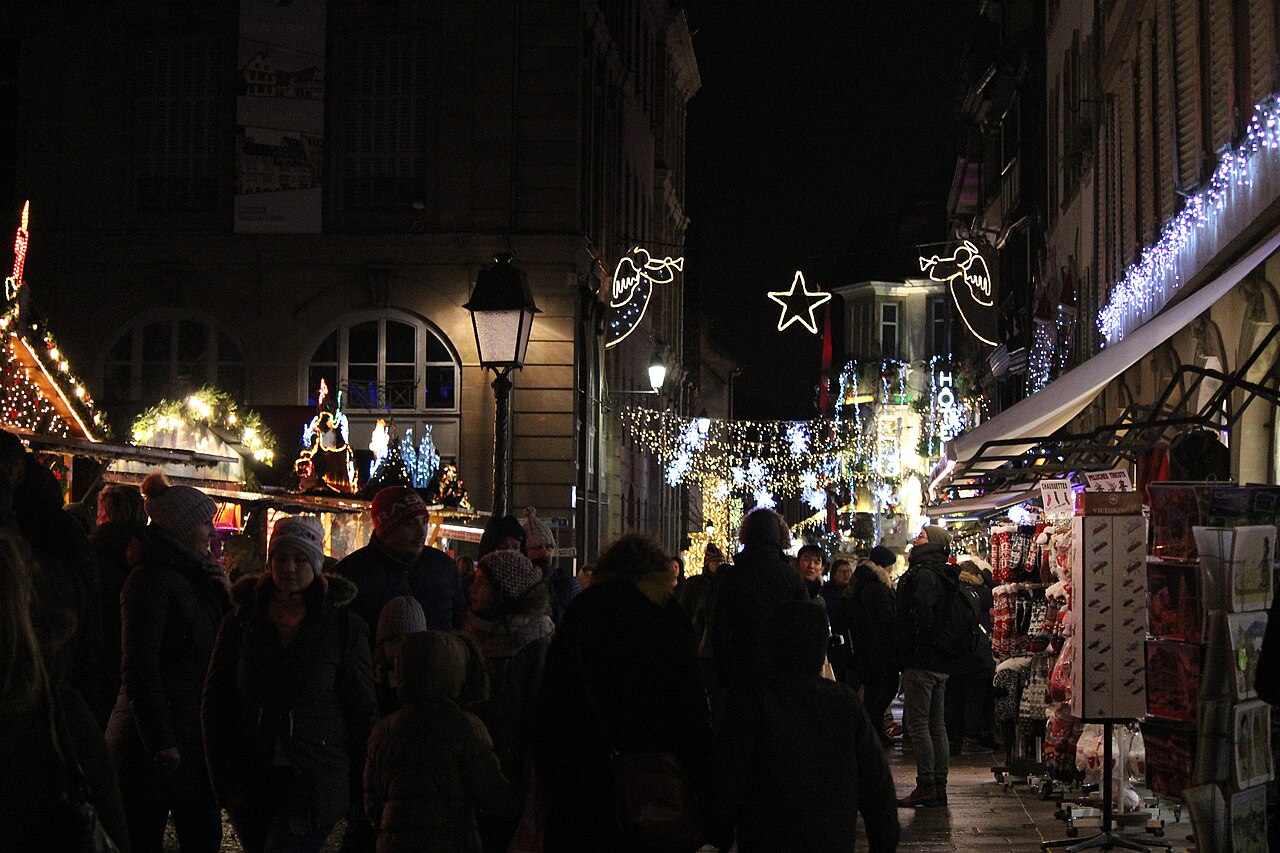
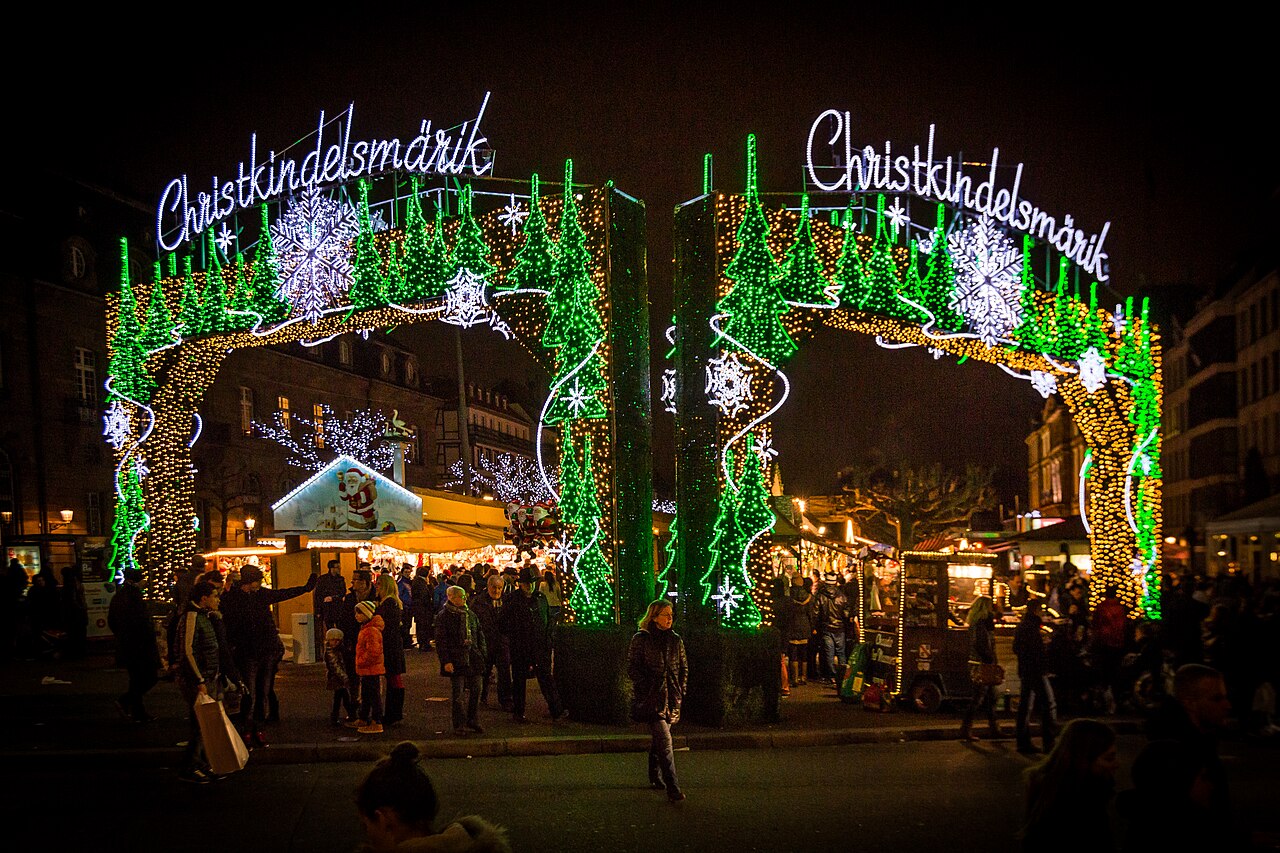
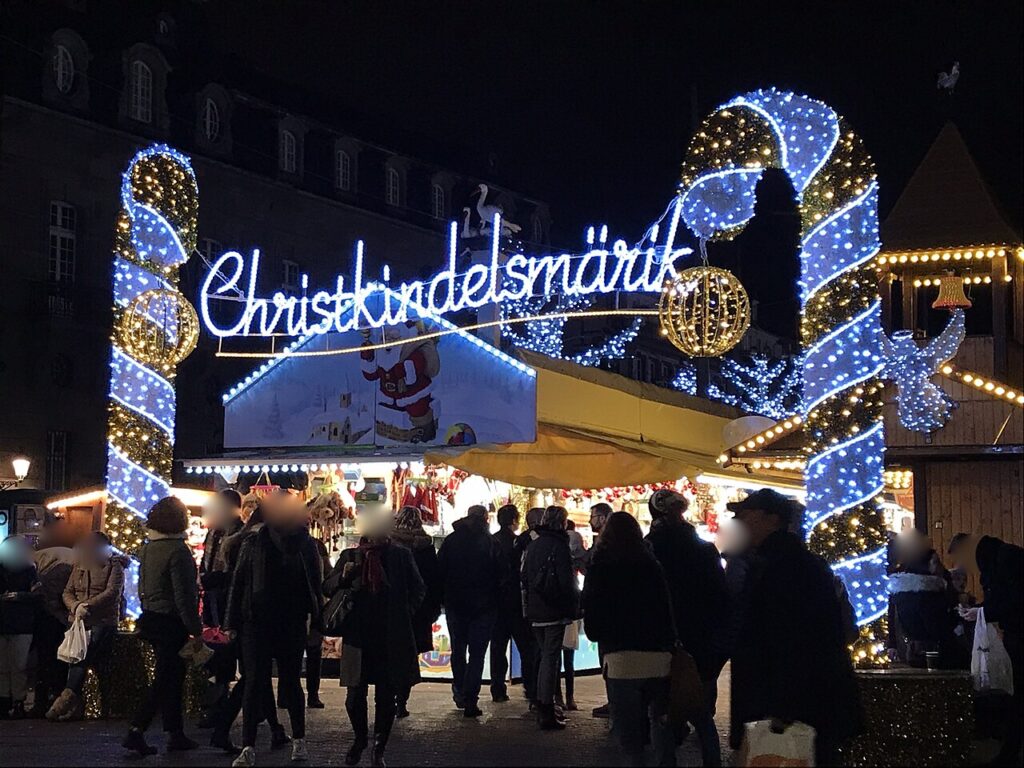
Alsace is the heartland of the French marché de Noël, the Christmas market. The most famous is the Christkindelsmärik in Strasbourg, first held in 1570, which helps the city call itself the “Capitale de Noël,” the Capital of Christmas. Towns such as Colmar and Mulhouse hold their own markets, with wooden chalets beneath streets strung with lights. The name Christkindelsmärik points to the Christkind, the Christ child figure who lends the market its name.
The smell of an Alsace market is part of the draw. Stalls pour vin chaud, hot spiced wine, and sell trays of bredele, the small buttery Christmas biscuits baked in dozens of shapes, along with pain d’épices, the regional honey gingerbread. Visitors browse glass baubles, carved figures, and Alsatian pottery while choirs sing nearby.
The Crèche and the Santons of Provence
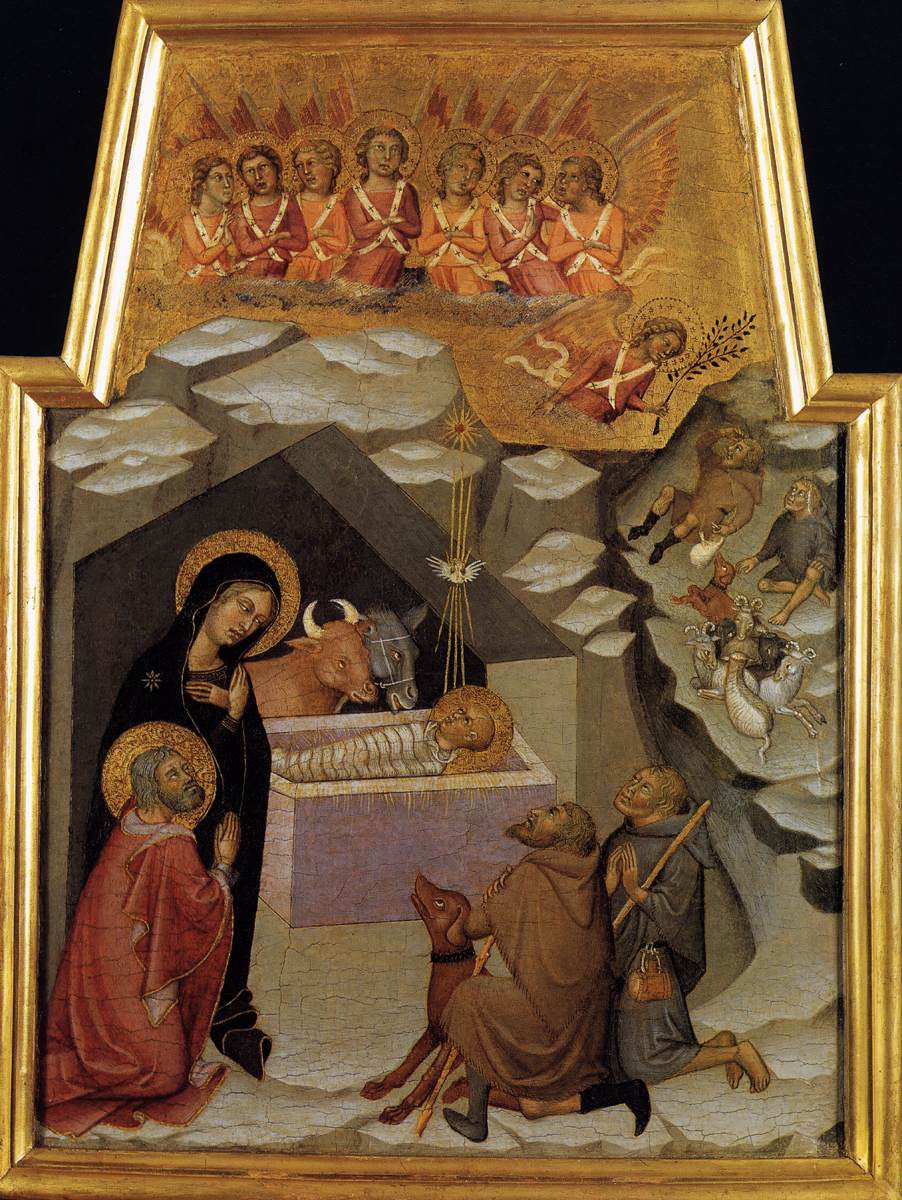
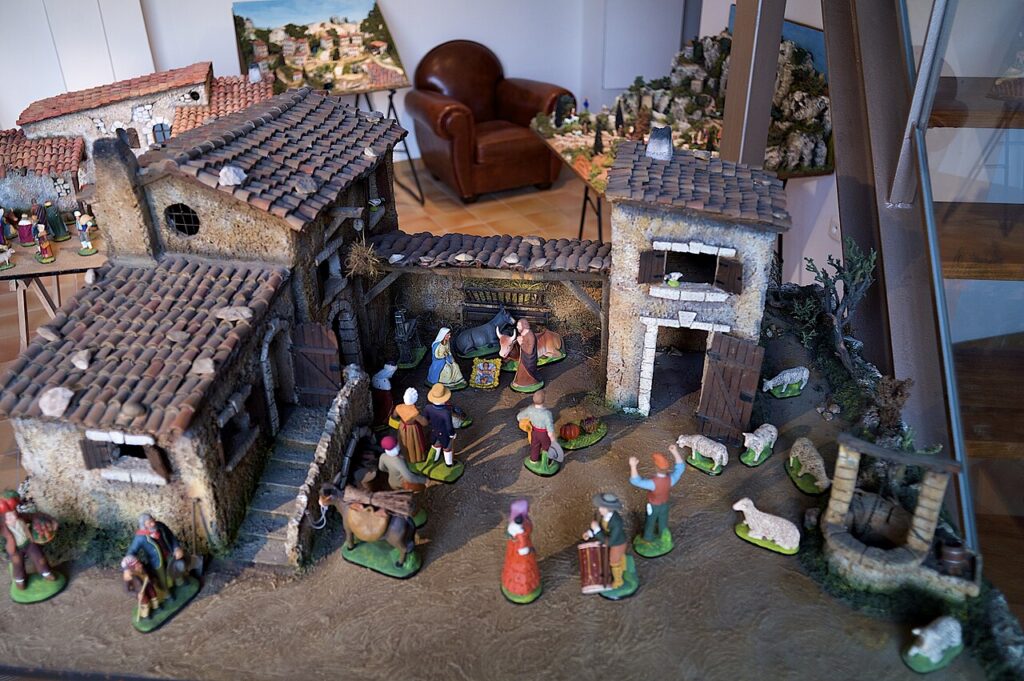
In French homes the nativity scene, the crèche, often matters as much as the tree. In Provence it is filled with santons, small hand-painted clay figures whose name means “little saints” in the Provençal tongue. Alongside Mary, Joseph, and the Christ child stand the people of a Provençal village: the baker, the fishwife, the drummer, the miller. Santon makers display their work at the foires aux santons, the santon fairs, held in Marseille and Aix-en-Provence each winter.
Le Réveillon de Noël
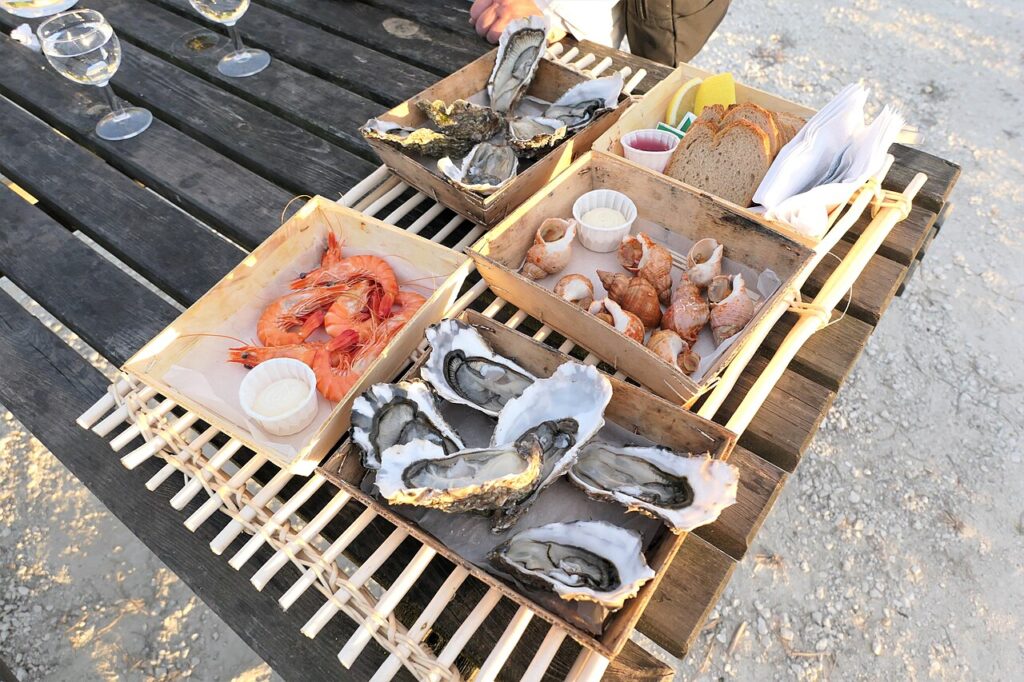
The réveillon is the great meal of the French Christmas, eaten late on Christmas Eve, often after returning from midnight Mass. The name comes from réveil, meaning to stay awake, and the feast lives up to it.
It is a showcase of fine food. Tables carry oysters, foie gras, smoked salmon, and escargots to start, then a roast such as dinde aux marrons, turkey with chestnuts, or a capon. Cheese follows, and Champagne flows throughout. The exact menu shifts from region to region. On the Atlantic coast oysters take pride of place, the southwest leans on foie gras and magret de canard, and Burgundy and the east bring rich roasts and game. Whatever the dishes, the spirit of abundance is shared across the country.
The Bûche de Noël
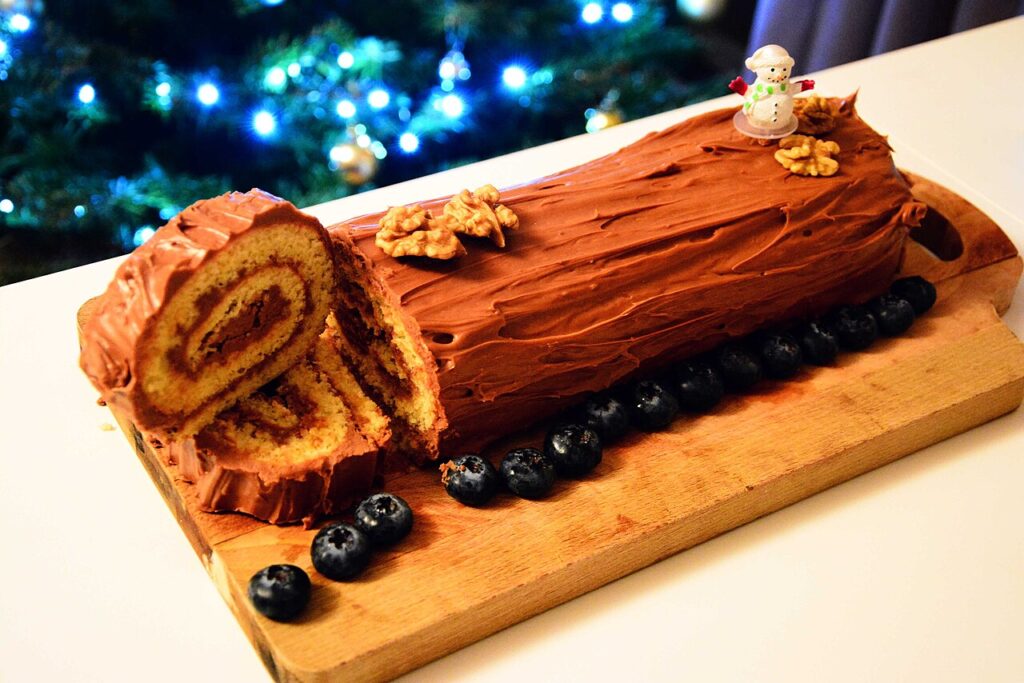
No French Christmas table is complete without the bûche de Noël, the Yule log. It is a rolled sponge cake, frosted and textured to resemble a wooden log, often finished with meringue mushrooms and a dusting of sugar like snow.
The cake recalls a much older custom. Families once chose a large log, the bûche, and burned it slowly in the hearth through the Christmas season, sometimes blessing it with wine. As open fireplaces gave way to stoves, the log moved from the hearth to the dessert plate.
Provence: The Gros Souper and the Thirteen Desserts
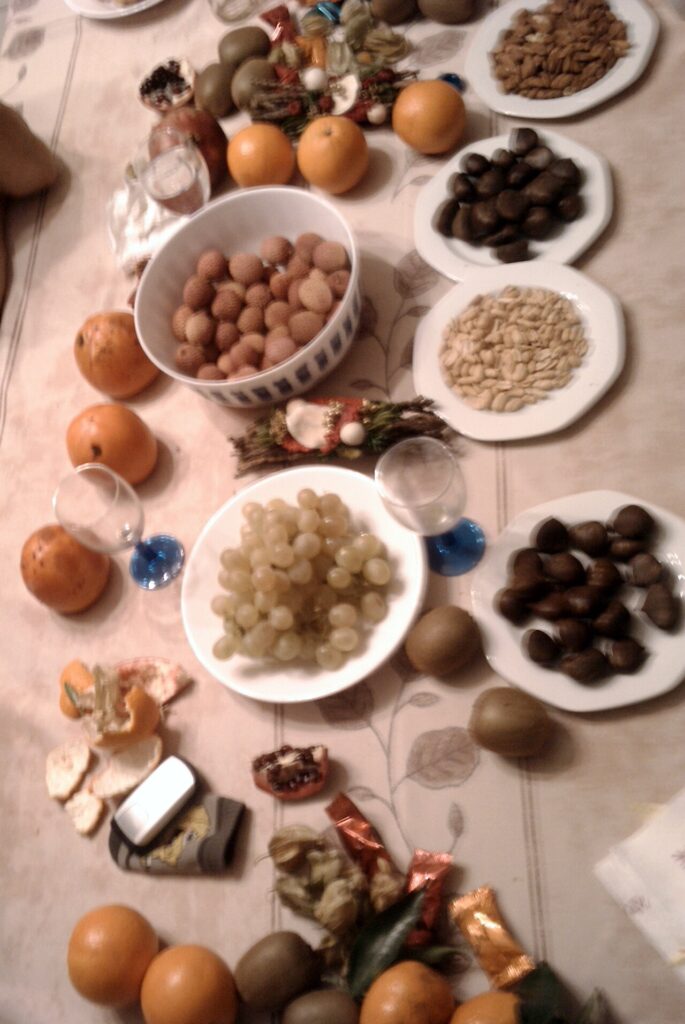
Provence keeps one of the richest Christmas Eve traditions in France. Before midnight Mass comes the gros souper, the “big supper,” which is traditionally a lean, meatless meal of vegetables, fish, and simple dishes set on a table laid with three white cloths and three candles.
The feast ends with les treize desserts, the thirteen desserts, set out together to represent Christ and the twelve Apostles. The lineup varies, but it usually includes the quatre mendiants, the four beggars, walnuts or hazelnuts, dried figs, almonds, and raisins, standing for four monastic orders, along with black and white nougat, dates, and fresh and candied fruit. The desserts traditionally stay on the table for three days.
Père Noël and the Shoes by the Fire
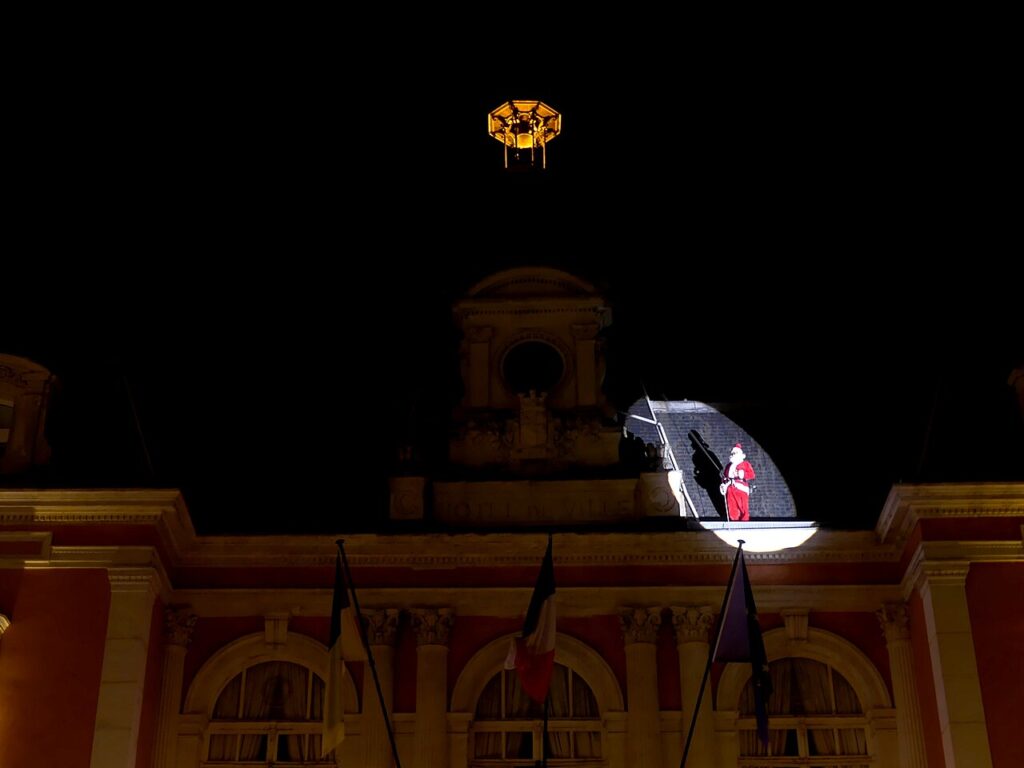
Père Noël, Father Christmas, brings gifts to French children. On Christmas Eve they leave their shoes, once wooden sabots, by the fireplace or under the tree, hoping to find them filled by morning. Writing a letter to Père Noël is part of the ritual. Since 1962 the French postal service has run an official secretariat that answers every letter children send, and a child needs only to write “Père Noël” on the envelope for it to arrive. Each year the office replies to more than a million letters, a postal tradition known across the country.
Midnight Mass and the Christmas Tree
For many families the religious heart of the night is la messe de minuit, midnight Mass. In some Provençal villages it includes the pastrage, a shepherds’ offering in which a lamb is brought to the altar, a living echo of the first Christmas.
The decorated sapin de Noël, the Christmas tree, also has deep French roots. The earliest known written record of a Christmas tree, dated 1521, comes from Sélestat in Alsace, long counted among the cradles of the decorated evergreen. From this corner of France and the Rhineland the custom spread to the rest of the world.
Epiphany and the Galette des Rois
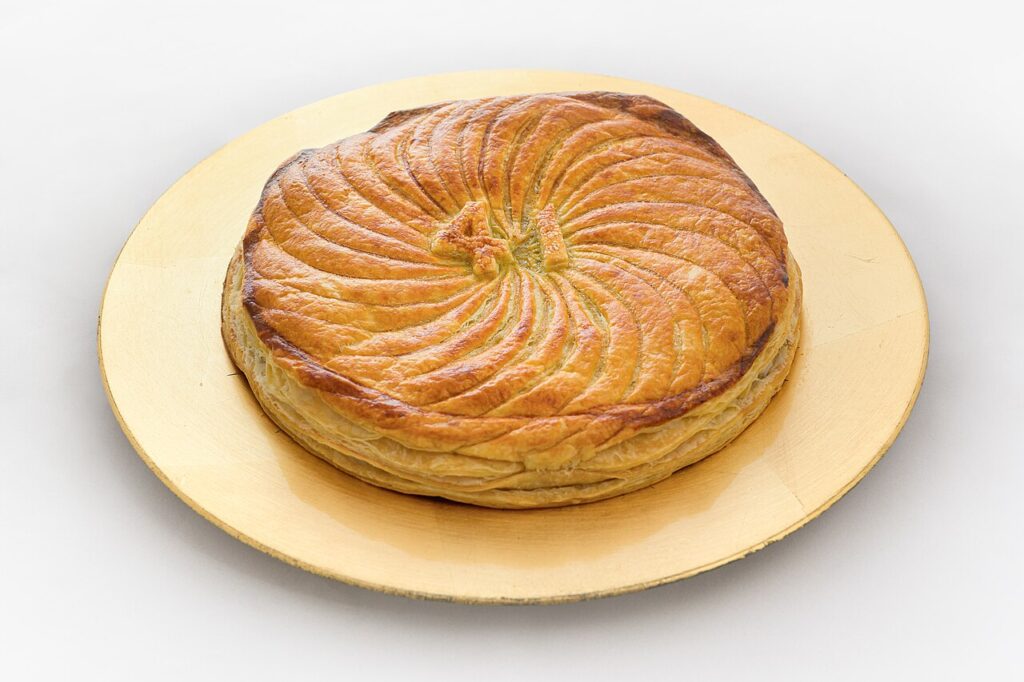
The season closes with l’Épiphanie and its famous cake, the galette des rois, the kings’ cake. In northern France it is a round of puff pastry filled with frangipane almond cream. In the south it takes the form of a brioche crown studded with candied fruit, the couronne des rois.
Hidden inside is a fève, once a dried bean and now usually a small porcelain charm. Whoever finds it is crowned king or queen for the day. By tradition the youngest child hides under the table and calls out who should receive each slice, so no one can be accused of cheating. Though Epiphany falls on January 6, galettes appear in bakery windows throughout the month, and families, offices, and friends share them at gatherings well into January.
Lights, Carols, and Living Nativities
The season has a glow beyond the home. French towns light their streets and squares, and many Provençal villages stage a crèche vivante, a living nativity in which residents play the Holy Family and the people of Bethlehem. Just before Christmas, on December 8, Lyon holds its famous Fête des Lumières, the Festival of Lights, when windows fill with candles and the whole city is illuminated. It grew from a religious feast of the Virgin Mary and now opens the festive weeks in spectacular style.
Old French carols, the chants de Noël, are still sung in churches and at home. Some, such as Il est né le divin enfant and Petit Papa Noël, are known to nearly everyone in the country.
Saying Merry Christmas in French
The greeting is Joyeux Noël, and people often add Bonnes fêtes, happy holidays, to take in the whole season from Christmas to the new year.
Christmas in France is a holiday of the table and of deep regional character, from the markets of Alsace to the santons of Provence. To see how it fits the bigger picture, explore our guide to Christmas around the world, the Christmas foods of different countries, the global cast of Christmas gift-bringers, and our overview of Christmas history and traditions.