Ethiopia celebrates Christmas on January 7, and it does so in a way that has barely changed in well over a thousand years. There are no Santa Claus, no tinsel, and almost no presents. Instead there is one of the oldest and most devout Christian observances on earth: an all night service of chant and candlelight, a feast that breaks a long fast, and pilgrims in white gathered at churches carved from solid rock. The Ethiopian Christmas is called Genna, sometimes written Ganna, and it is a deeply religious day.
This guide walks through the customs that shape an Ethiopian Christmas: the ancient church and its calendar, the great fast that comes before, the candlelit Genna service at Lalibela, the game that shares the holiday’s name, and the feast of doro wat and injera. For the wider view, see our overview of Christmas history and traditions and how the holiday is marked in countries around the world.
One of the World’s Oldest Christian Nations
Ethiopia embraced Christianity remarkably early. In the fourth century, around the year 330, the Kingdom of Aksum made Christianity its state religion under King Ezana, placing Ethiopia among the very first Christian nations. The Ethiopian Orthodox Tewahedo Church has carried that faith ever since, and it still shapes daily life for tens of millions of believers. By long tradition Ethiopia is also held to be the resting place of the original Ark of the Covenant, said to be kept in a chapel at Aksum, and every Ethiopian church guards a Tabot, a consecrated replica of its tablets, as its most sacred object.
The church keeps its ancient ways. Its liturgy is sung in Geez, a classical language no longer spoken in daily life, and its services follow rhythms set down centuries ago. Christmas here is not a recent import but a thread running back to the earliest centuries of the faith.
Why January 7? The Ethiopian Calendar
Ethiopia does not follow the Gregorian calendar used across much of the world. It keeps its own ancient calendar, which has thirteen months, twelve of thirty days and a short thirteenth month of five or six days. This calendar also runs about seven to eight years behind the Gregorian one, the gap arising from a different calculation of the year of Christ’s birth, so a traveler arriving for Christmas may be surprised to find the year is numbered earlier than at home.
Because of these differences, Ethiopian Christmas falls on what the rest of the world calls January 7, the 29th day of the month of Tahsas in the Ethiopian reckoning. It is not a different Christmas, simply the same feast of the Nativity counted on an older calendar, much as several other Orthodox churches also mark Christmas in early January.
The Fast Before the Feast
Genna does not arrive on its own. It is the reward at the end of a long period of fasting. For about forty three days before Christmas, observant believers keep the Tsome Nebiyat, the Fast of the Prophets, also known as the Advent or Christmas fast. During this time they give up meat, eggs, and dairy, eating a plant based diet that is in effect vegan.
The fast is not seen as a hardship so much as a preparation, a way of cleansing body and spirit before the holy day. It is only broken once the Christmas liturgy has ended, which makes the feast that follows all the more joyful.
Genna: The Christmas Service
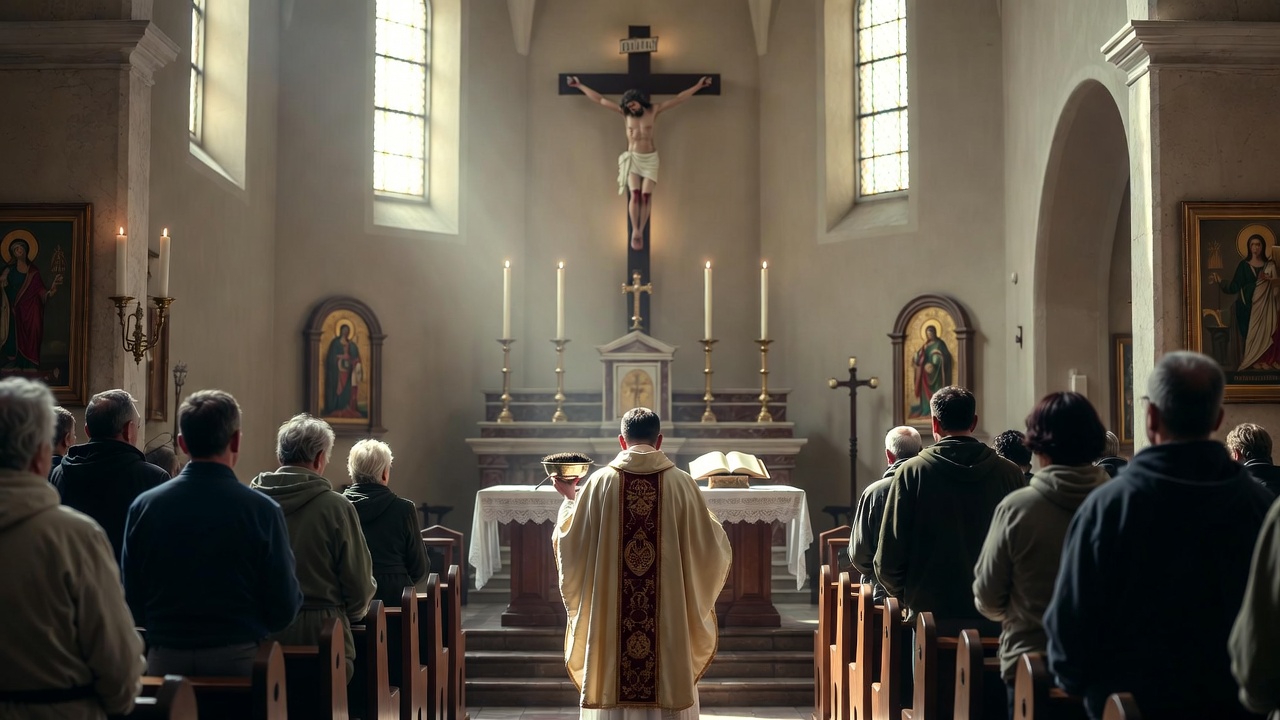
The heart of Ethiopian Christmas is the church service, which begins late on Christmas Eve and runs through the night into the early hours of January 7. Worshippers dress in white. Many wear the netela, a light handwoven cotton shawl, or the heavier gabi wrap, both white and often edged with a woven colored border called tibeb, so that a crowd of the faithful becomes a sea of white glowing in the candlelight. Each worshipper is given a slender candle, and the congregation circles the church in procession, often three times, before settling in for the long night of prayer.
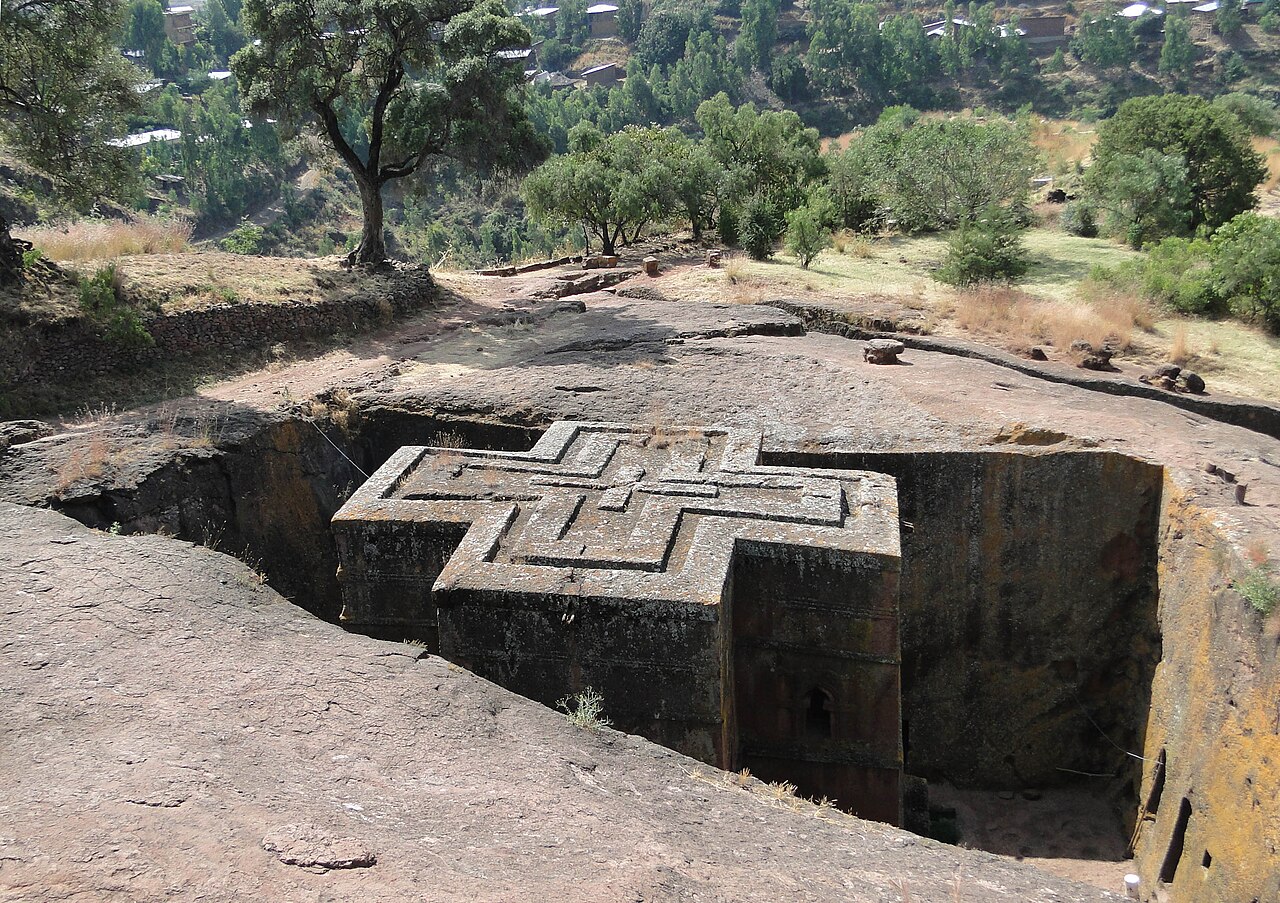
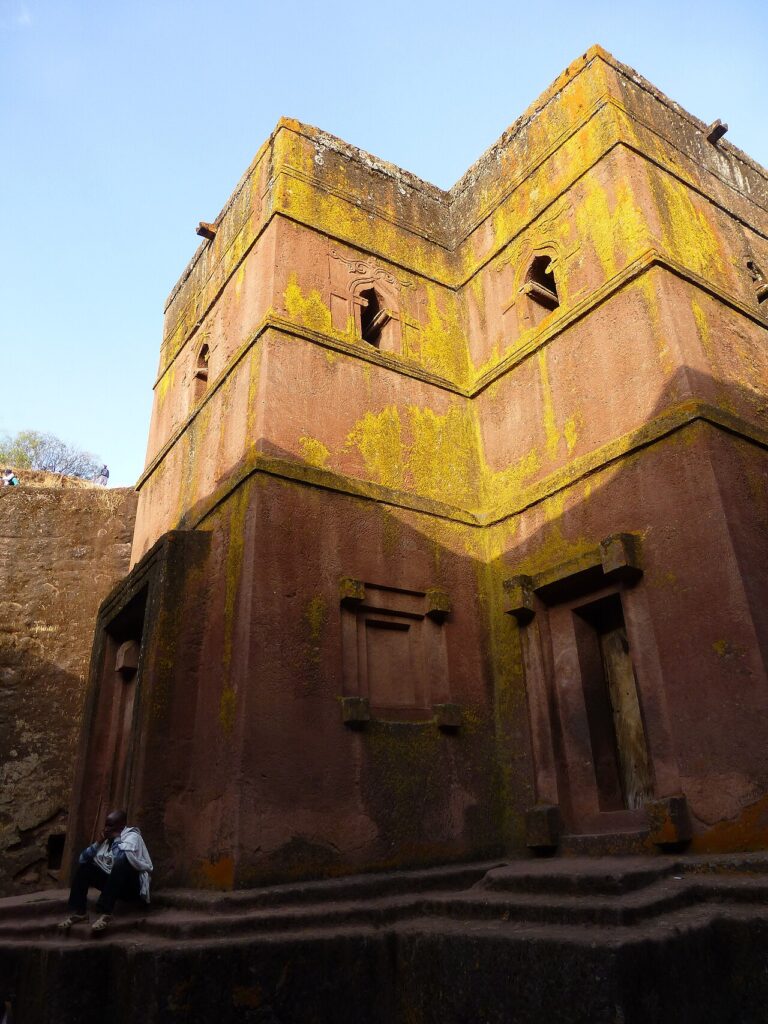
The most famous place to witness Genna is the town of Lalibela, home to eleven medieval churches hewn downward out of the solid rock, a UNESCO World Heritage Site. The most striking of them, Bete Giyorgis, the Church of Saint George, is carved in the shape of a cross sunk into the ground. Tens of thousands of pilgrims travel to Lalibela for the holiday, many walking for days, to pray where their ancestors prayed eight centuries ago.
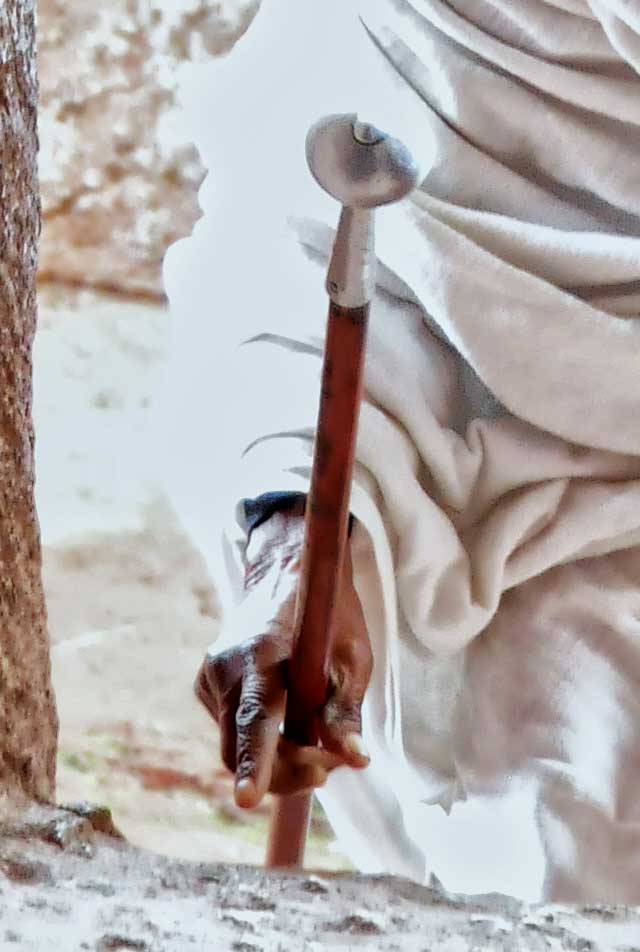
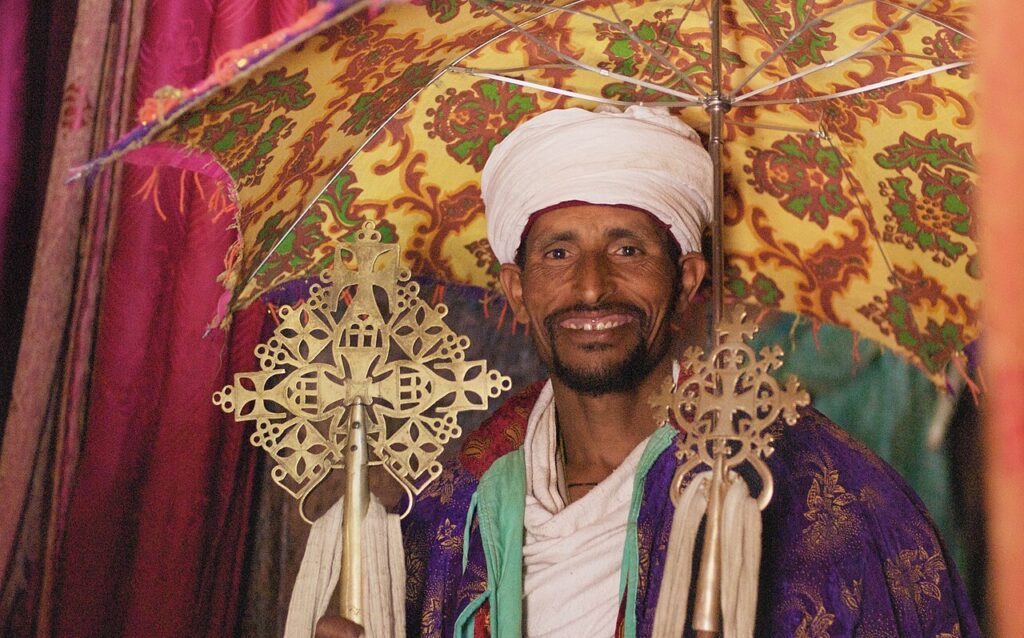
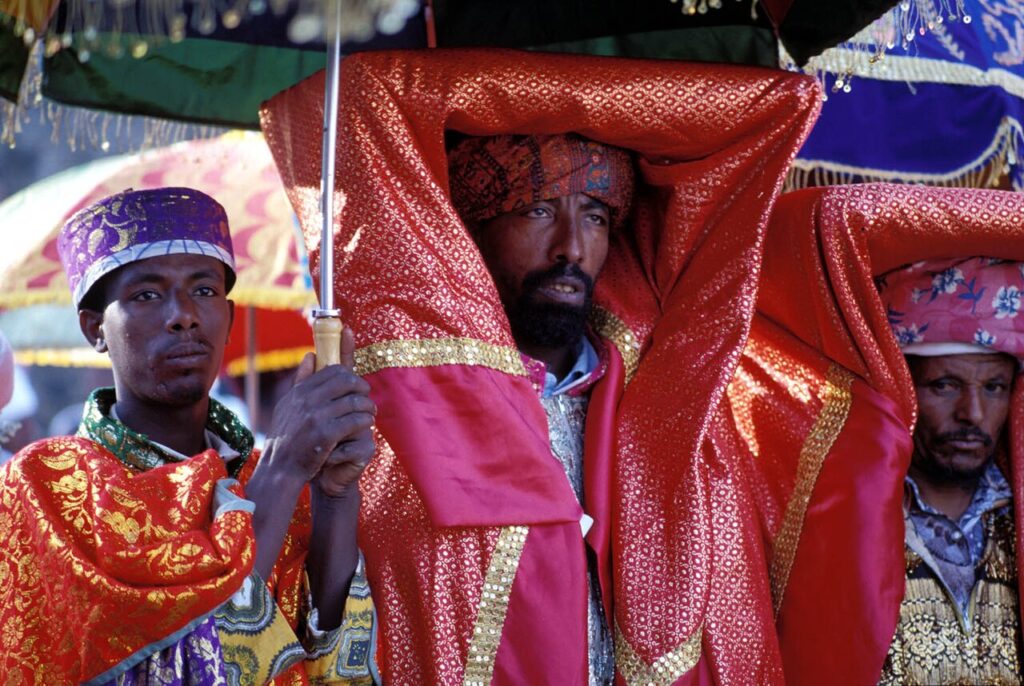
Inside and around the churches, priests and deacons lead the worship in full ceremony. They carry hand crosses and prayer staffs called mequamia, shelter under richly embroidered ceremonial umbrellas, and keep the rhythm of the ancient chant with the kebero, a drum, and the tsenatsil, a metal rattle. The chant itself, the zema, is traditionally traced to Saint Yared, a sixth century deacon who is said to have given the Ethiopian church its sacred music and its three modes, one for ordinary days, one for fasts, and one, the joyful Araray, for great feasts like Christmas. The learned cantors who carry this tradition are called debtera.
The service builds slowly through the night. Scripture is read and the zema rises and falls for hours, until the Divine Liturgy, the Qeddase, reaches its height in the dark hours before dawn. The faithful receive communion, and only then, as the sky lightens on January 7, do families head home to break the long fast at last.
The Game of Genna
The holiday lends its name to a traditional game, ye-Genna chewata, often simply called genna. It is a fast, rough field game played with a curved wooden stick and a ball, much like field hockey. By tradition it is played by men and boys in the open after the Christmas meal.
A beloved legend explains the link. When word of Christ’s birth reached the shepherds in the fields, the story goes, they were so overjoyed that they began to play, knocking a ball about with their staffs. The game is remembered as an echo of that first shepherds’ celebration.
The Feast: Doro Wat and Injera
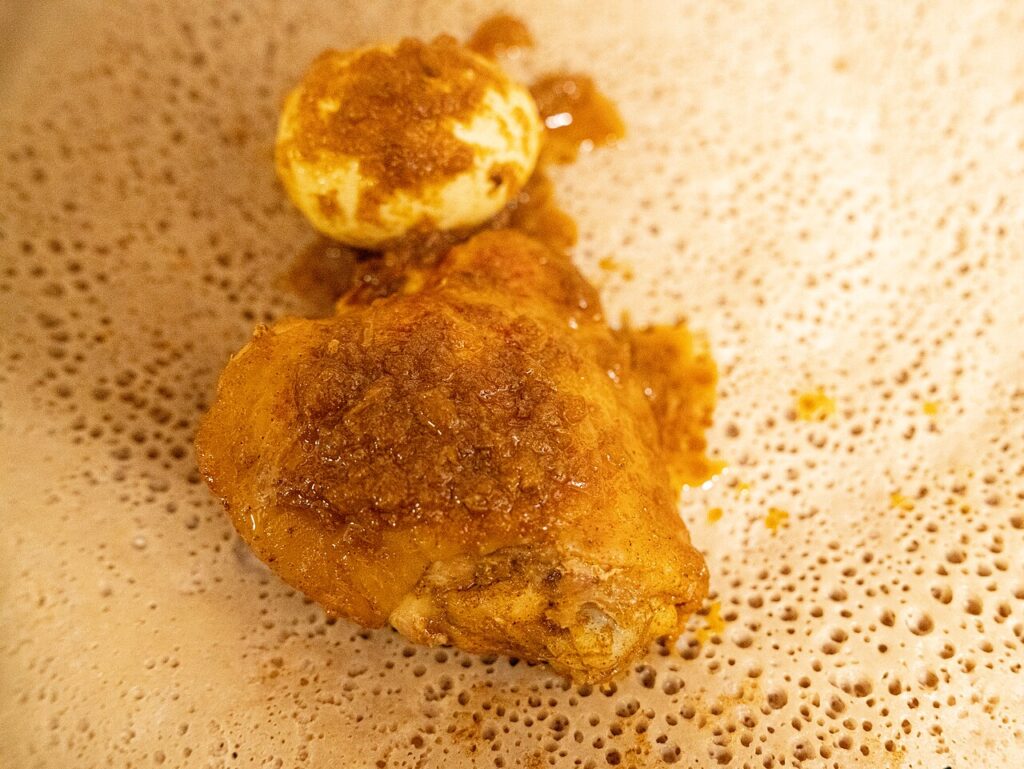
When the fast is broken, the table fills with the foods that were given up for so long. The centerpiece of the Christmas feast is doro wat, a rich, fiery chicken stew simmered with onions and the deep red spice blend called berbere, traditionally served with a hard boiled egg.
It is eaten, like most Ethiopian food, on injera, a large, soft, slightly sour flatbread made from a tiny ancient grain called teff. The injera serves as both plate and utensil: diners tear off pieces and use them to scoop up the stew. The meal is shared from a common platter, a gesture of togetherness, and feeding a morsel to another person, a custom called gursha, is a sign of love and respect. Alongside the stew there may be a round festive bread called defo dabo and, to drink, the honey wine tej or home brewed tella.
Coffee, Family, and a Modest Christmas
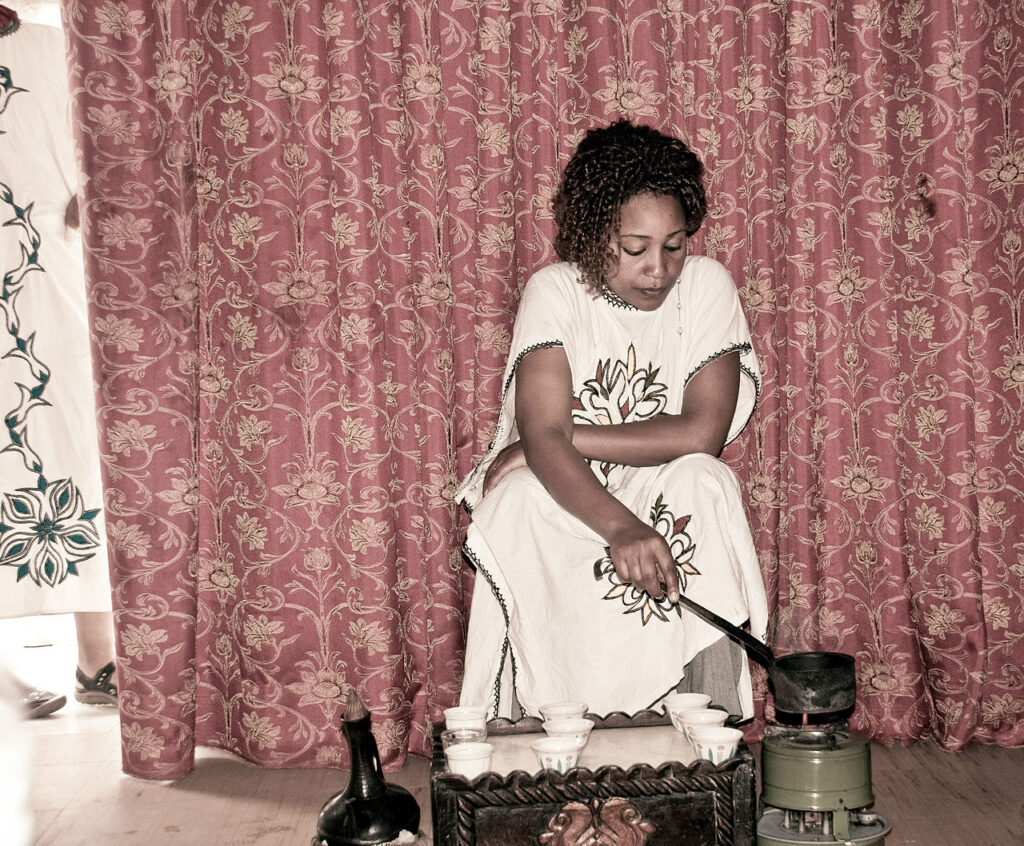
No Ethiopian celebration is complete without the coffee ceremony. Ethiopia is the birthplace of coffee, and on festive days green beans are roasted over coals, ground by hand, and brewed in a clay pot called a jebena, then poured in three rounds for family and guests amid the scent of burning incense.
Through it all, gifts traditionally play only a small part. Children may receive new clothes or a simple present, but Ethiopian Christmas has never been built around shopping or a pile of parcels, even as gift giving grows more common in the cities today. The focus stays on faith, fasting, feasting, and the gathering of family.
Twelve Days On: Timkat
The festive season does not end with Genna. About twelve days later, on January 19, comes Timkat, the Ethiopian Orthodox celebration of Epiphany, which marks the baptism of Christ in the River Jordan. For many it is the most colorful festival of the year.
At its heart is the same Tabot that rests hidden in each church’s inner sanctuary all year long. Wrapped in rich cloth and carried on a priest’s head, it is borne out in grand procession to a body of water, where the crowds keep vigil overnight and the waters are blessed at dawn, a reenactment of Christ’s baptism. Timkat is inscribed on UNESCO’s list of Intangible Cultural Heritage.
A Christmas Apart
To wish someone a happy Christmas in Amharic, you say Melkam Genna. From the long fast to the night of chant and the breaking of bread, Christmas in Ethiopia is a holiday measured in devotion rather than decoration, one of the most ancient and moving celebrations of the Nativity anywhere in the world. To see how other cultures mark the day, explore our guides to Christmas foods around the world and the gift bringers of many lands.