Christmas in Australia turns the familiar picture upside down. Here December 25 falls in the middle of summer, so there is no snow and no frost, just sunshine, cicadas, and the smell of a barbecue. Australians celebrate at the beach, around the pool, and under the open sky, swapping the hot roast for cold prawns and trading carols in the cold for Carols by Candlelight on a warm evening. Here is how Australia keeps Christmas.
A Summer Christmas
Because Australia lies in the Southern Hemisphere, the seasons are flipped. Christmas Day arrives at the height of summer, often hot enough to send the temperature past 30 or even 40 degrees Celsius. The result is a holiday built around the outdoors. Families gather in backyards and parks, head to the coast, and plan the day around staying cool.
The imagery of a traditional northern Christmas, snowmen, sleighs, and heavy roasts, still appears on cards and decorations, but the lived reality is sunscreen, swimming, and shade. Christmas also lands right at the start of the long summer school holidays, which run from mid December into late January, so the whole country shifts into a relaxed holiday gear. Many families travel to the coast or the country, and the days blur into one long, sunny break.
The Beach and the Barbecue
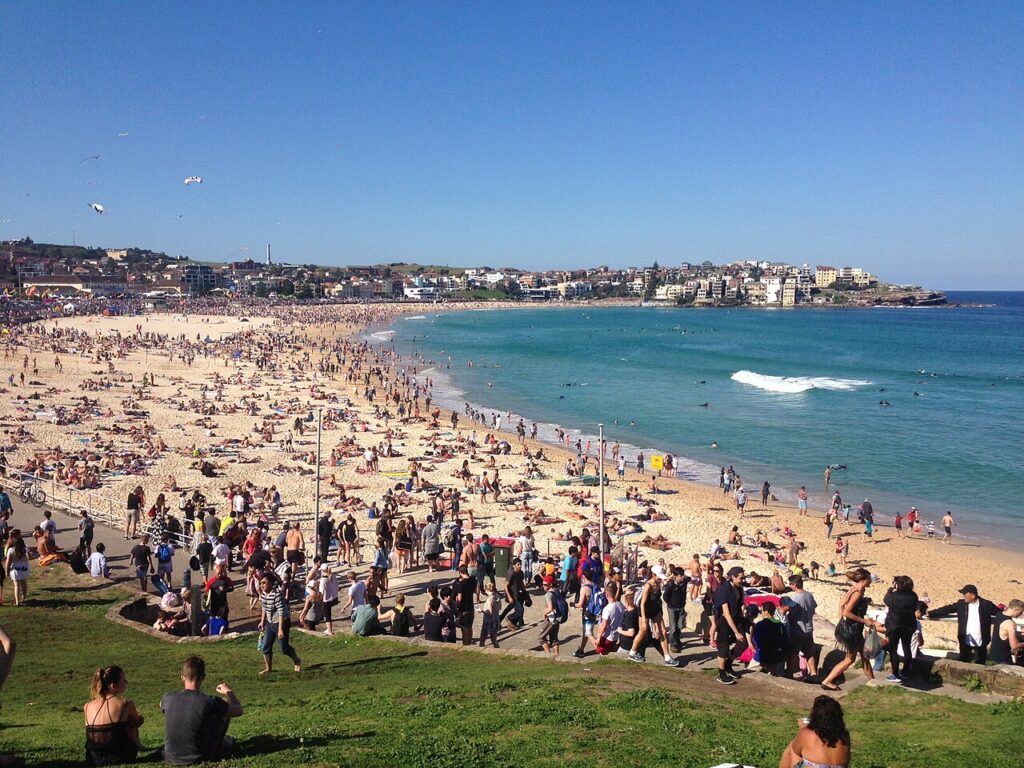
For many Australians the season means the beach. Sydney’s Bondi Beach is famous for its packed Christmas Day crowds, especially among backpackers and travelers far from home, and coastlines around the country fill with families enjoying the sun. A morning swim, a game of beach cricket, and a picnic in the shade make up a classic Australian Christmas Day, with the water never far away.
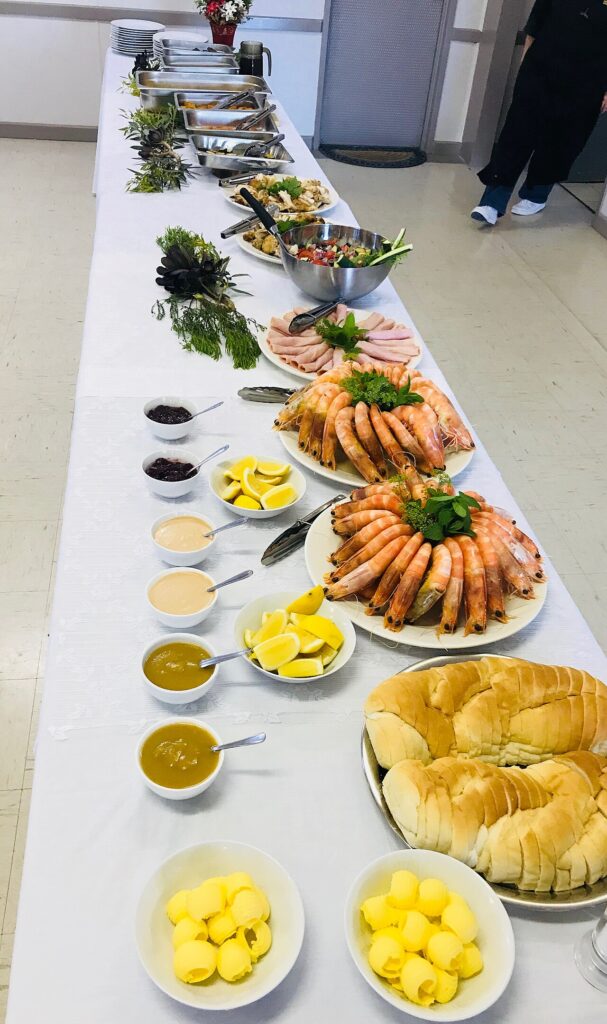
Lunch is just as relaxed. The Christmas barbecue, the “barbie,” is a national fixture, and many tables center on cold food that suits the heat: fresh prawns and other seafood, cold ham, cold chicken or turkey, and big salads. Plenty of families still cook a hot roast with all the trimmings out of tradition, but just as many keep it cool and casual. Seafood is so central that the Sydney Fish Market runs a famous marathon trading session in the days before Christmas, staying open around the clock as crowds queue for prawns, oysters, and lobster. Lunch tends to be long and unhurried, eaten outdoors in the shade with cricket on the radio or the lawn.
Pavlova and Christmas Sweets
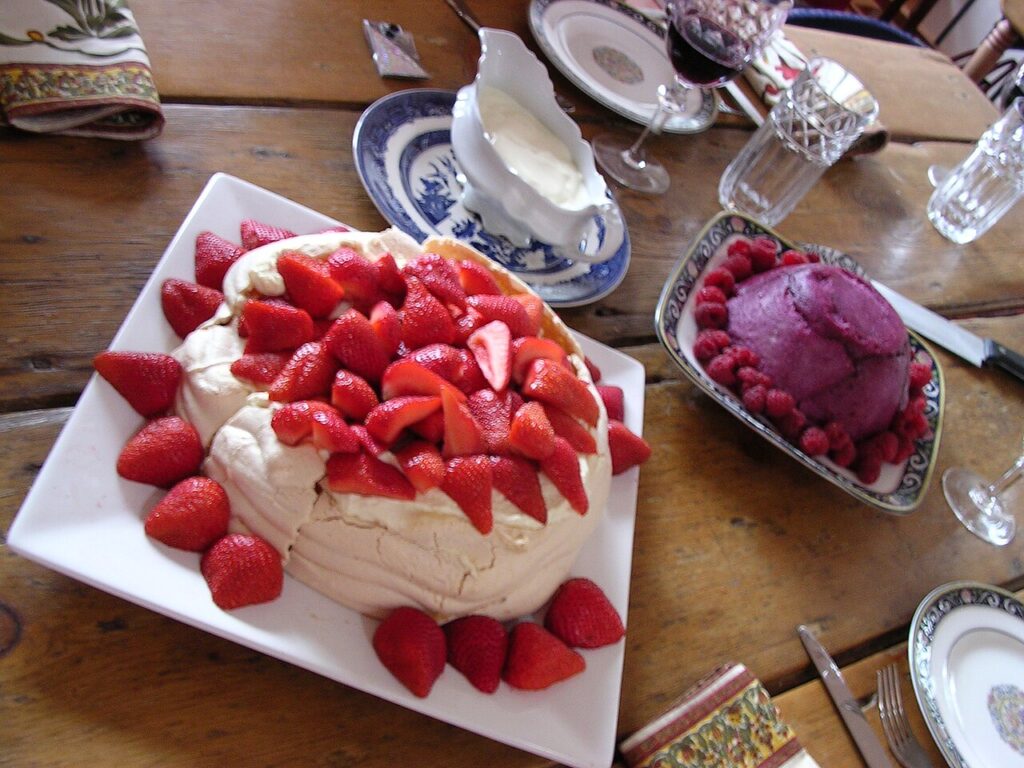
The most iconic Australian Christmas dessert is the pavlova, a cloud of meringue with a crisp shell and a soft marshmallow center, topped with whipped cream and fresh summer fruit like strawberries, passionfruit, and kiwifruit. Its origin is a long running and friendly rivalry with New Zealand. Both countries claim it, though the earliest recorded recipe appears in New Zealand in 1927, and food historians note that meringue desserts of this kind are older still.
Other sweets crowd the table too, from trifle to an Australian take on the British Christmas pudding, sometimes served with a hidden coin for luck. Cherries, mangoes, and stone fruit, all in season, are everywhere, piled high at markets and served by the bowl through the long afternoons.
Carols by Candlelight
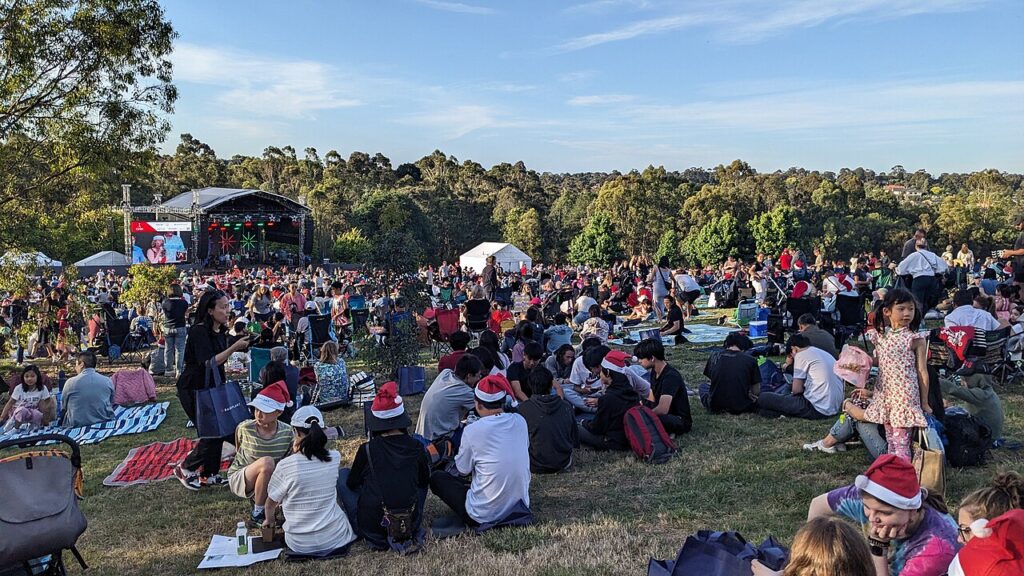
One of the best loved traditions is Carols by Candlelight, a large outdoor singalong held on a warm December evening, with the crowd holding candles as the light fades. The most famous has been held in Melbourne since 1938, moving to the Sidney Myer Music Bowl in 1959, and is broadcast across the nation, while Sydney hosts its own Carols in the Domain.
These concerts draw tens of thousands of people, mix well known carols with Australian favorites, and raise money for charity, with the Melbourne event long supporting Vision Australia. Families spread out picnic rugs as the sun sets, children wave glow sticks and candles, and the singing carries late into the warm night. Smaller versions take place in parks, churches, and schools in towns across the country, so almost everyone can find a carols night nearby.
Santa, Lights, and Trees
Santa Claus is as central here as anywhere, but he often gets a local makeover, pictured in board shorts and thongs, arriving on a surfboard or a lifeguard boat rather than a sleigh. Families put up Christmas trees and lights, pull bon-bons, the paper crackers that snap open to reveal a paper crown, a small toy, and a groan-worthy joke, and wear the crowns through lunch. Gifts are usually opened on Christmas morning, and children who have written to Santa wait to see what he has left under the tree.
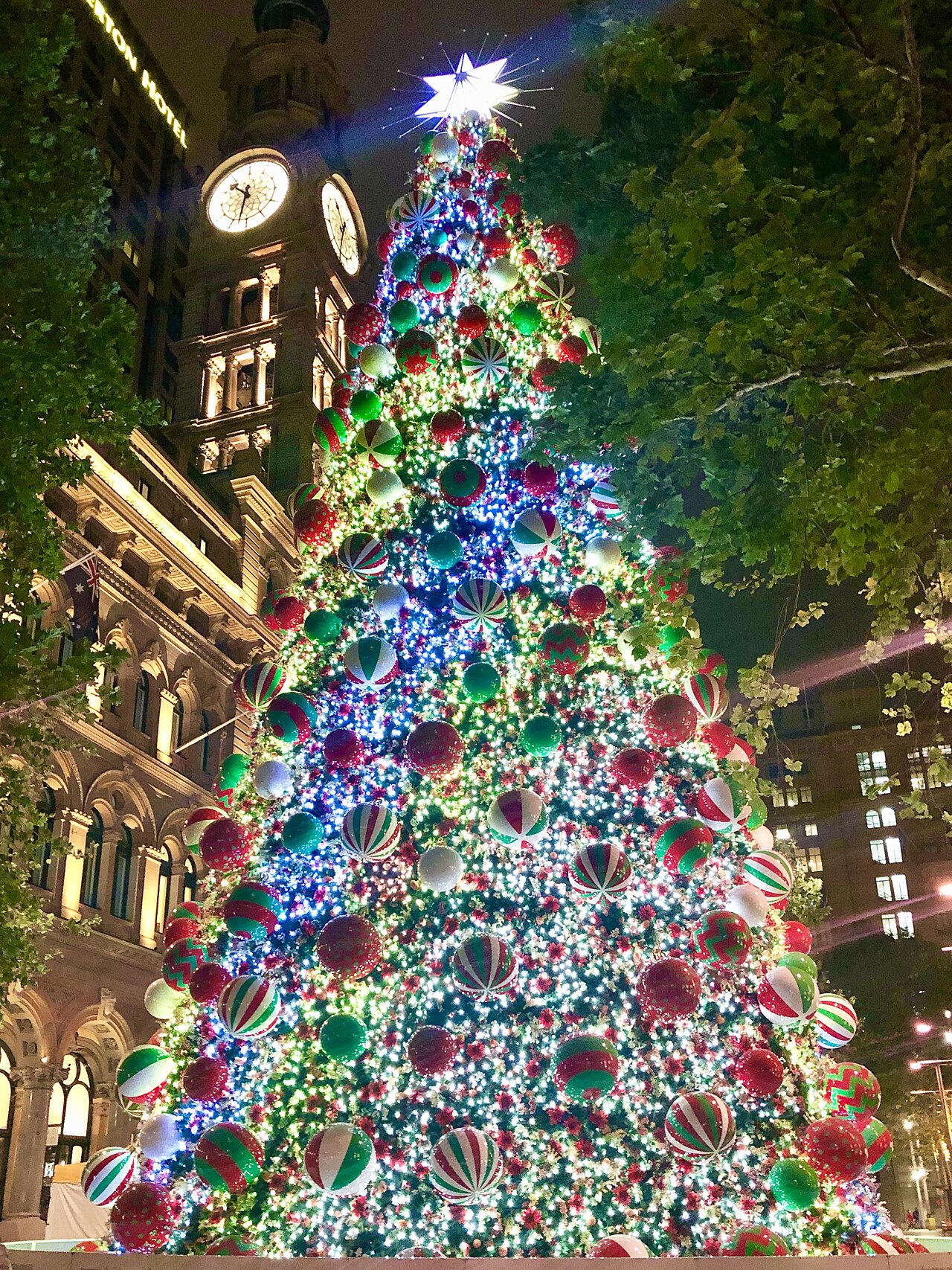
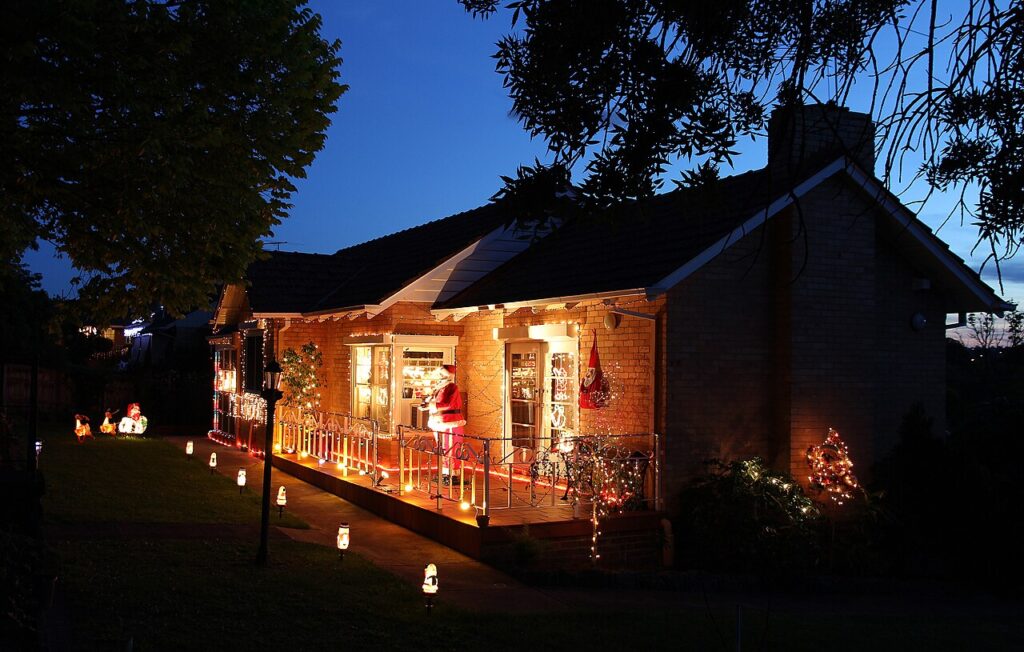
Cities and suburbs light up for the season. Department stores are known for their animated Christmas windows, above all the Myer windows in Melbourne, a city institution since 1956 that draws around a million viewers a year. Big public trees rise in spots like Sydney’s Martin Place, and whole streets compete with dazzling home light displays that families drive around to admire on summer evenings. Taking the children for a photo with the department-store Santa is a long standing ritual, and in December the city malls and shopping centers fill with carols, decorations, and last minute shoppers.
Native Plants of an Australian Christmas
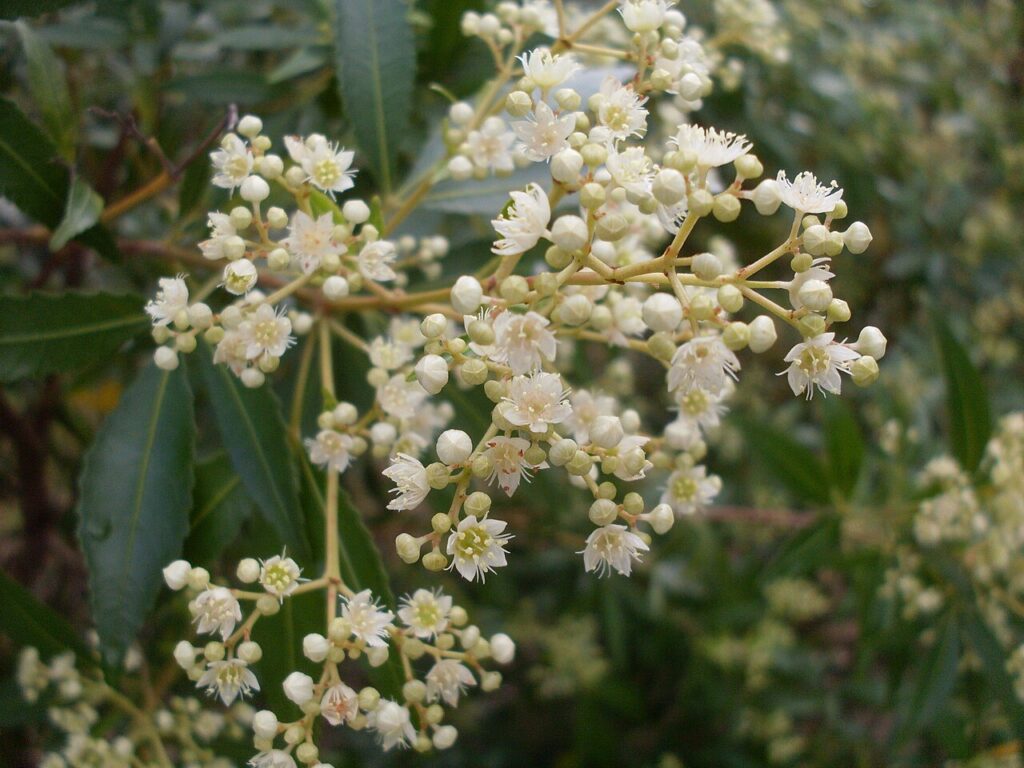
Australia even has its own Christmas flora, plants that happen to bloom in December. The New South Wales Christmas bush turns a vivid red as its flowers age, and sprigs of it appear in homes in place of holly. Christmas bells ring out in red and yellow, and in the west the Western Australian Christmas tree, a Nuytsia, lights up the bush with masses of bright orange bloom right on cue. These plants give an Australian Christmas a look all its own, and a sprig of red Christmas bush on the table is a small but cherished local touch, standing in for the holly of the Northern Hemisphere.
Boxing Day
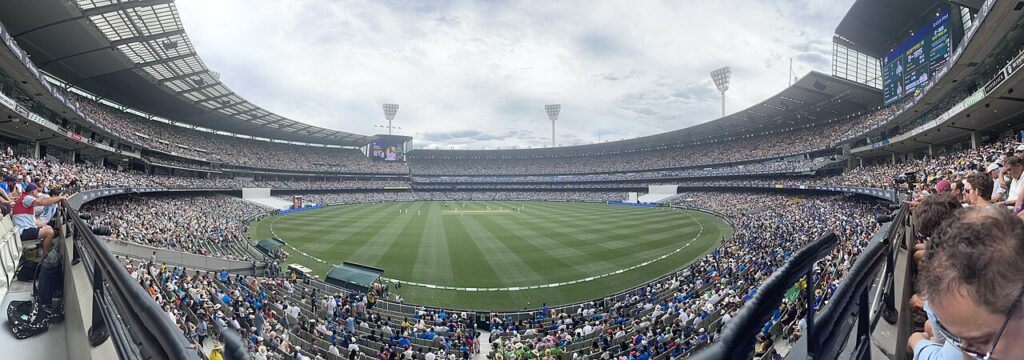
The holiday does not stop on December 25. Boxing Day, December 26, is a public holiday and a national institution in its own right. It opens the Boxing Day Test, a marquee cricket match held annually at the Melbourne Cricket Ground since 1980, and sends the fleet off on the Sydney to Hobart Yacht Race, which has started on Sydney Harbour each Boxing Day since 1945. For shoppers, it brings some of the biggest sales of the year, with crowds lining up outside the major stores at dawn. For many families the day is simply a chance to relax with leftovers, watch the cricket, and stretch the holiday out a little longer.
A Multicultural Christmas
Modern Australia is diverse and increasingly secular, yet Christmas remains its largest public holiday. For Christian Australians, church services on Christmas Eve and Christmas morning, nativity scenes, and carols keep the religious meaning at the center. For many others it is a cultural and family occasion, shaped by waves of migration that have added Italian, Greek, Vietnamese, Lebanese, and countless other touches to the Australian table. The result is a holiday that feels both familiar and distinctly local. On the same street one home may serve a Greek lamb roast, another a Vietnamese feast, and a third a plate of cold prawns and pavlova, all under the same summer sun.
Six White Boomers and Christmas in July
Australia has put its own stamp on Christmas culture. A much loved local song from 1960 imagines Santa swapping his reindeer for six white boomers, large kangaroos, to bound across the hot continent on Christmas Eve.
There is even a second, optional Christmas. Christmas in July, sometimes called Yulefest, lets people enjoy the cold weather version of the holiday during the Southern Hemisphere winter, with roaring fires, mulled wine, and hot roasts. It is especially popular in cooler areas like the Blue Mountains, where the chill finally matches the northern imagery. Guesthouses and restaurants put on full turkey dinners with all the trimmings, and for one weekend in the depths of winter Australians get to enjoy the snowy, cozy Christmas they only ever see on cards.
Saying Merry Christmas in Australia
The greeting is simply Merry Christmas, often shortened in the easygoing local style to “Merry Chrissie.” It comes with wishes for a good break, since Christmas falls right at the start of the long summer school holidays.
Christmas in Australia is proof that the holiday adapts to its setting, trading snow for surf without losing its warmth. It keeps the heart of the season, family, generosity, and celebration, while wearing thongs and reaching for the sunscreen. To see how it compares, explore our guide to Christmas around the world, the Christmas foods of different countries, the global cast of Christmas gift-bringers, and our overview of Christmas history and traditions.