Few countries keep Christmas quite the way Poland does. Here the most important night is not December 25 but the evening before, Christmas Eve, known as Wigilia. Families gather for a meatless supper of twelve dishes that does not start until the first star appears in the sky. They share a thin wafer called opłatek, tuck hay beneath the tablecloth, and leave one seat empty for an unexpected guest. What follows is a guide to how Poland, a Central European country and one of the continent’s most devoutly Catholic nations, celebrates Boże Narodzenie, the birth of Christ.
When Is Christmas in Poland?
The Polish Christmas season is long. It opens with Advent, the four weeks of preparation before Christmas, and many people mark Mikołajki on December 6, the feast of St Nicholas, when children find small gifts and sweets left for them overnight.
The heart of the celebration falls on Wigilia, Christmas Eve, December 24. Then come two public holidays, Christmas Day on December 25 and the Second Day of Christmas on December 26, which is also St Stephen’s Day. The season runs on to Trzech Króli, the Feast of the Three Kings on January 6, a public holiday in Poland once again since 2011. Many families keep the tree and decorations up until Candlemas on February 2.
Advent and St Nicholas Day
Advent is still observed as a quiet, reflective time in much of Poland. Some people attend Roraty, early morning Advent Masses held in honor of the Virgin Mary, often by candlelight. Bakers prepare gingerbread and households begin the long list of Christmas chores.
On the eve of December 6, St Nicholas, Święty Mikołaj, is said to visit. Children leave out shoes or wait by their beds and wake to find chocolate, fruit, and small presents. Well behaved children are rewarded, while the mischievous might find a twig as a gentle warning. This early visit is separate from the main gift giving that comes on Christmas Eve.
Wigilia: Waiting for the First Star
The word Wigilia comes from the Latin vigilia, meaning a vigil or watch. It is the emotional center of Christmas in Poland, valued by many families above Christmas Day itself.
By tradition, the supper cannot begin until the first star, the gwiazdka, is spotted in the evening sky. The star recalls the Star of Bethlehem that guided the Magi to the manger. Children are often sent to watch at the window, and the moment someone calls out that the star has appeared, the family takes its place at the table.
The Twelve Meatless Dishes
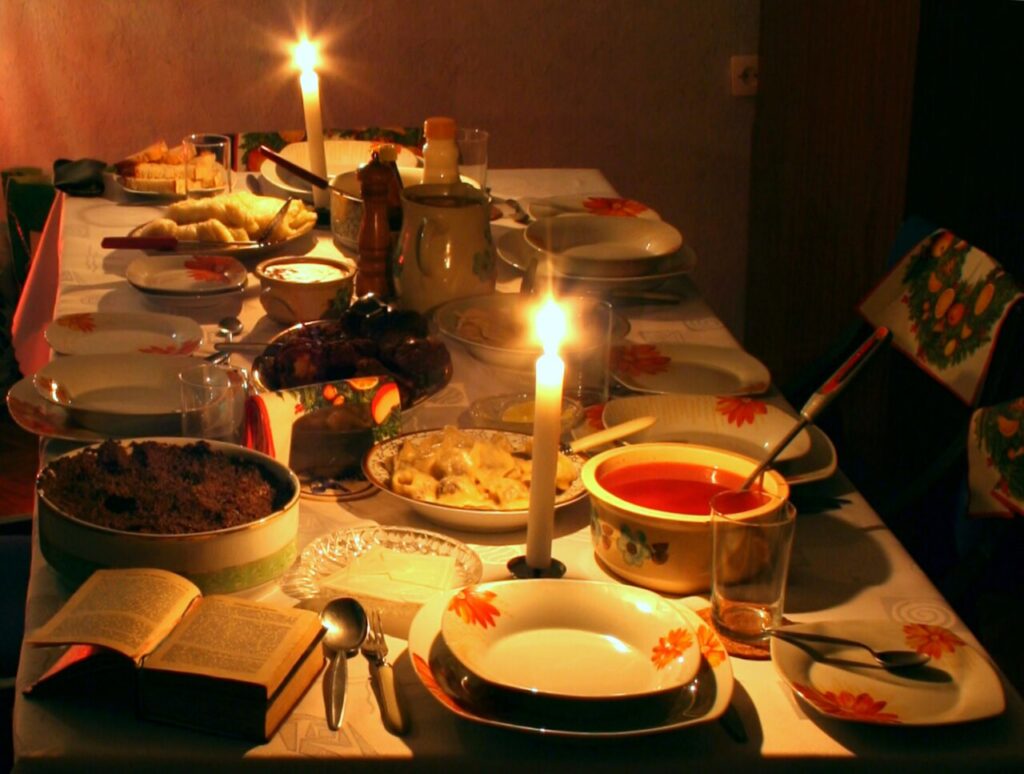
The Wigilia table is set with twelve dishes. The number is most often explained as one for each of the twelve Apostles, though some link it to the twelve months of the year. Because Christmas Eve was historically a day of fasting and abstinence, the entire spread is meatless. Fish is allowed, but no pork or poultry appears until the following day.
The exact menu varies by region and family, but the classics include:
- Barszcz czerwony z uszkami: a clear red beetroot soup served with uszka, tiny dumplings filled with mushrooms.
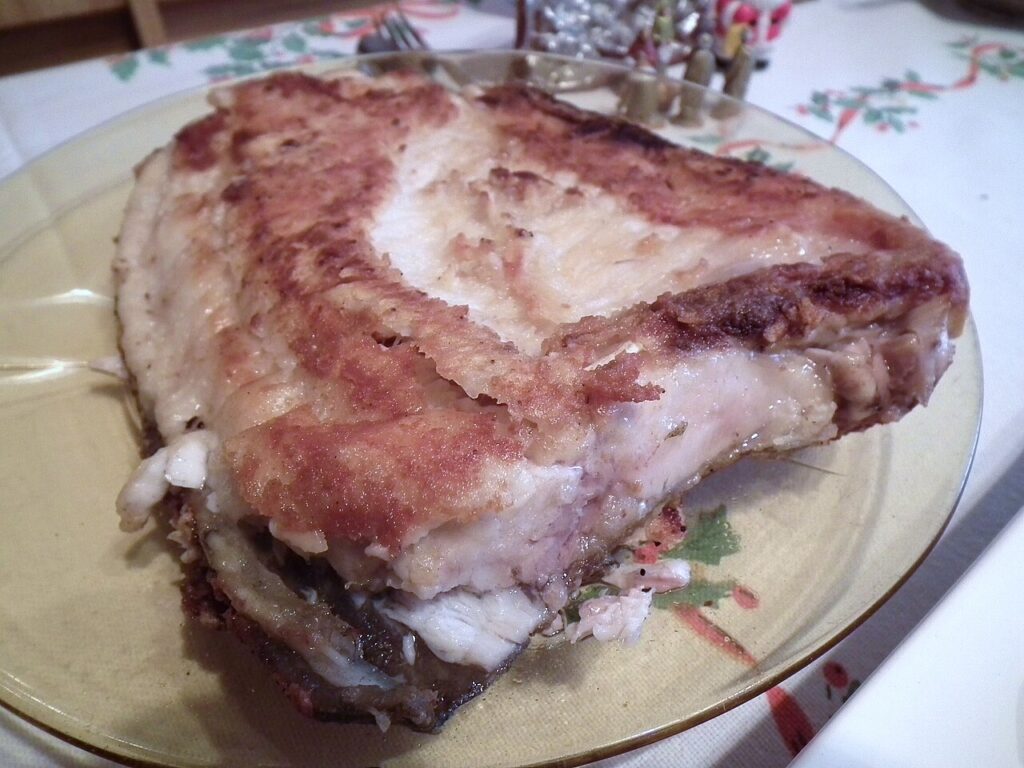
- Karp: carp is the centerpiece fish, usually fried in pieces or served in aspic. Many households once kept a live carp in the bathtub for a day or two before cooking, a custom that is fading but still remembered.
- Pierogi: dumplings, often filled with sauerkraut and wild mushrooms for the meatless table.
- Kapusta z grzybami: sauerkraut stewed with dried forest mushrooms.
- Kutia: a sweet dish of wheat berries, poppy seeds, honey, and nuts, especially loved in eastern Poland.
- Makowiec: a rolled poppy seed cake, and piernik, spiced honey gingerbread.
- Kompot z suszu: a warm drink made from dried fruit such as prunes, apples, and pears.
A small custom surrounds the carp. After the meal some people keep a few carp scales in their wallet through the new year, believed to bring prosperity.
Sharing the Opłatek
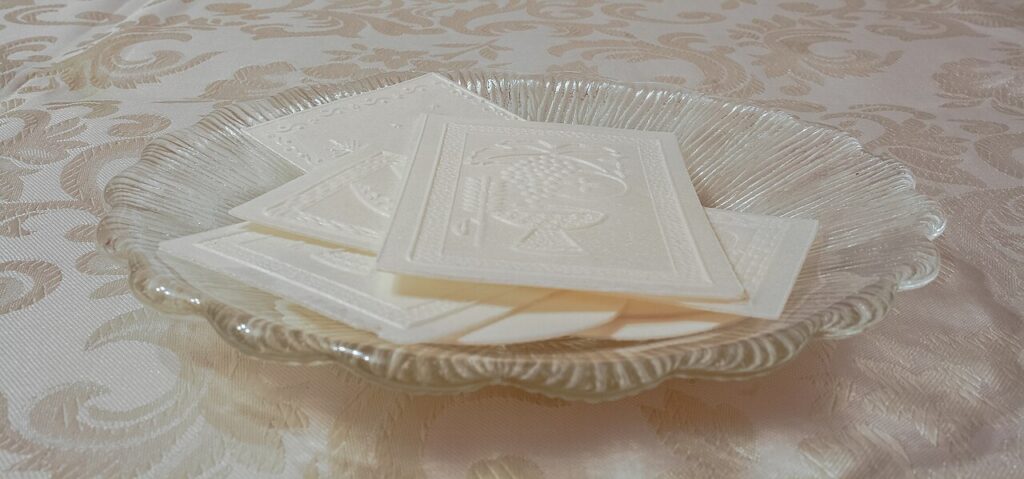
Before anyone eats, the family shares the opłatek, a thin, unleavened wafer much like communion bread, often stamped with a nativity scene. Each person holds the wafer, then moves around the table breaking off a piece from everyone else’s wafer in turn.
As they share it, family members exchange Christmas wishes, offer thanks, and forgive any wrongs of the past year. It is a tender, sometimes tearful moment, and the gesture is so cherished that people post opłatki to relatives living far away so they can share in the ritual from a distance.
Hay Under the Tablecloth and the Empty Seat
Two more customs give the Wigilia table its meaning. A wisp of hay is tucked beneath the white tablecloth, and sometimes a few stalks are placed on the table itself. It recalls the stable and the manger where Christ was born. In some homes children pull a straw from under the cloth to read fortunes for the coming year.
One place is always left empty, with a full setting of plate and cutlery. It waits for an unexpected guest, a traveler with nowhere to go, so that no one is turned away on this night. Many families also understand the empty seat as a place for absent or departed loved ones, keeping their memory at the table.
Pasterka: Midnight Mass
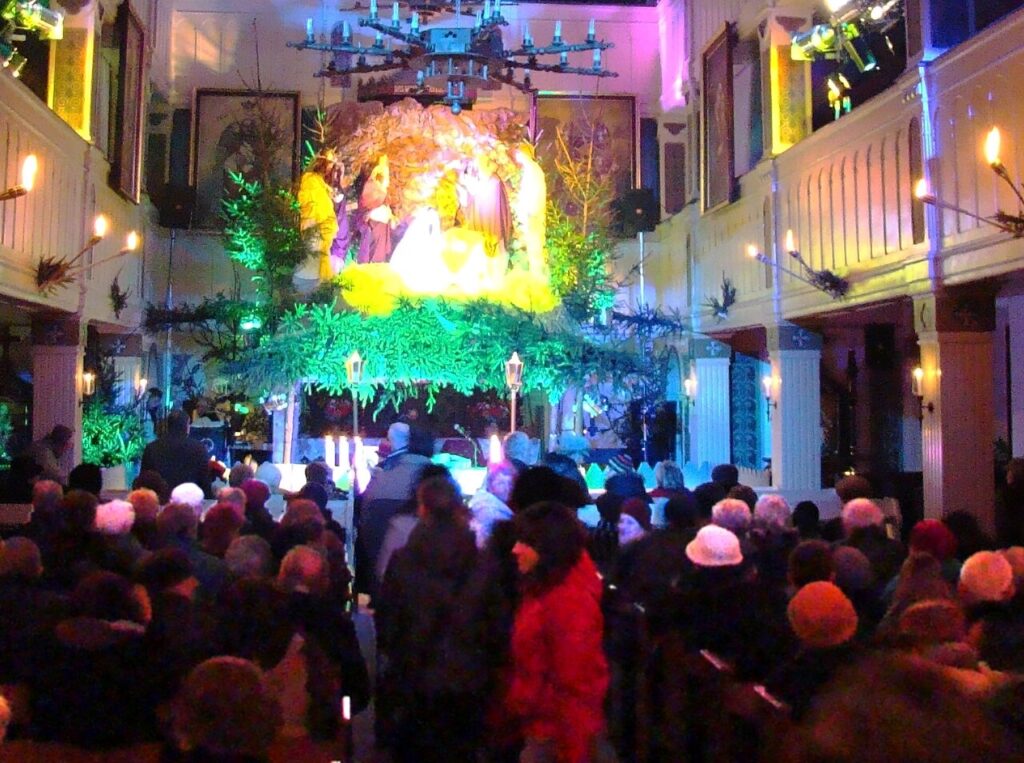
After supper, gifts are opened and carols are sung. Then many Poles head to church for Pasterka, the midnight Mass that welcomes Christmas Day. The name comes from pasterz, meaning shepherd, recalling the shepherds who were first to visit the newborn Christ. Churches fill to overflowing, and the Mass is one of the most attended services of the Polish year.
Szopka Krakowska: The Kraków Nativity Cribs
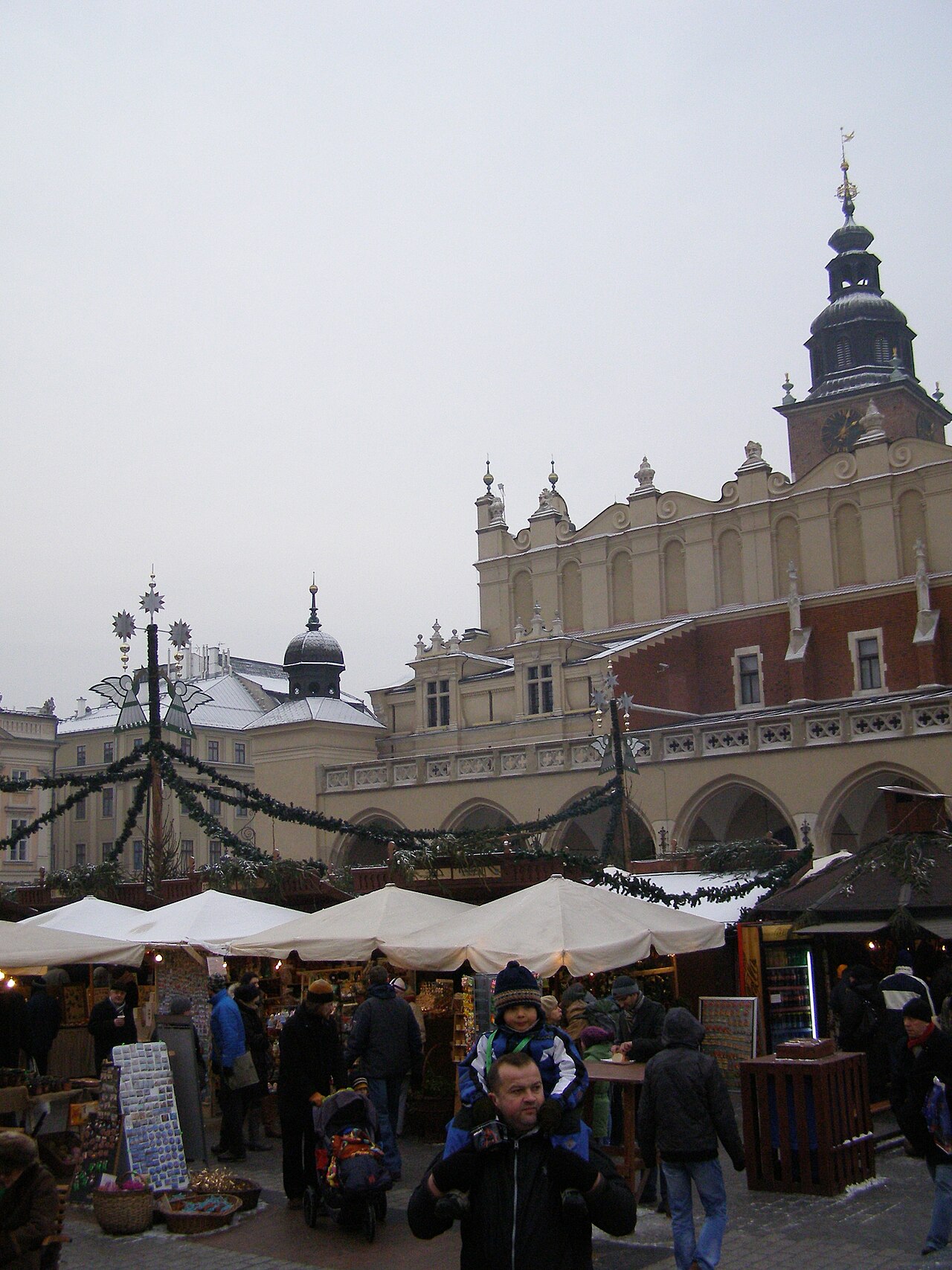
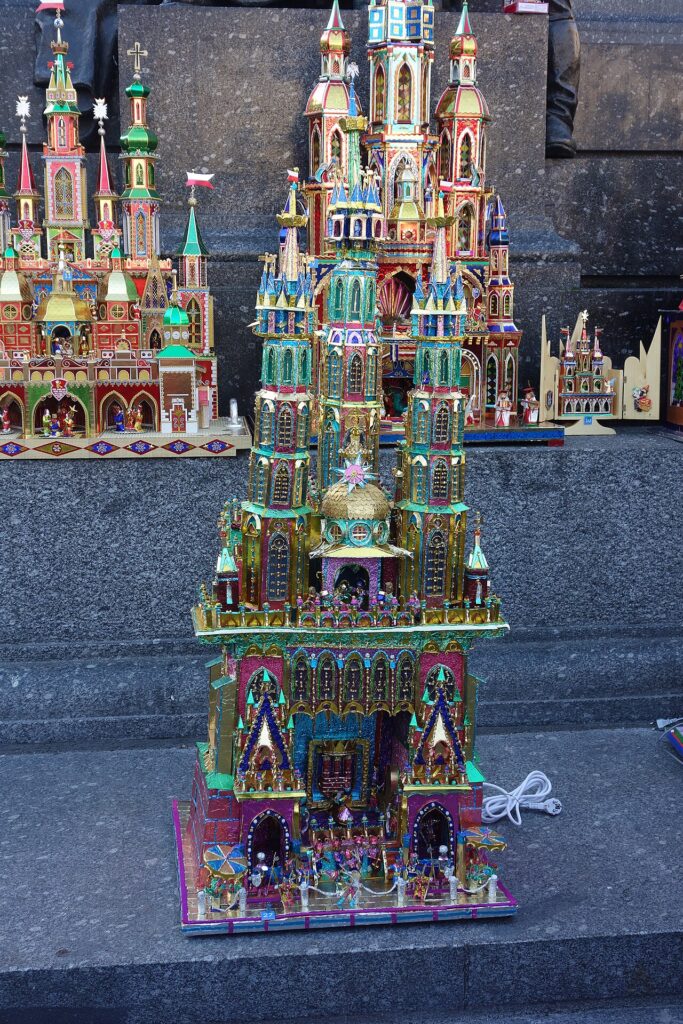
Poland gave the world one of its most striking Christmas folk arts, the szopka krakowska. These are not simple stables. They are tall, dazzling, multi-towered nativity cribs covered in colored foil, modeled on the spires and domes of Kraków’s own churches and landmarks, with the nativity tucked inside.
Every year on the first Thursday of December, builders carry their creations to the Main Square, by the Adam Mickiewicz monument, for a competition that has run since 1937. The craft of the Kraków nativity scene was inscribed on UNESCO’s list of Intangible Cultural Heritage in 2018, the first entry from Poland on that list.
Who Brings the Gifts?
The gift-bringer in Poland depends on where you are. In much of the country it is Święty Mikołaj, St Nicholas, who also visits on December 6. In the Wielkopolska, Kashubia, and Pomerania regions the gifts come from Gwiazdor, the star man, a figure in a fur coat and star-trimmed cap. In the southern regions of Małopolska and Podkarpacie, children may thank the Aniołek, the little angel, while in Upper Silesia it is the Dzieciątko, the Christ Child, who is credited. Whoever brings them, the presents are usually opened on Christmas Eve after supper rather than on Christmas morning.
Carols and Carolers
Poland has one of Europe’s richest traditions of Christmas carols, the kolędy. Some date back centuries, and the most beloved, such as Bóg się rodzi and Lulajże Jezuniu, are sung in churches and around family tables alike. In the days after Christmas, groups of kolędnicy, carolers in costume, still go from house to house in some villages, singing and acting out short nativity plays in exchange for treats or coins. Their cast often includes shepherds, angels, kings, and the Turoń, a snapping horned beast that brings good fortune. An old folk belief even holds that animals can speak in human voices on Christmas Eve night.
Christmas Day, St Stephen’s, and Epiphany
Christmas Day, December 25, is calm and family centered, with a leisurely meal that finally includes meat, often roast or bigos, the hunter’s stew. The Second Day of Christmas, December 26, is St Stephen’s Day. In some regions people once tossed oats in church or at one another to recall the stoning of St Stephen.
The season closes with Trzech Króli, the Three Kings, on January 6. Priests bless chalk, and families mark their doorways with the initials K+M+B and the year, a blessing on the household. Processions of the Three Kings now fill many Polish towns on that day.
Saying Merry Christmas in Polish
The common Christmas greeting is Wesołych Świąt, literally “Merry Holidays” or “Joyful Feast,” and the fuller form is Wesołych Świąt Bożego Narodzenia. You will hear it everywhere from late December, often paired with wishes for health and happiness in the new year.
Christmas in Poland rewards anyone who looks past the gifts. It is a holiday of waiting for a star, of bread shared and wrongs forgiven, of a chair kept empty for a stranger. To see how it fits the wider picture, explore our guide to Christmas around the world, the Christmas foods of different countries, the global cast of Christmas gift-bringers, and our overview of Christmas history and traditions.