Christmas in Spain is a long, warm, and deeply social season. It runs for nearly a month, anchored by family meals, religious tradition, and a calendar of customs that many visitors find unfamiliar. There is no single Christmas Day rush here. Instead the celebration unfolds across several key dates, building from early December to its real climax on January 6, the feast of the Three Kings.
Spanish families gather around the nativity scene rather than only the tree. The biggest dinner falls on Christmas Eve, not Christmas Day. The most important presents arrive in early January. And along the way Spain hosts the largest lottery on earth, eats twelve grapes against the clock, and lets a smiling log deliver sweets to children in Catalonia. This guide walks through how Spain celebrates, region by region and custom by custom. For the wider picture, see our guide to Christmas around the world and our overview of how different countries celebrate.
When Is Christmas in Spain?
The Spanish Christmas season opens on December 8, the feast of the Inmaculada Concepción (the Immaculate Conception). It is a public holiday, and in many towns it marks the day lights switch on and nativity scenes go up. From there the season runs all the way to January 6, the Día de Reyes, or Epiphany.
That gives Spain one of the longer Christmas calendars in Europe. The headline dates are December 8 (Inmaculada), December 22 (the Christmas lottery), December 24 (Nochebuena, Christmas Eve), December 25 (Navidad), December 28 (Día de los Santos Inocentes), December 31 (Nochevieja, New Year’s Eve), and January 6 (Reyes). A common saying holds that Christmas is not truly over until the Kings have come and gone.
To wish someone a merry Christmas in Spanish, you say Feliz Navidad. For a broader greeting across the whole season, people say Felices Fiestas, meaning happy holidays.
Nochebuena: The Christmas Eve Feast
The heart of a Spanish Christmas is Nochebuena, literally “the Good Night,” on December 24. This is the great family dinner of the year, and for most households it matters more than Christmas Day lunch. Relatives travel home, tables are extended, and the meal stretches late into the night.
There is no fixed national menu. Seafood is popular almost everywhere, from prawns and shellfish to baked fish such as sea bream. Roast lamb or suckling pig appears on many tables, along with rich soups and cured ham. The sweets come out at the end, and the toast is usually made with cava, the sparkling wine produced mainly in the Penedès region of Catalonia.
After dinner, the traditionally devout head to midnight Mass, known as the Misa del Gallo, the “Rooster’s Mass.” The name refers to an old belief that a rooster crowed at the hour Christ was born. Carols, called villancicos, are sung at home and in church throughout the season.
The Belén: Spain’s Beloved Nativity Scene
If one object defines Christmas in Spain, it is the Belén, the nativity scene named after Bethlehem. Many families consider it as central as the tree, and some skip the tree entirely. A Belén can be a small set on a side table or a vast landscape with hills, rivers, market stalls, shepherds, and dozens of figures surrounding the manger.
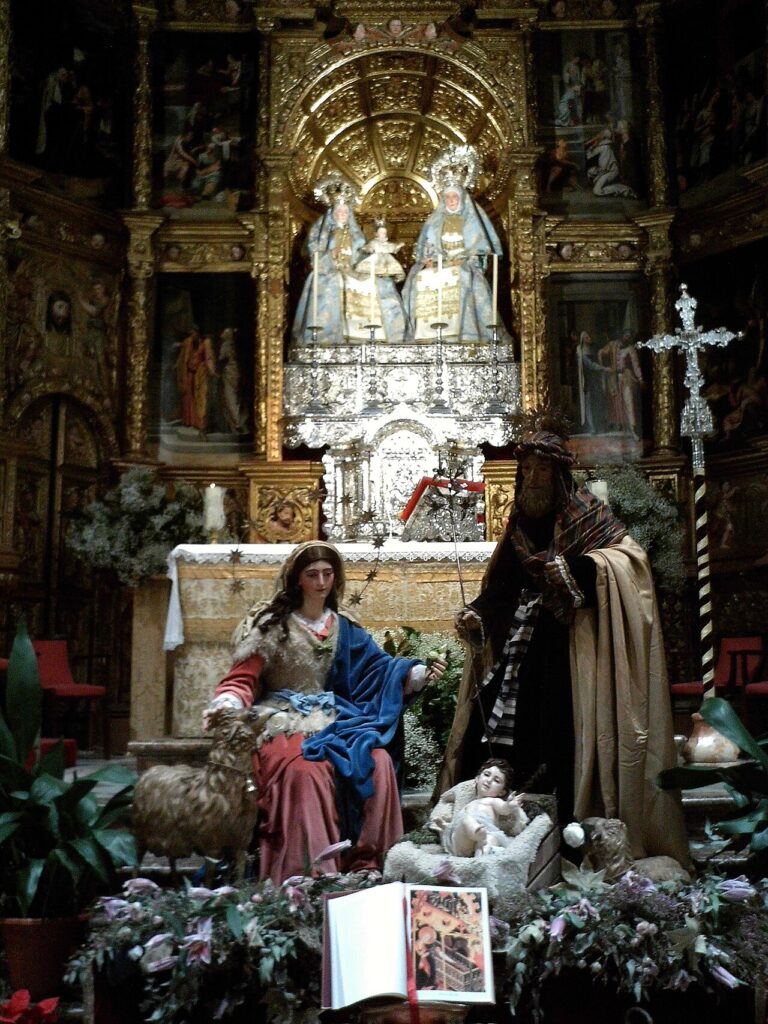
The craft of building these scenes is so popular it has its own name, belenismo, with clubs and competitions across the country. Towns and cathedrals stage large public Belenes that draw long queues, and some cities mount living nativity scenes with real people and animals. To learn more about this tradition’s religious roots, see our guide to the religious meaning of Christmas.
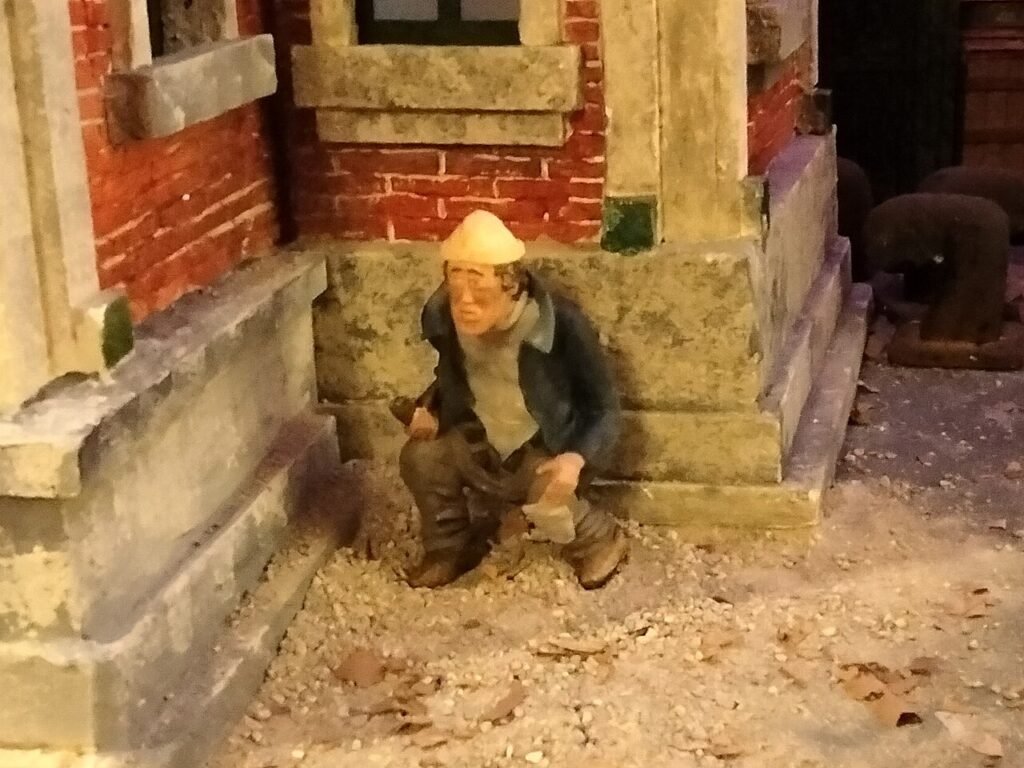
Catalonia adds a famous twist. Tucked somewhere in the scene, often half hidden, you may find El Caganer, a small figure of a peasant crouching to relieve himself. It sounds irreverent, but the figure is a beloved tradition, recorded since at least the 18th century, and folk belief holds that it symbolizes fertility and a good harvest for the year ahead. Finding the Caganer in the Belén is part of the fun for children.
Catalonia’s Tió de Nadal, the Christmas Log
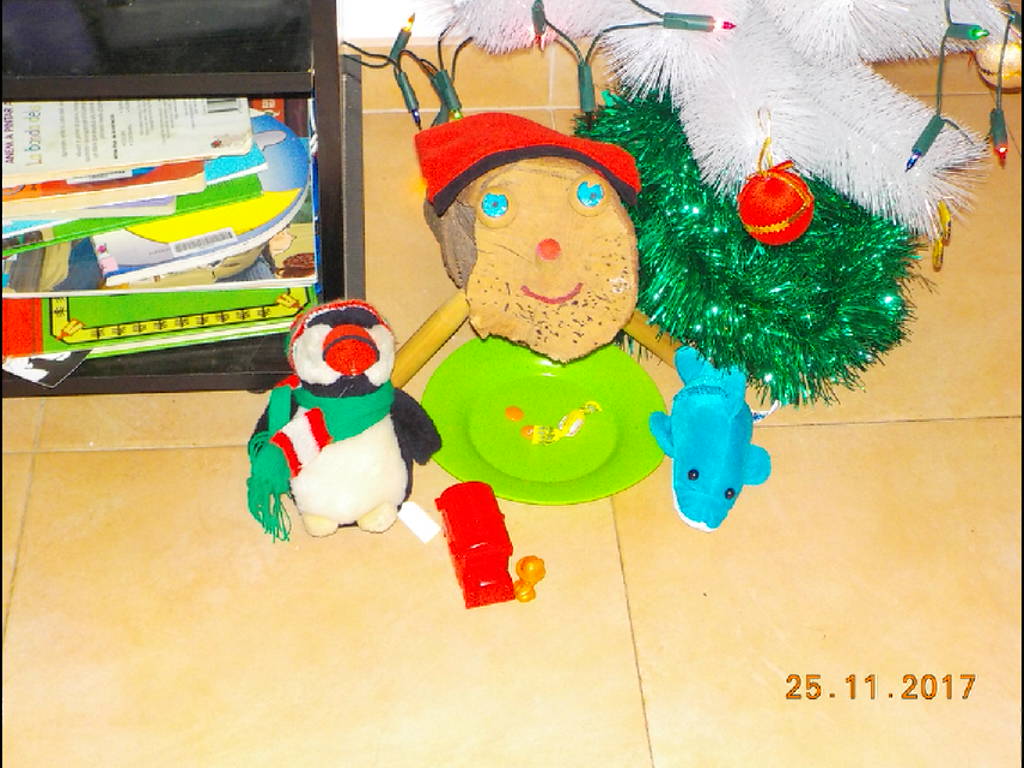
Catalonia is also home to one of Europe’s most unusual gift-bringers. The Tió de Nadal, also called the Caga Tió, is a hollow log propped up on little legs, given a painted smiling face and a small red hat. In the weeks before Christmas, children “feed” the log each night and cover it with a blanket to keep it warm.
On Christmas Eve or Christmas Day, the family beats the log with sticks while singing a song that urges it to deliver treats. The verses ask the Tió to produce nougat, hazelnuts, and cheese, and warn that the stick is coming if it does not. When the blanket is lifted, the log has “produced” sweets, turrón, and small gifts underneath. It is a playful tradition that delights Catalan children and puzzles almost everyone else.
El Gordo: The World’s Biggest Christmas Lottery
On the morning of December 22, much of Spain stops to watch the Lotería de Navidad, the Christmas Lottery. By total prize money paid out, it is widely described as the largest lottery in the world. Whole offices, families, bars, and villages buy shares of the same numbers, so wins are often spread across an entire town at once.
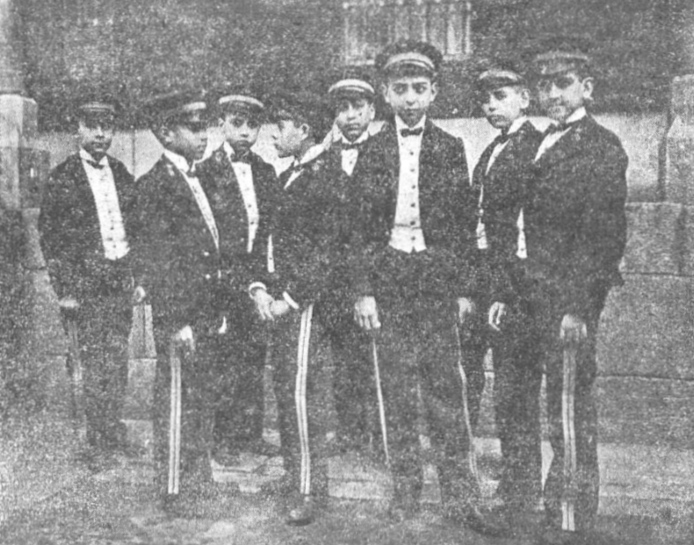
The top prize is nicknamed El Gordo, “the Fat One.” The draw itself is a spectacle. Pupils from Madrid’s Colegio de San Ildefonso sing out the winning numbers and prizes in a distinctive chant, a tradition the school has carried for generations. The event is broadcast live for hours and is one of the surest signs that Christmas has arrived.
Sweets of a Spanish Christmas
Spanish Christmas tables groan with sweets, and several are sold only at this time of year. The most iconic is turrón, a nougat made of almonds and honey. The two classic styles come from the Alicante region: the hard, brittle bar from the town of Jijona and a softer, chewier version.
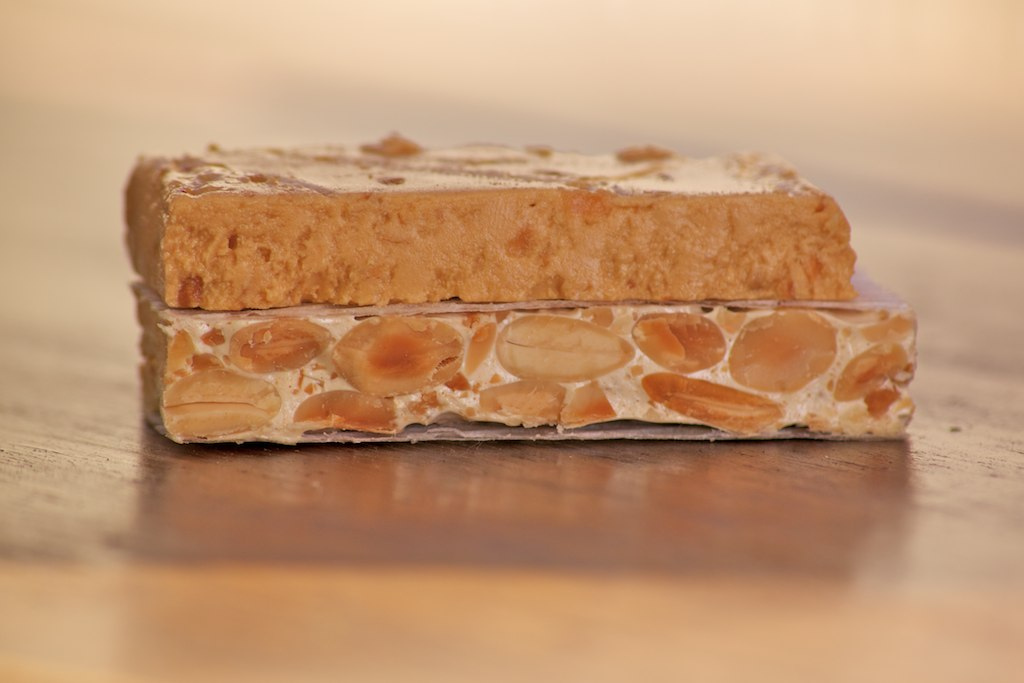
Alongside turrón sit polvorones and mantecados, crumbly shortbread-style cakes strongly associated with the Andalusian town of Estepa. There is also mazapán (marzipan), with the city of Toledo famous for its version. These treats are shared at home, given as gifts, and offered to every visitor through the holidays. For more festive food worldwide, see our roundup of Christmas foods around the world.
Twelve Grapes for the New Year
New Year’s Eve, Nochevieja, brings one of Spain’s best loved rituals: las doce uvas, the twelve grapes. As the clock strikes midnight, Spaniards try to eat one grape on each of the twelve chimes, one bell at a time. Finishing all twelve in time is said to bring luck for the year ahead, and the rush to keep pace is half the fun.
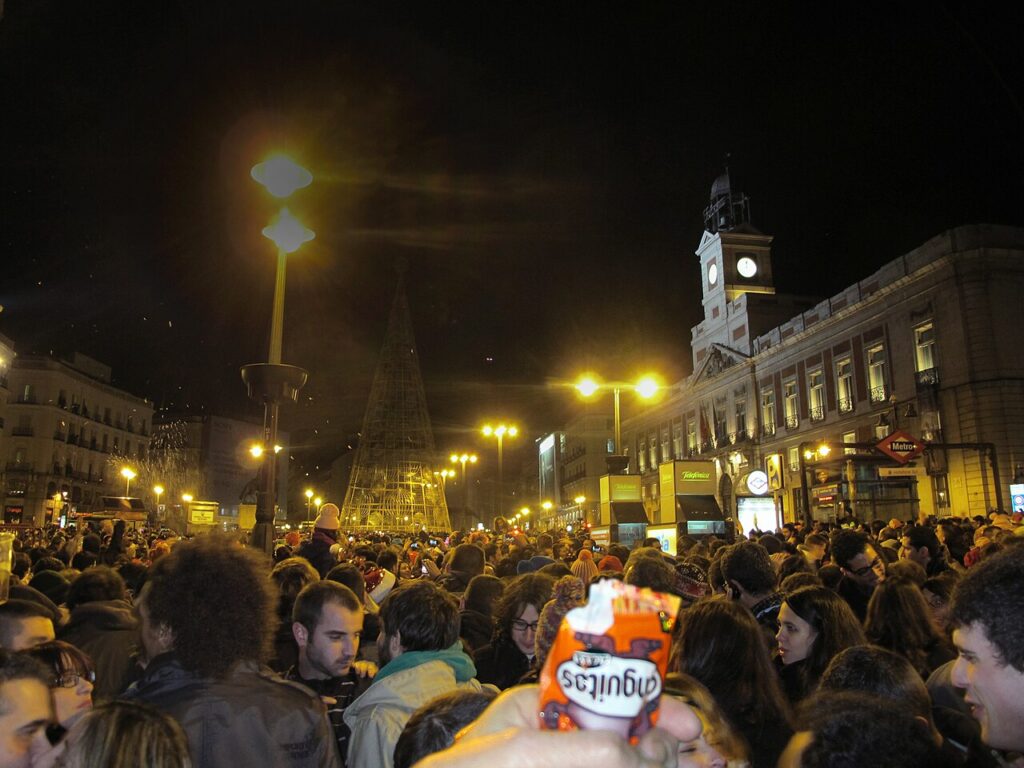
The most famous gathering is at the Puerta del Sol in Madrid, where huge crowds count down beneath the city’s clock, an event shown live on television across the country. The custom is usually traced to grape growers in the Alicante area around 1909, who are said to have promoted eating the surplus harvest at New Year. From there the habit spread nationwide.
The Three Kings: Spain’s Real Gift Day
For generations, the main gift-giving day in Spain was not Christmas morning but January 6, the Día de Reyes. The gift-bringers are the Reyes Magos, the Three Kings, Melchor, Gaspar, and Baltasar, who brought gifts to the infant Jesus and now bring presents to children. The American figure of Papá Noel has grown more common on December 25, but for many families the Kings remain the true highlight.
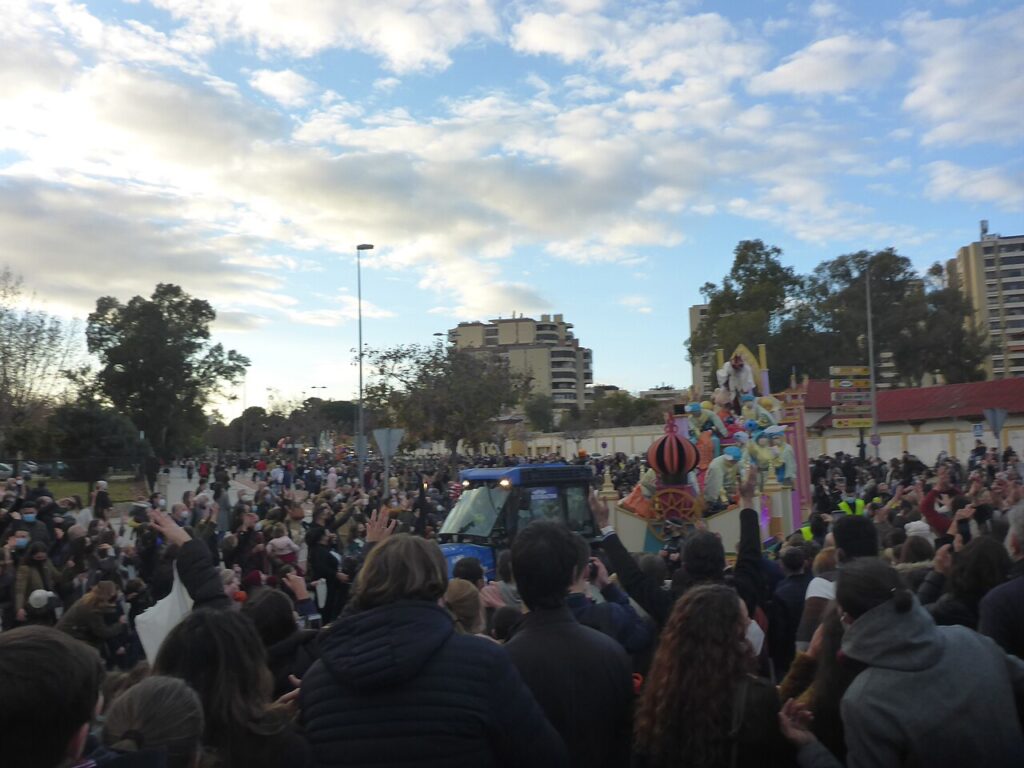
On the evening of January 5, towns across Spain hold the Cabalgata de los Reyes Magos, a grand parade in which the Three Kings ride through the streets on floats, tossing sweets to the crowds of children below. The Cabalgata in the town of Alcoy, in Alicante, is recognized as one of the oldest in the country, documented from 1866 and held continuously since 1885. To meet gift-bringers from other countries, see our guide to Santa Claus and the world’s gift-bringers.
That night children leave their shoes out, sometimes with food and water for the Kings’ tired camels, hoping to wake to gifts on the morning of January 6. Children who have misbehaved are told they will get carbón, a lump of sweet “coal” made of hard sugar.
The Kings’ day has its own cake, the Roscón de Reyes, a ring-shaped sweet bread decorated with candied fruit. Two surprises are hidden inside. Whoever finds the small figurine is crowned king or queen for the day. Whoever bites into the hidden dried bean has to pay for the roscón.
More Spanish Christmas Customs
Two other traditions round out the season. December 28 is the Día de los Santos Inocentes, Spain’s version of April Fools’ Day, when people play practical jokes called inocentadas and even newspapers run fake stories. And in Andalusia, especially around Jerez, families and neighbors gather for zambombas, lively flamenco-style singalongs of villancicos named after the zambomba, a friction drum that gives the gatherings their earthy beat.
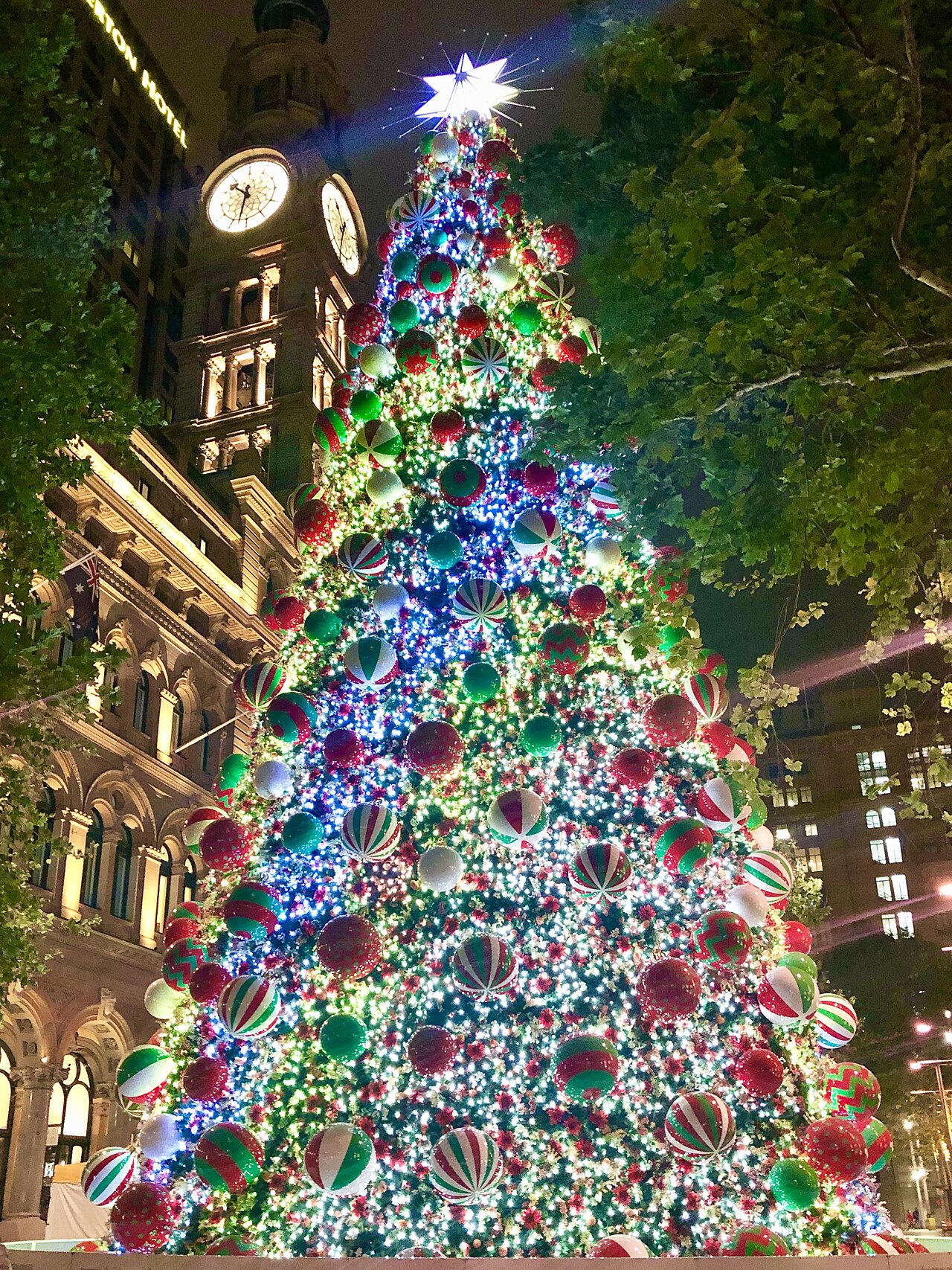
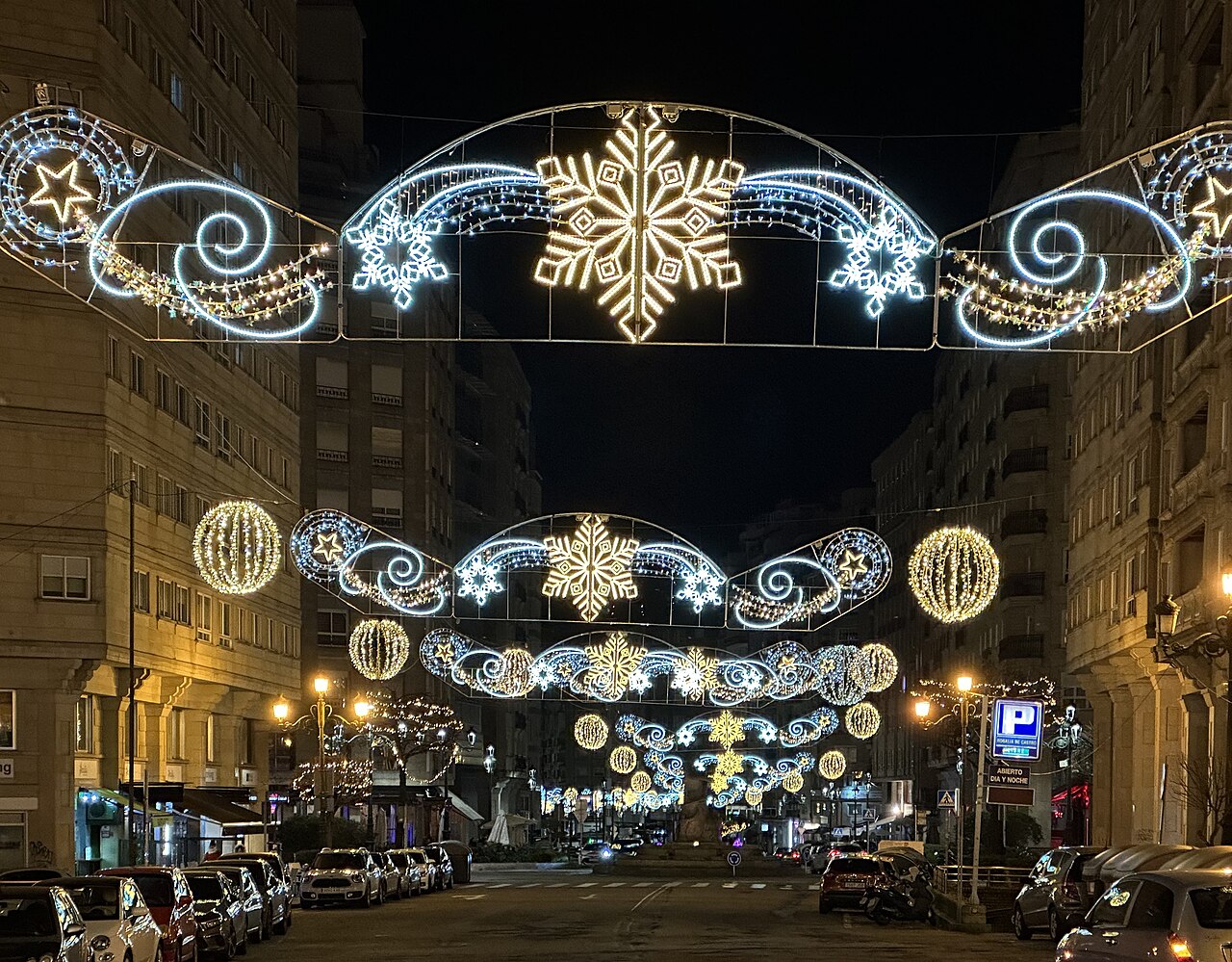
Spanish cities also compete to outshine one another with Christmas lights. The displays in Vigo and Málaga have become national attractions in their own right, drawing crowds who come simply to walk the illuminated streets. From the first lights of December to the last sweet of January, Christmas in Spain is a season to be shared slowly, and at the table.