Much of the Christmas the English speaking world recognizes was shaped in Britain. The decorated tree in the parlor, the greeting card in the post, the carol service, and Charles Dickens’ tale of Scrooge all took their modern form here in the nineteenth century. A British Christmas today blends that Victorian inheritance with older customs and a few very local quirks: a paper crown worn at dinner, a pudding set alight with brandy, and a pantomime where the audience shouts back at the stage.
This guide walks through the customs that shape Christmas in the United Kingdom: the roast dinner and its crackers, the Christmas pudding and mince pies, Father Christmas and the King’s broadcast, and the carols and pantomimes of the season. For the wider view, see our overview of Christmas history and traditions and how the holiday is marked in countries around the world.
Counting Down to the Day
The build up is half the fun. Children open a numbered window on an Advent calendar each morning of December, and many homes light an Advent wreath through the four Sundays before Christmas. On Christmas Eve some families attend a Midnight Mass or a candlelit carol service, stockings are hung, and in many households a single present may be opened before bed.
Christmas Day and Boxing Day
In Britain the great day is December 25. Families gather in the morning to open presents from under the tree and from stockings, then sit down to a long roast dinner in the early afternoon. December 26 is Boxing Day, a public holiday of its own. Its name most likely comes from the “Christmas boxes” of money once given to servants and tradespeople, and today it means sport, shopping sales, leftovers, and a slow recovery from the day before. To wish someone well, Britons say both “Merry Christmas” and, very commonly, “Happy Christmas.”
The Christmas Dinner
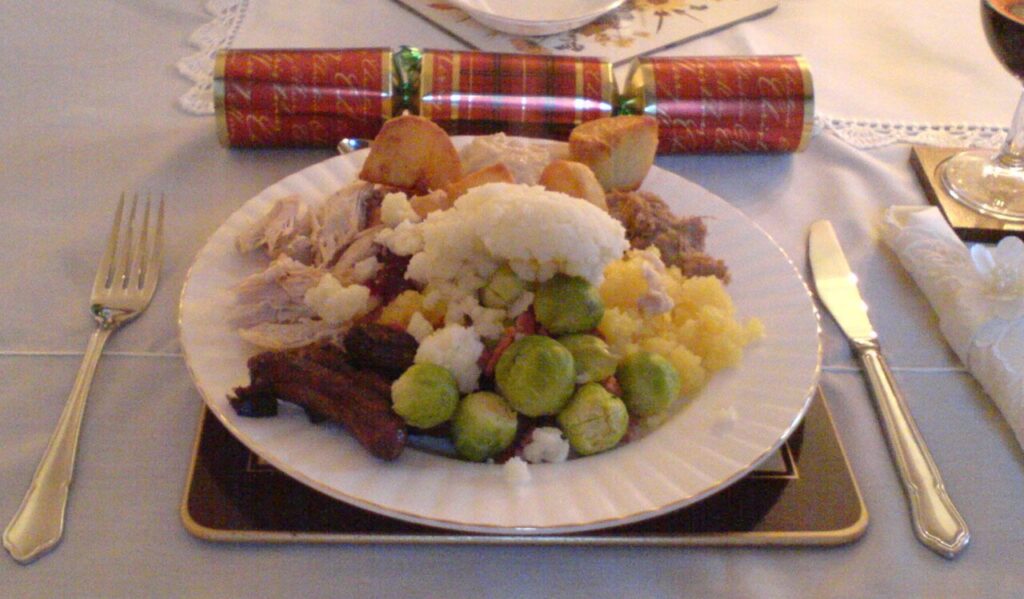
The centerpiece of the day is the Christmas dinner, a grand roast. Today the bird is almost always turkey, though goose was the traditional choice for centuries before turkey overtook it. The trimmings are half the point:
- Roast potatoes, crisp outside and fluffy within.
- Pigs in blankets, small sausages wrapped in bacon.
- Brussels sprouts, the most argued over vegetable on the table.
- Stuffing, bread sauce, cranberry sauce, and lashings of gravy.
The meal ends with the Christmas pudding, and very little room to spare.
Christmas Crackers
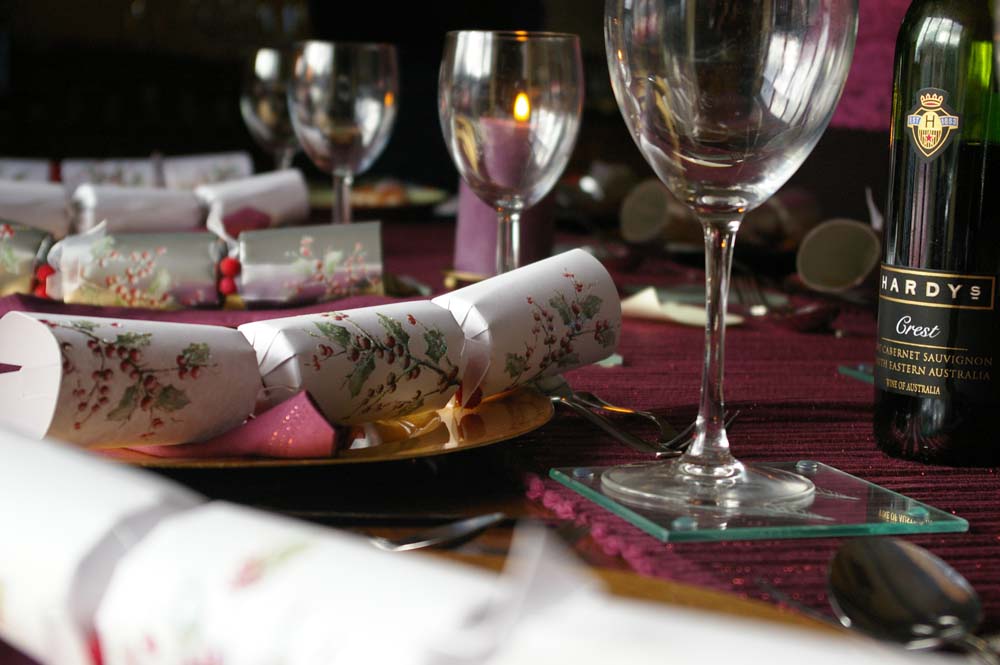
One thing on the British table puzzles many visitors: the Christmas cracker. This is a decorated cardboard tube that two people pull apart until it breaks with a small bang. Inside are three things by tradition: a flimsy paper crown, a groan worthy joke printed on a slip of paper, and a tiny toy or trinket. Everyone wears the paper crowns through dinner, prime minister and toddler alike.
The cracker is a British invention. A London confectioner named Tom Smith devised it around 1847, inspired by the French paper wrapped bonbon, and perfected its famous “snap” in the 1860s. It has been part of the proper Christmas table ever since.
Christmas Pudding and Mince Pies
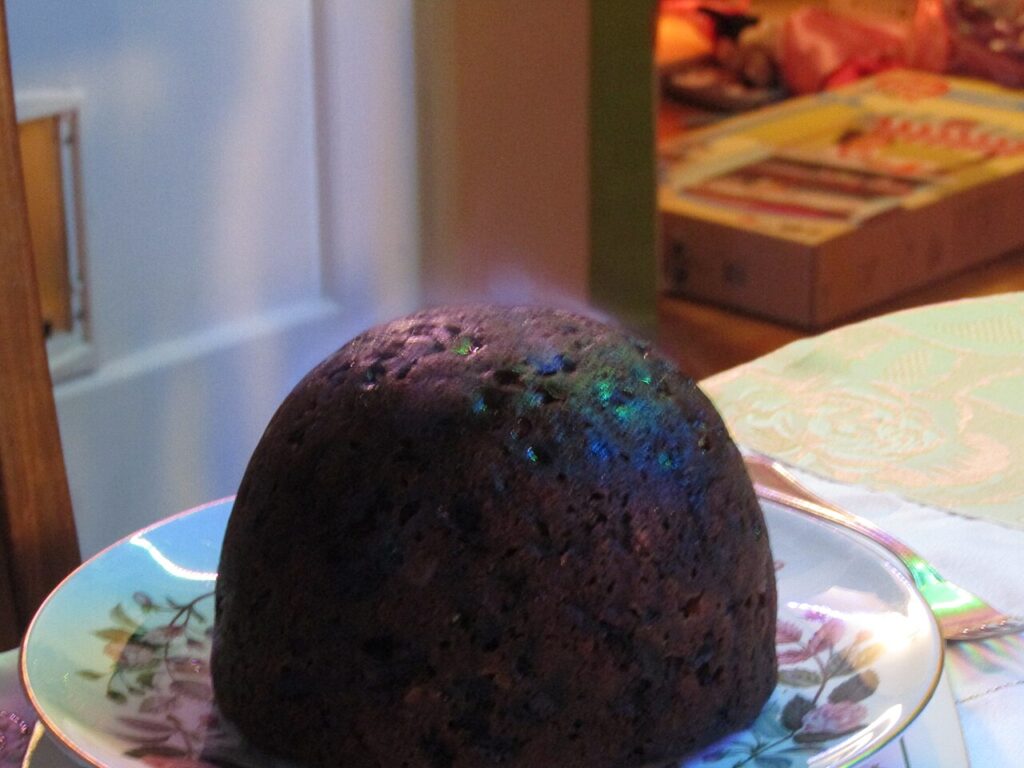
The traditional pudding is the Christmas pudding, also called plum or figgy pudding, a dark, dense dome of dried fruit and suet, steamed for hours and matured for weeks. It is brought to the table doused in warm brandy and set alight, crowned with a sprig of holly. By an old custom called Stir-up Sunday, on the last Sunday before Advent, every member of the family takes a turn to stir the mixture from east to west, in honour of the Magi, and make a wish, and a silver sixpence was once hidden inside to bring luck to whoever found it.
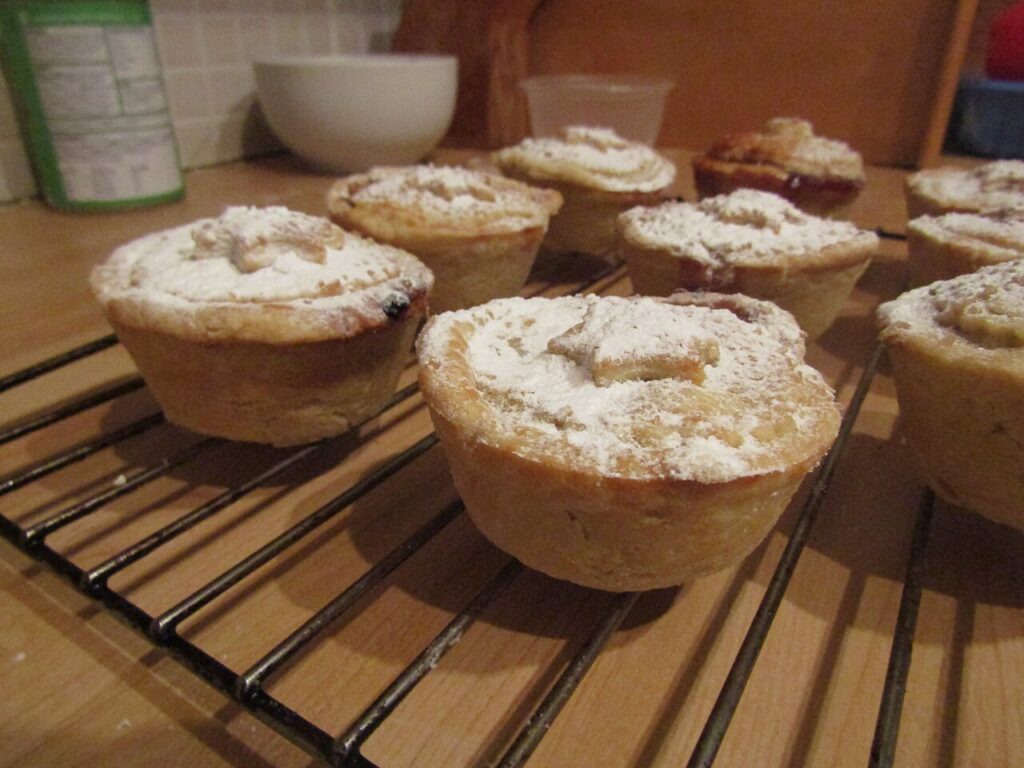
Alongside it come mince pies, little sweet pastries filled with “mincemeat,” a spiced mixture of dried fruit and suet that, despite the name, holds no meat today. They are eaten by the dozen all season long.
Father Christmas
The gift bringer is Father Christmas, an old English figure who personified the holiday’s good cheer long before he merged with the American Santa Claus to become the familiar red suited figure of today. On Christmas Eve children hang stockings at the end of the bed or by the fireplace, and leave out a mince pie and a glass of sherry or brandy for Father Christmas, with a carrot for the reindeer. In the morning the stockings are full and the plate is empty.
A Victorian Invention
The Christmas most Britons cherish was largely shaped in the Victorian era. Charles Dickens’ A Christmas Carol, published in 1843, fixed the spirit of the season as one of warmth, charity, and family, and its influence reaches around the world. The same decade and the years around it gave Britain several lasting customs.
Prince Albert, Queen Victoria’s German husband, helped popularize the Christmas tree after an image of the royal family around their decorated tree appeared in the Illustrated London News in 1848. He did not introduce it, the German born Queen Charlotte had kept one as early as 1800, but the royal image made it the fashion in every British home. The first commercial Christmas card was produced by Henry Cole in 1843. Even the robin, that small red breasted bird on so many cards, became a Christmas emblem in this era, a nod to the Victorian postmen in red coats, nicknamed “robins,” who delivered the new Christmas post.
The King’s Speech
At 3:00 in the afternoon on Christmas Day, many families pause for the monarch’s Christmas broadcast, now the King’s Speech delivered by King Charles III. The tradition began as a radio address by King George V in 1932, was first televised in 1957, and has become a fixed point of the British Christmas afternoon, a quiet moment between dinner and the evening.
Carols and Pantomime
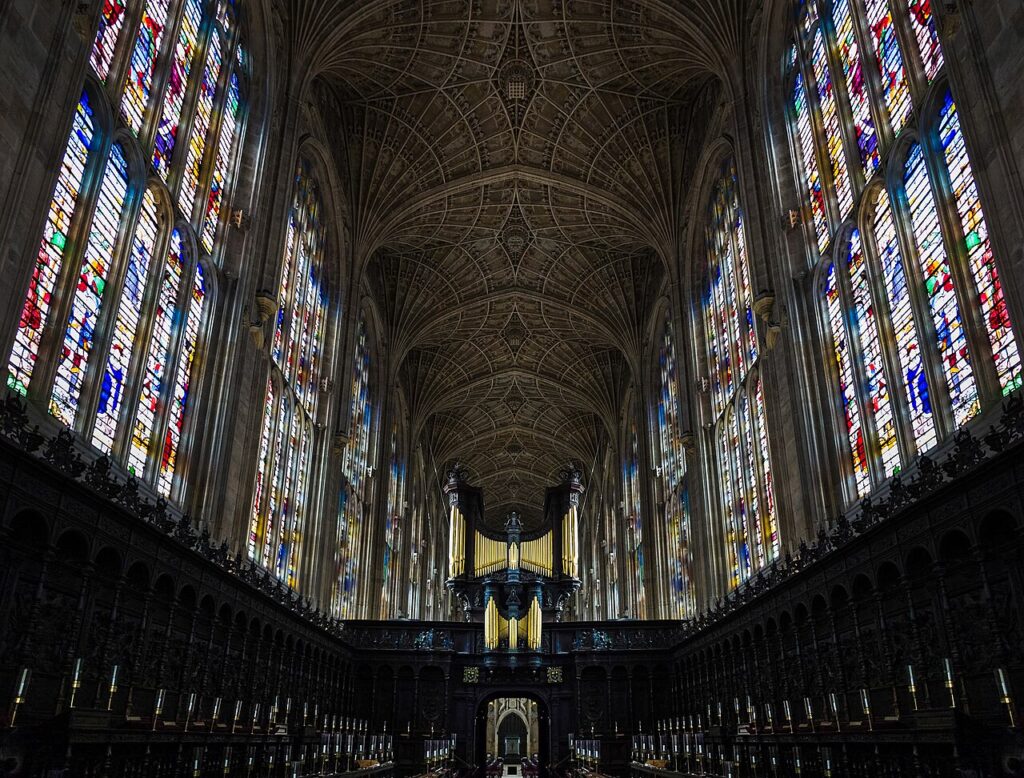
Music runs through the British Christmas. Carol services fill churches and cathedrals, and the most famous of all is the Festival of Nine Lessons and Carols from King’s College Chapel in Cambridge, broadcast on Christmas Eve in a format the college has used since 1918, itself adapted from a service first devised at Truro Cathedral in 1880. Groups of carol singers also go door to door, a descendant of the older custom of wassailing.
Then there is the pantomime, or “panto,” a gloriously silly form of family theatre staged across the country at Christmas. Pantos retell fairy tales with slapstick, songs, a man in a dress playing the Dame, a young woman as the “principal boy,” and constant audience participation. When the audience roars “He’s behind you!” and “Oh no it isn’t!”, a very British Christmas is in full swing.
Lights, Markets, and Boxing Day Sport
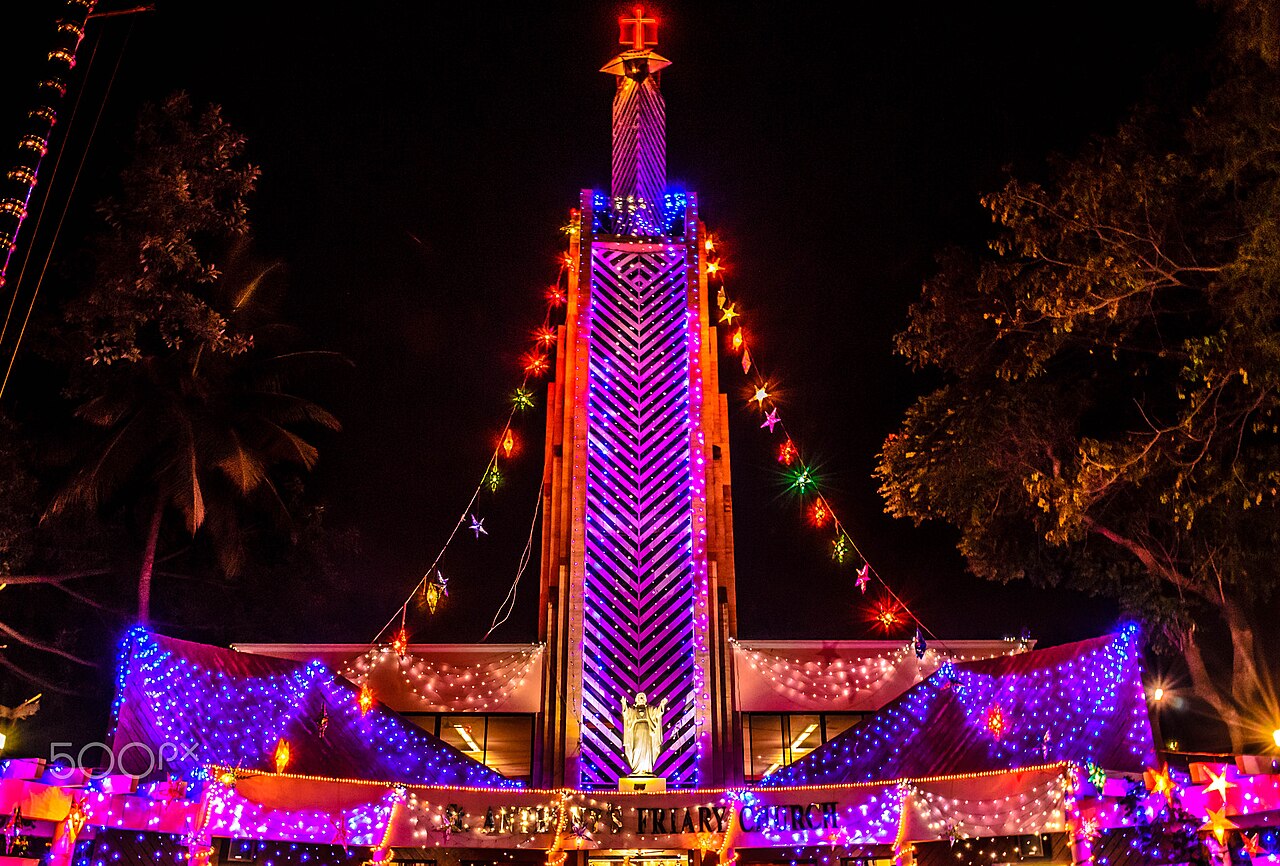
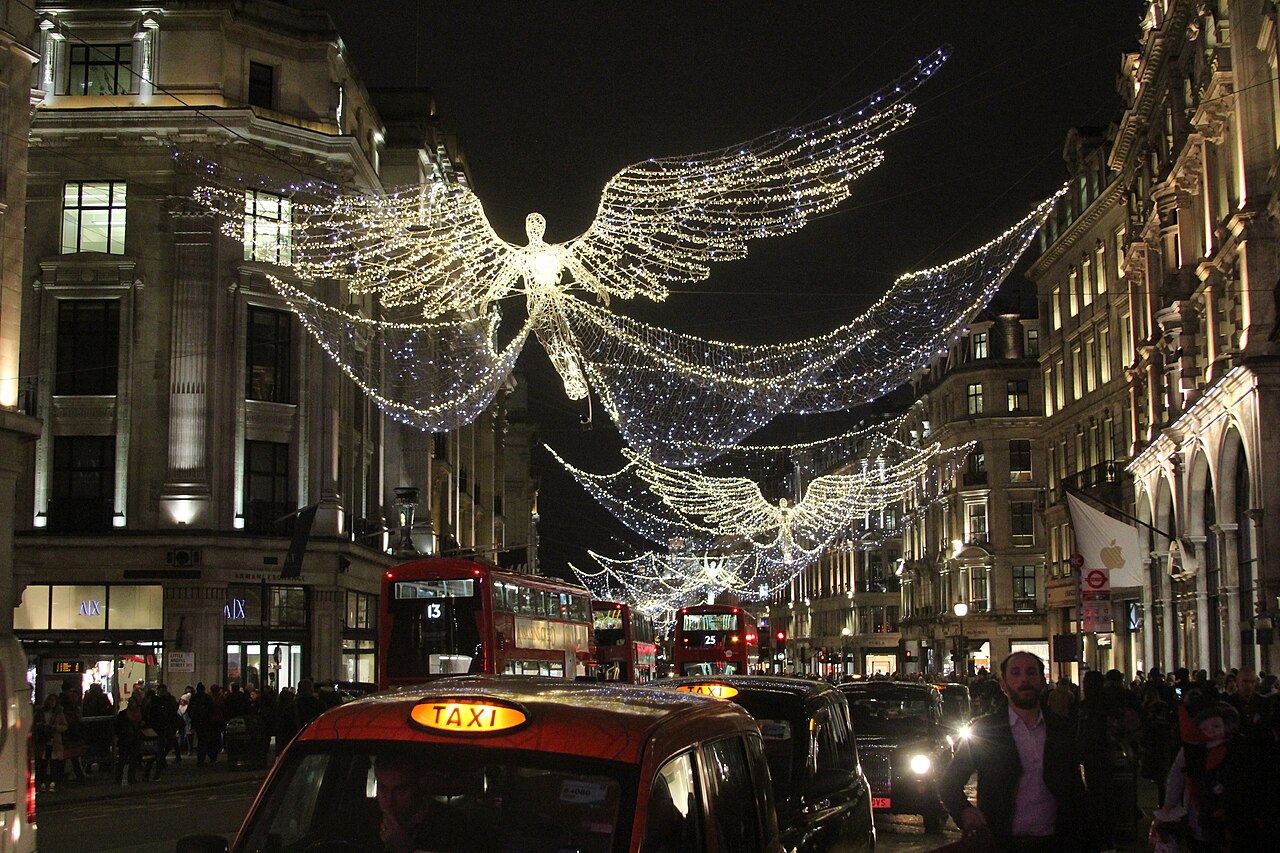
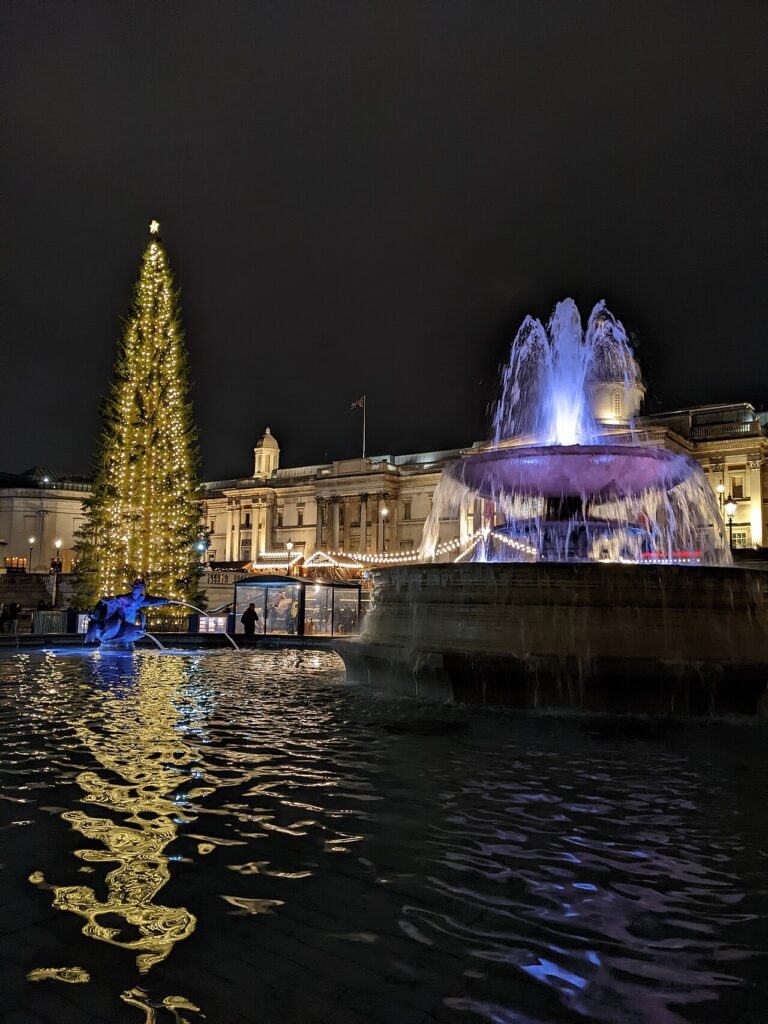
British towns light up for the season. London’s Oxford Street and Regent Street switch on elaborate light displays, and a giant Christmas tree stands in Trafalgar Square, given by the city of Oslo every year since 1947 in thanks for Britain’s friendship during the Second World War. Christmas markets, many in the German style, fill city squares from Birmingham to Edinburgh and Bath.
On Boxing Day the nation heads outdoors. There is a full programme of football and horse racing, the famously bracing Boxing Day swim in the cold sea at resorts around the coast, and long walks to work off the feast.
Modern Britain has added festive rituals of its own. Offices and schools hold a Christmas Jumper Day, wearing gaudy knitwear in aid of charity. The whole country argues, year after year, about whether anyone truly likes Brussels sprouts. And music fans follow the race for the Christmas Number One, the keenly contested title for the song topping the charts on Christmas Day.
Around the Four Nations
Christmas is not quite the same across the United Kingdom. In Wales, where the greeting is Nadolig Llawen, the old tradition of plygain, an early morning service of unaccompanied carols, still survives in some chapels. In Scotland, Christmas was for a long time a quiet affair, suppressed for centuries after the Reformation, while the great winter celebration was and still is Hogmanay, the New Year. Scots kept Christmas only modestly until the twentieth century, and it did not become a public holiday in Scotland until 1958.
Wherever it is kept, the decorations traditionally come down by Twelfth Night, the evening of January 5, as an old superstition warns that leaving them up any longer brings bad luck for the year ahead.
From the snap of a cracker to the last carol on Christmas Eve, Christmas in Britain is a season of family, food, and gentle ritual, much of it handed down from the Victorians who shaped the holiday we know. To see how other cultures celebrate, explore our guides to Christmas foods around the world and the gift bringers of many lands.