Christmas looks different in every corner of the world. In one country it arrives with snow, candles, and a quiet church service. In another it lands in the middle of summer, on a beach, with cold prawns and a barbecue. The date can shift, the gift bringer changes name and costume, and the food on the table tells you exactly where you are.
This guide walks through 25 countries and the traditions that make their Christmas distinct. For each one you will find a custom that many people outside that country have never heard of. Some are ancient. Some are surprisingly modern. All of them are real, and most are still going strong today.
If you want the bigger picture first, our complete guide to Christmas covers the dates, meaning, and origins of the holiday, and the history of Christmas traces how it spread from a midwinter feast to a global celebration.
Europe
Europe is where many of the customs the rest of the world copied first took shape. The Christmas tree, the Advent wreath, the printed card, and the modern Santa all have European roots. But each country kept its own flavor.
Germany
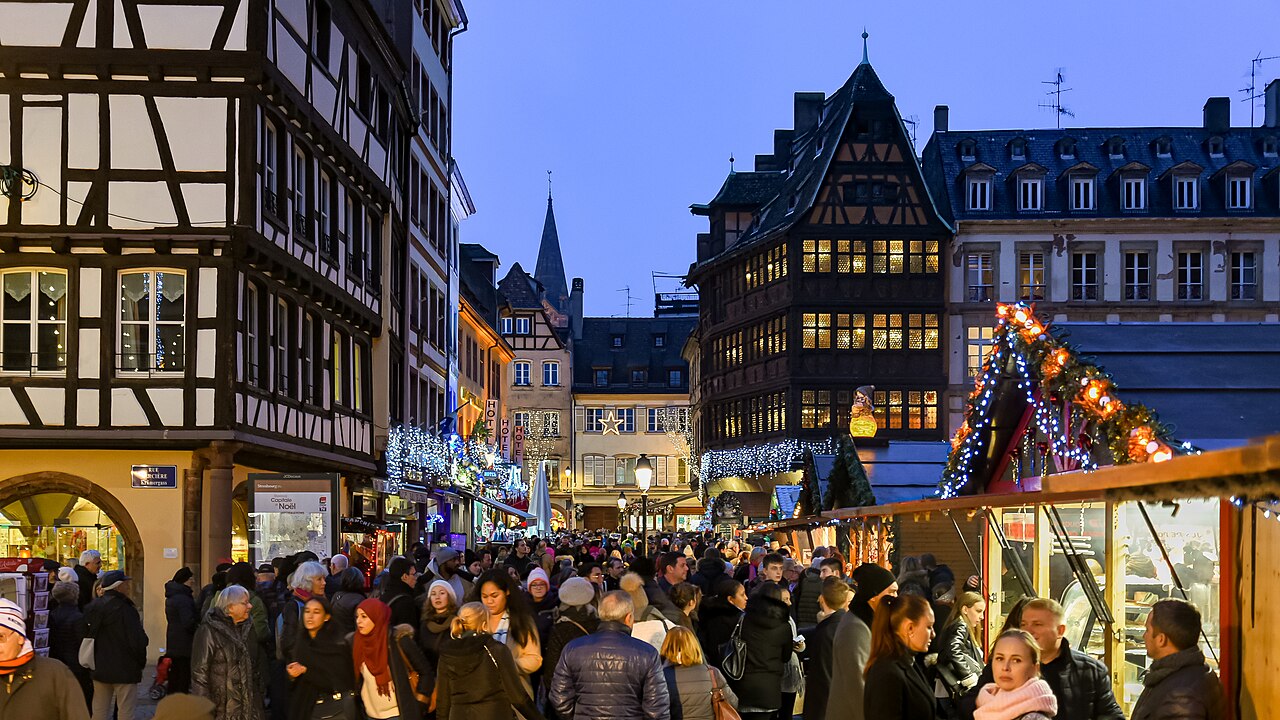
Germany gave the world two things every December: the decorated Christmas tree and the bustling outdoor Christmas market. Markets like the Striezelmarkt in Dresden have run for centuries, selling mulled wine, roasted nuts, and handmade ornaments.
The custom you may not know: the Advent wreath (Adventskranz) was the idea of a Protestant pastor named Johann Hinrich Wichern. In 1839 he ran a home for poor children in Hamburg and built a large wooden wheel with candles, lighting one more each day so the children could count down to Christmas. The four-candle wreath we use today grew out of that.
United Kingdom
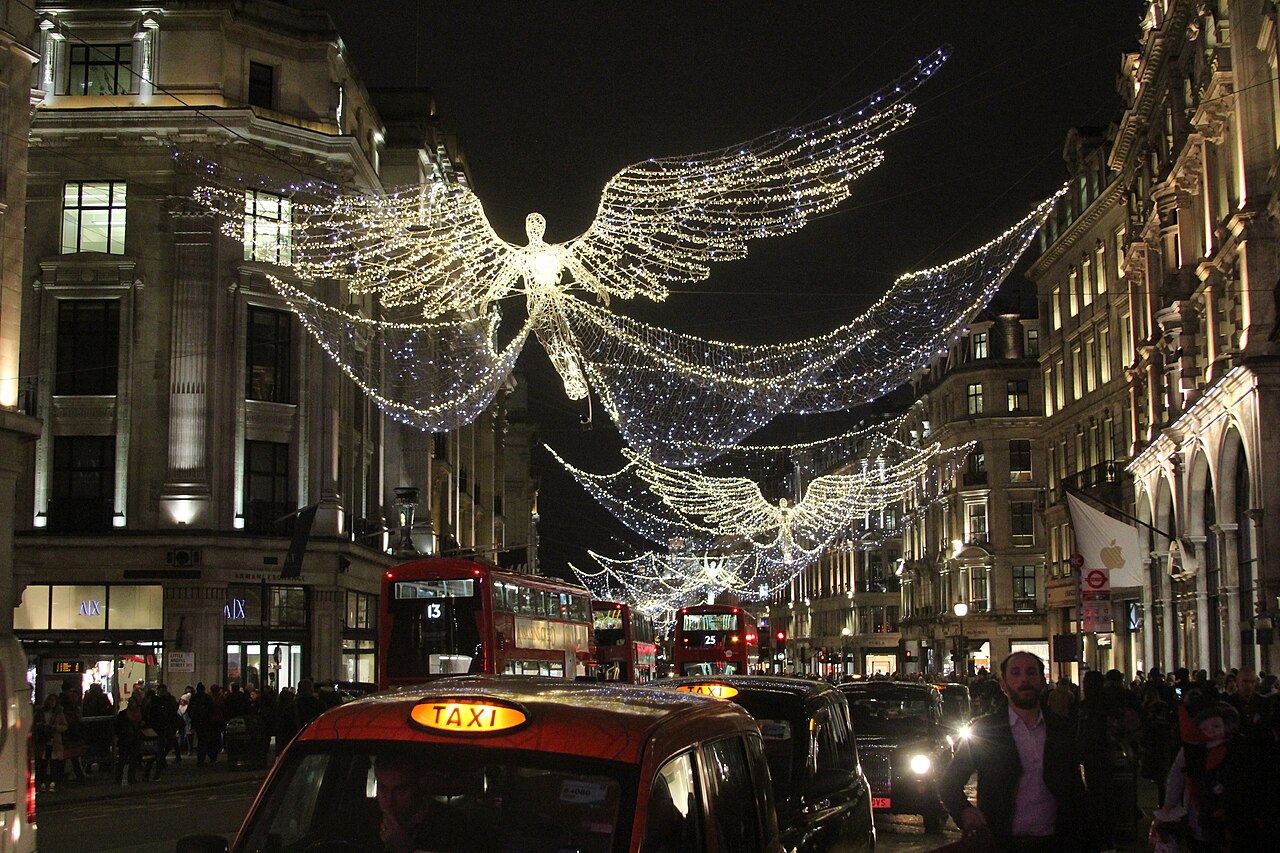
British Christmas means roast turkey, mince pies, pantomime shows, and a televised message from the monarch on Christmas Day. Children leave a mince pie and a drink out for Father Christmas.
The custom you may not know: the Christmas cracker was invented around 1847 by a London sweet maker named Tom Smith. He wrapped sugared almonds in twists of paper, then added a small “bang” mechanism and a paper hat. Today every British Christmas dinner ends with two people pulling a cracker, groaning at the joke inside, and wearing the paper crown through the meal.
Italy
Italy keeps Christmas close to the church. Nativity scenes, called presepi, are everywhere, a craft tradition that the city of Naples turned into an art form. Many families serve the Feast of the Seven Fishes on Christmas Eve.
The custom you may not know: the main gift bringer for many Italian children is not Santa at all. It is La Befana, a kindly old witch who flies on a broomstick on the night of January 5, the eve of Epiphany. She fills stockings with sweets for good children and a lump of coal for naughty ones. The story says she was too busy to follow the Three Kings to Bethlehem and has been searching ever since.
Spain
In Spain the season stretches past New Year to January 6, when the Three Kings (Los Reyes Magos) bring gifts. Cities hold grand parades the night before, and families eat a ring shaped cake called roscón de Reyes with a tiny figure hidden inside.
The custom you may not know: Spain runs the world’s biggest Christmas lottery, El Gordo (“the Fat One”), drawn on December 22. The total prize pool runs into the billions of euros, and schoolchildren from a Madrid college sing the winning numbers aloud. In the Catalonia region you will also meet the Caga Tió, a smiling hollow log that children “feed” for days, then beat with sticks on Christmas so it drops out sweets and small gifts.
France
The French Christmas table is famous for the bûche de Noël, a sponge cake rolled and frosted to look like a Yule log. Many families attend midnight Mass, then return for a late feast called le réveillon.
The custom you may not know: in the Provence region, dessert is not one cake but thirteen desserts (les treize desserts), served together to represent Christ and the twelve apostles. The spread includes nougat, dried figs, almonds, raisins, and fresh fruit. Children also leave their shoes by the fireplace for Père Noël to fill.
Sweden
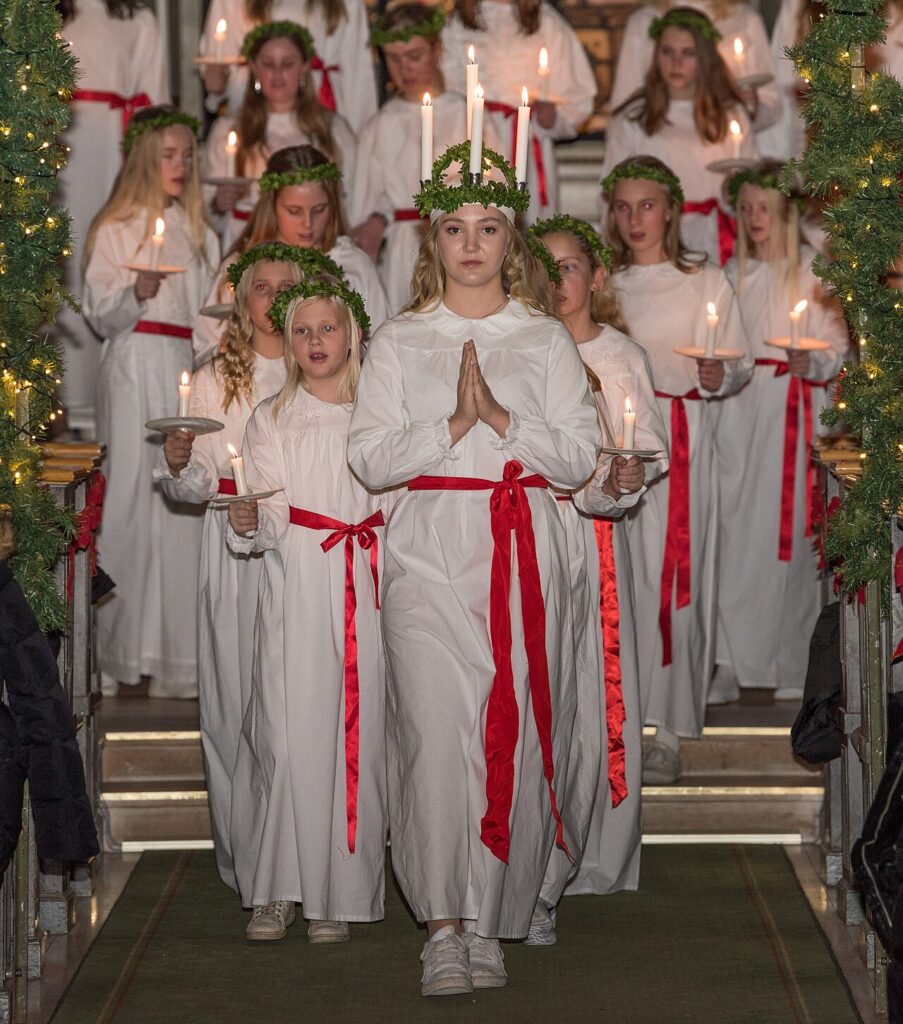
Swedish Christmas centers on Saint Lucia Day on December 13. A girl chosen to be Lucia wears a white gown and a crown of candles and leads a procession of children singing through the dark winter morning, carrying saffron buns and ginger biscuits.
The custom you may not know: at three o’clock on Christmas Eve, much of Sweden stops to watch the same television program: a Disney special known as Kalle Anka (Donald Duck and His Friends Wish You a Merry Christmas). It has aired every year since 1959 and remains one of the most watched broadcasts in the country. Towns also raise a giant straw Yule Goat, and the famous one in Gävle has been burned down by vandals dozens of times over the years.
Norway
Norwegians gather for a big Christmas Eve dinner of pork ribs, lamb, or dried cod, followed by rice porridge. The season is called jul, an old word older than Christianity itself.
The custom you may not know: by old folk belief, witches and evil spirits come out on Christmas Eve looking for brooms to ride. By that old tradition, some households still tuck their brooms out of sight before going to bed. Many families also serve rice porridge with a single almond hidden inside, and whoever finds it wins a marzipan pig.
Finland
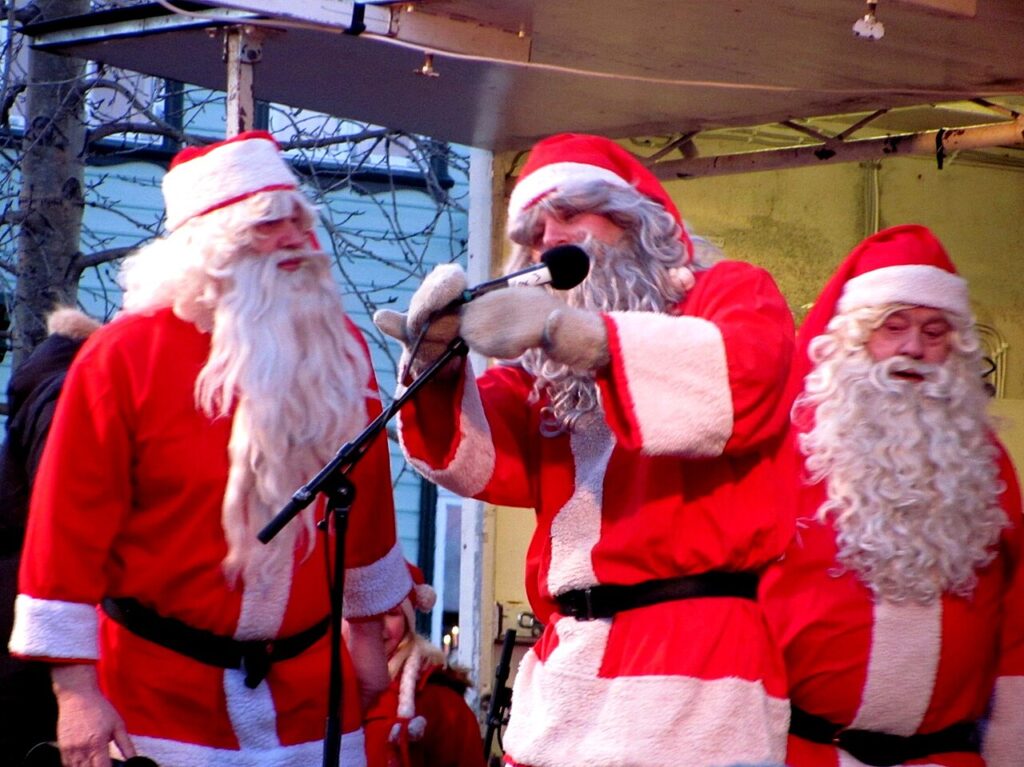
Finland claims to be the home of Santa Claus, who lives in Lapland in the far north. Children know him as Joulupukki, and unlike the chimney climbing Santa, he often knocks on the door in person to ask, “Are there any well behaved children here?”
The custom you may not know: on Christmas Eve, many Finnish families visit the sauna together to cleanse and relax before the evening meal. The city of Turku also reads a public Declaration of Christmas Peace at noon, a ceremony repeated almost every year since the Middle Ages.
Iceland
Iceland packs an extraordinary amount of folklore into its long, dark December. Instead of one Santa, Icelandic children get thirteen Yule Lads (Jólasveinar), mischievous brothers who come down from the mountains one at a time over the thirteen nights before Christmas. Each has a name and a habit, like Door Slammer, Spoon Licker, and Sausage Swiper. Children leave a shoe on the windowsill, and a well behaved child finds a small gift while a naughty one gets a raw potato.
The custom you may not know: on Christmas Eve, Icelanders give each other books and spend the night reading. The tradition is called Jólabókaflóð, the “Christmas book flood,” because most of the country’s new titles are published in the weeks before the holiday. Folklore also warns of the Yule Cat, a huge beast said to eat anyone who did not receive new clothes before Christmas.
Poland
The heart of Polish Christmas is Wigilia, the Christmas Eve supper. The meal does not begin until the first star appears in the sky, in memory of the Star of Bethlehem.
The custom you may not know: the table is set with twelve meatless dishes, one for each apostle, and one extra place is always left empty for an unexpected guest or a traveler with nowhere to go. Before eating, the family shares the opłatek, a thin wafer, breaking off a piece and exchanging good wishes with each person at the table.
Ukraine
Ukrainian Christmas keeps a rich tradition of carols and a twelve dish Holy Supper similar to Poland’s.
The custom you may not know: Ukrainians sometimes decorate the tree with an artificial spider web. The custom comes from a folk tale about a poor widow whose children could not afford ornaments. Overnight, spiders spun webs across the tree, and when the morning light hit them they turned to silver and gold. To this day a small spider ornament is considered good luck.
Netherlands
In the Netherlands the big gift giving night is not December 25 at all. It is December 5, the eve of the feast of Sinterklaas (Saint Nicholas).
The custom you may not know: Sinterklaas is said to arrive by steamboat from Spain weeks earlier, then ride a white horse over the rooftops to drop presents down chimneys. Children leave a shoe out, often with a carrot for the horse, and find it filled with sweets and a small gift in the morning. The figure of Sinterklaas is one of the direct ancestors of the modern Santa Claus.
Greece
In Greece, where the Orthodox church shapes much of the season, families bake a sweet bread called christopsomo and sing carols known as kalanda door to door.
The custom you may not know: Greek folklore tells of the Kallikantzaroi, mischievous goblins that are said to creep up from underground during the twelve days of Christmas to cause trouble. Families burn a log or keep a fire going to keep them away. In many seaside towns people also decorate wooden boats with lights, a custom older than the Christmas tree in Greece and tied to the country’s deep relationship with the sea.
Austria
Austrian Christmas is calm and church centered, with markets, carols, and the gentle Christkind bringing gifts. The carol “Silent Night” was first sung in an Austrian village in 1818.
The custom you may not know: in early December, the saintly Nicholas has a terrifying companion called Krampus, a horned, shaggy demon who punishes badly behaved children. In Alpine towns young men dress as Krampus and run through the streets in a noisy parade called a Krampuslauf, clattering chains and bells to frighten and delight the crowds.
Latin America
In Latin America Christmas is loud, warm, and deeply tied to the church. The season often runs from early December to Epiphany on January 6, and the celebration leans on processions, fireworks, and very late nights.
Mexico
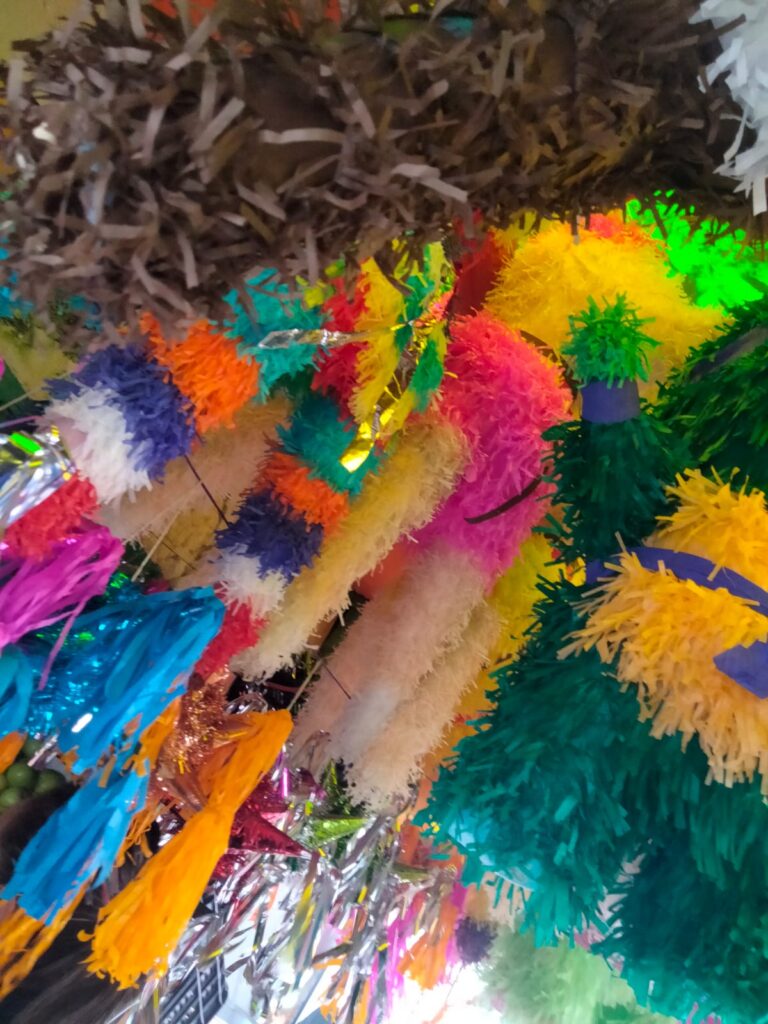
Mexican Christmas is built around Las Posadas, nine nights of processions from December 16 to 24 that reenact Mary and Joseph searching for shelter in Bethlehem. Neighbors go house to house singing, asking for a room, until they are finally welcomed in for a party with food, music, and a star shaped piñata.
The custom you may not know: in the city of Oaxaca, December 23 is the Night of the Radishes (Noche de los Rábanos). Artisans carve large radishes into detailed scenes of the Nativity, village life, and local legend, then display them in the main square for a one night competition that draws huge crowds.
Venezuela
Venezuelans celebrate with hallacas, a cornmeal parcel filled with meat and wrapped in plantain leaves, and a series of early morning Masses leading up to Christmas.
The custom you may not know: in the capital, Caracas, many people roller skate to church for the dawn Masses known as Misa de Aguinaldo. The streets are closed to traffic in the early hours so that families can skate safely to the service before returning home for breakfast.
Colombia
Colombia opens its Christmas season with light. On December 7, the Day of the Little Candles (Día de las Velitas), families place candles and paper lanterns on windowsills, balconies, and along the streets to honor the Virgin Mary on the eve of the Immaculate Conception.
The custom you may not know: the next nine days, from December 16 to 24, bring the Novena de Aguinaldos, when families and neighbors gather each evening to pray, sing, and eat together. The city of Medellín covers its river in millions of lights for one of the largest Christmas light displays in the world.
Brazil
Christmas in Brazil falls in the heat of summer, yet it keeps the snowy imagery anyway. Papai Noel (Father Christmas) is said to arrive from Greenland in a silk suit suited to the warm weather. The main meal happens late on Christmas Eve and often features turkey, ham, rice, and fresh tropical fruit.
The custom you may not know: the Amigo Secreto (Secret Friend) gift exchange is a national ritual at workplaces, schools, and among friends. Over the weeks before Christmas players drop playful clues about who they are before the final reveal. Cities also raise enormous floating Christmas trees on their lakes and bays, with the one in Rio de Janeiro once ranking among the largest in the world.
Asia
Christians are a minority across most of Asia, yet Christmas is widely celebrated, sometimes as a religious feast and sometimes as a bright, commercial, and even romantic occasion.
Philippines
The Philippines holds a strong claim to the longest Christmas season on Earth. Carols start playing in the “ber months,” as soon as September begins, and the festivities run past New Year.
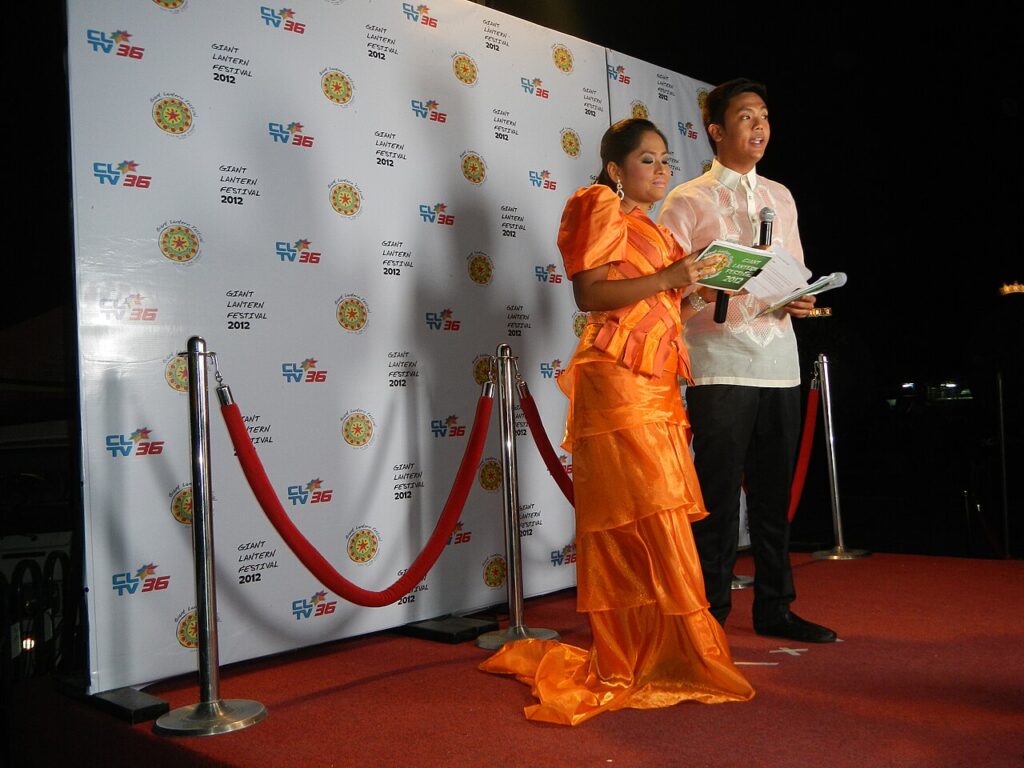
The custom you may not know: from December 16 the country observes Simbang Gabi, a series of nine dawn Masses. Finishing all nine is believed to bring a special blessing, and worshippers spill out afterward to street stalls selling rice cakes and warm ginger tea. The season’s signature symbol is the parol, a star shaped lantern that represents the Star of Bethlehem. The city of San Fernando, the “Christmas Capital of the Philippines,” holds a Giant Lantern Festival where lanterns several meters wide spin with thousands of lights.
Japan
Christmas is not a public holiday in Japan and carries little religious weight, but it is celebrated with enthusiasm as a bright, romantic event. Couples treat Christmas Eve a bit like Valentine’s Day, exchanging gifts and booking dinner dates.
The custom you may not know: millions of Japanese families eat fried chicken from KFC on Christmas. The habit traces back to a 1974 marketing campaign called “Kentucky for Christmas,” which was so successful that ordering a Christmas chicken bucket, often weeks in advance, became a genuine national tradition. Dessert is a light strawberry shortcake, whose red and white colors have become a symbol of Japanese Christmas.
India
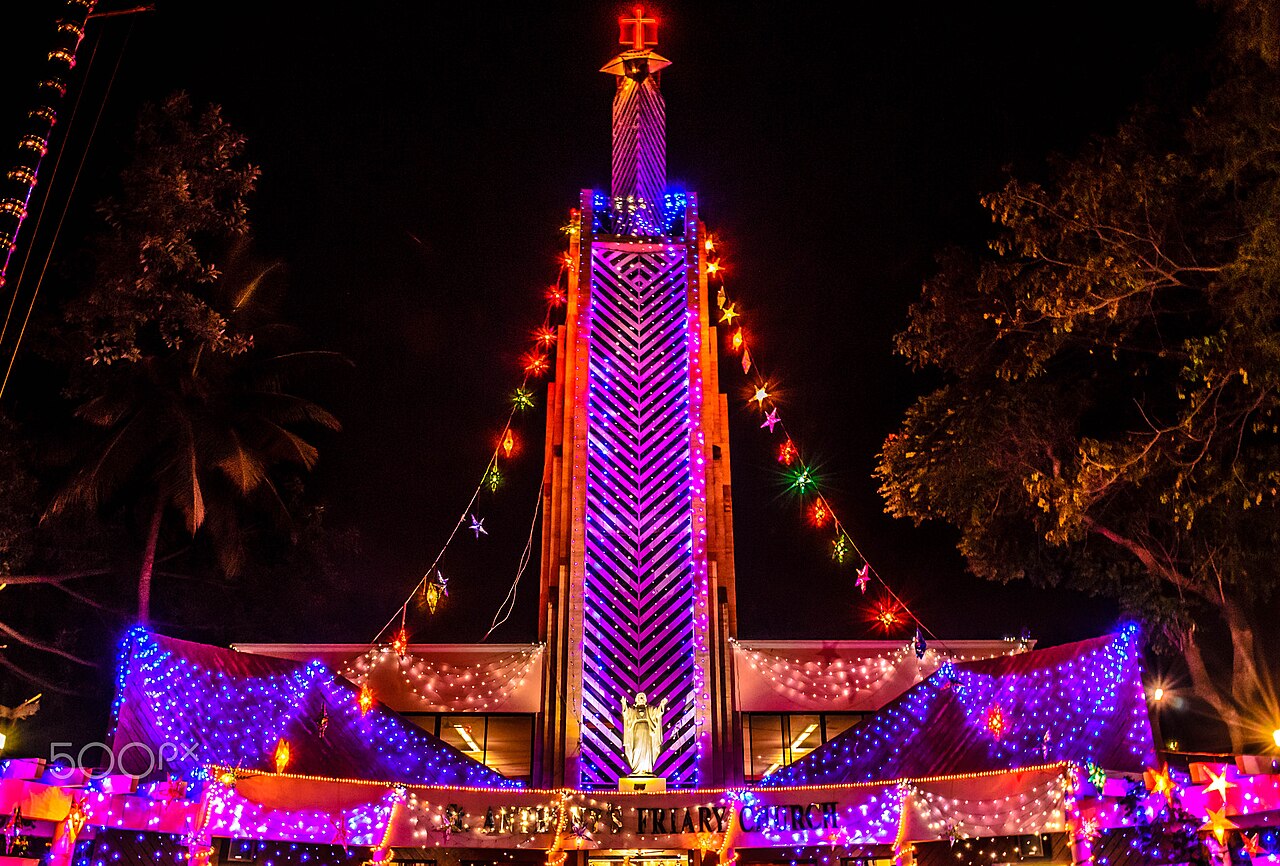
India’s roughly 28 million Christians celebrate Christmas with great warmth, especially in Goa and Kerala, where centuries of Christian history run deep. Midnight Mass is followed by feasting on rich cakes and sweets.
The custom you may not know: because fir trees are scarce in much of the country, many families decorate mango or banana trees, or simply hang ornaments on whatever greenery is on hand. Homes and churches glow with large paper star lanterns hung in doorways and windows, a sight that lines whole streets in Christian neighborhoods through December.
South Korea
South Korea is the rare East Asian country where Christmas is an official public holiday, a reflection of its large Christian population. Churches hold special services, and city centers fill with lights and decorations.
The custom you may not know: for many young South Koreans, Christmas is less a family day than a couples’ holiday, much like in Japan. Restaurants and cafés book up well in advance, and a date on Christmas Eve is the centerpiece of the evening rather than a family dinner.
Africa
Across Africa Christmas blends Christian worship with local food, music, and dress. In countries with ancient Christian roots the celebration can look very different from the Western version.
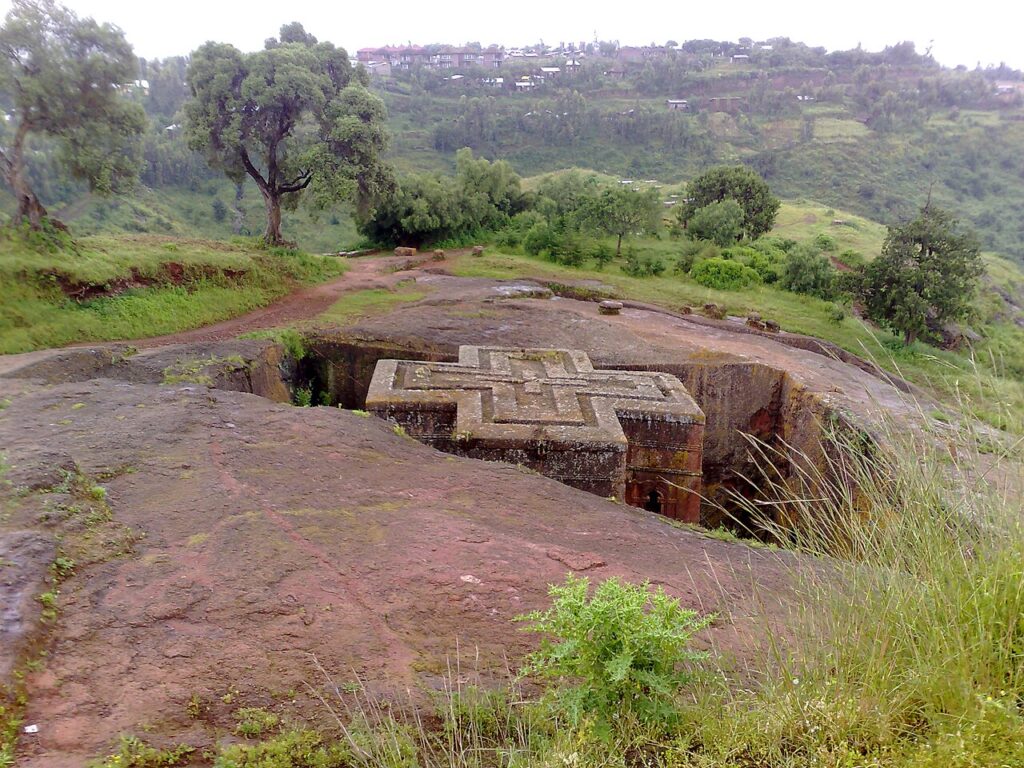
Ethiopia
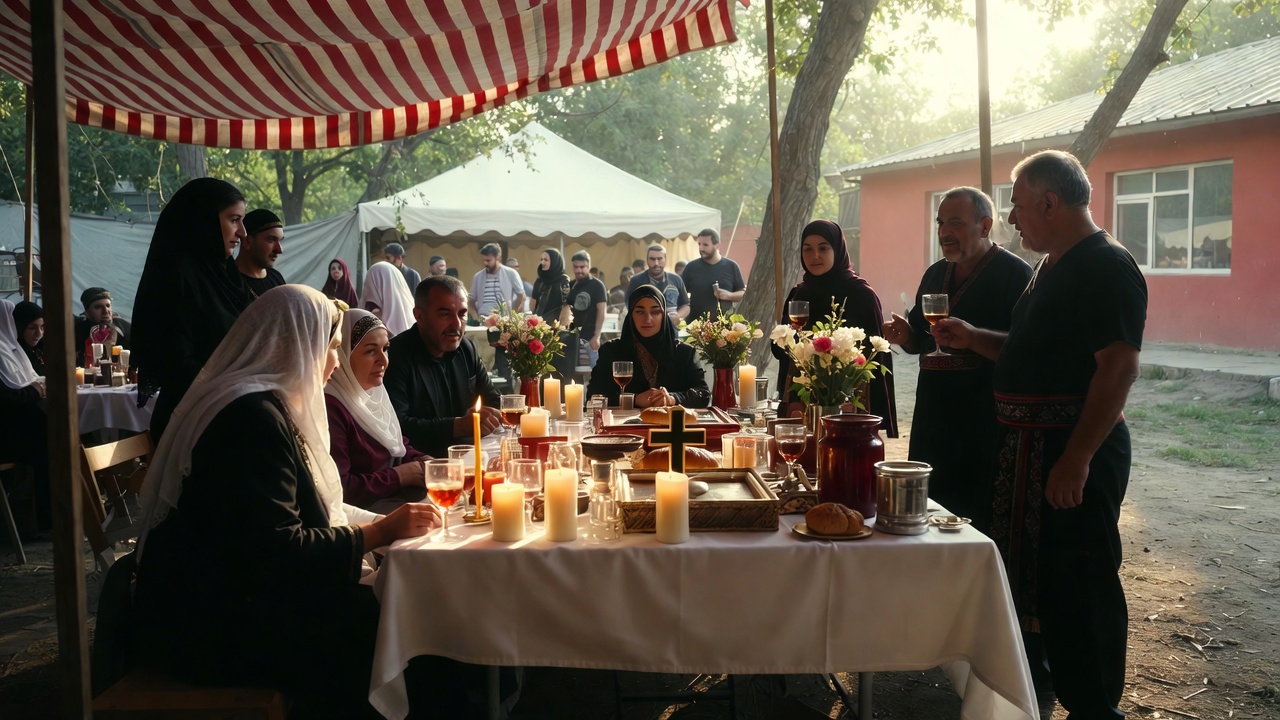
Ethiopia follows its own ancient calendar, so Christmas, known as Genna or Ganna, falls on January 7. The Ethiopian Orthodox faithful prepare with a long fast, then gather for an all night church service.
The custom you may not know: worshippers traditionally dress in a white shawl called a shamma and carry candles in a procession around the church. The rock hewn churches of Lalibela draw tens of thousands of pilgrims for the feast. Genna is also the name of a fast, hockey like game traditionally played by men and boys on Christmas Day, said to recall the shepherds who celebrated the birth of Christ.
South Africa
Christmas in South Africa arrives in midsummer, so the day is more likely to be spent outdoors than by a fire. Many families hold a braai, the South African barbecue, or pack a picnic for the beach or the bush.
The custom you may not know: in some regions a seasonal delicacy is the deep fried caterpillar of the Pine Tree Emperor moth, sometimes called the Christmas caterpillar because it is plentiful around the holiday. It is considered a crunchy, protein rich treat and a real part of the festive table for some families.
Oceania
Australia
Like its southern neighbors, Australia celebrates Christmas in the heat of summer. Families head to the beach, fire up the barbecue, and serve cold seafood such as prawns alongside the traditional roast. Santa is sometimes pictured arriving on a surfboard, and an Australian song imagines him swapping reindeer for “six white boomers,” large kangaroos.
The custom you may not know: Carols by Candlelight is a beloved national tradition. On warm December evenings huge crowds gather in parks, each holding a candle, to sing Christmas carols together under the open sky. The largest events, broadcast live across the country, draw tens of thousands of people and raise money for charity.
How the World’s Gift Bringers Compare
One of the clearest ways to see how Christmas varies is to ask a simple question: who brings the gifts, and when? The answer is rarely “Santa, on December 25.”
| Country | Who brings the gifts | When gifts arrive |
|---|---|---|
| United States, UK | Santa / Father Christmas | December 25 |
| Germany, Austria | Christkind or Saint Nicholas | December 6 and 24 |
| Netherlands | Sinterklaas | December 5 |
| Italy | La Befana (and Babbo Natale) | January 6 |
| Spain, much of Latin America | The Three Kings | January 6 |
| Iceland | The thirteen Yule Lads | December 12 to 24 |
| Russia and some Orthodox countries | Ded Moroz (Grandfather Frost) | New Year |
| Finland | Joulupukki | December 24 |
For a deeper look at these figures and the folklore behind them, our guide to Santa Claus and the world’s gift bringers explores how a 4th century bishop became a global icon, and how each culture reshaped him.
Customs at a Glance
If you only remember one surprising fact from each country, make it these.
| Country | A custom worth knowing |
|---|---|
| Germany | The Advent wreath began as a children’s countdown in 1839 |
| United Kingdom | The Christmas cracker dates to a 1847 sweet maker’s idea |
| Italy | A friendly witch, La Befana, brings gifts on January 6 |
| Spain | El Gordo is the world’s largest Christmas lottery |
| Sweden | The nation watches a Donald Duck special at 3pm on Christmas Eve |
| Norway | Brooms are hidden so witches cannot steal them |
| Iceland | Books are given and read on Christmas Eve (Jólabókaflóð) |
| Poland | Twelve dishes and an empty seat for the unexpected guest |
| Ukraine | Trees are decorated with a lucky spider web |
| Greece | Goblins, the Kallikantzaroi, roam for twelve days |
| Austria | Krampus runs through the streets to scare the naughty |
| Mexico | Radishes are carved into art on December 23 in Oaxaca |
| Venezuela | Caracas roller skates to dawn Mass |
| Colombia | Millions of candles open the season on December 7 |
| Philippines | The world’s longest Christmas season and giant lanterns |
| Japan | KFC for Christmas dinner since a 1974 campaign |
| India | Mango and banana trees stand in for fir |
| Ethiopia | Christmas (Genna) falls on January 7 |
| South Africa | A summer braai, and Christmas caterpillars in some regions |
| Australia | Carols by Candlelight and a beach barbecue |
Borrow a Tradition This Year
You do not need to travel to bring a little of the world into your own Christmas. Any of these is easy to try at home:
- From Iceland: give everyone a book on Christmas Eve and spend the night reading.
- From Poland: set one extra place at the table for an unexpected guest.
- From Sweden: bake saffron buns and light candles on the darkest mornings of December.
- From Mexico: hang a star shaped piñata for the children.
- From the Philippines: make a simple paper star lantern, a parol, for your window.
- From Japan: keep it simple with fried chicken and a strawberry shortcake.
The Common Thread
For all these differences, the same ideas surface again and again: light in the darkest part of the year, a shared meal, generosity to children and strangers, and time set aside for family. The witch in Italy, the goblins in Greece, the skaters in Caracas, and the readers in Iceland are all doing a version of the same thing. They are marking midwinter, or midsummer, with warmth and meaning.
That is what makes Christmas around the world worth exploring. Every country answers the same holiday in its own voice. To see how these customs fit into the wider story of the season, start with our main Christmas guide.
Hungry for more? Our guide to Christmas foods around the world explores 30 traditional dishes from many of these same countries.
Inspired to try a new custom? See our 30 Christmas activities and family traditions to start.